


Ragged grass tips, uneven patches, and engine strain often signal that your cutting equipment needs immediate attention. Learning how to choose a lawn mower blade allows you to restore clean cutting performance while protecting your deck and spindle assembly from undue mechanical stress. The proper cutting edge converts raw rotational power into crisp shearing action, which keeps turf healthy and reduces the risk of fungal discoloration after every pass. Whether you operate a compact electric mower for small yard upkeep or a wide-area machine, matching the blade configuration to your grass type makes a substantial difference.
Finding a dependable replacement requires careful verification of physical specifications rather than guesswork. Deck clearance, center hole geometry, lift aerodynamics, and steel thickness dictate how a blade performs in varying turf densities. Modern mower decks rely on precise airflow patterns to lift, cut, and discharge clippings efficiently without bogging down the motor. Equipping your machine with compatible hardware ensures smooth operation, safe retention under load, and long-term durability through demanding seasonal growth cycles.

Pros
- Compatible with dozens of popular 21-inch deck mower models from major brands.
- Alloy steel construction with rust-resistant coating offers good durability for the price.
- 3-in-1 design gives flexibility for mulching, bagging, or side discharge without swapping blades.
- High lift improves grass collection in the bag for less frequent emptying.
Cons
- Only one blade per pack – if you mow a large lawn or hit obstacles, you may want a spare on hand.
- Paint coating on edges will wear off after a few uses, which is normal but may require periodic inspection for rust.
- Without a large number of verified user reviews yet, long-term performance is based on product specs rather than extensive real-world feedback.
The Hipa 942-0741A is a replacement mulching blade designed specifically for 21-inch cutting decks on walk-behind mowers, riding mowers, and lawn tractors from Troy-Bilt, Craftsman, Cub Cadet, MTD, and other brands that use the bow-tie center hole pattern. If your mower’s original blade has dulled or chipped, this aftermarket blade offers a practical and affordable way to restore cutting performance. It’s a good fit for homeowners who want to keep their mower running well without spending a lot on OEM parts.
In terms of real-world performance, the blade’s 3-in-1 design allows you to switch between mulching, bagging, and side discharge depending on your mowing needs. The curved edges and high lift help chop grass clippings into fine pieces for mulching, while also improving airflow into the bag for better collection. According to the product specs, bagging capacity can increase by up to 50% compared to standard blades. It works well for regular mowing on a typical suburban lawn, and the mulching action returns nutrients to the soil so you don’t have to bag every time.
Build quality is a strong point here. The blade is made from alloy steel that includes chromium and molybdenum – elements that boost hardness and resist wear. The painted edges add a layer of rust protection during storage and also make handling safer when you’re installing or removing the blade. Over time, the paint will wear off as you mow, but the steel itself should hold up well under normal use. It measures 21 inches long, 2-1/4 inches wide, and about 3.4 mm thick, matching OEM dimensions for a proper fit.
Installation is straightforward for anyone comfortable with basic mower maintenance. The blade fits mowers made from 1995 onward that use the bow-tie center hole shape. You’ll want to wear thick gloves, as the edges can be sharp. Hipa recommends checking that the blade is securely fastened and free of cracks or severe damage before each use. Storage is simple – just keep the blade dry, maybe in a garage or shed, and the paint coating helps resist corrosion during off-seasons.
One limitation to keep in mind is that this is a single blade pack. If you have a large lawn or often hit hidden rocks or roots, having a spare might save you a trip to the store. Also, since there aren’t many user reviews yet, the long-term reliability is based on the material specs rather than extensive field data. That said, for the price, it’s a reasonable choice for maintaining your mower’s cutting ability.
Overall, the Hipa 942-0741A blade is a solid value for anyone with a compatible 21-inch deck mower. It offers good durability, flexible mulching and bagging performance, and easy compatibility across many popular mower brands. If your current blade is worn out and you want to get your lawn looking neat again, this replacement is worth considering.

Pros
- Secure clamp holds the blade steady, preventing slips and reducing the risk of injury.
- Broad compatibility with popular MTD, Troy-Bilt, and Yard Machines models up to 42-inch decks.
- Simple, tool-free operation - just slide, clamp, and loosen the nut.
- Low-cost way to make a common maintenance job easier.
Cons
- Universal fit means some blade shapes or deck designs may be too wide or too tight.
- Very stubborn blade nuts may still require additional leverage or penetrating oil.
- Limited track record - with no customer reviews yet, long-term durability is unproven.
Replacing or sharpening a lawn mower blade is one of those jobs that sounds simple but often turns into a wrestling match. The KINTLE Universal Mower Blade Removal Tool is designed to take the struggle out of that task. It clamps to the mower deck to hold the blade steady while you loosen the nut, making the process safer and faster. This is a handy accessory for any homeowner who maintains their own walk-behind or riding mower, especially first-timers who might not have a second person to help hold the blade.
Sharp blades are key to a clean cut, and this tool helps you keep yours in top shape. The product description highlights that it works with a wide range of MTD, Troy-Bilt, Yard Man, and Yard Machines models up to 42-inch decks, including single and twin blade setups. By holding the blade securely, it prevents the spinning and slipping that can lead to skinned knuckles or stripped bolts. For anyone who mows weekly and wants a tidy lawn without ragged grass tips, an easy blade change makes all the difference.
Build quality looks solid for the price. The rigid metal construction and easy-turn clamp handle are meant to handle the torque you'd put on a blade bolt, and the tool is small enough to toss in a toolbag or hang on a pegboard. Since it's a replacement for OEM part numbers 339079 and 490-850-0005, it's designed to match the fit of those specific clamps, which should give buyers some confidence in its compatibility.
Setup is basically zero - you just position the clamp over the deck and tighten the handle. You don't need any special skills, and it stores easily in a garage or shed drawer. In terms of maintenance, the tool itself needs little more than a wipe-down after use. Some users may find that very tight blade nuts still require a breaker bar or a bit of penetrating oil, but the clamp's job is to hold the blade, not to add leverage.
The main limitation is that it's a universal tool, so it won't fit every mower deck or every blade configuration out there. It's specified for decks up to 42 inches, so larger zero-turn or commercial mowers may be out of scope. Also, while the price is reasonable, it's a niche item - you're paying for convenience and safety rather than a complex feature set. If you have a compatible MTD or Troy-Bilt mower and you're tired of struggling with blade changes, this tool is a worthwhile addition to your garage arsenal.

Pros
- Universal fit for many walk-behind and riding mowers up to 42 inches.
- Sturdy metal build with rust resistance for durability.
- Easy-turn button makes blade removal quick and straightforward.
- Replaces multiple OEM part numbers, reducing compatibility worries.
Cons
- May not fit mowers with non-standard blade retention systems.
- Some users might prefer a longer handle for extra leverage.
If you own a walk-behind or riding mower up to 42 inches, the SporGain Universal Lawn Mower Blade Removal Tool might be the simple helper you need for routine blade swaps. Designed to replace several OEM tools like Cub Cadet 490-850-0005 and MTD 490-850-0005, this tool aims to make blade removal safer and less frustrating for suburban homeowners and DIYers.
Based on the product specs, the tool features a sturdy metal construction that resists deformation and rust. That's a plus if you tend to leave tools in a damp garage or shed. The easy-turn button is meant to simplify the process, letting you remove blades without wrestling with awkward angles or stripped bolts. Many users appreciate how it fits common Troy-Bilt, Bolens, and Yard Man models, so you don't have to guess about compatibility.
For anyone who's ever struggled with a stuck mower blade, having a dedicated removal tool can save time and knuckles. The SporGain tool is lightweight and compact, so it won't take up much space in your toolbox or hang on a pegboard. It's also affordable, which makes it a low-risk addition to your lawn care kit.
On the downside, this tool might not work with mowers that have non-standard blade retention systems. Some users might also wish for a longer handle to get extra leverage on stubborn bolts. But for most standard mowers, it should do the job without much fuss.
Overall, if you're looking for a budget-friendly way to maintain your mower blades safely and easily, the SporGain Universal Blade Removal Tool is worth considering. It's not a flashy gadget, but it gets the job done for everyday mower maintenance.

Pros
- Extremely easy to use – just attach to a drill and sharpen
- Durable material won't degrade from friction heat
- Affordable price for a five-pack, excellent value
- Versatile – works on many blade types beyond just mowers
- Saves time and effort compared to manual filing
Cons
- Requires a power drill or hand drill (not included)
- May not fit curved or very small blades perfectly
- Balancing the blade after sharpening is still recommended for best mower performance
The cenoz 5 Pack Lawn Mower Blade Sharpener is designed for homeowners who want to keep their mower blades sharp without spending a lot of money or time. This simple accessory attaches to any power drill, turning it into a fast blade sharpener in seconds. It's ideal for anyone who mows their own lawn and wants a cleaner cut, healthier grass, and less strain on the mower engine.
Performance-wise, the sharpener works quickly. According to the product description, it can restore a dull blade to a sharp edge in a short time. A sharper blade means the mower cuts grass cleanly instead of tearing it, which reduces browning and disease. The double-layer corundum material is a key upgrade over older versions – it's more durable and doesn't melt or degrade from the heat generated during grinding.
Build quality is a highlight. The corundum grindstone is tough and long-lasting, so you can sharpen multiple blades with one tool. The five-pack gives you extras for different tools or to share with a neighbor. Each sharpener measures 2.3 x 2.5 inches, which is a good size for most mower blades.
Setup is about as easy as it gets. You just insert the sharpener into your drill's chuck, tighten it, and you're ready to go. The product claims it takes only 10 seconds to install. No special skills or tools are needed. After sharpening, you'll want to check the blade balance to avoid vibration, but that's a simple step anyone can do.
A realistic limitation is that you need a drill – this sharpener doesn't work on its own. Also, while it's universal, very large or oddly shaped blades might not fit perfectly. And because it's a grinding stone, it removes material, so you shouldn't over-sharpen or thin the blade too much.
Overall, the cenoz blade sharpener is a practical, affordable solution for any U.S. homeowner who wants to maintain their lawn mower and other cutting tools. It's especially valuable for those on a budget, first-time buyers, or anyone who prefers easy DIY maintenance. If you already own a drill, this is a smart investment that will pay for itself in saved blade replacement costs.
Using the cenoz lawn mower blade sharpener is straightforward. First, disconnect the spark plug or remove the battery from your mower for safety. Then remove the mower blade and clean off any grass or debris. Insert the sharpener's shaft into your drill's chuck and tighten it securely. Hold the drill at a steady angle against the blade's cutting edge, moving it gently back and forth along the edge. The double-layer corundum will grind away dull metal. Work slowly to avoid overheating. After sharpening, check the blade balance with a balancer or by hanging it on a nail. If one side is heavier, remove a bit more material. Reinstall the blade, and you're ready to mow with a fresh edge.

Pros
- Very affordable - under $6 for a tool that can improve mower performance and blade life.
- Simple to use - no instructions needed; just place blade on the cone and observe the heavy side.
- Universal fit accommodates most residential mower blades, including standard round and square center holes.
- Durable metal construction feels sturdy and resistant to rust, unlike plastic balancers.
- Compact and lightweight - easy to store in a tool bag or hang on a pegboard.
Cons
- No instructions included - beginners may need to look up blade balancing basics online.
- May not fit very large or commercial-grade blades with unusual center hole shapes or sizes.
- Requires a separate blade sharpening tool - this balancer only checks balance, not sharpen.
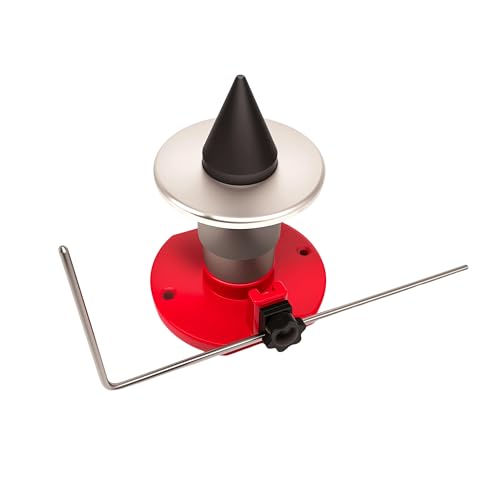
The SporGain Lawn Mower Blade Balancer is a simple, affordable tool designed for homeowners who sharpen their own mower blades. After sharpening, blades can become unbalanced, causing vibration, uneven cuts, and extra wear on the mower's engine. This balancer lets you quickly check and correct balance, making it a valuable addition to any DIY lawn care kit.
In real-world use, the balancer works as advertised. Place the blade on the central cone, and the heavier side will drop, showing where to grind more material. Many homeowners find this helps achieve a smoother cut and reduces the shaking felt during mowing. It's especially useful for those who mow frequently and want a manicured lawn without the hassle of professional sharpening services.
The build quality is solid for the price. Made from zinc die-cast metal, it feels sturdy and resistant to rust, though it's best stored in a dry place. The compact size (2.4 inches) means it won't take up much room in a toolbox or garage drawer. The metal construction is a step up from plastic balancers that can warp or break over time.
Setup and use are straightforward. Simply clean the blade, place it on the balancer, and observe. No tools or batteries are required. Maintenance involves wiping it clean after use and keeping it dry. Some users may need to look up blade balancing techniques if they're new to the process, as no instructions are included in the package.
Limitations are minor. The balancer works with most standard residential blades but may not fit very large or odd-shaped commercial blades. It also doesn't sharpen - it only checks balance, so you'll still need a file or grinder. For the average homeowner with a typical push or riding mower, however, it's more than adequate.
Overall, the SporGain Lawn Mower Blade Balancer is a practical, low-cost tool that delivers on its promise. At around $5, it's a worthwhile investment for anyone who maintains their own lawn equipment. It helps extend blade life, reduce vibration, and improve cut quality - all without breaking the bank. Recommended for budget-conscious DIYers and lawn care enthusiasts.
To get the most out of your SporGain blade balancer, keep it clean and dry. After each use, wipe off any grass clippings or dirt with a dry cloth. If it gets wet, dry it thoroughly to prevent rust. Store it in a toolbox, drawer, or hang it on a pegboard away from moisture. The metal construction is durable, but like any tool, occasional care extends its life.
When balancing blades, always ensure the blade is clean and free of debris before placing it on the balancer. Check the balancer's cone for any damage or wear. If the cone becomes bent or scratched, balance accuracy may be affected. For best results, use the balancer on a flat, level surface.
If you notice the balancer isn't giving consistent readings, verify that the blade's center hole is clean and round. The balancer works with standard round and square holes, but burrs or deformations can throw off the balance check. A quick file or sandpaper touch-up on the hole can help.
This balancer is a simple maintenance tool - no moving parts to lubricate or replace. With basic care, it should last for many seasons of blade sharpening.

Pros
- Universal fit works with most standard mower decks.
- Increases safety by locking the blade in place during removal.
- Simple design - no complicated setup or instructions needed.
- Durable construction meets OEM standards.
- Very affordable compared to professional blade removal tools.
Cons
- May not fit some non-standard or oversized mower decks.
- Requires a wrench or socket to turn the blade nut - not a standalone tool.
- Some users might prefer a socket-style tool instead of a blade locking bar.
If you own a lawn mower, you know that keeping the blade sharp is key to a clean cut. The MaxPower 339079 Universal Mower Blade Removal Tool is a simple accessory that makes blade changes safer and easier. It's designed for homeowners who prefer to handle their own mower maintenance, from first-time buyers to seasoned lawn care enthusiasts. This tool secures to the mower deck and locks the blade in place, preventing it from spinning while you loosen or tighten the nut.
In real-world use, this tool does exactly what it promises. By holding the blade steady, it eliminates the need for a second person or risky techniques like wedging a block of wood against the blade. Many users find that blade changes take just a few minutes with this tool. While it doesn't directly affect cutting performance, regular blade maintenance made easier by this tool leads to cleaner cuts and healthier grass. It works with most standard push mowers, self-propelled models, and even some riding mowers.
Build quality appears solid. The tool is made to meet or exceed OEM specifications, which suggests good durability for regular use. The metal construction feels sturdy enough to handle the torque of loosening a stubborn blade nut. It's also compact - about 8 inches long - so it won't take up much space in your garage or shed. The black finish resists rust, adding to its longevity.
Setup is straightforward: you simply slide the tool under the mower deck and hook it onto the blade. No assembly required. Storage is easy thanks to its small size. Maintenance of the tool itself is minimal - just wipe it clean after use. One thing to note: you'll still need a wrench or socket to turn the blade nut. This tool only prevents blade rotation; it doesn't replace the socket. Some users might prefer a tool that combines both functions, but for the price, this is a solid solution.
A realistic limitation is that it may not fit every mower deck. Some non-standard or oversized decks might not have the right clearance or shape for the tool to secure properly. Also, if your blade nut is extremely tight, you might need a breaker bar - the tool itself won't help with that. But for typical homeowner maintenance, this tool works well.
Overall, the MaxPower 339079 is a practical, affordable addition to any lawn care toolkit. If you're tired of wrestling with your mower blade or worrying about safety, this tool is worth picking up. It's especially suited for budget-conscious shoppers who want to extend the life of their mower without costly professional service. For the price, it's a smart investment in easier, safer lawn mower maintenance.

Pros
- Universal compatibility with many walk-behind and riding mower models up to 42-inch decks.
- Safe clamp design prevents blade rotation, reducing injury risk during removal or installation.
- Durable high-strength steel build withstands repeated use in tough conditions.
- Easy to use without an assistant, saving time and effort for solo maintenance.
- Low cost compared to hiring professional blade replacement services.
Cons
- May not fit all mower deck designs perfectly - check compatibility with your specific model before purchase.
- Limited to blade removal only; does not include other maintenance tools like a wrench or socket.
- Some users may find the clamp requires extra effort on stubborn or rusted blade bolts.
The KSWLOR Lawn Mower Blade Removal Tool is a practical accessory designed for homeowners who prefer to handle their own lawn mower maintenance. This universal blade clamp fits both walk-behind and riding mowers with decks up to 42 inches, making it a versatile addition to any yard care toolkit. Based on product specifications, it works with popular brands such as Troy-Bilt, MTD, Yard Machines, and Cub Cadet, covering a wide range of models from the early 2010s.
In real-world use, the tool's clamp design securely locks the blade in place, preventing it from spinning while you loosen or tighten the bolt. This feature significantly improves safety compared to using a block of wood or relying on friction alone. Many homeowners may appreciate being able to complete blade changes without needing a helper, as the clamp holds the blade steady for one-person operation.
Build quality appears solid, with the tool made from high-strength steel that can withstand repeated use. The compact dimensions (3.6 x 1.8 x 3 inches) make it easy to store in a tool box or hang on a pegboard in the garage. The black finish should resist rust under normal storage conditions, though keeping it dry will extend its life.
Setup is straightforward: simply position the clamp onto the blade so that the locking teeth engage, then use a wrench to remove the bolt. No assembly is required, and the tool comes ready to use out of the package. Maintenance is minimal - just wipe it clean after each use to prevent grass buildup.
One realistic limitation is that the clamp may not fit every mower blade shape or deck design perfectly. Users with older or less common mowers should verify compatibility before buying. Additionally, the tool only assists with blade removal; you still need a socket or wrench for the bolt itself.
Overall, the KSWLOR Blade Removal Tool offers an affordable and safe way for DIY lawn care enthusiasts to perform routine blade maintenance. It is a worthwhile investment for anyone looking to keep their mower cutting cleanly without the hassle of a traditional blade removal method.
This tool is designed to fit a wide range of walk-behind and riding mowers with decks up to 42 inches. It supports both single and twin blade configurations. According to the product description, it is compatible with specific models from Troy-Bilt (e.g., TB280ES, TB320, TB1100), MTD (e.g., 11A-B13M729, 13A326JC058), Yard Machines (e.g., 11A-020W700, 13A2775S000), and Cub Cadet (e.g., 490-850-0005). Always check your mower's model number against the list provided to ensure a proper fit.

Pros
- Designed for exact fit on Greenworks 16-inch mowers, eliminating guesswork.
- Sturdy one-piece steel build enhances longevity and resists bending.
- Sharp cutting edge promotes efficient grass trimming and a clean lawn appearance.
- Budget-friendly price makes it an economical maintenance item.
Cons
- Only fits specific Greenworks 16-inch models, so it won't work on other mower brands or sizes.
- No warranty information is included in the product details, which may be a concern for some buyers.
- Compatibility must be verified with the mower model before purchasing, as blade fit is critical.
If you own a Greenworks 16-inch corded mower, specifically the 25322 or 25242 model, this replacement blade is a straightforward way to restore your mower's cutting performance. It's designed for homeowners who want an affordable, no-fuss replacement part rather than paying for professional sharpening or a brand-new mower.
The blade's 15.75-inch length is engineered to match the factory specs of these mowers, ensuring the cutting edge sits at the right height and angle for a clean, even trim. The one-piece steel construction helps the blade hold its edge longer, which is especially helpful when mowing thicker spring growth or tackling routine weekly cuts.
One-piece steel forging gives this blade added strength compared to cheaper stamped alternatives. That means it's less likely to bend or deform if you clip a hidden rock or root. For a part that sits close to the ground, having that extra resilience can make a real difference over a full season of use.
Replacing a mower blade is a basic DIY task, and this blade is light enough to handle easily. You'll want to disconnect the spark plug or unplug the mower before swapping it out, then use a socket wrench to remove the center bolt. No special tools or adjustments are needed, so you can get back to mowing in under 15 minutes.
The main limitation is compatibility. This blade is strictly for Greenworks 16-inch mowers that use the 25322 or 25242 platform. It won't fit other brands or different deck sizes, so always double-check your mower's model number before ordering. Also, the product data doesn't mention any warranty, so inspect the blade upon arrival for any defects.
For homeowners who already own one of these Greenworks mowers, this replacement blade is a solid investment in keeping your equipment running well. It's reasonably priced, built to last, and does exactly what it's supposed to do. If you're not sure about compatibility, take a few minutes to measure your current blade before buying.
This blade is specifically designed for Greenworks 16-inch corded mowers, and it fits models 25322 and 25242. The actual blade length is 15.75 inches, which is what these mowers require for proper cutting performance.
Before ordering, verify your mower's model number. You can usually find it on a sticker or plate attached to the mower deck or handle. If your mower is a different model, this blade may not fit properly, so it's always a good idea to double-check.
For those who have purchased a used mower and aren't sure about the exact model, measure the existing blade from tip to tip. If it's close to 15.75 inches, you're likely on the right track, but confirming the model is still the safest approach.
Replacing the blade on your Greenworks mower is a simple job. First, unplug the mower to ensure it's completely off. Tilt the mower on its side with the air filter and carburetor facing up to prevent oil or fuel leaks.
Use a socket wrench to remove the center bolt holding the blade in place. Keep track of any washers or spacers you remove, as they'll need to go back in the same order. Place the new blade with the cutting edges oriented in the correct direction, then tighten the bolt securely.
It's also a good idea to clean the underside of the deck while you're in there. Removing grass buildup and debris will help the new blade work more efficiently and reduce the chance of uneven cutting.

Pros
- Adjustable fit accommodates a wide range of blade sizes.
- Durable metal build offers long-lasting reliability.
- Easy-turn knob simplifies adjustment and locking.
- Enhances safety by stabilizing the blade during maintenance.
- Affordable price for a useful lawn care tool.
Cons
- May not fit all mower models - check compatibility before purchase.
- Zero reviews at launch - limited user feedback available.
- Only suitable for blade removal and installation, not for other repairs.
The Cuidosful Adjustable Lawn Mower Blade Holder is a handy accessory for anyone who maintains their own mower. Designed to hold blades steady during removal and installation, it helps reduce the risk of slipping or injury. This tool is especially useful for homeowners who prefer to handle blade sharpening or replacement themselves, rather than taking the mower to a shop.
In terms of performance, the adjustable width feature allows it to grip a variety of blade sizes commonly found on walk-behind and riding mowers. The easy-turn knob makes it simple to set the holder to the right width and lock it in place. Based on product specifications, this design should improve control and stability, making blade service safer and less frustrating.
Build quality appears solid with a rust-resistant metal construction that resists bending or deforming over time. The compact dimensions (5.2 x 2.1 x 3.22 inches) mean it won't take up much space in a toolbox or garage drawer. Many homeowners may appreciate the durable feel and the peace of mind that comes from using a tool built to last.
Setup and use are straightforward - simply adjust the knob, place the holder over the blade, and tighten. No special skills or additional tools are required. For storage, it can be hung on a pegboard or tucked away without hassle. Maintenance of the tool itself is minimal; just wipe clean after use.
However, there are some limitations. Because it's a universal design, it may not fit every mower model perfectly. The product has zero customer reviews at this time, so real-world feedback is not yet available. Also, this tool is specifically for blade removal and installation, not for other repair tasks.
Overall, the Cuidosful Adjustable Lawn Mower Blade Holder is a budget-friendly option for DIY lawn care enthusiasts. If you regularly service your mower blades and want an extra layer of safety and convenience, this tool may be a worthwhile addition to your equipment. As always, check compatibility with your mower before purchasing.
Selecting the Right Lawn Mower Blade for Your Machine and Turf
Selecting the right lawn mower blade starts with evaluating how your machine manages grass clippings and what physical dimensions your deck requires. A replacement blade must match the original equipment mounting pattern and length to rotate freely without striking the deck walls or leaving uncut strips. Using the incorrect size or aerodynamic profile can overload your engine, vibrate the handlebars, or leave clumps across the lawn. Taking time to inspect your existing blade dimensions and deck style ensures you get clean results on every mowing session.
Understanding Blade Types and Aerodynamic Lift Profiles
Lawn mower blades vary significantly in their aerodynamic shapes to handle specific cutting tasks. Standard medium-lift blades provide a balanced approach, generating moderate airflow suitable for routine side-discharge mowing and general turf trimming. High-lift blades feature pronounced upward curves on their trailing edges, which create powerful suction to stand grass blades upright before slicing them cleanly. This intense airflow proves especially beneficial when operating bagging attachments or cutting moist turf, though it demands slightly more horsepower from the engine.
Mulching blades, often designated as 3-in-1 or all-purpose blades, feature specialized curved surfaces and extended cutting edges. The distinct design of options like the Hipa 942-0741A 21 inch Lawn Mower Mulching Blade creates multiple air currents under the deck, repeatedly circulating suspended grass clippings against the cutting edges until they disintegrate into fine particles. These tiny clippings settle quickly into the soil, decomposing naturally to return moisture and nitrogen to the lawn without requiring disposal bags. Low-lift blades feature minimal rear lift wings, making them ideal for dry, sandy soils where high airflow would otherwise pull abrasive grit into the cutting chamber and accelerate deck wear.
Choosing between these profiles depends on your preferred clipping management strategy and available power. If you regularly collect clippings in a rear grass catcher, a high-lift design maximizes packing efficiency and minimizes chute clogging. If your routine focuses on soil nourishment and rapid mowing without bagging, a dedicated mulching blade is the superior choice. Operators using dedicated cordless mulching mowers frequently find that matched mulching blades preserve battery efficiency by cutting grass cleanly on the first pass.
Accurate Length Measurements and Deck Clearance Verification
Determining exact blade length requires measuring diagonally from one cutting tip to the opposite cutting tip across the center mounting hole. Do not measure straight along one flat edge, because curved mulching contours and angled lift wings can produce misleading dimensions. A blade marketed for a specific deck size is typically slightly shorter than the deck shell itself to allow adequate rotational clearance. For example, a walk-behind unit with a 21-inch deck commonly uses an exact 21-inch blade, while dedicated compact units require precise engineering tolerances.
A clear demonstration of precise sizing is found on models like the Greenworks Replacement Lawn Mower Blade, which measures exactly 15.75 inches to operate safely inside a designated 16-inch deck housing. Installing an oversized blade can cause catastrophic deck contact, severe spindle damage, and dangerous projectile hazards. Conversely, selecting a blade that runs too short leaves wide uncut gaps between multi-blade systems or along the perimeter wheel tracks of single-blade mowers. Always consult your operator manual or measure the removed factory blade before purchasing a replacement.
Deck clearance also involves vertical spacing between the blade tips and the underside baffles. High-lift wings sit taller than flat standard blades, meaning they require adequate vertical ceiling room inside the deck chamber. If your mower features internal mulching baffles, verify that an aggressive lift wing will not strike baffle walls during deck flex or vibration. Checking these clearances by hand rotation while the engine or motor is completely disabled prevents expensive mechanical failures on startup.
Center Hole Geometry and Mounting Hole Patterns
Center hole geometry is a non-negotiable compatibility factor when choosing a mower blade. Manufacturers engineer proprietary mounting patterns to ensure the blade locks firmly onto the spindle shaft without slipping under rotational acceleration. Common configurations include round center holes, 5-point stars, 6-point stars, and bow-tie cutouts found on many outdoor power equipment platforms. Attempting to force an incompatible center hole pattern onto an unmatched spindle shaft will ruin the spindle star or cause the blade to spin loose during operation.
The bow-tie mounting pattern on the Hipa 942-0741A 21 inch Lawn Mower Mulching Blade illustrates how specific manufacturers align hardware across wide product families, including Troy-Bilt, MTD, and Yard Machines units. When replacing hardware, inspect the matching spindle face for worn splines or rounded alignment tabs before seating the new component. If the mounting pattern has minor play before the retaining bolt is tightened, you may have an incorrect hole profile. The blade should seat flush and stay centered naturally without rocking on the spindle adapter.
Some commercial and consumer mowers utilize secondary alignment holes alongside a central circular mounting bore. These outer holes accommodate shear pins or alignment dowels built into the blade adapter plate to absorb sudden impacts against hidden rocks or roots. Never drill out, grind, or modify a blade center hole to fit a mismatched shaft. Altering the structural core of the blade weakens the steel, introduces dangerous rotational imbalances, and voids equipment safety compliance.
Material Quality, Steel Composition, and Durability
Mower blade longevity depends heavily on steel metallurgy and proper heat treatment. Budget blades made from mild steel dull quickly when encountering coarse turf, dry thatch, or minor lawn debris, requiring frequent resharpening. Higher-grade replacement blades utilize high-carbon alloy steel enhanced with elements like chromium and molybdenum. These additives improve tensile strength, harden the cutting edge, and provide elevated resistance against surface rust and gouging.
One-piece forged steel construction, such as the build utilized by the Greenworks Replacement Lawn Mower Blade, provides uniform rigidity across the entire span of the cutting tool. Forged steel resists metal fatigue caused by persistent centrifugal forces and repeated grass impact. Thicker gauge steel also withstands incidental contact with small twigs and pinecones without bending out of plane. Maintaining straight blade geometry is critical because a bent blade ruins cut uniformity and exerts uneven loads on the engine crankshaft.
Surface coatings on new blades serve practical protective functions during storage and retail transit. Many replacement units arrive with painted or powder-coated cutting edges to inhibit corrosion while sitting on warehouse shelves. This coating wears away naturally within the first few minutes of active mowing, exposing the sharp metallic bevel underneath. Inspecting the raw steel thickness, often ranging from 0.120 inches to over 0.150 inches on heavy-duty units, gives a reliable indication of structural stiffness.
Essential Tools for Safe Blade Removal and Installation
Servicing a mower blade requires specialized safety practices and holding tools to prevent injury and hardware damage. Never attempt to hold a sharp blade with bare hands or a simple rag while applying torque to the mounting bolt. Dedicated clamping tools secure the blade directly to the mower deck lip, immobilizing the cutting edge completely. Utilizing a secure clamp allows you to apply full leverage with a breaker bar or torque wrench safely and smoothly.
Specialized tools like the KINTLE 490-850-0005 Universal Mower Blade Removal tool clamp firmly onto decks up to 42 inches to immobilize single or twin blade setups. Similar protection is offered by the MaxPower 339079 Universal Mower Blade Removal Tool and the SporGain Universal Lawn Mower Blade Removal Tool, both designed to replace common OEM service clamps for walk-behind and riding equipment. Having rigid metal locking hardware prevents accidental slipping, which is a frequent cause of stripped bolt heads and severe knuckle injuries.
Versatility is another consideration if you maintain multiple mowers across different properties or deck sizes. The Adjustable Lawn Mower Blade Holder features an adjustable width mechanism to grip various blade profiles securely, while the KSWLOR Lawn Mower Blade Removal Tool provides dependable steel clamping for standard 21-inch walk-behind decks. When working around any gas powered lawn mower, always disconnect the spark plug boot before positioning removal tools. On battery or electric models, remove the safety key and disconnect the power supply completely before touching the underdeck area.
Sharpening and Dynamic Balancing Considerations
A freshly chosen blade eventually loses its keen cutting edge through routine friction with grass blades and abrasive soil particles. Regular maintenance sharpens the cutting bevel to restore clean shearing performance without tearing grass tips. Tool packages like the cenoz 5 Pack Lawn Mower Blade Sharpener,【New】 provide double-layer corundum grindstones that chuck directly into standard power drills. These rotary sharpeners help restore the original factory bevel angle on dull blades quickly without overheating or softening the blade temper.
Balancing is an indispensable step after any sharpening or edge cleaning session. Uneven grinding removes more metal from one wing than the other, causing severe dynamic imbalance during high-speed rotation. Checking your sharpened hardware on a precision tool like the SporGain Lawn Mower Blade Balancer verifies whether both wings exert equal weight. An unbalanced blade induces destructive vibrations throughout the deck, loosening fasteners and causing premature failure of the spindle bearings or engine seals.
Using a magnetic or cone-style metal balancer is straightforward and reliable for standard blade shapes. Mount the cleaned center hole onto the stepped cone, allowing the blade to rest horizontally on the pivot point. If one side dips downward, carefully grind small amounts of material from the back edge of that heavy wing until the blade rests completely level. Never remove metal from the leading cutting edge to correct balance, as this ruins the cutting bevel geometry and blade symmetry.
Signs It Is Time to Replace Rather Than Resharpen
Knowing when a blade has reached the end of its useful service life is crucial for lawn health and operator safety. Resharpening works well for routine dullness, but metal erosion eventually thins the blade wing beyond safe operational limits. If sand and soil abrasion have worn down the upward lift wing until holes appear, the blade can fracture suddenly under load. Replace any blade showing deep chips larger than a quarter inch or noticeable thinning along the sail area.
Bent or twisted blades must be discarded immediately rather than hammered back into shape. Striking an immovable object like a tree root or steel boundary pipe alters the molecular structure of heat-treated steel, creating invisible stress fractures. A bent blade produces a stepped, uneven cut across the lawn and places tremendous harmonic stress on the motor shaft. If placing the blade on a flat workbench reveals that the tips do not sit on the same horizontal plane, replace the hardware promptly.
Persistent rust pitting along the center mounting hole also signals that retirement is overdue. Corrosion weakens the clamping surface, making it impossible to maintain manufacturer-specified torque on the retaining bolt. When rust flakes eat away the mating surfaces between the blade adapter and washer, the blade can loosen during normal mowing cycles. Choosing a fresh replacement blade eliminates these hazards and restores factory-level cutting precision immediately.
Proper Installation Practices and Final Verification
Installing your selected blade requires careful attention to orientation and torque specifications. One of the most frequent installation mistakes is mounting the blade upside down, which puts the blunt trailing edge against the grass and pushes turf flat instead of slicing it. The curved lift wings and raised ridges must always point upward toward the underside of the mower deck shell. Most quality blades stamp helpful directional text, such as “Bottom” or “Grass Side,” directly into the metal to guide orientation.
Thread the mounting bolt or spindle nut by hand to ensure the threads do not cross or bind before tightening. Reattach your deck clamp to lock the blade against the housing, then tighten the retaining fastener using a calibrated torque wrench. Walk-behind mowers commonly specify torque ranges between 35 and 50 foot-pounds, while larger tractor spindles may require 70 to 90 foot-pounds or more. Refer strictly to your equipment manual for exact torque ratings, as under-tightening permits dangerous slippage and over-tightening strips spindle threads.
Once installation is complete, remove all clamping tools and turn the blade by hand for one full rotation to confirm total clearance. Reconnect the spark plug wire or reinsert the safety key, then start the machine at partial throttle on a flat driveway or cleared area. Listen closely for abnormal rattling or unexpected vibration through the control handles before engaging thick turf. Verifying proper fit and balance ensures your selected blade delivers clean, manicured results across every section of your yard.






Write Your Review
No reviews yet. Be the first to share your experience!