


Tackling fallen tree limbs, storm debris, and regular firewood cutting without dealing with stale gasoline or finicky carburetors has made battery-powered equipment increasingly popular among property owners. Cordless cutting tools eliminate two-stroke oil mixing, spark plug fouling, and stubborn pull cords while providing instant push-button starting. Homeowners evaluating modern outdoor power setups often wonder, are makita battery chainsaws good enough to replace traditional gas-powered saws for routine tree trimming and firewood processing? Makita has expanded its cordless lineup across dual-voltage and heavy-duty battery configurations to deliver sustained torque without the noise and exhaust of conventional fuel engines.
Investing in a cordless chainsaw system usually comes down to chain speed, motor resilience under heavy loads, and battery ecosystem flexibility. Many property owners who already maintain their turf using a reliable cordless lawn mower appreciate having interchangeable battery packs that power both cutting tools and yard maintenance equipment. Understanding how outer rotor brushless motors, 18V LXT dual-battery systems, and higher-voltage 40V Max XGT platforms perform in dense wood helps buyers determine whether these cordless chainsaws suit their cutting requirements.

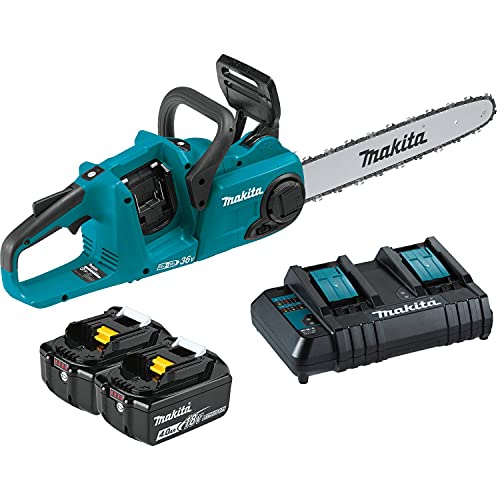


Evaluating Makita Battery Chainsaws: Performance, Battery Platforms, and Real-World Value
Battery-powered chainsaws have transformed modern property management by delivering immediate power without exhaust fumes, engine tuning, or pull-cord frustration. When property owners ask if Makita battery chainsaws are good, the answer depends on matching tool design and battery platform to the scale of cutting work. Makita manufactures cordless saws ranging from compact handheld pruning models to heavy 36V and 40V Max timber-cutting tools. Understanding how these tools operate under sustained timber loads helps homeowners and property caretakers choose equipment that matches their cutting expectations.
The Core Verdict: When and Why Makita Battery Chainsaws Excel
Makita cordless chainsaws earn high marks across residential and landscaping environments primarily for their brushless motor engineering and balanced weight distribution. These saws provide instant trigger response, smooth acceleration, and zero idling noise when you pause between cuts. For homeowners cleaning up fallen limbs, pruning storm damage, or cutting firewood, battery models remove the hassle of storing mixed two-stroke fuel that degrades over winter. They also eliminate common cold-start carburetor flooding, fouled spark plugs, and clogged air filters that frequently sideline gas equipment after long storage periods.
The overall build quality of Makita battery chainsaws stands out because the manufacturer integrates robust outer rotor brushless motors directly connected to the drive sprocket. This direct-drive configuration eliminates internal transmission gear reduction, reducing rotational mechanical drag and transferring battery amperage directly into cutting torque. While they cannot run indefinitely without recharging like a gas saw with fuel refills, they excel for intermittent cutting cycles where the motor only draws power while the chain is moving. For property owners already invested in 18V cordless platforms, adding a compatible chainsaw offers immediate utility without buying secondary charging stations.
Understanding Makita Battery Platforms: 18V LXT, 36V (18V X2), and 40V Max XGT
The voltage platform supplying electric current to the brushless motor serves as a primary factor determining chainsaw performance. Makita organizes its cordless power equipment into three distinct battery categories: standard single-battery 18V LXT, dual-battery 36V (18V X2) LXT, and high-output 40V Max XGT. Single-battery 18V models, such as the compact Makita XCU14Z 18V LXT pruning saw and Makita XCU11Z 18V LXT 14-inch saw, offer exceptional maneuverability for light limbing and overhead branch trimming. These compact configurations provide sufficient cutting torque for smaller branches without overwhelming the operator with front-heavy mass or excess vibration.
For larger cutting tasks like bucking downed hardwood trees or sectioning thick firewood logs, Makita employs its dual-battery 36V (18V X2) platform, seen in models like the Makita XCU04PT1 36V (18V X2), Makita XCU04CM, and Makita XCU04Z. This system bridges two standard 18V LXT lithium-ion batteries in series to supply 36 volts of operating potential directly to the brushless motor. Homeowners benefit from this arrangement because they can use the exact same 18V batteries that operate their drill drivers, impact wrenches, and blowers without buying into an unfamiliar platform. Meanwhile, the dedicated XGT 18 in. 40V MAX BRUSHLESS Electric Battery chainsaw delivers heavy commercial-grade current output for continuous clearing jobs, though it requires dedicated XGT batteries and chargers.
Motor Technology: Outer Rotor Brushless Systems and Direct-Drive Power
Brushless motor design represents the heart of Makita cordless chainsaw efficiency and longevity. Traditional brushed motors rely on mechanical carbon brushes that cause electrical friction, generate excess heat, and require eventual replacement as contact surfaces wear down. Makita employs an outer rotor brushless motor where the exterior magnetic casing rotates around stationary electrical coils. This inverted geometry produces significantly greater rotational momentum and low-end torque compared to conventional inner rotor motors of similar physical dimensions.
Because the outer rotor drives the guide bar chain sprocket directly without intermediate reduction gearing, the chainsaw achieves direct-drive power efficiency. Direct-drive configurations minimize mechanical power loss, allowing the motor to maintain higher chain speed even as wood density changes during a cut. The manufacturer rates these 36V outer rotor direct-drive motors as delivering performance comparable to a 32cc gas-powered chain saw. This level of sustained torque allows users to cut through thick pine, oak, and cedar logs without the sudden motor stalling common in budget electric saws.
Chain Speed, Bar Sizing, and Real Cutting Capabilities
Cutting performance in timber depends heavily on chain velocity, which is measured in feet per minute (FPM) or meters per second. Makita high-performance 36V saws, including the Makita XCU04Z 18V X2 (36V) and related kits, boast high chain speeds of up to 3,940 FPM, which allows cutters to slice cleanly through wood fibers with minimal bogging. Higher chain speed results in smoother cuts, reduced operator push force, and cleaner timber edges that protect living tree bark from tearing during limbing operations. In comparison, compact 18V pruning tools operate at lower speeds optimized for control, such as 1,520 FPM on 14-inch models or specialized linear speeds on compact handheld pruners.
Guide bar length dictates the maximum working diameter a saw can tackle in a single cutting pass. Makita tools and compatible options span bar sizes from 6-inch mini pruning saws up to 16-inch and 18-inch full-size guide bars. A 16-inch guide bar easily handles logs and fallen limbs up to approximately 14 inches in diameter, making it suitable for processing firewood and clearing medium-to-large storm debris. If your property maintenance tasks involve clearing thick underbrush alongside tree trimming, reviewing practical brush mower maintenance and tools can help you decide when to transition from handheld chainsaws to dedicated heavy mowing equipment.
Battery Runtime, Amp-Hour Sizing, and Thermal Management
Runtime on a battery-powered chainsaw is governed by the Amp-hour (Ah) rating of the installed battery packs and the physical density of the wood being cut. For example, operating a dual-battery 36V chainsaw with two 4.0Ah batteries typically yields around 150 cuts in 4×4 dimensional cedar lumber, while upgrading to 5.0Ah packs provides extended cutting endurance. For compact pruning saws running on a single 18V 2.0Ah pack, operators can expect up to 140 cuts in two-inch soft cedar branches. Softwoods like cedar and pine draw less motor current than dense hardwoods like oak, hickory, or maple, which naturally pull more electrical amperage and reduce overall cut counts per charge.
Thermal management is equally crucial when evaluating cordless tool endurance during sustained cutting sessions. High-draw applications like bucking large tree trunks generate heat within lithium-ion battery cells. Makita integrates electronic monitoring controls that exchange data between the tool and battery in real time to monitor current draw, operating temperature, and voltage discharge. If you also utilize cordless lawn mowers for mulching thick turf, you know that keeping spare battery packs cool and rotating them through dual-port rapid chargers ensures continuous outdoor workflow.
Automatic Oiling Systems and Tool-Free Chain Maintenance
Proper bar and chain lubrication is necessary to prevent friction heat from warping the guide bar or dulling cutter teeth prematurely. Makita chainsaws and high-grade compatible models feature built-in automatic chain oilers that continuously pump bar oil onto the guide bar rails during operation. Translucent oil viewing windows allow operators to check the fluid level at a glance before beginning work, ensuring the reservoir never runs dry unexpectedly. Unlike gas saws that consume fuel and oil in roughly matched proportions, battery saws continue cutting as long as the battery holds voltage, making regular visual oil checks essential.
Chain tensioning and bar replacement have also been simplified through tool-less chain adjustment systems found on models like the Makita XCU04PT1 and Makita XCU14Z. Rather than carrying a specialized scrench into the yard, operators can loosen the bar-locking lever and rotate an adjustment dial to set proper chain tension quickly. A properly adjusted chain should fit snugly against the underside of the guide bar rail without sagging, yet pull freely around the bar by hand when the brake is disengaged. Routine maintenance also involves brushing out wood chips from beneath the sprocket cover and keeping the bar oil passage clear of compacted sawdust.
Safety Mechanics: Electric Chain Brakes and Lock-Off Protection
Chainsaws represent one of the most hazardous pieces of outdoor power equipment, making responsive safety features non-negotiable. Makita battery chainsaws feature dual-action braking systems, including a mechanical inertia-activated chain brake and an electric brake that stops chain rotation almost instantly when the trigger is released. The physical chain brake handle sits directly in front of the top grip, engaging automatically if rotational kickback drives the saw upward into the operator hand. This instant stopping mechanism significantly minimizes the risk of severe lacerations during accidental contact or reactive bar tip kickback.
Additional safety features include built-in lock-off levers that prevent unintentional trigger engagement while transporting the saw around the yard. Many Makita models also feature master power switches with automatic power-off functions that shut down tool power after several minutes of inactivity. This prevents accidental startup if the tool is placed in a truck bed or storage shelf with batteries still attached. Retractable chain guards on compact pruning models further shield the upper edge of the cutter loop, preventing incidental contact with adjacent branches while working in tight brush.
Makita Ecosystem vs Third-Party Compatible Chainsaw Options
The widespread popularity of Makita 18V LXT lithium-ion batteries has encouraged third-party manufacturers to develop compatible cordless cutting tools. Brands such as XTENSEN, DEMIMA, and Seesii build cordless chainsaws and mini handheld pruning saws designed specifically to accept genuine Makita 18V battery packs. Options like the 16″ Brushless Cordless Chainsaw for Makita 18V, Mini Chainsaw for Makita Battery, and SEESII Mini Chainsaw 6 Inch Brushless provide affordable choices for homeowners who already own Makita batteries and chargers. These compatible saws feature high-efficiency brushless motors, automatic chain oiling, and tool-free chain tensioning mechanisms similar to name-brand options.
Choosing between genuine Makita tools and third-party compatible saws involves distinct tradeoffs in build materials, warranty support, and integrated electronic protections. Genuine Makita tools feature advanced electronic communication protocols that protect against deep battery discharge and high-temperature shutoff. Quality third-party options frequently integrate baseline low-voltage protection, shutting down if battery voltage drops below 14.4 volts to protect the battery cells from permanent damage. For occasional branch pruning and light yard cleanup, an 18V-compatible mini chainsaw can be a cost-effective solution, whereas heavy log cutting benefits from the robust construction and service backing of authentic Makita dual-battery tools.
Selecting the Right Model for Homeowners and Property Caretakers
Determining which Makita battery chainsaw or compatible saw fits your yard care needs depends on your regular wood diameters and existing equipment platform. If your primary objective is trimming overgrown ornamental trees, clipping low-hanging branches, and pruning orchard fruit trees, a lightweight 6-inch or 8-inch pruning saw provides superior maneuverability and single-hand balance. Compact models like the Makita XCU14Z or mini compatible saws allow gardeners to reach into dense foliage without the fatigue associated with swinging a full-sized 16-inch cutting bar. These smaller handheld units also store easily on garage shelves and require minimal bar oil per cutting session.
Conversely, property owners who manage wooded lots, prepare winter firewood, or regularly clean up storm-felled timber require the sustained power of a 36V (18V X2) chainsaw like the Makita XCU04 series. These direct-drive tools provide the chain speed, torque, and bar clearance necessary to process 12-inch to 14-inch logs efficiently without motor bogging. Pairing these tools with high-capacity 4.0Ah or 5.0Ah lithium-ion battery packs delivers dependable cutting endurance for weekend firewood chores. By selecting a saw that matches your specific property maintenance requirements, you gain a clean, low-maintenance cutting system that starts instantly every season.


Write Your Review
No reviews yet. Be the first to share your experience!