


Turning the ignition key on a riding mower only to hear rapid clicking or complete silence often prompts owners to question their machine’s electrical foundation. Anyone replacing a depleted power unit frequently asks are riding lawn mower batteries 6 or 12 volt when browsing replacement options for lawn tractors and zero-turn mowers. Modern lawn tractors, garden tractors, and zero-turn mowers manufactured in recent decades run on a standard 12-volt direct current electrical system. Understanding this voltage requirement ensures you select the proper starter battery, avoid damaging sensitive onboard wiring, and maintain consistent ignition performance throughout the cutting season.
While vintage utility tractors and certain antique farm machines from decades past occasionally featured 6-volt circuits, modern residential turf equipment relies strictly on 12-volt power to drive electric starter motors, safety interlock switches, and electric power take-off clutches. Modern battery advancements for battery operated lawn equipment and gas-powered tractors now include maintenance-free absorbent glass mat designs and lightweight lithium options alongside traditional flooded lead-acid units. Identifying the correct physical case size, terminal polarity layout, and Cold Cranking Amps rating will make seasonal maintenance straightforward while keeping your starting system in dependable working order.

Pros
- Spill-proof and vibration-resistant design ensures durability in lawn equipment
- High CCA rating provides reliable starting power for various mower engines
- Compatible with a wide range of riding mowers and lawn tractors from top brands
- Long service life with deep discharge recovery for seasonal use
Cons
- Battery only; no wiring harness or mounting accessories included, may require additional purchase for some mowers
- Weight of 14.1 pounds may be slightly heavier than some comparable batteries
The Mighty Max Battery ML-U1-CCAHR is a 12-volt, 320 cold cranking amps (CCA) sealed lead-acid (SLA) AGM battery designed primarily for riding mowers, lawn tractors, and other outdoor power equipment. This battery is a solid option for homeowners who need a dependable replacement battery that can handle the demands of frequent mowing in varying weather conditions. Whether you have a small suburban lawn or a larger rural property, this battery may provide the starting power you need.
According to the product specifications, the ML-U1-CCAHR features a high discharge rate and wide operating temperature range, which may help ensure reliable starts in both hot summer afternoons and chilly early mornings. The AGM construction is spill-proof and can be mounted in any position, offering flexibility for different mower designs. This battery is also resistant to shocks and vibration, which is important for equipment that experiences rough terrain.
Compatibility is a strong point for this battery. It is listed as compatible with a wide range of mowers including Craftsman 25780, Cub Cadet LTX 1046 KW, John Deere 330, and many more. This broad compatibility may make it a convenient choice for owners of multiple mowers or for those who want a reliable replacement without needing to search for a specific model.
In terms of build quality, the battery is described as long-lasting with deep discharge recovery capabilities. This means it may be able to recover from being drained more effectively than some standard batteries, which can be useful for seasonal equipment that sits unused for months. The included screws allow for straightforward installation, though users should note that no wiring harness or mounting accessories are included.
One potential limitation is the weight of 14.1 pounds, which might be slightly heavier than some comparable batteries. However, this weight is typical for a battery of this capacity and should not be an issue for most mower battery trays. Additionally, the battery is sold as a single unit, so buyers should ensure they are getting the correct size and terminal configuration for their mower.
Overall, the Mighty Max Battery ML-U1-CCAHR appears to be a practical and reliable choice for homeowners seeking a replacement battery for their riding mower or lawn tractor. It offers spill-proof safety, broad compatibility, and robust performance characteristics that may suit both casual and dedicated lawn care enthusiasts. As always, checking your mower's specific battery requirements before purchase is recommended.
Pros
- True maintenance-free operation – no topping off water or cleaning corrosion
- Strong CCA rating for reliable cold-weather starting on snow blowers or late-season mowing
- Comes fully charged and includes threaded posts for easy nut/bolt terminal hookup
- Works with most 12V small engine starters found on lawn tractors and zero-turn mowers
Cons
- Not a deep-cycle battery – not intended for extended power draws like electric winches or trolling motors
- Weight (nearly 13 lbs) may be slightly heavier than some comparable lithium or AGM options
- Some users may find the nut and bolt terminals require a wrench for installation instead of quick-connect clamps
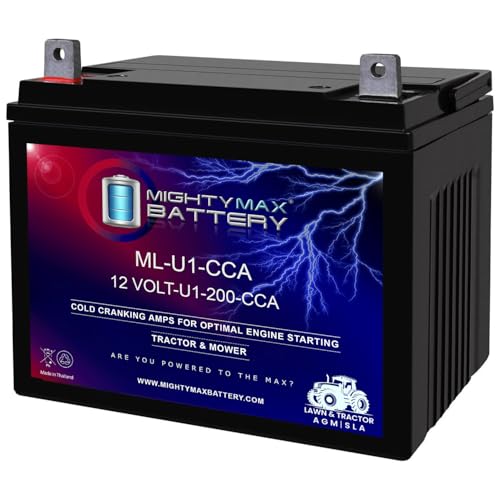
If you own a riding mower, lawn tractor, zero-turn mower, or even a snow blower, you know how frustrating a dead battery can be. The Mighty Max Battery 12V 200 CCA SLA AGM battery is designed to be a straightforward replacement for many small engine starting applications. It's a sealed lead-acid battery that uses AGM technology, meaning it's completely maintenance-free—no refilling, no acid spills, and no corrosion mess to clean up. For homeowners who just want to hop on their mower and get the grass cut without extra maintenance, this is a practical choice.
Performance-wise, the 200 cold cranking amps are sufficient for most riding mowers and lawn tractors. Even on chilly spring mornings or late-fall leaf cleanup days, this battery should give you reliable starting power. The AGM construction also means it handles vibration better than a flooded battery, which is important when you're bouncing over bumps in the yard. The nut and bolt terminals provide a solid, secure connection that won't loosen up over time—you can tighten them down and forget about them.
Build quality is what you'd expect from a reputable brand like Mighty Max Battery. The case is tough and sealed, so you can install it in a variety of positions (just not upside down). At 12.89 pounds, it's not too heavy to lift in and out of the battery tray. The dimensions (7.75 x 5.11 x 6.25 inches) are standard for many lawn mower batteries, so it should fit most trays without modification.
Setup is about as easy as it gets: remove the old battery, connect the new one (making sure to attach positive and negative correctly), tighten the nuts on the terminals, and you're ready to go. It comes pre-charged, so you don't need to wait for a first charge. Storage is simple too—since it's sealed, you can mount it in the mower all season without worrying about water levels or acid leaks.
One realistic limitation is that this is not a deep-cycle battery. It's built for short bursts of high current to start an engine, not for powering accessories like lights or electric clutches for an extended period. Also, some people prefer the convenience of quick-connect terminals, but the nut and bolt setup here is very secure and standard for many small engine applications.
Overall, the Mighty Max Battery 12V 200 CCA SLA AGM battery is a reliable, no-fuss replacement for your outdoor power equipment. If you want a battery that works when you need it and requires zero maintenance, this is a great pick. It's especially suited for suburban homeowners or rural property owners who want to get back to mowing quickly without dealing with battery headaches.
The 200 Cold Cranking Amps (CCA) rating is the key spec here. For most riding mowers and lawn tractors with engines between 12 and 25 HP, this battery provides enough power for reliable starts even in cooler temperatures. It uses AGM (Absorbent Glass Mat) technology, which means the electrolyte is absorbed into fiberglass mats rather than being free liquid. This gives it lower internal resistance and higher discharge rates than a standard flooded battery. The result is a strong, consistent crank that helps your engine fire up quickly.
Mighty Max Battery builds their SLA AGM batteries with a thick, impact-resistant polypropylene case that can handle the bumps and vibrations of lawn mowing. The sealed design means no acid fumes or corrosion buildup on terminals or cables—a common issue with traditional flooded batteries. Plus, the AGM construction is spill-proof, so you can mount the battery safely in mowers that tip or bounce. The nut and bolt terminals are made of brass or lead alloy and resist stripping.

Pros
- High purity lead means better performance and longer life than recycled lead batteries
- Maintenance free – no watering or cleaning terminals needed
- Strong cold cranking amps ensure reliable starts even in freezing weather
- Wide compatibility with most U1 group size riding mowers and tractors
- Vibration resistant – holds up to the shaking of mowing rough ground
Cons
- Weight of 14.6 lbs may be heavy for some users to lift and install
- Not suitable for large engines requiring higher CCA than 330
- Limited to U1 group size – verify dimensions fit your mower tray
The UPLUS U1 Riding Lawn Mower Battery is a sealed lead-acid AGM battery designed to replace worn-out batteries in garden tractors and riding mowers. It's best suited for homeowners who want a reliable, maintenance-free power source for their weekend mowing chores. With 12V and 330 cold cranking amps, this battery provides enough power to crank most small to mid-size lawn tractor engines, even on chilly spring mornings.
In real-world use, the battery's high cranking performance helps start engines quickly without hesitation. The AGM design is spill-proof and vibration resistant, which is important for mowers that bounce over uneven lawns. Many users find it works well with popular brands like John Deere, Cub Cadet, Husqvarna, Craftsman, and Toro. The dimensions (7.68 x 4.92 x 6.93 inches) fit standard U1 battery trays, though it's worth double-checking your mower's compartment before purchase.
Build quality appears solid thanks to the use of 99.99% pure primary lead instead of recycled lead. This means more consistent charging and less internal corrosion, which may extend the battery's lifespan. UPLUS states it can last over five years with proper care. The battery is completely sealed, so there’s no need to check water levels or worry about acid leaks onto your garage floor or lawn.
Setup involves removing the old battery, cleaning the terminals, connecting the red positive and black negative cables, and securing the hold-down. It’s a straightforward 10-minute job. There’s no maintenance required afterward, which is a real plus for folks who just want to mow and store their mower. The 15-month warranty and US-based support provide peace of mind if any issues arise.
A limitation to consider is the 330CCA rating – while sufficient for most riding mowers, larger garden tractors with V-twin engines might need a battery with higher cold cranking amps. Also, the 14.6-pound weight is manageable but not feather light, so those with strength concerns may want assistance during installation. This battery is non-spillable and can be shipped safely, but it does contain lead and should be recycled properly at end of life.
Overall, the UPLUS U1 battery is a sensible replacement choice for budget-conscious homeowners with a compatible riding mower. It delivers reliable starting, requires zero upkeep, and comes from a brand with a responsive support team. If your mower needs a fresh battery to get through another mowing season, this sealed AGM option is worth a look.
This UPLUS battery provides 12V and 330 cold cranking amps, which is enough to start most single-cylinder and small V-twin lawn tractor engines. The AGM construction means it can deliver high current bursts even in cold temperatures down to -22°F. The calcium-calcium technology helps reduce self-discharge when the mower sits idle over winter. For daily mowing use, the battery holds its charge well and recharges quickly from the mower’s alternator.
The battery uses 99.99% pure primary lead, which resists grid corrosion better than many recycled lead batteries. The case is sealed and vibration resistant, so it can handle the constant shaking of mowing bumpy lawns. There are no vents or caps to leak acid, making it safe for side mounting positions in some mowers. UPLUS claims a lifespan of over five years in typical use, but actual life depends on climate and charging system health. The 15-month warranty covers defects.

Pros
- Maintenance-free AGM design is ideal for homeowners who prefer a 'set it and forget it' battery without watering or cleaning terminals.
- Strong cold-cranking performance helps with reliable startup on chilly spring or fall mornings.
- Wide compatibility with leading mower brands makes it an easy replacement for many popular models.
- Leak-proof and vibration-resistant construction adds durability for rough yard conditions.
- Includes a 15-month warranty, providing extra peace of mind for budget-conscious buyers.
Cons
- The 26Ah capacity may be limiting for larger lawn tractors with high electrical demands, such as those with multiple accessories or electric PTO.
- While the terminal layout is standard (left positive, right negative), some users may need to check fitment carefully for their specific mower model.
- Periodic charging is required if the mower sits idle for extended periods to avoid deep discharge damage - a common need for all lead-acid batteries.
The UPLUS U1 riding lawn mower battery is a practical replacement option for homeowners who own garden tractors or ride-on mowers. As a sealed AGM (absorbent glass mat) battery, it is specifically built to deliver reliable starting power for your equipment without the hassle of traditional flooded batteries. This type of battery is best suited for anyone looking for a maintenance-free solution - whether you're a first-time mower owner or a seasoned homeowner who simply wants to replace a tired battery with something dependable.
In terms of real-world performance, the battery's 360 cold cranking amps (CCA) and 12-volt design provide enough punch for most standard riding mower engines. The description highlights strong low-temperature starting ability, which can be a huge plus for those early spring mornings when temperatures can still dip near freezing. The calcium-calcium technology also helps reduce self-discharge, meaning the battery may hold its charge better when stored in the garage or shed between cuts. While this isn't a battery designed for electric mowers, it is a solid fit for the gas-powered riding mowers that dominate suburban and rural lawns.
Build quality appears solid based on the materials and manufacturing details. The use of 99.99% pure primary lead is a notable feature, as it can improve charging efficiency and reduce the release of toxic fumes compared to recycled lead. The AGM construction is sealed, so there are no water levels to check, no spills, and no leaks. The battery is also described as vibration resistant, which is important because riding mowers constantly shake as they cross bumpy ground, flower beds, and uneven terrain around your yard.
Setup is straightforward for most mowers. The compact U1 form factor measures 7.68 inches long, 4.92 inches wide, and 6.93 inches high, and the terminal layout is left positive and right negative. You'll simply remove the old battery, connect the new one (red to positive, black to negative), and secure it in the tray. Maintenance is minimal, but the product description includes a note about avoiding deep discharge. If you leave your mower parked for several weeks, it's a good idea to hook it up to a trickle charger or at least check the voltage to ensure the battery doesn't drop too low.
One realistic limitation is the battery's 26Ah capacity. For most small to mid-size riding mowers, this is plenty. However, if your tractor has heavy electrical accessories like a powerful electric PTO, LED light bars, or a high-output charging system, you might want to confirm that 26Ah meets your needs. Also, while compatibility extends to major brands such as John Deere, Cub Cadet, Husqvarna, Craftsman, and Toro, it's always wise to double-check your owner's manual or measure the battery tray and terminal orientation before purchasing.
Overall, the UPLUS U1 offers a balanced set of features for the price. It brings a trusted chemistry, durable construction, and a generous 15-month warranty, which suggests the manufacturer stands behind the product. If you're a suburban homeowner or a rural property owner who needs a dependable replacement battery for a gas-powered riding mower or lawn tractor, this is a sensible choice that should let you get back to mowing without fuss.
Because this is an AGM battery, regular maintenance is minimal. There is no need to check electrolyte levels, add water, or clean up acid spills. The sealed design also means you can mount it in any orientation that fits your mower, as long as it's secure.
Still, all lead-acid batteries benefit from a little attention. If you store your riding mower for the winter or leave it sitting for more than a month, consider attaching a smart trickle charger to keep the battery topped off. The product description warns that deep discharge can damage the battery, and that's a real concern for seasonal equipment.
Every now and then, check the battery terminals for corrosion. Even with a sealed battery, dirt and moisture can build up. A quick wipe with a dry cloth or a wire brush keeps the connection clean. Make sure the battery is held down securely to avoid excess vibration, which could shorten its lifespan. With these small habits, the UPLUS U1 should provide years of reliable starting power for your lawn tractor.

Pros
- Maintenance-free AGM technology eliminates the need for water refills and reduces corrosion
- 200 CCA provides reliable starting power for most lawn tractors and riding mowers
- Universal U1 size fits a wide range of popular brands, simplifying replacement
Cons
- Some users may prefer a higher CCA rating for extremely cold climates or larger engines
- The square hole terminal design may require specific bolt sizes, potentially needing additional hardware for some mowers
The Daakmax AGM Battery Group U1 12V 24Ah 200CCA is a solid choice for homeowners looking to replace a worn-out battery in their riding mower or lawn tractor. Designed as a maintenance-free sealed lead-acid (SLA) battery, it fits the standard U1 size that many popular brands like Craftsman, Cub Cadet, and Toro use. If your mower struggles to start or you're tired of checking water levels in a flooded battery, this drop-in replacement could be a practical upgrade.
With 24 amp-hours (Ah) and 200 Cold Cranking Amps (CCA), this battery delivers enough punch to start most single-cylinder and small V-twin lawn tractor engines. The AGM construction means it's spill-proof and can handle moderate vibration from bumpy lawns—a clear advantage over traditional wet-cell batteries. The compact dimensions (7.68 x 5.12 x 7.09 inches) ensure it fits snugly in standard battery trays without modification.
Installation is straightforward thanks to the square hole nut and bolt terminals. The positive terminal is positioned on the left side, matching the layout of many Craftsman and Cub Cadet models. You'll just need a wrench to tighten the bolts securely. No special tools or adapters are required, which keeps the swap simple for DIY homeowners.
One of the biggest benefits of this battery is its maintenance-free design. You won't need to check electrolyte levels or deal with acid corrosion on your battery tray. The sealed case also reduces the risk of leaks, even if the mower tips slightly on uneven ground. For those who store their mower in a garage or shed over winter, this battery holds its charge reasonably well, though a trickle charger is still recommended for long off-seasons.
On the downside, 200 CCA is adequate for most residential riding mowers but may be borderline for larger engines or extremely cold climates. If you live in an area with harsh winters or have a heavy-duty lawn tractor, you might want a battery with higher cold cranking amps. Additionally, the square terminal design might not match every mower's existing cable connectors—some users may need to source the correct bolts or adapters.
Overall, the Daakmax U1 AGM battery offers a dependable, low-maintenance power source for typical suburban lawn care. It's a practical replacement for Craftsman, Cub Cadet, and Toro riding mowers, and the 1-year warranty provides reasonable peace of mind. For homeowners who want a hassle-free battery that gets the job done without constant upkeep, this is a solid option to consider.

Pros
- Wide compatibility with many popular riding mower brands, making it a versatile replacement option.
- Maintenance-free sealed design saves time and hassle compared to traditional flooded batteries.
- Shockproof and heat-resistant construction may enhance durability in demanding lawn care conditions.
- Competitive price point for a 330CCA battery, appealing to budget-conscious shoppers.
Cons
- No user reviews available yet, so real-world performance feedback is limited.
- Sealed lead acid batteries are heavier than lithium alternatives, which may affect portability during installation.
- CCA rating is moderate; for very cold climates or high-compression engines, a higher CCA might be needed.
The MARXON U1 battery is a 12-volt, 330 cold cranking amp (CCA) sealed lead acid (SLA) battery designed specifically for riding lawn mowers and garden tractors. It suits homeowners who need a dependable replacement battery for their outdoor power equipment, especially those with tractors from brands like Husqvarna, Troy-Built, Snapper, Scag, and many others listed in the compatibility.
In terms of performance, the 330 CCA rating provides enough starting power for most residential riding mowers under normal conditions. The sealed lead acid chemistry delivers consistent voltage and is maintenance-free, meaning you don't have to check or refill electrolyte levels. This setup may work well for homeowners who want a straightforward replacement without the fuss of traditional flooded batteries.
Build quality appears solid with shockproof material that helps resist vibration and heat from engine operation. The high purity micro crystal structure is claimed to extend service life beyond five years, though actual longevity depends on usage and charging habits. The compact U1 dimensions (7.68 x 4.92 x 6.14 inches) fit standard battery trays, making installation simple with included screws.
Setup is straightforward: just connect the positive and negative terminals correctly (positive on left, negative on right) and secure the battery in the tray. No special tools or maintenance routines are needed. Storage is typical for SLA batteries – keep it charged and avoid deep discharges to maximize lifespan.
One limitation is the lack of user reviews, so real-world feedback is not yet available. Also, SLA batteries are heavier than lithium options, which might be noticeable when handling. For very cold climates or high-compression engines, a higher CCA battery could be more reliable. However, for most residential riding mowers in moderate conditions, this MARXON battery should perform adequately.
Overall, the MARXON U1 battery is a practical, budget-friendly choice for anyone needing a direct replacement with broad compatibility. The 15-month warranty and US-based support add confidence. If you're looking for a maintenance-free power source for your garden tractor, this is worth considering.
The MARXON U1 battery is designed to fit a wide range of riding mowers and garden tractors. Compatible brands include AGCO ALLIS, BEAR CAT, BOB-CAT, BUNTON, DIXON, ENCORE, EXMARK, FERRIS, FINN CORP., GIANT-VAC, GRASSHOPPER, GRAVELY, HOWARD PRICE TURF EQUIPMENT, HUSQVARNA, HUSTLER, Kawasaki, LESCO, MASSEY-FERGUSON, MAXIM, MTD Pro, SCAG, SCOTTS, SIMPLICITY, SNAPPER, STEINER, SWISHER, TROY BUILT, WHITE OUTDOOR, WOODS, Yamaha, YAZOO/KEES, and ZIPPER.
Installation is straightforward: remove the old battery, clean the terminals, place the new battery in the tray with correct polarity (positive left, negative right), and secure it using the provided screws. Always disconnect the negative terminal first when removing the old battery and connect the positive first when installing the new one to avoid shorts.
No special tools or modifications are required. The battery fits standard U1 size trays commonly found in residential riding mowers.
MARXON offers a 15-month warranty on this U1 battery, covering defects in materials and workmanship. The company has a US-based office and warehouse, which may help with faster resolution of issues. They state that they will reply to emails within 12 hours.
For warranty claims, you typically need to provide proof of purchase and follow their return process. Always check the product listing for the most current warranty terms. Having local support adds peace of mind for homeowners who prefer dealing with a US-based company.

Pros
- Spill-proof and vibration-resistant – perfect for the jarring environment of a riding mower.
- High CCA rating ensures reliable starts even in colder months.
- Long service life with deep discharge recovery for extended use.
- Maintenance-free – no watering required, just install and go.
- One-year warranty adds extra value for budget-conscious homeowners.
Cons
- No wire harness or mounting accessories included – you may need to reuse existing hardware.
- Some users may find the 15.5-pound weight a bit heavy for handling during installation.
- Limited to specific U1R applications – verify compatibility before purchase.
The Mighty Max Battery ML-U1R-CCAHR is a 12V 320CCA sealed lead acid (SLA) battery designed as a replacement for riding mowers like the Husqvarna LGT2654. It's an AGM (absorbent glass mat) battery, meaning it's spill-proof and can be mounted in any position – a handy feature if your mower's battery compartment is cramped or oddly shaped. This battery is best suited for homeowners who need a reliable, maintenance-free power source for their lawn tractor, especially those in colder climates where cold cranking amps matter for winter storage and spring startup.
In terms of performance, the 320 cold cranking amps provide ample power to start most riding mower engines, even after sitting for months. The battery's high discharge rate ensures consistent power delivery, which translates to reliable cranking in chilly mornings or after long periods of disuse. While this battery isn't designed for deep-cycle use (like powering accessories), it excels at starting tasks – exactly what a lawn mower battery should do. The spill-proof design also means no acid leaks, so you don't have to worry about corrosion on your mower's frame or terminals.
Build quality is solid for a budget-friendly battery. The case is durable and resists shocks and vibration, which is crucial for the rough-and-tumble life of a riding mower. The dimensions (7.62 x 5 x 6.25 inches) fit standard U1R battery trays, and the polarity (positive on right, negative on left) matches many Husqvarna models. However, note that the battery comes with only the battery and screws – no wire harness or mounting brackets – so you'll need to reuse or purchase those separately.
Setup is straightforward: remove the old battery, clean the terminals, place the new battery in the tray, secure it with your existing hardware, and connect the cables (red to positive, black to negative). No maintenance is required – no watering, no checking electrolyte levels – which saves time for busy homeowners. Storage is also easy; the battery can be stored on a shelf or in the mower without worry of spills. The one-year warranty adds a layer of confidence, though typical SLA batteries last 3-5 years with proper care.
One limitation is that this battery is not a direct fit for all mowers – it's specifically for U1R applications, so double-check your mower's battery requirements before buying. Also, the 15.5-pound weight might feel heavy when lifting into tight compartments, but that's standard for this type of battery. Some users might wish for included hardware, but that's a minor inconvenience.
Overall, the Mighty Max Battery ML-U1R-CCAHR is a dependable, no-fuss replacement for your Husqvarna LGT2654 or similar U1R-equipped lawn mower. It offers strong starting power, spill-proof safety, and long life at a reasonable price. If you need a battery that just works without extra maintenance, this is a solid choice for your Saturday morning mowing routine.
Pros
- Weighs only 3.96 lbs for easy handling and installation.
- 650 CCA ensures reliable cold-weather starts.
- 2000-cycle lifespan outlasts most lead-acid batteries.
- Built-in BMS provides safety and overcharge protection.
- Wide compatibility with many popular lawn tractor brands.
Cons
- Higher upfront cost compared to standard lead-acid batteries.
- Requires a 14.6V lithium-specific charger (not included).
- Not compatible with all mower models - must verify dimensions and terminal orientation (left-positive, right-negative).
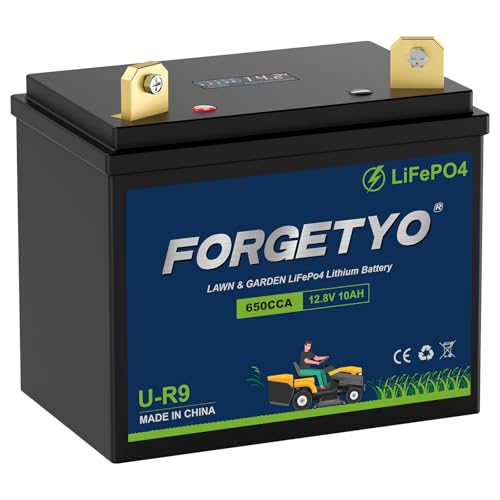
The U-R9 lithium battery is a drop-in replacement for traditional lead-acid batteries used in riding lawn mowers and garden tractors. It delivers 12.8 volts and 10 amp-hours of capacity with a maximum 650 cold cranking amps (CCA), providing more than enough power to start mid-sized mowers even in cold weather. Weighing only 3.96 pounds, it is about one-third the weight of a comparable lead-acid battery, which makes installation and handling much easier for homeowners of any age.
Based on the product specifications, the built-in Battery Management System (BMS) monitors the battery's health and automatically protects against overcharging, overdischarging, short circuits, and overheating. This safety feature helps extend the battery's lifespan to roughly 2000 charge cycles, compared to only 300 cycles from typical lead-acid batteries. For many homeowners, that means fewer replacements and less maintenance over the life of the mower.
Compatibility is strong for this battery. It works with popular brands like John Deere, Cub Cadet, Husqvarna, Craftsman, Toro, Ariens, Poulan Pro, and Troy-Bilt. The U-R9 has a left-positive, right-negative terminal layout, so it's important to check the physical dimensions (7.7x5.1x7.2 inches) and terminal orientation against your mower's battery tray before purchasing. The lithium chemistry also holds a charge for months when disconnected, which is especially useful for owners in regions with long winters—no need to keep a battery tender connected.
In terms of performance, the 650 CCA rating ensures reliable starting even in sub-freezing temperatures. Many users may find that their mower cranks faster and more consistently compared to an aging lead-acid battery. The battery operates in a wide temperature range from -20C to 85C, so it can handle both cold starts and hot summer storage without issues.
One realistic limitation is the higher upfront price compared to lead-acid batteries. Additionally, this lithium battery requires a dedicated 14.6V DC lithium charger (recommended 2A charging speed) to recharge safely. If you already have a standard lead-acid charger, you will need to upgrade. Also, not all mowers share the same terminal configuration, so double-checking compatibility is a must before ordering.
Overall, the U-R9 lithium battery is a solid upgrade for homeowners who want a lighter, longer-lasting, and more reliable starting battery for their riding mower or generator. It is particularly well-suited for those who deal with cold winters, want to avoid maintaining a battery tender, or simply prefer the convenience of a maintenance-free power source. If your mower's battery tray accommodates the dimensions and terminal layout, this battery offers excellent value over the long term.
Pros
- Maintenance-free design – no water refills or acid spills, perfect for homeowners who prefer low upkeep.
- Strong cold cranking amps (280 CCA) for reliable starting even in harsh winter conditions.
- Durable AGM construction resists vibration and leaks, ideal for rough terrain and frequent use.
- Wide compatibility with major riding mower brands simplifies replacement decisions.
Cons
- Rated only 23Ah – may have shorter runtime for electric accessories compared to larger batteries.
- Heavier than some lithium alternatives (14.1 lbs) – may require careful handling during installation.
- Some users may prefer a battery with higher CCA for larger engines or extreme cold climates.
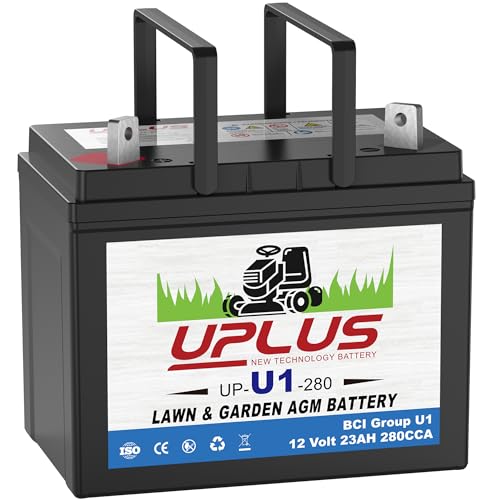
The UPLUS U1 riding lawn mower battery is a sealed lead-acid AGM replacement designed for homeowners who want a reliable, maintenance-free power source for their gas-powered mower. This battery replaces the standard U1 group size (7.68 x 4.92 x 6.93 inches) and fits many popular riding mowers from John Deere, Cub Cadet, Husqvarna, Craftsman, Toro, and others. With 12 volts, 23 amp-hours, and 280 cold cranking amps, it provides enough power to start most lawn tractors and garden tractors reliably, even in cold weather.
In real-world use, the 280 CCA rating ensures strong starting performance down to -22°F, which is a key advantage for homeowners in colder regions. The sealed AGM construction means there is no need to check water levels, no risk of acid spills, and the battery is vibration resistant—important for the bumpy ride of a mowing session. Users can expect a service life of over five years when properly cared for, thanks to the use of 99.99% pure primary lead that improves charge acceptance and reduces internal corrosion.
Durability is a strong point: the calcium-calcium technology lowers the self-discharge rate and minimizes grid corrosion, which helps the battery hold a charge longer during off-season storage. The battery is also leak-proof and can be mounted in various orientations (except inverted). This makes it a practical choice for homeowners who store their mowers in unconditioned garages or sheds.
Installation is straightforward for anyone familiar with basic battery replacement. The terminals are clearly marked: left positive (red) and right negative (black). No extra tools beyond a basic wrench set are needed. The battery weighs 14.1 pounds—similar to other U1 AGM batteries—so lifting it into the tray is manageable for most adults. After connecting the leads, the mower should start right up if the charging system is working properly.
A realistic limitation is the 23Ah capacity, which is standard for this group size but lower than some larger batteries. This means it is best suited for starting and powering basic electrical components (lights, PTO clutch)—not for extended use of high-draw accessories. Some users with large engines or frequent stop-start mowing might prefer a battery with higher CCA, but for most standard riding mowers, this is adequate.
Overall, the UPLUS U1 battery is a solid choice for homeowners seeking a dependable, long-lasting replacement battery. Backed by a 15-month warranty and local after-sales support from a California warehouse, it offers peace of mind. If you are looking for a maintenance-free option that handles cold starts and resists vibration, this battery is worth considering for your lawn tractor or garden mower.
The Technical Guide to Riding Lawn Mower Battery Voltage and Electrical Systems
Virtually every riding lawn mower sold today operates on a 12-volt electrical system. Understanding this nominal specification helps eliminate guesswork when your tractor struggles to crank after winter storage. Connecting the wrong voltage source or buying an incompatible battery can ruin starting relays, damage charging coils, or leave you stranded on an uncut lawn. Examining system voltage, terminal orientation, cranking power, and seasonal storage habits provides the knowledge required to diagnose electrical issues and select the correct replacement.
The Universal Standard: Why Modern Riding Mowers Run on 12 Volts
The transition to 12-volt electrical architecture became industry standard across lawn tractors, commercial zero-turn mowers, and garden tractors several decades ago. Manufacturers such as John Deere, Cub Cadet, Toro, Craftsman, and Husqvarna standardized on 12-volt direct current systems to support larger engine displacements and expanded electrical demands. Higher electrical pressure allows smaller wiring harnesses to deliver necessary wattage without generating excessive resistive heat. This configuration provides the high-torque cranking power needed to spin heavy flywheels and compress air-fuel mixtures in modern overhead-valve engines.
Modern riding mowers demand substantial electrical power beyond merely cranking the internal combustion engine. Electric starter solenoids require an immediate high-current burst to engage the starter pinion with the ring gear. Once the engine runs, auxiliary components such as electric blade clutches, digital hour meters, safety seat switches, and high-intensity headlights draw continuous current. A 12-volt system easily accommodates these loads while permitting compact charging stators and rectifiers under the flywheel.
Where the 6-Volt Confusion Originates
Confusion surrounding mower battery voltage usually stems from vintage agricultural machinery and specialized utility equipment. Classic mid-twentieth-century utility tractors, such as vintage Farmall or early Ford models, frequently used positive-ground 6-volt electrical systems. Some antique garden tractors manufactured prior to the early 1970s also utilized 6-volt batteries before automotive component standardization swept the small engine market. Seeing these older machines still operating in rural communities leads some homeowners to assume smaller riding mowers might still use 6 volts.
Multi-battery utility vehicles and commercial golf carts also contribute to this voltage misconception. Commercial turf equipment often links two or more heavy-duty 6-volt deep-cycle batteries in series to generate 12, 24, 36, or 48 volts. In contrast, standard consumer riding mowers utilize a single standalone 12-volt starting battery. Furthermore, common multi-bank smart chargers feature a 6-volt selection switch, which can lead owners to wonder whether their lawn equipment requires that lower setting.
Key Voltage Benchmarks and Multimeter Diagnostics
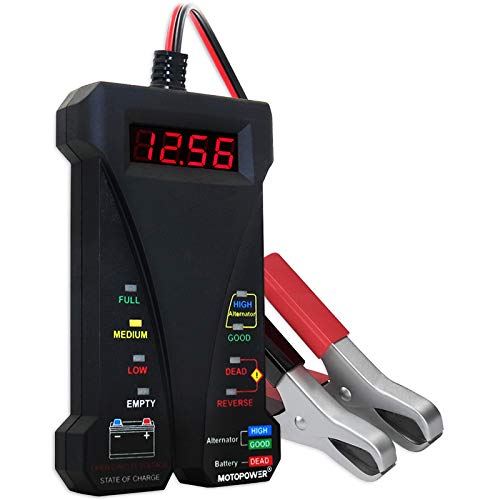
Diagnosing starting trouble begins by checking static open-circuit voltage across battery terminals using a digital multimeter set to direct-current volts. A fully charged, healthy 12-volt lead-acid battery should display a resting reading between 12.6 and 12.8 volts at room temperature. Each of the six internal galvanic cells contributes roughly 2.1 volts in series when fully charged. If your resting multimeter reading drops down to 12.2 volts, the battery is already operating at roughly fifty percent capacity and requires immediate bench charging to stop internal damage.
Resting voltage measurements below 12.0 volts indicate severe discharge, while a resting reading below 10.5 volts signals a dead cell. When a single internal cell shorts out or sulfates completely, the remaining five cells cannot generate sufficient electrical pressure to turn the starter. Testing voltage under an active cranking load provides even deeper diagnostic clarity. When turning the ignition key to start the engine, a healthy battery must maintain at least 9.6 volts across the terminals while the starter motor turns the crankshaft.
Testing the charging system with the engine running confirms whether your tractor can replenish the battery during mowing cycles. Run the engine at full operating throttle and measure the DC voltage across the battery posts. A functional alternator stator and voltage regulator should deliver between 13.5 and 14.5 volts DC to the battery. If running voltage remains at battery resting levels or exceeds 15.0 volts, the charging diode or voltage regulator has failed and requires replacement.
BCI Group Sizes and Terminal Polarity: Group U1 vs. Group U1R
Physical size and terminal orientation represent two of the most critical fitment factors when replacing a riding mower battery. The Battery Council International classifies standard garden tractor starter batteries under the Group U1 designation. These batteries typically measure approximately 7.75 inches in length, 5.1 inches in width, and between 6.25 and 7.2 inches in height. This standardized case fits neatly into the under-seat or under-hood battery trays found on most riding mowers.
Terminal polarity placement marks the crucial distinction between standard Group U1 and Group U1R batteries. When viewing the battery from the front terminal side with labels facing forward, a standard Group U1 battery positions the positive terminal on the left and the negative terminal on the right. A Group U1R battery reverses this arrangement, placing the positive terminal on the right and the negative terminal on the left. Many Husqvarna, Craftsman, and Toro models require the U1R layout due to strict wiring harness paths.
Lawn tractor battery cables are short, stiff, and engineered with almost no extra slack inside cramped engine compartments. Attempting to install a standard U1 battery in a tractor configured for a U1R battery will leave the factory cables unable to reach the correct posts safely. Stretching cables across the casing risks cracking terminal posts, causing severe chafing against vibrating metal brackets, or accidentally reversing polarity. Connecting battery cables in reverse polarity will instantly blow primary inline fuses and permanently destroy charging diodes.
Cold Cranking Amps: Matching Battery Power to Engine Displacement
Cold Cranking Amps (CCA) define a battery’s ability to supply electrical current at 0 degrees Fahrenheit for thirty seconds while maintaining at least 7.2 volts. While lawn mowers rarely operate in freezing winter conditions, CCA ratings indicate peak instantaneous starter torque when spinning tight engines against heavy compression. Smaller single-cylinder engines ranging from 12 to 18 horsepower typically require starting batteries rated between 200 and 280 CCA. Models such as the Daakmax 200 CCA or UPLUS 280 CCA provide ample cranking force for these compact powerplants.
Larger twin-cylinder overhead-valve engines displacing 600cc to over 800cc demand significantly higher cranking power to overcome high mechanical resistance. A 20 to 26 horsepower V-twin engine from Kohler, Briggs & Stratton, or Kawasaki requires a battery rated between 300 and 360 CCA. Batteries like the Mighty Max ML-U1-CCAHR 320 CCA, UPLUS 330 CCA, and MARXON 330 CCA deliver the heavy burst current needed for quick ignition. Using an undersized 200 CCA battery on a large V-twin causes sluggish cranking and overheats starter motor windings.
Installing a battery with higher CCA than the original factory rating will never harm your lawn mower starter motor. The starter draws only the specific current required based on internal electrical resistance and physical engine drag. Excess cranking capacity simply provides useful overhead, ensuring prompt starting during chilly spring mornings or when oil viscosity is thick. Higher CCA also extends overall battery life by reducing the relative percentage of discharge required during each starting cycle.
Battery Chemistry Options: Flooded Lead-Acid, Sealed AGM, and LiFePO4
Traditional flooded lead-acid batteries have long served as the budget-friendly standard for lawn tractors, but they carry noticeable operational drawbacks. Flooded batteries contain liquid sulfuric acid electrolyte that can spill or seep during steep slope operations or aggressive zero-turn maneuvers. Liquid electrolyte also evaporates over time, requiring periodic inspection of removable vent caps and occasional distilled water replenishment. Furthermore, severe mowing vibrations shake active lead paste loose from internal plate grids, shortening overall battery life.
Sealed Absorbent Glass Mat (AGM) batteries provide a substantial durability upgrade for rough residential and commercial mowing applications. AGM units suspend acid inside micro-fiberglass matting between plates, creating a completely spill-proof, leak-free, maintenance-free enclosure. Premium options from UPLUS and Mighty Max resist heavy deck vibrations and handle wide operating temperature swings without cracking. Sealed AGM batteries also feature a lower internal discharge rate compared to flooded models, maintaining usable resting voltage longer during intermittent summer use.
Lithium Iron Phosphate (LiFePO4) starting batteries, such as the Forgetyo U-R9 650 CCA model, represent the newest generation of mower starting power. These lightweight batteries weigh less than four pounds, cutting roughly three-quarters of the weight compared to standard 15-pound lead-acid batteries. Integrated Battery Management Systems protect internal cells from short circuits, overcharging, and excessive discharge. Following proper procedures for outdoor power equipment battery maintenance ensures these advanced cells maintain their charge across thousands of mowing cycles.
Safe Jump-Starting Protocols: Protecting Mower Electronics
Homeowners often wonder whether a standard passenger car can safely jump-start a stalled 12-volt riding lawn mower. Because both machines utilize 12-volt electrical systems, jump-starting is entirely possible, but following strict electrical precautions is essential. The most critical safety rule mandates that the donor vehicle engine MUST REMAIN COMPLETELY TURNED OFF throughout the entire process. A running automobile alternator generates massive charging amperage and transient voltage spikes that can instantly destroy delicate mower voltage regulators and stator coils.
Begin by connecting the red positive jumper clamp to the positive terminal of the dead mower battery, then attach the other red clamp to the positive post of the car battery. Next, connect the black negative clamp to the negative terminal of the car battery, and attach the remaining black clamp to an unpainted metal ground bolt on the mower frame. Once secured, crank the mower ignition immediately using the static reserve power of the car battery. Disconnect the jumper cables in exact reverse sequence the moment the small engine catches and idles smoothly.
Off-Season Storage, Maintenance Charging, and Sulfation Prevention
Winter neglect represents the number one cause of premature mower battery failure across cold-weather regions. Unmaintained lead-acid batteries experience natural internal self-discharge at a rate of 3 to 5 percent each month when stored in unheated sheds. As resting voltage slips below 12.2 volts, soft lead sulfate on the internal plates hardens into permanent, non-conductive crystals. Severe plate sulfation permanently destroys battery storage capacity, preventing the unit from accepting a charge or delivering cranking amps when spring arrives.
Preventing winter sulfation requires connecting a dedicated smart float maintainer rather than an unregulated continuous trickle charger. Smart maintainers monitor terminal voltage constantly, delivering a low 1-amp to 2-amp charge before switching into a harmless float monitoring mode once full charge is achieved. Unregulated trickle chargers can boil away electrolyte in sealed cases through continuous overcharging. Disconnecting the negative terminal cable during storage isolates the battery from minor parasitic drains caused by modern electronic relays or ignition switches.
Diagnosing Starting Failures: Battery vs. Solenoid vs. Stator
When an ignition key turns and nothing happens, isolating the faulty component saves time and prevents unnecessary part purchases. A rapid, machine-gun clicking sound from under the seat or hood almost always indicates an undercharged or failing battery. The starter solenoid coil receives just enough voltage to pull its internal contacts closed, but the heavy electrical draw of the starter motor immediately collapses battery voltage. This sudden voltage drop releases the solenoid, which then re-engages and drops repeatedly, creating the characteristic chatter.
A single loud click accompanied by complete silence usually points to a starter issue or high-resistance electrical connection rather than an entirely dead battery. Corroded flag terminals coated in white lead sulfate prevent high-amperage transfer even when a multimeter shows healthy resting voltage. Cleaning terminals with a wire brush and a neutralizing water and baking soda mixture often restores full current flow. If the battery shows 12.6 volts under a load test, the single click may indicate pitted solenoid contacts or a seized starter bendix drive.
If your mower starts normally from a fresh charge but stalls midway through mowing, inspect the under-flywheel stator and voltage regulator rather than blaming the battery. A failed charging system forces the ignition coil, safety relays, and electric PTO clutch to draw power solely from the battery until electrical reserve is exhausted. Testing DC charging voltage at full engine speed ensures your 12-volt battery receives continuous replenishment, guaranteeing clean starts and reliable mowing performance all season long.




Write Your Review
No reviews yet. Be the first to share your experience!