


Turning the ignition key on a riding mower after months of winter storage only to hear a rapid clicking solenoid is an all-too-familiar spring headache. While older tractors relied exclusively on heavy flooded lead-acid starter units, many property owners now wonder if modern mowers utilize advanced lithium technology. So, are lawn mower batteries lithium, or do standard small engines still depend on legacy lead plates? The answer depends heavily on the machine you operate, from cordless walk-behind platforms to gas-powered lawn tractors.
Walk-behind cordless electric mowers operate exclusively on high-voltage lithium-ion battery packs, but traditional riding mowers and zero-turn tractors historically came equipped with 12-volt lead-acid BCI Group U1 batteries. In recent years, drop-in 12-volt Lithium Iron Phosphate (LiFePO4) batteries have become popular replacements for conventional starting batteries. If you are comparing power systems across battery-operated yard tools and gas equipment, understanding how lithium starter batteries operate is essential. Upgrading to a lithium starting battery offers substantial weight savings and high cranking amps, yet requires specific charging system conditions to function safely.

Pros
- Lightweight design makes handling and installation much easier compared to heavy lead-acid batteries.
- Longer service life means fewer replacements and less downtime for your mower.
- Maintenance-free operation is perfect for homeowners who want a set-it-and-forget-it solution.
Cons
- Wire harness and mounting accessories are not included, so you may need to purchase separately.
- Higher upfront cost compared to standard lead-acid batteries, though long-term value may offset this.
The Mighty Max Battery ML-U1-CCALI is a 12V lithium battery designed specifically for lawn mowers and tractors. It uses advanced LiFePO4 cells and an integrated Battery Management System (BMS) to deliver reliable starting power, even in tough outdoor conditions. This battery is a direct replacement for standard U1 lead-acid batteries, making it a convenient upgrade for many riding mowers.
One of the biggest advantages of this battery is its weight – it's up to 60% lighter than a comparable lead-acid battery. That makes installation a lot easier, especially if you're tired of lugging around heavy batteries. The lighter weight also reduces strain on your mower's electrical system, which may help improve overall performance. According to user feedback, the fast charging capability is another plus, getting you back to mowing sooner.
Build quality is solid, with a fully sealed design that resists vibration and weather. There's no need to check water levels or perform any routine maintenance – just install it and forget it. The battery is also designed to last longer than traditional lead-acid options, with more charge cycles and fewer replacements over time. That's a real benefit for homeowners who use their mower regularly.
Setup is straightforward: the battery comes with nut and bolt hardware, and you can mount it in multiple positions (just not upside down). However, you'll need to supply your own wire harness and mounting accessories if they're not already part of your mower. The dimensions (7.75 x 5.25 x 7.25 inches) and polarity (positive on left, negative on right) are standard for U1 batteries, so compatibility is likely high.
A realistic limitation is the upfront cost – lithium batteries are more expensive than lead-acid ones. But if you factor in the longer lifespan, reduced maintenance, and lighter weight, many homeowners find the investment worthwhile. Also, the 5-year warranty provides extra peace of mind.
Overall, the Mighty Max Battery ML-U1-CCALI is a practical choice for anyone with a riding mower or lawn tractor who wants a reliable, lightweight, and maintenance-free power source. It's especially suited for those who use their equipment frequently and want to minimize downtime. If you're okay with the higher initial price, this battery can be a smart long-term upgrade.

Pros
- Extremely lightweight compared to lead-acid replacements, reducing strain when lifting into the tractor.
- High cranking power (450CCA) ensures dependable starts even in cooler temperatures.
- Maintenance-free operation with built-in safety protections - install it and forget it.
- Versatile compatibility across major brands like Craftsman, John Deere, Cub Cadet, Husqvarna, and Troy-Bilt.
Cons
- Upfront cost is higher than a standard lead-acid battery, though longer lifespan may offset the price.
- Requires checking terminal configuration and dimensions before purchase, as some models may need adapters.
- Lithium batteries can be sensitive to extreme heat if stored improperly, though the BMS helps mitigate this.
If you own a riding mower or lawn tractor, you know the frustration of a dead battery on a Saturday morning. This DOUKAS DKLU1R lithium battery is designed to replace those heavy, maintenance-hungry lead-acid U1 batteries with a lightweight, reliable power source. It suits homeowners with mid-size to large lawns who want a dependable start every time, especially for machines that sit in the garage for weeks between uses.
The product description highlights an impressive 450 cold-cranking amps, which is plenty for most single-cylinder or V-twin lawn tractor engines. Because it weighs only 3.3 pounds, you won't be wrestling a 15-pound brick into the battery tray. The lithium chemistry also holds a charge much longer than lead-acid when idle, and with over 2,500 charge cycles, it should outlast several seasons of regular mowing.
Durability looks well thought out for outdoor equipment. The IP65 rating means it can handle rain, mud, and moisture from washing your mower. The internal shock-absorbing layer helps protect against the constant vibration of rough terrain, which is often what kills batteries on riding mowers. The built-in Battery Management System adds extra protection against overcharging, deep discharge, and freezing, so you don't have to worry about damaging it by leaving it in the shed over winter.
Installation is straightforward. It's a direct replacement for common U1 group sizes, so you just disconnect the old battery, drop this one in, and connect the cables. There's no filling with acid, no cleaning corroded terminals, and no periodic charging needed thanks to the smart sleep mode. That makes it a great option for folks who aren't comfortable messing with traditional lead-acid maintenance.
Keep in mind that compatibility is broad but not universal. Before buying, double-check your mower's terminal type and physical dimensions. The battery covers most U1 applications, but some older or oddball models may need extra attention. Also, the price is higher than a basic lead-acid replacement, though you're paying for longer life, lighter weight, and maintenance-free operation.
Overall, this battery makes sense for homeowners who want a reliable, no-fuss start battery that won't let them down mid-season. It's particularly handy for those who store their mower in unheated spaces or only mow every couple of weeks. If you're tired of dealing with dead or sulfated batteries, this lithium upgrade is worth considering.

Pros
- 10-year lifespan reduces replacement frequency and saves money
- Built-in SOC display lets you check battery health at a glance
- IP66 rating protects against weather and dust in real-world yard conditions
- Maintenance-free with no acid leaks or corrosion
- 400A CCA provides strong starting power for most residential riding mowers
Cons
- Requires a regulated charging system (13.8V-14.6V) — not compatible with all mowers
- May not fit some specific models like 725-17335, so check compatibility first
- Higher upfront cost compared to standard lead-acid batteries
The TYKOOL U1-S-400 is a lithium lawn mower battery designed to replace traditional lead-acid units in many riding mowers from John Deere, Cub Cadet, Craftsman, and other brands. It's a smart upgrade for homeowners who want consistent starting power and a longer service life without the hassle of annual battery swaps.
This battery delivers 400 cold cranking amps, which is more than enough to start most residential mowers quickly—even after sitting for weeks. The built-in LCD display shows voltage and state of charge, so you always know how much power is left. According to the product description, the LiFePO4 cells provide over 3,000 deep cycles and a 10-year service life, which may significantly reduce long-term costs.
Build quality appears solid with a V0-rated flame-retardant enclosure and IP66 waterproof housing. This means it can handle humid mornings, light rain, and dusty conditions typical in American backyards. The battery is also maintenance-free, with no acid leaks or corrosion to worry about.
Setup is straightforward if your mower uses a standard U1 battery tray and has a regulated charging system (13.8V-14.6V). The battery's ultra-low self-discharge rate allows it to hold a charge through winter without a trickle charger—just disconnect and store. At 4.3 pounds, it's much lighter than lead-acid alternatives, making handling easier.
One limitation is that this battery requires a regulated charging system, so it won't work with all mowers. Also, it's not compatible with certain models like the 725-17335, so checking your mower's specifications before purchase is essential. The upfront cost is higher than lead-acid batteries, but the longer lifespan may offset that over time.
Overall, the TYKOOL U1-S-400 is a practical choice for homeowners seeking a reliable, long-lasting battery upgrade for their riding mower. If your mower's charging system is compatible, this battery may save you time and money in the long run.
The TYKOOL U1-S-400 uses automotive-grade LiFePO4 cells that provide 400 cold cranking amps for reliable starting power. The battery has a capacity of 8Ah and is designed for residential riding mowers. Its smart BMS protects against overcharge, short circuits, and thermal issues.
One of the biggest advantages is the 10-year service life with over 3,000 deep cycles. This is a huge improvement over standard lead-acid batteries that often need replacing every 1-2 years. The built-in LCD display shows voltage and state of charge, so you can monitor battery health easily.
For winter storage, the battery's ultra-low self-discharge rate means it can sit for months without losing much charge. No trickle charger is needed—just disconnect and store it. This makes it ideal for seasonal mower use.
The TYKOOL U1-S-400 features a V0-rated flame-retardant enclosure and IP66 waterproof housing. This means it can withstand humid mornings, light rain, and dusty environments without damage. The battery is also vibration-resistant, which is important for mowers that bounce over uneven terrain.
Unlike lead-acid batteries, this lithium unit is completely sealed and maintenance-free. There are no acid leaks or corrosion to worry about, which can damage your mower's battery tray and terminals. The compact size (7.6x4.8x6.9 inches) fits standard U1 trays, and at 4.3 pounds, it's much lighter than lead-acid alternatives.
Pros
- Weighs only 3.96 lbs for easy handling and installation.
- 650 CCA ensures reliable cold-weather starts.
- 2000-cycle lifespan outlasts most lead-acid batteries.
- Built-in BMS provides safety and overcharge protection.
- Wide compatibility with many popular lawn tractor brands.
Cons
- Higher upfront cost compared to standard lead-acid batteries.
- Requires a 14.6V lithium-specific charger (not included).
- Not compatible with all mower models - must verify dimensions and terminal orientation (left-positive, right-negative).
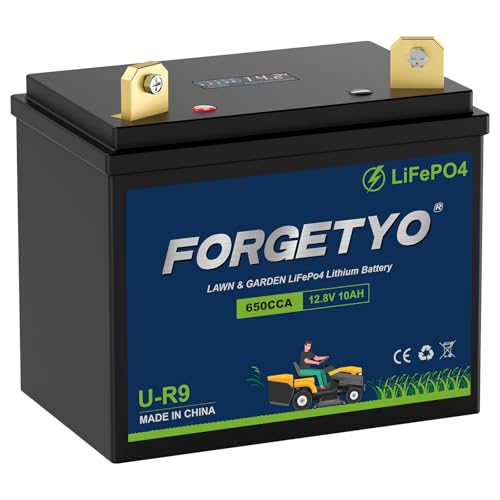
The U-R9 lithium battery is a drop-in replacement for traditional lead-acid batteries used in riding lawn mowers and garden tractors. It delivers 12.8 volts and 10 amp-hours of capacity with a maximum 650 cold cranking amps (CCA), providing more than enough power to start mid-sized mowers even in cold weather. Weighing only 3.96 pounds, it is about one-third the weight of a comparable lead-acid battery, which makes installation and handling much easier for homeowners of any age.
Based on the product specifications, the built-in Battery Management System (BMS) monitors the battery's health and automatically protects against overcharging, overdischarging, short circuits, and overheating. This safety feature helps extend the battery's lifespan to roughly 2000 charge cycles, compared to only 300 cycles from typical lead-acid batteries. For many homeowners, that means fewer replacements and less maintenance over the life of the mower.
Compatibility is strong for this battery. It works with popular brands like John Deere, Cub Cadet, Husqvarna, Craftsman, Toro, Ariens, Poulan Pro, and Troy-Bilt. The U-R9 has a left-positive, right-negative terminal layout, so it's important to check the physical dimensions (7.7x5.1x7.2 inches) and terminal orientation against your mower's battery tray before purchasing. The lithium chemistry also holds a charge for months when disconnected, which is especially useful for owners in regions with long winters—no need to keep a battery tender connected.
In terms of performance, the 650 CCA rating ensures reliable starting even in sub-freezing temperatures. Many users may find that their mower cranks faster and more consistently compared to an aging lead-acid battery. The battery operates in a wide temperature range from -20C to 85C, so it can handle both cold starts and hot summer storage without issues.
One realistic limitation is the higher upfront price compared to lead-acid batteries. Additionally, this lithium battery requires a dedicated 14.6V DC lithium charger (recommended 2A charging speed) to recharge safely. If you already have a standard lead-acid charger, you will need to upgrade. Also, not all mowers share the same terminal configuration, so double-checking compatibility is a must before ordering.
Overall, the U-R9 lithium battery is a solid upgrade for homeowners who want a lighter, longer-lasting, and more reliable starting battery for their riding mower or generator. It is particularly well-suited for those who deal with cold winters, want to avoid maintaining a battery tender, or simply prefer the convenience of a maintenance-free power source. If your mower's battery tray accommodates the dimensions and terminal layout, this battery offers excellent value over the long term.
Pros
- 480 CCA provides strong starting power in cold conditions.
- 12Ah capacity and 3000+ cycles offer long-term value.
- Built-in digital display for easy voltage monitoring.
- IP66 waterproof and V0 fireproof construction for durability.
- Eco-friendly, maintenance-free operation.
Cons
- Requires alternator output within 13.8V-14.6V for proper BMS function.
- Not compatible with some compact battery trays (e.g., 725-17335).
- Premium upfront cost compared to lead-acid batteries.
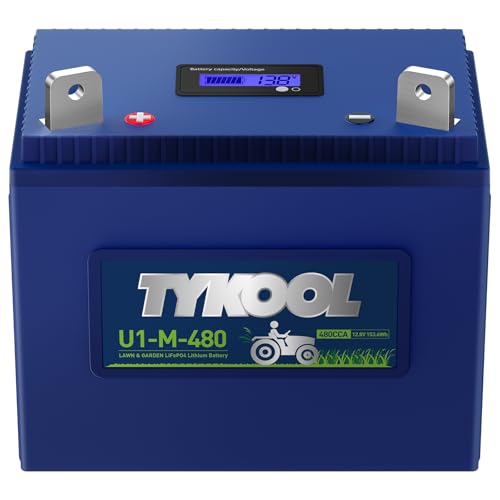
The TYKOOL 480CCA 12Ah LiFePO4 lawn mower battery is a modern upgrade for homeowners who rely on gas-powered lawn tractors. Designed as a direct replacement for Group U1 batteries, it fits popular brands like John Deere, Cub Cadet, Craftsman, and Troy-Bilt. This lithium battery is ideal for those who want reliable starting power without the hassle of maintenance or acid spills.
Based on product specifications, the 480 cold cranking amps deliver strong starting performance, even on chilly spring mornings when lead-acid batteries often struggle. The 12Ah capacity provides 50% more energy than entry-level models, handling frequent restarts and electronic accessories with ease. With over 3000 charge cycles, users can expect up to a decade of service, making it a cost-effective choice for regular mowing.
The built-in digital display shows real-time voltage and energy levels, giving homeowners confidence in their battery's health. The smart BMS offers five-layer protection, including overcharge, discharge, heat, short-circuit, and balance protection. The IP66-rated waterproof and V0 fireproof housing protects against engine heat, high-pressure washes, and damp grass, ensuring durability in harsh outdoor conditions.
Installation is straightforward as a drop-in replacement for standard U1 battery trays. However, it is critical to verify that the alternator output is between 13.8V and 14.6V to ensure BMS compatibility. The battery maintains its charge for months during off-season storage, so no battery tender is needed—just disconnect and store until spring.
One limitation is that this battery is not suitable for some compact battery trays, such as the 725-17335 model. Additionally, the higher upfront cost compared to lead-acid batteries may be a consideration for budget-conscious buyers. However, the long lifespan and zero maintenance can offset the initial investment over time.
Overall, the TYKOOL LiFePO4 battery is a practical upgrade for homeowners seeking reliable starting power, long cycle life, and eco-friendly operation. It is especially well-suited for those who want to eliminate acid corrosion and reduce environmental waste. Just ensure compatibility with your mower's charging system before purchasing.
Pros
- Extremely lightweight compared to lead-acid – about 4 lbs vs 20+ lbs, which simplifies handling and reduces mower weight
- Higher cold cranking amps (400 CCA) provide stronger starting power, especially useful in cold mornings or for engines with higher compression
- Long lifespan (over 3,000 cycles) means fewer replacements over the years, saving money and hassle
- Built-in BMS gives peace of mind against common battery failures like overcharging or short circuits
Cons
- Upfront cost is higher than a standard lead-acid battery, though the longer life may offset this over time
- Polarity orientation must be checked – the [+] on left and [-] on right arrangement may not fit all mowers without cable adjustment
- 8Ah capacity is lower than some large lead-acid batteries, so it may not be ideal for mowers with very high parasitic draw or extended use without charging
If you own a riding lawn mower or garden tractor that uses a standard Group U1 battery, you have probably dealt with the heavy weight and eventual failure of lead-acid batteries. The TYKOOL 400 CCA 8Ah LiFePO4 lithium battery offers an upgrade that many homeowners may find appealing. It is designed as a direct replacement for lead-acid batteries in a wide range of popular mowers from brands like Cub Cadet, John Deere, Craftsman, Troy-Bilt, Toro, and others. This battery is especially suited for those who want a lighter, longer-lasting, and maintenance-free power source for their equipment.
In terms of performance, the TYKOOL battery delivers 400 cold cranking amps — roughly double that of many standard lead-acid U1 batteries. According to product specifications, this extra power helps your mower start quickly even in cooler weather or after sitting for a while. The 8Ah capacity is adequate for typical lawn tractor starting and basic electrical loads (lights, safety switches). Some users may notice that the battery holds its charge well over the off-season, thanks to the LiFePO4 chemistry. There is no need to trickle charge as often as with lead-acid, though the manufacturer still recommends periodic charging if storing for months.
Build quality appears solid. The battery weighs just 3.97 pounds — a huge reduction from the 20+ pounds of a conventional lead-acid battery. This makes it much easier to lift in and out of the mower, especially for older users or those with back concerns. The plastic case is durable, and the integrated Battery Management System (BMS) provides protection against overcharging, deep discharge, over-current, and short circuits. The BMS also balances the cells to extend overall life. Based on the specs, users can expect over 3,000 charging cycles, which translates to many years of reliable service under normal use.
Installation is straightforward if your mower has the correct terminal orientation (positive on left, negative on right). The battery is the same size as a standard U1 (7.6 x 4.8 x 6.9 inches), so it fits existing trays and hold-downs. However, some mowers may have the terminals reversed — you will need to check the layout before buying. Many users may also need to tighten the terminal bolts securely since the lithium battery's thinner terminals can sometimes loosen over time. Maintenance is essentially zero: no water to add, no corrosion to clean, no acid to worry about.
One realistic limitation is the upfront cost. At around $130, this lithium battery costs several times more than a comparable lead-acid battery. But the longer lifespan and better performance may justify the price for frequent mower users. Also, the 8Ah capacity means it is not intended for high-drain applications like large winches or heavy electrical accessories. For standard lawn tractor use, though, it should work fine.
Overall, the TYKOOL 400 CCA lithium battery is a practical upgrade for American homeowners who want a lighter, more powerful, and longer-lasting battery for their riding mower. If you are tired of hauling heavy lead-acid batteries and dealing with corrosion or premature failure, this may be a worthwhile investment. Just confirm your mower's terminal orientation and battery group size before purchasing.
Understanding Lithium Technology in Lawn Mower Starting Systems
Gasoline lawn tractors, zero-turn mowers, and cordless electric turf equipment rely on fundamentally distinct electrical systems to power their blades and ignite their engines. Knowing whether your mower can utilize a lithium battery begins by understanding how manufacturers design their starting and charging circuits.
Factory Lead-Acid Defaults Versus Lithium Alternatives
Traditional gas-powered lawn tractors and zero-turn mowers have historically shipped from the factory with 12-volt flooded lead-acid batteries. These conventional units rely on lead plates submerged in liquid electrolyte to deliver the burst of electrical current needed to spin the starter motor. In contrast, modern battery-powered walk-behind mowers and cordless electric riding equipment operate exclusively on dedicated high-voltage lithium-ion platforms ranging from 40 volts up to 80 volts. Today, an increasing number of homeowners with gasoline equipment are choosing to upgrade their starting systems by installing drop-in 12-volt lithium replacement batteries.
These drop-in replacement batteries utilize Lithium Iron Phosphate chemistry, commonly abbreviated as LiFePO4, rather than the cobalt-based lithium chemistry found in smartphones and power tools. LiFePO4 cells deliver the necessary twelve-volt output while conforming to standard lawn tractor physical dimensions. Brands such as Mighty Max Battery, TYKOOL, DOUKAS, and Forgetyo now produce specialized LiFePO4 batteries designed specifically for garden tractor engine ignition. While factory mowers may not always arrive with lithium batteries pre-installed, lithium starting technology has become an accessible and dependable aftermarket upgrade.
Chemistry Differences: Flooded Lead-Acid, AGM, and LiFePO4
Understanding the chemical construction of your battery helps explain why performance varies dramatically between power types. Conventional flooded lead-acid batteries feature lead antimony or lead calcium plates immersed in a liquid sulfuric acid solution, which requires proper venting and upright mounting. Sealed Absorbent Glass Mat (AGM) batteries improve upon this design by suspending the electrolyte in fiberglass mats, creating a spill-proof enclosure that offers better vibration resistance across rough terrain. However, both flooded and AGM batteries suffer from natural plate sulfation whenever the tractor sits idle in an unheated garage or garden shed.
Internal plate sulfation causes lead-acid batteries to self-discharge at an estimated rate of three to five percent each month during off-season storage. In contrast, 12-volt LiFePO4 lithium batteries utilize an exceptionally stable cathode material that experiences negligible monthly self-discharge. Because lithium cells do not contain lead plates or free-flowing acid, they cannot suffer from sulfation or corrode battery tray hardware. Furthermore, LiFePO4 chemistry provides inherent thermal stability and resistance to thermal runaway, making it significantly safer for outdoor power equipment than older lithium-cobalt configurations.
Cranking Power Demands and Cold Cranking Amps (CCA)
Cold Cranking Amps, abbreviated as Cold Cranking Amps (CCA), measure the electrical current a battery can discharge for thirty seconds at zero degrees Fahrenheit while maintaining at least 7.2 volts. Residential lawn tractors with single-cylinder engines generally require between 230 and 300 CCA to spin the flywheel past top dead center. Larger commercial zero-turn mowers equipped with high-displacement V-twin engines often demand 300 to 350 CCA or more to achieve reliable ignition. When lead-acid batteries become partially discharged, their available cranking amps plummet rapidly, resulting in sluggish cranking or a rapidly clicking starter solenoid.
A major advantage of lithium starter batteries is their ability to maintain a remarkably flat discharge curve and sustained voltage under heavy load. While a standard lead-acid battery might sag below ten volts during engine cranking, a healthy 12-volt LiFePO4 pack generally remains above eleven volts throughout the starting sequence. This consistent voltage delivery produces faster starter motor rotation and immediate engine ignition, even on crisp spring mornings. High-performance lithium replacement units, including models from Forgetyo and TYKOOL, offer ratings from 400 CCA to 650 CCA, providing abundant reserve cranking power for demanding engine platforms.
Physical Group Sizing and Terminal Polarity Hazards
Most residential riding mowers and lawn tractors use batteries built to the Battery Council International (BCI) Group U1 case standard. A typical Group U1 battery measures roughly 7.75 inches in length, 5.25 inches in width, and 7.25 inches in total height, allowing it to slide into factory battery trays under the seat or hood. However, buyers must pay strict attention to terminal layout before making a purchase. Standard Group U1 batteries position the positive terminal on the left side when looking at the front label, while Group U1R batteries position the positive terminal on the right side.
Because tractor wiring harnesses are built with minimal cable slack, purchasing the wrong terminal orientation can prevent cables from reaching the posts. Forcing battery cables to stretch across the top of the case risks rubbing through insulation, causing severe electrical shorts or arcing against the metal frame. When maintaining your equipment or outfitting riding mowers for steep inclines, you must also verify that the battery uses flag terminals with bolt fasteners matching your factory ring lugs. Ensuring correct polarity and snug mechanical mounting protects both the battery casing and the tractor electrical harness from catastrophic short circuits.
Stator and Voltage Regulator Charging Requirements
Before installing any lithium battery into a gasoline riding mower, you must verify that your engine possesses a compatible charging system. Small gasoline engines do not utilize automotive-style alternators; instead, they generate charging current using flywheel magnets rotating around a stationary stator coil. This raw electrical output is converted to direct current (DC) through a diode or an onboard voltage regulator-rectifier. To properly charge a 12-volt LiFePO4 battery without triggering protective shutdowns, the mower charging system must be regulated and output between 13.8V and 14.6V DC at full operating throttle.
Older or entry-level lawn mowers sometimes feature unregulated charging systems that utilize a single diode to provide half-wave rectified current. Unregulated circuits can produce erratic voltage spikes exceeding fifteen volts, which will damage lithium cells or cause the internal protection circuit to disconnect. You can check your mower electrical health by starting the engine, advancing the throttle to maximum operating RPM, and placing digital multimeter probes across the battery terminals. If the multimeter registers steady charging voltage between 13.8V and 14.6V DC, the system is suitable for a modern lithium starting battery.
The Function of the Battery Management System (BMS)
Every quality 12-volt lithium lawn mower battery contains an internal electronic circuit board known as a Battery Management System (BMS). The BMS continuously monitors individual cell voltages, current flow, and operating temperatures to keep the battery within safe operating limits. If the tractor charging system spikes above acceptable voltage thresholds, the BMS instantly interrupts the circuit to safeguard the cells. Likewise, the system prevents over-discharge by cutting power before individual cell voltages drop into irreversible damage territory, typically below ten volts.
Advanced units, including select models from TYKOOL, feature integrated digital liquid crystal displays that show real-time voltage and state of charge percentages directly on the top casing. Other manufacturers integrate intelligent sleep modes that put the battery into an ultra-low-power standby state after extended periods of inactivity. This automated sleep feature prevents parasitic draw from onboard tractor electronics, such as hour meters or safety switches, from draining the pack between mows. If a BMS trips due to excessive draw or temporary faults, applying a compatible lithium charger usually resets the circuit and restores full operational function.
Safe Jump-Starting Protocols and Electrical Precautions
Jump-starting a riding mower requires careful adherence to electrical safety procedures to prevent expensive damage to small-engine electronics. If you must jump-start a 12-volt lawn tractor using a passenger vehicle, the donor vehicle engine must strictly remain turned off throughout the entire procedure. A running automobile engine produces charging current backed by a high-output automotive alternator, which can instantly overload and destroy the lawn tractor voltage regulator, stator, and wiring harness. Connecting to a passenger car battery while the vehicle engine is turned off provides safe, stable twelve-volt power without dangerous amperage spikes.
Always connect the red jumper cable clamp to the positive terminal of the mower battery first, followed by the positive terminal of the booster battery. Next, connect the black jumper cable clamp to the negative terminal of the booster battery, and attach the final negative clamp to an unpainted metal frame bolt or engine block on the mower, well away from the battery. After starting the mower engine, disconnect the cables in exact reverse order by removing the negative frame ground first. Remember that if a lithium battery has entered BMS protection mode due to extreme undervoltage, an ordinary jump-start may fail until a dedicated charger resets the internal circuit.
Seasonal Storage, Off-Season Charging, and Maintenance
Proper seasonal storage habits make the difference between a battery that lasts many seasons and one that fails on the first warm spring afternoon. Because conventional lead-acid units suffer from rapid sulfation, they require continuous connection to a smart trickle maintainer to stay viable over long winter months. In contrast, 12-volt LiFePO4 batteries have exceptionally low self-discharge rates and perform best when disconnected from the mower harness and stored at roughly fifty to eighty percent state of charge. Simply removing the negative battery cable eliminates any parasitic drain from tractor switches, allowing the lithium pack to retain sufficient cranking voltage until spring arrives.
When recharging a lithium lawn tractor battery on the workbench, you must never use an old unregulated automotive charger or a lead-acid charger equipped with an automated desulfation mode. High-voltage desulfation pulses designed to break up lead sulfate crystals can confuse or destroy the sensitive microcontrollers inside a lithium BMS. Instead, use a dedicated lithium charger that utilizes a constant current and constant voltage charging profile tailored to 14.6 volts DC. For broader equipment maintenance advice, reviewing an outdoor power equipment battery maintenance overview can help keep all your lawn care tools operating smoothly across changing seasons.
Deciding Between Lead-Acid and Lithium for Your Mower
Choosing between a traditional lead-acid battery and a modern lithium starting unit comes down to budget, mower age, and maintenance habits. Standard flooded lead-acid batteries remain an inexpensive upfront option for older lawn tractors with basic unregulated charging coils. However, lead-acid batteries demand regular off-season attention, weigh between fifteen and twenty pounds, and rarely last beyond two or three mowing seasons without degraded cranking performance. For property owners tired of replacing dead batteries every spring, a 12-volt LiFePO4 battery represents a durable, maintenance-free alternative that eliminates messy acid spills and corroded terminals.
Weighing approximately three to four pounds, a lithium starter battery reduces front-end or under-seat weight, putting less stress on mower mounting brackets and steering assemblies. The substantial cold cranking amps and robust vibration resistance make lithium models particularly appealing for zero-turn mowers and lawn tractors tackling extensive acreage. Before making the switch, confirm your tractor battery tray dimensions, verify whether your cables require a Group U1 or U1R terminal layout, and test that your charging system delivers regulated DC voltage. Making an informed upgrade ensures fast, reliable engine starts from the first cut of spring to the final cleanup of autumn.



Write Your Review
No reviews yet. Be the first to share your experience!