


Trimming tight borders along garden beds and perimeter fencing often presents more challenges than mowing open turf. Clean edges define a manicured lawn, yet dragging a heavy gas string trimmer around obstacles quickly drains your stamina. When property owners evaluate their lawn care gear, figuring out what is the best electric weed wacker becomes an essential step in ditching gasoline fumes and pull-cord frustrations. Modern cordless platforms now deliver the torque and line speed required to slice through dense weeds without the vibration and maintenance headaches of two-stroke engines.
Switching to battery power also streamlines your weekend chores by sharing interchangeable battery packs across your wider setup of cordless battery lawn tools. Instead of mixing fuel or replacing fouled spark plugs, you can click in a charged battery and immediately tackle ditch lines, sidewalk edges, and fence posts. Understanding motor specifications, feeding mechanics, and cutting deck swaths ensures you pick an electric trimmer that matches your property layout. Investing in the right battery energy capacity keeps you moving steadily through thick overgrowth without unexpected stalls.



Evaluating Electric Weed Wackers for Residential Lawn Care
Choosing the ideal battery trimmer requires matching motor performance and cutting mechanics to your property’s specific turf challenges. Standard string trimmers rely on high rotational velocity to tear through tender grass blades, while heavier vegetation demands specialized line diameters or rigid cutting edges. Homeowners often struggle with tools that bog down in damp spring growth or burn through line spools against abrasive concrete curbs. Understanding the mechanical differences across electric trimmers helps you select a machine that delivers clean cuts without constant maintenance delays.
Motor Mechanics and Cutting Power Output
Electric weed trimmers utilize compact motors engineered to produce high rotational speeds between 6,200 and 9,500 RPM. Upgraded copper wire motor windings provide efficient electrical conductivity while generating the necessary torque to maintain line velocity under resistance. Many entry-level string trimmers connect the motor directly to the cutting head, which works well for standard grass trimming along perimeter fences. Higher-demand tools incorporate gear-reduction systems, such as specialized power-drive transmissions, that multiply motor torque to prevent head stalling when slicing through thick meadow weeds.
Maintaining consistent rotational speed proves vital because trimmer line depends on centripetal force to remain rigid during the cutting stroke. When motor revolutions drop under heavy turf load, flexible nylon line deflects backward rather than shearing the grass cleanly. This loss of cutting momentum causes ragged, torn grass tips that turn brown and expose the lawn to fungal disease. Selecting a motor platform capable of holding stable RPM under load ensures that your trimming passes remain crisp and efficient across both dense fescue and coarse summer crabgrass.
Brushless and high-output brushed motors also differ in how they handle thermal buildup during prolonged trimming sessions. Compact electric motor housings must dissipate internal heat efficiently through intake vents and internal fan assemblies. If grass clippings and fine dust clog the motor ventilation ports, internal operating temperatures climb rapidly, triggering electronic thermal cutoffs. Keeping motor air vents clear of accumulated clippings ensures consistent power delivery and preserves the long-term integrity of internal electrical components.
Line Feed Systems and Spool Advancement Mechanics
Line advancement mechanisms dictate how easily an operator maintains the proper cutting swath without interrupting yard work. Traditional bump-feed heads require the user to strike the trimmer head against the turf, which can crack plastic housings or bend rotating arbor shafts on hard ground. Modern electric models frequently replace manual bumping with automatic feed spools that monitor line length centrifugally. Every time the operator releases and re-engages the trigger switch, the mechanism releases a calculated segment of line, such as four-tenths of an inch, to keep the cutting path at full diameter.
Push-button command feed systems offer an alternative method by granting the operator direct manual control over line advancement. Rather than relying on centrifugal springs or automatic sensor mechanisms, a dedicated push-button on the handle dispenses line instantly when pressed. This setup eliminates line waste by preventing unnecessary feeds during short, frequent stop-and-start trimming tasks. Operators can feed fresh cutting string precisely when line wear reduces cutting efficiency, extending the lifespan of each spool.
Line diameter selection directly influences cutting durability and spool capacity on electric trimmers. Most residential battery trimmers accommodate monofilament nylon line measuring between 0.055 inches and 0.065 inches in diameter. Thinner 0.055-inch lines offer lower aerodynamic drag and allow electric motors to spin at maximum velocity with minimal battery draw. Thicker 0.065-inch lines provide greater tensile strength, which resists premature snapping when trimming alongside brick foundations, chain-link fences, and decorative stone walls.
Metal Blade Brush Cutters Versus Traditional Nylon Trimmer Line
Certain overgrown yards feature fibrous brush, woody brambles, and thick saplings that snap traditional nylon trimmer lines instantly. In these rugged conditions, stringless brush-cutting systems equipped with interchangeable metal blades provide a dependable alternative. Durable straight metal blades and circular saw blades slice through tough stalks without requiring constant spool unwinding or line replacement. These rigid cutting attachments transform a lightweight yard trimmer into a practical brush-clearing tool for rough ditch banks, neglected alleyways, and dense property perimeters.
Operating metal cutting blades introduces distinct handling characteristics that demand disciplined cutting technique and enhanced operator safety. Rigid steel blades lack the flexible deflection of nylon string, meaning impacts against hard obstructions like rocks or concrete can produce severe mechanical kickback. Manufacturers typically supply safety goggles, protective gloves, and reinforced debris guards to shield the operator from deflected plant material and flying pebbles. Trimming operators must establish clear visual clearance before engaging metal blades in unfamiliar or debris-strewn brush patches.
Understanding when to use rotating metal attachments versus nylon filament mirrors fundamental principles found in our lawn mower blade selection guide, where edge thickness and rotational inertia dictate performance. While a flexible nylon string bends harmlessly around delicate wooden posts, rigid metal teeth will gouge fence pickets and damage young ornamental trees. Reserving metal blades for heavy-duty clearing along outer fence lines preserves your delicate landscaping borders from accidental mechanical damage. Switching back to standard nylon line remains the safest practice when manicuring turf next to stone walkways and established garden edging.
Battery Voltage, Usable Energy Capacity, and Runtime Management
Cordless electric weed wackers commonly operate on 20-volt or 21-volt lithium-ion battery platforms engineered for lightweight balance and consistent power output. Evaluating a trimmer’s true energy capacity requires multiplying nominal pack voltage by the battery’s amp-hour rating to determine total Watt-hours. For example, a 20-volt battery rated at 2.0 amp-hours yields 40 Watt-hours of available electrical energy under normal discharge conditions. Systems bundling two 2.0-amp-hour batteries provide roughly 30 minutes of continuous trimming time, giving homeowners ample capacity to finish average residential suburban lots.
Operating technique heavily influences how fast a cordless battery drains its stored energy reserves during routine yard chores. Trimming through wet, dense grass forces the electric motor to draw maximum amperage, accelerating battery depletion and raising cell temperatures. Conversely, maintaining a steady, sweeping cadence across light turf tips allows the motor to spin freely with modest energy consumption. Allowing depleted lithium-ion battery packs to cool down for several minutes before placing them on the charging dock protects cell chemistry and maximizes overall battery service life.
Homeowners who already own cordless power tools often gain substantial cost advantages by purchasing bare-tool trimmer models compatible with their existing batteries. Trimmer platforms designed to accept widely available 20-volt lithium-ion battery packs allow DIY enthusiasts to leverage higher-capacity packs, such as 4.0Ah or 5.0Ah batteries, without purchasing redundant chargers. This modular approach extends uninterrupted runtime across larger properties and ensures that your tool collection shares interchangeable power sources. Verifying terminal pin alignment and voltage compatibility ensures safe operation between third-party tool bodies and established brand battery platforms.
Ergonomics, Shaft Adjustability, and 2-in-1 Edging Conversions
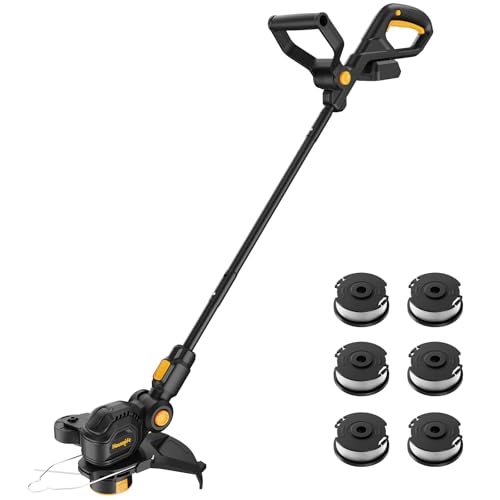
Operator fatigue often determines whether lawn trimming feels like a quick touch-up or an exhausting physical chore. Lightweight electric trimmers weighing between four and six pounds reduce spinal compression and shoulder strain during prolonged yard maintenance. Adjustable auxiliary handles that rotate 180 degrees allow operators of different heights to find a natural, balanced grip without bending their lower backs. Ergonomic handles designed with dual safety trigger locks also accommodate both left-handed and right-handed users comfortably while preventing accidental tool engagement.
Convertible trimming heads offer multi-functional versatility by transforming a horizontal grass trimmer into a vertical lawn edger within seconds. Pivoting heads that rotate 90 degrees allow operators to bevel clean trench lines along concrete driveways, stone pavers, and sidewalk borders. Many convertible models incorporate integrated rubberized guide wheels that roll along paved surfaces to steady the cutting head. These guide wheels support the tool’s physical weight while ensuring uniform cutting depth and laser-straight turf borders without gouging the soil.
Trimming uneven slopes, ditch banks, and low-clearance areas under patio furniture requires flexible shaft articulation. Pivoting trimmer heads adjust to multiple angle detents, letting you hold the main drive shaft comfortably while keeping the cutting string parallel to steep terrain. Maintaining proper footing and control while managing slopes mirrors the stability precautions outlined in our advice on mowing steep hills safely. Innovative shafts that fold 180 degrees further simplify seasonal storage, allowing the entire tool to fit compactly inside cramped garden sheds, apartment closets, or crowded garages.
Maneuvering Tight Obstacles, Flower Beds, and Property Borders
Trimming along delicate flower beds and garden borders requires precise control to avoid destroying prized ornamental plants. Most modern electric string trimmers feature adjustable wire spacer guards or integrated flower protectors that extend beyond the cutting arc. These fold-down metal or plastic guards maintain a safe physical barrier between the whirling nylon line and tender plant stems. They also keep the high-speed trimmer line from whipping against decorative mulch rings, patio furniture legs, and painted fence posts.
Cutting swath dimensions play an important role in balancing trimming speed against tight-space maneuverability. A 12-inch cutting diameter represents the standard sweet spot for suburban properties, offering sufficient width to clear long fence lines quickly while remaining compact enough to squeeze between narrow garden pathways. Wider swaths demand more motor power and drain battery reserves faster, whereas narrow cutting paths increase the total number of sweeping passes required. Choosing a 12-inch cutting deck swath ensures seamless navigation around air conditioning units, children’s play sets, and narrow backyard gates.
Low-noise motor design represents another major practical advantage of electric weed wackers over noisy gas-powered alternatives. Optimized electric motors generate minimal mechanical vibration and emit significantly lower decibel levels during operation, protecting operator hearing and reducing neighborhood noise pollution. This quiet operation allows homeowners to trim yard borders during early weekend mornings or late evenings without disturbing sleeping neighbors. Reduced vibration also minimizes hand numbness and wrist fatigue, enabling smooth, steady trimming along intricate landscape contours.
Preventive Care, Spool Maintenance, and Seasonal Equipment Storage
Proper post-trimming maintenance keeps electric string trimmers running reliably and prevents unexpected mechanical breakdowns. After each trimming session, disconnect the battery pack and clear accumulated damp clippings from the underside of the debris guard. Wet grass buildup restricts cutting head rotation, increases motor drag, and creates unnecessary thermal stress on internal electrical windings. Inspecting the rotating drive spindle for wound weeds or string fragments ensures that the cutting head spins freely during subsequent lawn care sessions.
Managing replacement spools properly prevents tangled lines and frustrating feeding failures during weekend yard chores. When winding fresh trimmer line onto reusable spool cores, maintain firm tension and wrap the nylon line evenly in the direction indicated by the molded directional arrows. Crossing line strands or winding string loosely causes the filament to bind under centrifugal tension, preventing automatic feed mechanisms from advancing smoothly. Keeping several pre-wound replacement spools on hand in a sealed plastic bag preserves nylon line suppleness and ensures swift spool swaps during large yard projects.
Preparing your cordless electric weed wacker for winter storage requires protecting both the mechanical chassis and its lithium-ion battery packs. Store lithium batteries in a temperature-controlled indoor space away from freezing garage temperatures, maintaining a moderate charge level between forty and sixty percent. Storing batteries in extreme cold degrades internal cell capacity and can cause irreversible voltage drops that prevent the charger from recognizing the pack in the spring. Hanging the folded trimmer chassis in a dry, ventilated utility shed keeps the cutting head off damp concrete floors and ensures that your yard equipment stands ready for rapid spring cleanup.



Write Your Review
No reviews yet. Be the first to share your experience!