


Overgrown turf spilling across concrete driveways, stone pavers, and curbs degrades the curb appeal of an otherwise pristine yard. Finding What Is The Best Cordless Edger requires evaluating the mechanical distinction between dedicated trenching units and lightweight multi-purpose string tools. Dedicated battery edgers utilize hardened steel blades and guide wheels to slice distinct boundary channels through dense root networks. Multi-purpose convertible units offer rapid line trimming versatility for lighter suburban maintenance. Investing in reliable battery-powered lawn equipment ensures you maintain clean landscape borders without handling messy fuel mixtures or pull-cord frustration.
Cordless edger technology has advanced significantly with modern high-torque electric motors and high-capacity lithium-ion cells. Modern tools produce substantial slicing torque along concrete borders while keeping overall machine weights manageable for long sessions. Matching your equipment choice to property layout, soil compaction, and turfgrass species prevents motor stalling and uneven cut lines. Reviewing a detailed lawn mower blade selection guide illustrates how blade metallurgy and cutting rotational dynamics influence border definition. Understanding these mechanical variables helps property owners choose the ideal tool for lasting boundary definition.



Evaluating Cordless Lawn Edgers for Crisp Turf Borders
Determining What Is The Best Cordless Edger starts with recognizing how distinct outdoor power equipment designs address boundary maintenance. A crisp border along concrete sidewalks, driveways, and flowerbeds requires enough mechanical force to slice through stolons, roots, and compacted topsoil. Homeowners often struggle to choose between dedicated wheeled edgers and convertible string trimmers equipped with rotating heads. Each format offers specific mechanical advantages depending on perimeter distance, turf density, and physical operator endurance.
Dedicated Steel Blades Versus String Trimmer Conversions
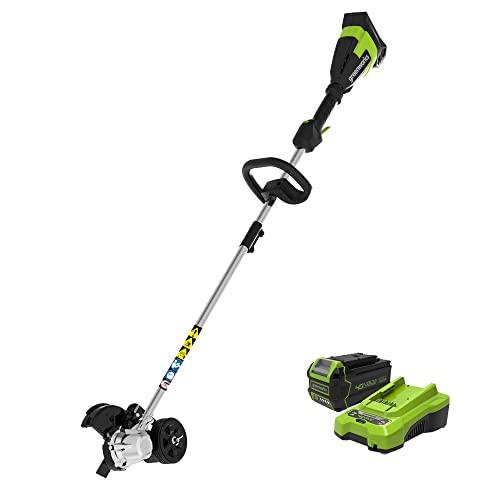
Dedicated cordless edgers rely on solid steel blades rotating vertically inside protective metal or polymer housings. Tools like the Greenworks 40V 8 in Cordless Electric Lawn Edger and the WORX Cordless Lawn Edger cut deep, distinct boundary grooves into the turf perimeter. The rigid steel blade physically severs underground grass rhizomes and carves a miniature trench between soil and pavement. This trench prevents aggressive turf species like Bermuda and St. Augustine from creeping onto concrete walkways.
Convertible 2-in-1 tools use nylon trimmer line rotating on a vertical axis to whip away grass blades hanging over curbs. The BLACK+DECKER 20V MAX String Trimmer and Edger 2 and the WORX 20V 12″ 2-in-1 Cordless String Trimmer exemplify this dual-purpose architecture. These machines excel at light cosmetic grooming along straight paths where turf has not yet established deep root mats over pavement. Nylon monofilament lacks the mass to dig into dry, compacted soil or cut buried roots, functioning best for routine weekly maintenance.
Choosing between these formats depends on your lawn maintenance history and primary landscaping goals. If your sidewalk borders are overgrown with thick turf and compacted sod, a dedicated steel blade tool is essential to carve the initial channel. For small suburban properties with established concrete walkways, a convertible string tool saves storage space and reduces equipment investment.
Motor Architecture and Torque Delivery Under Load
Electric motor design directly governs how well a cordless edger powers through compacted earth and tangled root systems. Traditional brushed electric motors use mechanical carbon contacts that generate internal friction, heat, and gradual power drop-off under heavy loads. Modern brushless motors, by contrast, utilize electronic commutation to monitor blade resistance dynamically and maintain rotational momentum. The brushless motor in the Greenworks 40V 8 in Cordless Electric Lawn Edger delivers strong rotational efficiency and longer operational life with less mechanical wear.
Gear reduction transmissions also play a critical role in multiplying motor torque for heavy cutting tasks. The BLACK+DECKER 20V MAX String Trimmer and Edger 2 utilizes a PowerDrive transmission to step down the 6200 RPM motor speed into usable string-spinning torque. Dedicated trenching units like the goodjob Cordless Lawn Edger incorporate a 400W motor operating at 3500 RPM to deliver steady drive to a 9-inch steel blade. Balancing motor wattage and rotational speed ensures the cutting edge slices clean borders without triggering thermal overload.
Battery Voltage, Amp-Hour Ratings, and Energy Capacity
Battery platforms define the operational runtime and sustained cutting authority of any cordless lawn tool. Evaluating a battery requires calculating total energy capacity in Watt-hours, which equals nominal voltage multiplied by Amp-hour capacity. A 40V system with a 4.0Ah battery, like the pack supplied with the Greenworks edger, delivers 160 Watt-hours of total stored electrical energy. In comparison, a 20V system running a single 2.0Ah pack provides 40 Watt-hours of available reserve energy, which suits shorter perimeters.
Multi-battery configurations offer a practical solution for maintaining continuous workflow across larger residential landscapes. The goodjob Cordless Lawn Edger includes two 2.0Ah 20V batteries paired with a fast charger to support up to 40 minutes of total working runtime. The WORX 20V 12″ 2-in-1 Cordless String Trimmer also bundles two 20V MaxLithium batteries that swap seamlessly across other tools on the WORX Power Share platform. Shared battery ecosystems reduce overall tool costs while ensuring you always have a charged pack ready for weekend yard maintenance.
Blade Diameter, Metallurgy, and Depth Adjustment Mechanisms
The dimensions and metallurgical grade of the cutting blade dictate how cleanly an edger cuts through sod and compacted soil. Dedicated cordless units typically utilize hardened steel blades ranging from 7 inches to 9 inches in diameter. The WORX Cordless Lawn Edger features a 7-inch steel trencher blade designed to track accurately along straight concrete paths. Larger cutting surfaces, such as the lock-tight 9-inch steel blade on the goodjob unit, provide extended wear life and penetrate deeper root networks along driveway borders.
Adjustable cutting depth allows homeowners to match blade penetration to specific turf types and ground contours. Most dedicated edgers offer multiple depth settings, commonly ranging between 1.25 inches and 2 inches below the surface. The WORX WG898 provides three selectable depth positions at 1.5 inches, 1.75 inches, and 2 inches to adapt to varying soil conditions and blade wear. Tool-free depth selectors allow quick height adjustments without requiring wrenches or hex keys in the middle of yard work.
Chassis Balance, Guide Wheels, and Tracking Accuracy
Straight, professional turf borders require stable chassis tracking that keeps the cutting blade locked in a straight line. Dedicated edgers incorporate specialized guide wheels and mechanical edge guides that ride directly along the pavement edge. The goodjob Cordless Lawn Edger uses large 4-inch rear dual guide wheels to stabilize the cutting housing tightly against curbs and stone walkways. Dual-wheel configurations distribute machine weight evenly, preventing the blade from tilting sideways or gouging into soft soil.
Convertible string trimmers take a different approach to tracking by utilizing lightweight guide rollers or support wheels. The WORX 20V 12″ 2-in-1 Cordless String Trimmer includes rubberized wheels that support the tool head when tilted 90 degrees for edging tasks. While rubberized rollers improve line straightness compared to freehand trimming, they lack the rigid steering control of dual rear steel-edger wheels. For rolling ground or sloped curbs, understanding how your machine handles terrain variations is vital, much like selecting equipment when mowing steep slopes and uneven ground across irregular residential lots.
Ergonomic Adjustments, Machine Weight, and Operator Comfort
Tool weight and ergonomic adjustability determine how comfortably an operator can complete long border edging sessions. Dedicated steel edgers generally weigh between 4.5 pounds and 10 pounds depending on motor housing construction and battery size. The goodjob Cordless Lawn Edger weighs only 4.5 pounds, making it exceptionally nimble for homeowners who want to avoid arm and shoulder fatigue. Convertible string trimmers like the WORX WG163 weigh around 5.5 pounds, providing a lightweight handheld balance during quick trimming tasks.
Telescopic shafts and rotatable auxiliary handles allow operators to tailor the tool geometry to their physical height. A properly adjusted shaft length prevents the user from hunching over or extending their arms unnaturally while following the curb line. The WORX WG898 features an adjustable handle and telescopic shaft that collapses completely for compact garage wall storage. The goodjob unit incorporates a 180-degree rotatable auxiliary handle that relieves wrist pressure when guiding the blade around curved walkways.
Anti-Clog Guards, Soil Conditions, and Debris Management
Edging through damp soil, dense root thatch, and clay topsoil creates heavy debris buildup inside the protective blade housing. A poorly designed blade guard traps moist soil and grass clippings, increasing friction against the spinning blade and stalling the motor. The goodjob Cordless Lawn Edger features a redesigned anti-clog guard engineered to minimize mud accumulation during wet spring sessions. A well-sculpted debris channel allows excavated soil and turf fibers to discharge smoothly away from the blade arbor.
Excavated soil clods, loose thatch, and severed grass blades must be cleared promptly from adjacent sidewalks and driveways. Leaving cut debris along the perimeter allows rain to wash mud into the street or back into the freshly cut boundary groove. Integrating high-volume cleanup equipment, such as lawn debris and leaf collection systems, ensures the manicured edge remains sharp and visually striking. Clearing the concrete surface right after edging also makes it easier to inspect the trench for missed turf stragglers.
Safety Interlocks, Blade Replacement, and Routine Upkeep
Operating high-speed rotating blades along hard pavement surfaces demands strict attention to safety features and equipment maintenance. Quality cordless edgers incorporate double safety trigger locks to prevent accidental motor startup during storage, transport, or blade inspections. The safety trigger requires two deliberate finger actions to engage the motor switch, protecting the user from unexpected spin-up. Full blade shields and durable deflection flaps block propelled stones, hard soil particles, and mulch fragments from striking the operator.
Routine blade maintenance is essential to maintain clean trenching performance and avoid putting excessive stress on the motor. Before inspecting, tightening, or replacing a cutting blade, always remove the battery pack to isolate electrical power completely. Most dedicated edgers utilize standard arbor nuts and locking pins that allow straightforward blade swaps using included hex keys or wrenches. Inspecting the blade for excessive rounding, cracking, or severe gouges ensures the cutting edge stays sharp and safe.
Selecting the Ideal Cordless Edger for Your Property
Finding the best cordless edger ultimately depends on aligning equipment specifications with your lawn perimeter and landscape design. Homeowners with extensive concrete driveways, street sidewalks, and dense sod varieties benefit most from dedicated wheeled units like the Greenworks 40V or WORX WG898. These machines deliver the motor torque, blade mass, and wheel stability required to trench and maintain deep, crisp boundary lines. The higher energy capacity of 40V platforms or dual 20V battery systems ensures you finish long boundaries without waiting on recharges.
For smaller suburban properties with simple walkways, a convertible 2-in-1 tool like the BLACK+DECKER LST300 or WORX WG163 provides remarkable versatility. These lightweight string units handle perimeter trimming and sidewalk detailing with a single battery platform and a minimal storage footprint. They excel at maintaining established grass margins where deep trenching is not required. Evaluating your soil conditions, turf density, and perimeter length ensures you choose the right tool for immaculate borders.





Write Your Review
No reviews yet. Be the first to share your experience!