

Backyard maintenance often leaves property owners debating which power tools are strictly necessary to maintain clean borders and manicured turf lines. When evaluating your yard care arsenal, determining whether Is A Weed Eater The Same As An Edger helps prevent unnecessary equipment purchases while ensuring your turf receives proper care. String trimmers excel at clearing tall grass around fence posts, foundation walls, and raised garden beds where standard mower decks cannot navigate. Pairing proper trimming habits with a reliable lawn mower blade selection guide helps maintain consistent turf health across your entire lawn. However, expecting a standard string trimmer to dig structural trenches along concrete sidewalks often leads to ragged borders and rapid line depletion.
Dedicated edgers serve an entirely different mechanical role by driving a vertical steel blade along hard boundaries like driveways and curbs to establish defined turf separation. While both machines target turf maintenance, their cutting planes, power transmission methods, and ground interactions remain distinct. Modern homeowners exploring battery operated lawn equipment overview options frequently encounter hybrid tools designed to bridge this divide. Understanding the mechanical boundaries of each machine prevents premature equipment wear and ensures your landscaping projects produce clean, professional boundaries.
Understanding the Differences Between String Trimmers and Lawn Edgers
Defining whether Is A Weed Eater The Same As An Edger begins by recognizing that these machines address completely different cutting planes and turf management objectives. A weed eater utilizes a flexible monofilament line spinning at high speed on a horizontal plane to shear soft vegetation. An edger, by contrast, operates on a vertical plane using a rigid cutting blade to carve precise mechanical boundaries into soil and turf roots. Conflating these two machines frequently leads to damaged borders, stripped trimmer lines, and ragged results along walkways. Understanding the mechanical boundaries of each tool allows property owners to select the appropriate equipment for their landscape.
Primary Functional Distinctions: Horizontal Trimming vs Vertical Trenches
Horizontal cutting represents the primary engineering goal of every conventional weed eater. String trimmers excel at clearing standing grass and tender weeds from locations that standard rotary lawn mowers cannot access. These problem zones typically include tight spaces around wooden fence pickets, deck posts, masonry foundations, and tree rings. Because flexible monofilament line yields upon impact, a string trimmer cuts grass cleanly without causing structural damage to stationary wooden or stone obstacles.
Vertical trenching serves as the primary objective of a dedicated lawn edger. Rather than mowing down standing foliage, an edger slices directly into the boundary where turfgrass meets a solid barrier like a concrete sidewalk, asphalt driveway, or curb. The vertical blade physically severs lateral grass stolons, rhizomes, and dense thatch layers that attempt to creep across paved surfaces. This mechanical excavation leaves a sharp gap between the sod line and paved masonry, preventing turf encroachment.
Attempting to perform trenching with a conventional horizontal weed eater forces the operator into awkward ergonomic postures. Tilting a standard string trimmer sideways requires holding the machine at an unnatural angle, placing excessive strain on wrists and back muscles. Rotating a standard trimmer head vertically also directs high-velocity debris and loosened gravel directly back toward the operator. Dedicated edgers resolve this issue by incorporating fixed support wheels that balance machine weight directly against paved surfaces.
Cutting Mechanism Physics: Monofilament Line vs Rigid Steel Blades
Monofilament nylon line relies entirely on high rotational velocity and centrifugal force to achieve cutting rigidity. When the trimmer spindle spins at high revolutions per minute, the flexible nylon line extends outward into a stiff cutting disc. As the tip of the line strikes a flexible blade of grass, it easily shears the plant tissue through kinetic force. When that same line encounters hard aggregate, concrete curb faces, or compacted topsoil, kinetic energy dissipates rapidly, causing the nylon to fray or snap.
Rigid steel edger blades operate under a completely different mechanical paradigm focused on sustained torque rather than high-velocity whipping action. A dedicated edger typically utilizes a carbon steel blade measuring between seven and nine inches in length, driven by a direct shaft or geared transaxle. This rigid steel profile easily cleaves through compacted clay soil and fibrous turf crowns that would instantly destroy flexible nylon line. The rigid blade also acts as a mechanical guide, following the straight edge of concrete curbs without wandering.
The physical result of each cutting mechanism directly impacts long-term turf health along walkways. A sharp edger blade cleanly slices turf stolons and soil, leaving a trench that sheds water and discourages weed germination along pavement cracks. In contrast, attempting to scalp sidewalk borders with a high-speed trimmer line often tears grass blades raggedly, resulting in brown turf tips vulnerable to disease. For property owners maintaining aggressive spreading turf species like Bermuda or St. Augustine, the cutting strength of a rigid steel blade provides boundary control that flexible lines cannot match.
The Hybrid Solution: Convertible Trimmers with Integrated Edging Wheels
Recognizing that many suburban homeowners do not wish to store separate machines, power equipment manufacturers have developed convertible string trimmers. These hybrid tools typically feature a rotating drive shaft or pivoting motor housing that allows the trimmer head to rotate ninety degrees into a vertical position. Many electric and cordless models incorporate a small rolling guide wheel or wire edge guard adjacent to the cutting head shroud. This wheel rolls smoothly along sidewalk pavement, holding the vertical spinning line at a consistent height above the soil line.
Convertible trimmers perform admirably when maintaining pre-existing, well-defined lawn borders on residential properties. If a clean trench has already been established by a steel edger blade, a convertible string trimmer can easily maintain that line on a weekly basis by slicing away tender grass shoots before they take root. This makes 2-in-1 convertible trimmers an attractive choice for small suburban lawns with moderate turf growth. Homeowners appreciate the reduced storage footprint and the convenience of switching from fence-line trimming to border edging with a single locking collar adjustment.
Convertible string trimmers have distinct mechanical limitations when confronted with neglected lawns or heavy soil build-up. A spinning nylon line cannot cut through hard-packed clay, accumulated sidewalk silt, or dense turf blankets that have spilled over a driveway. Forcing a convertible string trimmer to excavate heavy soil results in broken line, overheated electric motors, and erratic borders. When initial boundary restoration or deep furrow excavation is required, a dedicated steel blade machine remains essential before transitioning to maintenance trimming.
Consumables and Line Wear: Autofeed Spool Dynamics and Line Gauge Selection
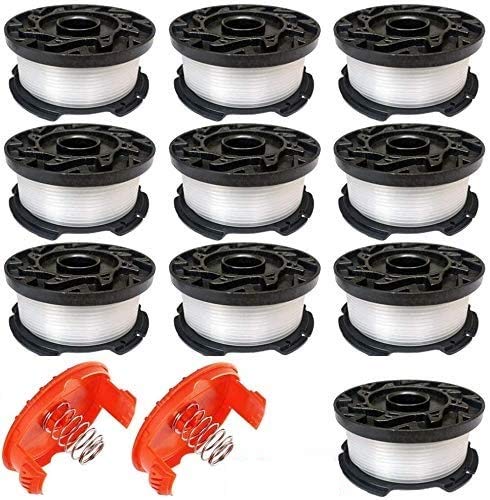
Managing cutting consumables represents an ongoing operational factor when utilizing a weed eater for border maintenance. Systems like the 0.065″ Line String Trimmer Autofeed Replacement spool utilize automatic feed spool mechanics, commonly abbreviated as AFS, to release additional line as wear occurs. These factory-wound assemblies utilize centrifugal force and aerodynamic drag regulation to advance the nylon cord automatically without requiring manual head tapping. Pre-wound spools packaged by CALU LUKY offer thirty feet of durable polyamide nylon thread designed to reduce line welding and unexpected jams inside the trimmer housing.
Line gauge plays an essential role in balancing cutting performance with electric motor efficiency. A 0.065-inch diameter line, as utilized in replacement spools compatible with Black and Decker string trimmers like the LST and GH series, provides an optimal balance for lightweight motors. Thinner lines generate minimal aerodynamic drag, allowing smaller electric motors to maintain high rotational speed and long battery runtime without thermal overload. Heavier lines measuring 0.080-inch or 0.095-inch require larger gas engines or commercial brushless motors to overcome air resistance and maintain cutting velocity.
When operators use a string trimmer vertically along abrasive concrete borders, line consumption accelerates significantly compared to horizontal trimming. Contact with abrasive concrete surfaces and asphalt quickly abrades the nylon tip, triggering the autofeed mechanism to supply fresh line repeatedly. Having multi-pack replacement spools and durable replacement caps readily available ensures uninterrupted yard work during heavy seasonal growth. Operators should also inspect the spool housing and cap tabs for signs of plastic fatigue, as cracked retaining caps can allow centrifugal force to eject the spool during vertical operation.
Boundary Management: Concrete Curbs, Soft Garden Beds, and Hardscaping
Different landscaping boundaries dictate whether a weed eater or a dedicated edger provides the superior mechanical result. Concrete sidewalks, asphalt driveways, and street curbs represent hard boundaries that benefit from the rigid precision of a vertical steel blade. The physical edge of the pavement acts as a solid guide, allowing the edger blade to sever turf roots cleanly in a single pass. Once established, these hard borders create an impenetrable visual line that elevates the overall curb appeal of the entire property.
Soft boundaries, such as natural garden borders, mulch beds, and decorative stone rings, require a far gentler approach. Operating a rigid steel edger blade near soft garden edges risks severing underground irrigation drip lines, cutting landscape weed fabric, or slicing into shallow tree roots. For these delicate transition zones, using a string trimmer held at a slight angle allows the operator to feather turf height gradually. Applying protective mower deck sprays to trimmer shields and mower decks can also help prevent sticky, acidic grass sap from bonding to equipment undersides during wet edging tasks.
Hardscaping features composed of decorative brick pavers, flagstone walkways, or mortar-set masonry also demand careful tool selection. A steel edger blade can chip expensive pavers, fracture mortar joints, or spark dangerously against hard granite aggregates. In these sensitive environments, a string trimmer equipped with 0.065-inch or 0.080-inch nylon line provides the necessary safety margin. The flexible line slices overhanging grass foliage without scratching, cracking, or degrading finished masonry surfaces.
Operational Safety and Debris Management During Edge Work
Operating cutting tools along hard pavement significantly amplifies the risk of high-velocity projectile injuries. When a string trimmer spins vertically or a steel blade enters a sidewalk crack, the cutting mechanism strikes loose stones, concrete grit, and glass fragments at immense speeds. The manufacturer warnings supplied with replacement spools explicitly instruct operators to wear eye protection and long pants during operation to prevent severe impact injuries. Certified safety glasses and heavy denim trousers provide essential protection against ricocheting debris during roadside edging work.
Electrical and mechanical isolation protocols must always be observed prior to performing any maintenance on trimmer heads or edger blades. Before attempting to clear tangled line, clear packed mud from guide wheels, or snap in a new autofeed spool, always disconnect the machine from its power source. For battery-powered trimmers, this requires removing the lithium-ion battery pack entirely from the handle cradle; for corded models, unplug the extension cord from the outlet. Never rely on the handle trigger safety lock alone when handling cutting heads, as accidental motor activation can cause severe hand injuries.
Post-trimming cleanup represents the final critical stage of professional boundary maintenance. Operating an edger or vertical trimmer along curbs deposits pulverized topsoil, loose clippings, and root fragments across the pavement surface. If left unattended, this organic material washes into municipal storm drains during rainstorms or gets tracked onto residential flooring. Utilizing outdoor blowers or integrating yard leaf collector systems ensures that all dislodged debris is collected and added to compost piles, leaving sidewalks immaculate and structurally sound.
Equipment Selection: Choosing Between Dedicated Tools and 2-in-1 Systems
Selecting between a dedicated edger, a standard weed eater, or a hybrid 2-in-1 system depends primarily on property acreage and turf variety. Suburban homeowners managing quarter-acre or half-acre properties with cool-season grasses like fescue or Kentucky bluegrass often achieve outstanding results using a single convertible string trimmer. Because cool-season grasses spread primarily by tillers or short rhizomes, weekly vertical trimming with an autofeed nylon spool easily controls border encroachment. This eliminates the financial cost and storage burden associated with purchasing multiple single-purpose outdoor power tools.
Large residential properties, commercial grounds, and yards planted with aggressive warm-season turfgrasses often justify investment in dedicated machinery. Grass species such as Bermuda, St. Augustine, and Zoysia produce dense, woody stolons that spread aggressively across pavement surfaces, forming thick sod mats within weeks. A lightweight string trimmer quickly bogs down when confronted with this dense matting, depleting trimmer line spools at an unsustainable rate. Dedicated walk-behind or high-torque stick edgers deliver the continuous mechanical force required to maintain deep, uniform boundary trenches along extensive linear borders.
Multi-attachment power heads represent another compelling alternative for discerning property managers. These modular systems utilize a single high-output power unit, powered by a gas engine or high-voltage commercial battery platform, paired with interchangeable tool attachments. Operators can quickly swap between a heavy-duty string trimmer head and a dedicated steel-blade edger attachment using a secure split-shaft coupler. This approach provides the authentic cutting performance of a rigid steel edger alongside the versatile trimming capability of a string trimmer, all while utilizing a unified motor and battery ecosystem.
Practical Maintenance for Consistent Turf Borders
Sustaining reliable performance from string trimmers and edgers requires routine mechanical inspection and proper consumable storage. Operators should frequently clean the underside of the cutting shroud, removing caked mud, grass clippings, and winding debris that can hinder head rotation. When utilizing pre-wound replacement spools, store unused spools in a cool, slightly humid environment, such as a sealed plastic container with a damp sponge. Polyamide nylon line naturally absorbs atmospheric moisture, which preserves its structural elasticity and prevents brittle snapping during high-speed vertical cutting operations.
Ultimately, a weed eater and an edger remain distinct tools designed for complementary outdoor maintenance objectives. While a convertible string trimmer equipped with fresh line spools can successfully maintain pre-cut borders around a residential yard, it cannot fully replace the deep trenching capability of a dedicated steel blade. Evaluating your turf species, existing border condition, and personal storage capacity ensures you deploy the right cutting tool for every section of your property. By matching the appropriate machine to the task, you achieve clean boundaries, protect your equipment from premature wear, and maintain healthy, vibrant turf.





Write Your Review
No reviews yet. Be the first to share your experience!