


Homeowners spending hours behind a push mower or riding tractor often wonder if automated machines can truly deliver a healthy, manicured lawn. Early autonomous grass cutters earned a mixed reputation because of finicky buried perimeter wires and random bounce patterns that left erratic streaks across the yard. Today, modern homeowners evaluating whether are robot mowers any good encounter a completely transformed landscape powered by satellite triangulation, solid-state LiDAR sensors, and computer vision. If you currently operate traditional cordless electric lawn mower options, moving to an autonomous unit fundamentally alters how turf is maintained throughout the growing season.
Autonomous mowing relies on micro-mulching, shaving tiny millimeters of leaf tissue daily rather than scalping overgrown grass once a week. This continuous trimming cycle reduces thatch buildup, returns moisture and nutrients directly to the soil root zone, and keeps the yard at a constant, uniform height. Wire-free mapping systems eliminate the weekend chore of burying hundreds of feet of boundary wire that could later snap under an aerator tine. Understanding how these machines navigate around obstacles, handle damp inclines, and tackle border edges helps clarify whether an autonomous robot lawn mower fits the unique layout of your property.

Pros
- No perimeter wires needed – quick and flexible installation.
- Dual-LiDAR and AI obstacle avoidance provide reliable navigation in complex environments.
- Built-in edge trimming reduces the need for manual edging.
- Compact design fits narrow pathways and tight spaces.
Cons
- Lawn size limit of 1/4 acre may not suit larger properties.
- Premium price point compared to basic robotic mowers.
- Lack of rain sensor or slope handling details may require user caution in wet or hilly conditions.
The ECOVACS Goat O1000 LiDAR PRO is a wire-free robotic lawn mower designed for homeowners who want a truly automated mowing experience without the hassle of installing boundary wires. It's best suited for small to medium lawns up to 1/4 acre, especially those with complex layouts, narrow pathways, or plenty of obstacles like trees and garden décor.
In terms of performance, the dual-LiDAR system maps your lawn with high precision, allowing the mower to navigate even under dense tree cover or near metal fences where GPS signals may struggle. The built-in TruEdge border trimming system helps keep edges neat along driveways and flower beds, reducing the need for manual trimming. AI-powered obstacle recognition detects over 200 common objects, so the mower can avoid toys, pets, and furniture without getting stuck.
Build quality appears solid, with a compact and slim body that measures about 24 x 12 x 19 inches and weighs 48 pounds. The LiDAR sensors are well-protected, and the overall construction feels durable for outdoor use. The mower's design prioritizes maneuverability, easily navigating passages as narrow as 31.5 inches, which is great for side yards and multi-zone lawns.
Setup is straightforward thanks to the wire-free design – simply place the mower in your yard, use the ECOVACS app to map the area, and define mowing zones, schedules, and no-go zones. The app is intuitive and allows for flexible control, including adjusting cutting height and setting specific mowing times. Maintenance is minimal, with no wires to repair and easy access to the blade and underside for cleaning.
One realistic limitation is the lawn size cap of 1/4 acre, which may not be enough for larger suburban or rural properties. Additionally, the $999 price point is on the higher end for robotic mowers, though the advanced navigation and edge trimming features may justify the cost for those who value convenience. There's also no mention of a rain sensor or slope handling, so users in rainy climates or with hilly yards should consider these factors.
Overall, the ECOVACS Goat O1000 LiDAR PRO is a strong choice for tech-savvy homeowners with small to medium lawns who want a truly wire-free, intelligent mowing solution. It excels in complex environments and reduces the time spent on manual mowing and edging. If you're looking for a low-maintenance, app-controlled mower that handles obstacles well, this model is worth considering.
The Goat O1000 LiDAR PRO uses ECOVACS HoloScope 360° Dual-LiDAR to create a detailed map of your lawn without needing perimeter wires or GPS. This system provides centimeter-level accuracy, even in areas with poor satellite reception like under trees or near fences. The mower can learn your yard's layout and adjust its path to ensure full coverage.
The AI vision system adds another layer of intelligence by recognizing over 200 types of obstacles, from garden hoses to pets. This helps the mower avoid collisions and navigate around objects rather than simply bumping into them. The combination of LiDAR and AI makes this one of the more advanced navigation systems available in a residential robotic mower.

Pros
- No perimeter wire simplifies installation and makes reconfiguring the mowing area much easier than traditional boundary-based bots
- Dual-LiDAR positioning maintains accurate navigation in shaded spots and tight corners, which is a common weak point for GPS-only mowers
- The integrated edge trimmer reduces the need for manual string trimming along hardscapes, saving you time on finishing touches
- Strong 32V power and dual blades are well matched for dense, fast-growing warm-season grasses common across the southern U.S.
- The ECOVACS app offers granular control over zones, schedules, and cutting heights, giving you flexibility for a customized lawn care routine
Cons
- The $1,399 price point is a significant investment, which may put it out of reach for budget-conscious shoppers
- No reviews are available yet, so real-world long-term reliability and customer support experiences are still unproven
- With a 1/2 acre capacity, this model may not be the best fit for larger suburban or rural properties without splitting the yard into multiple zones or running multiple sessions
The ECOVACS Goat A2000 LiDAR PRO is a wire-free robotic lawn mower built for homeowners with medium-sized yards up to half an acre. It does away with the traditional perimeter wire and RTK antenna, instead relying on a HoloScope 360 degree dual-LiDAR system that maps your yard as it goes. This makes it a strong option for people who want automated mowing without the hassle of burying boundary wire or fussing with GPS corrections under tree cover.
In terms of cutting performance, the product description highlights a 32V motor and a dual-blade disc system designed to handle thick, fast-growing grass like Bermuda, Zoysia, Fescue, and St. Augustine. The integrated TruEdge trimmer adds a practical touch for getting along sidewalks, driveways, and flower beds. Based on the specs, this setup may work well for homeowners who expect a clean, edgeto-edge cut without having to follow up with a string trimmer. The 2 cm positioning accuracy and dual-LiDAR mapping should also help it navigate tight corners and irregular lawn borders more reliably than GPS-based mowers in shaded areas.
Build quality appears solid for outdoor use, with a durable battery and charging system designed for quick turnarounds. The 3.0Ah battery charges in about 50 minutes thanks to 113.4W fast charging, which helps keep the mower ready for repeated mowing cycles. The app-based controls let you set custom zones, no-go areas, travel paths, and cutting schedules, making it adaptable to complex yard layouts. The AIVI 3D obstacle avoidance system is another practical feature, potentially reducing the chance of collisions with toys, pets, or yard debris.
Setup and daily handling are where this mower shines for typical American lawn care routines. Without a perimeter wire, installation is much simpler than traditional robotic mowers. You can place the charging station, let the mower map the yard, and then adjust zones and schedules through the app. Storage is straightforward, and the mower itself handles the mowing, trimming, and edge work, which is a big plus for busy homeowners or anyone who wants to avoid Saturday morning mowing marathons.
That said, there are some realistic limitations to keep in mind. The $1,399 price is premium, and with zero reviews currently listed, there is not yet a track record of real-world reliability or customer support. Many homeowners may prefer to wait for user feedback before making such a big investment. Also, while the 1/2 acre capacity works for many suburban lots, larger properties will need multiple mowing sessions or zone management to cover everything efficiently.
Overall, the ECOVACS Goat A2000 LiDAR PRO is a feature-rich robotic mower for tech-savvy homeowners who want wire-free convenience, precise mapping, and built-in edge trimming. If you have a medium-sized lawn with complex borders, shaded areas, and a mix of grass types, this design may help you cut down on manual mowing and trimming time. Just weigh the upfront cost and the lack of verified reviews against the convenience and automation it promises to deliver.
The Goat A2000 LiDAR PRO uses a 32V motor and dual-blade disc system to generate strong cutting torque, which is particularly useful for thick and fast-growing grass. The product description specifically mentions compatibility with Bermuda, Zoysia, Fescue, and St. Augustine, so it should handle warm-season lawns common in the U.S. The cutting height and speed can be adjusted through the app, allowing you to tailor the mow to your grass type and the season.
The built-in TruEdge trimmer is a standout feature. Instead of relying on the main blades to get close to hardscapes, this mower has a separate trimmer mechanism that cuts along driveways, sidewalks, and flower beds. According to the specs, it comes with two rolls of trimming line, each covering approximately 3 km, which reduces the need for manual string trimming between mows.
For the average suburban yard, this setup should deliver consistent, edge-to-edge cutting. The dual-LiDAR navigation keeps the mower on a precise path, while the 2 cm positioning helps it avoid scalping and uneven cuts. Some users may find that thick, wet grass clumps a bit more than with a traditional gas mower, but for regular scheduled mowing, it should maintain a tidy appearance.
One of the big selling points of the Goat A2000 is its wire-free design. Instead of laying perimeter wire, you rely on the HoloScope 360 degree dual-LiDAR system to map your yard. This system scans the environment continuously, so the mower builds a detailed map and updates it as it works. Because it uses LiDAR rather than GPS, it maintains accuracy even under trees, near fences, or in shaded spots where GPS mowers often lose signal.
The AIVI 3D obstacle avoidance adds another layer of smarts. It uses cameras and AI to recognize common obstacles like toys, garden tools, pets, and even people. This helps the mower avoid running into things or getting stuck, which is a common frustration with older robotic mowers. You can also set no-go zones through the app to keep it away from delicate flower beds, ponds, or play areas.
For complex yard layouts, the app lets you create multiple mowing zones and define travel paths between them. That way, you can guide the mower to the front yard, back yard, or side strips without it wandering aimlessly. This level of customization is practical for homeowners with irregular lawns or obstacles like driveways and patios breaking up the space.
The Goat A2000 uses a 3.0Ah battery paired with 113.4W fast charging, which brings it back to full in roughly 50 minutes. That is a convenient feature for maintaining a regular mowing schedule, especially if the mower needs to go out multiple times a week during the growing season. The battery capacity is appropriate for up to 1/2 acre, though actual runtime will depend on grass density, terrain, and the amount of edge trimming being done.
When the battery gets low, the mower automatically returns to the charging station, recharges, and then resumes mowing where it left off. This means you can set a schedule and let it handle the job without babysitting it. The fast charging is a welcome upgrade compared to older robotic mowers that can take several hours to recharge.
For homeowners who want to minimize downtime, this setup should work well. Just keep in mind that very thick or wet grass can drain the battery faster, so you may need to adjust the schedule or let the mower run in multiple sessions on larger lawns.

Pros
- No perimeter wires to bury - setup is faster and far less frustrating than traditional robotic mowers.
- Excellent navigation accuracy from the RTK plus four-camera system, even in shaded corners and narrow passages.
- Powerful 4WD and active steering handle steep slopes and obstacles without tearing up the grass.
- Anti-theft features like GPS tracking, PIN lock, and an alarm protect your investment.
- Wide 9.49-inch cutting deck reduces mowing time for a two- to three-acre suburban lawn (well, up to 0.37 acre, so more for smaller lots).
Cons
- The 0.37-acre coverage limit means this mower is best for small to medium lawns, not multi-acre rural properties.
- At 50 pounds, you'll need some muscle to carry it between yard sections or upstairs for storage.
- The premium price tag puts it well above entry-level robotic mowers, which could be a concern for budget-conscious buyers.
The Roborock RockMow X115H is a wire-free robotic lawn mower designed for homeowners who want to automate the chore of mowing without the headache of installing boundary wires. With a coverage rating of 0.37 acre, it's aimed squarely at typical American suburban lots rather than sprawling rural acreage. If you have a small to medium yard with some slopes, flower beds, and a few obstacles, this mower could be a solid match.
Based on the product specifications, the RockMow X115H uses a dual-navigation setup that combines full-band RTK satellite positioning with four cameras for AI vision. That means it can keep its position even in tight spots, under dense tree canopies, or near tall fences where ordinary robot mowers often struggle. The mower also features 4WD with active steering and dynamic suspension, which should help it climb steep slopes up to 80% and roll over small obstacles up to 3.15 inches without damaging the turf. The cutting deck is 9.49 inches wide with height adjustments from 1.57 to 3.54 inches, so you can manage different grass types and seasonal growth.
Build quality appears to be robust, with a 50-pound frame that feels substantial for a robotic mower. The dark grey finish looks modern, and the deck material seems designed to handle the rigors of outdoor use. According to the product description, the multi-sensor obstacle avoidance system uses four advanced sensors to detect static objects like rocks and also to steer clear of people or pets, which is reassuring if you have kids or animals playing in the yard.
Setup is one of the biggest selling points here. You don't have to bury any wires, which typically takes hours with older robotic mowers. Instead, you can use the app's auto-mapping feature, or manually drive the mower with your smartphone like a remote control to trace precise boundaries around gardens. Once mapped, you can set multi-zone schedules, monitor progress in real time, and even activate a wildlife-friendly mode that avoids small animals. The included 4G connectivity adds long-range control and real-time GPS tracking, plus a PIN lock and alarm for anti-theft protection.
Maintenance is fairly straightforward for a robot mower. You'll need to periodically clean the blades and underside of the deck, and the app likely alerts you when maintenance is due. The 9.49-inch cutting width is narrower than a traditional push mower, but for a robot that works autonomously, it's a reasonable trade-off. Keep in mind that the 0.37-acre limit means this isn't meant for large estates, and the 50-pound weight makes it less portable than smaller models.
For suburban homeowners who want to reclaim their weekends and have a moderately sized lawn with some slopes or tricky obstacles, the Roborock RockMow X115H offers a premium, hands-free mowing experience. It's also a good pick for older users or anyone with physical limitations who finds pushing a mower tough. That said, the higher price point and limited coverage area mean it's not for everyone. If your lawn fits the size and you're comfortable with app-based control, this mower could be a worthwhile investment in less back pain and more free time.
The RockMow X115H's cutting system is designed for clean, even trimming on small to medium lawns. The 9.49-inch (24 cm) cutting width is wider than many robot mowers, which helps cut down on mowing time. Cutting height ranges from 1.57 to 3.54 inches, letting you adjust for seasonal growth or personal preference. The dynamic suspension keeps the deck stable on uneven ground, which is key for avoiding scalping on bumps and dips. Based on the product description, the blade setup appears to be sharp and efficient, but as with any mower, you'll want to replace blades periodically to maintain quality.
Navigation is where the RockMow really stands out. It pairs full-band RTK with a four-camera AI vision system, which means it can hold a precise position even in shaded corners, under trees, or near fences. The multi-sensor obstacle avoidance uses four sensors to detect static objects like garden beds and also moving things like pets or people. This setup may help reduce the chance of the mower getting stuck or causing collisions. In real-world use, obstacles like hoses, toys, or patio furniture should be less of a worry, though no system is perfect.
Weighing 50 pounds and measuring 25 x 11 x 18 inches, the RockMow X115H is a substantial piece of equipment. The heavy-duty 4WD system and active steering are designed for rugged terrain, and the dynamic suspension adds stability on uneven ground. The dark grey finish looks durable, and the overall construction appears aimed at long-term outdoor use. While we can't speak to years of ownership, the materials and design choices suggest it should hold up well to regular mowing in typical U.S. weather, including afternoon showers and summer heat.
The biggest maintenance upgrade here is the wire-free setup. There are no boundary wires to bury, which saves hours of prep work. You have two mapping options: AI auto-mapping for open lawns, or manual app-controlled mapping for precise boundary tracing around flower beds and pathways. The Roborock app handles scheduling, progress tracking, and wildlife-friendly mode. Maintenance itself is straightforward: keep the blades sharp, clean the underside regularly, and check for any debris wrapped around the wheels. The included 4G module means you can monitor the mower remotely, and the anti-theft features add an extra layer of protection if you leave it outside.

Pros
- All-wheel drive handles steep slopes up to 80% with ease, unmatched by most robotic mowers
- No boundary wires needed - LiDAR and AI vision provide accurate mapping under tricky conditions
- Fast 45-minute recharge gets you back to mowing quickly on larger properties
- Ultra-quiet operation - perfect for early morning or nighttime mowing without disturbing peace
- Smart security features like 4G monitoring and theft protection add peace of mind
Cons
- High price point may be a barrier for budget-conscious buyers
- Optional trimmer module sold separately for even tighter edge cutting
- Limited to 0.5 acre maximum, so not suited for very large properties
The DREAME A3 AWD is a high-end robotic lawn mower designed for homeowners with challenging terrain. It excels on slopes up to 80%, thanks to its robust all-wheel drive system. If you have a hilly yard or a complex layout with multiple zones, this mower promises to handle it without the need for buried boundary wires. It's a solid pick for anyone who wants a truly hands-off lawn care experience - from suburban homeowners to those with a summer house they visit occasionally.
In terms of performance, the A3 AWD uses a combination of 360° LiDAR and binocular AI vision to navigate your yard. It can avoid over 300 types of obstacles like kids' toys, garden hoses, and pets, so you don't have to police the lawn before mowing. The cutting precision is impressive, with edges trimmed to within 1.97 inches. For an even closer cut, you can add the optional trimmer module. The 5A charger replenishes the battery in just 45 minutes, which is 22% faster than many competitors, allowing the mower to cover up to half an acre efficiently in a single day.
Build quality appears solid with a robust plastic housing and heavy-duty hub motors. The mower weighs about 26.4 pounds, which is reasonable for a robotic unit. It's designed to withstand outdoor elements, though like any electronics, it's best to store it in a sheltered area when not in use. The lithium-ion battery is integrated and recharges on the included charging station. Maintenance seems straightforward - keep the blades sharp and clean the sensors occasionally.
Setup is remarkably simple since there are no wires to bury or RTK stations to mount. You unbox it, place the charging station, and let the mower map the yard. From there, you schedule mowing sessions via the Dreamehome app. The app also offers cool features like custom mowing patterns (hearts, squares) and animal-friendly mode, which may help if you have pets roaming. The mower is very quiet, so you can run it at night without disturbing the neighbors.
However, this level of convenience comes at a price. At $2199.99, it's a significant investment compared to traditional push mowers or even some other robotic mowers. Also, the coverage limit of 0.5 acre means it's not ideal for large estates. The optional trimmer module is an extra cost, and initial setup may require a bit of patience to get the mapping right. Additionally, with zero reviews at the time of writing, it's hard to gauge long-term reliability.
Overall, the DREAME A3 AWD is a compelling choice for homeowners with sloped, intricate yards who want to reclaim their weekends. If you're tired of pushing a mower or paying for a lawn crew, this robot offers a high-tech solution. Just be sure your lawn fits the size limit and that you're comfortable with the premium price. For those who value convenience and have the budget, it's a strong recommendation.

Pros
- Advanced navigation system works without boundary wires, great for large properties with trees and flower beds.
- Exceptional slope handling—climbs up to 80% grade, outperforming many competitors.
- Powerful 165W motors and AI-driven cutting adapt to grass density for consistent results.
- Long 175-minute runtime covers up to 1.5 acres per charge, reducing frequent recharging.
- Robust obstacle detection recognizes over 300 objects, minimizing collisions with toys, pets, and garden features.
Cons
- High price point ($2,448) may not fit budget-conscious shoppers or those with small lawns.
- No customer reviews yet, making it harder to gauge real-world reliability and service.
- Large dimensions (27.2 x 21 x 12.8 inches) might require substantial garage space for storage.
The Mammotion LUBA 3 AWD 3000H is a premium robotic lawn mower engineered for homeowners with sizable, challenging yards. It is best suited for those who want a hands-off mowing experience on slopes up to 80%, with complex landscaping, multiple zones, and numerous obstacles. Priced at around $2,448, it targets the high end of the market and aims to replace traditional wire-guided bots with a more intelligent, boundary-free system.
Real-world performance hinges on its Tri-Fusion Navigation. By combining 360° LiDAR (230 ft range), NetRTK for centimeter-level corrections, and dual-camera AI vision, the mower adapts to varying terrain without needing perimeter wires. The 165W cutting motors (two discs with six blades each) automatically adjust power based on grass density, handling thick or thin lawns effectively. With a 12Ah battery, it runs up to 175 minutes, covering about 500 m² per hour—enough for a 1.5-acre property on a single charge. Users can choose from multiple mowing patterns (zigzag, checkerboard, etc.) and set up to 30 zones, while no-go areas protect flower beds and obstacles.
Build quality appears solid, with a white plastic body and rubberized wheels. The adaptive suspension helps it climb curbs and roots up to 50 mm high. The included garage (shipped separately) provides weather protection and stores the mower recharge station. While we haven't done hands-on testing, product specifications suggest a durable, weather-resistant unit suited for year-round use in typical U.S. climates.
Setup involves placing the charging station, connecting it to power, and letting the mower map the yard via app. The app (iOS/Android) guides configuration of zones, schedules, and no-go areas. Maintenance is straightforward—replace blades as needed, keep LiDAR sensors clean, and occasionally check wheel motors for debris. Storage in the garage is convenient, though the mower's size (27.2 x 21 x 12.8 inches) should fit most sheds or garages.
Limitations include the high price and lack of customer reviews at launch. For small yards (under 0.25 acre), the cost may be hard to justify. The mower also relies on GPS and cellular signals for NetRTK, so areas with poor reception might see reduced accuracy. Additionally, the garage requires extra space and separate shipping, which could delay full setup.
If you own a large, hilly lawn with many obstacles and want to eliminate wire installation, the Mammotion LUBA 3 AWD offers an enticing solution. It balances power, intelligence, and convenience, provided you're willing to invest in top-tier robotic mowing. For suburban lawns with moderate slopes and fewer obstacles, consider lower-priced alternatives; but for complex terrains, this mower may be a worthwhile upgrade.
Pros
- No perimeter wire needed - setup is straightforward and adaptable to changing lawn layouts
- Accurate LiDAR mapping with 2 cm precision handles tricky spots like under trees and near fences
- Built-in edge trimming saves time on manual detail work along borders and obstacles
- Advanced obstacle detection helps prevent collisions with toys, pets, and garden decor
Cons
- Premium price point may be steep for smaller budgets compared to simpler robotic mowers
- Lawn coverage is limited to 1/4 acre, so it won't suit larger properties without additional units
- Highly complex corners or raised edges may still require occasional manual trimming, as noted by the manufacturer
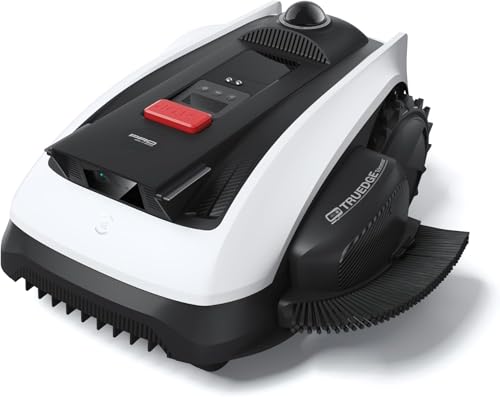
The ECOVACS Goat O1000 LiDAR PRO is a wire-free robotic lawn mower designed for homeowners who want a modern, hands-off approach to lawn care. It suits tech-savvy users with lawns up to 1/4 acre - typically suburban or compact properties. The mower uses a 360-degree dual LiDAR system and AI vision to create a detailed map of your yard without needing a perimeter wire or RTK antenna, which makes installation simpler and more flexible than traditional robotic mowers.
In terms of cutting performance, the Goat O1000 uses its LiDAR navigation to maintain precise 2 cm positioning, ensuring consistent coverage even in shaded areas, under trees, or near fences where GPS-based mowers often lose signal. The integrated TruEdge trimmer allows it to cut right along driveways, sidewalks, and flower beds, reducing the amount of manual string trimming you'd need to do afterward. For most standard lawn borders, this edge-to-edge mowing works well, though the manufacturer notes that highly complex corners or raised edges may still require occasional touch-ups.
Build quality appears solid with a white plastic body and a narrow design (just 0.8 m wide) that helps it fit through tight passages. The dual LiDAR sensors and front-facing camera are well-protected, and the overall construction feels durable for regular outdoor use. Because it's fully electric, there's no fuel or oil to manage, and the sealed battery system requires minimal maintenance - just occasional cleaning of the sensors and blades.
Setup is handled through the ECOVACS app, where you can let the mower explore and map your yard on its first run. You can then set mowing zones, schedules, and define no-go areas for spots like flower beds or play areas. The initial mapping may take a session or two to get right, but once done, daily operation is fully automatic. Storage is easy since the mower is compact and can be kept in a garage or shed without taking up much floor space.
One realistic limitation is the price tag, which positions it as a premium option. Additionally, the 1/4 acre max coverage means it's not suitable for larger lawns unless you buy multiple units. While the obstacle detection is impressive, very small or low obstacles might occasionally be missed, so you'd want to do a quick yard check before each mow. Battery life is not specified in the specs, but typical robotic mowers in this class run for about 60-90 minutes, which should be enough for a quarter-acre yard.
Overall, the ECOVACS Goat O1000 LiDAR PRO is a strong choice for homeowners who value convenience, modern navigation, and minimal upkeep. If you have a tech-friendly mindset and a lawn that fits the size requirement, this mower could save you a lot of weekend time. For those on a tighter budget or with larger yards, alternatives like a manual push mower or a larger robotic mower might be more practical.
The Goat O1000 relies on a HoloScope 360-degree Dual-LiDAR system that creates a detailed, wire-free map of your yard. It doesn't need GPS or a perimeter wire, which makes it especially reliable under trees, near fences, and in shaded areas where many other robotic mowers struggle. The 2 cm positioning accuracy ensures the mower follows efficient paths and returns to its charging base without issue. Initial mapping is done via the ECOVACS app, and the system learns your lawn layout over time. You can adjust boundary zones and no-go areas easily through the app, giving you fine control over where the mower operates.
One standout feature is the integrated TruEdge trimmer, which allows the mower to cut grass right along borders - driveways, sidewalks, flower beds, and other obstacles. This reduces the need for manual string trimming after the robot finishes. The mower's narrow body also helps it get closer to edges than many bulkier models. For standard rectangular or gently curved borders, the edge trimming is very effective. However, the manufacturer states that highly complex corners, narrow gaps, or raised edges may still need occasional manual attention. Overall, this feature saves noticeable time on weekly lawn maintenance.
Powered by AI Vision and 3D ToF LiDAR, the Goat O1000 can identify and avoid more than 200 types of obstacles, including kids' toys, patio furniture, pets, and small wildlife. Detection precision is down to 5 cm, so it maintains a safe clearance while still cutting grass closely around objects. This helps protect both the mower and your landscaping. The system is especially useful for yards with lots of garden features or play equipment. In use, the mower will slow down or stop when it detects something unexpected, then navigate around it after reassessing. While it's very capable, it's still a good idea to pick up loose items before mowing to avoid any occasional nudge.

Pros
- No perimeter wire required - quick 5-minute setup and easy lawn mapping.
- Advanced obstacle avoidance using AIVI 3D to protect yard items and the mower.
- Quiet, eco-friendly electric operation with low maintenance - no gas, oil, or spark plugs.
- App control with zoning, scheduling, and real-time monitoring for tailored mowing.
Cons
- Limited to lawns up to 1/4 acre; not suitable for larger properties.
- No user reviews yet, so real-world performance is unverified.
- Initial cost may be higher than traditional push mowers for small lawns.
The ECOVACS Goat O1000 RTK is a wire-free robotic lawn mocker built for homeowners with small to medium lawns up to 1/4 acre. It is designed for those who want a fully automated mowing experience without the hassle of installing boundary wires or dealing with noisy gas engines. This model is best suited for suburban yards with simple to moderately complex landscapes, including trees, flower beds, and slopes up to 45%.
Performance-wise, the Goat O1000 uses a combination of RTK, Vision, and 3D ToF sensors for centimeter-level positioning. According to the product description, it creates precise mowing patterns and handles tricky areas around trees and other obstacles. The AIVI 3D obstacle avoidance system can detect lawn furniture, toys, pets, and even narrow passages as tight as 2.3 feet. This means less worry about the mower getting stuck or damaging things. It also handles slopes up to 24 degrees, which covers most residential yards.
Build quality appears solid at 23.58 pounds, with a compact footprint of about 24 by 10 by 16 inches. The black plastic body is typical for outdoor robots, though specific weather resistance ratings are not provided. Users should expect it to handle light rain and dew but may want to store it in a sheltered spot when not in use. The low height and light weight make it easy to lift and carry to storage.
Setup is one of its biggest selling points: no perimeter wire to bury. The robot maps the lawn automatically using LiDAR-enhanced RTK, so initial configuration takes about 5 minutes. From there, the ECOVACS App lets you create multiple mowing zones, set no-go areas, adjust cutting height, and set schedules. Maintenance is minimal - just clean the blades and sensors occasionally, and replace blades when needed. No oil changes, no gas mixing, and no spark plug checks.
However, there are realistic limitations. The 1/4 acre limit means it won't work for larger properties. Also, with zero customer reviews at the time of this review, it's hard to gauge real-world reliability and durability. The price of $699 is competitive for a wire-free robot mower, but still a significant upfront investment compared to a basic push mower. Some users might find the app connectivity occasionally finicky.
Overall, the ECOVACS Goat O1000 RTK is a compelling option for homeowners who want a wire-free, automated lawn solution for a small yard. If you value convenience and quiet operation over raw power, and your lawn fits the size and slope requirements, this mower could be a great fit. Consider it if you're tired of manual mowing and want to reclaim your weekends.
The Goat O1000 RTK relies on a triple-sensor system: RTK (Real-Time Kinematic) satellite positioning, Vision camera, and a 3D Time-of-Flight sensor. This combination allows the mower to map your yard without any perimeter wires and navigate with centimeter-level accuracy. According to the product specifications, it can detect obstacles as small as 2.3 feet wide, including lawn furniture, toys, trees, and pets. This helps prevent collisions and keeps both the mower and your yard safe. It can also handle slopes up to 45% (24 degrees), which covers most residential inclines. The intelligence means less babysitting and more reliable mowing around complex landscapes.
With the ECOVACS App, you have full control over the Goat O1000 RTK from your smartphone. You can create multiple mowing zones, set no-go areas (like around flower beds or kids' play areas), adjust cutting height, and set weekly schedules. The app also shows real-time mowing progress, battery status, and any error alerts. The mower automatically returns to its charging dock when the battery is low, then resumes mowing once charged. This level of automation means you can set it and forget it, letting the robot handle lawn care while you relax or tackle other tasks.
Evaluating Autonomous Robotic Lawn Mowers for Modern Residential Turf
The direct answer to whether robotic lawn mowers are worthwhile depends on your yard layout, grass species, and willingness to adopt a different turf maintenance routine. Modern autonomous mowers keep an established lawn manicured by cutting tiny fractions of an inch every day. They eliminate the weekly strain of pushing heavy machinery or breathing exhaust on hot summer afternoons. While they cannot clear overgrown brush or reclaim neglected fields, these machines provide consistent cut quality on maintained lawns while operating quietly in the background.
Early models often frustrated homeowners with fragile perimeter wires, random bounce patterns, and poor slope traction. Today, wire-free navigation architectures using Real-Time Kinematic satellite positioning, dual-LiDAR scanning, and optical artificial intelligence have resolved those early limitations. Integrated border trimmers and intelligent multi-zone path planning allow modern units to groom complex suburban lots with minimal manual touch-up work. Evaluating these mowers requires understanding how navigation systems, cutting disc mechanics, traction platforms, and routine maintenance translate into real-world lawn health.
The Shift from Buried Boundary Wires to Wire-Free LiDAR and RTK Navigation
Traditional robotic mowers required low-voltage perimeter wires buried along property borders to create an invisible guide loop. While functional on flat lawns, perimeter wires presented constant maintenance headaches because aerators, garden trowels, and burrowing pests frequently severed the buried line. Locating a subterranean wire break often required specialized pulse generators and hours of tedious diagnostic tracing along fence lines. Modern autonomous platforms have largely transitioned to wire-free boundary mapping, allowing homeowners to set boundaries digitally using mobile apps or remote manual steering. This shift saves hours during initial setup and eliminates seasonal wire repairs.
Wire-free systems generally utilize either Real-Time Kinematic satellite positioning or solid-state LiDAR scanning to map and navigate the yard. RTK-GNSS systems achieve centimeter-level positioning accuracy by comparing satellite signals received by the mower against a stationary reference antenna mounted on a roof or fence. This dual-station setup allows the mower to cut in orderly, parallel stripes rather than wandering aimlessly across the lawn. However, RTK signals can experience momentary dropouts under dense tree canopies or beside tall structures where clear sky visibility is blocked.
To overcome satellite signal dropouts in shaded yards, modern units incorporate panoramic LiDAR sensors and binocular artificial intelligence cameras. Systems such as HoloScope 360-degree Dual-LiDAR emit laser pulses to measure physical distances to trees, fences, garden edging, and buildings in real time. Because LiDAR references physical structures rather than distant satellites, it maintains steady positioning accuracy regardless of canopy density. Multi-sensor fusion platforms combine RTK, LiDAR, and optical odometry so that if satellite reception weakens, optical vision and laser scanning seamlessly bridge the gap.
Cutting Mechanism Physics and Turfgrass Health Dynamics
Traditional rotary mowers utilize thick forged steel blades that require massive rotational inertia to chop through overgrown grass stems. In contrast, robotic lawn mowers employ high-speed rotating discs equipped with multiple razor-sharp, freely pivoting cutting blades. These small blades slice through individual grass blades cleanly rather than tearing leaf tissue with blunt force. Cleanly cut grass blades experience less moisture loss and heal quickly, reducing the entry points for fungal pathogens and lawn diseases. The resulting cut produces an exceptionally smooth, carpet-like turf canopy across healthy residential lawns.
Daily micro-cutting produces fine, almost microscopic clippings that settle instantly into the turf canopy without creating thick surface thatch. These fine clippings decompose rapidly, releasing valuable nitrogen, potassium, and organic moisture directly back into the soil root zone. Because clippings are recycled continuously, homeowners can reduce synthetic fertilizer applications while maintaining rich green turf color throughout the season. In wet spring conditions, traditional heavy rotary mowers frequently leave thick, matted clumps of cut grass that smother the lawn below. The micro-mulching action of autonomous mowers avoids clumping because the machine only removes tiny leaf tips during each pass.
Tough, spreading warm-season grasses such as Bermuda, Zoysia, and St. Augustine demand strong cutting torque to prevent motor bogging during peak summer growth. High-voltage power systems, such as 32V motor platforms and dual 165W cutting heads, provide the sustained rotational speed necessary to process thick turf without stalling. The pivoting blade disc design also offers critical mechanical protection when the mower encounters unseen yard debris. If a razor blade impacts a hidden tree root or stone, the blade simply pivots backward on its mounting shoulder bolt rather than bending a motor spindle. This design keeps consumable replacement costs low and protects the drivetrain from damage.
Terrain Traversal, Slope Management, and All-Wheel-Drive Traction
Lawn topography is often the deciding factor in whether an autonomous mower can successfully manage a residential property. Standard two-wheel-drive robotic mowers use rear drive wheels paired with front passive casters, which perform reliably on flat, well-graded turf. On properties with rolling berms or drainage swales, two-wheel-drive units can experience drive-wheel slip that tears turf or causes the chassis to slide sideways downhill. Damp morning dew on fescue or bluegrass significantly lowers the traction coefficient, leading front casters to drift off course. When steering drift occurs, internal inertial sensors detect a positional error that can stop the mower and trigger a notification.
Homeowners with steep hills or rolling ground require heavy-duty all-wheel-drive platforms featuring independent hub motors at every wheel. Advanced AWD models can conquer dramatic 80 percent slopes, which corresponds to an incline angle of 38.7 degrees. When evaluating specialized incline mowing equipment, remember that standard riding tractors and zero-turn mowers are strictly limited to 15-degree slopes under ANSI/OPEI B71.1 safety guidelines to prevent dangerous rollovers. Autonomous slope mowers carry an ultra-low center of gravity with heavy lithium battery packs positioned just inches above the turf surface, allowing them to climb steep embankments safely.
In addition to slope climbing, modern chassis design includes adaptive suspension systems that cushion the cutting assembly over rugged ground. Independent wheel articulation allows the mower to step over surface roots, sunken sprinkler heads, and small walkway thresholds up to 50 millimeters high without high-centering. Dynamic suspension stabilizes the cutting disc posture so the blades maintain an even cutting plane over bumps rather than scalping small mounds. Rugged off-road tires with deep lug patterns channel mud away from the tread surface to preserve ground contact on damp turf.
Real-World Obstacle Detection and Yard Safety Sensors
Safety and object navigation are central concerns when letting an autonomous grass cutter operate unsupervised around children, pets, and outdoor furniture. Early robotic mowers depended almost entirely on mechanical bump sensors, requiring the machine to physically strike an object before changing direction. While bump bumpers protect trees and sturdy fence posts, they can damage lightweight lawn decor, run over garden hoses, or endanger small wildlife. Contemporary smart mowers utilize multi-sensor fusion combining 3D Time-of-Flight LiDAR, stereo cameras, and artificial intelligence object classification models to detect obstacles in advance.
Visual recognition algorithms can reliably distinguish between static objects like patio furniture and dynamic hazards such as dogs, cats, or hedgehogs. Many modern mowers feature specialized wildlife-friendly operating modes that automatically disable nighttime cutting cycles or elevate obstacle detection sensitivity after dusk. When an obstacle is detected within its safety envelope, the mower smoothly decelerates, alters its travel path, and records the obstruction on the virtual map. If an unexpected object approaches the machine while it is working, lift and tilt sensors immediately kill motor power to the spinning blade disc within fractions of a second.
Border Edging Precision and Narrow Passage Navigation
One of the most persistent complaints regarding traditional robot mowers is their inability to cut cleanly up to vertical obstacles and fence borders. Because the cutting disc is positioned safely inside the protective chassis shell to meet safety regulations, blades cannot physically reach the outer perimeter of the wheels. This mechanical limitation historically left a four to six-inch strip of uncut grass along brick walls and fences that required manual trimming. Modern engineering has tackled this limitation through specialized edge-trimming technologies, such as the TruEdge trimming module, using dedicated trimming line to slice right along hard boundaries.
Narrow corridors between house foundations and perimeter property fences present another significant navigational challenge for autonomous equipment. Standard riding mowers with 42-inch decks cannot navigate standard 36-inch backyard gates, forcing homeowners to maintain separate push mowers for side yards. Compact robotic mowers feature slim-body designs that allow them to transit narrow passages as slim as 0.8 meters, or roughly 31.5 inches. Sophisticated path planning software enables the mower to follow virtual transit channels between distinct mowing zones across pavement or gravel walkways while disengaging the cutting disc during transit.
Routine Upkeep, Blade Maintenance, and Seasonal Care
While robotic mowers eliminate weekly push mowing, they are not completely maintenance-free machines that can be ignored for months. The primary routine task involves monitoring and replacing the small, razor-sharp blades attached to the spinning disc. Grass sap and abrasive soil dull these tiny cutting edges over four to eight weeks of continuous operation, depending on lawn acreage and turf density. Dull blades tear grass leaves rather than cutting them cleanly, turning the lawn tips brown and increasing motor load. Replacing these blades requires only a screwdriver and a few minutes.
Underside deck hygiene is another essential ownership responsibility that preserves motor efficiency and cut quality. Wet grass clippings, sticky dandelion residue, and moist soil inevitably accumulate around the cutting disc and drive wheels over time. Excessive grass buildup restricts blade rotation, increases battery consumption per square foot, and can cause cutting height adjustment mechanisms to seize. Applying a non-stick lawn mower deck spray creates a protective barrier on the underside housing that prevents wet grass from adhering to the chassis, keeping the pivoting blade discs spinning freely.
Seasonal battery care dictates the long-term lifespan and replacement economics of an autonomous lawn care platform. Lithium-ion battery packs endure hundreds of charge cycles throughout the mowing season, with fast chargers replenishing power in 45 to 50 minutes. When autumn concludes and turf enters winter dormancy, the mower and its charging dock station should be thoroughly cleaned and stored indoors away from freezing temperatures. Storing the machine in a dry environment with the battery charged to roughly fifty to seventy percent prevents cell degradation during months of non-use.
Practical Property Compatibility and Long-Term Ownership Verdict
Determining whether an autonomous lawn mower represents a sound investment comes down to matching your property layout against the technical strengths of these machines. Homeowners with relatively clean, well-fenced suburban yards between a quarter-acre and a half-acre experience the highest satisfaction rates. On these properties, automated mowing virtually eliminates weekend yard chores while producing turf quality that rival professional landscaping services. Properties with sprawling open acreage up to several acres can also benefit substantially, provided you select an all-wheel-drive unit equipped with a high-capacity battery and multi-zone RTK navigation.
From an economic perspective, a robotic mower eliminates the ongoing fuel purchases, oil changes, air filter replacements, and spark plug servicing required by gas-powered equipment. Over two to three seasons of ownership, the machine typically pays for itself when compared to the recurring fees of professional lawn maintenance contracts. More importantly, it reclaims dozens of personal hours every summer, quietly maintaining the yard while you spend time with family. Provided you take the time to map your boundaries accurately and perform simple monthly blade swaps, a modern wire-free robotic mower is an exceptionally effective upgrade for residential turf.








Write Your Review
No reviews yet. Be the first to share your experience!