


Pushing a walk-behind machine across dense turfgrass on a warm afternoon quickly turns routine yard maintenance into an exhausting workout. Homeowners managing quarter-acre to half-acre properties frequently question should i get a self propelled mower when physical fatigue, dense southern turf varieties, or uneven ground begin slowing down their weekly mowing routine. While a standard manual push mower works adequately on tiny, dead-flat city plots, an integrated drive system transfers engine power directly to the drive wheels, eliminating the strenuous effort needed to propel a heavy steel cutting deck forward.
Evaluating this equipment choice requires balancing the mechanical advantages of motorized wheels against machine curb weight, storage footprints, and ongoing drive maintenance. If your yard features noticeable terrace grades or rolling banks, reviewing a guide to mowing steep hills can clarify how drive traction impacts safety on slopes. Understanding transmission configurations, engine displacement, and cordless battery platforms will help determine whether a motorized walk-behind mower aligns with your turf care routine and yard layout.

Pros
- Self-propelled rear-wheel drive offers excellent traction on slopes and uneven ground.
- 170cc OHV engine provides ample power for thick or wet grass.
- Steel deck is sturdy and built to last.
- 6-position height adjustment gives flexibility for different grass lengths.
- Foldable handle saves storage space.
Cons
- Weighs 59 pounds, which may be heavy for some users to lift or maneuver manually.
- Recoil start requires some effort; no electric start option.
- Assembly may take some time and tools, though instructions are clear.
The PowerSmart 21-inch self-propelled gas lawn mower is designed for homeowners who need reliable cutting power on uneven or sloped terrain. With a 170cc OHV engine and rear-wheel drive, this walk-behind mower reduces physical effort while delivering consistent performance. It suits medium to large lawns, especially those with hills or bumpy ground.
In real-world use, the engine starts reliably with the auto choke and recoil system, even after sitting for a while. The self-propelled drive engages smoothly, and the rear-wheel traction helps maintain control on inclines. The steel deck withstands bumps and debris, and the 3-in-1 capability lets you mulch, side discharge, or bag clippings depending on the season. The 21-inch cutting width is efficient for most suburban yards.
Build quality feels solid for the price point. The steel deck resists rust and dents, and the wheels roll well over grass and packed soil. The height adjustment uses dual levers, making it easy to change cutting height from 1.5 to 3.9 inches without stopping. The handle folds for compact storage, which is handy for smaller garages or sheds.
Setup requires attaching the handle and grass bag, which takes about 20-30 minutes with basic tools. Maintenance includes checking oil, cleaning the deck, and sharpening the blade periodically. The foldable design helps store it upright or flat. Some users may find the 59-pound weight a bit heavy to lift, but the self-propelled feature minimizes pushing effort during mowing.
One limitation is the lack of an electric start, so users need to pull the recoil cord each time. Also, the grass bag capacity is adequate for typical use but may require emptying more often in tall grass. Noise levels are typical for a gas mower, so ear protection is recommended.
Overall, the PowerSmart 21-inch self-propelled mower offers good value for homeowners seeking a durable, powerful machine for sloped lawns. It handles thick grass, offers versatile discharge options, and stores easily. If you prefer a lighter or electric model, this may not be ideal, but for gas-powered reliability and traction, it's a solid choice.
The PowerSmart 21-inch mower is powered by a 170cc OHV 4-stroke engine with auto choke and recoil start. This engine provides enough torque to cut through thick, wet, or overgrown grass without bogging down. The overhead valve design improves fuel efficiency and reduces emissions compared to older side-valve engines. The auto choke simplifies starting—just prime and pull. Regular maintenance includes checking oil levels and cleaning the air filter. The engine runs on regular unleaded gasoline, and the fuel tank capacity is sufficient for mowing a typical lawn without refueling.
Pros
- Smooth variable-speed control with CVT gives you precise pace matching, reducing fatigue on long pushes.
- High rear wheels and spiked tires handle rough terrain and bumpy yards well.
- 3-in-1 cutting options make it a flexible year-round tool.
- Tool-free, single-lever height adjustment is simple to use.
- Automatic choke and easy-start engine reduce frustration for casual users.
Cons
- Heavy at 84.9 pounds, which may be tough for older or physically limited users to lift or turn around.
- Requires regular gas engine upkeep - oil changes, filter cleaning, and winterizing - compared to a plug-in electric model.
- The 22-inch cutting width is fine for mid-sized yards, but larger properties may find it a bit narrow for faster mowing.
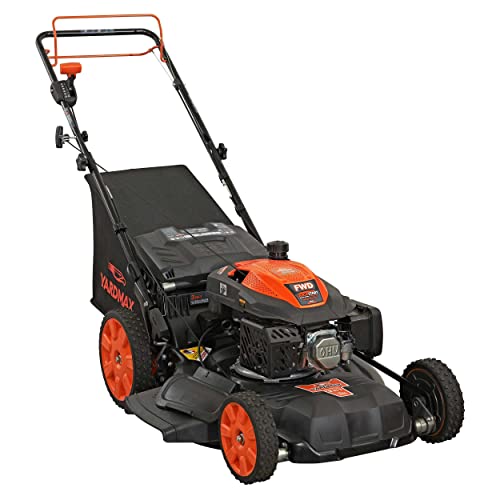
The YARDMAX YG2860 is a gas-powered, self-propelled walk-behind lawn mower built for homeowners who want dependable cutting power without wrestling with a cord or waiting on a battery charge. With a 22-inch steel deck, a 201cc engine, and a continuously variable transmission, this mower sits in the sweet spot for suburban yards and small-to-medium properties. It is especially useful for people with uneven terrain or those who simply want the mower to do more of the legwork.
Under typical conditions, the 22-inch cutting width helps you cover a decent path in each pass, while the 3-in-1 design lets you bag clippings for a tidy lawn, mulch them for natural fertilizer, or blow them out the side discharge for fast work during heavy growth. The CVT's six-speed range is a standout for navigating obstacles: you can slow to a crawl near flower beds, then speed up along open stretches. PACE technology is designed to match your walking speed, so you're not constantly fighting the throttle or dragging the mower along.
The high-wheel design is a practical choice for bumpy yards, since larger wheels roll over dips and lumps more easily than the standard small rear wheels found on many budget mowers. The aggressive spiked tread tires add grip on wet grass and gentle slopes, reducing the likelihood of wheel spin. The black steel deck feels solid, and the built-in cleanout port makes post-mow maintenance less of a chore. Keep in mind that a steel deck can be prone to rust if you store the mower outside or leave grass packed under it, so regular cleaning is worthwhile.
Assembly is generally straightforward for a self-propelled mower - the handle folds for compact storage in a garage or shed, and the single-lever height adjustment means you can change cutting height without needing tools. The automatic choke system is a genuine convenience: no priming or fiddling with a separate choke lever, just start and go. As with any gas mower, expect to change the oil annually, keep the air filter clean, and use fresh fuel. The deck cleanout port simplifies washing away clippings, which can extend the life of the deck.
The biggest trade-off is weight - at roughly 85 pounds, this is not a lightweight machine. Pushing it is easy thanks to the self-propelled drive, but lifting it into a truck bed or carrying it over stairs can be a workout. The 22-inch deck is also best suited to yards under half an acre; anything larger will mean more passes. And because it's gas-powered, you'll have the usual engine maintenance that cordless or plug-in mowers avoid.
For homeowners who want a reliable, powerful self-propelled mower with adjustable speed and rugged wheels, the YARDMAX YG2860 is a strong value at its price point. It may not be the best choice for anyone with physical limitations or a tiny storage space, but for a typical American yard with slopes, mature turf, and the occasional heavy growth, it's a practical workhorse. Based on the product specs and user feedback, this mower should serve well for many seasons of Saturday morning mowing.
The 22-inch steel deck gives a good balance between maneuverability and cutting swath. The 3-in-1 system allows you to bag, mulch, or side discharge without needing an adapter. For mulching, the mower relies on blade design and suction to recut clippings into fine pieces, which works best when the grass is dry. The single-lever height adjustment offers a range of cutting heights, so you can keep the lawn at your preferred length through the season.
Power comes from a 201cc gas engine, which should handle thick grass and damp conditions without bogging down as easily as smaller engines. The automatic choke system removes the guesswork from starting, and the CVT gives you six speed settings so the mower can maintain momentum while you walk at a natural pace. Note that gas engines need fuel, oil, and periodic maintenance, but they also offer unlimited runtime, making them a good fit for larger lots.
The high wheels and rubber spiked tires help the mower roll over uneven ground, and the self-propelled drive reduces pushing effort. Six speed options allow you to slow down in tight corners and speed up on open stretches. The handle folds for storage, and the overall footprint is reasonable for a garage or shed. At 84.9 pounds, you'll want to park it where you don't have to lift it often.
To keep this mower running well, check the oil level before each use and change it as recommended in the manual. Clean the air filter periodically and replace it if it's dirty. Use the deck cleanout port with a garden hose to wash away grass clippings after mowing, and let the deck dry before storing. Keep the blade sharp for clean cuts, and use fresh unleaded gas to avoid fuel-system issues.

Pros
- Powerful brushless motor and 80V battery provide ample torque and runtime for medium-sized lawns.
- Self-propelled rear-wheel drive with variable speed makes mowing on hills effortless.
- Quieter operation compared to gas mowers - good for early morning mowing.
- LED headlight is a thoughtful addition for low-light conditions.
- Steel deck feels sturdy and durable.
Cons
- Battery and charger included, but runtime may vary with grass conditions; heavy or wet grass may reduce runtime.
- At 75 pounds, it's not the lightest electric mower, though self-propelled helps.
- No reviews yet, so real-world performance feedback is limited.
The Greenworks 80V 21in Self-Propelled Lawn Mower is a cordless electric mower designed for homeowners with medium-sized lawns up to about half an acre. It combines the convenience of battery power with the performance of a brushless motor and a durable steel deck, making it a strong contender for those looking to move away from gas mowers.
In terms of cutting performance, the 21-inch deck with brushless motor provides consistent power for most grass conditions. The self-propelled rear-wheel drive with variable speed control helps you maintain a steady pace on slopes and uneven ground. The mower offers mulching, bagging, and side discharge options, giving you flexibility for different yard needs. The LED headlight is a practical feature for early morning or evening mowing sessions.
The steel deck adds durability and longevity, while the overall build feels solid. The 80V battery system is part of Greenworks' platform, so you can use the same battery with other tools. The mower weighs about 75 pounds, which is on the heavier side for an electric mower, but the self-propelled drive makes it easy to push.
Assembly is straightforward, with most components pre-assembled. The handle folds for compact storage, which is helpful for garages with limited space. Maintenance is minimal compared to gas mowers - no oil changes, no spark plugs. Just keep the blade sharp and the deck clean.
One limitation is the runtime; the included 4.0Ah battery may not complete a full half-acre if the grass is thick or wet. Some users may want to purchase an extra battery for larger lawns. Also, since this is a new model with no reviews yet, long-term reliability is unknown. The price point of $449.99 is competitive for a premium 80V self-propelled mower.
Overall, the Greenworks 80V self-propelled mower appears to be a well-rounded option for homeowners seeking a quiet, low-maintenance electric mower with good power and features. It's especially suited for those with sloped yards who will benefit from the rear-wheel drive. If you're in the market for a cordless mower and value self-propelled convenience, this model is worth considering.
The Greenworks 80V 4.0Ah battery provides enough power for up to 1/2 acre on a single charge, depending on grass conditions. The battery is compatible with other Greenworks 80V tools, so you can share batteries across your yard equipment. Charging time is approximately 1-2 hours using the included charger. For larger lawns or tougher cutting conditions, an additional battery may be needed to complete the job. The brushless motor efficiently uses battery power, extending runtime compared to older brushed motors.

Pros
- Powerful brushless motor with high RPM ensures clean cuts even in thick grass.
- Self-propelled system eases mowing on hills and large lawns, reducing fatigue.
- Dual 8.0Ah batteries provide ample runtime for typical suburban lots.
- Lightweight and compact design for easy storage and maneuverability.
- 3-in-1 versatility for mulching, bagging, or discharging clippings.
Cons
- Battery runtime may be limited for very large lawns (over 1/4 acre) - consider a spare set.
- 20.5-inch cutting deck is smaller than some gas mowers, meaning more passes on larger areas.
- No side discharge included - only rear discharge and mulching/bagging.
The KraftSense 20.5-inch cordless self-propelled mower is designed for homeowners with small to medium lawns (up to a quarter acre) who want a quieter, cleaner alternative to gas mowers. Its 40V dual-battery system and brushless motor aim to deliver consistent cutting power without the hassle of cords or fuel.
According to product specifications, the brushless motor spins at 4,100 RPM, enabling clean cuts through typical grass. The 3-in-1 system allows mulching, bagging, or rear discharge, giving flexibility depending on the season. The self-propelled drive helps reduce pushing effort on slopes, based on the manufacturer's claims.
The mower weighs about 38 pounds, making it relatively light for a self-propelled model. The deck is likely durable for regular use, and the 16-gallon bag reduces emptying frequency. The eight height-adjustment settings from 1.2 to 3.9 inches accommodate different grass lengths.
The mower arrives partially assembled; owners may need to attach the handle and grass bag. The handle folds for upright storage, saving garage space. Battery charging takes some time, but having two 8.0Ah batteries provides extended runtime.
One potential drawback is the 20.5-inch cutting width, which is smaller than some gas mowers, meaning more passes on larger lawns. Battery runtime is rated for up to a quarter acre; bigger properties may require additional batteries. Also, there is no side discharge option, only rear discharge.
For homeowners seeking a cordless mower with self-propelled convenience and good battery life for typical suburban yards, the KraftSense offers solid value at its price point. It may be a practical choice for those wanting to switch from gas without breaking the bank.

Pros
- Strong 201cc engine provides reliable power for large lawns and thick grass without bogging down.
- 22-inch cutting width covers more ground per pass, saving time on medium to large properties.
- Self-propelled drive with large rear wheels reduces pushing effort on slopes and uneven terrain.
- Versatile 3-in-1 system allows bagging, mulching, or side discharge to match lawn care needs.
Cons
- At roughly 80 pounds, this mower is heavier than many electric models, which may make it less ideal for small yards or hilly terrain without the self-propel engaged.
- Some users may find the single-speed self-propel limited compared to variable-speed models for precise pace control.
- Assembly is required out of the box, and the engine needs oil and fuel before first use—a minor setup step for gas mowers.
The SENIX 201cc self-propelled gas lawn mower is designed for American homeowners with medium to large lawns who want a dependable machine that can handle tough grass and uneven ground. It bridges the gap between budget-friendly push mowers and high-end commercial models, offering a solid blend of power, cutting width, and convenience features. This mower is especially well-suited for suburban lawns, rural properties, or anyone tired of wrestling a lightweight mower through thick spring growth.
Under the hood, the 201cc OHV 4-stroke engine provides reliable torque to power through tall grass and damp conditions without stalling. The 22-inch stamped steel deck cuts a wider swath than the typical 20-inch mower, which can save you several passes on a half-acre lot. The self-propelled drive engages with a simple lever, and the large 11-inch rear wheels help maintain traction on slopes and soft ground. While the single-speed drive lacks the fine-tuned control of variable-speed systems, most users will find it adequate for maintaining a steady walking pace.
Build quality is a highlight here—the steel deck feels sturdy and resistant to dings and rust, and the wheels are substantial enough to roll over ruts and roots. The 3-in-1 system lets you switch between bagging, mulching, and side discharge with a quick change of the plug and chute. Mulching performance is decent for regular maintenance, though very long or wet grass may require a second pass. The single-lever height adjustment is smooth and offers six positions from 1.25 to 4 inches, making it easy to raise the deck for rough terrain or lower it for a manicured look.
Setting up the mower out of the box involves attaching the handle, installing the grass bag, and adding oil and fuel—a straightforward process that takes about 20 minutes. Storage is manageable thanks to a foldable handle that reduces the footprint in your garage or shed. Routine maintenance includes checking oil levels, cleaning the deck after each use, and sharpening or replacing the blade annually. The engine features a low-oil shutdown to protect against damage, and the air filter is easy to access for cleaning.
On the downside, this mower is heavier than many electric alternatives, weighing around 80 pounds. While the self-propel helps, you'll still feel the weight when turning or maneuvering in tight spaces. The grass bag capacity is adequate but may need frequent emptying on larger lawns. Also, the single-speed drive means you can't adjust your pace independently of the mower's speed—something to consider if you prefer a slower or faster walk.
Overall, the SENIX 201cc self-propelled mower delivers strong performance for the price. It's a practical choice for homeowners who need a gas-powered workhorse for a medium to large lawn and want features like a wider deck, easy height adjustment, and 3-in-1 versatility without spending over $400. If you're looking for a reliable mower that can handle regular weekly cuts and occasional overgrowth, this model is worth a close look.

Pros
- Rear-wheel drive handles slopes and uneven terrain better than front-drive models
- Wide 22-inch cutting deck reduces mowing time compared to smaller 20- or 21-inch mowers
- 170cc engine provides ample power for thick, dense grass without bogging down
- Multiple cutting options (mulch, bag, discharge) offer versatility for different lawn conditions
Cons
- At 75 pounds, it's fairly heavy for a push mower; maneuvering on flat ground may require more effort when self-propel is not engaged
- Steel deck, while durable, adds weight and may be prone to rust if not cleaned and stored properly
- Some users find the grass bag connection could be more secure; occasional jams when bagging wet grass
The PowerSmart 22-Inch 170cc Self Propelled Gas Lawn Mower is a practical choice for homeowners with medium to large suburban yards who want a reliable, gas-powered mower without spending over $400. It’s specifically suited for those who face gentle slopes or uneven ground and prefer a self-propelled rear-wheel drive to reduce pushing effort.
In terms of cutting performance, the 170cc OHV engine delivers consistent power through thick grass and light weeds. The 22-inch steel deck cuts a wide path, which helps you finish the lawn faster—especially useful if you're mowing a half-acre lot. The 3-in-1 system works well: mulching chops clippings fine for natural fertilization, the rear bag holds a generous 60 liters, and side discharge is available for tall growth. The six-position height adjustment covers a useful range from 1.5 to 3.9 inches, allowing you to adapt to seasonal conditions, from close spring cuts to longer summer lengths that shade the soil.
Build quality is solid for the price point. The steel deck feels sturdy and should withstand several seasons of typical use, though it will benefit from occasional cleaning and a coating of rust preventative if stored in damp conditions. The rear-wheel drive provides decent traction on slopes, though on wet grass or loose soil you may still need to guide the machine. The handle is comfortable and the controls are straightforward—auto choke and recoil start are user-friendly, even for first-time gas mower owners.
Assembly is moderate: expect to attach the handle, grass bag, and possibly adjust cables—plan about 30 minutes with basic tools. Storage is manageable thanks to a foldable handle that reduces footprint in a garage or shed. Maintenance includes regular oil changes (the engine is a 4-stroke), air filter cleaning, and blade sharpening. The recoil start is reliable, but be prepared to refill gas each season; there is no electric start option.
A realistic limitation is the mower's weight—75 pounds—which makes it less maneuverable when not self-propelled, such as when turning or navigating tight flower beds. Also, the grass bag connection can sometimes come loose if the bag is overfilled or when mowing damp grass. Some users report that the self-propel speed is not variable, so you'll need to adjust your walking pace to match.
Overall, the PowerSmart 22-Inch 170cc Self Propelled Gas Mower offers strong value for homeowners wanting a capable gas mower with self-propelled ease and versatile cutting options. It’s a solid pick for suburban lawns with modest slopes and regular mowing needs, especially if you’re on a budget but don’t want to sacrifice power or deck size.
The 170cc OHV 4-stroke engine is the heart of this mower. It provides reliable power for cutting thick, tall grass without stalling. The overhead valve design improves fuel efficiency and reduces emissions compared to older side-valve engines. Auto choke and recoil start simplify cold starts—just prime and pull. The engine runs on regular unleaded gas and requires standard SAE 30 oil (not included). No battery or cord needed, so you can mow as long as there's fuel in the tank. The engine is not the quietest, but at typical gas mower noise levels it’s acceptable for daytime use in most neighborhoods.

Pros
- Strong 170cc engine provides ample power for thick grass and moderate slopes.
- Self-propelled drive eases mowing on hills and reduces user fatigue.
- 3-in-1 system offers flexibility for mulching, bagging, or discharging clippings.
- Easy height adjustment and folding handle add convenience and storage efficiency.
Cons
- No side discharge option - only rear discharge and bagging; mulching requires the included plug.
- At 68 pounds, it may be heavy for some users to maneuver when not self-propelled.
- Limited reviews available at launch, so long-term reliability is unproven.
The PowerSmart 22-Inch Self Propelled Gas Lawn Mower is designed for American homeowners who need a reliable, no-fuss mower for medium to large lawns. Its 170cc 4-cycle OHV engine provides plenty of torque to cut through thick grass, while the self-propelled rear-wheel drive helps you tackle slopes without excessive effort. This mower suits budget-conscious buyers who want gas power without stepping up to a premium brand.
In terms of cutting performance, the 22-inch steel deck and heavy-duty blade deliver a clean cut across a wide path, reducing mowing time. The 3-in-1 system lets you mulch clippings for natural fertilizer, collect them in the rear bag, or discharge out the back. Based on the product description, switching between modes is straightforward. The six cutting heights (1.5 to 3.9 inches) give you control for early spring cuts or leaving grass longer in summer heat.
Build quality appears solid for the price point. The steel deck should resist rust with proper care, and the folding handle allows compact storage in a garage or shed. Assembly requires no tools, which is a nice convenience. The self-propelled drive engages via a lever, and the auto choke simplifies starting - just pull the recoil starter and go.
Maintenance is typical for a gas mower: check oil, clean the deck, sharpen or replace the blade, and change the oil seasonally. The engine is a standard 170cc OHV, so parts and service should be easy to find. The rear bag capacity is not specified, but based on similar models, it should handle a typical suburban yard without constant emptying.
One limitation is the lack of a side discharge option - the mower only offers rear discharge or bagging, and mulching requires installing the included plug. Some users may prefer side discharge for tall, wet grass. Also, at 68 pounds, this mower is not lightweight; while the self-propelled drive helps, you still need to push it manually on flat ground or when turning.
Overall, the PowerSmart 22-Inch Self Propelled Gas Lawn Mower offers strong value for homeowners who need a dependable gas mower with self-propelled convenience. It is a practical choice for those with hilly terrain, medium to large lawns, and a preference for mulching or bagging. If you are looking for an affordable gas mower that gets the job done without extra frills, this model is worth considering.

Pros
- Strong 201cc OHV engine provides reliable power for thick grass and larger yards.
- Rear-wheel drive with large wheels offers excellent traction on slopes and rough terrain.
- 3-in-1 cutting system gives flexibility for mulching, bagging, or side discharge.
- Quick and easy height adjustment with a single lever for precise cutting.
- Durable steel deck built to withstand regular use and weather exposure.
Cons
- Weighs 79 pounds, which may be heavy for some users to maneuver manually if self-propelled disengages.
- Limited to a 22-inch cutting width, which may not be ideal for very large lawns without a riding mower.
- Assembly may require some time and basic tools, though instructions are generally clear.
The SENIX 201cc 22-inch self-propelled gas lawn mower is a solid choice for American homeowners who need reliable power and easy handling for medium to large lawns. With its 201cc OHV engine and rear-wheel drive system, this mower is designed to tackle slopes, uneven ground, and thick grass without bogging down. It’s ideal for suburban yards, rural properties, or anyone who wants a capable gas mower without stepping up to a riding model.
In real-world use, the 22-inch steel cutting deck helps you cover more ground per pass compared to smaller 20-inch mowers, cutting down mowing time. The 3-in-1 cutting system lets you switch between bagging, mulching, and side discharge, so you can adapt to different lawn conditions—whether you’re cleaning up spring growth, mulching fall leaves, or just giving the yard a quick trim. The single-lever height adjustment offers six settings from 1.25 to 4 inches, making it easy to get the perfect cut for any grass type or season.
Build quality feels solid for the price point. The steel deck is durable enough for regular mowing over rocks and sticks, and the large 11-inch rear wheels provide good traction on hills and uneven terrain. The self-propelled system is rear-wheel drive, which helps with maneuverability on slopes and makes pushing easier on flat ground. At 79 pounds, it’s not the lightest mower, but the self-propelled feature takes most of the effort out of mowing.
Setup is straightforward—most of the mower comes pre-assembled, and you’ll just need to attach the handle and grass bag. Maintenance is simple: the air filter is easy to access, and oil changes are straightforward. Storage is manageable thanks to its compact dimensions, though it doesn’t have a folding handle for vertical storage, so you’ll need some floor space in your garage or shed.
One limitation is the weight—if the self-propelled system disengages, pushing the mower manually can be tough, especially on slopes. Also, the 22-inch cutting width is fine for most medium lawns, but if you have a very large property, you might find yourself making more passes than with a wider deck. Some users may also prefer a mower with a folding handle for easier storage.
Overall, the SENIX 201cc self-propelled mower is a reliable, practical option for homeowners who want a powerful gas mower with good traction and versatile cutting options. It’s best suited for those with medium to large lawns who need a machine that can handle hills and thick grass without breaking the bank. If you’re looking for a dependable walk-behind mower that offers solid performance and easy operation, this SENIX model is worth considering.

Pros
- Powerful 201cc engine delivers consistent torque for thick grass and uneven terrain.
- Self-propelled drive reduces physical effort, great for hilly or large lawns.
- Multiple cutting options (mulch, bag, side discharge) provide flexibility for seasonal yard needs.
- Easy starting system eliminates primer and choke adjustments.
- Affordable price point for a self-propelled gas mower with a reliable engine.
Cons
- At 89 pounds, it's heavier than some comparable models, which may be challenging for storage or transport.
- Single-speed self-propelled drive may not offer the variable speed control some users prefer for different terrain.
- No reviews yet, so long-term reliability is unverified – potential buyers should check updated feedback.
The BILT HARD 21-inch self-propelled gas lawn mower is designed for homeowners who need reliable cutting performance on medium to large lawns. With a 201cc OHV engine and rear-wheel drive, this mower aims to make weekly mowing less of a chore. It offers three discharge options – mulching, bagging, or side discharge – so you can adapt to grass conditions and personal preference. The single-lever height adjustment allows quick changes from 1.2 to 3.75 inches, accommodating different grass types and seasonal growth.
In real-world use, the self-propelled system helps you maintain a steady pace across flat or gently sloping yards. The 21-inch cutting deck covers ground efficiently, reducing the number of passes needed. The no-choke, no-primer starting system is a practical feature for those who want to get started without fuss. According to product specifications, the engine delivers 9.0 ft-lb of torque, which should handle typical grass thickness without bogging down. Mulching performance depends on grass moisture and height, but the 3-in-1 design gives you flexibility.
Build quality centers on a durable steel deck that can withstand bumps from rocks or roots. The foam-wrapped handle reduces vibration and hand fatigue during extended use. The rear-wheel drive provides good traction on inclines, though the single-speed may feel limited on steep hills. The mower weighs 89 pounds, which is substantial but typical for a gas self-propelled model. The wheels and height adjustment mechanism feel solid, and the overall construction suggests it can handle regular seasonal use.
Setup requires basic assembly – attaching the handle and grass bag – which most users can complete in under 30 minutes. Storage may be a consideration due to the weight, but the handle can be folded for compact upright storage in a garage or shed. Maintenance includes regular oil changes, air filter cleaning, and blade sharpening. The engine is a standard 4-cycle design, so you'll need to keep a supply of SAE 30 oil. The side discharge chute and mulching plug are easy to swap.
A realistic limitation is the lack of variable speed control on the self-propelled drive. Some users may find the single speed either too fast or too slow for their pace. Additionally, the mower is on the heavier side, which could make maneuvering around tight flower beds or over obstacles more challenging. The grass bag capacity is not specified in the data, but typical 21-inch mowers hold around 2 bushels. Also, since there are no customer reviews yet, early adopters should consider the brand's warranty and support.
Overall, the BILT HARD self-propelled mower is a solid option for budget-conscious homeowners who want gas power without paying a premium. It suits those with medium to large lawns who value easy starting and versatile cutting options. If you don't mind the single-speed drive and the weight, this mower could be a reliable workhorse for regular lawn maintenance. Checking updated user feedback after a few months of release would help confirm long-term durability.
The 21-inch steel deck provides a wide cutting path suitable for most residential lawns. The single-lever height adjustment synchronizes all four wheels, allowing you to set the cut from 1.2 to 3.75 inches in eight positions. This range covers everything from a short, manicured look to taller cuts for warm-season grasses. The 3-in-1 capability means you can mulch clippings to return nutrients to the soil, bag them for a clean finish, or use side discharge for fast mowing when grass is long. The mulching performance may vary with grass conditions, but the deck design promotes good airflow.
The BILT HARD mower is powered by a 201cc 4-stroke OHV engine that produces 9.0 ft-lb of torque. This engine is designed for reliable starting without choke or primer adjustments – just pull the cord and go. It runs on regular unleaded gasoline and requires SAE 30 oil for lubrication. The engine is air-cooled and should provide consistent power for mowing thick grass. Routine maintenance includes checking oil level before each use, changing oil after the first 5 hours and then annually, and cleaning or replacing the air filter as needed.

Pros
- Powerful brushless motor provides cutting performance comparable to gas mowers
- Two 4.0Ah batteries included offer extended runtime for medium to large lawns
- Rear-wheel drive self-propulsion handles slopes and thick grass with ease
- Quiet operation ideal for early morning or noise-sensitive neighborhoods
- LED headlight adds convenience for low-light mowing sessions
Cons
- At 65 pounds, the mower is heavier than some cordless models, which may be a drawback for those needing to lift it frequently
- Battery runtime can vary significantly depending on grass conditions and terrain; heavy use may require additional batteries
- No customer reviews yet, so long-term reliability is unverified based on available data
The Greenworks 60V 21-inch self-propelled lawn mower is designed for homeowners who want the power of a gas mower without the noise, emissions, and maintenance. With two 4.0Ah batteries included, this cordless electric mower can handle up to 3/4 acre per charge, making it a strong contender for medium to large suburban yards. It’s especially suited for those who prioritize quiet operation and eco-friendliness, as it runs 3x quieter than gas mowers with zero emissions.
In real-world use, the brushless motor delivers consistent cutting power. The 21-inch cutting deck and self-propelled rear-wheel drive make it easy to manage slopes and thick grass. You can adjust speed on the fly for precise control. The 4-in-1 versatility—mulch, bag, side discharge, and turbo leaf pickup—covers all your grass and leaf cleanup needs. The included LED headlight is a thoughtful touch for mowing in low-light conditions.
Build quality appears solid with aluminum handles and a durable deck. At 65 pounds, the mower is heavier than some cordless competitors, but the self-propelled drive reduces the effort required during operation. The foldable handle helps with compact storage in a garage or shed. Assembly is straightforward, and the batteries are removable for convenient charging.
Maintenance is minimal: no gas, oil, or spark plugs to change. Just keep the blades sharp and the deck clean. The two 4.0Ah batteries should cover most mowing sessions, though very large properties or particularly thick grass may require a third battery. Charging time is reasonable, but you can mow with one pack while the other charges to extend runtime.
One limitation is the weight—lifting the mower to access tight spots or transport it might be challenging. Also, since there are no customer reviews yet, long-term durability is not confirmed. However, Greenworks is a reputable brand in outdoor power equipment, and the 60V platform has been well-received in other tools.
Overall, the Greenworks 60V self-propelled mower is a practical choice for eco-conscious homeowners who want gas-like performance without the hassle. It works well for lawns up to 3/4 acre, especially on varied terrain. If you’re willing to invest in a cordless mower with plenty of features, this model is worth considering.
The Greenworks 60V mower comes with two 4.0Ah lithium-ion batteries, providing a total capacity of 8.0Ah. According to the product description, this can deliver enough power for up to 3/4 acre per charge, though actual runtime depends on grass thickness, terrain, and the mowing speed you select. The batteries are compatible with other Greenworks 60V tools, so if you already own any, you can share spares. Charging typically takes about 60-90 minutes per battery. For large lawns, having both batteries fully charged ensures you can mow without interruption by swapping packs.
The 21-inch steel cutting deck and brushless motor provide consistent, gas-like cutting power. You can adjust cutting height easily to suit grass conditions. The self-propelled drive with rear-wheel traction helps maintain steady progress on slopes. The 4-in-1 system lets you switch between mulching, bagging, side discharge, or turbo leaf pickup. Mulching is effective for returning nutrients to the lawn, while the bagging option catches clippings neatly. Side discharge works well for tall or wet grass. The turbo leaf pickup is handy for fall cleanup.
The mower features a self-propelled system with variable speed control, so you can match your walking pace. Handles are aluminum and comfortable to grip. Assembly out of the box is straightforward, with most parts pre-assembled. The foldable handle design allows for compact vertical storage, saving space in your garage or shed. The two batteries are removable and can be charged indoors or outdoors. The LED headlight is a bonus for mowing in dim light. Overall, the mower is quite user-friendly for its size and power.
Evaluating Walk-Behind Propulsion for Residential Turf Management
Deciding on a self-propelled lawn mower centers on evaluating your physical stamina, property layout, and how much effort you want to invest in routine yard maintenance. A walk-behind machine with motorized drive wheels fundamentally changes the physical dynamics of cutting grass by handling forward propulsion automatically. Reviewing drive mechanics, wheel configurations, powertrain choices, and maintenance commitments will clarify whether self-propelled machinery delivers the right balance of convenience and long-term utility for your lawn.
How Self-Propelled Drive Systems Alter Lawn Care Workload
A self-propelled lawn mower incorporates an internal transmission that channels mechanical power from the motor directly to the drive axle. Instead of relying entirely on human muscle to push a machine weighing between sixty and one hundred pounds, the operator merely engages a drive control bail against the handle. This motorized propulsion maintains steady forward momentum across dense turf, tall fescue, and uneven ground surfaces. For property owners managing thick summer growth, the difference in physical fatigue between a manual push mower and a self-propelled model becomes apparent within minutes of starting.
The core benefit of motorized propulsion centers on consistent walking speed and reduced cardiovascular strain. Pushing a standard manual mower requires sustained force that taxes the lower back, shoulders, and legs, particularly during humid weather or across thick grass. A self-propelled transmission absorbs the mechanical burden of forward movement, allowing the operator to focus primarily on steering and path alignment. This mechanical assistance proves especially valuable for operators with joint stiffness or physical limitations who still prefer maintaining their own grounds.
Operating pace also becomes more predictable when the cutting deck travels under mechanical drive. Manual pushing often leads to inconsistent travel speeds, causing operators to rush through thin turf and slow down in dense patches. Inconsistent travel speeds alter blade encounter rates, which can lead to ragged tips or stragglers across the lawn. With a reliable drive system maintaining forward ground speed, the cutting blade interacts with grass blades at a uniform rate, resulting in a cleaner and more uniform surface finish.
Front-Wheel Drive Versus Rear-Wheel Drive Traction Characteristics
Drive wheel placement fundamentally dictates how a walk-behind self-propelled mower handles turns, slopes, and bagging weight. Front-wheel drive configurations route transmission torque to the front axle, leaving the rear wheels unpowered. The YARDMAX 22 in. 201cc Select PACE 6 Speed CVT utilizes front-wheel drive, which allows operators to pivot quickly around landscape beds and trees by pushing down on the handle to raise the spinning front drive wheels off the turf. This free-wheeling pivot maneuver saves significant effort in yards packed with tight garden contours and intricate border edging.
Front-wheel drive systems present notable traction limitations on incline grades and during heavy bagging. As a rear grass catcher fills with clippings, center-of-gravity weight shifts backward over the rear wheels, which reduces downward contact pressure on the powered front tires. On damp grass or upward slope inclines, unloaded front drive wheels can spin in place without providing forward traction. Consequently, front-wheel drive mowers perform best on predominantly flat residential parcels where swift maneuvering around flower beds takes priority over uphill climbing traction.
Rear-wheel drive platforms deliver superior traction on rolling ground and sloped yards because machine weight stays firmly planted over the drive axle. Models like the PowerSmart 21-Inch Self Propelled Gas Lawn Mower and the SENIX 201cc 22″ 3-in-1 Variable Speed Self utilize rear-wheel drive to maintain continuous wheel bite on uneven ground. As the mower climbs a terrace or carries a full collection bag, the rearward weight transfer actually enhances rear tire grip. For properties with drainage swales, terraced retaining walls, or moderate hill inclines, rear-wheel drive remains the preferred drive layout.
Single-Speed Transmissions Compared to Variable-Speed Systems
Transmission gearing directly influences how comfortably a self-propelled mower adapts to different walking gaits and yard layouts. Entry-level self-propelled models frequently employ single-speed mechanical gearboxes that lock forward travel into one predetermined ground speed, typically around two and a half miles per hour. A single-speed setup works adequately if the preset factory pace matches your natural stride on open, unobstructed turf. However, if that fixed pace feels too brisk near fence lines or too sluggish in open stretches, the operator cannot adjust forward velocity without disengaging the drive bail entirely.
Variable-speed transmissions solve pacing mismatches by giving the operator on-the-fly control over forward ground speed. Some machines feature shift-lever systems, such as the six-speed continuously variable transmission found on the YARDMAX 22 in. 201cc Select PACE 6 Speed CVT, letting users match travel speed precisely to turf thickness and personal stride. Other platforms utilize pressure-sensitive bail handles that increase drive speed as you push the handlebar forward. Having adjustable ground speed helps operators slow down to maneuver around fence corners and accelerate across long, open lawn expanses without stalling or straining.
Pacing flexibility also plays a vital role when mulching heavy spring overgrowth or tall grass. Forcing a cutting deck through dense, damp turf at high speed can overwhelm the engine, leading to engine bogging and unsightly grass clumping under the deck. A variable-speed transmission allows you to downshift to a slower forward pace while keeping blade rotation speed high. This separation between forward travel speed and engine cutting speed ensures thorough clipping dispersion and prevents the blade chamber from choking.
Gas Powertrains Versus Cordless Battery Drive Platforms
Choosing between internal combustion gas engines and modern cordless battery platforms represents a critical fork in equipment selection. Gas-powered walk-behind mowers typically feature four-stroke overhead valve engines ranging from 170cc to 201cc displacement. Models such as the BILT HARD 21″ Self Propelled Gas Lawn Mower produce substantial rotational torque, delivering nine foot-pounds of torque to power through dense turfgrass while driving the rear wheels. Gas systems offer continuous run capability through simple refueling, but they require seasonal spark plug checks, fresh engine oil changes, air filter cleanings, and fuel stabilizer for winter storage.
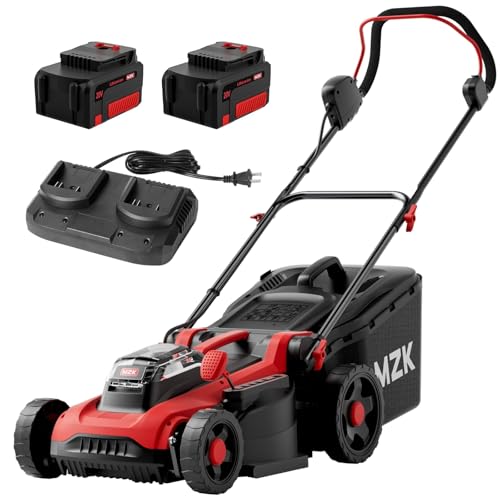
Cordless battery self-propelled mowers have matured into capable alternatives that eliminate fuel mixing, exhaust fumes, and pull-cord starting. Modern platforms utilize high-efficiency brushless motors paired with lithium-ion battery packs to deliver instant cutting torque. The KraftSense 20.5″ 40V Brushless Cordless Electric Self combines two twenty-volt eight-amp-hour batteries into a 296 Watt-hour energy system, while the Greenworks 80V 21in Self-Propelled Lawn Mower relies on an 80V four-amp-hour pack delivering 320 Watt-hours. Examining broader cordless electric lawn mower models reveals how battery voltage and amp-hour ratings dictate cutting runtime under heavy mulching loads.
Evaluating battery energy capacity requires multiplying system voltage by total amp-hours to determine true Watt-hours of available reserve. A single-battery setup might handle a quarter-acre on a single charge, but heavy grass and continuous self-propelled drive draw significant current that reduces runtimes. High-capacity kits like the Greenworks 60V 21in Self-Propelled Lawn Mower, (2) provide two four-amp-hour packs to support up to three-quarters of an acre across changing yard conditions. Cordless mowers offer push-button starting and quiet operation, though battery pack replacement costs must be weighed against long-term gas maintenance expenses.
Yard Acreage, Slope Angles, and Physical Terrain Thresholds
Property size serves as one of the clearest criteria when deciding whether self-propelled assistance justifies the extra investment. For small city lots under five thousand square feet, a lightweight manual push mower maneuvers effortlessly around tight borders and stores away easily in small sheds. However, once turf areas expand beyond a quarter-acre up to three-quarters of an acre, walking behind a manual push mower accumulates considerable fatigue. A self-propelled machine with a twenty-one or twenty-two-inch steel deck shortens total mowing time and preserves operator stamina across large lawns.
Topography and ground pitch further influence whether self-propelled drive becomes a necessity rather than a luxury. Mowing across rolling swales, roadside ditches, and elevated terrace banks demands substantial pushing power to maintain uphill momentum. Safety standards established by equipment industry guidelines emphasize that operators should always traverse slopes horizontally across the face with walk-behind mowers to maintain stable foot traction. A rear-wheel drive self-propelled system provides the motorized tire bite needed to prevent backward slipping, allowing you to walk steadily without fighting gravity on every pass.
Surface irregularities, such as exposed tree roots, mole runs, and bumpy soil, also favor motorized wheel propulsion. A manual mower easily gets hung up when front wheels encounter turf divots or raised soil hummocks, jolting the operator handle against the chest. The driving torque of powered drive wheels pulls the deck smoothly over minor terrain dips and rutted sections without abrupt halts. Large rear wheels, such as the eleven-inch wheels found on select SENIX mowers, pair with drive axles to glide over rough yard contours with minimal operator effort.
Long-Term Mechanical Maintenance and Operating Longevity
Adding a self-propelled drivetrain introduces mechanical assemblies that require periodic inspection and routine service. In addition to standard blade sharpening and engine care, a self-propelled mower contains a drive belt, an idler pulley tension spring, a transmission gearbox, and wheel drive pinions. Over time, grass clippings and fine grit can migrate inside the rear wheel gear covers, causing drive gears to slip or bind. Routine maintenance involves removing rear drive wheels annually to brush away accumulated dirt, inspecting the drive belt for glazing, and checking drive cable tension.
Corrosion and grass accumulation beneath the mower deck can also degrade drive efficiency and cut performance. Wet clippings adhering to the underside of the deck restrict airflow, reducing mulching lift and forcing the engine to work harder. Keeping cutting chambers clean preserves deck airflow and prevents moisture from damaging lower transmission seals. Utilizing deck protective spray applications helps prevent wet clipping buildup, ensuring smooth grass ejection whether side-discharging, bagging, or mulching.
Safety precautions remain mandatory before conducting any mechanical inspection or drive system adjustment. Always shut down the engine or electric motor, engage the parking brake if equipped, and remove the spark plug boot or high-voltage battery key before reaching beneath the deck. Inspect drive belts for fraying, verify that wheel clutch assemblies engage smoothly, and confirm that single-lever height adjusters move freely across all positions. Proactive drive maintenance ensures that transmission components operate smoothly season after season without premature failure.
Deciding Between a Push Mower, Self-Propelled Mower, or Riding Machine
Determining whether to invest in a self-propelled mower ultimately requires matching machine capabilities to your physical requirements and property layout. Homeowners with flat, modest yards who view mowing as light exercise often prefer the simplicity, lighter weight, and lower maintenance of a manual push mower. However, if mowing currently causes shoulder fatigue, lower back discomfort, or excessive exhaustion, upgrading to a self-propelled walk-behind machine provides immediate relief. The motorized drive transforms the task from strenuous physical labor into an easy walking routine.
Property boundaries and gate dimensions also help define the boundary between walk-behind mowers and larger riding equipment. Properties between half an acre and one acre often sit right on the edge of needing a riding tractor or compact zero-turn. Yet residential yards with perimeter privacy fences and standard thirty-six-inch pedestrian gates cannot accommodate thirty-eight to forty-eight-inch riding decks. A wide twenty-two-inch self-propelled walk-behind mower clears narrow gate latches easily while offering enough cutting swath and motorized speed to complete large lawns efficiently.
If your yard spans more than one full acre of open, rolling ground, transitioning directly to a riding lawn tractor or zero-turn mower represents the most practical long-term choice. But for residential lots ranging between five thousand square feet and three-quarters of an acre, a self-propelled walk-behind mower delivers the ideal balance of affordability, maneuverability, and fatigue reduction. Selecting the appropriate drive wheel layout, transmission type, and power platform ensures dependable mowing performance tailored to your specific lawn conditions.




Write Your Review
No reviews yet. Be the first to share your experience!