


Inspecting a lawn after a weekend cut often reveals an uneven, whitish haze across the turf canopy, pointing directly to damaged grass tips rather than a lush carpet of green. When property owners ask do sharp mower blades make a difference, turf specialists and power equipment mechanics offer an unequivocal yes. Dull cutting edges pound and rip grass blades instead of shearing them cleanly, fracturing leaf vascular tissue and leaving ragged wounds that turn brown within forty-eight hours. Utilizing protective treatments such as a lawn mower deck spray helps keep the cutting chamber clear of moist clippings, but maintaining sharp rotary steel remains the primary mechanical defense against turf disease and moisture loss.
Beyond the immediate agronomic benefits, blade sharpness fundamentally alters how the entire cutting deck interacts with your mower powertrain. High blade tip speeds approaching 18,000 to 19,000 feet per minute generate substantial vacuum lift, but rounded cutting edges drastically increase aerodynamic resistance and mechanical drag. This parasitic drag forces gas engines to consume excess fuel and causes modern cordless electric lawn mowers to drain valuable battery Watt-hours prematurely under routine cutting conditions. Maintaining crisp cutting bevels protects spindle bearings from excessive operational shock, improves mulching and bagging airflow, and promotes rapid cellular recovery across every square foot of turf.
Pros
- Lets you sharpen blades without removing them from most standard mowers.
- Adjustable angle guide helps maintain consistent edge geometry.
- Cordless operation offers freedom to move around the yard.
- Variable speed provides flexibility for different blade conditions.
- Lightweight and easy to handle, especially for quick touch-ups.
Cons
- Not intended for zero-turn or heavy-duty commercial blades.
- Only a sharpener - cannot repair chipped or deeply damaged blades.
- Battery life may only cover 1-2 blades per charge, requiring recharging for multiple mowers.
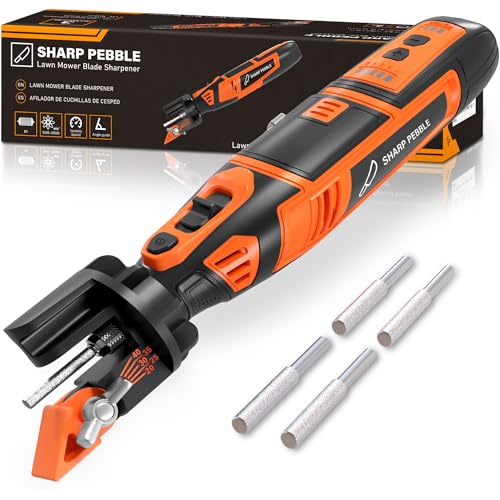
The Sharp Pebble Cordless Lawn Mower Blade Sharpener is a practical tool for homeowners who want to keep their mower blades sharp without the hassle of removal or the expense of professional sharpening. Designed for standard residential blades, it aims to make routine maintenance quick and convenient. This kit is best suited for those who mow regularly and want to maintain a clean cut for a healthier lawn.
In terms of performance, this sharpener can handle light to moderate edge dulling in about 2-3 minutes per blade when used on the mower, according to the product description. For badly worn edges, removal is recommended for better results. The adjustable angle guide (20-40 degrees) allows you to match your blade's factory bevel, which is crucial for effective cutting. The variable speed control (5,000-30,000 RPM) gives you the flexibility to work at a pace that feels right for the task. The cordless, lightweight design means you can take it to your mower wherever it sits, without dragging a cord.
Build quality appears solid for a home-use tool, with an ergonomic grip and a compact form factor. The adjustable angle guide feels sturdy when tightened, and the variable speed trigger offers good control. It's not designed for heavy-duty or commercial use, but for the average suburban lawn owner, it should hold up well over a season of regular touch-ups.
Setup is straightforward - charge the battery, set your desired angle, and you're ready to go. Storage is easy thanks to its small size. Maintenance is minimal: just keep the tool clean and the battery charged. This tool is especially handy for those who prefer to do quick sharpenings between mows, helping to extend blade life and reduce the need for replacements.
One realistic limitation is that this sharpener is only for standard residential blades - it won't work on zero-turn or heavy-duty commercial blades. Also, it's a sharpener, not a grinder, so if your blades have chips, dents, or missing metal, you'll need a grinder first. Battery life covers 1-2 blades per charge, which is fine for a single mower but may require a recharge for multiple blades.
Overall, the Sharp Pebble Cordless Lawn Mower Blade Sharpener is a solid choice for homeowners who want an easy, cordless way to maintain their mower blades. It's practical, adjustable, and offers good value for those who prefer to keep their equipment in top shape between professional sharpenings or replacements. If you have a standard residential mower and want a quick, no-fuss sharpening solution, this kit is worth considering.

Pros
- Wide compatibility with multiple Honda HRR216 and HRX217 models
- Mulching performance reduces the need for bagging and promotes natural lawn fertilization
- Durable steel build with added rust protection for long-term use
- Cost-effective compared to buying separate OEM upper and lower blades
- Simple installation with basic tools and clear compatibility notes
Cons
- May require verifying exact part numbers and model compatibility before purchase
- Paint on blades may temporarily affect initial cutting until it wears off
- Limited to Honda mowers—not universal for other brands
The Grasscool HRR2169VKA HRN216 mulching blade set is a replacement option designed specifically for Honda HRR216 and HRX217 series mowers. Based on product specifications, this set includes both the upper and lower blades needed for a complete swap, making it suitable for homeowners who want to restore their mower’s mulching capability without paying premium OEM prices.
In terms of performance, the mulching blade profile is intended to cut grass clippings into finer pieces, which can help them decompose faster and return nutrients to the lawn. The 20-13/16 inch length matches the standard cutting width of many Honda models, so users should see consistent grass handling in both bagging and mulching modes. The steel construction is described as precision-cut for durability, and the black paint coating serves as a protective layer against rust during storage. According to the manufacturer, this coating does not need to be removed before use—it will wear off naturally after a few minutes of mowing.
Build quality appears solid based on the listed materials and dimensions. The blades weigh 1.5 pounds each, suggesting a robust steel composition that can withstand regular mowing over a typical suburban lawn. The paint coating is a thoughtful addition for those who store equipment in damp garages or sheds, as it helps prevent corrosion before the blade is put into service.
Installation is straightforward for anyone comfortable with basic mower maintenance. The set replaces Honda part numbers 72511-VL0-S00, 72531-VH7-000, and the complete mulching set 08720-VH7-000. However, buyers need to double-check that their specific mower model is listed in the compatibility guide—the product describes a long list of HRR216 and HRX217 variants, but it’s always wise to confirm before purchasing.
One realistic limitation is the lack of user reviews at this point, which makes it harder to gauge long-term wear or real-world mulching efficiency. Also, the paint coating, while protective, may slightly affect initial cut quality until it wears off—something to keep in mind for the first use. For Honda owners seeking an economical blade replacement, this set seems like a practical choice that covers the essentials.
Pros
- Quick and simple attachment to any standard drill – sharpens blades in seconds without removing them from the mower (if accessible)
- Corundum material is extremely durable and won't wear down quickly, offering consistent sharpening performance over time
- Includes a blade balancer that helps reduce vibration and prolongs mower engine life – a thoughtful addition at this price point
- Versatile enough to sharpen multiple yard tools beyond just mower blades, adding value for money
Cons
- May not work well on heavily damaged or extremely dull blades that require professional reshaping
- Balancer only fits blades with a center hole – some specialty or offset blades may not balance properly
- Users will need to exercise caution to avoid over-sharpening or creating an uneven edge, especially without prior experience
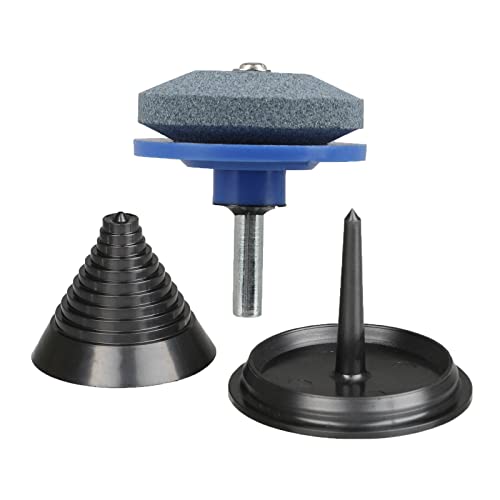
If you're a homeowner who mows their own lawn, keeping your mower blades sharp is one of the simplest ways to improve cut quality and reduce engine strain. The jtfrkope Lawn Mower Blade Sharpener and Balancer Set offers a budget-friendly way to do just that. Designed to work with any standard drill, this corundum sharpener quickly restores a factory-sharp edge to dull blades, while the included balancer helps eliminate vibration after sharpening. It's an ideal accessory for anyone from first-time buyers to seasoned lawn care enthusiasts who want to extend blade life without spending money on replacements or professional sharpening.
In real-world use, this sharpener shines in speed and convenience. Instead of labor-intensive manual filing, you simply insert the sharpener into your drill and guide it along the blade edge. The double-layer corundum stone sharpens both sides at once, and the angled surfaces help maintain a proper cutting angle. While you won't get a mirror finish like a professional grinder, most homeowners will notice an immediate improvement in cutting performance – grass is sheared cleanly rather than torn, which leads to a healthier lawn. The blade balancer is equally straightforward: place the blade on the cone, and if it tilts, you know more material needs to be removed from the heavy side. This step is crucial for preventing vibration that can damage your mower's spindle bearings and engine over time.
Build quality is a highlight for such an affordable product. The corundum material is dense and heat-resistant, so it won't degrade quickly even with repeated use. The sharpener feels solid and the grinding surface stays flat. The balancer is a simple plastic cone that works reliably for standard blades with a center hole. However, if you have offset or non-standard blades, it may not be perfectly centered. The entire set is compact and easy to store – fits in a tool drawer or a small corner of the garage. No batteries or electricity needed beyond your drill, making it a low-maintenance addition to your toolkit.
Setup is as easy as it gets: attach the sharpener to your drill chuck, tighten, and you're ready to go. The learning curve is minimal – watch a quick video or follow the simple instructions. That said, it's important not to press too hard or linger too long on one spot, as you can heat the blade and ruin its temper. A light touch and steady passes work best. The balancer helps ensure you remove material evenly. Maintenance is straightforward: just wipe the sharpener clean after use – no oiling or special care required.
One realistic limitation is that this sharpener won't fix deeply nicked or badly warped blades. For those cases, you'll still need to replace the blade or take it to a pro. Also, because the sharpener mounts on a drill, you have to remove the blade from the mower first – so it's not an on-the-fly tool. But given the price, it's a practical trade-off. Some users may want a guide to keep the sharpening angle consistent, but with practice you'll develop a feel for it.
Overall, this set is a smart purchase for any U.S. homeowner who mows their lawn and wants to maintain their equipment without frequent blade replacements or service bills. It's especially well-suited for budget-conscious shoppers, DIYers, and those with small to medium-sized yards who mow monthly. While it's not a heavy-duty professional tool, it delivers reliable performance for routine blade maintenance. If you're looking to save money and keep your mower running smoothly all season, this sharpener and balancer set is a worthwhile addition to your lawn care arsenal.

Pros
- Affordable and simple way to improve mower performance and longevity
- Universal fit works with many blade types and mower brands
- Sturdy zinc construction feels more durable than plastic alternatives
Cons
- Not necessary for occasional users who don't sharpen blades regularly
- May not fit very large or oddly shaped blades without adapters
If you sharpen your own lawn mower blades—or plan to—a blade balancer is one of those small tools that makes a real difference. The Oregon Universal Precision Mower Blade Balancer is designed to help you check whether your blade is evenly balanced after sharpening. An unbalanced blade can cause annoying vibration, uneven cutting, and extra wear on your mower's engine and deck. This simple tool helps you avoid those problems.
Based on the product features, this balancer works with virtually any rotary blade used on push mowers and riding mowers. You just place the blade on the cone-shaped balancer, and if it tilts to one side, you know it needs more work. The tool is made from zinc die-casting, which feels more solid and durable than plastic balancers that can warp or break over time.
For homeowners who take pride in their lawn and like to keep their equipment in top shape, this is an easy addition to the tool box. It's especially useful if you sharpen blades a few times each season or after hitting rocks or roots. Using a balancer can help your mower run smoother, cut more evenly, and last longer—without spending much money.
One thing to keep in mind: if you rarely sharpen your blades or you take them to a shop for sharpening, you may not need this tool. It's really meant for DIY maintenance. Also, while it fits most standard blades, very large or unusually shaped blades might not sit properly on the cone. But for the vast majority of home mower owners, this balancer works as advertised.
Overall, the Oregon Universal Precision Mower Blade Balancer is a practical, low-cost tool that helps you get the most out of your mower. If you already sharpen your own blades, this is a no-brainer. If you're new to mower maintenance, it's a great first step toward keeping your mower running smoothly for years.
Using a blade balancer is straightforward. After sharpening your mower blade, clean off any debris or rust. Place the blade's center hole onto the cone of the balancer. The balancer sits on a flat surface, and the blade should rest level. If one side dips, file or grind a bit more material from the heavy side until the blade stays level. Recheck after each adjustment. This process helps ensure your mower runs with minimal vibration and gives a clean, even cut.

Pros
- Direct fit for Ariens Ikon 48 and Gravely ZT X/ZT XL 48 models
- High-lift shape improves bagging and side discharge performance
- Solid steel build feels durable and long-lasting
- Cost-effective three-pack compared to buying individual OEM blades
Cons
- May produce more noise and vibration compared to standard lift blades
- Not suitable for mulching—designed for bagging or discharge only
The 8TEN LawnRAZOR mower blade set is a practical replacement option for owners of Ariens Ikon 48 and Gravely ZT X or ZT XL 48-inch zero-turn mowers. This three-pack includes high-lift blades designed to improve grass clipping discharge and bagging efficiency. For homeowners or lawn care professionals who want to restore cutting performance without paying premium OEM prices, this is a solid choice.
High-lift blades create more airflow under the deck, which helps lift grass before cutting and propels clippings forcefully into the bag or out the side chute. Based on user feedback, this design works well for tall or damp grass where standard blades might leave clumps. However, if you prefer mulching—chopping clippings fine to return nutrients to the lawn—these blades may not be ideal because they tend to throw clippings rather than recut them.
Each blade measures 16.5 inches long, 2.25 inches wide, and 0.157 inches thick, with a 5/8-inch center hole. The green powder-coated finish resists rust and corrosion, adding to the blade’s lifespan. Many users comment that the steel feels sturdy and holds an edge reasonably well over a season of regular mowing.
Installation is straightforward: simply remove the old blades, clean the spindle area, and bolt on the new ones. A torque wrench is recommended to ensure proper tightness. Because these are direct replacements for OEM part 09659000, no modifications are needed. The three-pack is convenient for replacing all blades at once, which helps maintain balanced cutting and reduces vibration.
One realistic limitation is that high-lift blades can be noisier than standard or mulching blades, especially at full throttle. They also require more engine power to spin, which might slightly reduce fuel efficiency or battery runtime, but this is typical for this blade style. Some users note that if your mower deck is not level, these blades may cause uneven cutting—so check deck leveling before installation.
Overall, the 8TEN LawnRAZOR blades are a reliable and cost-effective upgrade for Ariens and Gravely owners who prioritize bagging or side discharge performance. If you mow a large lawn with frequent bagging or have to deal with thick grass, this set will help you get the job done efficiently. Just be aware that they are not designed for mulching, and you may notice a bit more noise compared to standard lift blades.
Pros
- High-quality hardened steel construction resists dulling and chipping for long-lasting sharpness
- Star-mount design makes installation straightforward without needing special tools
- Compatible with several popular Husqvarna riding mower models, ensuring a direct fit
- High-lift design improves bagging efficiency, especially in thick or damp grass conditions
- Pack of three blades provides a complete replacement set for consistent cutting performance
Cons
- Only fits specific Husqvarna models, so compatibility must be verified before purchase
- Premium price compared to generic blades, but reflects OEM quality and reliability
- Not suitable for mulching-focused mowers, as high-lift is optimized for bagging and discharge
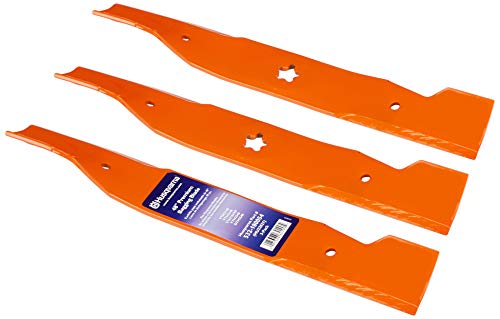
If you own a compatible Husqvarna riding mower and prioritize bagging performance, the Husqvarna 48-Inch High-Lift Bagging Lawn Mower Blades (3-pack) are a straightforward upgrade. These blades are designed as OEM replacements for models like the YTH22V46, YTH24V48, TS146X, and TS148X series, ensuring a precise fit with no modifications needed. The hardened steel construction promises to stay sharper longer than standard blades, which is a key advantage for homeowners who mow frequently or tackle thick grass.
In real-world use, the high-lift design generates strong suction to lift grass clippings into the bagger, reducing clumps and leaving a cleaner lawn. The 4-in-1 capability also allows for mulching, side discharge, or leaf shredding, giving you flexibility depending on the season. According to product specs, these blades run quieter than many alternatives, which is a plus for early morning mowing sessions in suburban neighborhoods.
Build quality is a highlight—the forged steel is resistant to bending and warping, even after hitting hidden rocks or roots. The star-mount pattern simplifies installation; you can swap all three blades in under 30 minutes with a basic socket wrench. The orange color doesn’t affect performance, but it makes the blades easy to spot during maintenance.
Setup is straightforward if you have basic mechanical skills. The package includes three blades, and no additional hardware is needed. Storage is not an issue since blades are small and can be hung in a garage. Maintenance involves regular sharpening or replacement after heavy use, but these blades hold an edge well for a full season of weekly mowing.
One realistic limitation is the narrow compatibility—these blades only fit the listed Husqvarna models, so you must measure your deck and verify your mower’s model number. Also, they are priced higher than generic blades, but the OEM fit and durability justify the cost for many users. If you’re looking for a budget alternative, aftermarket options exist, but they may not offer the same precision or longevity.
Overall, the Husqvarna 48-inch high-lift blades are a solid investment for homeowners who want reliable bagging performance and a hassle-free replacement. If you own a compatible model and value OEM quality, this three-pack is a practical choice to keep your mower running at its best.
These blades are specifically designed for Husqvarna riding mowers with a 48-inch cutting deck, including models YTH22V46, YTH24V48, TS146X/XK/XD, and TS148X/XK. The star-mount pattern ensures a secure fit and easy installation—just remove the center bolt, replace the old blade, and torque it to spec. No special tools are required, but a socket wrench and a blade removal tool can help if the old blades are stuck.
Always verify your mower’s model number and deck size before buying. If your mower has a different spindle pattern, these blades will not fit. The OEM part number is 180054, so you can cross-reference with your owner’s manual. For best results, replace all three blades at once to maintain even cutting performance.

Pros
- Direct fit for many Greenworks mower models, saving time on compatibility research
- Sharp blade provides a clean cut that helps prevent grass damage and disease
- Affordable replacement compared to buying a new mower or expensive OEM blades
- Lightweight design makes handling and installation straightforward
Cons
- Only compatible with specific Greenworks mower models — check mounting pattern before purchase
- May require balancing after installation for optimal performance and reduced vibration
- Not a universal blade — won't fit other brands or non-listed Greenworks models
If you own a Greenworks cordless mower, keeping the blade sharp is key to a healthy lawn. The Greenworks 2905203 blade is a direct replacement designed for many 21-inch models across the 40V, 60V, 80V, and 2x24V lines. This blade is ideal for homeowners who want to restore cutting performance without the cost of a new mower.
Based on the product specifications, this blade is built from durable steel and weighs just one pound. It's intended to deliver a clean cut for mulching, bagging, or side discharge. Many users find that a fresh blade improves grass lift and reduces tearing, which helps the lawn recover faster. The 21-inch length matches the deck size of compatible mowers, ensuring full coverage.
The build quality appears solid for a replacement blade. Steel construction offers good resistance to bending from rocks or roots, though regular sharpening may be needed depending on yard conditions. The black coating may help reduce rust, but storing the blade dry is still recommended.
Installation is straightforward — you'll need a wrench to remove the old blade and bolt on the new one. Always disconnect the battery or spark plug before swapping. Some users recommend checking the balance after installation to avoid vibration. No special tools or skills are required, making it a simple DIY maintenance task.
A realistic limitation is compatibility: this blade only fits the specific Greenworks models listed. Always compare the mounting pattern (center hole and shape) with your mower before buying. Also, like any blade, it will dull over time and may need replacement after a season or two of regular use.
For Greenworks mower owners, this blade is a practical and affordable way to keep your lawn looking its best. It's not a universal part, but for the right model, it offers reliable cutting performance. If you're comfortable with basic maintenance, this replacement blade is a smart buy.
This Greenworks 2905203 blade is designed for 21-inch mowers. Compatible models include many from the 40V, 60V, 80V, and 2x24V lines. Examples: 80V models 2550702, 2550402, 2501202; 60V models 2531702, 2531602; 40V models 2515502, 1306402AZ; 2x24V models 2533202, 2532702. Always verify the mounting pattern on your mower matches the image before purchase.
Replacing your mower blade is a simple task. First, disconnect the power source (battery or spark plug). Tip the mower on its side with the air filter up. Use a wrench to remove the bolt holding the old blade. Install the new blade with the cutting edge facing the deck. Tighten the bolt securely. Check blade balance by hanging it on a nail — if one side dips, file the heavy side slightly. Reconnect power and test on grass before full use.

Pros
- Genuine Greenworks part ensures reliable fit and performance.
- Durable steel holds sharpness for many mows, reducing frequency of replacements.
- Wide compatibility across multiple Greenworks battery-powered mower lines.
- Affordable way to extend the life of your mower and maintain lawn quality.
Cons
- Only fits specific Greenworks models – must verify compatibility before buying.
- May require basic tools and safety precautions for installation; no hardware included.
- Some users note that the blade orientation must be carefully matched to the mower pattern.
This Greenworks replacement blade is a genuine OEM part designed for a wide range of 21-inch Greenworks mowers, including 80V, 60V, 40V, and dual 24V models. For homeowners who need to refresh their mower's cutting ability, this blade offers a reliable solution without the expense of a new machine. Whether you're maintaining a small suburban lawn or tackling a medium-sized yard, a sharp blade makes all the difference in grass quality.
Based on product specifications, the blade is made from durable steel that holds its edge reasonably well through many mowing sessions. It's intended for clean cutting and effective mulching, helping break down clippings for natural lawn feeding. Many users find that after replacing a dull or damaged blade, their mower performs much better, with less tearing of grass and a more even cut. However, performance can vary depending on mower condition and grass type.
The build quality appears solid for a replacement blade at this price point. The steel is thick enough to resist bending under normal use, though hitting rocks or hidden debris could still cause damage. The blade is pre-sharpened but not coated, so regular sharpening or replacement will extend its lifespan. It's important to note that this blade only fits mowers with a specific mounting pattern – compare the blade outline with your existing one to ensure the holes align correctly.
Installation is straightforward for most DIYers. You'll need a socket wrench and possibly a block of wood to keep the blade from spinning. The blade itself doesn't include new bolts or washers, so reuse the original hardware if it's in good condition. Always disconnect the mower's battery or power source before working on the blade. Safety glasses and gloves are recommended. The whole swap usually takes under 20 minutes.
One limitation is that this blade is not compatible with all Greenworks mowers – only those listed in the product description. If your mower model isn't in the compatibility list, this blade won't fit. Also, because it's a fixed blade (not a mulching or high-lift style), its performance for bagging or side discharge may be adequate but not exceptional. For heavy mulching, some users prefer a specialized mulching blade.
Overall, this Greenworks replacement blade is a smart buy for anyone with a compatible mower who wants to restore cutting performance without buying a whole new mower. It's affordable, easy to install, and built to OEM specs. Just double-check your mower's mounting pattern before ordering, and you'll likely get many more satisfied mows out of your trusty Greenworks.
Before purchasing this blade, verify your mower model against the list provided in the product description. The blade fits numerous 21-inch Greenworks mowers in the 80V, 60V, 40V, and dual 24V series. However, not all 21-inch Greenworks mowers use the same mounting pattern. To check, simply remove your current blade and compare its shape and bolt-hole spacing with the pictures shown for this blade. If the patterns differ, the blade will not fit.
Installation is simple: tilt the mower on its side (carburetor or battery side up), use a block of wood to jam the blade from spinning, then loosen the center bolt with a socket wrench. Remove the old blade, note its orientation, then mount the new blade with the curved ends pointing upward (toward the mower deck). Tighten the bolt securely, but don't over-torque. Always wear gloves – blades are sharp!

Pros
- Durable 40MnB steel construction holds an edge well and resists bending or chipping
- High-lift design improves grass clipping collection and reduces clogging in wet or heavy grass
- Wide compatibility with many Husqvarna, Craftsman, and Poulan 48-inch deck mowers, including zero-turn models
Cons
- Limited to 48-inch decks, so not suitable for smaller or larger mower sizes
- No mulching capability – only supports bagging and side discharge, which may require separate mulching blades
- Some users may need to confirm exact center hole shape and blade length for their specific mower model
If you own a 48-inch deck riding mower or zero-turn mower from Husqvarna, Craftsman, or Poulan, the GICOOL Z248F replacement blade set offers a practical and affordable way to keep your mower cutting cleanly. Designed to replace OEM part numbers like 532180054 and 173920, these blades are a direct fit for popular models such as the Husqvarna Z248F, YTH2348, YTH24V48, and Craftsman equivalents. For homeowners who want reliable cutting performance without paying premium OEM prices, this set is worth a close look.
These blades are made from 40MnB steel, a material known for its strength and ability to hold a sharp edge over multiple mowing seasons. The high-lift design generates strong airflow to lift grass before cutting, which helps produce a clean, even finish even in tall or damp grass. According to the product description, the blades support both bagging and side-discharge modes, making them versatile for different yard conditions. Users who frequently deal with heavy spring growth or wet grass may appreciate the reduced clogging and improved clipping collection.
Build quality appears solid for the price point. The blades measure 16-3/4 inches long, 2-1/2 inches wide, and about 13/64 inches thick, with a 5-point star center hole that fits most standard spindles. The rust-resistant coating is a nice touch—it protects the blades during storage and makes handling safer during installation. That coating wears off naturally during use, so it won't affect cutting performance. Many homeowners will find installation straightforward, though it's always wise to double-check compatibility with your specific mower model before buying.
One limitation to note is that these are 2-in-1 blades, not 3-in-1. They work well for bagging and side discharge, but they don't offer a dedicated mulching mode. If you prefer to mulch clippings back into the lawn for natural fertilization, you may need to look for a different blade set. Also, these blades are specifically sized for 48-inch decks, so they won't fit smaller or larger mowers. That said, for the intended audience, they provide a cost-effective way to maintain cutting performance without breaking the bank.
Overall, the GICOOL Z248F blade set is a solid choice for budget-conscious homeowners with compatible Husqvarna, Craftsman, or Poulan 48-inch mowers. The durable steel construction, high-lift design, and wide compatibility make them a practical replacement option. Just be sure to confirm your mower's blade requirements before purchasing, and consider your preferred mowing style—if bagging or side discharge is your go-to, these blades will serve you well.
These GICOOL blades are designed as high-lift blades, meaning they create a strong upward airflow to lift grass before cutting. This helps produce a cleaner, more even cut, especially in taller or damp grass where standard blades might struggle. The 40MnB steel construction holds an edge well, so you can expect consistent cutting performance across multiple mowing sessions. The blades support bagging and side discharge, making them a good fit for homeowners who prefer to collect clippings or blow them out to the side. Keep in mind that they are not designed for mulching, so if you want to leave clippings on the lawn, you may need a different blade type.
The Impact of Sharp Mower Blades on Turf Health and Machine Performance
Maintaining sharp mower blades fundamentally dictates whether turfgrass heals cleanly or succumbs to moisture stress and fungal disease. A rotary blade spinning at several thousand revolutions per minute acts either as a precision scythe or a destructive club depending entirely on the condition of its cutting bevel. Understanding how edge sharpness influences both plant physiology and mechanical deck efficiency helps equipment operators avoid costly engine repairs and lawn discoloration throughout the growing season.
The Agronomic Difference Between Tearing and Slicing Grass
When a sharp steel edge contacts a grass blade at high rotational velocity, it exerts concentrated force across a micro-thin cutting line, slicing through cellulose and vascular bundles cleanly. In contrast, a dull or rounded blade edge functions as a blunt impact weapon, smashing and tearing the plant tissue along natural longitudinal grain lines. This mechanical trauma crushes surrounding cell walls, leaving a ragged, white-fringed tip that desiccates rapidly under summer heat. The lawn takes on an unsightly grayish-brown hue within forty-eight hours of cutting simply because millions of torn leaf tips are dying simultaneously.
The physiological damage caused by torn leaf margins extends well beyond superficial discoloration. Frayed tips lose significant water reserves through uncontrolled cellular leakage, forcing the root system to divert nutrients toward wound healing rather than deep vertical growth. Furthermore, torn and crushed leaf tissue creates an open gateway for airborne fungal spores such as dollar spot, leaf rust, and brown patch. Cleanly severed grass tips seal within twenty-four hours through natural suberization, locking in vital moisture and preserving internal plant defenses against microbial infection.
Different grass varieties demonstrate varying degrees of sensitivity to blunt cutting edges. Cool-season grasses like Kentucky bluegrass and tall fescue exhibit rapid apical dieback, displaying visible bleach marks when impacted by dull edges. Tough southern warm-season turfgrasses, including Bermuda, Zoysia, and St. Augustine, possess fibrous vascular cords that place heavy physical resistance on the cutter blade. When blades lack a keen bevel, these wiry stems are frequently yanked loose from shallow crowns, tearing root anchors and degrading overall turf density over successive mowing cycles.
Aerodynamics, Deck Vacuum, and Powertrain Efficiency
Rotary mower cutting decks are engineered as enclosed aerodynamic chambers that rely on high-velocity air movement to lift grass before cutting. Commercial blade tip speeds target benchmarks between 18,000 and 19,000 feet per minute, generating low-pressure suction under the deck baffles. A sharp edge slices cleanly through standing grass blades without impeding the circular airflow vortex established by the spinning blades. When cutting edges are severely rounded, the blunt face creates turbulent boundary layers, deflecting grass stems forward rather than drawing them vertically into the cutting plane.
Mechanical drag escalates rapidly as the leading cutting edge loses its crisp profile. Blunt edges push through dense grass like a wedge, transferring tremendous rotational resistance back through the spindle assembly, idler pulleys, and engine crankshaft. On internal combustion equipment, this parasitic load drags down operating RPM, leading to incomplete fuel combustion, excessive carbon buildup, and elevated cylinder head temperatures. The resulting drop in rotational speed exacerbates cut quality defects, producing ragged streaks and clumps across the turf.
Cordless battery platforms experience an even more noticeable performance drop from dull cutting edges. Electric walk-behind and riding mowers rely on onboard brushless motors that draw current proportional to the mechanical torque demanded by the deck. Forcing a rounded blade through dense turf spikes amperage consumption, accelerating battery drain and generating heat within the lithium-ion cells. Maintaining crisp cutting edges preserves total usable Watt-hour capacity, allowing operators to complete larger mowing swaths without triggering thermal safety cutoffs.
Visual Diagnostics: Identifying When Blades Require Service
Lawn care operators can easily diagnose blade condition without lifting the mower by inspecting the turf immediately following a cut pass. Examine several dozen grass blades across different sections of the yard, focusing closely on the freshly severed tips. A healthy cut reveals a crisp, straight horizontal edge across the blade width with no hanging filaments. If the grass tips show white, shredded fringes or a jagged crown, the mower blade has lost its operational edge and requires prompt maintenance.
Direct physical examination of the mower undercarriage reveals specific wear indicators on the steel itself. After disconnecting the spark plug or removing the battery disconnect key, inspect the leading edge for rolled metal, rounding, and stone chips. A dull blade displays a shiny, polished radius along the front lip where a sharp bevel should meet the flat lower plane. Minor stone dings under one-eighth of an inch can be reshaped during routine sharpening, but deep gouges or micro-cracks near the center hole dictate immediate blade replacement for operator safety.
Sail erosion is another critical wear indicator that often goes unnoticed by homeowners. The raised wings on the back of the blade experience continuous abrasion from swirling soil particles, grit, and dense organic debris. Over multiple mowing seasons, this abrasive action thins the steel sheet right along the curved bend of the uplift sail. If the sail metal becomes paper-thin compared to the main blade body, the high centrifugal forces can cause the wing to break away inside the deck housing, creating a serious hazard and unbalancing the machine.
Edge Restoration Standards: Bevel Angles, Tools, and Limits
Restoring a mower blade requires maintaining specific bevel geometry rather than grinding the edge to razor sharpness. Mower blades should never be sharpened like kitchen knives, as an ultra-thin, acute edge rolls over and chips during its first contact with an acorn or twig. Factory cutting edges are typically ground to an angle between thirty and thirty-five degrees, terminating in a blunt flat face roughly one-thirty-second of an inch thick. This configuration provides the necessary shearing performance while retaining adequate steel mass to resist impact damage.
Homeowners can select from various sharpening tools depending on their mechanical comfort and available workshop equipment. Cordless rotary kits, such as the Sharp Pebble cordless lawn mower blade sharpener, feature adjustable guide attachments ranging from twenty to forty degrees to ensure consistent edge geometry across the blade length. Simpler accessories, like double-layer corundum stones mounted on handheld electric drills, offer rapid touch-ups for light edge wear. For severely dented or hardened commercial blades, a bench grinder or angle grinder equipped with a forty-grit flap disc allows rapid material removal while following the original bevel plane.
Preventing thermal damage during the grinding process is critical to maintaining steel strength. Pushing aggressively against a high-speed abrasive wheel generates excessive friction heat, which turns the steel blue and ruins the heat-treated temper. Once steel loses its temper, the metal becomes soft and will dull rapidly after just a single mowing pass. Taking light, continuous passes along the existing bevel and allowing the steel to cool preserves the original metallurgical structure, ensuring the cutting edge holds its sharpness across multiple yard sessions.
The Critical Necessity of Static and Dynamic Blade Balancing
Sharpening removes physical metal, and unequal grinding between the two cutting wings inevitably produces an unbalanced rotating assembly. Because mower blades spin at velocities between 2,800 and 3,600 RPM, even a few grams of weight imbalance generate severe centrifugal vibrations. These cyclic vibrations transmit directly through the spindle shaft, fatiguing sealed ball bearings, loosening deck hardware, and cracking stamped deck shells. On walk-behind mowers, sustained vibration can bend the engine crankshaft, causing permanent mechanical damage that often exceeds the value of the equipment.
Verifying blade balance on a dedicated gauge is an indispensable step before reinstalling any serviced blade. High-quality fixtures, such as the Oregon universal precision mower blade balancer, utilize low-friction bearings and machined zinc die-cast cones to indicate tiny weight discrepancies. Simple cone balancers, like those bundled with drill-mounted sharpeners, also provide helpful static balance verification on a flat workshop bench. If one wing dips downward, grind small amounts of steel from the trailing edge or back of the heavy wing until the blade rests horizontally without tilting.
Operating an unbalanced deck severely impacts machine handling and accelerates operator physical fatigue. Vibration transmitted through lap bars, foot platforms, and handlebars leads to hand numbness and muscle fatigue during extended mowing sessions. Balanced blades ensure smooth cutting deck engagement and steady power transfer, which is especially vital when maintaining proper mower traction on steep hills where equipment stability demands predictable handling. Spending a few moments to verify balance protects spindle assemblies and guarantees a comfortable, controlled operation.
Matching Blade Profiles and OEM Replacement Options
Selecting the correct blade profile is just as crucial as maintaining a sharp edge, as different mowing tasks demand specific airflow dynamics. High-lift blades, such as the Husqvarna 48-inch high-lift bagging lawn mower blade sets or the 8TEN LawnRAZOR blades for Ariens and Gravely mowers, feature tall rear sails designed to produce powerful vertical suction. This aggressive vacuum pulls bent turf upright and propels dense clippings cleanly through discharge chutes into collection systems. Using high-lift blades alongside efficient lawn mower leaf collection systems ensures dependable bagging performance without clogging the discharge throat.
Mulching blades incorporate complex multi-tiered cutting edges and specialized baffling to recirculate grass clippings inside the deck chamber. The Grasscool replacement blade set for Honda HRR and HRN mowers illustrates this approach, utilizing a dual-blade MicroCut configuration where upper and lower blades slice grass into microscopic pieces. The upper blade makes the primary cut, while the lower trailing blade dices the clippings before they drop into the turf canopy. If either blade in a stacked mulching system becomes dull, clippings fail to chop finely, resulting in unsightly rows of debris that suffocate underlying grass.
Cordless battery mowers rely on purpose-built blades engineered from lighter gauge steel to minimize rotational mass and conserve energy. Models like the Greenworks replacement blade for twenty-one-inch battery platforms feature optimized aerodynamics tailored to the lower torque curve of electric motors. When buying replacement blades, always verify center hole compatibility, such as five-point star, six-point star, or standard round arbor bores, to ensure secure mounting. Using blades with mismatched mounting patterns causes severe spindle play, arbor damage, and erratic cutting heights across the mowing deck.
Safe Removal, Inspection, and Installation Procedures
Under-deck maintenance requires strict adherence to safety protocols to prevent accidental motor or engine engagement. On gasoline-powered mowers, always disconnect the spark plug lead and secure the boot away from the spark plug terminal. On battery-powered platforms, remove the lithium-ion power pack and pull the safety key before reaching beneath the deck shell. Engaging the parking brake, chocking the rear drive wheels, and raising the deck to its highest locked position ensures a stable workspace while servicing the cutting hardware.
Removing spindle bolts requires holding the blade securely to prevent rotation while applying high break-away torque. Use a heavy wooden block or dedicated blade locking clamp wedged between the cutting wing and the inner deck wall. Never attempt to hold the sharp steel blade with a gloved hand while breaking loose stubborn, rusted mounting bolts. Most standard mower spindles utilize conventional right-hand threads that loosen counter-clockwise, although certain commercial timed decks feature left-hand reverse threads on opposing spindles that require clockwise rotation to loosen.
Before installing a sharpened or replacement blade, inspect the spindle mounting flange, blade washer, and bolt threads for debris, rust, or distortion. Always orient the blade so the curved uplift sails point upward toward the underside of the deck, with the flat cutting bevel facing toward the grass. Tighten the spindle bolt with a calibrated torque wrench to the exact foot-pound specification provided in your machine operator manual. With the power source disconnected, rotate the blade by hand one full turn to confirm smooth clearance against the deck shell and anti-scalp brackets.
Routine blade sharpening and precise balancing directly influence both the appearance of your turf and the operational lifespan of your mower. Slicing grass stems cleanly promotes rapid plant recovery, minimizes turf disease susceptibility, and leaves behind a vibrant green lawn after every pass. Furthermore, sharp blades reduce parasitic engine load, optimize airflow through discharge chutes, and shield expensive spindle assemblies from destructive harmonic vibrations. Establishing an inspection and maintenance habit guarantees peak cutting performance and long-term mechanical reliability across every mowing season.






Write Your Review
No reviews yet. Be the first to share your experience!