


Maintaining a crisp, manicured lawn depends directly on the mechanical condition of your cutting deck. When preparing for routine seasonal service, determining what size blade for 21 inch mower decks require is often the first puzzle equipment owners encounter. Walk-behind mowers are advertised by their nominal cutting path rather than their exact internal shell width. Whether you run traditional gas-powered equipment or modern cordless electric walk-behind mowers, matching blade geometry to your specific cutting deck ensures smooth grass discharge and protects internal engine components.
Installing an incorrect replacement blade can lead to severe deck strikes, ruined spindle shafts, or excessive clumping across your turf. Most walk-behind mowers marketed with a 21-inch cutting deck utilize a single blade measuring between 20-1/2 inches and 21 inches diagonally. This compact gap creates necessary clearance for aerodynamic lift while preventing the blade tips from impacting the stamped steel housing. Understanding how to measure these components and cross-reference your spindle mounting pattern eliminates purchasing mistakes and gets your machine running smoothly.

Pros
- Compatible with dozens of popular 21-inch deck mower models from major brands.
- Alloy steel construction with rust-resistant coating offers good durability for the price.
- 3-in-1 design gives flexibility for mulching, bagging, or side discharge without swapping blades.
- High lift improves grass collection in the bag for less frequent emptying.
Cons
- Only one blade per pack – if you mow a large lawn or hit obstacles, you may want a spare on hand.
- Paint coating on edges will wear off after a few uses, which is normal but may require periodic inspection for rust.
- Without a large number of verified user reviews yet, long-term performance is based on product specs rather than extensive real-world feedback.
The Hipa 942-0741A is a replacement mulching blade designed specifically for 21-inch cutting decks on walk-behind mowers, riding mowers, and lawn tractors from Troy-Bilt, Craftsman, Cub Cadet, MTD, and other brands that use the bow-tie center hole pattern. If your mower’s original blade has dulled or chipped, this aftermarket blade offers a practical and affordable way to restore cutting performance. It’s a good fit for homeowners who want to keep their mower running well without spending a lot on OEM parts.
In terms of real-world performance, the blade’s 3-in-1 design allows you to switch between mulching, bagging, and side discharge depending on your mowing needs. The curved edges and high lift help chop grass clippings into fine pieces for mulching, while also improving airflow into the bag for better collection. According to the product specs, bagging capacity can increase by up to 50% compared to standard blades. It works well for regular mowing on a typical suburban lawn, and the mulching action returns nutrients to the soil so you don’t have to bag every time.
Build quality is a strong point here. The blade is made from alloy steel that includes chromium and molybdenum – elements that boost hardness and resist wear. The painted edges add a layer of rust protection during storage and also make handling safer when you’re installing or removing the blade. Over time, the paint will wear off as you mow, but the steel itself should hold up well under normal use. It measures 21 inches long, 2-1/4 inches wide, and about 3.4 mm thick, matching OEM dimensions for a proper fit.
Installation is straightforward for anyone comfortable with basic mower maintenance. The blade fits mowers made from 1995 onward that use the bow-tie center hole shape. You’ll want to wear thick gloves, as the edges can be sharp. Hipa recommends checking that the blade is securely fastened and free of cracks or severe damage before each use. Storage is simple – just keep the blade dry, maybe in a garage or shed, and the paint coating helps resist corrosion during off-seasons.
One limitation to keep in mind is that this is a single blade pack. If you have a large lawn or often hit hidden rocks or roots, having a spare might save you a trip to the store. Also, since there aren’t many user reviews yet, the long-term reliability is based on the material specs rather than extensive field data. That said, for the price, it’s a reasonable choice for maintaining your mower’s cutting ability.
Overall, the Hipa 942-0741A blade is a solid value for anyone with a compatible 21-inch deck mower. It offers good durability, flexible mulching and bagging performance, and easy compatibility across many popular mower brands. If your current blade is worn out and you want to get your lawn looking neat again, this replacement is worth considering.


Pros
- Direct replacement for many Troy Bilt, Craftsman, and Cub Cadet mowers, so compatibility is straightforward.
- Pre-sharpened blade provides good cutting performance right away, reducing initial setup effort.
- High-strength steel construction offers durability for regular mowing through typical lawn conditions.
- Two-pack is a practical way to always have a spare blade on hand for quick swaps during the season.
Cons
- Some users may need to check exact blade dimensions to ensure fit, as compatibility lists can be extensive.
- Mulching blades may not perform as well for bagging or side discharge compared to dedicated blades for those tasks.
- Protective coating may wear off quickly, requiring resharpening sooner than expected for some users.
If you own a Troy Bilt, Craftsman, or Cub Cadet 21-inch walk-behind mower, keeping a spare blade on hand is a smart move for hassle-free lawn care. The UDC Parts 942-0741A mulching blade 2-pack is designed to fit a wide range of popular models, making it a practical choice for homeowners who want reliable cutting without the need for frequent sharpening or replacements. This set is especially useful for those who mow regularly and want to minimize downtime during the growing season.
Based on product specifications and user feedback, these blades are pre-sharpened and coated with a protective layer that wears off during initial use. This design allows them to deliver consistent mulching performance right out of the box. The high-strength steel construction helps the blade hold up well against typical lawn debris, such as twigs and small rocks, though it's always a good idea to clear the mowing area to extend blade life. Many homeowners may find that the mulching action effectively chops grass clippings into fine particles, which then break down naturally to feed the lawn.
Installation is straightforward - the blade is a direct fit for many models, including the Troy Bilt TB100 through TB490 series, Craftsman M140, M220, M230, M250, and M320, as well as Cub Cadet SC621, SC621E, and SC300HW. You'll want to double-check the dimensions (21-inch length, 2-1/4-inch width, bow-tie center hole) against your mower's specifications to ensure a proper fit. The process typically involves removing the old blade, installing the new one with the correct orientation, and tightening the bolt securely. No special tools are required, though a torque wrench can help ensure proper installation.
Durability seems to be a strong point, with the blade maintaining its edge through multiple mowing sessions under normal conditions. Some users may find that the protective coating wears off relatively quickly, but the underlying steel remains sharp for extended use. When the blade does dull, it can be resharpened safely to extend its life further. This makes the 2-pack a good value, as you can rotate blades between sharpening to keep one always ready.
One realistic limitation is that these are specifically mulching blades, so they may not perform as well if you prefer bagging or side discharge. For those who primarily mulch, this blade works great, but if you need versatility across different discharge methods, you might want to consider a universal blade. Additionally, the compatibility list is extensive, so it's worth verifying your mower model to avoid any fitment issues. The product comes with one year of support for manufacturing defects, which adds some peace of mind for the purchase.
Overall, the UDC Parts 942-0741A blade 2-pack is a solid choice for budget-conscious homeowners who want a reliable spare for their 21-inch mower. It offers good cutting performance, easy installation, and durable construction that should handle regular mowing tasks well. If you're looking for a straightforward replacement that keeps your mower running efficiently without breaking the bank, this set is worth considering.

Pros
- Genuine EGO part guarantees compatibility and quality fit
- 3-in-1 functionality covers mulching, bagging, and side discharge
- Factory-sharpened for immediate, clean cuts
- Promotes lawn health by delivering a precise cut
- Simple replacement process for routine maintenance
Cons
- Only fits specific EGO mower models (LM2100 series, LM2142SP) – not universal
- May require periodic sharpening or replacement depending on usage and terrain
- Price is higher than some generic blades, but offers genuine fit and performance
If you own an EGO Power+ electric mower from the LM2100 series or the LM2142SP, keeping a sharp blade on hand is key to a great-looking lawn. The EGO Power+ 21-Inch Replacement Blade (AB2100) is a genuine OEM part designed specifically for these models, so you can trust it will fit perfectly and perform as intended.
This blade is a 3-in-1 design, meaning it handles mulching, bagging, and side discharge tasks with ease. It comes factory-sharpened from high-quality steel, so you get a clean cut right out of the box. A clean cut isn't just about looks—it helps your grass heal faster and stay healthier, which many homeowners appreciate during the growing season.
Build quality is solid, as you'd expect from EGO. The steel feels robust and able to handle typical suburban lawns, including occasional sticks or debris. Since it's a genuine part, you won't have to worry about fitment issues or vibrations that sometimes come with aftermarket blades.
Replacing the blade is straightforward—just flip your mower, remove the old blade, and install the new one using the center hole. No special tools beyond a wrench are needed, and the whole process takes about 10 minutes. This makes routine maintenance simple enough for weekend DIYers.
One realistic limitation is that this blade is only compatible with specific EGO mower models (LM2101, LM2100, LM2102SP, LM2100SP, LM2142SP). If you have a different EGO mower, check compatibility before buying. Also, like any blade, it will dull over time, especially if you mow often or hit rocky areas, so you may need to replace it every season or two depending on use.
Overall, this is a reliable replacement blade for EGO mower owners who want a genuine fit and dependable cutting performance. It's a practical investment for maintaining your mower's efficiency and keeping your lawn looking its best.
The EGO Power+ AB2100 blade is factory-sharpened to deliver a precise, clean cut that helps grass heal faster and resist disease. Based on product specs, its 3-in-1 design allows for effective mulching, bagging, and side discharge, making it versatile for different lawn care needs. Many users find it maintains sharpness well through several mowing sessions, though regular inspection is recommended.
This blade is specifically designed for EGO Power+ mower models LM2101, LM2100, LM2102SP, LM2100SP, and LM2142SP. It is a genuine OEM part, so you can expect a perfect fit without modifications. Always double-check your mower's model number before purchasing to ensure compatibility.
To keep your EGO mower cutting well, inspect the blade every few uses for dullness or damage. Replace it when you notice tearing grass or uneven cuts. Installation is simple: remove the mower's battery, tilt it on its side, use a wrench to loosen the blade bolt, swap blades, and tighten securely. Always follow safety precautions in your mower's manual.
Pros
- High lift design improves grass pickup and reduces bagging time
- Durable high-carbon steel construction holds edge well
- Compatible with many popular mower models (Troy-Bilt TB series, Craftsman M series, etc.)
- Affordable replacement blade for regular maintenance
Cons
- Only fits bow tie spindle center hole - verify your mower's pattern before purchase
- Some users may prefer a standard lift blade for lower horsepower mowers
- Rust-resistant coating may wear off quickly during use
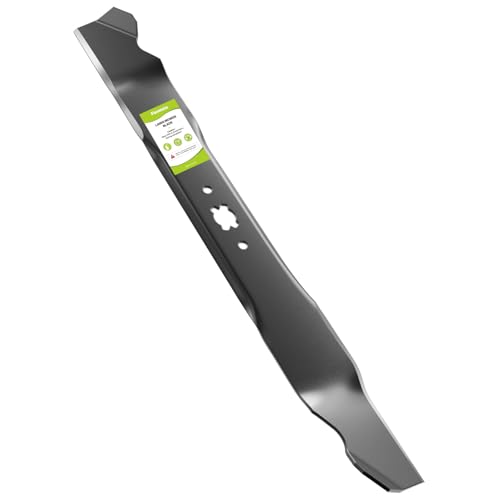
If you own a walk-behind mower from Troy-Bilt, Craftsman, Cub Cadet, or MTD, the Fismiuta 21-inch mulching blade is a solid replacement option. Designed to fit many popular models like the TB110, TB200, and Craftsman M100 series, this blade aims to improve your mowing experience with a higher lift height and durable construction.
The standout feature here is the 32mm lift height, which is about 4mm higher than many standard blades. According to the product description, this creates stronger airflow and suction, helping to lift grass for a cleaner cut and better collection in the bag. For homeowners who deal with thick grass or damp conditions, this can mean fewer passes and less time emptying the bag. The blade also works for mulching and side discharge, giving you flexibility depending on your yard's needs.
Build quality seems promising with high-carbon steel construction. This material is known for holding an edge longer than standard steel, and the rust-resistant coating provides some protection during installation and initial use. Keep in mind the coating will wear off as you mow, but the blade remains sharpenable for extended life. The blade measures 21 inches long, 2-1/4 inches wide, and 9/64 inches thick, with a bow tie center hole.
Installation is straightforward if you are comfortable changing mower blades. The key is to confirm your mower's spindle has a bow tie pattern - this blade will not fit star or round center holes. Always disconnect the spark plug and wear gloves when replacing blades. Many users find swapping blades takes about 10-15 minutes with basic tools.
One limitation to consider: the higher lift may slightly increase engine load, so it's best suited for mowers with adequate power (typically 140cc and up). For older or lower-horsepower mowers, a standard lift blade might be more appropriate. Also, the price is reasonable for a single replacement blade, but if you have a large property, you might want to buy multiple for quick changes.
Overall, the Fismiuta 21-inch blade is a practical choice for anyone needing a replacement that offers better grass collection and mulching performance. Just double-check your mower's compatibility and center hole shape before ordering. For the price, it's a worthwhile upgrade for weekend lawn care.

Pros
- Compatible with a wide range of mower models from MTD, Cub Cadet, Troy-Bilt, and Craftsman
- Sharpened and powder coated for immediate use and long-term rust protection
- Made in the USA, which may appeal to buyers seeking domestic manufacturing
- Affordable price point for a replacement blade that restores mulching efficiency
Cons
- Must match current blade OEM number to ensure exact fit, which may require checking compatibility
- Powder coating will wear off after first cut, so initial appearance may not reflect final sharpness
- Only includes one blade, not a set, so multiple purchases needed for dual-blade mowers
The Maxpower 331528B is a 21-inch mulching blade designed as a direct replacement for many MTD, Cub Cadet, Troy-Bilt, and Craftsman mowers. It’s a simple, practical solution for homeowners who want to keep their mower cutting cleanly without spending a lot. If you’ve noticed your mower leaving clumps or uneven cuts, swapping in a fresh blade like this one can make a noticeable difference.
In terms of real-world performance, this blade is sharpened during manufacturing and then powder coated for protection. That coating comes off during the first cut, revealing a precision-sharpened edge. For mulching, it’s designed to lift and recut grass clippings into fine particles that decompose quickly. Many users find it restores the mulching capability of their older mower without needing a full deck replacement.
Build quality is solid for the price. The blade is made in the USA from what feels like durable steel. The powder coating helps prevent rust during storage or shipping, though it will wear off after a few uses. That’s normal and doesn’t affect cutting performance once the coating is gone. The center hole uses a bow tie pattern with a 5/16-inch outer hole diameter and 2.5-inch center-to-center spacing, which fits many common mower models.
Setup is straightforward if you’ve changed a mower blade before. You’ll need to match your current blade’s OEM number to ensure a proper fit—Maxpower lists several compatible numbers like 742-0741 and 942-0641. The blade weighs about 1.6 pounds, so it’s easy to handle during installation. Just remember to disconnect the spark plug and secure the mower before working under the deck.
One realistic limitation is that this blade won’t fit every mower, even if the brand matches. Always double-check your OEM number before buying. Also, the powder coating might initially make the blade look dull, but that’s cosmetic. Some users note that the coating can leave a slight residue on grass for the first cut, but it washes off quickly.
Overall, the Maxpower 331528B is a reliable, budget-friendly replacement blade for common mower brands. It’s especially good for homeowners who want to restore mulching performance without paying for a premium brand. If you’re comfortable with basic mower maintenance, this blade is a solid choice for keeping your lawn looking tidy all season.

Pros
- Direct fit for many Greenworks mower models, saving time on compatibility research
- Sharp blade provides a clean cut that helps prevent grass damage and disease
- Affordable replacement compared to buying a new mower or expensive OEM blades
- Lightweight design makes handling and installation straightforward
Cons
- Only compatible with specific Greenworks mower models — check mounting pattern before purchase
- May require balancing after installation for optimal performance and reduced vibration
- Not a universal blade — won't fit other brands or non-listed Greenworks models
If you own a Greenworks cordless mower, keeping the blade sharp is key to a healthy lawn. The Greenworks 2905203 blade is a direct replacement designed for many 21-inch models across the 40V, 60V, 80V, and 2x24V lines. This blade is ideal for homeowners who want to restore cutting performance without the cost of a new mower.
Based on the product specifications, this blade is built from durable steel and weighs just one pound. It's intended to deliver a clean cut for mulching, bagging, or side discharge. Many users find that a fresh blade improves grass lift and reduces tearing, which helps the lawn recover faster. The 21-inch length matches the deck size of compatible mowers, ensuring full coverage.
The build quality appears solid for a replacement blade. Steel construction offers good resistance to bending from rocks or roots, though regular sharpening may be needed depending on yard conditions. The black coating may help reduce rust, but storing the blade dry is still recommended.
Installation is straightforward — you'll need a wrench to remove the old blade and bolt on the new one. Always disconnect the battery or spark plug before swapping. Some users recommend checking the balance after installation to avoid vibration. No special tools or skills are required, making it a simple DIY maintenance task.
A realistic limitation is compatibility: this blade only fits the specific Greenworks models listed. Always compare the mounting pattern (center hole and shape) with your mower before buying. Also, like any blade, it will dull over time and may need replacement after a season or two of regular use.
For Greenworks mower owners, this blade is a practical and affordable way to keep your lawn looking its best. It's not a universal part, but for the right model, it offers reliable cutting performance. If you're comfortable with basic maintenance, this replacement blade is a smart buy.
This Greenworks 2905203 blade is designed for 21-inch mowers. Compatible models include many from the 40V, 60V, 80V, and 2x24V lines. Examples: 80V models 2550702, 2550402, 2501202; 60V models 2531702, 2531602; 40V models 2515502, 1306402AZ; 2x24V models 2533202, 2532702. Always verify the mounting pattern on your mower matches the image before purchase.
Replacing your mower blade is a simple task. First, disconnect the power source (battery or spark plug). Tip the mower on its side with the air filter up. Use a wrench to remove the bolt holding the old blade. Install the new blade with the cutting edge facing the deck. Tighten the bolt securely. Check blade balance by hanging it on a nail — if one side dips, file the heavy side slightly. Reconnect power and test on grass before full use.
Complete Sizing and Replacement Guide for 21-Inch Lawn Mower Blades
A 21-inch lawn mower deck almost always requires a replacement blade measuring diagonally between 20-1/2 inches and 21 inches from tip to tip. The advertised 21-inch deck designation indicates the full circular diameter of the grass-cutting path rather than the outer dimensions of the mower housing. Equipment manufacturers deliberately design a clearance envelope of roughly 1/4 inch to 1/2 inch between the rotating blade tip and the inner deck wall. This safety gap prevents the blade from scraping the metal housing during minor frame flex and allows clippings to circulate smoothly through the cutting chamber.
Installing an undersized replacement blade creates performance headaches across your lawn. If a blade is too short, clippings drop prematurely instead of being pulled upward into the discharge chute or collection bag. Mower decks rely on the aerodynamic vacuum generated by spinning blade sails to pull grass upright for an even cut. Verifying your machine’s exact diagonal length and center arbor ensures that your lawn mower maintains factory airflow balance and turf finish.
How to Measure Lawn Mower Blade Length Accurately
Measuring a lawn mower blade requires following a diagonal path from the outer cutting tips. Lawn mower blades are manufactured with opposing cutting edges and raised aerodynamic sails on their trailing sides. Because of this staggered layout, the true operational cutting length is the straight-line distance connecting the outermost corner of one cutting tip across the center hole to the opposite tip. Measuring straight along a flat side will always produce an artificially short reading and lead to ordering the wrong part.
Before inspecting or measuring any cutting component, you must disable the mower to prevent accidental startup. For gas-powered walk-behind machines, disconnect the spark plug wire and secure the rubber boot away from the metal terminal. If you operate a cordless battery model, remove the safety disconnect key and detach the battery pack completely from the deck housing. Always tilt the mower with the carburetor and air cleaner facing upward to prevent crankcase oil from saturating the intake filter or exhaust system.
With the blade exposed, position a rigid ruler or steel tape measure across the underside of the steel wing. Hook the measuring tape on the outermost corner of one cutting edge and stretch it diagonally across the center mounting arbor to the far opposite tip. Record this diagonal distance to the nearest 1/16 of an inch to capture the true operational length. If your measurement reads between 20-1/2 inches and 21 inches, your equipment uses a standard commercial replacement sized for 21-inch walk-behind decks.
Deck Clearance Tolerances and Internal Aerodynamics
Lawn mower cutting decks are specialized aerodynamic chambers where precise rotational clearances dictate grass collection efficiency. Within a typical 21-inch stamped steel or cast aluminum deck, the gap between the spinning blade tips and the interior shroud ranges from 1/4 inch to 3/8 inch. This narrow tolerance creates a strong low-pressure zone that lifts limp or trampled grass blades upright milliseconds before the cutting edge makes contact. If a replacement blade is oversized by even 1/4 inch, frame deflection over rough terrain can cause the spinning steel to strike the inner deck shell violently.
Clippings and damp soil frequently accumulate along the underside of the deck during spring mowing sessions. As this organic matter hardens into a dense crust, the physical clearance around the blade tip narrows significantly. This buildup restricts rotational airflow, increases mechanical resistance on the engine or motor, and leaves uncut grass stragglers across your lawn. Regularly scraping the underside of your deck preserves designed clearance margins and prevents unnecessary motor bog-down in thick turf.
Maintaining proper internal air velocity is especially important when operating collection equipment. Property owners who manage heavy autumn leaf fall or pull tow-behind leaf collectors depend on powerful deck suction to transfer organic debris into hoppers. A correctly proportioned 21-inch blade generates the continuous upward thrust required to propel clippings through the discharge tunnel without clogging. Sacrificing blade length reduces this air velocity, leaving heavy rows of clippings scattered over your grass.
Center Hole Patterns and Spindle Mounting Configurations
Correct blade length means very little if the center mounting pattern fails to match your mower spindle. Outdoor power equipment manufacturers utilize specific arbor shapes to lock the blade firmly in place and prevent circular slippage during operation. The bow-tie center hole pattern is one of the most widely used designs on residential walk-behind mowers today. Common on MTD, Troy-Bilt, Cub Cadet, and modern Craftsman machines, this shape anchors the blade securely without demanding extreme spindle bolt torque.
Many aftermarket and universal blades utilize a round 1-inch center hole accompanied by metal reducing bushings. Universal packages typically supply nested washers in diameters ranging from 3/8 inch to 13/16 inch to adapt the blade to various engine shaft sizes. While universal blades offer broad convenience for older equipment, the reducing washer must seat perfectly flat against the spindle shoulder. Any misalignment or uneven seating creates dynamic wobble that can destroy crankshaft bearings and induce severe handle vibration.
Modern cordless electric mowers introduce specialized multi-point mounting plates that deviate from traditional gas spindles. Battery brands like EGO Power+ utilize proprietary hubs featuring distinct alignment pins and circular recesses designed specifically for their brushless motor assemblies. Similarly, Greenworks electric platforms rely on stamped multi-point drive patterns to lock the blade directly to the motor hub. Forcing a standard gas blade onto a proprietary electric spindle can fracture the mounting adapter and permanently ruin the electric motor.
Decoding OEM Part Numbers and Model Compatibility
Sourcing replacement blades through OEM part numbers remains the safest way to ensure proper mechanical fitment. Outdoor equipment brands frequently stamp reference codes directly into the steel blade body near the center arbor. For example, common MTD part numbers such as 942-0741A, 742-0741, and 742-04276 correspond to standard 21-inch mulching blades across multiple brands. Checking these stamped identifiers before ordering eliminates guesswork and ensures exact alignment with factory deck specifications.
When rust or surface abrasion erases part numbers from an old blade, consult the product identification tag on your mower frame. This metal tag is typically affixed to the rear skirt between the wheels or near the engine base. If you are refurbishing an older machine, our practical guide on decoding mower deck serial numbers explains how model prefixes identify matching chassis parts and deck configurations. Tracing the serial number allows you to access manufacturer parts diagrams and locate the correct blade specification quickly.
Online parts lookups also confirm whether your deck requires secondary mounting hardware such as specialized bell washers or anti-rotation pins. Many modern walk-behind mowers feature outer guide holes spaced exactly 2-1/2 inches apart to accept auxiliary spindle pins. Matching these secondary holes prevents the blade from shifting off-center during sudden resistance in heavy grass. Always verify that both center and side mounting dimensions match your spindle assembly before tightening the center bolt.
Blade Aerodynamics: Mulching vs. High-Lift vs. 3-in-1 Profiles
The physical curvature and sail profile of a 21-inch mower blade determine how grass clippings move inside the deck shroud. Standard 3-in-1 blades feature a continuous cutting edge paired with moderate rear air sails measuring around 1-1/8 inches in height. This balanced geometry provides enough lift to discharge clippings sideways, push material into a rear bag, or process basic mulch. For typical weekly maintenance on mixed suburban turf, an all-purpose 3-in-1 blade offers reliable all-around cutting performance.
Dedicated mulching blades incorporate curved cutting tiers or wavy back edges designed to keep clippings suspended within the dome. As the blade rotates at high speed, clippings circulate through the cutting zone multiple times and are shredded into fine particles. These tiny grass fragments fall deep into the turf canopy, releasing moisture and vital nitrogen back into the soil naturally. However, mulching blades perform best in dry grass conditions, as damp clippings tend to stick to the deck baffles and form dense clumps.
High-lift blades feature aggressively curved rear sails designed specifically for maximum upward airflow. This heightened suction stands wiry or dense turf species upright moments before the cutting edge strikes the stem. High-lift designs are the ideal choice when bagging damp spring growth or collecting heavy fallen leaves. The trade-off is increased aerodynamic drag on the engine or motor, which can slightly reduce fuel efficiency or shorten cordless battery runtime.
Gas vs. Battery-Powered 21-Inch Mower Blade Differences
Although gas and cordless electric mowers both feature 21-inch decks, their replacement blades are fundamentally different in construction. Gas mower blades are forged from thick alloy steel, frequently measuring 9/64 inch (roughly 3.4 mm) in thickness to resist bending on yard obstacles. Small gas engines utilize heavy cast-iron flywheels to store rotational inertia, allowing them to power heavy blades through thick turf without stalling. This heavy construction delivers durability against hidden stones and tree roots on rough ground.
Cordless electric mowers rely on efficient brushless motors powered by lithium-ion battery packs. To maximize runtime and reduce rotational resistance, battery mower blades are constructed from thinner, lighter stamped steel. Installing a heavy gas replacement blade onto a 40V, 56V, or 80V cordless mower places excessive strain on the electric motor controller. The motor draws excessive amperage attempting to spin the heavier mass, generating heat that can trigger premature thermal shutdown in thick grass.
Electric platforms also frequently utilize tuned dual-blade systems within their 21-inch deck housing. These systems combine an upper shredding blade with a lower cutting blade to mulch grass finely while conserving battery energy. When shopping for electric mower blades, stick strictly to factory-approved profiles engineered for your specific battery platform. Doing so ensures optimal motor efficiency, smooth electronic braking, and extended battery life across every mowing session.
Step-by-Step Blade Removal and Installation Protocol
Replacing a worn mower blade is a straightforward mechanical procedure when safe shop practices are followed. Start by disconnecting the spark plug wire on gas models or extracting the safety key and battery packs on cordless electric mowers. Tilt the mower carefully so the air filter and carburetor point toward the sky, preventing oil from draining into the intake tract. Place a solid block of wood between the blade wing and the inner deck wall to lock the spindle in place securely.
Fit an appropriate six-point socket wrench over the center retaining bolt to avoid stripping the fastener corners. The vast majority of walk-behind mowers use standard right-hand threads, which loosen by turning counterclockwise. Apply steady pressure to break loose the retaining bolt, keeping your hands protected with heavy leather work gloves. Remove the bolt, conical washer, and any blade support brackets, taking note of how each piece was originally oriented.
Clean dirt, dried grass, and surface rust from the spindle adapter before mounting the replacement blade. Position the new blade so the curved aerodynamic sails point upward toward the underside of the deck housing. The flat, stamped side marked “Bottom” or “Grass Side” must face downward toward the lawn. Reinstall the retaining hardware and torque the center bolt securely against the wooden block to prevent loosening during operation.
Blade Balancing, Sharpening, and Wear Replacement Thresholds
Operating an unbalanced lawn mower blade generates severe mechanical vibration that can damage spindle bearings and loosen engine mounts. Even brand-new replacement blades should be checked for balance before mounting, as uneven powder coating can create minor weight differences. You can verify blade balance by placing the center hole on a cone balancer or balancing the arbor horizontally on a round screwdriver shaft. If one side consistently dips downward, remove small amounts of metal from the trailing edge of the heavy side until the blade rests completely level.
Keeping cutting edges sharp is essential for maintaining lawn health and avoiding jagged leaf tips. Dull cutting edges crush and tear grass blades, causing rapid moisture loss and increasing vulnerability to turf diseases. Inspect your 21-inch blade every 25 hours of operation, checking for rounded corners, deep metal gouges, and eroded sails. While light dulling can be corrected with a mill bastard file, blades showing significant thinning along the rear sail must be replaced immediately.
Never attempt to straighten a bent mower blade that has struck a pipe, tree root, or rock. Bending steel introduces internal fatigue fractures that severely compromise the structural integrity of the blade. A damaged blade can snap at full operational speed, creating a dangerous flying projectile beneath the cutting deck. Discard bent or cracked blades immediately and install a fresh, balanced replacement to preserve operator safety.
Operational Verification and Cut Quality Inspection
Once your new 21-inch blade is torqued into place, reconnect the spark plug wire or reinsert the safety battery key. Start the mower on a flat, clean surface like a paved driveway and listen carefully for unusual rattles or vibrations. The machine should run smoothly without rhythmic thumping or shaking across the operator handle bars. If you detect noticeable vibration, shut off the engine immediately and recheck blade balance and spindle seating.
Advance into your yard and make an initial test pass across an even patch of turfgrass. Step behind the cut path to verify that grass stems are sliced cleanly at a consistent height without frayed tips. Observe the discharge pattern to ensure clippings spread evenly across the turf without dropping in heavy, wet clumps. Clean, level cuts indicate that the blade length, center arbor, and aerodynamic lift are performing in complete harmony.
Finding the right replacement blade for a 21-inch walk-behind mower requires balancing diagonal length, center hole geometry, and deck aerodynamics. Sourcing blades that match your deck clearance margins and powertrain specifications prevents motor strain and ensures long-term reliability. Regular seasonal inspection, proper blade balancing, and clean deck maintenance will keep your grass healthy and vibrant all year long.




Write Your Review
No reviews yet. Be the first to share your experience!