


Grass blades that are torn rather than cleanly sliced develop frayed, whitish-brown tips that spoil the appearance of your lawn within forty-eight hours of cutting. When rotary cutting edges lose their bevel, the machine beats the turf into submission instead of shearing individual blades of grass, which invites fungal infections and accelerates moisture loss. Understanding why is it important to keep lawn mower blades sharp helps property owners preserve turf health while shielding deck spindles, drive belts, and engines from undue mechanical stress. Efficient grass discharge relies heavily on proper edge geometry and aerodynamic lift beneath the deck chamber.
Dull edges force small gas engines and electric motors to consume significantly more energy to push blunt steel through dense turfgrass varieties like tall fescue, Kentucky bluegrass, or thick Bermuda. Whether you run commercial zero-turns or compact cordless electric lawn mowers, blunt cutting surfaces drag down blade tip speed and create heavy clumping under the deck shell. Keeping sharp edges on your cutting hardware ensures clean healing, crisp striping, and maximum operational efficiency all season long. Routine maintenance with proper sharpening and balancing tools prevents premature spindle bearing degradation and keeps your equipment running smoothly.
Pros
- Lets you sharpen blades without removing them from most standard mowers.
- Adjustable angle guide helps maintain consistent edge geometry.
- Cordless operation offers freedom to move around the yard.
- Variable speed provides flexibility for different blade conditions.
- Lightweight and easy to handle, especially for quick touch-ups.
Cons
- Not intended for zero-turn or heavy-duty commercial blades.
- Only a sharpener - cannot repair chipped or deeply damaged blades.
- Battery life may only cover 1-2 blades per charge, requiring recharging for multiple mowers.
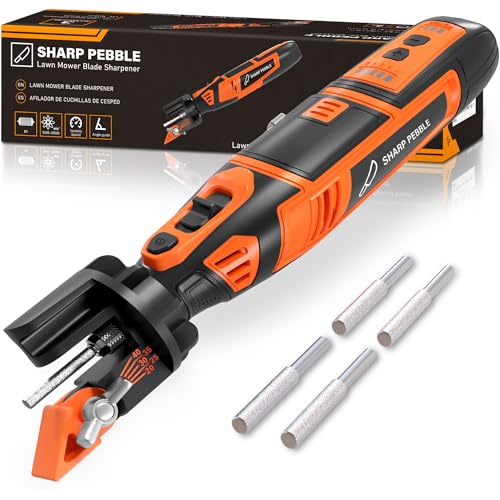
The Sharp Pebble Cordless Lawn Mower Blade Sharpener is a practical tool for homeowners who want to keep their mower blades sharp without the hassle of removal or the expense of professional sharpening. Designed for standard residential blades, it aims to make routine maintenance quick and convenient. This kit is best suited for those who mow regularly and want to maintain a clean cut for a healthier lawn.
In terms of performance, this sharpener can handle light to moderate edge dulling in about 2-3 minutes per blade when used on the mower, according to the product description. For badly worn edges, removal is recommended for better results. The adjustable angle guide (20-40 degrees) allows you to match your blade's factory bevel, which is crucial for effective cutting. The variable speed control (5,000-30,000 RPM) gives you the flexibility to work at a pace that feels right for the task. The cordless, lightweight design means you can take it to your mower wherever it sits, without dragging a cord.
Build quality appears solid for a home-use tool, with an ergonomic grip and a compact form factor. The adjustable angle guide feels sturdy when tightened, and the variable speed trigger offers good control. It's not designed for heavy-duty or commercial use, but for the average suburban lawn owner, it should hold up well over a season of regular touch-ups.
Setup is straightforward - charge the battery, set your desired angle, and you're ready to go. Storage is easy thanks to its small size. Maintenance is minimal: just keep the tool clean and the battery charged. This tool is especially handy for those who prefer to do quick sharpenings between mows, helping to extend blade life and reduce the need for replacements.
One realistic limitation is that this sharpener is only for standard residential blades - it won't work on zero-turn or heavy-duty commercial blades. Also, it's a sharpener, not a grinder, so if your blades have chips, dents, or missing metal, you'll need a grinder first. Battery life covers 1-2 blades per charge, which is fine for a single mower but may require a recharge for multiple blades.
Overall, the Sharp Pebble Cordless Lawn Mower Blade Sharpener is a solid choice for homeowners who want an easy, cordless way to maintain their mower blades. It's practical, adjustable, and offers good value for those who prefer to keep their equipment in top shape between professional sharpenings or replacements. If you have a standard residential mower and want a quick, no-fuss sharpening solution, this kit is worth considering.
Pros
- Quick and simple attachment to any standard drill – sharpens blades in seconds without removing them from the mower (if accessible)
- Corundum material is extremely durable and won't wear down quickly, offering consistent sharpening performance over time
- Includes a blade balancer that helps reduce vibration and prolongs mower engine life – a thoughtful addition at this price point
- Versatile enough to sharpen multiple yard tools beyond just mower blades, adding value for money
Cons
- May not work well on heavily damaged or extremely dull blades that require professional reshaping
- Balancer only fits blades with a center hole – some specialty or offset blades may not balance properly
- Users will need to exercise caution to avoid over-sharpening or creating an uneven edge, especially without prior experience
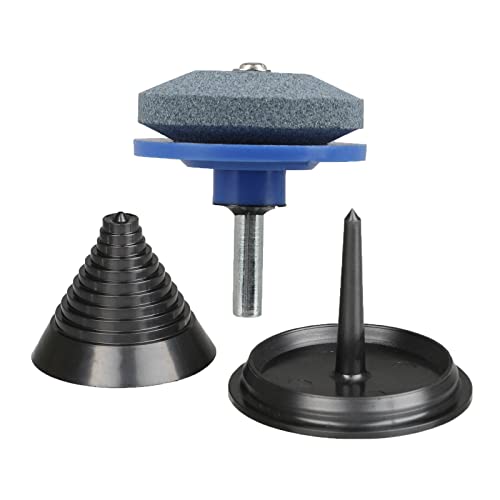
If you're a homeowner who mows their own lawn, keeping your mower blades sharp is one of the simplest ways to improve cut quality and reduce engine strain. The jtfrkope Lawn Mower Blade Sharpener and Balancer Set offers a budget-friendly way to do just that. Designed to work with any standard drill, this corundum sharpener quickly restores a factory-sharp edge to dull blades, while the included balancer helps eliminate vibration after sharpening. It's an ideal accessory for anyone from first-time buyers to seasoned lawn care enthusiasts who want to extend blade life without spending money on replacements or professional sharpening.
In real-world use, this sharpener shines in speed and convenience. Instead of labor-intensive manual filing, you simply insert the sharpener into your drill and guide it along the blade edge. The double-layer corundum stone sharpens both sides at once, and the angled surfaces help maintain a proper cutting angle. While you won't get a mirror finish like a professional grinder, most homeowners will notice an immediate improvement in cutting performance – grass is sheared cleanly rather than torn, which leads to a healthier lawn. The blade balancer is equally straightforward: place the blade on the cone, and if it tilts, you know more material needs to be removed from the heavy side. This step is crucial for preventing vibration that can damage your mower's spindle bearings and engine over time.
Build quality is a highlight for such an affordable product. The corundum material is dense and heat-resistant, so it won't degrade quickly even with repeated use. The sharpener feels solid and the grinding surface stays flat. The balancer is a simple plastic cone that works reliably for standard blades with a center hole. However, if you have offset or non-standard blades, it may not be perfectly centered. The entire set is compact and easy to store – fits in a tool drawer or a small corner of the garage. No batteries or electricity needed beyond your drill, making it a low-maintenance addition to your toolkit.
Setup is as easy as it gets: attach the sharpener to your drill chuck, tighten, and you're ready to go. The learning curve is minimal – watch a quick video or follow the simple instructions. That said, it's important not to press too hard or linger too long on one spot, as you can heat the blade and ruin its temper. A light touch and steady passes work best. The balancer helps ensure you remove material evenly. Maintenance is straightforward: just wipe the sharpener clean after use – no oiling or special care required.
One realistic limitation is that this sharpener won't fix deeply nicked or badly warped blades. For those cases, you'll still need to replace the blade or take it to a pro. Also, because the sharpener mounts on a drill, you have to remove the blade from the mower first – so it's not an on-the-fly tool. But given the price, it's a practical trade-off. Some users may want a guide to keep the sharpening angle consistent, but with practice you'll develop a feel for it.
Overall, this set is a smart purchase for any U.S. homeowner who mows their lawn and wants to maintain their equipment without frequent blade replacements or service bills. It's especially well-suited for budget-conscious shoppers, DIYers, and those with small to medium-sized yards who mow monthly. While it's not a heavy-duty professional tool, it delivers reliable performance for routine blade maintenance. If you're looking to save money and keep your mower running smoothly all season, this sharpener and balancer set is a worthwhile addition to your lawn care arsenal.

Pros
- Combines sharpening and balancing in one kit, saving money and storage space.
- Adjustable angles (15-45 degrees) accommodate a wide range of mower blade types.
- Large articulated arm and ball bearing design enhance precision and reduce vibration.
- Magnetic balancer is simple and intuitive - no extra tools needed.
- Solid aluminum alloy build feels durable and should last through many seasons.
Cons
- Price is higher than basic blade sharpeners, though the dual function may justify it.
- Requires an angle grinder (not included) to use the sharpener.
- Blade width compatibility is limited to 1.77-3.15 inches, which may not cover all mower models.
The Aurorasters New Upgrade Large Size Lawn Mower Blade Sharpener and Balancer is a two-in-one tool designed for homeowners who prefer to maintain their own mower blades. It combines a blade sharpener with an adjustable arm and a magnetic balancer, aiming to simplify the process of keeping blades sharp and properly balanced. This setup may work well for DIYers with a standard angle grinder who want more control than a simple file or bench grinder offers.
Based on product specifications, the sharpener features a 20.08-inch articulated arm with a ball bearing design and an enlarged handle to reduce wobble during use. The 7 adjustable angles from 15 to 45 degrees allow it to handle most common blade bevels. Many homeowners may find that this range covers mulching, standard, and high-lift blades. The magnetic balancer uses a cone and magnet to quickly show if a blade is out of balance, which can help prevent vibration and uneven cuts during mowing.
Build quality appears solid with a high-quality aluminum alloy frame. The bushings fit snugly over guide pins, which should contribute to consistent sharpening. The included adapter screws are meant to fit most angle grinders, so setup is straightforward. The balancer's magnetic base holds the blade securely while you check balance. Overall, the materials feel appropriate for regular seasonal use.
Setup is simple: attach the sharpener to your angle grinder using the provided screws, adjust the angle to match your blade, and guide the blade along the arm. The magnetic balancer requires no assembly - just place the blade on the cone and see if it tips. Maintenance involves keeping the parts clean and occasionally checking the bearings. Storage is easy since the components are compact enough to fit in a garage drawer or shelf.
A realistic limitation is the price - at around $68, it's more expensive than a basic sharpening file or a simple balancer. Additionally, you need an angle grinder, which not every homeowner owns. The blade width range (1.77-3.15 inches) covers many standard mower blades, but some wider or narrower blades may not fit. There are no user reviews yet, so long-term durability is unknown, but the aluminum construction suggests decent longevity.
If you already own an angle grinder and want a dedicated, precise way to sharpen and balance mower blades, this Aurorasters kit is a practical investment. It's especially useful for those who mow regularly and want to extend blade life and improve cut quality. For budget-conscious shoppers or those who only sharpen once a season, a simpler manual file may suffice. But for enthusiasts who value accuracy and convenience, this combo offers good value.
The Aurorasters blade sharpener and balancer are designed with convenience in mind. The sharpener attaches to your angle grinder using the included adapter screws, which should fit most standard grinders. The adjustable arm and handle allow you to set the angle and guide the blade smoothly. The magnetic balancer requires no assembly - just place the blade on the cone and observe if it settles evenly. Both tools are meant to be intuitive, so you can start sharpening without reading a lengthy manual. Some users may need a few tries to get the angle exactly right, but the markings are clear. Overall, the setup is straightforward for anyone comfortable with basic tools.

Pros
- Very affordable solution for blade maintenance
- Simple to install and use with any standard drill
- Works on a wide range of blades beyond just mowers
- Sturdy construction from double-layer corundum
Cons
- May not be suitable for very thick or hardened blades
- Requires a drill and some manual effort for best results
- Limited to sharpening only the cutting edge, not for reshaping severely damaged blades
Keeping your lawn mower blades sharp is one of the most important steps for a clean, healthy lawn. Dull blades tear grass instead of cutting it, leaving ragged edges that turn brown and invite disease. The Bneykrir 4Pcs Lawn Mower Blade Sharpener offers a simple, low-cost way to maintain your blades right at home using any power drill you already own.
This set includes four sharpening stones made from double-layer corundum, a material known for its hardness and durability. Each stone is designed to mount quickly onto your drill's chuck—installation takes about 10 seconds. Once attached, you run the spinning stone along the edge of your mower blade to restore a sharp cutting surface. Based on user feedback, this method is effective for most standard lawn mower blades, including those on push mowers, riding mowers, and even tractor blades.
The sharpener is lightweight and compact, making it easy to store in a toolbox or garage drawer. Because it comes as a 4-pack, you have extras to keep in your shed, share with a neighbor, or use for different tools. The corundum construction holds up well over multiple uses, though like any abrasive stone, it will eventually wear down with heavy use.
One of the biggest advantages is the cost savings. Instead of paying for professional sharpening or buying new blades every season, you can touch up your blades in minutes. This is especially useful for homeowners who mow frequently and want to maintain peak cutting performance without a big investment. The process also helps keep your blades balanced, which reduces vibration and wear on your mower's engine.
However, there are some limitations. This sharpener is best for routine maintenance on moderately dull blades. If your blades are deeply nicked, bent, or heavily worn, you may need to replace them or use a grinder first. Also, while the product works with any drill, achieving a consistent edge takes a steady hand and some practice. It's not as precise as a dedicated sharpening guide or professional service.
Overall, the Bneykrir blade sharpener is a practical choice for the budget-conscious homeowner who wants to keep their mower running efficiently. It's easy to use, versatile, and delivers good results for the price. If you're looking for a no-fuss way to extend the life of your blades and get a better cut, this set is worth adding to your lawn care toolkit.

Pros
- Quick and easy installation – no deck removal needed
- Safe locking mechanism reduces risk of injury
- Durable USA-made construction for long-term use
- Fits standard blades up to 2-3/4 inches wide
- Eliminates the need for extra tools or blocks
Cons
- Only works with blades 2-3/4 inches or less – may not fit wider blades
- Requires raising the mower at least 4 inches for optimal use
- May not be compatible with all mower brands or blade designs
The BLADZ-LOK Premium Standard Lawn Mower Blade Removal Tool is a practical accessory for anyone who owns a riding mower or zero-turn mower. Designed to simplify blade changes, this tool locks two blades together, letting you remove the bolt without removing the entire mower deck. It's a handy solution for homeowners who want to keep their blades sharp without spending hours on deck removal.
Based on product specifications, the tool installs in about 30 seconds with a simple three-step process. You raise the mower at least 4 inches, place the tool over the blades, and then use a wrench to loosen the blade bolt. The patented design uses a coupler that grips the blades securely, preventing them from spinning as you work. This eliminates the need for wood blocks, wedges, or another person to hold the blades.
Build quality appears solid, with the tool made in the USA from premium materials. The coupler is designed to fit standard blades up to 2-3/4 inches wide, which covers most residential riding mower blades. The manufacturer emphasizes that the tool will not damage new or sharpened blades, which is a common concern with other removal methods.
Setup is straightforward, but you do need to measure your blade width before ordering. The tool is not suitable for blades wider than 2-3/4 inches. Once you have the right fit, the tool stores easily in a toolbox or mower storage area. No ongoing maintenance is required beyond keeping it clean.
One limitation is that the tool requires the mower to be raised at least 4 inches. This may not be possible on all mowers, especially if you lack a lift or ramps. Also, while the tool fits most standard blades, it may not work with certain non-standard designs or heavy-duty tractor blades. Users should verify compatibility before purchase.
Overall, the BLADZ-LOK is a well-designed tool for homeowners who change their own mower blades. It saves time, reduces frustration, and adds a layer of safety. If you own a riding mower with standard blades and want a faster, simpler blade change, this tool is worth considering.
Using the BLADZ-LOK is straightforward. First, ensure your mower is on a level surface and the engine is off. Raise the mower deck at least 4 inches using a jack, lift, or ramps. Safety first – always use wheel chocks and disconnect the spark plug.
Next, measure your blade width. The tool fits blades 2-3/4 inches or less. If your blades are wider, this tool will not work. Place the coupler over the two blades, aligning the slots with the blade edges. The tool should sit snugly, locking the blades together.
Finally, use a socket wrench to loosen the blade bolt. The tool holds the blades in place, preventing them from spinning. Once the bolt is loose, remove the tool and then the blade. Reverse the process to install new blades. The entire process takes about 30 seconds once the mower is raised.
The BLADZ-LOK is designed with safety in mind. The coupler's locking mechanism holds the blades firmly together, reducing the risk of the blades spinning unexpectedly during bolt removal. This is a significant improvement over using wood blocks or wedges, which can slip or break.
Made in the USA from premium materials, the tool is built to last. The manufacturer emphasizes durability, and the tool's simple design means there are no moving parts to wear out. With proper care, it should provide years of reliable service.
However, as with any blade removal tool, it's important to follow safety guidelines. Always wear gloves and eye protection. Ensure the mower is stable and the engine is off. The tool is not intended for use on blades wider than 2-3/4 inches, so double-check compatibility before each use.
The Science and Mechanics Behind Lawn Mower Blade Sharpness
Keeping rotary mower blades properly sharpened represents one of the most critical aspects of turfgrass management and outdoor power equipment reliability. When a mower blade spins at high velocity, its cutting bevel must slice cleanly through vegetative tissue rather than smashing it apart through brute force. A dull cutting edge compromises plant health, increases machine vibration, drains fuel reserves, and reduces battery runtime across residential and commercial platforms. Regular maintenance restores proper edge geometry, allowing equipment to perform efficiently while maintaining crisp turf aesthetics throughout the entire growing season.
Turfgrass Physiology and Clean Shearing Versus Foliage Tearing
Every grass blade contains vascular bundles responsible for transporting water, minerals, and synthesized carbohydrates throughout the plant. When a sharp mower edge strikes the leaf blade, it produces a clean transverse incision that minimizes physical cellular trauma. The plant immediately initiates a natural sealing process, closing the vascular wound within twenty-four to forty-eight hours after shearing. This rapid physiological recovery prevents unnecessary moisture evaporation and keeps the lawn looking vibrant green without visible tip dieback.
A blunt cutting edge impacts the turf like a blunt club, ripping and shredding delicate cellular walls along the top of the leaf. This violent tearing action leaves frayed, ragged margins that desiccate quickly under direct sunlight and high ambient temperatures. The resulting bleached or whitish-brown leaf tips create an unsightly haze across the entire yard within two days of mowing. Furthermore, these jagged open wounds provide easy points of entry for opportunistic fungal pathogens such as dollar spot, leaf spot, and brown patch.
Aerodynamic Airflow and Deck Vacuum Performance
Rotary mower decks operate as enclosed aerodynamic vacuum chambers where blades perform two distinct functions simultaneously. The rear upturned sail creates upward suction that stands individual grass stems erect, while the sharpened leading edge shears the grass at a uniform height. When edges become rounded or nicked, the aerodynamics across the blade surface become turbulent rather than laminar. This disruption weakens the vertical suction force inside the deck housing, allowing limp or bent grass blades to evade the cutting path.
Weakened deck airflow leads directly to visible cutting defects such as uncut stragglers, uneven swathes, and poor clippings dispersion. Clippings that should be thrown cleanly out the discharge chute or pulverized within a mulching chamber instead drop in heavy, wet clumps across the turf. These dense mats of grass clippings block sunlight, trap moisture, and suffocate healthy grass underneath. Maintaining a sharp leading edge preserves the continuous airflow velocity necessary for clean bagging, uniform mulching, and smooth side discharge.
Powertrain Stress, Fuel Consumption, and Battery Drain
Blunt mower blades demand substantially more mechanical torque to force steel through thick grass stands. In internal combustion engines, this increased resistance pulls down engine revolutions per minute, forcing the governor to open the throttle wider to compensate. The resulting fuel consumption increases noticeably over the course of a single mowing season, burning extra gasoline while generating excess exhaust emissions. Routine touch-ups allow the engine to operate within its optimal torque band without constant lugging or thermal strain.
Cordless battery-powered mowers experience an even more direct operational penalty when pushing dull cutting edges through dense growth. Electric brushless motors draw continuous electrical current measured in Watt-hours, calculated by multiplying platform voltage by operating amp-hours. High cutting resistance spikes amperage draw, rapidly draining lithium-ion battery reserves and cutting operational runtime significantly. Under heavy conditions, this severe amp draw can trip electronic thermal overload protections, temporarily shutting down the motor to prevent permanent stator damage.
Spindle Assemblies and Structural Vibration Dynamics
Deck spindle housings support rotating shafts that turn blades at tip speeds often exceeding eighteen thousand feet per minute. When a sharp blade cuts grass cleanly, the rotational resistance remains smooth and uniform across every revolution. Dull blades create harsh, repetitive resistance spikes as blunt metal bashes through stubborn sod, sending shock vibrations up through the spindle shaft. Over time, these continuous impact loads degrade sealed ball bearings, crack cast aluminum housings, and loosen deck mounting bolts.
Mechanical stress extends beyond the spindle assemblies into idler pulleys, electric power take-off clutches, and drive belts. Increased drag forces drive belts to slip under heavy cutting loads, generating excessive friction that glazes rubber compound surfaces and stretches tensioning springs. In severe cases, the constant chatter and harmonic vibration can induce metal fatigue along the welded deck shell itself. Keeping cutting edges sharp minimizes rotational drag and protects these expensive mechanical assemblies from premature catastrophic failure.
Blade Edge Geometry: Sharpening Angles and Bevel Profiles
A common misconception among homeowners is that lawn mower blades should be sharpened to a razor-thin surgical edge. In reality, an edge ground as thin as a utility knife rolls over, mushrooms, or chips almost immediately upon striking small pebbles, sticks, or hard dirt mounds. Factory blade specifications generally call for a bevel angle between thirty and thirty-five degrees with a blunt cutting margin roughly the thickness of a butter knife. This specific geometry provides sufficient sharpness to slice grass cleanly while retaining enough steel mass to resist impact damage.
Maintaining the original manufacturer bevel angle is essential whenever dressing a worn cutting surface. Guided sharpening fixtures like the Aurorasters New Upgrade Large Size Lawn Mower tool offer multiple adjustable angles ranging from fifteen to forty-five degrees to match diverse blade profiles. Compact cordless tools like the Sharp Pebble Cordless Lawn Mower Blade Sharpener provide guides between twenty and forty degrees to help operators preserve accurate geometry during routine touch-ups. Preserving consistent bevel angles ensures that the blade cuts cleanly without removing unnecessary steel mass from the working edge.
Tool Selection for Safe and Accurate Blade Maintenance
Property owners have several effective sharpening systems available depending on their mechanical experience and equipment setup. Rotary sharpening stones designed for standard power drills, such as the jtfrkope drill attachment kit or the Bneykrir 4Pcs Lawn Mower Blade Sharpener set, provide an accessible and budget-friendly sharpening solution. These double-layer corundum ceramic stones feature built-in plastic bevel guides that sit against the flat backside of the blade while the rotating stone dresses the angled cutting edge. They work well for quick seasonal cleanups on standard residential walk-behind and riding mower blades.
Handheld rotary tool sharpeners offer an agile alternative for light routine maintenance without extensive machine disassembly. The Sharp Pebble Cordless Lawn Mower Blade Sharpener operates between five thousand and thirty thousand revolutions per minute, allowing operators to touch up dulled edges in a few minutes. However, rotary tools and drill stones serve primarily as maintenance sharpeners rather than heavy grinders. Blades with large rock gouges, deep gouges, or severe metal loss require a stationary bench grinder or dedicated angle grinder to re-establish a true flat bevel before fine honing.
For commercial operators and acreage owners managing multi-blade decks, articulated grinding jigs offer professional stability and angle consistency. Fixtures equipped with extended articulated arms and sturdy clamping jaws secure angle grinders firmly, eliminating freehand wobble and ensuring straight cutting faces across wide blade spans. These heavy-duty tools accommodate wider blades ranging up to more than three inches, making them well suited for thick, high-lift commercial steel. Selecting the right sharpening tool depends entirely on blade thickness, initial edge wear, and whether you prefer quick touch-ups or complete profile restoration.
Safe Blade Removal and Deck Maintenance Protocols
Working under a mower deck requires strict adherence to outdoor power equipment safety procedures to prevent accidental engine starts or severe physical injury. Always park the mower on a hard, level concrete surface, engage the parking brake, and shut down the engine completely. On gasoline models, disconnect the spark plug wire and secure the boot away from the terminal. On battery-powered machines, remove the safety key and disconnect the primary battery pack before reaching anywhere near the cutting chamber.
Loosening tight spindle bolts requires stabilizing the blade to prevent dangerous free rotation while applying high torque with a socket wrench. Many operators wedge scrap pieces of two-by-four lumber between the blade and deck baffle, though wet wood can slip or split unexpectedly. Dedicated locking fixtures like the BLADZ-LOK Premium Standard Lawn Mower Blade removal tool clamp two riding mower blades together, securing both components securely in seconds. This hands-free mechanical lock eliminates slipping risks and allows operators to loosen fasteners without dropping or removing the entire mower deck.
Dynamic Balancing and Vibration Prevention
Sharpening removes steel from the cutting face, which can easily create an unbalanced condition if more metal is ground from one side of the blade than the other. An unbalanced blade spinning at several thousand revolutions per minute acts as an eccentric rotating weight, generating severe high-frequency vibration. This vibration fatigues the operator, rattles deck components loose, and rapidly destroys spindle bearings. Every sharpening session must conclude with a precise balance check before the blade is bolted back onto the spindle arbor.
Checking rotational equilibrium is straightforward when utilizing dedicated balancing tools. Simple stepped cone balancers, like those included in the jtfrkope sharpening package, provide an inexpensive static check by resting the blade center hole over a low-friction cone. For higher precision, wall-mounted magnetic balancers suspend the blade horizontally using strong permanent magnets to reveal even minor weight discrepancies. If one side dips downward, carefully grind a small amount of metal from the back sail of the heavy side until the blade rests completely level.
Operational Indicators of Dull Cutting Edges
Lawn conditions provide immediate visual clues that cutting edges require urgent maintenance. When looking across a freshly cut lawn, a silver or grayish-white tint indicates that leaf blades have been ripped rather than sliced cleanly. Frayed tips will dry out and turn distinct brown ribbons within several days, giving the grass an unkempt appearance even though it was recently trimmed. Uneven cut height and isolated clumps of clippings trailing behind the deck also signal that dulled edges and degraded aerodynamic suction are failing to process grass cleanly.
Equipment behavior changes just as noticeably when cutting edges degrade. Operators will hear engine revolutions drop significantly when entering thick grass, accompanied by increased chassis vibration and occasional drive belt squeal. On demanding terrain or when operating specialized mowers for steep hills, maintaining sharp edges is vital to ensure that engine power drives wheel traction instead of fighting blade resistance. If your mower begins bogging down or struggling to discharge clippings cleanly through standard discharge chutes, the cutting hardware requires immediate inspection.
Establishing Seasonal Sharpening Schedules and Maintenance Routines
Sharpening intervals vary according to property size, regional turf species, and soil composition. For typical residential yards, blades should be inspected and touched up every twenty to twenty-five hours of active mowing time. Homeowners managing sandy soil conditions must inspect blades more frequently, as abrasive sand particles sucked into the vacuum chamber erode steel edges far faster than organic plant matter. Always inspect blades immediately after hitting unseen surface tree roots, buried irrigation heads, or hidden rocks to dress minor nicks before they worsen.
Keeping a spare set of balanced replacement blades in your workshop makes seasonal maintenance seamless and stress-free. When the installed set becomes dull or chipped, you can swap in the sharp set immediately and sharpen the dulled blades at your convenience. During winter storage, clean all grass residue from the blades, grind a fresh thirty-degree edge, verify balance on a magnetic stand, and apply a light coat of protective oil to prevent surface corrosion. Having sharp, balanced blades ready for early spring ensures that your equipment begins the mowing season delivering clean cuts and promoting healthy lawn growth.
Maintaining sharp mower blades is a foundational lawn care habit that pays dividends in turf vigor, machine reliability, and operational efficiency. Clean cuts protect grass plants from fungal infection and moisture stress while reducing mechanical strain across engine components, deck spindles, and drive belts. By using proper sharpening jigs, balancing stands, and safe removal practices, any equipment owner can achieve professional results and extend blade longevity across multiple seasons. Taking the time to dress your mower blades regularly ensures a healthier lawn and a smoother mowing experience every time you head into the yard.






Write Your Review
No reviews yet. Be the first to share your experience!