


Ragged, frayed grass tips across a freshly cut lawn indicate that dull rotary cutting edges are tearing turf stems instead of shearing them cleanly. Learning how to file a lawn mower blade properly restores clean cutting performance, reduces mechanical strain on deck spindle bearings, and prevents unsightly turf browning caused by bruised grass blades. Whether managing a compact residential walk-behind, a zero-turn rider, or modern electric cordless lawn mowers, maintaining sharp cutting steel protects turfgrass health and deck efficiency.
While unguided high-speed bench grinders can easily overheat hardened steel and ruin factory temper, manual mill files and specialized drill sharpeners provide controlled metal removal for home mechanics. Mastering correct bevel angles, balanced metal removal, and secure blade clamping ensures smooth operation without destructive deck vibration. This workshop guide details the mechanical procedures, required safety steps, and filing motions needed to re-edge rotary mower blades safely and effectively.

Pros
- Simple, effective blade sharpening that any homeowner can handle in minutes.
- Durable high carbon steel construction should hold up through many seasons of use.
- Paddle handle is easy to grip and helps you maintain a steady filing angle.
- Reusable sleeve keeps the file safe and adds a layer of storage convenience.
Cons
- No comprehensive instructions included, so beginners may need to look up proper filing techniques for mower blades.
- Rotary file works best on uncoated steel blades; some premium coated mower blades may be damaged if filed aggressively.
- At 8 inches, it is shorter than some full-length mill files, which might make it less suited for very large or heavy-duty equipment.
The Mercer Industries BCDRT08-8 Inch Rotary Mower File with Handle is exactly the kind of simple, affordable tool that belongs in every homeowner's garage. This isn't a fancy electric sharpener or a bulky bench grinder - it's a hand-held, high carbon steel file designed to put a fresh edge back on your lawn mower blades, garden tools, and woodworking tools. For folks who mow a typical suburban yard and want to avoid replacing blades every few weeks, this file offers a practical way to keep cutting performance consistent without spending much money.
Based on product specifications, the file measures 8 inches in length and weighs just over half an ounce, so it's light enough to use comfortably while you sit on a workbench or kneel beside your mower. The built-in paddle handle gives you a secure grip, which helps you maintain a steady angle as you work from one end of the blade to the other. Many homeowners may prefer this kind of manual sharpening because it's quiet, quick, and lets you see exactly what you're doing. It's a great setup for do-it-yourselfers who want to keep their mower cutting clean grass without disassembling half the machine.
In terms of build quality, the high carbon steel is a smart choice for a cutting tool. It holds a sharp edge, and the file itself is meant to be used on softer steel that you'll find on most standard mower blades. The reusable plastic sleeve is a thoughtful inclusion - it protects the teeth when you toss the file into a drawer or tool bag, and it also keeps you from accidentally nicking your hands when reaching for other tools. For the price, it feels like a solid, no-nonsense accessory that should survive years of weekend yard work.
Setup and maintenance couldn't be simpler. There's no assembly, no charging, and no cords to deal with. After each mowing session, you can file the blade right on the mower (if you're careful to raise it and secure it) or remove the blade and clamp it to a work surface. The product description highlights its use for lawn mower blades, garden tools, and woodworking tools, so it's genuinely versatile. Some users find that a little lubricating oil on the file teeth helps prevent clogging, but it's not required for basic sharpening.
The main limitation is that this is a manual file, so it won't transform a badly nicked or deeply damaged blade back to brand-new condition. For a truly dull edge or small nicks, it's great. But if you've hit a rock or a stump and the blade is badly gouged, you'll probably still need a grinder or a replacement blade. Also, the rotary design tends to work best when you follow the original bevel angle, so it's worthwhile to spend a few minutes watching a tutorial if you've never sharpened a mower blade before.
All in all, for the budget-conscious homeowner, apartment dweller with a small push mower, or first-time mower buyer, the Mercer Industries rotary mower file is a smart pickup. It's inexpensive, easy to store, and helps you keep your equipment running smoothly. If you already own basic tools and don't want to invest in an electric sharpener, this file delivers the extra edge you need for a tidy, healthy lawn.
Pros
- Quick and simple attachment to any standard drill – sharpens blades in seconds without removing them from the mower (if accessible)
- Corundum material is extremely durable and won't wear down quickly, offering consistent sharpening performance over time
- Includes a blade balancer that helps reduce vibration and prolongs mower engine life – a thoughtful addition at this price point
- Versatile enough to sharpen multiple yard tools beyond just mower blades, adding value for money
Cons
- May not work well on heavily damaged or extremely dull blades that require professional reshaping
- Balancer only fits blades with a center hole – some specialty or offset blades may not balance properly
- Users will need to exercise caution to avoid over-sharpening or creating an uneven edge, especially without prior experience
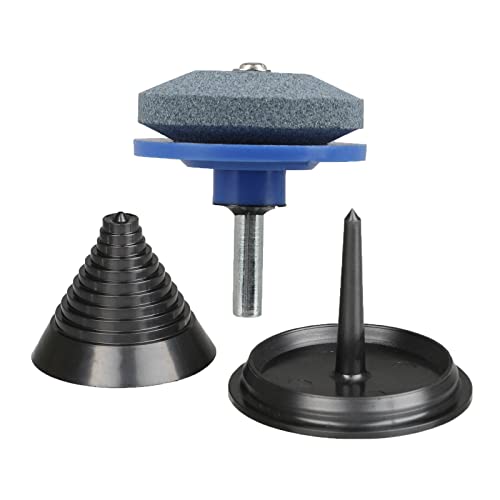
If you're a homeowner who mows their own lawn, keeping your mower blades sharp is one of the simplest ways to improve cut quality and reduce engine strain. The jtfrkope Lawn Mower Blade Sharpener and Balancer Set offers a budget-friendly way to do just that. Designed to work with any standard drill, this corundum sharpener quickly restores a factory-sharp edge to dull blades, while the included balancer helps eliminate vibration after sharpening. It's an ideal accessory for anyone from first-time buyers to seasoned lawn care enthusiasts who want to extend blade life without spending money on replacements or professional sharpening.
In real-world use, this sharpener shines in speed and convenience. Instead of labor-intensive manual filing, you simply insert the sharpener into your drill and guide it along the blade edge. The double-layer corundum stone sharpens both sides at once, and the angled surfaces help maintain a proper cutting angle. While you won't get a mirror finish like a professional grinder, most homeowners will notice an immediate improvement in cutting performance – grass is sheared cleanly rather than torn, which leads to a healthier lawn. The blade balancer is equally straightforward: place the blade on the cone, and if it tilts, you know more material needs to be removed from the heavy side. This step is crucial for preventing vibration that can damage your mower's spindle bearings and engine over time.
Build quality is a highlight for such an affordable product. The corundum material is dense and heat-resistant, so it won't degrade quickly even with repeated use. The sharpener feels solid and the grinding surface stays flat. The balancer is a simple plastic cone that works reliably for standard blades with a center hole. However, if you have offset or non-standard blades, it may not be perfectly centered. The entire set is compact and easy to store – fits in a tool drawer or a small corner of the garage. No batteries or electricity needed beyond your drill, making it a low-maintenance addition to your toolkit.
Setup is as easy as it gets: attach the sharpener to your drill chuck, tighten, and you're ready to go. The learning curve is minimal – watch a quick video or follow the simple instructions. That said, it's important not to press too hard or linger too long on one spot, as you can heat the blade and ruin its temper. A light touch and steady passes work best. The balancer helps ensure you remove material evenly. Maintenance is straightforward: just wipe the sharpener clean after use – no oiling or special care required.
One realistic limitation is that this sharpener won't fix deeply nicked or badly warped blades. For those cases, you'll still need to replace the blade or take it to a pro. Also, because the sharpener mounts on a drill, you have to remove the blade from the mower first – so it's not an on-the-fly tool. But given the price, it's a practical trade-off. Some users may want a guide to keep the sharpening angle consistent, but with practice you'll develop a feel for it.
Overall, this set is a smart purchase for any U.S. homeowner who mows their lawn and wants to maintain their equipment without frequent blade replacements or service bills. It's especially well-suited for budget-conscious shoppers, DIYers, and those with small to medium-sized yards who mow monthly. While it's not a heavy-duty professional tool, it delivers reliable performance for routine blade maintenance. If you're looking to save money and keep your mower running smoothly all season, this sharpener and balancer set is a worthwhile addition to your lawn care arsenal.

Pros
- Extremely easy to use – just attach to a drill and sharpen
- Durable material won't degrade from friction heat
- Affordable price for a five-pack, excellent value
- Versatile – works on many blade types beyond just mowers
- Saves time and effort compared to manual filing
Cons
- Requires a power drill or hand drill (not included)
- May not fit curved or very small blades perfectly
- Balancing the blade after sharpening is still recommended for best mower performance
The cenoz 5 Pack Lawn Mower Blade Sharpener is designed for homeowners who want to keep their mower blades sharp without spending a lot of money or time. This simple accessory attaches to any power drill, turning it into a fast blade sharpener in seconds. It's ideal for anyone who mows their own lawn and wants a cleaner cut, healthier grass, and less strain on the mower engine.
Performance-wise, the sharpener works quickly. According to the product description, it can restore a dull blade to a sharp edge in a short time. A sharper blade means the mower cuts grass cleanly instead of tearing it, which reduces browning and disease. The double-layer corundum material is a key upgrade over older versions – it's more durable and doesn't melt or degrade from the heat generated during grinding.
Build quality is a highlight. The corundum grindstone is tough and long-lasting, so you can sharpen multiple blades with one tool. The five-pack gives you extras for different tools or to share with a neighbor. Each sharpener measures 2.3 x 2.5 inches, which is a good size for most mower blades.
Setup is about as easy as it gets. You just insert the sharpener into your drill's chuck, tighten it, and you're ready to go. The product claims it takes only 10 seconds to install. No special skills or tools are needed. After sharpening, you'll want to check the blade balance to avoid vibration, but that's a simple step anyone can do.
A realistic limitation is that you need a drill – this sharpener doesn't work on its own. Also, while it's universal, very large or oddly shaped blades might not fit perfectly. And because it's a grinding stone, it removes material, so you shouldn't over-sharpen or thin the blade too much.
Overall, the cenoz blade sharpener is a practical, affordable solution for any U.S. homeowner who wants to maintain their lawn mower and other cutting tools. It's especially valuable for those on a budget, first-time buyers, or anyone who prefers easy DIY maintenance. If you already own a drill, this is a smart investment that will pay for itself in saved blade replacement costs.
Using the cenoz lawn mower blade sharpener is straightforward. First, disconnect the spark plug or remove the battery from your mower for safety. Then remove the mower blade and clean off any grass or debris. Insert the sharpener's shaft into your drill's chuck and tighten it securely. Hold the drill at a steady angle against the blade's cutting edge, moving it gently back and forth along the edge. The double-layer corundum will grind away dull metal. Work slowly to avoid overheating. After sharpening, check the blade balance with a balancer or by hanging it on a nail. If one side is heavier, remove a bit more material. Reinstall the blade, and you're ready to mow with a fresh edge.

Pros
- Versatile for sharpening various metal tools including lawn mower blades, garden shears, and drills.
- Sturdy carbon steel construction with high hardness for durable, long-lasting use.
- Comfortable non-slip handle improves grip and reduces hand strain during sharpening tasks.
- Compact and lightweight design for easy storage and portability around the yard.
Cons
- Limited to manual sharpening; may require more effort compared to powered sharpeners for frequent use.
- Only one file included, so users needing multiple grits or sizes may need to purchase additional files.
- Smooth blade design may not be ideal for heavy-duty or aggressive material removal on very dull blades.
For homeowners who take pride in a well-manicured lawn, keeping mower blades sharp is a simple but essential task. The Wvapzwr 8in Flat Mill File is designed to help with exactly that—restoring the edge on lawn mower blades, garden shears, drills, and other metal tools. This single-pack file is a straightforward, budget-friendly option for those who prefer a hands-on approach to tool maintenance.
Based on the product specifications, this file is made from carbon steel with a tooth-shaped design on both sides. This dual-sided cutting surface aims to provide even, smooth sharpening. The 12.4-inch length gives you enough reach to work on mower blades without feeling cramped, while the ergonomic, non-slip handle is intended to offer a comfortable grip. For many homeowners, this setup may work well for quick touch-ups between professional sharpenings or for maintaining a variety of garden tools.
Durability is a key consideration for any sharpening tool. The carbon steel construction is described as having high hardness and being resistant to breaking, which suggests it can handle regular use without wearing down quickly. The handle combines PP and TRP materials for a secure hold, even when your hands are sweaty or gloved. This build quality may appeal to those who want a reliable file that can stay in the toolbox for seasons to come.
In terms of everyday handling, the file is lightweight at under half a pound, making it easy to maneuver around blade edges. The compact 12.4-inch size also means it can be stored in a drawer, on a pegboard, or in a tool bag without taking up much space. For homeowners with limited garage or shed space, this is a practical advantage. Maintenance is minimal—just wipe the file clean after use to prevent rust and keep it ready for the next sharpening session.
One realistic limitation is that manual filing requires some physical effort and technique, especially on very dull or nicked blades. While this file can restore a working edge, it may not match the speed or precision of a powered bench grinder or a dedicated sharpening tool. Additionally, the smooth blade design (as opposed to a coarse or bastard cut) means it is best suited for fine sharpening rather than heavy material removal. Users with heavily damaged blades might need to start with a coarser file first.
Overall, the Wvapzwr flat mill file is a practical choice for homeowners who want an affordable, easy-to-use sharpening tool for their lawn mower blades and garden tools. It fits well into the routine maintenance of outdoor power equipment, helping you keep cuts clean and grass healthy. If you are a first-time buyer or a budget-conscious shopper looking for a simple solution to extend the life of your blades, this file is worth considering.
Pros
- Affordable solution compared to buying new blades
- Easy to use with any standard power drill
- Corundum construction offers good durability
- Versatile enough for various cutting tools
Cons
- May require practice to achieve consistent sharpening angle
- Not suitable for severely damaged or nicked blades
- Limited to manual drill operation; no electric sharpener included
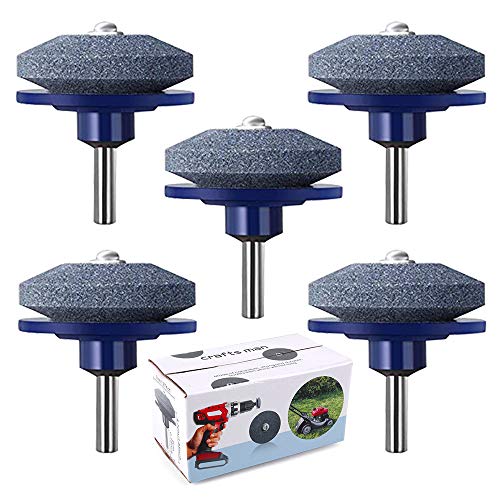
The cenoz Lawn Mower Blade Sharpener is a practical accessory designed for homeowners who want to maintain their mower blades without frequent replacements. This 5-pack of blue sharpeners is made from corundum, a material chosen for its resistance to wear from high-speed grinding. The product is intended for use with any standard power drill, making it an accessible option for DIY yard maintenance.
In terms of performance, this sharpener helps restore a sharp edge to dull blades, which can improve cutting quality and reduce tearing of grass. A sharper blade typically results in a cleaner cut, promoting healthier lawn growth. The product is versatile enough to work on lawn mowers, lawn tractors, rototillers, drill blades, and sickle bar cutters, adding flexibility for users with multiple tools.
Build quality appears solid based on the description, with the corundum material aimed at prolonging service life. Each sharpener measures roughly 1.97 by 1.85 inches, a compact size that makes storage easy in a garage or toolbox. The 5-pack provides backup units for extended use or for sharing with neighbors.
Setup is straightforward: simply install the sharpener into your drill chuck, and you can begin sharpening in about 10 seconds. This ease of use is a key advantage for those who prefer quick maintenance over complicated procedures. However, achieving a consistent sharpening angle may require some practice, especially for beginners.
A limitation to note is that this sharpener is not designed for badly damaged or nicked blades. It works best for routine touch-ups to maintain edge sharpness. Additionally, it relies on your drill's power, so it won't replace an electric bench grinder for heavy-duty reshaping.
Overall, the cenoz Lawn Mower Blade Sharpener is a budget-friendly choice for U.S. homeowners who want to keep their mower blades sharp with minimal hassle. It suits those who already own a drill and prefer DIY maintenance over buying expensive new blades. For routine sharpening, this 5-pack offers good value and convenience.

Pros
- Very affordable solution for blade maintenance
- Simple to install and use with any standard drill
- Works on a wide range of blades beyond just mowers
- Sturdy construction from double-layer corundum
Cons
- May not be suitable for very thick or hardened blades
- Requires a drill and some manual effort for best results
- Limited to sharpening only the cutting edge, not for reshaping severely damaged blades
Keeping your lawn mower blades sharp is one of the most important steps for a clean, healthy lawn. Dull blades tear grass instead of cutting it, leaving ragged edges that turn brown and invite disease. The Bneykrir 4Pcs Lawn Mower Blade Sharpener offers a simple, low-cost way to maintain your blades right at home using any power drill you already own.
This set includes four sharpening stones made from double-layer corundum, a material known for its hardness and durability. Each stone is designed to mount quickly onto your drill's chuck—installation takes about 10 seconds. Once attached, you run the spinning stone along the edge of your mower blade to restore a sharp cutting surface. Based on user feedback, this method is effective for most standard lawn mower blades, including those on push mowers, riding mowers, and even tractor blades.
The sharpener is lightweight and compact, making it easy to store in a toolbox or garage drawer. Because it comes as a 4-pack, you have extras to keep in your shed, share with a neighbor, or use for different tools. The corundum construction holds up well over multiple uses, though like any abrasive stone, it will eventually wear down with heavy use.
One of the biggest advantages is the cost savings. Instead of paying for professional sharpening or buying new blades every season, you can touch up your blades in minutes. This is especially useful for homeowners who mow frequently and want to maintain peak cutting performance without a big investment. The process also helps keep your blades balanced, which reduces vibration and wear on your mower's engine.
However, there are some limitations. This sharpener is best for routine maintenance on moderately dull blades. If your blades are deeply nicked, bent, or heavily worn, you may need to replace them or use a grinder first. Also, while the product works with any drill, achieving a consistent edge takes a steady hand and some practice. It's not as precise as a dedicated sharpening guide or professional service.
Overall, the Bneykrir blade sharpener is a practical choice for the budget-conscious homeowner who wants to keep their mower running efficiently. It's easy to use, versatile, and delivers good results for the price. If you're looking for a no-fuss way to extend the life of your blades and get a better cut, this set is worth adding to your lawn care toolkit.

Pros
- Quick and easy blade sharpening with any drill, saving time compared to manual filing.
- Includes both coarse and fine grit stones for efficient restoration and finishing.
- Blade balancer helps eliminate vibration, extending mower lifespan and improving cut quality.
- Compact and portable kit with storage case, ideal for home use or on-the-go maintenance.
- Versatile enough to sharpen various garden tools beyond mower blades.
Cons
- May require practice to achieve consistent sharpening angle on curved or large blades.
- Balancer only fits blades with a center hole between 5/8 and 1.5 inches, so some specialty blades may not work.
- Storage case is basic and may not withstand heavy shop use over time.
If you own a lawn mower, you know that a sharp blade makes all the difference in cut quality and engine efficiency. The cenoz 5-Piece Lawn Mower Blade Sharpener Kit is designed for homeowners who want to keep their blades in top shape without spending a lot on professional sharpening services or bulky bench grinders. This kit includes four sharpening stones and a blade balancer, all packed in a compact storage case that fits easily in a garage or shed.
Based on the product description, the sharpening stones are made from industrial-grade corundum, a material known for its hardness and wear resistance. The dual-layer design combines a coarse grit for removing rust and nicks with a fine grit for finishing, so you can restore a dull blade to razor-like sharpness in just a few passes. The universal 1/4-inch shank fits any standard power drill or hand drill, making it easy to attach and use. Many homeowners may appreciate how quickly this setup works compared to manual filing—it can turn a tedious chore into a 10-minute task.
Included in the kit is a blade balancer that works with blades having a center hole from 5/8 to 1.5 inches. Balancing your blade after sharpening is crucial because even a small imbalance can cause vibration, leading to premature wear on mower bearings and an uneven cut. This balancer lets you check and correct balance easily, which helps protect your mower and ensures a smoother, more professional-looking lawn.
The kit is also versatile beyond mower blades. According to the features, you can use the stones on garden shears, rototiller blades, sickles, and other cutting tools. The compact size and corrosion-resistant materials make it suitable for outdoor use and storage. The included storage case keeps all five pieces organized, so you won't lose small parts between uses.
One realistic limitation is that sharpening by hand with a drill attachment requires some practice to maintain a consistent angle, especially on curved or wide blades. Also, the balancer may not fit every blade type—if your mower uses a blade with a non-standard center hole, you might need a different balancing solution. The storage case is functional but basic, and may not hold up to heavy shop abuse over years.
Overall, this kit is a practical, budget-friendly option for DIY lawn care enthusiasts who want to keep their mower blades sharp without investing in expensive equipment. It's especially well-suited for homeowners with one or two mowers who don't mind spending a few minutes on maintenance. If you value convenience, portability, and cost savings, the cenoz sharpener kit is worth considering.
Pros
- Adjustable sharpening angle covers most blade types, giving you flexibility for different mower decks
- Wide blade width range fits everything from push mowers to riding mowers
- Ball-bearing guide and large handle make the sharpening process smoother and less fatiguing
- Tool-free angle adjustments save time when switching between blades or sharpening multiple blades
Cons
- Requires a separate angle grinder—not included—so total cost may be higher for first-time buyers
- Clamp-on design needs a sturdy workbench or table; portable use is limited
- Some users may find the initial setup takes a few tries to get the alignment just right
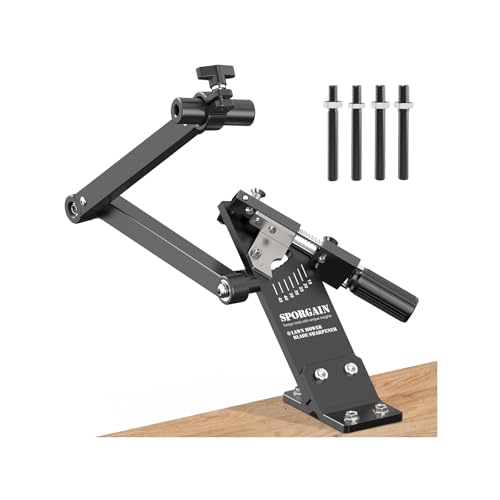
The SporGain lawn mower blade sharpener is a practical accessory for homeowners who prefer to sharpen their own mower blades rather than replacing them or paying for professional sharpening. Designed to fit blades from 1.65 to 3.60 inches wide—covering standard, mulching, and high-lift styles—this jig works with most angle grinders to restore a sharp edge quickly. It's especially useful for those with multiple mowers or who want to keep blades in top condition throughout the growing season.
In terms of performance, the adjustable 15-45 degree angle lets you match the original blade bevel, which can help maintain cutting quality and reduce tearing of grass. The ball-bearing guide and enlarged 25mm handle reduce friction and make the sharpening process smoother than freehand methods. Four adapter screws are included to secure the jig to common angle grinders, though you'll need to supply the grinder itself. According to the product description, setup involves clamping the sharpener to a workbench, adjusting the angle with thumb screws, and then running the grinder along the blade edge.
The build quality appears solid for its price point. The steel frame holds blades securely, and the thumb-screw adjustments are tool-free, which simplifies switching between blades or changing angles. The compact dimensions (13.5 x 9 x 3.4 inches) mean it won't take up much storage space in a garage or shed. However, because it requires a workbench or sturdy table, it's not a portable solution for on-site sharpening at a neighbor's house or in the field.
Setup and maintenance are straightforward: unbox, clamp, adjust, and sharpen. There are no complex parts to assemble, and cleaning is simply a matter of wiping off metal filings after use. The jig itself requires little upkeep, though the ball bearing may benefit from occasional lubrication. For homeowners who already own an angle grinder, this sharpener offers a cost-effective way to maintain blade sharpness without removing the blade from the mower—though you still need to detach the blade from the mower deck first.
A realistic limitation is that the sharpener only works with blades that fit within its width range; very narrow or extra-wide blades may not clamp securely. Additionally, achieving a perfectly even edge may take a few practice runs, especially for beginners. Some users might prefer a guided sharpening system with built-in stops, but the SporGain's adjustable angle and ball-bearing guide provide good control for the price.
Overall, the SporGain lawn mower blade sharpener is a solid choice for DIY-minded homeowners who want to keep their mower blades sharp without spending a lot of money. It's best suited for those who have a workbench and an angle grinder already, and who are comfortable with basic tool setup. If you're looking to extend blade life and improve cut quality between professional sharpenings, this adjustable jig offers a practical, budget-friendly solution.
Step-by-Step Guide to Filing and Balancing Lawn Mower Blades
Filing a rotary lawn mower blade involves isolating machine power, unbolting the blade safely, clamping the steel in a bench vise, and applying steady forward strokes along the factory bevel with a quality mill bastard file. The primary objective is restoring a sharp, uniform cutting edge without grinding away excessive steel or altering the original bevel angle. Proper filing also requires checking blade balance on a static cone gauge to ensure smooth high-speed rotation under the cutting deck. Taking a methodical approach protects both mower blade integrity and long-term turf health.
Critical Safety Preparation and Blade Removal Workflow
Safety begins before touching any mechanical fasteners on the mower deck. For gas-powered walk-behind and riding mowers, disconnect the spark plug boot and tuck the rubber lead away to prevent accidental engine ignition while rotating the blade by hand. For battery-powered mowers, remove the primary lithium-ion battery pack and extract the red safety key from the console. Riding tractor operators should also engage the manual parking brake and lower the deck to its lowest service height or lock the transport mechanism.
Working under a mower deck requires proper mechanical support and blade locking. Never rely solely on a hydraulic jack without safety stands when working beneath a raised riding mower or commercial zero-turn. Wedge a solid wooden block, such as a short piece of scrap two-by-four lumber, firmly between the blade tip and the interior deck baffle. This block immobilizes the cutting steel so you can apply substantial leverage with a breaker bar or heavy socket wrench without risking hand injury.
Spindle retaining bolts are subjected to high rotational torque and seasonal moisture, often requiring steady force to break loose. Most single-blade residential walk-behind mowers employ standard right-hand threaded hardware, which loosens counterclockwise. However, some commercial multi-spindle decks utilize reverse left-hand threads on specific spindles to prevent self-loosening during operation. Inspect the bolt head and spindle documentation before applying extreme torque, and mark the grass-facing side of the blade with chalk to guarantee correct orientation during reinstallation.
Essential Workshop Tools for Precision Filing
Selecting the correct filing tool ensures clean metal removal without damaging blade steel. A flat mill bastard file, such as the Mercer Industries BCDRT08-8″ Rotary Mower File featuring a built-in paddle handle or the carbon-steel Wvapzwr 8in Flat Mill File with an ergonomic grip, provides the ideal tooth profile for single-cut filing. These eight-inch steel files feature uniform teeth that cut smoothly through hardened carbon steel while allowing the operator complete tactile control over the contact angle.
Homeowners seeking faster metal removal on nicked blades often turn to power drill attachments. Rotary drill sharpeners, such as the cenoz 5 Pack Lawn Mower Blade Sharpener,【New】 or the Bneykrir 4Pcs Lawn Mower Blade Sharpener,Universal, utilize double-layer corundum grinding stones with built-in guide collars that slide directly over standard drill chucks. The angled corundum stone rests against the factory bevel while the guide plate stabilizes the flat bottom surface, speeding up sharpening on blunt edges. Similar multi-packs like the cenoz Crafts Man Lawn Mower Blade Sharpener provide durable grinding abrasive designed to resist high friction heat during drill-powered maintenance.
For operators maintaining multiple cutting decks or heavier commercial blades, adjustable grinding jigs offer rigid mechanical repeatability. Specialized workshop jigs, such as the SporGain [Updated Lawn Mower Blade Sharpener, clamp directly to workbench surfaces and hold blades between 1.65 inches and 3.60 inches wide at adjustable angles from 15 degrees to 45 degrees. These articulated frames pair with angle grinders to produce uniform bevels across straight, mulching, and high-lift blade profiles. Regardless of whether you use a manual hand file or a drill attachment, keeping a stepped cone balancer nearby is essential for post-sharpening verification.
Inspecting Blade Condition and Cleaning Surface Debris
Before applying any file to the cutting edge, thoroughly clean the steel to reveal its true mechanical condition. Compacted grass clippings, dried plant sap, and surface oxidation build up along the blade underside and cutting chamber over weeks of cutting. Use a stiff wire brush or heavy steel putty knife to scrape away all organic buildup from both the flat face and the raised aerodynamic sail. Wiping the blade with a shop rag and mild degreaser leaves a bare metal surface that allows accurate bevel inspection.
Examine the entire length of the blade for structural deformities, deep impact gouges, and stress cracks. Blades strike rocks, exposed tree roots, and metal debris, which can bend the blade wings or crack the steel around the center mounting hole. Lay the dismounted blade on a completely flat concrete surface or workbench to check for twists or warped ends. A bent rotary blade creates uneven deck tracking, cuts turf at uneven heights, and places severe cyclic stress on spindle bearings.
Pay close attention to the rear aerodynamic lift sail on high-lift and mulching blades. In sandy soil conditions, abrasive grit accelerates wear along the curved lift wing, gradually thinning the steel until paper-thin edges develop. If the lift sail is excessively worn, or if impact nicks along the cutting edge exceed one-third of the blade width, retire the blade immediately. Filing cannot restore structural integrity to thinned or cracked metal, and running compromised steel at high tip speeds creates serious detachment hazards.
Step-by-Step Manual Filing Technique and Bevel Maintenance
Secure the clean blade horizontally in a heavy bench vise with one cutting edge facing upward and the flat face clamped firmly between the jaws. Clamping the blade close to the cutting edge minimizes metal vibration and chatter as the file passes over the steel. Position yourself comfortably with a stable, shoulder-width stance so you can stroke across the blade using your upper body rather than just your wrists. Good workshop ergonomics ensure consistent pressure and uniform contact across the entire cutting length.
Align your mill file with the original factory bevel, which typically sits at an angle between 30 and 35 degrees relative to the flat bottom face. Pushing the file at too shallow an angle creates a razor-sharp, paper-thin edge that easily chips upon striking small twigs. Conversely, holding the file too steep produces an excessively blunt angle that crushes grass stems rather than slicing them cleanly. Take a moment to match the file face flush against the existing beveled plane before starting your strokes.
Execute smooth, steady push strokes in a single direction, moving diagonally from the inside of the blade outward toward the tip. Mill bastard files are engineered to cut exclusively on the forward push stroke; dragging the file backward across hardened steel dulls the cutting teeth and damages the file surface. Apply firm downward and forward pressure during each stroke, lift the file entirely off the steel on the return motion, and reposition it for the next pass. Count your strokes carefully on the first side so you can match the material removal on the opposite cutting edge.
Aim for a clean, uniform edge that retains a slight flat landing rather than a razor edge. A cutting edge with approximately one-sixty-fourth of an inch of thickness, roughly matching the edge of a standard butter knife, provides maximum durability against lawn debris. Razor-sharp edges dull rapidly under the intense impact forces generated inside a rotary mower deck. Continue filing with consistent, controlled strokes until visible nicks are smoothed out and a continuous clean metallic sheen extends along the entire factory cutting bevel.
Deburring the Flat Bottom Surface
As you file the angled bevel, displaced metal naturally pushes over the lower edge to form a thin ridge known as a wire edge or burr. Leaving this ragged burr in place impedes clean grass slicing and can break off unpredictably during the first few minutes of operation. Deburring requires removing this thin lip of steel without altering the flat aerodynamic profile of the blade underside.
To debur correctly, unclamp the blade, flip it over in the bench vise, and place your mill file completely flat against the un-beveled underside. Lightly slide the file across the back of the cutting edge in one or two gentle, flat strokes. Never angle the file on the bottom face; creating a secondary bevel on the flat side disrupts the air suction pattern inside the deck and ruins cutting quality. Once the wire edge is sheared away, the bottom surface should feel completely smooth to a gloved finger.
Precision Static Balancing and Weight Correction
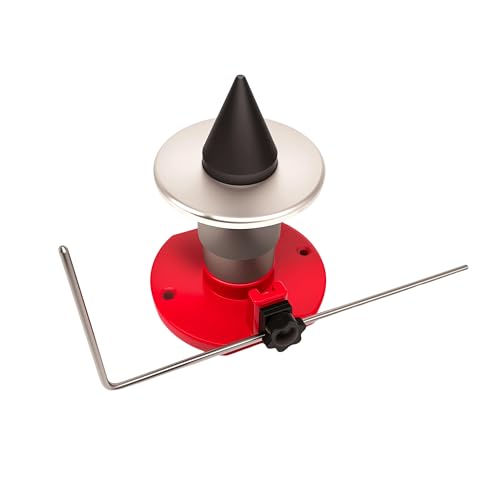
High rotational speeds make dynamic balance mandatory for all rotary lawn mower blades. Operating an unbalanced blade spins uneven centrifugal mass at several thousand revolutions per minute, transmitting intense vibration directly into deck spindles, engine crankshafts, or electric motor bearings. Complete sharpening kits, like the Lawn Mower Blade Sharpener for Drill and Lawn or the 5PCS Lawn Mower Blade Sharpener Kit, include stepped universal blade balancers to ensure proper post-sharpening verification.
Place the center hole of your sharpened blade horizontally onto the stepped cone of the balancer, ensuring the balancer rests on a level, vibration-free workbench. Release the blade gently and observe whether one side dips toward the table. If one cutting wing drops consistently, that side carries excess weight that must be removed before reinstalling the blade on your machine.
Correct weight imbalances by removing metal strictly from the back sail or non-cutting rear section of the heavy wing, never by filing away the freshly sharpened cutting edge. Grinding down the cutting bevel to fix balance alters the blade geometry and shortens the cutting radius of that side. Shave a small amount of steel from the trailing lift wing with your file, clean away metal shavings, and retest the blade on the balancing cone until it rests perfectly level.
Blade Reinstallation and Torque Verification
Reinstalling the cutting blade requires strict attention to orientation and clamping torque. Position the blade against the spindle arbor so the curved aerodynamic sails point upward toward the underside of the deck belly, not down toward the grass. Installing a blade upside down is a frequent DIY mistake that results in uncut turf, intense scalping, and excessive drag because the blunt trailing edge strikes the lawn rather than the sharp bevel. Verify your chalk reference mark from disassembly to confirm the blade sits in its proper operational position.
Hand-thread the spindle retaining bolt and any concave Belleville spring washers, ensuring the cupped side of the washer faces inward toward the blade to maintain steady clamping tension. Wedge your wooden two-by-four block between the blade tip and the deck wall to prevent rotation while tightening. Use a calibrated torque wrench to tighten the bolt according to the manufacturer specifications outlined in your operator manual, typically ranging from 45 to 60 foot-pounds on walk-behind units and up to 90 foot-pounds on heavy-duty commercial zero-turn decks.
Sharpening Intervals, Turf Agronomy, and Powertrain Efficiency
Routine blade sharpening directly influences turfgrass health and lawn recovery times. Dull mower blades tear grass blades roughly, leaving ragged, shredded tips that turn tan or white within twenty-four to forty-eight hours. These torn, frayed leaf wounds lose moisture rapidly and expose turf plants to fungal blights such as brown patch and dollar spot. In contrast, a clean scissor-like cut produced by a well-filed edge heals quickly, preserving deep green coloration and promoting dense root growth.
Maintaining a sharp cutting bevel also yields substantial mechanical benefits for your mower powertrain. Dull edges generate severe aerodynamic and cutting resistance, forcing gas engines to burn more fuel and bog down in heavy spring growth. In our detailed battery-operated lawn mower performance guide, we highlight how dull cutting steel rapidly drains amp-hour reserves and triggers premature thermal cutoff in electric motors. Clean, sharp blades slice effortlessly through dense turfgrass, maximizing battery runtime and minimizing heat buildup in brushless motors.
For typical residential suburban lawns, sharpening blades every twenty to twenty-five cutting hours, or roughly twice per mowing season, maintains peak cutting quality. Properties with sandy soils, gravel driveways, or hidden surface roots may require touch-up filing every twelve to fifteen hours to eliminate stone nicks. Keeping a log of service dates along with your tracking equipment age and maintenance schedules ensures your mower deck remains in peak mechanical condition season after season.
Practical Workshop Summary and Verification
Taking the time to file a lawn mower blade by hand or with a guided drill sharpener is one of the most rewarding maintenance tasks for any property owner. Respecting basic workshop safety, adhering to the factory 30-degree bevel angle, and confirming static balance on a cone gauge extends spindle assembly life and elevates lawn appearance. Keeping a clean file and a balanced spare blade in your garage allows fast blade swaps whenever turf tips show signs of fraying.







Write Your Review
No reviews yet. Be the first to share your experience!