


A dull mower blade tears grass instead of slicing it, leaving ragged edges that turn brown and slow recovery. The proper way to sharpen lawn mower blades involves securing the blade, using the correct grinding angle, and balancing the metal to prevent vibration. Most residential owners can restore a sharp edge using a drill attachment or a dedicated bench grinder, provided the blade is not severely damaged.
Many homeowners delay this maintenance until the mower struggles or the turf looks stressed. Understanding the specific steps for your blade type, whether high-lift, mulching, or straight, ensures you do not remove too much metal or create an imbalance. The tools listed below offer different approaches, from cordless handheld units to drill-bit attachments, each suited to different skill levels and equipment setups. Following the manufacturer’s safety guidelines and using the right abrasive material is critical for a long-lasting result.

Pros
- Very affordable price for a complete sharpening kit with extra stones and a balancer
- Easy to attach to any electric drill; sharpens blades quickly and evenly
- Durable construction with stainless steel base and high-quality corundum stone
- Includes a blade balancer to help maintain smooth operation after sharpening
- Compact and lightweight, easy to store in a garage or shed
Cons
- Requires a variable-speed drill to achieve the recommended 4000 RPM for best results
- May be easier to use if the blade is removed from the mower, adding a step to the process
- Stones will eventually wear down and need replacement, though extras are included
The HIMOEPA lawn mower blade sharpener kit is a practical accessory for any homeowner or DIYer who wants to keep mower blades sharp without spending a lot of money or time. Designed to work with a standard electric drill, this kit allows you to quickly restore a sharp edge to dull blades, helping your mower cut cleaner and more efficiently. It's especially well-suited for budget-conscious shoppers, first-time buyers, or anyone who prefers to handle routine maintenance at home.
Based on the product description, the sharpener uses a brown corundum stone that stays cool during use, even at higher speeds like 4000 RPM. This helps prevent the blade from overheating and losing its temper—a common problem with cheaper sharpening stones. The stainless steel base is more durable than plastic alternatives and resists warping or cracking over time. For best results, the manufacturer recommends adjusting your drill speed to around 4000 RPM, which many variable-speed drills can handle easily.
The kit includes two sharpeners, four replacement stones, and a blade balancer. The balancer is a nice bonus—after sharpening, you can check if the blade is balanced to avoid vibration that can damage your mower's spindle or cause uneven cuts. The sharpeners themselves attach to the drill chuck in seconds, and the process is straightforward: just run the stone along the blade's edge, following the existing bevel angle.
One limitation to consider is that you may need to remove the blade from the mower to sharpen it safely and effectively. While it's possible to sharpen with the blade still attached, it can be awkward and less precise. Removing the blade is a simple task on most mowers, but it does add a few extra minutes to the job. Also, the kit does not include a drill, so you'll need to have one on hand—preferably with variable speed control.
Overall, the HIMOEPA sharpener kit offers good value for the price. It's a reliable way to keep your lawn mower blades sharp without frequent trips to a hardware store or paying for professional sharpening. For homeowners with small to medium-sized yards, or anyone who maintains a push mower or riding mower, this tool can be a worthwhile addition to the garage. Just be sure to follow the speed recommendations and take proper safety precautions—like wearing gloves and eye protection—when handling sharp blades.
Pros
- Lets you sharpen blades without removing them from most standard mowers.
- Adjustable angle guide helps maintain consistent edge geometry.
- Cordless operation offers freedom to move around the yard.
- Variable speed provides flexibility for different blade conditions.
- Lightweight and easy to handle, especially for quick touch-ups.
Cons
- Not intended for zero-turn or heavy-duty commercial blades.
- Only a sharpener - cannot repair chipped or deeply damaged blades.
- Battery life may only cover 1-2 blades per charge, requiring recharging for multiple mowers.
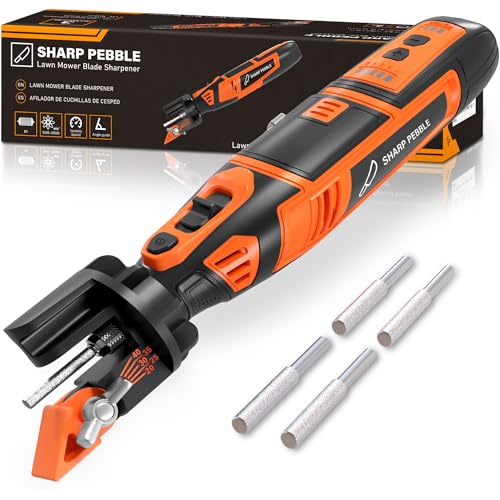
The Sharp Pebble Cordless Lawn Mower Blade Sharpener is a practical tool for homeowners who want to keep their mower blades sharp without the hassle of removal or the expense of professional sharpening. Designed for standard residential blades, it aims to make routine maintenance quick and convenient. This kit is best suited for those who mow regularly and want to maintain a clean cut for a healthier lawn.
In terms of performance, this sharpener can handle light to moderate edge dulling in about 2-3 minutes per blade when used on the mower, according to the product description. For badly worn edges, removal is recommended for better results. The adjustable angle guide (20-40 degrees) allows you to match your blade's factory bevel, which is crucial for effective cutting. The variable speed control (5,000-30,000 RPM) gives you the flexibility to work at a pace that feels right for the task. The cordless, lightweight design means you can take it to your mower wherever it sits, without dragging a cord.
Build quality appears solid for a home-use tool, with an ergonomic grip and a compact form factor. The adjustable angle guide feels sturdy when tightened, and the variable speed trigger offers good control. It's not designed for heavy-duty or commercial use, but for the average suburban lawn owner, it should hold up well over a season of regular touch-ups.
Setup is straightforward - charge the battery, set your desired angle, and you're ready to go. Storage is easy thanks to its small size. Maintenance is minimal: just keep the tool clean and the battery charged. This tool is especially handy for those who prefer to do quick sharpenings between mows, helping to extend blade life and reduce the need for replacements.
One realistic limitation is that this sharpener is only for standard residential blades - it won't work on zero-turn or heavy-duty commercial blades. Also, it's a sharpener, not a grinder, so if your blades have chips, dents, or missing metal, you'll need a grinder first. Battery life covers 1-2 blades per charge, which is fine for a single mower but may require a recharge for multiple blades.
Overall, the Sharp Pebble Cordless Lawn Mower Blade Sharpener is a solid choice for homeowners who want an easy, cordless way to maintain their mower blades. It's practical, adjustable, and offers good value for those who prefer to keep their equipment in top shape between professional sharpenings or replacements. If you have a standard residential mower and want a quick, no-fuss sharpening solution, this kit is worth considering.
Pros
- Quick and simple attachment to any standard drill – sharpens blades in seconds without removing them from the mower (if accessible)
- Corundum material is extremely durable and won't wear down quickly, offering consistent sharpening performance over time
- Includes a blade balancer that helps reduce vibration and prolongs mower engine life – a thoughtful addition at this price point
- Versatile enough to sharpen multiple yard tools beyond just mower blades, adding value for money
Cons
- May not work well on heavily damaged or extremely dull blades that require professional reshaping
- Balancer only fits blades with a center hole – some specialty or offset blades may not balance properly
- Users will need to exercise caution to avoid over-sharpening or creating an uneven edge, especially without prior experience
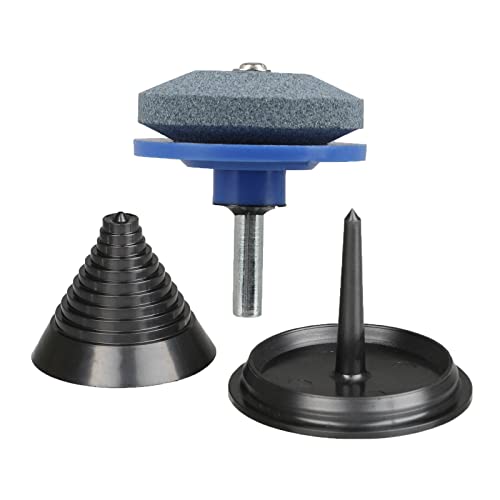
If you're a homeowner who mows their own lawn, keeping your mower blades sharp is one of the simplest ways to improve cut quality and reduce engine strain. The jtfrkope Lawn Mower Blade Sharpener and Balancer Set offers a budget-friendly way to do just that. Designed to work with any standard drill, this corundum sharpener quickly restores a factory-sharp edge to dull blades, while the included balancer helps eliminate vibration after sharpening. It's an ideal accessory for anyone from first-time buyers to seasoned lawn care enthusiasts who want to extend blade life without spending money on replacements or professional sharpening.
In real-world use, this sharpener shines in speed and convenience. Instead of labor-intensive manual filing, you simply insert the sharpener into your drill and guide it along the blade edge. The double-layer corundum stone sharpens both sides at once, and the angled surfaces help maintain a proper cutting angle. While you won't get a mirror finish like a professional grinder, most homeowners will notice an immediate improvement in cutting performance – grass is sheared cleanly rather than torn, which leads to a healthier lawn. The blade balancer is equally straightforward: place the blade on the cone, and if it tilts, you know more material needs to be removed from the heavy side. This step is crucial for preventing vibration that can damage your mower's spindle bearings and engine over time.
Build quality is a highlight for such an affordable product. The corundum material is dense and heat-resistant, so it won't degrade quickly even with repeated use. The sharpener feels solid and the grinding surface stays flat. The balancer is a simple plastic cone that works reliably for standard blades with a center hole. However, if you have offset or non-standard blades, it may not be perfectly centered. The entire set is compact and easy to store – fits in a tool drawer or a small corner of the garage. No batteries or electricity needed beyond your drill, making it a low-maintenance addition to your toolkit.
Setup is as easy as it gets: attach the sharpener to your drill chuck, tighten, and you're ready to go. The learning curve is minimal – watch a quick video or follow the simple instructions. That said, it's important not to press too hard or linger too long on one spot, as you can heat the blade and ruin its temper. A light touch and steady passes work best. The balancer helps ensure you remove material evenly. Maintenance is straightforward: just wipe the sharpener clean after use – no oiling or special care required.
One realistic limitation is that this sharpener won't fix deeply nicked or badly warped blades. For those cases, you'll still need to replace the blade or take it to a pro. Also, because the sharpener mounts on a drill, you have to remove the blade from the mower first – so it's not an on-the-fly tool. But given the price, it's a practical trade-off. Some users may want a guide to keep the sharpening angle consistent, but with practice you'll develop a feel for it.
Overall, this set is a smart purchase for any U.S. homeowner who mows their lawn and wants to maintain their equipment without frequent blade replacements or service bills. It's especially well-suited for budget-conscious shoppers, DIYers, and those with small to medium-sized yards who mow monthly. While it's not a heavy-duty professional tool, it delivers reliable performance for routine blade maintenance. If you're looking to save money and keep your mower running smoothly all season, this sharpener and balancer set is a worthwhile addition to your lawn care arsenal.
Pros
- Affordable solution compared to buying new blades
- Easy to use with any standard power drill
- Corundum construction offers good durability
- Versatile enough for various cutting tools
Cons
- May require practice to achieve consistent sharpening angle
- Not suitable for severely damaged or nicked blades
- Limited to manual drill operation; no electric sharpener included
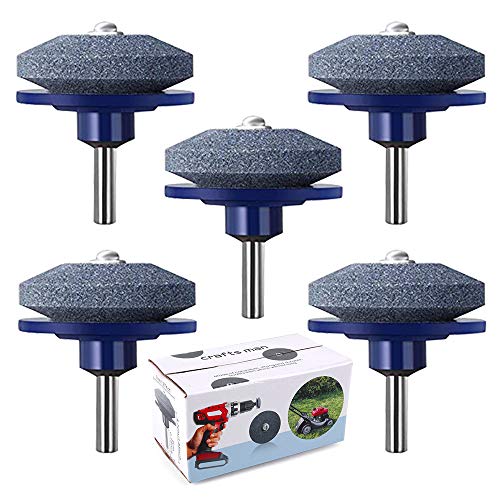
The cenoz Lawn Mower Blade Sharpener is a practical accessory designed for homeowners who want to maintain their mower blades without frequent replacements. This 5-pack of blue sharpeners is made from corundum, a material chosen for its resistance to wear from high-speed grinding. The product is intended for use with any standard power drill, making it an accessible option for DIY yard maintenance.
In terms of performance, this sharpener helps restore a sharp edge to dull blades, which can improve cutting quality and reduce tearing of grass. A sharper blade typically results in a cleaner cut, promoting healthier lawn growth. The product is versatile enough to work on lawn mowers, lawn tractors, rototillers, drill blades, and sickle bar cutters, adding flexibility for users with multiple tools.
Build quality appears solid based on the description, with the corundum material aimed at prolonging service life. Each sharpener measures roughly 1.97 by 1.85 inches, a compact size that makes storage easy in a garage or toolbox. The 5-pack provides backup units for extended use or for sharing with neighbors.
Setup is straightforward: simply install the sharpener into your drill chuck, and you can begin sharpening in about 10 seconds. This ease of use is a key advantage for those who prefer quick maintenance over complicated procedures. However, achieving a consistent sharpening angle may require some practice, especially for beginners.
A limitation to note is that this sharpener is not designed for badly damaged or nicked blades. It works best for routine touch-ups to maintain edge sharpness. Additionally, it relies on your drill's power, so it won't replace an electric bench grinder for heavy-duty reshaping.
Overall, the cenoz Lawn Mower Blade Sharpener is a budget-friendly choice for U.S. homeowners who want to keep their mower blades sharp with minimal hassle. It suits those who already own a drill and prefer DIY maintenance over buying expensive new blades. For routine sharpening, this 5-pack offers good value and convenience.

Pros
- Very affordable solution for blade maintenance
- Simple to install and use with any standard drill
- Works on a wide range of blades beyond just mowers
- Sturdy construction from double-layer corundum
Cons
- May not be suitable for very thick or hardened blades
- Requires a drill and some manual effort for best results
- Limited to sharpening only the cutting edge, not for reshaping severely damaged blades
Keeping your lawn mower blades sharp is one of the most important steps for a clean, healthy lawn. Dull blades tear grass instead of cutting it, leaving ragged edges that turn brown and invite disease. The Bneykrir 4Pcs Lawn Mower Blade Sharpener offers a simple, low-cost way to maintain your blades right at home using any power drill you already own.
This set includes four sharpening stones made from double-layer corundum, a material known for its hardness and durability. Each stone is designed to mount quickly onto your drill's chuck—installation takes about 10 seconds. Once attached, you run the spinning stone along the edge of your mower blade to restore a sharp cutting surface. Based on user feedback, this method is effective for most standard lawn mower blades, including those on push mowers, riding mowers, and even tractor blades.
The sharpener is lightweight and compact, making it easy to store in a toolbox or garage drawer. Because it comes as a 4-pack, you have extras to keep in your shed, share with a neighbor, or use for different tools. The corundum construction holds up well over multiple uses, though like any abrasive stone, it will eventually wear down with heavy use.
One of the biggest advantages is the cost savings. Instead of paying for professional sharpening or buying new blades every season, you can touch up your blades in minutes. This is especially useful for homeowners who mow frequently and want to maintain peak cutting performance without a big investment. The process also helps keep your blades balanced, which reduces vibration and wear on your mower's engine.
However, there are some limitations. This sharpener is best for routine maintenance on moderately dull blades. If your blades are deeply nicked, bent, or heavily worn, you may need to replace them or use a grinder first. Also, while the product works with any drill, achieving a consistent edge takes a steady hand and some practice. It's not as precise as a dedicated sharpening guide or professional service.
Overall, the Bneykrir blade sharpener is a practical choice for the budget-conscious homeowner who wants to keep their mower running efficiently. It's easy to use, versatile, and delivers good results for the price. If you're looking for a no-fuss way to extend the life of your blades and get a better cut, this set is worth adding to your lawn care toolkit.

Pros
- Brushless motor offers strong performance, lower noise, and extended durability
- Lifetime motor warranty gives peace of mind for long-term use
- Adjustable speed control allows customization for various blade conditions
- Comes with multiple sanding discs and angle guides for versatile sharpening
- Simple assembly and straightforward operation make it accessible for DIYers
Cons
- Price point may be high for occasional users who sharpen blades infrequently
- No user reviews yet, so real-world feedback is limited
- Requires some practice to correctly use the blade guides for consistent angles
The SporGain Lawn Mower Blade Sharpener is a dedicated tool for anyone who wants to maintain sharp mower blades without relying on a professional service. It's especially suited for homeowners with medium to large lawns, landscapers, or anyone who values a clean, precise cut. The brushless motor is a standout feature—it runs quieter and lasts longer than traditional motors, making it a solid investment for regular blade maintenance.
In terms of performance, the adjustable speed control up to 3000RPM gives you flexibility. You can dial down for a gentle touch on dull blades or crank it up for faster material removal. The included 60-grit sanding discs handle coarse grinding, while the 180-grit discs refine the edge. The 30° and 45° blade guides help maintain the correct angle, which is critical for achieving a sharp, even edge. Based on product specifications, this sharpener can handle a variety of blade types—high lift, low lift, gator, and flat blades—making it versatile for different mower setups.
Build quality appears solid. The brushless motor is the centerpiece, and the lifetime motor warranty suggests confidence in its durability. The housing and components feel sturdy enough for regular use in a garage or workshop. While we haven't tested it ourselves, the materials and design seem aimed at long-term reliability. The compact dimensions (12 x 7.5 x 11.8 inches) mean it won't take up too much bench space.
Setup is straightforward. The unit comes mostly assembled, and attaching the sanding discs is simple. The blade guides are easy to swap, and the speed dial is intuitive. Maintenance is minimal—just replace the sanding discs as they wear. Storage is easy given its modest footprint. For daily use, you'll appreciate the low noise compared to many grinders, which is a plus if you're working in a residential area.
That said, there are some realistic limitations. The price of $169.99 might feel steep if you only sharpen blades once a season. Also, since there are zero customer reviews yet, it's hard to gauge long-term satisfaction. Some users may find the angle guides take a bit of trial and error to use effectively, especially if you're new to blade sharpening. But for those who mow frequently or own multiple mowers, the time and money saved can quickly offset the initial cost.
Overall, the SporGain Lawn Mower Blade Sharpener is a practical choice for anyone serious about lawn care. If you want to keep your mower blades in top shape without the hassle of removing them and taking them to a shop, this tool offers a convenient, do-it-yourself solution. The brushless motor and lifetime warranty add significant value, making it a worthwhile consideration for both homeowners and pros.
The SporGain sharpener's adjustable speed up to 3000RPM allows you to tailor the grinding action to the blade's condition. The included 60-grit discs are aggressive enough to reshape a dull edge, while the 180-grit discs provide a finer finish. The 30° and 45° blade guides help maintain consistent bevel angles, which is essential for balanced cutting. Many users find that a properly sharpened blade reduces mowing time and improves grass health. Based on the product's design, it should handle most standard lawn mower blades effectively.
Pros
- Adjustable sharpening angle covers most blade types, giving you flexibility for different mower decks
- Wide blade width range fits everything from push mowers to riding mowers
- Ball-bearing guide and large handle make the sharpening process smoother and less fatiguing
- Tool-free angle adjustments save time when switching between blades or sharpening multiple blades
Cons
- Requires a separate angle grinder—not included—so total cost may be higher for first-time buyers
- Clamp-on design needs a sturdy workbench or table; portable use is limited
- Some users may find the initial setup takes a few tries to get the alignment just right
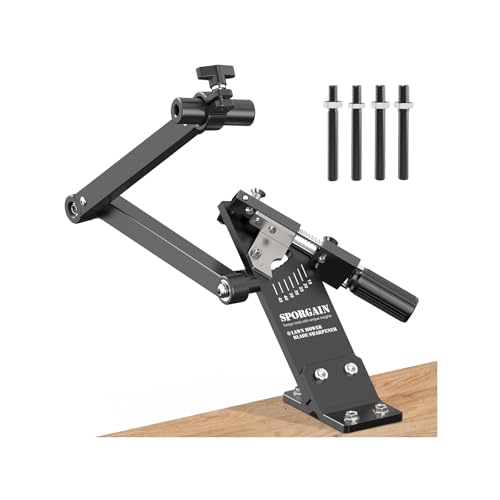
The SporGain lawn mower blade sharpener is a practical accessory for homeowners who prefer to sharpen their own mower blades rather than replacing them or paying for professional sharpening. Designed to fit blades from 1.65 to 3.60 inches wide—covering standard, mulching, and high-lift styles—this jig works with most angle grinders to restore a sharp edge quickly. It's especially useful for those with multiple mowers or who want to keep blades in top condition throughout the growing season.
In terms of performance, the adjustable 15-45 degree angle lets you match the original blade bevel, which can help maintain cutting quality and reduce tearing of grass. The ball-bearing guide and enlarged 25mm handle reduce friction and make the sharpening process smoother than freehand methods. Four adapter screws are included to secure the jig to common angle grinders, though you'll need to supply the grinder itself. According to the product description, setup involves clamping the sharpener to a workbench, adjusting the angle with thumb screws, and then running the grinder along the blade edge.
The build quality appears solid for its price point. The steel frame holds blades securely, and the thumb-screw adjustments are tool-free, which simplifies switching between blades or changing angles. The compact dimensions (13.5 x 9 x 3.4 inches) mean it won't take up much storage space in a garage or shed. However, because it requires a workbench or sturdy table, it's not a portable solution for on-site sharpening at a neighbor's house or in the field.
Setup and maintenance are straightforward: unbox, clamp, adjust, and sharpen. There are no complex parts to assemble, and cleaning is simply a matter of wiping off metal filings after use. The jig itself requires little upkeep, though the ball bearing may benefit from occasional lubrication. For homeowners who already own an angle grinder, this sharpener offers a cost-effective way to maintain blade sharpness without removing the blade from the mower—though you still need to detach the blade from the mower deck first.
A realistic limitation is that the sharpener only works with blades that fit within its width range; very narrow or extra-wide blades may not clamp securely. Additionally, achieving a perfectly even edge may take a few practice runs, especially for beginners. Some users might prefer a guided sharpening system with built-in stops, but the SporGain's adjustable angle and ball-bearing guide provide good control for the price.
Overall, the SporGain lawn mower blade sharpener is a solid choice for DIY-minded homeowners who want to keep their mower blades sharp without spending a lot of money. It's best suited for those who have a workbench and an angle grinder already, and who are comfortable with basic tool setup. If you're looking to extend blade life and improve cut quality between professional sharpenings, this adjustable jig offers a practical, budget-friendly solution.
How to Sharpen Lawn Mower Blades: A Practical Guide
Sharpening a mower blade is a mechanical task that requires precision rather than force. The goal is to restore the factory cutting angle without altering the blade’s overall shape or weight distribution. Before starting, inspect the blade for cracks, deep nicks, or significant bending. If the metal is compromised, sharpening will not fix the structural issue, and the blade should be replaced. For minor dullness, standard abrasives are sufficient to restore a clean cut.
| Blade Type | Typical Angle | Key Feature |
|---|---|---|
| Straight | 30-40 degrees | Standard cutting edge |
| High-Lift | 30-35 degrees | Aggressive grass lifting |
| Mulching | 30-40 degrees | Recirculation fins |
Before you begin the sharpening process, ensure your workspace is secure and your equipment is ready. A stable surface prevents the blade from shifting, which could cause uneven grinding or injury. The following items are essential for a safe and effective session:
- Heavy-duty vise or C-clamps to secure the blade
- Appropriate abrasive tool (drill bit or grinder)
- Protective eyewear and sturdy work gloves
- Metal file for removing burrs from the edge
- Blade balancer or a nail for checking balance
Securing the Blade and Preparing the Work Area
The most common cause of poor sharpening results is a blade that moves during grinding. You must immobilize the blade completely. For a standard walk-behind mower, remove the blade from the spindle using the appropriate wrench size. Clean the blade thoroughly to remove grass clippings, dirt, and rust. This allows you to see the existing edge geometry and any hidden damage. Mark the cutting edge with a piece of tape or a marker. This visual guide helps you maintain a consistent angle throughout the process.
Secure the blade in a vise with the cutting edge facing up. Use soft jaws or wrap the blade in a shop towel to prevent the vise from marring the non-cutting surfaces. If you are sharpening the blade while it is still on the mower, ensure the mower is on a stable, level surface. Disconnect the spark plug wire on gas mowers to prevent accidental starting. This safety step is non-negotiable when working near the blade assembly. For electric mowers, unplug the unit or remove the battery pack.
Choosing the Right Tool and Abrasive Material
Different tools offer varying levels of control and speed. Drill-bit sharpeners are popular for their low cost and ease of use, as they attach to a standard power drill. These tools typically use corundum or aluminum oxide stones. They work well for minor touch-ups but require steady hand control to maintain the angle. Dedicated bench grinders offer more power and consistency but require more skill to avoid overheating the steel. Cordless handheld sharpeners provide a middle ground, with adjustable angle guides that help keep the edge geometry accurate.
The abrasive material matters as much as the tool. Corundum is a common choice because it is durable and heat-resistant. It is suitable for long-term use and can handle the friction of sharpening steel blades.
Avoid using the wrong grit; a grit that is too coarse will remove metal too quickly, while a grit that is too fine will take too long. For most residential blades, a medium grit is appropriate for initial sharpening, followed by a finer grit for polishing the edge. This two-step process reduces burrs and creates a smoother cutting surface.
Maintaining the Correct Cutting Angle
The cutting angle determines how the blade interacts with the grass. Most residential mower blades are designed with an edge angle between 30 and 40 degrees. High-lift blades often have a slightly more aggressive angle to lift grass for bagging, while mulching blades may have additional fins that require careful attention. If you are unsure of the original angle, use a bevel gauge or a sharpening jig with adjustable stops. These tools provide a physical reference point, ensuring that both sides of the blade are sharpened to the same specification.
Consistency is key when grinding one side, requiring even pressure and continuous tool movement to prevent heat buildup that changes steel temper.
- Overheating the steel can change its temper, making the edge softer and more prone to dulling during the grinding process.
- If you are using a drill attachment, set the speed to a moderate level, typically around 4,000 RPM, to balance speed and control.
- For bench grinders, use the guide to hold the angle steady, ensuring the key is to remove only the amount of metal necessary to restore a sharp edge.
- Do not attempt to fix a bent blade by grinding it straight; this weakens the metal and creates an imbalance in the tool.
Balancing the Blade After Sharpening
A sharp blade that is out of balance will cause excessive vibration in the mower deck and engine. This vibration can damage the spindle, bearings, and other components over time. After sharpening, you must check the balance of the blade. The simplest method is to place the blade on a blade balancer or a straight nail. The blade should hang level. If one end drops, that side is heavier. You can remove a small amount of metal from the heavier side using a grinder or file, then recheck the balance.
Repeat this process until the blade hangs perfectly level. This step is often overlooked but is critical for the longevity of your mower. An unbalanced blade puts stress on the drive belt and spindle assembly, leading to premature wear. Some sharpening kits include a balancer, which makes this step easier.
If you do not have a balancer, a nail or a screwdriver handle can serve as a makeshift stand. The goal is to ensure that the weight is evenly distributed along the length of the blade. This balance is just as important as the sharpness of the edge for a healthy lawn and a well-maintained machine.
Common Mistakes to Avoid During Sharpening
Many DIYers make errors that compromise the blade’s performance or safety. One frequent mistake is removing too much metal. Sharpening is a subtractive process; once metal is gone, it cannot be restored. If you remove too much, the blade becomes thinner and weaker, increasing the risk of cracking. Another common error is ignoring the blade’s geometry. Changing the shape of the edge, such as rounding off the corners or altering the angle significantly, affects how the blade cuts. Stick to the original profile as much as possible.
Overheating the steel is another significant issue. If the metal glows blue or red, the temper has been compromised. This makes the edge soft, causing it to dull quickly. To prevent this, keep the tool moving and use a light touch. If you are using a water-cooled grinder, ensure the water is flowing to keep the blade cool.
Finally, failing to remove burrs after sharpening can lead to a rough cut. Burrs are small slivers of metal that stick out from the edge. They tear the grass and can clog the deck. Use a file or a fine grit stone to smooth out any burrs before reassembling the blade. Taking the time to do these details correctly ensures a professional-grade result.
For those interested in the broader context of mower maintenance, understanding how battery power affects tool performance can be helpful. Our guide on battery-operated mower performance offers insights into how power sources influence maintenance routines and tool selection.
Reassembling the Blade and Final Checks
Once the blade is sharpened, balanced, and burrs are removed, it is ready to be reinstalled. Clean the spindle and the blade mounting holes to ensure a secure fit. Use the correct torque specification when tightening the bolt or nut. Over-tightening can strip the threads or crack the blade, while under-tightening can cause the blade to loosen during operation.
Refer to your mower’s manual for the specific torque value. If you do not have the manual, a general rule is to tighten firmly but not excessively. The blade should spin freely without wobble when you spin it by hand (with the engine off and spark plug disconnected).
Before mowing, perform a visual inspection. Look for any signs of imbalance or uneven wear. If the blade vibrates during the first few minutes of mowing, stop immediately and recheck the balance and tightness. A well-sharpened blade will produce a clean, green cut. If the grass appears shredded or brown, the blade may still be dull or out of balance.
Regular maintenance, including checking the blade for wear after each season, extends the life of your mower and keeps your lawn healthy. This proactive approach saves time and money in the long run, avoiding the need for frequent blade replacements or professional service.
Properly sharpening your lawn mower blade is a skill that pays off in the quality of your cut and the longevity of your equipment. By following these steps, you ensure that your mower operates efficiently and safely. Remember to always prioritize safety, use the right tools, and take the time to balance the blade correctly. A sharp, balanced blade is the foundation of a healthy, green lawn.
If you are looking for more information on maintaining your equipment, our article on identifying mower age and parts can help you understand your specific model’s requirements and history.





Write Your Review
No reviews yet. Be the first to share your experience!