


Yes, you can push a self propelled lawn mower by disengaging the drive system, which allows the wheels to roll freely without motorized assistance. Most modern walk-behind mowers include a specific lever or button that cuts power to the transmission, effectively turning the machine into a standard push unit for short distances or specific tasks. This capability is designed for maneuvering in tight spaces, transporting the mower, or handling very short, flat sections of lawn where full propulsion is unnecessary.
Understanding how to switch between self-propelled and manual push modes is essential for safe operation and equipment longevity. While the drive system reduces physical effort on slopes or thick grass, knowing how to disable it prevents accidental movement and allows for precise control in delicate areas.
The mechanism typically involves a safety interlock that must be released before the drive engages, ensuring the operator is in a stable position. For those curious about different power sources, our guide on battery-operated lawn mower performance offers additional context on how electric drive systems differ from gas-powered transmissions in terms of engagement and maintenance.

Pros
- Self-propelled rear-wheel drive offers excellent traction on slopes and uneven ground.
- 170cc OHV engine provides ample power for thick or wet grass.
- Steel deck is sturdy and built to last.
- 6-position height adjustment gives flexibility for different grass lengths.
- Foldable handle saves storage space.
Cons
- Weighs 59 pounds, which may be heavy for some users to lift or maneuver manually.
- Recoil start requires some effort; no electric start option.
- Assembly may take some time and tools, though instructions are clear.
The PowerSmart 21-inch self-propelled gas lawn mower is designed for homeowners who need reliable cutting power on uneven or sloped terrain. With a 170cc OHV engine and rear-wheel drive, this walk-behind mower reduces physical effort while delivering consistent performance. It suits medium to large lawns, especially those with hills or bumpy ground.
In real-world use, the engine starts reliably with the auto choke and recoil system, even after sitting for a while. The self-propelled drive engages smoothly, and the rear-wheel traction helps maintain control on inclines. The steel deck withstands bumps and debris, and the 3-in-1 capability lets you mulch, side discharge, or bag clippings depending on the season. The 21-inch cutting width is efficient for most suburban yards.
Build quality feels solid for the price point. The steel deck resists rust and dents, and the wheels roll well over grass and packed soil. The height adjustment uses dual levers, making it easy to change cutting height from 1.5 to 3.9 inches without stopping. The handle folds for compact storage, which is handy for smaller garages or sheds.
Setup requires attaching the handle and grass bag, which takes about 20-30 minutes with basic tools. Maintenance includes checking oil, cleaning the deck, and sharpening the blade periodically. The foldable design helps store it upright or flat. Some users may find the 59-pound weight a bit heavy to lift, but the self-propelled feature minimizes pushing effort during mowing.
One limitation is the lack of an electric start, so users need to pull the recoil cord each time. Also, the grass bag capacity is adequate for typical use but may require emptying more often in tall grass. Noise levels are typical for a gas mower, so ear protection is recommended.
Overall, the PowerSmart 21-inch self-propelled mower offers good value for homeowners seeking a durable, powerful machine for sloped lawns. It handles thick grass, offers versatile discharge options, and stores easily. If you prefer a lighter or electric model, this may not be ideal, but for gas-powered reliability and traction, it's a solid choice.
The PowerSmart 21-inch mower is powered by a 170cc OHV 4-stroke engine with auto choke and recoil start. This engine provides enough torque to cut through thick, wet, or overgrown grass without bogging down. The overhead valve design improves fuel efficiency and reduces emissions compared to older side-valve engines. The auto choke simplifies starting—just prime and pull. Regular maintenance includes checking oil levels and cleaning the air filter. The engine runs on regular unleaded gasoline, and the fuel tank capacity is sufficient for mowing a typical lawn without refueling.

Pros
- Powerful brushless motor and 80V battery provide ample torque and runtime for medium-sized lawns.
- Self-propelled rear-wheel drive with variable speed makes mowing on hills effortless.
- Quieter operation compared to gas mowers - good for early morning mowing.
- LED headlight is a thoughtful addition for low-light conditions.
- Steel deck feels sturdy and durable.
Cons
- Battery and charger included, but runtime may vary with grass conditions; heavy or wet grass may reduce runtime.
- At 75 pounds, it's not the lightest electric mower, though self-propelled helps.
- No reviews yet, so real-world performance feedback is limited.
The Greenworks 80V 21in Self-Propelled Lawn Mower is a cordless electric mower designed for homeowners with medium-sized lawns up to about half an acre. It combines the convenience of battery power with the performance of a brushless motor and a durable steel deck, making it a strong contender for those looking to move away from gas mowers.
In terms of cutting performance, the 21-inch deck with brushless motor provides consistent power for most grass conditions. The self-propelled rear-wheel drive with variable speed control helps you maintain a steady pace on slopes and uneven ground. The mower offers mulching, bagging, and side discharge options, giving you flexibility for different yard needs. The LED headlight is a practical feature for early morning or evening mowing sessions.
The steel deck adds durability and longevity, while the overall build feels solid. The 80V battery system is part of Greenworks' platform, so you can use the same battery with other tools. The mower weighs about 75 pounds, which is on the heavier side for an electric mower, but the self-propelled drive makes it easy to push.
Assembly is straightforward, with most components pre-assembled. The handle folds for compact storage, which is helpful for garages with limited space. Maintenance is minimal compared to gas mowers - no oil changes, no spark plugs. Just keep the blade sharp and the deck clean.
One limitation is the runtime; the included 4.0Ah battery may not complete a full half-acre if the grass is thick or wet. Some users may want to purchase an extra battery for larger lawns. Also, since this is a new model with no reviews yet, long-term reliability is unknown. The price point of $449.99 is competitive for a premium 80V self-propelled mower.
Overall, the Greenworks 80V self-propelled mower appears to be a well-rounded option for homeowners seeking a quiet, low-maintenance electric mower with good power and features. It's especially suited for those with sloped yards who will benefit from the rear-wheel drive. If you're in the market for a cordless mower and value self-propelled convenience, this model is worth considering.
The Greenworks 80V 4.0Ah battery provides enough power for up to 1/2 acre on a single charge, depending on grass conditions. The battery is compatible with other Greenworks 80V tools, so you can share batteries across your yard equipment. Charging time is approximately 1-2 hours using the included charger. For larger lawns or tougher cutting conditions, an additional battery may be needed to complete the job. The brushless motor efficiently uses battery power, extending runtime compared to older brushed motors.

Pros
- Strong 201cc engine provides reliable power for large lawns and thick grass without bogging down.
- 22-inch cutting width covers more ground per pass, saving time on medium to large properties.
- Self-propelled drive with large rear wheels reduces pushing effort on slopes and uneven terrain.
- Versatile 3-in-1 system allows bagging, mulching, or side discharge to match lawn care needs.
Cons
- At roughly 80 pounds, this mower is heavier than many electric models, which may make it less ideal for small yards or hilly terrain without the self-propel engaged.
- Some users may find the single-speed self-propel limited compared to variable-speed models for precise pace control.
- Assembly is required out of the box, and the engine needs oil and fuel before first use—a minor setup step for gas mowers.
The SENIX 201cc self-propelled gas lawn mower is designed for American homeowners with medium to large lawns who want a dependable machine that can handle tough grass and uneven ground. It bridges the gap between budget-friendly push mowers and high-end commercial models, offering a solid blend of power, cutting width, and convenience features. This mower is especially well-suited for suburban lawns, rural properties, or anyone tired of wrestling a lightweight mower through thick spring growth.
Under the hood, the 201cc OHV 4-stroke engine provides reliable torque to power through tall grass and damp conditions without stalling. The 22-inch stamped steel deck cuts a wider swath than the typical 20-inch mower, which can save you several passes on a half-acre lot. The self-propelled drive engages with a simple lever, and the large 11-inch rear wheels help maintain traction on slopes and soft ground. While the single-speed drive lacks the fine-tuned control of variable-speed systems, most users will find it adequate for maintaining a steady walking pace.
Build quality is a highlight here—the steel deck feels sturdy and resistant to dings and rust, and the wheels are substantial enough to roll over ruts and roots. The 3-in-1 system lets you switch between bagging, mulching, and side discharge with a quick change of the plug and chute. Mulching performance is decent for regular maintenance, though very long or wet grass may require a second pass. The single-lever height adjustment is smooth and offers six positions from 1.25 to 4 inches, making it easy to raise the deck for rough terrain or lower it for a manicured look.
Setting up the mower out of the box involves attaching the handle, installing the grass bag, and adding oil and fuel—a straightforward process that takes about 20 minutes. Storage is manageable thanks to a foldable handle that reduces the footprint in your garage or shed. Routine maintenance includes checking oil levels, cleaning the deck after each use, and sharpening or replacing the blade annually. The engine features a low-oil shutdown to protect against damage, and the air filter is easy to access for cleaning.
On the downside, this mower is heavier than many electric alternatives, weighing around 80 pounds. While the self-propel helps, you'll still feel the weight when turning or maneuvering in tight spaces. The grass bag capacity is adequate but may need frequent emptying on larger lawns. Also, the single-speed drive means you can't adjust your pace independently of the mower's speed—something to consider if you prefer a slower or faster walk.
Overall, the SENIX 201cc self-propelled mower delivers strong performance for the price. It's a practical choice for homeowners who need a gas-powered workhorse for a medium to large lawn and want features like a wider deck, easy height adjustment, and 3-in-1 versatility without spending over $400. If you're looking for a reliable mower that can handle regular weekly cuts and occasional overgrowth, this model is worth a close look.

Pros
- Rear-wheel drive handles slopes and uneven terrain better than front-drive models
- Wide 22-inch cutting deck reduces mowing time compared to smaller 20- or 21-inch mowers
- 170cc engine provides ample power for thick, dense grass without bogging down
- Multiple cutting options (mulch, bag, discharge) offer versatility for different lawn conditions
Cons
- At 75 pounds, it's fairly heavy for a push mower; maneuvering on flat ground may require more effort when self-propel is not engaged
- Steel deck, while durable, adds weight and may be prone to rust if not cleaned and stored properly
- Some users find the grass bag connection could be more secure; occasional jams when bagging wet grass
The PowerSmart 22-Inch 170cc Self Propelled Gas Lawn Mower is a practical choice for homeowners with medium to large suburban yards who want a reliable, gas-powered mower without spending over $400. It’s specifically suited for those who face gentle slopes or uneven ground and prefer a self-propelled rear-wheel drive to reduce pushing effort.
In terms of cutting performance, the 170cc OHV engine delivers consistent power through thick grass and light weeds. The 22-inch steel deck cuts a wide path, which helps you finish the lawn faster—especially useful if you're mowing a half-acre lot. The 3-in-1 system works well: mulching chops clippings fine for natural fertilization, the rear bag holds a generous 60 liters, and side discharge is available for tall growth. The six-position height adjustment covers a useful range from 1.5 to 3.9 inches, allowing you to adapt to seasonal conditions, from close spring cuts to longer summer lengths that shade the soil.
Build quality is solid for the price point. The steel deck feels sturdy and should withstand several seasons of typical use, though it will benefit from occasional cleaning and a coating of rust preventative if stored in damp conditions. The rear-wheel drive provides decent traction on slopes, though on wet grass or loose soil you may still need to guide the machine. The handle is comfortable and the controls are straightforward—auto choke and recoil start are user-friendly, even for first-time gas mower owners.
Assembly is moderate: expect to attach the handle, grass bag, and possibly adjust cables—plan about 30 minutes with basic tools. Storage is manageable thanks to a foldable handle that reduces footprint in a garage or shed. Maintenance includes regular oil changes (the engine is a 4-stroke), air filter cleaning, and blade sharpening. The recoil start is reliable, but be prepared to refill gas each season; there is no electric start option.
A realistic limitation is the mower's weight—75 pounds—which makes it less maneuverable when not self-propelled, such as when turning or navigating tight flower beds. Also, the grass bag connection can sometimes come loose if the bag is overfilled or when mowing damp grass. Some users report that the self-propel speed is not variable, so you'll need to adjust your walking pace to match.
Overall, the PowerSmart 22-Inch 170cc Self Propelled Gas Mower offers strong value for homeowners wanting a capable gas mower with self-propelled ease and versatile cutting options. It’s a solid pick for suburban lawns with modest slopes and regular mowing needs, especially if you’re on a budget but don’t want to sacrifice power or deck size.
The 170cc OHV 4-stroke engine is the heart of this mower. It provides reliable power for cutting thick, tall grass without stalling. The overhead valve design improves fuel efficiency and reduces emissions compared to older side-valve engines. Auto choke and recoil start simplify cold starts—just prime and pull. The engine runs on regular unleaded gas and requires standard SAE 30 oil (not included). No battery or cord needed, so you can mow as long as there's fuel in the tank. The engine is not the quietest, but at typical gas mower noise levels it’s acceptable for daytime use in most neighborhoods.

Pros
- Auto choke feature simplifies starting - no primer bulb or choke lever to fuss with.
- Lightweight at 51 pounds, making it easy to push and maneuver for most users.
- 8 height adjustments give good versatility for different grass lengths and seasons.
- Budget-friendly price point for a gas-powered mower with a reliable engine.
Cons
- Limited to 2-in-1 operation (mulch or side discharge) - no rear bagging option included.
- 20-inch cutting deck may be narrow for larger lawns, requiring more passes.
- Some users may find the 144cc engine less powerful for thick or wet grass compared to larger engines.
The BILT HARD 20-inch gas push mower is a straightforward, no-nonsense lawn mower designed for homeowners with small to medium-sized yards. Powered by a 144cc 4-stroke OHV engine with an auto choke system, it eliminates the need for priming or manual choking, making startup as simple as pulling the cord. This mower is best suited for those who want a reliable, gas-powered machine without the complexity of self-propulsion or electric battery management.
In terms of cutting performance, the 20-inch steel deck and specialized blade deliver a clean, even cut across your lawn. The 8-position single-lever height adjustment allows you to quickly change the cutting height from 0.7 to 3.2 inches, accommodating different grass lengths and seasonal needs. The mower offers 2-in-1 functionality, allowing you to either mulch clippings back into the lawn or use side discharge for larger amounts of grass. However, it does not include a rear bagging option, so if bagging is important to you, you may need to purchase a separate bagger attachment.
Build quality appears solid for its price point, with a durable steel cutting deck that should withstand regular use. The 7-inch rear and 6-inch front double ball-bearing wheels provide smooth rolling over uneven terrain, and the foam-wrapped angled grip helps reduce hand fatigue during longer mowing sessions. At 51 pounds, this mower is relatively lightweight, making it easy to push and maneuver around flower beds, trees, and other obstacles.
Setup is straightforward, with most assembly required being attaching the handle and wheels. Maintenance is typical for a gas mower: regular oil changes, air filter cleaning, and blade sharpening will keep it running well. The auto choke system simplifies starting, but you still need to follow proper engine break-in procedures. Storage is convenient thanks to its compact dimensions (57.4 x 21.6 x 38.5 inches), fitting easily in most garages or sheds.
One realistic limitation is the lack of a rear bagger, which may be a dealbreaker for those who prefer to collect clippings. Additionally, the 20-inch cutting deck is on the smaller side, meaning you'll need more passes on larger lawns. The 144cc engine provides adequate power for typical residential grass, but it may struggle slightly in very thick or wet conditions compared to larger engines. Some users have also noted that the mower should not be tipped or turned over to avoid oil entering the combustion chamber, which requires careful handling during cleaning or blade changes.
Overall, the BILT HARD 20-inch gas push mower is a practical choice for budget-conscious homeowners with small to medium lawns who want a simple, reliable mower without extra bells and whistles. It offers good cutting versatility, easy starting, and solid build quality for its price. If you need bagging capability or have a very large lawn, you may want to consider other options, but for everyday mowing on a modest property, this mower delivers good value.

Pros
- Strong 170cc engine provides ample power for thick grass and moderate slopes.
- Self-propelled drive eases mowing on hills and reduces user fatigue.
- 3-in-1 system offers flexibility for mulching, bagging, or discharging clippings.
- Easy height adjustment and folding handle add convenience and storage efficiency.
Cons
- No side discharge option - only rear discharge and bagging; mulching requires the included plug.
- At 68 pounds, it may be heavy for some users to maneuver when not self-propelled.
- Limited reviews available at launch, so long-term reliability is unproven.
The PowerSmart 22-Inch Self Propelled Gas Lawn Mower is designed for American homeowners who need a reliable, no-fuss mower for medium to large lawns. Its 170cc 4-cycle OHV engine provides plenty of torque to cut through thick grass, while the self-propelled rear-wheel drive helps you tackle slopes without excessive effort. This mower suits budget-conscious buyers who want gas power without stepping up to a premium brand.
In terms of cutting performance, the 22-inch steel deck and heavy-duty blade deliver a clean cut across a wide path, reducing mowing time. The 3-in-1 system lets you mulch clippings for natural fertilizer, collect them in the rear bag, or discharge out the back. Based on the product description, switching between modes is straightforward. The six cutting heights (1.5 to 3.9 inches) give you control for early spring cuts or leaving grass longer in summer heat.
Build quality appears solid for the price point. The steel deck should resist rust with proper care, and the folding handle allows compact storage in a garage or shed. Assembly requires no tools, which is a nice convenience. The self-propelled drive engages via a lever, and the auto choke simplifies starting - just pull the recoil starter and go.
Maintenance is typical for a gas mower: check oil, clean the deck, sharpen or replace the blade, and change the oil seasonally. The engine is a standard 170cc OHV, so parts and service should be easy to find. The rear bag capacity is not specified, but based on similar models, it should handle a typical suburban yard without constant emptying.
One limitation is the lack of a side discharge option - the mower only offers rear discharge or bagging, and mulching requires installing the included plug. Some users may prefer side discharge for tall, wet grass. Also, at 68 pounds, this mower is not lightweight; while the self-propelled drive helps, you still need to push it manually on flat ground or when turning.
Overall, the PowerSmart 22-Inch Self Propelled Gas Lawn Mower offers strong value for homeowners who need a dependable gas mower with self-propelled convenience. It is a practical choice for those with hilly terrain, medium to large lawns, and a preference for mulching or bagging. If you are looking for an affordable gas mower that gets the job done without extra frills, this model is worth considering.

Pros
- Lightweight and easy to maneuver around landscaping, gardens, and tight corners
- Eco-friendly operation - no gas, oil, cords, or charging needed
- Sharp alloy steel blades and adjustable cutting height deliver a clean, even cut
- Quiet enough for early morning use without waking the household or neighbors
Cons
- Manual reel mower requires more pushing effort than a gas or self-propelled mower, especially on thicker or taller grass
- 14-inch cutting width means more passes on larger lawns compared to wider mowers
- Not ideal for uneven, rocky, or overgrown yards where a powered mower may handle better
The American Lawn Mower 1304-14GC is a manual reel mower with a 14-inch, 5-blade cutting system and an included grass catcher. It is best suited for homeowners with small to medium yards, apartment dwellers with modest lawn space, and anyone looking for a quiet, environmentally friendly way to keep grass tidy. Since it runs entirely on pushing effort, it also fits well with eco-conscious households that want to avoid gas, oil, cords, and battery charging.
In real-world use, the scissor-action cut from the five heat-treated alloy steel blades tends to slice grass cleanly rather than tearing it, which many lawn care enthusiasts appreciate for a healthier lawn. The adjustable cutting height from 1 to 2.25 inches gives flexibility for spring growth, summer maintenance, and fall cleanup. The 10-inch polymer wheels help this mower roll smoothly over modest bumps, and the T-style handle with a cushioned grip makes it comfortable to guide around flower beds and landscape edges. Because it is a manual reel mower, it works best when the grass is not overly tall, wet, or thick.
Build quality appears solid for the price point. The frame is lightweight at 18 pounds, and the alloy steel blades are designed to hold an edge for years with routine care. The polymer wheels resist rust and weather damage, which is a practical benefit for tools kept in a shed or garage. The included grass catcher is handy for collecting clippings, though some users may find it fills up quickly on lush grass and needs frequent emptying.
Setup is straightforward, with most assembly involving the handle and catcher. Storing this mower takes up little space, making it a good option for apartment balconies, small sheds, or tight garage corners. Maintenance is minimal: keep the blades clean, occasionally check and adjust the cutting height, and ensure the reel stays free of grass buildup. There is no engine oil to change, no air filter to replace, and no battery to recharge.
That said, this mower has limitations. It is not a replacement for a gas, electric, or self-propelled mower on large properties. Pushing a reel mower through dense, tall, or wet grass requires more effort, and the 14-inch cutting width means more passes across even a modest lawn. Rocky or uneven terrain can also be challenging, and the cutting height range may not suit every grass type or season.
For the right buyer, the American Lawn Mower 1304-14GC is a practical, low-maintenance choice. If you have a small yard, want a quieter morning routine, and prefer a hands-on approach to lawn care, this reel mower offers a simple and eco-friendly way to keep grass looking neat. Just be realistic about your lawn size and conditions before choosing it as your primary mower.
The 14-inch cutting deck and five-blade reel are designed for precision cutting on small lawns. The scissor action slices grass blades cleanly, which can reduce stress on the turf compared to mowers that tear grass. The adjustable cutting height ranges from 1 to 2.25 inches, giving you room to adapt to seasonal growth patterns.
Because this is a manual reel mower, performance depends on mowing frequency. If you cut before grass gets too tall, the reel spins easily and the catcher collects clippings well. Letting grass grow too tall or trying to cut wet, heavy grass will make pushing harder and may leave some clippings behind. For best results, mow when grass is dry and keep up with regular trimming.
This reel mower runs entirely on human power, so there are no emissions, no fuel costs, and no cord to manage. It is also extremely quiet, which makes it a neighbor-friendly option for early morning or evening mowing. For homeowners looking to reduce their carbon footprint, this is one of the simplest ways to maintain a lawn.
The lack of a gas engine also means fewer maintenance tasks. There is no oil to change, no spark plug to replace, and no battery to charge. Just push, cut, and store. The main fuel is a bit of effort, and the payoff is a clean cut without the noise and fumes.
Setup is generally simple, and the lightweight 18-pound build makes it easy to carry to a shed, garage, or even an apartment storage area. The handle can be adjusted for comfort, and the compact footprint means it will not take over your garage space.
Maintenance is minimal. After each use, brush off grass clippings from the reel and blades, and occasionally wipe down the frame to keep it looking good. The alloy steel blades are designed to stay sharp for years, but if they dull over time, they can be sharpened or replaced. Checking the cutting height adjustment and keeping the wheels clear of debris will help keep this mower running smoothly.

Pros
- Strong 201cc OHV engine provides reliable power for thick grass and larger yards.
- Rear-wheel drive with large wheels offers excellent traction on slopes and rough terrain.
- 3-in-1 cutting system gives flexibility for mulching, bagging, or side discharge.
- Quick and easy height adjustment with a single lever for precise cutting.
- Durable steel deck built to withstand regular use and weather exposure.
Cons
- Weighs 79 pounds, which may be heavy for some users to maneuver manually if self-propelled disengages.
- Limited to a 22-inch cutting width, which may not be ideal for very large lawns without a riding mower.
- Assembly may require some time and basic tools, though instructions are generally clear.
The SENIX 201cc 22-inch self-propelled gas lawn mower is a solid choice for American homeowners who need reliable power and easy handling for medium to large lawns. With its 201cc OHV engine and rear-wheel drive system, this mower is designed to tackle slopes, uneven ground, and thick grass without bogging down. It’s ideal for suburban yards, rural properties, or anyone who wants a capable gas mower without stepping up to a riding model.
In real-world use, the 22-inch steel cutting deck helps you cover more ground per pass compared to smaller 20-inch mowers, cutting down mowing time. The 3-in-1 cutting system lets you switch between bagging, mulching, and side discharge, so you can adapt to different lawn conditions—whether you’re cleaning up spring growth, mulching fall leaves, or just giving the yard a quick trim. The single-lever height adjustment offers six settings from 1.25 to 4 inches, making it easy to get the perfect cut for any grass type or season.
Build quality feels solid for the price point. The steel deck is durable enough for regular mowing over rocks and sticks, and the large 11-inch rear wheels provide good traction on hills and uneven terrain. The self-propelled system is rear-wheel drive, which helps with maneuverability on slopes and makes pushing easier on flat ground. At 79 pounds, it’s not the lightest mower, but the self-propelled feature takes most of the effort out of mowing.
Setup is straightforward—most of the mower comes pre-assembled, and you’ll just need to attach the handle and grass bag. Maintenance is simple: the air filter is easy to access, and oil changes are straightforward. Storage is manageable thanks to its compact dimensions, though it doesn’t have a folding handle for vertical storage, so you’ll need some floor space in your garage or shed.
One limitation is the weight—if the self-propelled system disengages, pushing the mower manually can be tough, especially on slopes. Also, the 22-inch cutting width is fine for most medium lawns, but if you have a very large property, you might find yourself making more passes than with a wider deck. Some users may also prefer a mower with a folding handle for easier storage.
Overall, the SENIX 201cc self-propelled mower is a reliable, practical option for homeowners who want a powerful gas mower with good traction and versatile cutting options. It’s best suited for those with medium to large lawns who need a machine that can handle hills and thick grass without breaking the bank. If you’re looking for a dependable walk-behind mower that offers solid performance and easy operation, this SENIX model is worth considering.

Pros
- Powerful 201cc engine delivers consistent torque for thick grass and uneven terrain.
- Self-propelled drive reduces physical effort, great for hilly or large lawns.
- Multiple cutting options (mulch, bag, side discharge) provide flexibility for seasonal yard needs.
- Easy starting system eliminates primer and choke adjustments.
- Affordable price point for a self-propelled gas mower with a reliable engine.
Cons
- At 89 pounds, it's heavier than some comparable models, which may be challenging for storage or transport.
- Single-speed self-propelled drive may not offer the variable speed control some users prefer for different terrain.
- No reviews yet, so long-term reliability is unverified – potential buyers should check updated feedback.
The BILT HARD 21-inch self-propelled gas lawn mower is designed for homeowners who need reliable cutting performance on medium to large lawns. With a 201cc OHV engine and rear-wheel drive, this mower aims to make weekly mowing less of a chore. It offers three discharge options – mulching, bagging, or side discharge – so you can adapt to grass conditions and personal preference. The single-lever height adjustment allows quick changes from 1.2 to 3.75 inches, accommodating different grass types and seasonal growth.
In real-world use, the self-propelled system helps you maintain a steady pace across flat or gently sloping yards. The 21-inch cutting deck covers ground efficiently, reducing the number of passes needed. The no-choke, no-primer starting system is a practical feature for those who want to get started without fuss. According to product specifications, the engine delivers 9.0 ft-lb of torque, which should handle typical grass thickness without bogging down. Mulching performance depends on grass moisture and height, but the 3-in-1 design gives you flexibility.
Build quality centers on a durable steel deck that can withstand bumps from rocks or roots. The foam-wrapped handle reduces vibration and hand fatigue during extended use. The rear-wheel drive provides good traction on inclines, though the single-speed may feel limited on steep hills. The mower weighs 89 pounds, which is substantial but typical for a gas self-propelled model. The wheels and height adjustment mechanism feel solid, and the overall construction suggests it can handle regular seasonal use.
Setup requires basic assembly – attaching the handle and grass bag – which most users can complete in under 30 minutes. Storage may be a consideration due to the weight, but the handle can be folded for compact upright storage in a garage or shed. Maintenance includes regular oil changes, air filter cleaning, and blade sharpening. The engine is a standard 4-cycle design, so you'll need to keep a supply of SAE 30 oil. The side discharge chute and mulching plug are easy to swap.
A realistic limitation is the lack of variable speed control on the self-propelled drive. Some users may find the single speed either too fast or too slow for their pace. Additionally, the mower is on the heavier side, which could make maneuvering around tight flower beds or over obstacles more challenging. The grass bag capacity is not specified in the data, but typical 21-inch mowers hold around 2 bushels. Also, since there are no customer reviews yet, early adopters should consider the brand's warranty and support.
Overall, the BILT HARD self-propelled mower is a solid option for budget-conscious homeowners who want gas power without paying a premium. It suits those with medium to large lawns who value easy starting and versatile cutting options. If you don't mind the single-speed drive and the weight, this mower could be a reliable workhorse for regular lawn maintenance. Checking updated user feedback after a few months of release would help confirm long-term durability.
The 21-inch steel deck provides a wide cutting path suitable for most residential lawns. The single-lever height adjustment synchronizes all four wheels, allowing you to set the cut from 1.2 to 3.75 inches in eight positions. This range covers everything from a short, manicured look to taller cuts for warm-season grasses. The 3-in-1 capability means you can mulch clippings to return nutrients to the soil, bag them for a clean finish, or use side discharge for fast mowing when grass is long. The mulching performance may vary with grass conditions, but the deck design promotes good airflow.
The BILT HARD mower is powered by a 201cc 4-stroke OHV engine that produces 9.0 ft-lb of torque. This engine is designed for reliable starting without choke or primer adjustments – just pull the cord and go. It runs on regular unleaded gasoline and requires SAE 30 oil for lubrication. The engine is air-cooled and should provide consistent power for mowing thick grass. Routine maintenance includes checking oil level before each use, changing oil after the first 5 hours and then annually, and cleaning or replacing the air filter as needed.
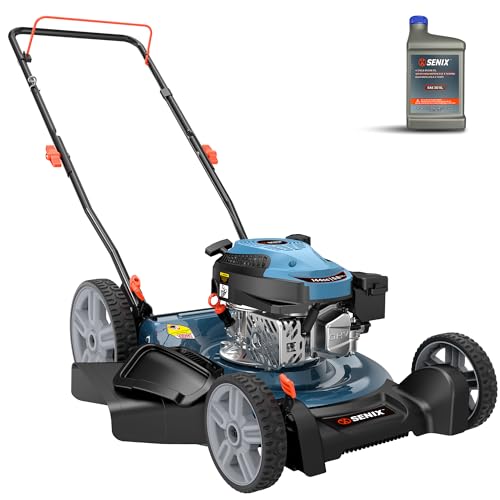
Pros
- Powerful 144cc gas engine provides reliable cutting performance for thick grass and light weeds.
- Large 11-inch rear wheels significantly improve maneuverability on uneven or sloped lawns.
- Simple 2-in-1 system with tool-free switching between mulching and side discharge.
- Easy 6-position height adjustment with dual levers, no tools required.
- Low price point under $250 makes it accessible for budget-conscious shoppers.
Cons
- No self-propelled drive; may require more effort on steep slopes or very large yards.
- Only offers mulching and side discharge - no rear bagging option for collecting clippings.
- Limited initial reviews make long-term durability harder to assess, though the 2-year warranty provides some peace of mind.
The SENIX 21-Inch Gas Push Lawn Mower is a straightforward, no-frills machine aimed at homeowners who need reliable cutting power for small to medium-sized lawns - think up to about half an acre. It is especially suited for those who prefer a gas engine over electric for its runtime and torque, and who want a mower that can handle slightly uneven terrain without breaking the bank. With its 144cc engine and wide 21-inch deck, this mower is designed to tackle typical suburban grass, occasional weeds, and gentle slopes.
In real-world use, the engine delivers consistent power for cutting through thick grass without bogging down. The 2-in-1 system lets you switch between mulching and side discharge quickly - no tools required, which is handy when you encounter wet or tall patches. The mulching action helps return nutrients to the soil, reducing the need for fertilizers. The oversized 11-inch rear wheels really stand out here: they roll over bumps, roots, and small rocks more smoothly than standard wheels, making the mower feel lighter to push than its 50-pound weight suggests. While it is not self-propelled, most homeowners will find it manageable on flat or slightly sloping lawns.
Build quality appears solid for the price point. The steel deck feels durable enough to handle typical yard debris, and the wheels are built with robust plastic hubs that should resist cracking. The handle is comfortable and folds for compact storage. Height adjustment is tool-free via dual levers at each wheel, which is convenient for quick changes. The engine is a standard 4-stroke that runs on regular unleaded gasoline, and maintenance is straightforward - oil changes and air filter cleaning are simple tasks for any DIYer.
Assembly takes about 30 minutes out of the box, with most major parts pre-assembled. The included tool kit helps you get started right away. Storage is easy thanks to the folding handle and compact dimensions (about 33 x 23 x 16 inches). For daily use, the mower starts reliably with a pull cord, though some users may need a few pulls on first startup. The 2-year warranty covers the engine, deck, and wheels, and the company promises 24-hour support for minor issues - a nice safety net for first-time buyers.
Realistic limitations include the lack of a self-propelled drive - if your yard is steep or larger than half an acre, you might find pushing tiring. Also, there is no rear bagging option; clippings are either mulched or discharged via the side chute. Some homeowners prefer bagging for a cleaner finish or for grasscycling. Additionally, with zero customer reviews at launch, it is harder to gauge long-term reliability, though the warranty helps offset that uncertainty.
Overall, the SENIX 21-Inch Gas Push Lawn Mower is a sensible choice for budget-conscious homeowners who need a dependable, easy-to-push gas mower with versatile cutting options. It works well for small to medium yards with some unevenness, and the large wheels and simple controls make it user-friendly. If you can live without self-propulsion and bagging, this mower offers good value for the price.
The 21-inch cutting deck is a nice upgrade over standard 20-inch decks, letting you cover more ground per pass. Combined with the 144cc engine, the mower chews through typical yard grass without stuttering. The 2-in-1 mulching/side discharge system works effectively: mulching chops clippings fine enough to decompose quickly, while side discharge clears wet or tall grass without clogging. The height adjustment range from 1.25 to 3.75 inches covers all seasons - from a tight summer cut to a longer winter setting. The dual-lever design lets you raise or lower all four wheels evenly, preventing scalping on uneven ground.
Maneuverability is a strong point thanks to the 11-inch rear wheels. They roll over obstacles like roots and small rocks much easier than typical 7- or 8-inch wheels, reducing the effort needed to push the mower. The 8-inch front wheels also help navigate around flower beds and garden edges. While not self-propelled, the mower feels light enough for most users to handle on flat to moderate slopes. The foldable handle makes storage and transport convenient, and the overall weight of 50 pounds is manageable for lifting into a truck or shed.
The SENIX mower is powered by a 144cc 4-cycle engine that runs on regular unleaded gasoline. This is a reliable, simple engine design that provides enough torque for thick grass and light weeds. It is not the most powerful engine in its class, but for typical suburban lawns, it performs well. Starting is via a recoil pull cord, and the engine features a standard air filter and oil fill for easy maintenance. The 2-year warranty covers the engine, deck, and wheels, which is good for a budget-priced mower. The company also offers lifetime customer support with a 24-hour response time for minor issues, so you are not left in the dark if something goes wrong.
How Self-Propelled Mowers Allow Manual Pushing
Self-propelled mowers are engineered with a transmission system that can be bypassed to allow free rolling. The core answer to whether you can push one lies in the design of the drive engagement mechanism, which is separate from the engine or motor power source.
When the drive is disengaged, the wheels are no longer linked to the propulsion unit, allowing the mower to be moved by hand like a traditional push mower. This feature is critical for navigating obstacles, entering small gates, or storing the unit in tight spaces where motorized movement is impractical or unsafe.
| Component | Function in Drive Mode | Function in Push Mode |
|---|---|---|
| Transmission | Transfers power from engine/motor to wheels | Disconnected or freewheeling |
| Drive Lever/Button | Engages power transfer to wheels | Disengages power transfer |
| Brakes | May lock wheels when released | Releases wheel lock for rolling |
| Handle Safety Interlock | Prevents drive engagement without grip | Often still required for engine start |
- Locate the drive control lever or button on the handlebar assembly.
- Ensure the engine or motor is running to test the disengagement.
- Move the control to the ‘off’ or ‘neutral’ position to stop wheel rotation.
- Check if the wheels roll freely by gently pushing the mower forward.
- Verify that the brake system releases if the model features wheel locks.
- Test maneuverability in a small, clear area before full use.
Mechanics of the Drive Disengagement
The disengagement process varies slightly between gas-powered and electric models but follows a similar logical path. In gas mowers with rear-wheel drive, the transmission is often a gear-driven system that can be shifted into neutral.
The operator must pull a lever or press a button that physically disconnects the drive shaft from the rear wheels. This action stops the transfer of torque from the engine to the wheels, allowing them to spin independently. Some models use a belt-driven system where the belt slips or disengages from the pulley when the drive is off.
Electric mowers, such as those with brushless motors, may use a clutch mechanism or electronic control to stop the drive motor. In these cases, the main cutting motor may continue to run, but the drive motor shuts off. This distinction is important because the blades may still be spinning even when the mower is in push mode.
Operators must remain aware of the blade status and maintain a safe distance from the cutting deck at all times. The handlebar interlocks usually remain active to ensure the engine or motor does not start unless the operator is gripping the handle correctly.
Physical Effort and Weight Considerations
Pushing a self-propelled mower requires more physical effort than a standard push mower due to the added weight of the transmission, drive motor, and battery or fuel system.
- These components can add significant mass to the machine, making it harder to maneuver on slopes or uneven terrain without the assist of the drive system.
- The weight distribution is also different, with more mass concentrated in the rear or center, which can affect balance and steering responsiveness.
- Operators should be prepared for a heavier feel, especially when starting to move the mower from a standstill.
The wheels on self-propelled mowers are often larger and designed for traction rather than low rolling resistance. While this helps with grip on grass, it can increase the friction encountered when pushing manually.
High-quality ball bearings in the wheel hubs help mitigate this, but the overall rolling resistance is still higher than on a lightweight reel or basic push mower. For short distances, such as moving the mower from a garage to the lawn, the extra weight is manageable. However, for extended manual pushing, it can lead to fatigue and strain on the lower back and arms.
Safety Interlocks and Operational Limits
Safety interlocks play a crucial role in how the mower behaves in push mode. Most mowers have a bar that must be depressed to start the engine or motor. This interlock is separate from the drive engagement but is often linked to the overall safety system.
If the operator releases the handle, the engine may cut out, preventing the mower from moving under its own power. In push mode, this safety feature remains active, ensuring that the mower stops if the operator lets go. This is a critical safety feature that prevents runaway mowers.
It is important to note that the cutting blades may still be engaged even when the drive is disengaged. The blade control lever or button is typically separate from the drive control. Operators must ensure they understand the specific controls on their mower model. Accidentally engaging the drive while in a position where it is unsafe to do so can lead to loss of control. Always refer to the operator’s manual for the specific sequence of actions required to switch between drive and push modes safely.
When to Use Push Mode vs. Drive Mode
Drive mode is the primary way to mow most lawns, as it reduces physical effort and allows for consistent speed and cutting quality. It is particularly useful on slopes, in thick grass, or over large areas where walking while pushing would be exhausting. The self-propelled feature ensures that the mower maintains a steady pace, which helps in achieving an even cut. Using drive mode also reduces the risk of the mower stalling or the operator losing balance on uneven ground.
Push mode is best used for specific tasks where precise control is needed or where the drive system is not suitable. This includes mowing very small patches, navigating around delicate plants or obstacles, and transporting the mower. It is also useful when the drive system is malfunctioning or needs to be inspected.
In these cases, pushing the mower manually allows the operator to move the machine without engaging the potentially faulty transmission. For those interested in electric options, our guide on cordless electric mowers discusses how battery management affects drive availability.
Maintenance and Care for the Drive System
Regular maintenance of the drive system is essential to ensure it functions correctly when needed. For gas mowers, this includes checking the transmission fluid levels and inspecting the drive belts for wear or damage. A worn belt can slip, causing the drive to engage intermittently or fail to engage altogether. For electric mowers, the focus is on keeping the drive motor and battery connections clean and free from debris. Dust and grass clippings can clog the motor vents and cause overheating, which can damage the drive motor.
It is also important to lubricate the moving parts of the drive mechanism as recommended by the manufacturer. This includes the levers, buttons, and any exposed gears or chains. Proper lubrication ensures smooth operation and prevents sticking, which can make it difficult to engage or disengage the drive. Neglecting maintenance can lead to premature wear and costly repairs. Following the manufacturer’s maintenance schedule is the best way to keep the drive system in top condition.
Troubleshooting Common Drive Issues
If the drive system does not engage when the lever is pulled, the first step is to check the safety interlocks. Ensure that the handlebar bar is fully depressed and that the blade control is engaged if required. Sometimes, the interlock switch may be dirty or obstructed, preventing it from closing the circuit. Cleaning the switch area and ensuring it moves freely can resolve this issue. If the problem persists, check the fuses or circuit breakers for electric mowers, or the drive belt for gas mowers.
Another common issue is the drive engaging unexpectedly. This can happen if the lever is not fully released or if the spring mechanism is worn. It is important to ensure that the drive lever returns to the ‘off’ position automatically when released. If it sticks in the ‘on’ position, the drive may engage without the operator’s intent. This is a safety hazard and should be addressed immediately. Replacing the lever assembly or the spring can fix this problem.
Knowing how to push a self-propelled mower is a valuable skill for any lawn care enthusiast. It provides flexibility and safety in situations where motorized drive is not practical. By understanding the mechanics, safety features, and maintenance requirements, you can ensure that your mower operates smoothly and safely in both drive and push modes. Always consult your operator’s manual for specific instructions and safety warnings related to your model.


Write Your Review
No reviews yet. Be the first to share your experience!