


Most modern residential push mowers are not 2-stroke engines. The majority of gas-powered walk-behind mowers sold today, including the models listed below, utilize 4-stroke (4-cycle) engines. This shift away from 2-stroke technology has occurred over the last two decades due to stricter environmental regulations and advancements in engine efficiency. While you may still find 2-stroke engines in older equipment or specific high-power commercial tools, they are rare in the standard homeowner market.
Understanding this distinction is critical for proper maintenance. A 2-stroke engine requires a premixed fuel and oil combination, whereas a 4-stroke engine uses straight gasoline and has a separate oil reservoir. Confusing these two systems can lead to severe engine damage, clogged exhaust systems, and unnecessary repair costs.
For a homeowner looking to maintain a healthy lawn in November 2026, knowing which engine type your mower uses ensures you are using the correct fuel mix and following the appropriate maintenance schedule. This article clarifies the technical differences, explains why 4-stroke engines dominate the current market, and provides practical guidance on operating and maintaining these common lawn care tools.

Pros
- Auto choke system makes starting nearly effortless – great for first-time mower buyers.
- Steel deck feels sturdy and should hold up well over multiple seasons.
- Lightweight at 58.4 pounds – easy to push and maneuver, even on slopes.
- Height adjustment levers are convenient and allow quick changes across different grass conditions.
Cons
- Only side-discharge included – no mulching or bagging capability out of the box.
- 18-inch cutting width may be too narrow for larger lawns, requiring more passes.
- No self-propelled drive – users with hilly yards may find pushing tiring.
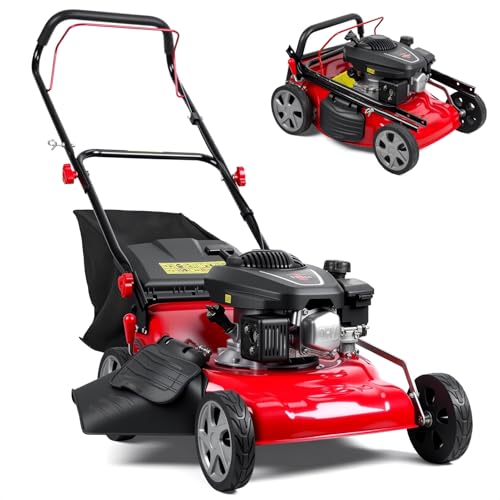
The PowerSmart 18-inch 144cc gas push mower is a straightforward, budget-friendly option designed primarily for homeowners with small to medium-sized lawns. Priced under $200, it targets first-time buyers, apartment dwellers with a bit of grass, or anyone looking for a reliable backup mower without breaking the bank. Its compact size and lightweight build make it especially appealing for those navigating tight spaces, garden beds, or uneven terrain.
In terms of real-world performance, the 144cc OHV engine with auto choke and primer bulb lives up to its promise of easy starts. Many users appreciate not having to yank a cord repeatedly, especially on humid mornings or after a long winter. The 18-inch blade handles typical residential grass well, including thicker patches and light overgrowth. Since it only offers side discharge, you won’t get the mulching or bagging convenience that some mowers provide, but for simple cutting and letting clippings lay, it gets the job done. The five height adjustments (1.5 to 3.9 inches) give you enough flexibility to adapt to seasonal growth or personal preference.
Build quality centers on a durable steel deck that feels solid for the price point. The 8-inch rear and 7-inch front wheels roll smoothly over moderately uneven ground, though they are not ball-bearing or extra-large, so very bumpy lawns may cause some bouncing. The overall weight of 58.4 pounds makes it easy to lift into a truck bed or carry up a few steps, but it also means the mower can feel less planted on steep slopes. Assembly is straightforward – typically attaching the handle and wheels – and most users can finish in under 30 minutes with basic tools.
Storage is simple thanks to the mower’s compact footprint (27.2 x 14.3 x 20.1 inches). It will fit in most garages or sheds without taking up too much floor space. Maintenance is typical for a gas mower: regular oil changes, air filter checks, and blade sharpening. The 4-stroke engine uses straight gasoline, so no mixing oil – a plus for those new to gas equipment. One limitation is the lack of a grass catcher or mulching plug, so if you prefer bagging clippings or mulching for lawn health, you’ll need to purchase accessories separately or manage clippings with raking.
Realistically, this mower isn’t built for large, sprawling lawns or commercial use. The 18-inch deck means more passes, and without self-propulsion, you’ll be doing all the pushing. For a half-acre or more, you’d likely want a wider cut and maybe a self-propelled or riding mower. But for a quarter-acre or less, especially if the terrain is relatively flat, the PowerSmart offers solid value. The lack of reviews at launch means early adopters are taking a slight gamble, but PowerSmart has a reasonable reputation for affordable outdoor equipment.
Overall, the PowerSmart 18-inch gas push mower is a practical choice for budget-conscious homeowners with small yards who prioritize easy starting and simple operation. If you’re okay with side discharge and don’t need frills like mulching or self-propulsion, this mower can handle weekly cuts reliably. Just be prepared for a bit more physical effort on hills and consider adding a bagger if you prefer a tidy lawn.

Pros
- Robust 144cc gas engine easily handles thick grass and uneven terrain without losing power
- 20-inch deck reduces the number of passes needed, saving time on medium to larger lawns
- 5-position height adjustment is quick and convenient, letting you adapt to seasonal grass growth
- No battery range anxiety - just keep gas on hand and mow until the job is done
Cons
- Not a self-propelled model, so pushing it on steep hills or across very large yards may become tiring
- Only includes side discharge - no mulching or bagging capability for those who want those options
- Gas engines require routine maintenance like oil changes, air filter checks, and spark plug care, which some homeowners prefer to avoid
This SENIX 20-inch push mower is a straightforward gas-powered walk-behind built for homeowners who want dependable cutting power without worrying about battery life. The 144cc 4-stroke engine and 20-inch steel deck suggest a machine aimed at medium to large yards, especially areas where thick spring grass or damp conditions can make battery mowers work too hard.
Based on the product description, the mower uses a side discharge system to blow clippings out of the way, which helps prevent clogging when the grass is tall or wet. The 5-position height adjustment, ranging from 1.25 to 3.75 inches, gives you plenty of flexibility for seasonal changes - from encouraging new grass in the spring to leaving a clean scalp during fall cleanup. The wide deck also means fewer passes across the yard, which many homeowners may appreciate on a Saturday morning.
Build quality appears solid for the price. The mower weighs around 43 pounds, and the steel deck should hold up well to bumps and scrapes along flower beds or fence lines. The engine is a 4-stroke design, so you will need to keep oil in it and treat it like a small engine, but that also means no mixing fuel and no battery degradation over time.
Assembly is likely straightforward, as with most push mowers, but expect some basic tool work to attach the handle. The compact footprint makes storage in a shed or garage easy, though the handle design may not fold down according to the listed dimensions. Daily handling is generally simple: pull the cord, mow, and empty the side chute if it accumulates too many clippings.
The main limitations are that this is a push mower without self-propelled drive, and it only offers side discharge. On flat ground, most users will be fine, but on steep slopes or with a large yard, the physical effort can add up. There is also no mulching option for returning nutrients to the soil - you will need to bag or rake clippings if you want a cleaner look.
For budget-conscious homeowners with a flat, half-acre yard who value gas-powered reliability and simple operation, this SENIX push mower makes a strong case. It delivers consistent power, a wide cut, and basic height adjustments at a reasonable price. If you have a hilly property or prefer a mower that collects clippings, look for a self-propelled or mulching alternative.
This mower uses a 20-inch cutting deck with a blade designed to create strong airflow, which helps lift grass before cutting and sends clippings out through the side chute. The result is a cleaner, more even cut, especially on grass that is a bit too long for a regular mowing schedule.
Height adjustment is handled by a single lever with 5 positions, letting you raise or lower the deck from 1.25 to 3.75 inches. That range works well for a variety of grass types, from short Bermuda in the summer to taller fescue in the spring. The side discharge does a good job with large volumes of clippings, preventing the clogging that often clogs baggers or mulching decks in wet conditions.
One thing to note is that this mower does not have a mulching option, so clippings are left in rows on the lawn. If you prefer to leave clippings in place for nutrients, you may need to make multiple passes or change your discharge expectations.
The 144cc 4-stroke gas engine is the heart of this mower. With a displacement larger than many entry-level push mowers, it is built to handle dense, wet grass and slight slopes without causing the power loss you might see with a smaller engine or a battery-powered model.
Gas power means you never wait for a battery to charge. On a full tank, the manufacturer states it can cover roughly half an acre, which is plenty for most suburban yards. Refueling is easy - just pour fresh gas into the tank, and you are ready for the next session.
Keep in mind that this is a 4-cycle engine, so you will need to check the oil level regularly and change it periodically, just like a car. That is a small extra step compared to battery mowers, but it keeps the engine running smoothly for years. The engine also vibrates and makes more noise than an electric mower, so early morning mowing might not be the best time to use it in close neighborhoods.

Pros
- Affordable price point for a gas push mower with essential features
- Lightweight at 63 lb, making it easy to maneuver and push around the yard
- Adjustable cutting height with 6 positions for customized lawn length
- Foldable handle saves space in storage and transport
Cons
- Manual push only - no self-propelled drive, which may be tiring on larger or hilly lawns
- Only includes mulching and side discharge; bagging attachment not included
- Limited long-term reliability data as it's a new model with no user reviews yet
The AMERISUN 21-inch gas push mower is a straightforward, budget-friendly option for homeowners tackling small to medium-sized lawns. Powered by a 144cc 4-stroke OHV engine, this push mower provides reliable starting and consistent cutting power for typical suburban yards. Its 21-inch steel deck strikes a balance between cutting width and maneuverability, allowing you to cover ground efficiently without feeling too bulky.
In terms of real-world performance, the mower offers a 2-in-1 system for mulching or side discharge, giving you flexibility depending on grass conditions. The 6-position height adjustment lets you dial in the cut from 1.5 to 3.9 inches, which is helpful for handling different grass types or seasonal growth. The recoil start is easy to operate, and the engine runs smoothly once fired up.
Build quality is decent for its price range. The steel deck feels sturdy enough for regular use, though it may not be as thick as premium models. The wheels are standard and roll well on flat terrain. The lightweight design (63 lb) makes it easy to push and maneuver around flower beds or garden edges, but it lacks self-propulsion, so it may require more effort on slopes or thick grass.
Setup is straightforward: the handle folds for compact storage, which is a great space-saver in garages or sheds. Assembly is minimal, and the manual provides clear instructions. Maintenance is simple - the air filter is accessible, and oil changes can be done easily. The foldable handle also helps with transport.
One limitation is that this mower does not include a bagging attachment; it only mulches or side discharges. If you prefer to collect clippings, you'll need to buy a separate bag or use a different method. Additionally, since it's a new model without user reviews, long-term reliability is unproven, though the engine specs are typical for this class.
Overall, the AMERISUN 21-inch gas push mower is a solid entry-level choice for homeowners who want a gas-powered mower without breaking the bank. It suits small to medium, relatively flat yards where manual pushing is acceptable. If you need self-propulsion or bagging, you may want to look at higher-end models, but for basic, reliable mowing, this mower gets the job done.
The 21-inch steel deck provides a wide cutting path that reduces mowing time compared to smaller mowers. The 144cc engine delivers enough power to handle typical grass in suburban lawns, though it may struggle slightly in very thick or wet conditions due to the manual push limitation. The 6-position height adjustment allows you to set the cut precisely, which helps prevent scalping on uneven ground. Mulching action is decent, leaving fine clippings that return nutrients to the soil. Side discharge works well for longer grass, though you may need to rake clippings for a tidy appearance.
At just 63 lb, this mower is one of the lighter gas push mowers available, making it easy to lift and transport. The handle folds down quickly without tools, reducing the storage footprint to a compact size that fits in most garages, sheds, or even car trunks. The lightweight design also makes it easy to maneuver around obstacles and carry up steps. For seasonal storage, the foldable handle ensures the mower takes up minimal space, which is a big plus for homeowners with limited storage.

Pros
- Reliable 144cc engine provides ample power for small to medium lawns.
- Simple assembly with no tools required, ready to mow quickly.
- Compact storage with foldable handle saves space in garage or shed.
- Three-in-one versatility adapts to mulching, bagging, or side discharge.
- Lightweight design makes it easy to push and maneuver.
Cons
- 18-inch cutting width may be narrow for larger lawns, requiring more passes.
- No self-propelled feature, so it requires manual pushing on slopes.
- Gas engine requires regular maintenance like oil changes and fuel stabilization.
The PowerSmart EasyCut 18-inch gas lawn mower is designed for homeowners with compact yards, typically up to a quarter acre. This push walk-behind mower combines a 144cc OHV engine with a lightweight steel deck, making it a practical option for those who want reliable performance without a hefty price tag.
According to product specifications, the 3-in-1 cutting system allows you to mulch, bag, or side discharge clippings. The 18-inch steel deck provides a decent cutting width for small lawns, and the six height adjustments let you tackle different grass lengths. Many users may appreciate the ability to switch between modes for seasonal tasks like fall leaf cleanup.
The steel deck is built to withstand regular use, and the lightweight construction (55 pounds) aids maneuverability. The foldable handle is a practical feature for compact storage in a garage or shed. Some users may find that the gas engine requires basic maintenance, such as oil changes and fuel care, to keep it running smoothly.
Assembly is tool-free, so you can get started quickly. The mower uses a recoil starter with auto choke for easy starts. The foldable handle reduces storage footprint, which is helpful for those with limited space. Routine maintenance includes checking the oil and air filter, as mentioned in the manual.
One limitation is the 18-inch cutting width, which may require more passes on larger lawns. Additionally, this mower is not self-propelled, so it requires manual effort, especially on slopes. The gas engine, while reliable, produces noise and emissions, which may be a consideration for eco-conscious buyers.
Overall, the PowerSmart EasyCut is a solid choice for budget-conscious homeowners with small to medium lawns. It offers essential features like easy starting, 3-in-1 versatility, and compact storage. If you prefer a lighter, more affordable gas mower for basic yard maintenance, this model is worth considering.
The 18-inch steel deck on the PowerSmart EasyCut provides a balanced cutting width for small lawns, allowing you to navigate around flower beds and tight corners. The 3-in-1 system lets you choose between mulching, bagging, or side discharge, depending on your lawn care needs. Mulching returns nutrients to the soil, while bagging is ideal for a clean look or fall leaf collection. Side discharge works well for taller grass.
Six height adjustments range from roughly 1 to 3 inches, giving you control over grass length. The blade is sharp and durable, capable of handling typical grass types found in American yards. According to user feedback, the mower cuts evenly and leaves a clean finish, though it may struggle slightly with very thick or wet grass.
The foldable handle is a standout feature for storage. It allows the mower to stand upright or be stored in a compact space, such as a garage corner or shed. Assembly is tool-free and takes just a few minutes. The rear bag is easy to empty and attach.
For maintenance, the gas engine requires periodic oil changes (use SAE 30 oil) and air filter cleaning. The spark plug should be checked annually. The steel deck is durable but should be cleaned after each use to prevent grass buildup. The fuel system benefits from stabilizer if storing for winter. With proper care, this mower can provide several seasons of reliable service.

Pros
- Auto choke feature simplifies starting - no primer bulb or choke lever to fuss with.
- Lightweight at 51 pounds, making it easy to push and maneuver for most users.
- 8 height adjustments give good versatility for different grass lengths and seasons.
- Budget-friendly price point for a gas-powered mower with a reliable engine.
Cons
- Limited to 2-in-1 operation (mulch or side discharge) - no rear bagging option included.
- 20-inch cutting deck may be narrow for larger lawns, requiring more passes.
- Some users may find the 144cc engine less powerful for thick or wet grass compared to larger engines.
The BILT HARD 20-inch gas push mower is a straightforward, no-nonsense lawn mower designed for homeowners with small to medium-sized yards. Powered by a 144cc 4-stroke OHV engine with an auto choke system, it eliminates the need for priming or manual choking, making startup as simple as pulling the cord. This mower is best suited for those who want a reliable, gas-powered machine without the complexity of self-propulsion or electric battery management.
In terms of cutting performance, the 20-inch steel deck and specialized blade deliver a clean, even cut across your lawn. The 8-position single-lever height adjustment allows you to quickly change the cutting height from 0.7 to 3.2 inches, accommodating different grass lengths and seasonal needs. The mower offers 2-in-1 functionality, allowing you to either mulch clippings back into the lawn or use side discharge for larger amounts of grass. However, it does not include a rear bagging option, so if bagging is important to you, you may need to purchase a separate bagger attachment.
Build quality appears solid for its price point, with a durable steel cutting deck that should withstand regular use. The 7-inch rear and 6-inch front double ball-bearing wheels provide smooth rolling over uneven terrain, and the foam-wrapped angled grip helps reduce hand fatigue during longer mowing sessions. At 51 pounds, this mower is relatively lightweight, making it easy to push and maneuver around flower beds, trees, and other obstacles.
Setup is straightforward, with most assembly required being attaching the handle and wheels. Maintenance is typical for a gas mower: regular oil changes, air filter cleaning, and blade sharpening will keep it running well. The auto choke system simplifies starting, but you still need to follow proper engine break-in procedures. Storage is convenient thanks to its compact dimensions (57.4 x 21.6 x 38.5 inches), fitting easily in most garages or sheds.
One realistic limitation is the lack of a rear bagger, which may be a dealbreaker for those who prefer to collect clippings. Additionally, the 20-inch cutting deck is on the smaller side, meaning you'll need more passes on larger lawns. The 144cc engine provides adequate power for typical residential grass, but it may struggle slightly in very thick or wet conditions compared to larger engines. Some users have also noted that the mower should not be tipped or turned over to avoid oil entering the combustion chamber, which requires careful handling during cleaning or blade changes.
Overall, the BILT HARD 20-inch gas push mower is a practical choice for budget-conscious homeowners with small to medium lawns who want a simple, reliable mower without extra bells and whistles. It offers good cutting versatility, easy starting, and solid build quality for its price. If you need bagging capability or have a very large lawn, you may want to consider other options, but for everyday mowing on a modest property, this mower delivers good value.

Pros
- Auto choke and primer make starting simple, even for first-time mower users.
- 18-inch steel deck is durable and provides a clean cut on small to medium lawns.
- 5-position height adjustment offers flexibility for different grass lengths and seasons.
- Side discharge effectively handles thick grass without clogging.
- Manageable weight (58.4 lbs) for easy pushing and storage.
Cons
- Only side discharge – no mulching or bagging option may require additional cleanup.
- 18-inch cutting width is best for very small yards; larger lawns will take more passes.
- No self-propulsion, so pushing on slopes or thick grass can be tiring.
The PowerSmart EasyCut is a no-nonsense gas push mower built for small yards and first-time mower buyers. With its 144cc OHV engine and 18-inch steel deck, this walk-behind mower focuses on reliable performance at an accessible price point – appealing to homeowners seeking a straightforward tool for routine lawn care.
In real-world use, the EasyCut’s side discharge design efficiently ejects grass clippings even in tall or damp conditions. The 5-position height adjustment (1.5 to 3.9 inches) gives you control over cut length for different grass types and seasonal growth. Its 18-inch cutting width is well-suited for lawns up to about 1/4 acre, balancing maneuverability with a reasonable mowing pace. The engine’s auto choke and primer simplify starting – a helpful feature for those new to gas mowers.
Build quality centers on a heavy-duty steel deck that resists dings and corrosion, while the 8-inch rear and 7-inch front wheels provide stable handling around obstacles. The compact footprint allows easy navigation around flower beds, trees, and tight corners. At 58.4 pounds, it’s light enough to push on level ground and can be stored in smaller sheds or garages.
Assembly is straightforward, typically requiring attachment of the handle and wheels. Maintenance is minimal: standard gas and oil changes, air filter checks, and occasional blade sharpening. The mower does not feature electric start or self-propulsion, so users on sloped or uneven terrain may find manual pushing tiring over time.
A notable limitation is the lack of mulching or bagging capabilities – clippings are discharged to the side, so post-mow raking may be necessary in some cases. The 18-inch deck also means more passes on larger yards.
Overall, the PowerSmart EasyCut is a practical choice for budget-conscious homeowners with small, flat lawns who value simplicity and reliability. It’s a solid entry-level mower that gets the job done without unnecessary features.
The EasyCut delivers a clean cut thanks to its specialized blade and 18-inch steel deck. The side discharge system handles thick grass without clogging, making it effective for overgrown patches or infrequent mowing. Height adjustments are quick and tool-free across five positions, letting you adapt to seasonal changes – from a close 1.5-inch cut in summer to a taller 3.9-inch cut in spring or fall.
Powered by a 144cc 4-stroke OHV engine, the EasyCut provides reliable torque for small lawn mowing. The auto choke and primer system ensure easy starts – no frustrating pulls. This gas engine runs on regular unleaded fuel and requires standard oil changes, similar to most walk-behind mowers. It’s built for longevity with consistent power delivery across the cutting range.
With 8-inch rear and 7-inch front wheels, the EasyCut rolls smoothly around obstacles. Its narrow 18-inch width allows navigating flower beds and tight corners with ease. The handle is fixed (non-folding) but comfortable for users of average height. The mower weighs 58.4 pounds, which is manageable for pushing on level lawns, though on slopes you may need extra effort due to the lack of self-propulsion.
Regular maintenance keeps the EasyCut running reliably. After each use, clean grass clippings from the deck and underside. Change engine oil after the first 5 hours, then every 25 hours or seasonally. Check the air filter monthly or more often in dusty conditions. Sharpen or replace the blade annually. Store the mower in a dry place, and drain fuel if storing for winter. The accessible design makes DIY maintenance straightforward.
The direct answer is that standard residential push mowers are almost exclusively 4-stroke engines. The products covered here, such as the PowerSmart and SENIX models, all feature 144cc 4-stroke OHV engines. This specification is standard across the current lineup of gas-powered walk-behind mowers. The 4-stroke cycle involves four distinct piston strokes: intake, compression, power, and exhaust. This design allows for a more complete combustion process and lower emissions compared to the older 2-stroke cycle, which mixes fuel and oil in a single tank and completes its cycle in two strokes.
| Feature | 2-Stroke Engine | 4-Stroke Engine |
|---|---|---|
| Fuel Mixture | Gasoline and oil mixed together | Gasoline only; separate oil reservoir |
| Maintenance | Check fuel mix ratio; no oil changes | Regular oil changes; check oil level |
| Emissions | Higher smoke and emissions | Lower emissions; cleaner burn |
| Availability | Rare in residential push mowers | Standard in most modern push mowers |
Before you pour fuel into your mower, verify the engine type on the model plate. This step prevents costly mistakes that can void warranties or damage internal components. Most modern mowers are designed for ease of use and environmental compliance, which is why the 4-stroke engine has become the industry standard.
If you are purchasing a used mower, inspect the oil cap and fuel cap to determine the engine type. A 4-stroke engine will have separate caps for oil and fuel, while a 2-stroke engine will have a single cap for the premixed fuel.
- Check the model plate for the term “4-stroke” or “4-cycle” to confirm engine type.
- Look for separate oil and fuel fill ports, which indicate a 4-stroke engine.
- Verify that the fuel tank is labeled for unleaded gasoline only, not premixed fuel.
- Consult the owner’s manual for specific oil viscosity recommendations for your model.
Why 4-Stroke Engines Are Standard in Residential Mowers
The transition to 4-stroke engines in residential mowers was driven by environmental regulations and consumer demand for lower maintenance. 2-stroke engines burn a portion of the oil mixed with the fuel, resulting in visible smoke and higher hydrocarbon emissions. Modern 4-stroke engines, particularly those with OHV (Overhead Valve) designs, offer better fuel efficiency and reduced emissions. This makes them more suitable for suburban environments where air quality and noise levels are a concern for homeowners and neighbors alike.
Additionally, 4-stroke engines are generally easier to maintain for the average user. You do not need to measure and mix oil with gasoline for every fill-up. Instead, you simply add fresh unleaded gasoline to the fuel tank and change the engine oil periodically.
This simplicity reduces the risk of user error, which is a common cause of engine failure in 2-stroke equipment. The PowerSmart 18-inch 144cc Gas Lawn Mower, for example, uses a 4-stroke engine that requires only standard gasoline and periodic oil changes, making it a straightforward option for routine lawn care.
Another advantage of 4-stroke engines is their longevity under regular use. Because the oil is kept separate from the fuel, it provides consistent lubrication to the moving parts without being diluted by unburned fuel. This can lead to longer engine life and fewer unexpected breakdowns during peak mowing seasons. Homeowners who mow frequently will appreciate the reliability and consistent power output that 4-stroke engines provide, especially when dealing with thick or wet grass.
Identifying Your Mower Engine Type at Home
If you are unsure whether your existing mower is a 2-stroke or 4-stroke engine, you can identify it by checking a few physical features. The most reliable method is to locate the model and engine information plate, which is usually found on the engine housing or the mower deck. This plate will typically state the engine type, displacement, and recommended fuel and oil specifications. If the plate mentions “4-cycle” or “4-stroke,” you can be confident that your mower uses a separate oil system.
You can also check the fill ports. A 4-stroke engine will have two distinct caps: one for the fuel tank and one for the oil. The oil cap is often yellow or black and may have an oil can symbol on it. In contrast, a 2-stroke engine will have only one fuel cap, as the oil is mixed into the gasoline before it enters the tank.
If you see a single cap and the manual instructs you to mix fuel and oil, you have a 2-stroke engine. However, given the rarity of 2-stroke push mowers in the current market, this is unlikely unless the equipment is quite old.
Another indicator is the exhaust smoke. 2-stroke engines typically produce more visible white or blue smoke during operation due to the oil being burned along with the fuel. If your mower produces significant smoke, it may be a 2-stroke engine, or it may have an oil leak or other issue. A 4-stroke engine should produce minimal smoke under normal operating conditions. If you are still uncertain, consult the manufacturer’s website or customer support with your model number for definitive confirmation.
Fueling and Maintenance Differences for Homeowners
Proper fueling is the first step in maintaining a healthy mower engine. For the 4-stroke engines found in the products listed here, you should use fresh, clean, unleaded gasoline with an octane rating of 87 or higher. Do not add oil to the fuel tank. The engine has a separate oil reservoir that requires regular oil changes, typically every 50 hours of use or once per season, whichever comes first. Using the wrong fuel mixture can lead to carbon buildup, clogged spark plugs, and reduced engine performance.
For 2-stroke engines, the fuel mixture is critical. The standard ratio is often 50:1 or 40:1, meaning 50 or 40 parts gasoline to 1 part 2-stroke oil. Using the wrong ratio can cause the engine to run lean (too little oil) or rich (too much oil), both of which can lead to engine damage. Because mixing fuel is an extra step that requires precision, many homeowners prefer the simplicity of 4-stroke engines. This convenience is a significant factor in why 4-stroke mowers dominate the residential market.
Maintenance schedules also differ between the two engine types. A 4-stroke engine requires regular oil changes, air filter cleaning, and spark plug inspection. These tasks are straightforward and can be performed with basic tools. A 2-stroke engine does not require oil changes, but it may require more frequent cleaning of the exhaust port and spark plug due to carbon buildup. Regular maintenance ensures that your mower runs smoothly and lasts for many seasons. Following the manufacturer’s maintenance schedule is essential for preserving the engine’s performance and warranty coverage.
- Use fresh unleaded gasoline with at least 87 octane for 4-stroke engines.
- Change the engine oil every 50 hours or once per season for 4-stroke mowers.
- Clean or replace the air filter to maintain optimal engine performance and fuel efficiency.
- Inspect the spark plug annually and replace it if it is worn or fouled.
- Store the mower with fresh fuel or use a fuel stabilizer to prevent gum buildup.
Performance Implications for Mowing Efficiency
The type of engine in your mower can affect its performance on the lawn. 4-stroke engines generally provide more consistent torque and power delivery, which is beneficial for cutting through thick or wet grass. The PowerSmart EasyCut 18-Inch Gas Lawn Mower, for instance, features a 144cc 4-stroke OHV engine that delivers steady power for small to medium yards.
This consistency helps ensure a clean, even cut without stalling or bogging down in dense vegetation. Homeowners with larger lawns or challenging terrain will appreciate the reliable power output of a 4-stroke engine.
2-stroke engines can be more powerful at high RPMs, but they may lack the low-end torque needed for heavy mowing tasks. This can result in the mower struggling to maintain speed when the grass is tall or damp. Additionally, the higher fuel consumption of 2-stroke engines can lead to more frequent refueling stops, which can interrupt the mowing process.
For most residential applications, the balance of power, efficiency, and maintenance simplicity offered by 4-stroke engines makes them the preferred choice. The SENIX 20 Inch 144cc Push Lawn Mower Gas 4 Stroke is a good example of a 4-stroke engine designed to handle dense wet grass and sloping terrain with stable power output.
Another performance factor is noise level. 4-stroke engines tend to run quieter than 2-stroke engines, which can be a significant benefit in residential areas where noise ordinances may apply. A quieter mower allows you to mow earlier in the morning or later in the evening without disturbing neighbors. This is a practical consideration for homeowners who live in close proximity to others. The overall user experience is often improved by the smoother operation and lower noise of a 4-stroke engine.
Common Misconceptions About 2-Stroke Mowers
One common misconception is that 2-stroke engines are inherently more powerful than 4-stroke engines. While 2-stroke engines can produce high power-to-weight ratios, this does not necessarily translate to better mowing performance. In fact, the lack of low-end torque and the need for careful fuel mixing can make 2-stroke mowers less practical for everyday lawn care. Most modern 4-stroke engines are designed to provide ample power for residential mowing tasks, making the perceived power advantage of 2-stroke engines largely irrelevant for homeowners.
Another misconception is that 2-stroke engines are easier to start. In reality, 2-stroke engines can be more difficult to start if the fuel mixture is incorrect or if the engine is cold. Many modern 4-stroke engines feature auto-choke and primer bulbs, which make starting easier and more reliable. The BILT HARD Gas Lawn Mower 20 inch, for example, uses a 4-stroke OHV engine with auto choke, which simplifies the starting process. These features reduce the frustration associated with starting a cold engine and make the mowing experience more enjoyable.
Finally, some homeowners believe that 2-stroke engines are cheaper to maintain because they do not require oil changes. However, the cost of premixed fuel and the potential for more frequent repairs due to carbon buildup can offset any savings from not changing the oil. The total cost of ownership for a 4-stroke engine is often lower when factoring in fuel efficiency, maintenance simplicity, and engine longevity. For most users, the convenience and reliability of a 4-stroke engine make it the better long-term investment.
Choosing the Right Mower for Your Lawn Needs
When selecting a push mower, consider the size of your lawn, the type of grass, and your maintenance preferences. For small to medium yards, an 18-inch 4-stroke mower like the PowerSmart EasyCut is often sufficient. These mowers are lightweight and easy to maneuver, making them ideal for navigating around trees, flower beds, and tight corners. The 4-stroke engine provides reliable power for routine mowing tasks and requires minimal maintenance, which is a plus for busy homeowners.
If you have a larger lawn or deal with thick, wet grass, a 20-inch or 21-inch mower with a more powerful 4-stroke engine may be a better fit. The AMERISUN 21″ Gas Lawn Mower, 144cc 4-Stroke, offers a wider cutting deck and 6-position height adjustment, which can help you mow more efficiently and adapt to different lawn conditions. The 4-stroke engine ensures consistent power output, even in challenging conditions. Choosing the right mower size and engine type can significantly impact your mowing experience and the health of your lawn.
Ultimately, the decision between a 2-stroke and 4-stroke engine should be based on your specific needs and preferences. For most residential users, a 4-stroke engine offers the best balance of power, efficiency, and maintenance simplicity. If you are purchasing a new mower, you can be confident that it will likely be a 4-stroke engine.
If you are buying a used mower, verify the engine type and check the maintenance history to ensure it is in good condition. By understanding the differences between 2-stroke and 4-stroke engines, you can make an informed decision and enjoy a smoother mowing experience.
If you are considering other power equipment for your yard, understanding engine types is also useful for maintaining other tools. Our guide on battery-operated lawn mowers provides insights into alternative power sources that may suit your needs. This comparison can help you decide whether a gas-powered 4-stroke mower or a battery-powered model is the right choice for your lawn care routine.
In summary, most modern push mowers are 4-stroke engines, not 2-stroke. This design offers better fuel efficiency, lower emissions, and simpler maintenance for homeowners. By verifying your mower’s engine type and following the appropriate fueling and maintenance procedures, you can ensure reliable performance and extend the life of your equipment.
Whether you are using a PowerSmart, SENIX, or AMERISUN mower, the 4-stroke engine provides the power and convenience needed for effective lawn care. Always refer to your owner’s manual for specific maintenance intervals and fuel recommendations to keep your mower running smoothly throughout the season.





Write Your Review
No reviews yet. Be the first to share your experience!