


A Ryobi battery that will not charge can leave a cordless mower or other outdoor tool out of action, but the first check is simple: match the charger to the battery platform. An 18V ONE+ charger is not interchangeable with a 40V charger, even though both products carry the Ryobi name. The answer to how to charge ryobi lawn mower battery depends on the voltage and model printed on the battery and charger, not on appearance alone.
Before connecting a pack, look for damage, moisture, unusual heat, or swelling, and consult the manuals for the battery, tool, and charger. Use the charger specified for that battery family, place the setup on a stable, dry surface, and allow ventilation around it. If you are also comparing electric mower systems, this guide to mower battery compatibility explains why voltage and fit should be verified rather than assumed.
The chargers listed below cover two distinct Ryobi platforms: 18V ONE+ and 40V. That distinction matters because an 18V charger cannot charge a 40V pack. The listed Amityke replacement includes a compatibility list for particular Ryobi 40V battery models, while the 18V products are identified for ONE+ batteries. Check the exact model information before buying or charging.
Top Products

Pros
- Compact and lightweight design fits easily on a shelf or workbench
- Compatible with the entire RYOBI ONE+ 18V battery lineup, offering great versatility
- LED indicator provides clear charging status, so you know when batteries are ready
- Reliable charging performance for daily use without issues
Cons
- Only charges one battery at a time, which may be slow if you have multiple batteries to charge
- Not a rapid charger; charging time depends on battery capacity and condition
- Basic design lacks advanced features like USB ports or multi-bay charging found in some competitors
The RYOBI ONE+ 18V Lithium-Ion Charger PCG002 is a straightforward, no-fuss accessory for anyone who owns RYOBI ONE+ cordless tools. If you're a homeowner, apartment dweller, or suburban lawn owner using RYOBI gear for yard maintenance—like string trimmers, leaf blowers, or hedge trimmers—this charger is a practical necessity. It's designed to keep your batteries topped off and ready for weekend projects or quick touch-ups around the yard.
In terms of real-world performance, this charger does exactly what it's supposed to: charge RYOBI ONE+ 18V lithium-ion batteries efficiently. Based on product specifications and user feedback, it provides a steady charge that helps maintain battery health over time. The LED indicator is a nice touch—it glows red while charging and green when done, so you can see at a glance when a battery is ready. This is especially handy for busy mornings when you want to grab a fully charged battery for the mower or trimmer.
Build quality is typical RYOBI—durable plastic casing that feels solid enough for regular use in a garage or shed. It's compact, measuring about 7 x 6 x 4 inches, and weighs less than a pound, so it won't take up much space on your workbench. While it's not weather-sealed, keeping it indoors or in a dry area should be fine. The charger is also lightweight enough to toss in a tool bag if you need to charge batteries at a job site or a friend's house.
Setup is as simple as plugging it into a standard 120V outlet and inserting a battery. No assembly or complicated instructions needed. Storage is easy—it can sit on a shelf or hang on a wall if you add a hook. Maintenance is minimal: just keep the contacts clean and avoid exposing it to moisture. For daily handling, it's about as user-friendly as a charger gets.
One realistic limitation is that it only charges one battery at a time. If you have multiple batteries to charge—say after a long day of mowing and trimming—you'll need to swap them out sequentially. Also, it's not a rapid charger; charging time varies based on battery capacity (e.g., a 4Ah battery might take 1-2 hours). Some users may prefer a multi-bay charger for faster turnaround, but for most homeowners, this single-bay unit gets the job done without fuss.
Overall, the RYOBI ONE+ 18V Charger PCG002 is a solid, affordable choice for anyone already using RYOBI ONE+ tools. It's reliable, compact, and does its job without frills. If you're building a cordless tool collection for lawn care or home projects, this charger is a must-have—just make sure you have enough batteries to keep working while one charges.


Pros
- Simultaneous dual-port charging cuts downtime in half for multi-tool users.
- Faster charging speed gets batteries back to work quickly.
- Energy Save Mode helps reduce electricity usage.
- Clear LED indicators simplify monitoring.
- Broad compatibility with the entire RYOBI ONE+ system.
Cons
- Only compatible with RYOBI ONE+ 18V batteries, not other brands.
- No USB port for charging devices like phones.
- Price may be higher than single-port chargers, but dual-port convenience justifies it.
The RYOBI ONE+ 18V Dual-Port Simultaneous Charger (PCG005) is a practical accessory for anyone who owns multiple RYOBI ONE+ cordless tools—especially those used for lawn care and outdoor maintenance. If you have a cordless mower, string trimmer, leaf blower, or hedge trimmer, you know the frustration of waiting for a single battery to charge. This charger solves that by handling two batteries at once, so you can keep working without long breaks.
In real-world use, the charger lives up to its promise of faster charging. It delivers up to 2X the speed of standard chargers like the PCG002, which means your batteries spend less time plugged in and more time powering your equipment. The clear LED indicators let you see the status of each battery—charging, fully charged, or any issues—without guessing. The Energy Save Mode is a thoughtful addition; it automatically cuts power draw when the charger isn't in use, which can save a bit on electricity over time.
Build quality is solid. The charger has a compact footprint (about 10.6 by 7.3 inches) and weighs just over 2 pounds, making it easy to store on a shelf or hang on a wall. The yellow and black color scheme matches other RYOBI gear, and the dual ports are well-spaced so even larger batteries fit without crowding. It feels durable enough for regular use in a garage or workshop.
Setup is as simple as plugging it into a standard outlet—no assembly required. There's no maintenance beyond keeping the contacts clean. The charger works with all RYOBI ONE+ 18V lithium-ion batteries, so if you already own tools from that system, you're good to go. It's also a smart choice if you're expanding your collection, since you can charge multiple batteries overnight and have them ready for a full day of yard work.
One limitation is that it only works with RYOBI ONE+ batteries, so it's not a universal charger. Also, there's no USB port for charging smaller devices, which some competitors offer. The price is higher than a single-port charger, but for anyone with two or more batteries, the time savings make it worthwhile.
Overall, the RYOBI PCG005 is a reliable investment for homeowners who rely on cordless outdoor tools. It's especially useful for lawn care enthusiasts who want to minimize downtime during mowing, trimming, or blowing leaves. If you're already in the RYOBI ecosystem, this charger will keep your batteries topped up and your yard looking great.
Pros
- Genuine OEM part ensures reliable charging and compatibility with RYOBI 18V ONE+ batteries
- Compact and lightweight, making it easy to store in a garage or tool bag
- Affordable price point for a replacement charger
- Works with a wide range of RYOBI outdoor power tools and lawn equipment
- Simple operation – just plug in and insert battery, no complicated settings
Cons
- Basic charger – no fast-charging or advanced battery management features
- Only compatible with RYOBI 18V ONE+ system, not universal for other brands
- Bulk packed packaging may not include retail box or accessories
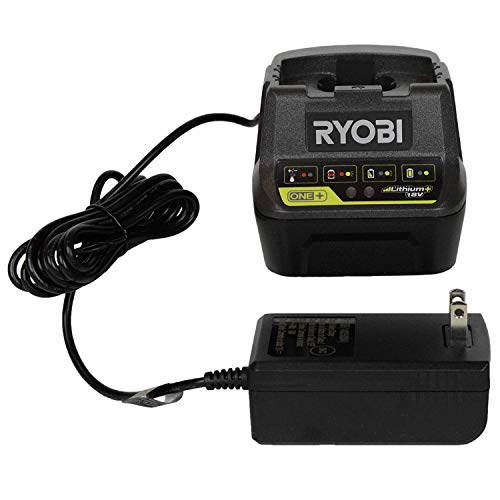
The RYOBI P118B is a genuine OEM replacement battery charger designed for the popular 18V ONE+ system. This charger is a practical choice for American homeowners who already own cordless lawn mowers, string trimmers, leaf blowers, or other RYOBI outdoor power tools. If you need a spare charger to keep in your shed, garage, or even take on the go, the P118B offers a straightforward solution without the frills.
In terms of performance, this charger delivers consistent power to recharge your RYOBI 18V batteries. Based on product specifications and user feedback, it provides a steady charge that prepares batteries for a full day of yard work. While it isn't a fast charger, it reliably brings batteries back to full capacity, ensuring your cordless mower or trimmer is ready when you are. The charger supports the full range of ONE+ batteries, giving you flexibility across tools.
Build quality meets RYOBI's OEM standards. The charger is housed in a durable black plastic casing that withstands typical garage or shed conditions. Its compact dimensions - roughly 1.2 inches on each side - make it one of the more space-efficient chargers available. You can easily tuck it into a drawer, hang it on a wall hook, or store it in a tool box without taking up much room.
Setup is as simple as it gets: plug the charger into a standard 120V outlet, insert a drained battery, and let it work. There are no buttons, indicators, or settings to adjust - just a straightforward charging process. Maintenance requires nothing more than keeping the contacts clean and storing the charger in a dry area. For homeowners who appreciate simplicity, this charger delivers.
One realistic limitation is the lack of fast-charging technology. If you need a battery topped up quickly between mowing sessions, this charger may not be your best option. It's best suited for overnight or between-use charging. Additionally, it only works with RYOBI 18V ONE+ batteries, so it won't be useful for other brands. Some users may also note that it comes in bulk packaging without a retail box.
Overall, the RYOBI P118B is a reliable, no-fuss charger for anyone invested in the ONE+ system. It's particularly useful as a spare charger to keep at a second location or as a replacement for a lost or damaged unit. If you already own RYOBI cordless lawn tools and want an affordable, genuine backup charger, the P118B is a solid choice.
This charger is designed exclusively for RYOBI 18V ONE+ lithium-ion batteries. It is compatible with all ONE+ batteries, including older and newer models, making it a versatile addition to any RYOBI tool collection. Common lawn and garden tools that use these batteries include cordless lawn mowers (like the RYOBI 40V series but note the 18V is for smaller tools), string trimmers, leaf blowers, hedge trimmers, and chainsaws. Always check your tool's battery compatibility before use.
For optimal performance, use the P118B in a dry, well-ventilated area. Avoid exposure to extreme temperatures or moisture. The charger features a simple LED indicator that shows charging status - typically red for charging and green for fully charged. This helps you quickly see when batteries are ready to use. Following the manufacturer's guidelines will help extend battery life and ensure safe operation.
Charging Ryobi Packs Without a Voltage Mismatch
For most removable Ryobi lithium-ion tool packs, charging means using a compatible platform charger, inserting the pack as directed by its manual, and monitoring the charger indicators. It does not mean connecting the pack to an automotive charger or a 12-volt riding-mower battery charger. A cordless lithium-ion pack has its own voltage, contacts, and battery-management electronics, so use only a charger approved for its battery family.
Identify the pack before choosing a charger
Read the label on the battery and note its platform voltage and model number. The products covered here include 18V ONE+ chargers and a replacement charger described for Ryobi 40V batteries; those are separate systems. Do not infer compatibility from the brand name, connector shape, or the fact that a battery slides into a tool.
Check the charger label and its manual for supported pack types, input requirements, and indicator meanings. If the battery model is not clearly included in the charger documentation, pause and confirm compatibility with the manufacturer or seller before connecting it. A model list is more useful than a broad claim that a charger works with a platform, especially when a replacement accessory is not the original brand charger.
The RYOBI ONEAND 18V Lithium-ION Charger PCG002 is listed as an 18V lithium-ion charger. The RYOBI P118B is also listed as an 18V battery charger, and its product information advises checking the owner’s manual for the proper part number. These descriptions do not establish that either charger can charge 40V packs, so keep them with compatible 18V batteries only.
The RYOBI ONE+ 18V Dual-Port Simultaneous Charger is described as charging two RYOBI ONE+ 18V lithium-ion batteries at once. Its product details mention LED indicators and an energy-save mode, and describe faster charging relative to the PCG002. Those are product-listed features, not a reason to assume an exact charge time for a particular battery; pack capacity, condition, and charger instructions matter.
The Amityke Rapid Charging Replacement for Ryobi 40V lists compatibility with specified OP-series packs and states an output of DC 40V, up to 3A. Its description estimates about two hours to charge a 4.0Ah battery, but that is a listed claim rather than a guarantee for every pack or charging condition. Verify your exact battery model against the listing and follow the included instructions.
Prepare the battery and charging area
Remove the battery from the mower or tool using the equipment instructions, then inspect the case and contact area. Do not charge a pack that is swollen, cracked, leaking, wet, unusually hot, or has damaged contacts. Do not open the housing or attempt to repair its internal cells; stop using a suspect pack and contact the manufacturer for safe handling guidance.
Set the charger on a stable, dry, non-combustible surface in a ventilated area, away from rain, direct heat, and materials that could obstruct airflow. Keep the battery and charger out of reach of children and pets. Follow the manual’s temperature limits, because lithium-ion packs may refuse charging or stop charging when they are too hot or too cold.
Check that the charger is unplugged if its manual calls for that before inserting the battery, then align the pack with the rails and contacts rather than forcing it. Seat it as directed and connect the charger to the power source according to its instructions. A pack that will not slide or latch smoothly may be misaligned, the wrong platform, or damaged; forcing it can damage the contacts.
Read the indicator lights rather than guessing
Once the pack is seated, use the charger’s indicator lights to determine whether charging has begun, finished, or stopped because of a fault or temperature condition. Indicator patterns vary by model, so use the charger manual rather than applying one Ryobi charger’s light code to another. The dual-port charger’s product information says its LEDs show charging status, full charge, and issues, but the manual remains the authority for interpreting a particular pattern.
If the charger reports an error, remove the battery only as directed and check for a poor connection, debris, or a temperature issue. Let a hot pack cool naturally in a safe location; do not put it in a refrigerator or use a heater to change its temperature. If the issue remains after following the manual, stop repeated attempts and contact Ryobi or the charger manufacturer.
After the indicator shows charging is complete, remove the battery as directed and unplug or store the charger according to its instructions. Avoid leaving a pack in a hot vehicle or exposed to moisture after charging. Reinstall it on the mower only when it is dry, undamaged, and the tool is switched off.
Why a pack may not start charging
A pack that appears unresponsive does not automatically mean its cells have failed. A charger may delay or refuse charging because the battery is outside its operating temperature range, not fully seated, or incompatible with that charger. A dirty or damaged contact can also interrupt the connection, but clean only as the manuals permit and never bridge contacts with a metal object.
Try only basic, manual-approved checks: confirm the outlet works, verify the charger model supports the battery, inspect the case and contacts, and reseat the pack without force. If the pack has been stored for a long time, follow the manufacturer’s recovery guidance rather than attempting to jump, bypass, or externally energize it. Do not use another battery or improvised wiring to wake a pack.
A repeated fault indication, a pack that becomes unusually hot, visible damage, or an odor is a reason to stop charging. Move away from a damaged or overheating lithium battery and follow local emergency guidance if it smokes or catches fire. Contact the manufacturer for disposal or service instructions; do not place a damaged lithium pack in household trash or dismantle it.
Separate charging trouble from mower runtime trouble
A mower that stops during a demanding cut may have a battery that is discharged, a pack that has reached a protective temperature limit, or another tool issue. Let the battery cool or warm naturally within the manufacturer’s stated range, then charge it with the correct platform charger. Avoid diagnosing a cordless pack with 12-volt lawn-tractor benchmarks: a 40V lithium-ion pack is not a 12V lead-acid starter battery.
Runtime also depends on the battery’s condition, capacity, grass, cutting height, and mower load. The product information provided for these chargers does not specify mower runtime, cutting area, or the capacity of any particular battery. If a pack repeatedly runs down much sooner than expected, compare its behavior with the mower manual and consider whether the pack, charger, or equipment needs manufacturer service.
Do not substitute a higher-voltage pack because it appears to offer more capacity. The mower must be designed for that exact battery platform, and charger compatibility must also match. For questions about replacement mower batteries and equipment matching, this riding mower battery selection guide concerns a different, 12V starter-battery category, not Ryobi cordless lithium packs.
Choosing among the listed charger types
For an 18V ONE+ battery, the PCG002 and P118B are the listed single-platform options in this selection. The P118B is identified as a genuine Ryobi replacement part, but its product information specifically advises checking the owner’s manual and part number. That is a sensible step before ordering, since the supplied details do not list every compatible pack model.
The dual-port charger may suit a user who owns multiple compatible 18V ONE+ packs and wants to charge two at once. Its description says simultaneous charging is supported, but does not provide a charge time for every combination of battery capacities. Confirm the exact pack and charging instructions, and do not assume that two charging ports mean the same charging rate for all batteries.
The Amityke charger is the only listed option identified for Ryobi 40V packs, with specific OP-series compatibility stated in its product description. Because it is a replacement accessory, compare the battery’s printed model number with the supplied compatibility list and review the charger’s instructions before use. If there is any mismatch or uncertainty, use a charger explicitly confirmed for that battery instead.
Brand and price alone are not enough to choose a charger. Check platform voltage, exact battery model, connector fit, charger output information, and the manufacturer’s instructions. Product ratings and descriptions can help identify options, but they do not replace a compatibility check or establish performance for a battery model that is not named.
Storage habits that protect the charging routine
For seasonal storage, remove the pack from the mower and follow the battery manual’s recommended storage charge and temperature range. Keep it dry and away from heat, and inspect it periodically for visible changes. Do not leave a lithium-ion battery connected to a charger indefinitely unless the manufacturer expressly permits that storage method.
Store the charger where its contacts cannot be damaged or contaminated, and keep its cord from being pinched or pulled. A wall-mount feature is listed for the Amityke unit, which may help with placement, but the charger still needs a dry location and unobstructed ventilation. Unplugging and storing equipment as directed can also reduce accidental damage when the mower is not in use.
Before the next mowing session, inspect the battery again and charge it with its matching charger. If charging behavior changes, the pack shows physical damage, or the mower repeatedly stops despite a charged battery, avoid repeated trial-and-error charging. Record the battery and charger model numbers and use them when seeking support so the compatibility question can be answered accurately.
The practical rule is to identify the battery platform first, then use the charger documented for that exact family and follow its light codes and temperature guidance. Keep 18V ONE+ and 40V equipment separate, and do not force or improvise a connection. If the model match is uncertain or the pack appears damaged, stop and verify it with the manufacturer before charging again.



Write Your Review
No reviews yet. Be the first to share your experience!