


A riding mower that clicks instead of cranking often has a weak battery, but a voltage reading can also reveal a charging or connection problem. If you’re asking what voltage is my lawn mower battery, most gas-powered riding mowers and zero-turns use a nominal 12-volt starting battery. That label describes the system, not the exact reading you should see on a charged battery. A healthy, fully charged lead-acid battery typically rests around 12.6V to 12.8V after surface charge has dissipated.
Measure before buying a replacement, then compare the result with the battery label and mower manual. A low reading can mean discharge, while a failed cell, corroded terminal, poor ground, starter fault, or charging-system problem can produce similar starting symptoms. Battery case size and terminal position matter just as much as voltage: Group U1 and U1R can put the positive post on opposite sides. For more fitment context, see our guide to mower battery compatibility and riding mower battery options.

Pros
- High 280CCA for reliable starting power even in cold weather
- Long 5-year expected lifespan with proper care
- Maintenance-free and leak-proof for hassle-free ownership
- Durable shockproof and heat-resistant construction
Cons
- Dimensions may not fit all U1 battery compartments; check compatibility
- Sealed lead acid battery weight (14.1 lbs) may be heavier than some lithium alternatives
- No specific anti-vibration features mentioned for rough mower conditions
The MARXON U1 battery is a 12V 280CCA sealed lead acid replacement battery designed specifically for riding lawn mowers and garden tractors. If you own a suburban lawn or a larger property that requires a riding mower, this battery is a direct replacement for many U1 size applications. It's built to deliver the starting power needed to get your mower going, season after season.
Performance-wise, the 280 Cold Cranking Amps provide enough juice to start most single-cylinder and twin-cylinder mower engines, even in cooler morning temperatures. The battery is maintenance-free, so you never have to check fluid levels or add water - just install it and use it. That's a big convenience for homeowners who want a simple, reliable starting solution.
Build quality is a highlight. The battery uses a patented alloy that resists corrosion and prevents leaks. The micro crystal structure is claimed to improve purity and extend lifespan up to 5 years. Additionally, the shockproof casing helps it handle the vibrations and bumps that come with mowing uneven terrain. This makes it a durable choice for regular yard work.
Installation is straightforward. The battery comes with screws, and you can connect it to your mower's cables in minutes - positive on left, negative on right. No special tools required. The weighs about 14 pounds, which is typical for lead acid batteries of this size.
One limitation to consider is that you should measure your existing battery compartment. While this is a standard U1 size (7.68 x 4.92 x 6.14 inches), some tractors may have slightly different dimensions or terminal orientation. Also, if you're looking for a lighter weight or longer runtime for accessories, a lithium battery might be worth comparing - though it would cost more.
Overall, the MARXON U1 battery is a solid choice for homeowners who need a dependable replacement for their riding mower. It combines convenience, durability, and solid performance at a budget-friendly price. Backed by a 15-month warranty and US-based support, it's a practical option for keeping your mower running reliably.
Installing the MARXON U1 battery is a simple DIY task that most homeowners can handle. Start by ensuring your mower is turned off and the key is removed. Locate the battery tray, typically under the seat or hood.
Remove the old battery by disconnecting the negative (black) cable first, then the positive (red). Lift out the old battery and clean any corrosion from the tray and cables using a baking soda and water solution. Let it dry completely.
Place the new MARXON battery in the tray, ensuring the positive terminal aligns with the positive cable. Connect the positive cable first, then the negative. Tighten the screws securely. The battery comes with mounting screws, but you may reuse existing hardware if it fits.
After installation, start your mower and let it run for a few minutes. Check that the battery is securely held and cables are not loose. The battery is maintenance-free, so no further action is needed. Always dispose of old batteries properly at a recycling center.

Pros
- Provides reliable starting power for Snapper walk-behind mowers
- Maintenance-free and spill-proof, no need to check fluid levels
- Good value at an affordable price point
- Long service life with deep discharge recovery capabilities
Cons
- Does not include wire harness or mounting accessories, only battery and screws
- Capacity may be smaller than OEM for some Snapper models, check fitment before purchase
- Not suitable for all mower types - verify dimensions and polarity before ordering
If you own a Snapper push lawn mower and need a replacement battery, the Mighty Max Battery YTX4L-BS is a solid, budget-friendly option to consider. This sealed lead acid (SLA) battery is designed to replace the original battery in many Snapper walk-behind mowers, providing the 12V power needed to start the engine reliably. It's a practical choice for homeowners who want a simple, maintenance-free solution without breaking the bank.
Based on product specifications, this battery delivers 50 cold cranking amps (CCA) at 12 volts and 3 amp-hours (AH) capacity. That's enough cranking power for most small engine mowers, so you can expect consistent starts even in cooler weather. The AGM (absorbent glass mat) construction makes it spill-proof and vibration-resistant, which is a real plus for mowers that bounce around the yard. It also handles deep discharges well, meaning it can recover if you accidentally leave the key on.
In terms of build quality, the Mighty Max battery uses SLA/AGM technology, which means it's sealed and maintenance-free. You don't have to check or add water, and it can be mounted in any position without leaking. The dimensions are 4.4 x 2.75 x 3.42 inches, and it weighs about 2.93 pounds, so it should fit snugly into most Snapper battery trays. The polarity is marked: negative on left, positive on right, which is standard for many mowers.
Setup is straightforward—the battery comes with screws, but no wire harness or mounting accessories. For most Snapper mowers, you just connect the red wire to the positive terminal and the black to negative, then secure the battery in place. That said, you should double-check your mower's battery tray dimensions and orientation to be sure it fits. Some older models may require a different size or orientation.
Where this battery may fall short is if you have a model that requires a larger capacity or different terminal placement. The price is very low, but the trade-off is that you're getting a basic SLA battery without any extras. Also, the 3AH capacity is on the smaller side, so it's best suited for mowers that are used regularly and not left sitting for months without charging.
Overall, the Mighty Max Battery YTX4L-BS is a great value replacement for Snapper push mower owners who want a reliable, spill-proof, and maintenance-free battery. It's a straightforward swap that will get your mower back in action without spending a lot. Just verify your mower's battery requirements before ordering, and you'll be ready to tackle your lawn with confidence.

Pros
- High purity lead means better performance and longer life than recycled lead batteries
- Maintenance free – no watering or cleaning terminals needed
- Strong cold cranking amps ensure reliable starts even in freezing weather
- Wide compatibility with most U1 group size riding mowers and tractors
- Vibration resistant – holds up to the shaking of mowing rough ground
Cons
- Weight of 14.6 lbs may be heavy for some users to lift and install
- Not suitable for large engines requiring higher CCA than 330
- Limited to U1 group size – verify dimensions fit your mower tray
The UPLUS U1 Riding Lawn Mower Battery is a sealed lead-acid AGM battery designed to replace worn-out batteries in garden tractors and riding mowers. It's best suited for homeowners who want a reliable, maintenance-free power source for their weekend mowing chores. With 12V and 330 cold cranking amps, this battery provides enough power to crank most small to mid-size lawn tractor engines, even on chilly spring mornings.
In real-world use, the battery's high cranking performance helps start engines quickly without hesitation. The AGM design is spill-proof and vibration resistant, which is important for mowers that bounce over uneven lawns. Many users find it works well with popular brands like John Deere, Cub Cadet, Husqvarna, Craftsman, and Toro. The dimensions (7.68 x 4.92 x 6.93 inches) fit standard U1 battery trays, though it's worth double-checking your mower's compartment before purchase.
Build quality appears solid thanks to the use of 99.99% pure primary lead instead of recycled lead. This means more consistent charging and less internal corrosion, which may extend the battery's lifespan. UPLUS states it can last over five years with proper care. The battery is completely sealed, so there’s no need to check water levels or worry about acid leaks onto your garage floor or lawn.
Setup involves removing the old battery, cleaning the terminals, connecting the red positive and black negative cables, and securing the hold-down. It’s a straightforward 10-minute job. There’s no maintenance required afterward, which is a real plus for folks who just want to mow and store their mower. The 15-month warranty and US-based support provide peace of mind if any issues arise.
A limitation to consider is the 330CCA rating – while sufficient for most riding mowers, larger garden tractors with V-twin engines might need a battery with higher cold cranking amps. Also, the 14.6-pound weight is manageable but not feather light, so those with strength concerns may want assistance during installation. This battery is non-spillable and can be shipped safely, but it does contain lead and should be recycled properly at end of life.
Overall, the UPLUS U1 battery is a sensible replacement choice for budget-conscious homeowners with a compatible riding mower. It delivers reliable starting, requires zero upkeep, and comes from a brand with a responsive support team. If your mower needs a fresh battery to get through another mowing season, this sealed AGM option is worth a look.
This UPLUS battery provides 12V and 330 cold cranking amps, which is enough to start most single-cylinder and small V-twin lawn tractor engines. The AGM construction means it can deliver high current bursts even in cold temperatures down to -22°F. The calcium-calcium technology helps reduce self-discharge when the mower sits idle over winter. For daily mowing use, the battery holds its charge well and recharges quickly from the mower’s alternator.
The battery uses 99.99% pure primary lead, which resists grid corrosion better than many recycled lead batteries. The case is sealed and vibration resistant, so it can handle the constant shaking of mowing bumpy lawns. There are no vents or caps to leak acid, making it safe for side mounting positions in some mowers. UPLUS claims a lifespan of over five years in typical use, but actual life depends on climate and charging system health. The 15-month warranty covers defects.

Pros
- Wide compatibility with many popular riding mower brands, making it a versatile replacement option.
- Maintenance-free sealed design saves time and hassle compared to traditional flooded batteries.
- Shockproof and heat-resistant construction may enhance durability in demanding lawn care conditions.
- Competitive price point for a 330CCA battery, appealing to budget-conscious shoppers.
Cons
- No user reviews available yet, so real-world performance feedback is limited.
- Sealed lead acid batteries are heavier than lithium alternatives, which may affect portability during installation.
- CCA rating is moderate; for very cold climates or high-compression engines, a higher CCA might be needed.
The MARXON U1 battery is a 12-volt, 330 cold cranking amp (CCA) sealed lead acid (SLA) battery designed specifically for riding lawn mowers and garden tractors. It suits homeowners who need a dependable replacement battery for their outdoor power equipment, especially those with tractors from brands like Husqvarna, Troy-Built, Snapper, Scag, and many others listed in the compatibility.
In terms of performance, the 330 CCA rating provides enough starting power for most residential riding mowers under normal conditions. The sealed lead acid chemistry delivers consistent voltage and is maintenance-free, meaning you don't have to check or refill electrolyte levels. This setup may work well for homeowners who want a straightforward replacement without the fuss of traditional flooded batteries.
Build quality appears solid with shockproof material that helps resist vibration and heat from engine operation. The high purity micro crystal structure is claimed to extend service life beyond five years, though actual longevity depends on usage and charging habits. The compact U1 dimensions (7.68 x 4.92 x 6.14 inches) fit standard battery trays, making installation simple with included screws.
Setup is straightforward: just connect the positive and negative terminals correctly (positive on left, negative on right) and secure the battery in the tray. No special tools or maintenance routines are needed. Storage is typical for SLA batteries – keep it charged and avoid deep discharges to maximize lifespan.
One limitation is the lack of user reviews, so real-world feedback is not yet available. Also, SLA batteries are heavier than lithium options, which might be noticeable when handling. For very cold climates or high-compression engines, a higher CCA battery could be more reliable. However, for most residential riding mowers in moderate conditions, this MARXON battery should perform adequately.
Overall, the MARXON U1 battery is a practical, budget-friendly choice for anyone needing a direct replacement with broad compatibility. The 15-month warranty and US-based support add confidence. If you're looking for a maintenance-free power source for your garden tractor, this is worth considering.
The MARXON U1 battery is designed to fit a wide range of riding mowers and garden tractors. Compatible brands include AGCO ALLIS, BEAR CAT, BOB-CAT, BUNTON, DIXON, ENCORE, EXMARK, FERRIS, FINN CORP., GIANT-VAC, GRASSHOPPER, GRAVELY, HOWARD PRICE TURF EQUIPMENT, HUSQVARNA, HUSTLER, Kawasaki, LESCO, MASSEY-FERGUSON, MAXIM, MTD Pro, SCAG, SCOTTS, SIMPLICITY, SNAPPER, STEINER, SWISHER, TROY BUILT, WHITE OUTDOOR, WOODS, Yamaha, YAZOO/KEES, and ZIPPER.
Installation is straightforward: remove the old battery, clean the terminals, place the new battery in the tray with correct polarity (positive left, negative right), and secure it using the provided screws. Always disconnect the negative terminal first when removing the old battery and connect the positive first when installing the new one to avoid shorts.
No special tools or modifications are required. The battery fits standard U1 size trays commonly found in residential riding mowers.
MARXON offers a 15-month warranty on this U1 battery, covering defects in materials and workmanship. The company has a US-based office and warehouse, which may help with faster resolution of issues. They state that they will reply to emails within 12 hours.
For warranty claims, you typically need to provide proof of purchase and follow their return process. Always check the product listing for the most current warranty terms. Having local support adds peace of mind for homeowners who prefer dealing with a US-based company.

Pros
- Affordable replacement for Toro mower batteries – saves money over dealer parts
- Spill-proof and vibration-resistant – safe for rough terrain and all-season use
- Maintenance-free – no need to add water or clean terminals frequently
- Compact size fits standard battery trays, easy to install in minutes
Cons
- Battery only – no mounting hardware or wire harness included; may need to reuse existing brackets
- 3.4Ah capacity may be lower than some OEM batteries, potentially requiring more frequent charging for heavy use
- Lead acid chemistry – not as lightweight or long-lasting as lithium-ion alternatives
If you own a Toro lawn mower that requires a 12V battery, the Mighty Max Battery ML3-12 is a practical and budget-friendly replacement option. This sealed lead acid (SLA) battery is designed to deliver reliable starting power for your mower without the hassle of regular maintenance. It’s a direct fit for many Toro models that use battery part number 106-8397, making it a convenient choice for homeowners who prefer to replace rather than repair.
Based on product specifications, this battery offers a high discharge rate and stable performance across a wide temperature range. Whether you’re mowing in the heat of summer or storing the mower in a cold garage, the ML3-12 is built to handle the extremes. The AGM (Absorbent Glass Mat) construction makes it spill-proof and resistant to shocks and vibration—important for the bumpy ride of a lawn mower.
Installation is straightforward: simply remove the old battery, connect the F1 terminals, and secure the battery in place using your existing mounting hardware. The compact dimensions (5.28 x 2.64 x 2.64 inches) mean it fits most standard battery trays without modification. However, note that the package includes only the battery—no wires or brackets—so you’ll need to reuse those from your original setup.
In everyday use, this battery provides consistent cranking power for most residential mowers. The 3.4Ah capacity is adequate for typical starting duties, but if you have a larger mower with additional electrical accessories (like headlights or electric start), you might need to recharge more frequently. For most homeowners mowing a standard suburban lawn, this battery should last a full season with proper charging.
One limitation is that SLA batteries are heavier than modern lithium-ion alternatives, but they are also more affordable and widely available. The one-year warranty from Mighty Max adds confidence, and many users find this battery to be a reliable drop-in replacement. If you’re looking to save money without sacrificing dependability, the ML3-12 is a solid choice for your Toro mower.

Pros
- Maintenance-free and leak-proof design reduces routine upkeep
- Shockproof material withstands vibration and heat better than traditional batteries
- Wide compatibility with many popular riding mower and tractor brands
Cons
- Some users may find the 360CCA rating slightly lower than OEM batteries for larger engines
- Dimensions may require checking fitment for non-standard battery trays
- Limited to 12V systems; not suitable for higher voltage equipment
For homeowners who rely on a riding mower or lawn tractor to keep their yard looking sharp, a dependable battery is just as important as a sharp blade. The MARXON U1 Riding Lawn Mower Battery is a 12-volt sealed lead acid (SLA) battery with 360 cold cranking amps (CCA). It's designed to fit a wide range of popular mower models from John Deere, Craftsman, Cub Cadet, Toro, Husqvarna, and many others, making it a versatile replacement option for suburban and rural property owners alike.
When it comes to real-world performance, the 360 CCA rating provides enough power to start most single-cylinder and small V-twin engines found on typical residential riding mowers and garden tractors. The battery's shockproof material helps it handle the vibration and heat that come with regular mowing, especially during hot summer months. According to the product description, the sealed design is maintenance-free, meaning you won't need to check water levels or add acid - just install it and get back to mowing. For those who prefer a no-fuss setup, this can be a practical time-saver.
Build quality appears solid for a budget-friendly battery. The patented alloy construction aims to resist corrosion and prevent leaks, which is important when storing the battery in a garage or shed over the winter. The compact U1 size (7.68 x 4.92 x 6.14 inches) and 15-pound weight make it easy to lift into place, even for those who may not be mechanically inclined. Polarity is clearly marked (positive on left, negative on right), reducing the chance of hooking it up backward.
Installation is straightforward for anyone comfortable with basic battery connections. The listing includes the battery and screws, so you may need to reuse your existing cables or terminal hardware. Storage is typical for a lead-acid battery - keep it charged during off-season months to prolong its life. Maintenance is nearly zero thanks to the sealed design, though periodic cleaning of the terminals to prevent corrosion is always a good idea.
One realistic limitation is that 360 CCA may not be sufficient for larger engines or extreme cold weather starting. Some users might find that their original equipment battery had a higher CCA rating, especially for commercial-grade zero-turn mowers. It's worth checking your mower's specifications before purchasing to ensure compatibility. Also, while the compatibility list is extensive, it's always smart to measure your battery tray to confirm the U1 dimensions will fit.
Overall, the MARXON U1 battery is a solid, affordable option for homeowners looking to replace a worn-out battery in their riding mower or garden tractor. It offers a balance of reliability, easy maintenance, and broad compatibility at a reasonable price point. If you're a budget-conscious shopper or a first-time mower owner who wants a straightforward replacement without the premium cost of some brand-name batteries, this one is worth considering.

Pros
- High cold cranking amps (350 CCA) ensure reliable starts even in cooler weather
- GEL technology provides a longer cycle life compared to standard flooded batteries, reducing replacement frequency
- Vibration-resistant build handles the jolts of mowing and off-road equipment use
- Maintenance-free sealed design means no need to check water levels or clean terminals
Cons
- Premium price point may be higher than some standard flooded batteries
- No wire harness or mounting accessories included, so you may need to purchase separately
- GEL batteries can be sensitive to overcharging, requiring a compatible charger for best lifespan
The Energizer EN-U1-350-GEL is a 12-volt, 350 CCA sealed lead acid AGM battery designed for lawn mowers, garden tractors, and other outdoor power equipment. It suits homeowners who need a dependable replacement battery for their riding mower, zero-turn mower, or utility vehicle. This battery uses GEL technology, which offers a longer cycle life than standard AGM or flooded options, making it a good fit for frequent users who want fewer replacements.
In terms of performance, the 350 cold cranking amps provide strong starting power even in cooler weather. The GEL construction supports deep-cycle use, meaning the battery can handle repeated charging and discharging without losing capacity quickly. This is especially useful for equipment that runs for long periods or gets used seasonally. The battery also resists vibration and shock, which helps maintain reliability over rough terrain.
Build quality is solid with a sealed AGM design that is maintenance-free and spill-proof. You don't need to add water or clean corrosion often. The nut and bolt terminals make installation straightforward with standard lawn mower cables. The battery can be mounted in any position except upside down, offering flexibility for different equipment layouts.
Setup is simple: just connect the terminals to your mower's cables and secure the battery. No additional accessories are included, so you may need to supply your own mounting brackets or wire harness if required. Storage is easy since the sealed design allows it to sit safely in a garage or shed without leaking.
A realistic limitation is the price, which is higher than many flooded batteries. Also, GEL batteries need a charger compatible with GEL chemistry to avoid overcharging. If you use a standard charger, you risk reducing battery life. Additionally, the battery does not come with mounting hardware, so check your equipment's needs.
Overall, the Energizer EN-U1-350-GEL is a reliable choice for homeowners who want a long-lasting, low-maintenance battery for their lawn mower or tractor. It works best for those who value deep-cycle durability and vibration resistance over upfront cost. If you need a straightforward replacement with good starting power and less frequent replacement, this battery may be a practical investment.
This battery uses GEL technology, where the electrolyte is suspended in a silica gel rather than liquid. This design offers several advantages for lawn mower and tractor use. First, it provides a longer cycle life compared to standard AGM or flooded batteries, meaning it can handle more charge/discharge cycles before failing. Second, the gel is less prone to leaking, making the battery spill-proof even if tipped. Third, the construction resists vibration and shock better than flooded batteries, which is important for equipment that bounces over uneven ground. However, GEL batteries require a charger specifically designed for GEL chemistry to prevent overcharging. Using a standard car battery charger can damage the battery over time. If you already have a compatible charger, this battery can deliver reliable power for many seasons.
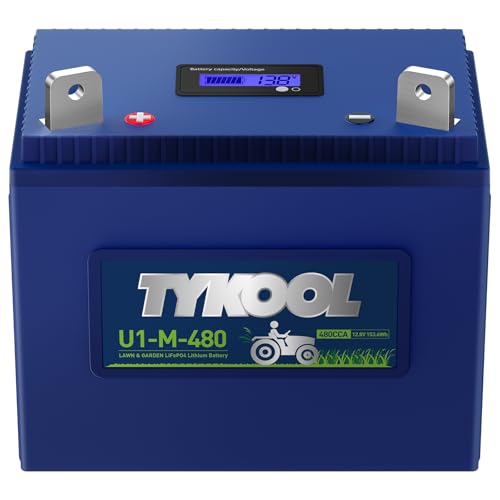
Pros
- 480 CCA provides strong starting power in cold conditions.
- 12Ah capacity and 3000+ cycles offer long-term value.
- Built-in digital display for easy voltage monitoring.
- IP66 waterproof and V0 fireproof construction for durability.
- Eco-friendly, maintenance-free operation.
Cons
- Requires alternator output within 13.8V-14.6V for proper BMS function.
- Not compatible with some compact battery trays (e.g., 725-17335).
- Premium upfront cost compared to lead-acid batteries.
The TYKOOL 480CCA 12Ah LiFePO4 lawn mower battery is a modern upgrade for homeowners who rely on gas-powered lawn tractors. Designed as a direct replacement for Group U1 batteries, it fits popular brands like John Deere, Cub Cadet, Craftsman, and Troy-Bilt. This lithium battery is ideal for those who want reliable starting power without the hassle of maintenance or acid spills.
Based on product specifications, the 480 cold cranking amps deliver strong starting performance, even on chilly spring mornings when lead-acid batteries often struggle. The 12Ah capacity provides 50% more energy than entry-level models, handling frequent restarts and electronic accessories with ease. With over 3000 charge cycles, users can expect up to a decade of service, making it a cost-effective choice for regular mowing.
The built-in digital display shows real-time voltage and energy levels, giving homeowners confidence in their battery's health. The smart BMS offers five-layer protection, including overcharge, discharge, heat, short-circuit, and balance protection. The IP66-rated waterproof and V0 fireproof housing protects against engine heat, high-pressure washes, and damp grass, ensuring durability in harsh outdoor conditions.
Installation is straightforward as a drop-in replacement for standard U1 battery trays. However, it is critical to verify that the alternator output is between 13.8V and 14.6V to ensure BMS compatibility. The battery maintains its charge for months during off-season storage, so no battery tender is needed—just disconnect and store until spring.
One limitation is that this battery is not suitable for some compact battery trays, such as the 725-17335 model. Additionally, the higher upfront cost compared to lead-acid batteries may be a consideration for budget-conscious buyers. However, the long lifespan and zero maintenance can offset the initial investment over time.
Overall, the TYKOOL LiFePO4 battery is a practical upgrade for homeowners seeking reliable starting power, long cycle life, and eco-friendly operation. It is especially well-suited for those who want to eliminate acid corrosion and reduce environmental waste. Just ensure compatibility with your mower's charging system before purchasing.
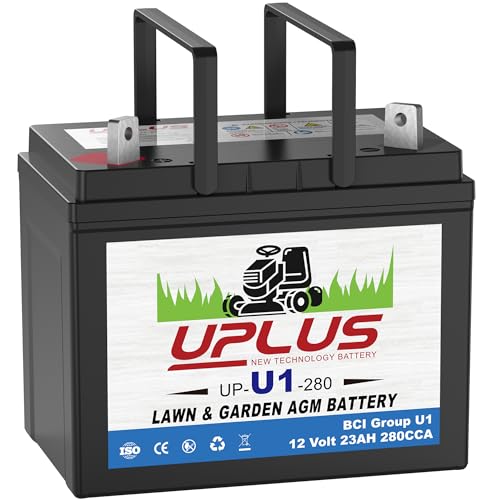
Pros
- Maintenance-free design – no water refills or acid spills, perfect for homeowners who prefer low upkeep.
- Strong cold cranking amps (280 CCA) for reliable starting even in harsh winter conditions.
- Durable AGM construction resists vibration and leaks, ideal for rough terrain and frequent use.
- Wide compatibility with major riding mower brands simplifies replacement decisions.
Cons
- Rated only 23Ah – may have shorter runtime for electric accessories compared to larger batteries.
- Heavier than some lithium alternatives (14.1 lbs) – may require careful handling during installation.
- Some users may prefer a battery with higher CCA for larger engines or extreme cold climates.
The UPLUS U1 riding lawn mower battery is a sealed lead-acid AGM replacement designed for homeowners who want a reliable, maintenance-free power source for their gas-powered mower. This battery replaces the standard U1 group size (7.68 x 4.92 x 6.93 inches) and fits many popular riding mowers from John Deere, Cub Cadet, Husqvarna, Craftsman, Toro, and others. With 12 volts, 23 amp-hours, and 280 cold cranking amps, it provides enough power to start most lawn tractors and garden tractors reliably, even in cold weather.
In real-world use, the 280 CCA rating ensures strong starting performance down to -22°F, which is a key advantage for homeowners in colder regions. The sealed AGM construction means there is no need to check water levels, no risk of acid spills, and the battery is vibration resistant—important for the bumpy ride of a mowing session. Users can expect a service life of over five years when properly cared for, thanks to the use of 99.99% pure primary lead that improves charge acceptance and reduces internal corrosion.
Durability is a strong point: the calcium-calcium technology lowers the self-discharge rate and minimizes grid corrosion, which helps the battery hold a charge longer during off-season storage. The battery is also leak-proof and can be mounted in various orientations (except inverted). This makes it a practical choice for homeowners who store their mowers in unconditioned garages or sheds.
Installation is straightforward for anyone familiar with basic battery replacement. The terminals are clearly marked: left positive (red) and right negative (black). No extra tools beyond a basic wrench set are needed. The battery weighs 14.1 pounds—similar to other U1 AGM batteries—so lifting it into the tray is manageable for most adults. After connecting the leads, the mower should start right up if the charging system is working properly.
A realistic limitation is the 23Ah capacity, which is standard for this group size but lower than some larger batteries. This means it is best suited for starting and powering basic electrical components (lights, PTO clutch)—not for extended use of high-draw accessories. Some users with large engines or frequent stop-start mowing might prefer a battery with higher CCA, but for most standard riding mowers, this is adequate.
Overall, the UPLUS U1 battery is a solid choice for homeowners seeking a dependable, long-lasting replacement battery. Backed by a 15-month warranty and local after-sales support from a California warehouse, it offers peace of mind. If you are looking for a maintenance-free option that handles cold starts and resists vibration, this battery is worth considering for your lawn tractor or garden mower.
Diagnosing Lawn Mower Battery Voltage
For a gas riding mower, the quick answer is usually 12 volts nominal. The useful diagnostic answer depends on whether the battery is resting, cranking the starter, or being charged by the mower. Those are different operating conditions, so one reading alone cannot identify every no-start cause. Use the equipment manual as the authority for model-specific limits and test locations.
Why a 12-Volt Battery Reads Above 12 Volts
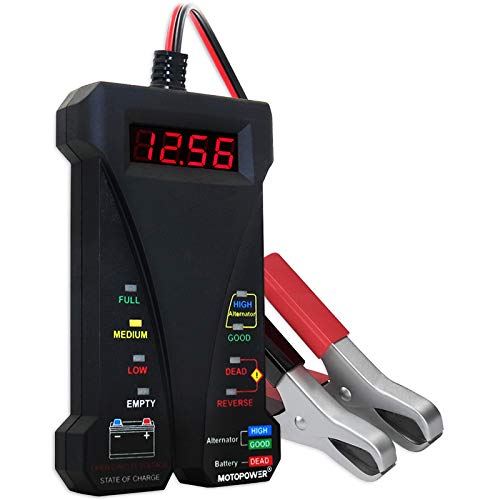
A lead-acid battery is made from cells whose combined voltage is described as a nominal 12V system. When fully charged and rested, its open-circuit voltage commonly measures about 12.6V to 12.8V. A reading near 12.2V indicates substantial discharge, often described as roughly half charged, while a reading below 10.5V can point to a failed or shorted cell. These are useful screening benchmarks, not a substitute for the battery maker’s specifications or a proper load test.
Immediately after charging or running the mower, surface charge can make the meter display more than the settled resting value. Let the battery rest before using the reading to estimate its state of charge, and keep the meter leads on clean battery posts rather than on cable clamps if you want to separate battery condition from connection resistance. Temperature, battery chemistry, and meter accuracy can affect interpretation. A lithium starter replacement may have different voltage behavior and charging requirements, so use its documentation rather than applying lead-acid assumptions.
Taking a Resting Voltage Reading Safely
Park the mower on a level surface, lower the attachment deck, set the brake, remove the key, and keep hands and tools clear of moving parts. Wear eye protection and acid-resistant work gloves when working around lead-acid batteries, and do not test a battery with a cracked case, leakage, swelling, or other visible damage. Set a digital multimeter to DC volts on a range that can display a 12V battery, then touch the red probe to positive and the black probe to negative. Confirm the polarity marks on the case rather than guessing from cable color or terminal position.
Record the reading with the engine off and the battery rested, then compare it with the benchmarks and the manufacturer’s guidance. If the meter shows a negative value, the probes are reversed; remove them and correct the placement without letting the probes bridge the terminals. Do not let a wrench or other metal object connect a post to the mower frame. A short circuit can cause severe burns, sparks, battery damage, or fire.
A low resting result does not automatically mean the battery must be replaced. Recharge it using a charger intended for its chemistry and voltage, following the battery and charger instructions, then allow it to rest and measure again. A battery that returns to a healthy resting range may still fail under starter load, so note whether it cranks strongly or voltage collapses when the key is turned. Avoid high-amp automotive charging settings unless the equipment manufacturer explicitly approves them.
What Cranking Voltage and Clicking Can Tell You
The starter draws much more current than the mower’s small electrical accessories, which is why a battery can show a plausible resting voltage and still struggle to turn the engine. Observe the meter while someone turns the key only if the mower’s operating instructions allow a safe test and all guards and safety systems remain in place. A drop below about 9.6V during cranking is a warning benchmark used in battery diagnosis, but temperature, starter load, and the manufacturer’s test procedure matter. Do not bypass the seat switch, blade control, or starter circuit to obtain a reading.
Rapid solenoid chatter often accompanies voltage that falls too low to hold the solenoid engaged. A single click may instead involve a weak battery, dirty connections, a faulty solenoid, a starter issue, or a mechanical problem. Slow cranking can also result from cable resistance or a poor engine ground. These symptoms narrow the search, but none proves that the battery is the only failed component.
Inspect the battery posts, cable ends, ground connection, and visible wiring for looseness, corrosion, fraying, or heat damage with the key removed. A connection can look intact yet have enough resistance to reduce current under load. Do not use a metal tool to bridge terminals or bypass a solenoid. If connections are clean and secure but the battery voltage collapses under an appropriate test, have the battery load-tested or follow the mower manufacturer’s diagnostic procedure.
Checking Whether the Mower Is Recharging the Battery
A starting battery is replenished by the mower’s charging system after the engine starts. A resting reading that declines again after charging may indicate a battery that cannot retain charge, but it can also mean the stator, voltage regulator, wiring, or a parasitic electrical load needs attention. With the mower operated according to its manual, a running DC reading in the general 13.5V to 14.5V range is a useful charging-system benchmark. Confirm the specified engine speed and measurement points in the service information before treating a result as pass or fail.
Keep probes and clothing away from belts, pulleys, fans, and hot engine parts. Do not reach into the engine compartment while components are moving, and stop if you cannot hold the meter safely or identify the correct test points. A reading below the expected charging range can arise from several faults, while an excessively high reading can also signal a regulator problem. A dealer or small-engine technician can test the stator and regulator when the manual’s checks do not isolate the cause.
If the mower charges correctly but the battery loses charge while parked, inspect accessories and wiring for an unintended draw. Remove the key and follow the manual before disconnecting circuits; do not probe connectors or pull fuses at random. A smart maintainer suitable for the battery chemistry can help during storage, but it should be connected and configured according to its instructions. For a retailer-oriented explanation of replacement sizing, our mower battery sizing and shopping guide offers useful context.
Matching Voltage, Case, Polarity, and Cranking Rating
Do not treat nominal voltage as the only replacement specification. Check the mower’s original battery label and manual for group size, terminal type, polarity, capacity, and minimum cranking rating. Many riding mowers use a Group U1 case, but the U1 and U1R designations can differ in positive-terminal location. Viewed from the labeled side as specified by the battery convention, the positive post may be on the left for one layout and the right for the reverse layout; verify the actual markings and cable arrangement before ordering.
A polarity mismatch can leave factory cables too short or place the positive lead where it could contact the frame. Never stretch cables, swap connections to make them reach, or reverse polarity. Match the terminal hardware too: products may use bolt-through or nut-and-bolt terminals, while some smaller batteries use different connector forms. Check the tray, hold-down, height clearance, and cable length against the old battery, because a nominally correct voltage does not guarantee mechanical compatibility.
Cold Cranking Amps (CCA) describe starting capability under a defined cold-temperature test, and the mower manufacturer’s required rating should guide selection. The products listed here include U1 lead-acid or AGM options with stated ratings of 280, 330, and 360 CCA, as well as a LiFePO4 option listing 480 CCA. Those figures are not interchangeable proof of fit or performance: group size, polarity, chemistry, charging compatibility, and equipment requirements still need checking. More CCA is not a reason to ignore the manual or fit a battery with unsuitable dimensions.
Examples show why labels deserve close attention. The MARXON U1 listing specifies 12V and 280 CCA, with positive-left polarity and stated dimensions of 7.68 by 4.92 by 6.14 inches. The UPLUS U1 330 CCA listing specifies 12V AGM, 25Ah, and positive-left polarity, while its 280 CCA counterpart lists 23Ah and the same terminal orientation. The listed MARXON 330 CCA model also states positive-left polarity; compare each individual product’s dimensions and hardware with the mower rather than assuming every U1 case is identical.
Smaller replacement batteries in the supplied listings illustrate another distinction. The Mighty Max YTX4L-BS is listed as a 12V battery with 50 CCA and negative-left, positive-right polarity, while the Mighty Max ML3-12 is a 12V, 3Ah battery with F1 terminals. Their specifications differ from the larger U1 starting batteries, so they should not be treated as universal riding mower substitutes. Match a replacement to the exact original battery and equipment application.
Lead-Acid, AGM, and LiFePO4 Charging Differences
Flooded lead-acid batteries may require inspection or maintenance as described by their maker, while sealed AGM designs are intended to contain electrolyte without routine water checks. Both remain 12V starter battery types in the products shown, but the correct charger setting must match the battery chemistry. Never open a sealed battery or attempt to repair internal cells. Stop using a battery that is leaking, cracked, or unusually swollen and follow local hazardous-battery handling guidance.
LiFePO4 is a distinct chemistry, not simply a lighter lead-acid battery with the same charging behavior. The TYKOOL listing identifies a 12V Group U1 LiFePO4 starter battery with a built-in display and battery management system, and states that it is recommended for regulated charging systems with alternator output between 13.8V and 14.6V. That specification should be checked against the mower’s actual charging system and the battery’s full instructions before purchase. Do not install it solely because its case is labeled U1 or its stated CCA is higher.
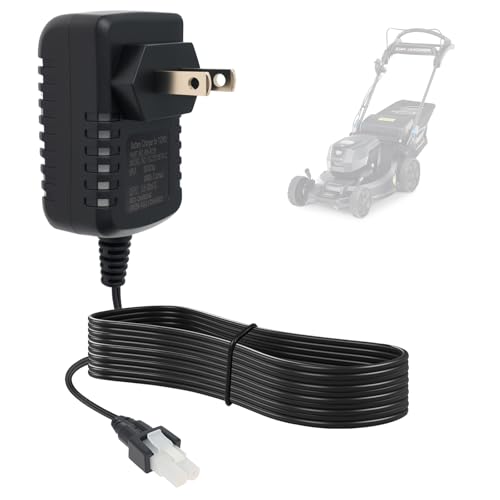
Cordless walk-behind mowers are a different category. Their proprietary 40V, 56V, 60V, or 80V packs are not interchangeable with a 12V starter battery, and voltage must match the exact mower platform and approved pack. Runtime depends in part on capacity and cutting conditions, but the supplied starter battery data does not establish cordless runtime or cross-brand compatibility. Use the original tool maker’s battery and charger compatibility information for those systems.
Safe Jump-Starting and Seasonal Storage
A dead 12V riding mower or zero-turn may sometimes be jump-started using an approved procedure, but consult the mower manual first. If using a passenger vehicle as the donor, its engine must remain OFF while connected to the mower, because a running donor alternator can damage the mower’s stator and voltage regulator. Connect only matching voltage systems and maintain positive-to-positive and negative-to-negative polarity exactly as the equipment instructions specify. Keep sparks, flames, and smoking materials away from lead-acid batteries, which can release explosive gas while charging.
Do not jump a damaged, frozen, leaking, or swollen battery. Wear eye protection and suitable acid-resistant gloves, keep the connection sequence from the manuals, and do not let clamps touch each other or the mower frame. If the prescribed connection points or sequence are unclear, stop and ask a qualified service provider rather than improvising. After a successful start, determine why the battery discharged instead of assuming the jump fixed the underlying problem.
Long periods of disuse can leave a lead-acid battery discharged, and remaining discharged can contribute to sulfation and reduced capacity. Store and maintain it according to the battery maker’s directions, using a compatible smart maintainer rather than an unregulated charger left unattended. Disconnecting a battery for storage may be appropriate when the mower manual permits it; remove the negative cable first and reinstall it last, while preventing tools from contacting the frame and positive post at once. Recycle lead-acid batteries through an authorized collection point instead of placing them in household waste.
The practical starting point is a rested reading, followed by a safe cranking check and a charging-system check if the battery repeatedly goes flat. Confirm nominal voltage, group size, post orientation, and terminal hardware against the mower before replacing anything. A 12V label answers the basic question, but those measurements and fitment details help identify whether the real issue is battery condition, wiring, or charging.




Write Your Review
No reviews yet. Be the first to share your experience!