


Introduction
A mower that clicks but will not crank can turn a simple spring startup into a frustrating delay. If you are asking can you jump start lawn mower battery with a car, the short answer is yes for many 12-volt riding mowers, provided you follow the mower manufacturer’s instructions and keep the donor car’s engine OFF. A running car can expose the mower’s stator and voltage regulator to electrical damage, so this is not a detail to skip. Correct polarity and sound connections matter just as much as the donor source.
First check the mower’s battery label, terminal arrangement, and condition rather than assuming every no-start is a dead battery. A rested 12-volt lead-acid battery near 12.6V to 12.8V is generally charged, while a reading below 10.5V can point to a failed cell; a jump may not fix that failure. Group U1 and U1R batteries can place the positive terminal on different sides, and short factory cables may not reach a reversed layout. For more context, see this guide to mower battery fitment differences and our overview of riding mower starter batteries.
Top Products


Pros
- High purity lead means better performance and longer life than recycled lead batteries
- Maintenance free – no watering or cleaning terminals needed
- Strong cold cranking amps ensure reliable starts even in freezing weather
- Wide compatibility with most U1 group size riding mowers and tractors
- Vibration resistant – holds up to the shaking of mowing rough ground
Cons
- Weight of 14.6 lbs may be heavy for some users to lift and install
- Not suitable for large engines requiring higher CCA than 330
- Limited to U1 group size – verify dimensions fit your mower tray
The UPLUS U1 Riding Lawn Mower Battery is a sealed lead-acid AGM battery designed to replace worn-out batteries in garden tractors and riding mowers. It's best suited for homeowners who want a reliable, maintenance-free power source for their weekend mowing chores. With 12V and 330 cold cranking amps, this battery provides enough power to crank most small to mid-size lawn tractor engines, even on chilly spring mornings.
In real-world use, the battery's high cranking performance helps start engines quickly without hesitation. The AGM design is spill-proof and vibration resistant, which is important for mowers that bounce over uneven lawns. Many users find it works well with popular brands like John Deere, Cub Cadet, Husqvarna, Craftsman, and Toro. The dimensions (7.68 x 4.92 x 6.93 inches) fit standard U1 battery trays, though it's worth double-checking your mower's compartment before purchase.
Build quality appears solid thanks to the use of 99.99% pure primary lead instead of recycled lead. This means more consistent charging and less internal corrosion, which may extend the battery's lifespan. UPLUS states it can last over five years with proper care. The battery is completely sealed, so there’s no need to check water levels or worry about acid leaks onto your garage floor or lawn.
Setup involves removing the old battery, cleaning the terminals, connecting the red positive and black negative cables, and securing the hold-down. It’s a straightforward 10-minute job. There’s no maintenance required afterward, which is a real plus for folks who just want to mow and store their mower. The 15-month warranty and US-based support provide peace of mind if any issues arise.
A limitation to consider is the 330CCA rating – while sufficient for most riding mowers, larger garden tractors with V-twin engines might need a battery with higher cold cranking amps. Also, the 14.6-pound weight is manageable but not feather light, so those with strength concerns may want assistance during installation. This battery is non-spillable and can be shipped safely, but it does contain lead and should be recycled properly at end of life.
Overall, the UPLUS U1 battery is a sensible replacement choice for budget-conscious homeowners with a compatible riding mower. It delivers reliable starting, requires zero upkeep, and comes from a brand with a responsive support team. If your mower needs a fresh battery to get through another mowing season, this sealed AGM option is worth a look.
This UPLUS battery provides 12V and 330 cold cranking amps, which is enough to start most single-cylinder and small V-twin lawn tractor engines. The AGM construction means it can deliver high current bursts even in cold temperatures down to -22°F. The calcium-calcium technology helps reduce self-discharge when the mower sits idle over winter. For daily mowing use, the battery holds its charge well and recharges quickly from the mower’s alternator.
The battery uses 99.99% pure primary lead, which resists grid corrosion better than many recycled lead batteries. The case is sealed and vibration resistant, so it can handle the constant shaking of mowing bumpy lawns. There are no vents or caps to leak acid, making it safe for side mounting positions in some mowers. UPLUS claims a lifespan of over five years in typical use, but actual life depends on climate and charging system health. The 15-month warranty covers defects.

Pros
- Maintenance-free AGM design is ideal for homeowners who prefer a 'set it and forget it' battery without watering or cleaning terminals.
- Strong cold-cranking performance helps with reliable startup on chilly spring or fall mornings.
- Wide compatibility with leading mower brands makes it an easy replacement for many popular models.
- Leak-proof and vibration-resistant construction adds durability for rough yard conditions.
- Includes a 15-month warranty, providing extra peace of mind for budget-conscious buyers.
Cons
- The 26Ah capacity may be limiting for larger lawn tractors with high electrical demands, such as those with multiple accessories or electric PTO.
- While the terminal layout is standard (left positive, right negative), some users may need to check fitment carefully for their specific mower model.
- Periodic charging is required if the mower sits idle for extended periods to avoid deep discharge damage - a common need for all lead-acid batteries.
The UPLUS U1 riding lawn mower battery is a practical replacement option for homeowners who own garden tractors or ride-on mowers. As a sealed AGM (absorbent glass mat) battery, it is specifically built to deliver reliable starting power for your equipment without the hassle of traditional flooded batteries. This type of battery is best suited for anyone looking for a maintenance-free solution - whether you're a first-time mower owner or a seasoned homeowner who simply wants to replace a tired battery with something dependable.
In terms of real-world performance, the battery's 360 cold cranking amps (CCA) and 12-volt design provide enough punch for most standard riding mower engines. The description highlights strong low-temperature starting ability, which can be a huge plus for those early spring mornings when temperatures can still dip near freezing. The calcium-calcium technology also helps reduce self-discharge, meaning the battery may hold its charge better when stored in the garage or shed between cuts. While this isn't a battery designed for electric mowers, it is a solid fit for the gas-powered riding mowers that dominate suburban and rural lawns.
Build quality appears solid based on the materials and manufacturing details. The use of 99.99% pure primary lead is a notable feature, as it can improve charging efficiency and reduce the release of toxic fumes compared to recycled lead. The AGM construction is sealed, so there are no water levels to check, no spills, and no leaks. The battery is also described as vibration resistant, which is important because riding mowers constantly shake as they cross bumpy ground, flower beds, and uneven terrain around your yard.
Setup is straightforward for most mowers. The compact U1 form factor measures 7.68 inches long, 4.92 inches wide, and 6.93 inches high, and the terminal layout is left positive and right negative. You'll simply remove the old battery, connect the new one (red to positive, black to negative), and secure it in the tray. Maintenance is minimal, but the product description includes a note about avoiding deep discharge. If you leave your mower parked for several weeks, it's a good idea to hook it up to a trickle charger or at least check the voltage to ensure the battery doesn't drop too low.
One realistic limitation is the battery's 26Ah capacity. For most small to mid-size riding mowers, this is plenty. However, if your tractor has heavy electrical accessories like a powerful electric PTO, LED light bars, or a high-output charging system, you might want to confirm that 26Ah meets your needs. Also, while compatibility extends to major brands such as John Deere, Cub Cadet, Husqvarna, Craftsman, and Toro, it's always wise to double-check your owner's manual or measure the battery tray and terminal orientation before purchasing.
Overall, the UPLUS U1 offers a balanced set of features for the price. It brings a trusted chemistry, durable construction, and a generous 15-month warranty, which suggests the manufacturer stands behind the product. If you're a suburban homeowner or a rural property owner who needs a dependable replacement battery for a gas-powered riding mower or lawn tractor, this is a sensible choice that should let you get back to mowing without fuss.
Because this is an AGM battery, regular maintenance is minimal. There is no need to check electrolyte levels, add water, or clean up acid spills. The sealed design also means you can mount it in any orientation that fits your mower, as long as it's secure.
Still, all lead-acid batteries benefit from a little attention. If you store your riding mower for the winter or leave it sitting for more than a month, consider attaching a smart trickle charger to keep the battery topped off. The product description warns that deep discharge can damage the battery, and that's a real concern for seasonal equipment.
Every now and then, check the battery terminals for corrosion. Even with a sealed battery, dirt and moisture can build up. A quick wipe with a dry cloth or a wire brush keeps the connection clean. Make sure the battery is held down securely to avoid excess vibration, which could shorten its lifespan. With these small habits, the UPLUS U1 should provide years of reliable starting power for your lawn tractor.

Pros
- Maintenance-free and leak-proof design reduces routine upkeep
- Shockproof material withstands vibration and heat better than traditional batteries
- Wide compatibility with many popular riding mower and tractor brands
Cons
- Some users may find the 360CCA rating slightly lower than OEM batteries for larger engines
- Dimensions may require checking fitment for non-standard battery trays
- Limited to 12V systems; not suitable for higher voltage equipment
For homeowners who rely on a riding mower or lawn tractor to keep their yard looking sharp, a dependable battery is just as important as a sharp blade. The MARXON U1 Riding Lawn Mower Battery is a 12-volt sealed lead acid (SLA) battery with 360 cold cranking amps (CCA). It's designed to fit a wide range of popular mower models from John Deere, Craftsman, Cub Cadet, Toro, Husqvarna, and many others, making it a versatile replacement option for suburban and rural property owners alike.
When it comes to real-world performance, the 360 CCA rating provides enough power to start most single-cylinder and small V-twin engines found on typical residential riding mowers and garden tractors. The battery's shockproof material helps it handle the vibration and heat that come with regular mowing, especially during hot summer months. According to the product description, the sealed design is maintenance-free, meaning you won't need to check water levels or add acid - just install it and get back to mowing. For those who prefer a no-fuss setup, this can be a practical time-saver.
Build quality appears solid for a budget-friendly battery. The patented alloy construction aims to resist corrosion and prevent leaks, which is important when storing the battery in a garage or shed over the winter. The compact U1 size (7.68 x 4.92 x 6.14 inches) and 15-pound weight make it easy to lift into place, even for those who may not be mechanically inclined. Polarity is clearly marked (positive on left, negative on right), reducing the chance of hooking it up backward.
Installation is straightforward for anyone comfortable with basic battery connections. The listing includes the battery and screws, so you may need to reuse your existing cables or terminal hardware. Storage is typical for a lead-acid battery - keep it charged during off-season months to prolong its life. Maintenance is nearly zero thanks to the sealed design, though periodic cleaning of the terminals to prevent corrosion is always a good idea.
One realistic limitation is that 360 CCA may not be sufficient for larger engines or extreme cold weather starting. Some users might find that their original equipment battery had a higher CCA rating, especially for commercial-grade zero-turn mowers. It's worth checking your mower's specifications before purchasing to ensure compatibility. Also, while the compatibility list is extensive, it's always smart to measure your battery tray to confirm the U1 dimensions will fit.
Overall, the MARXON U1 battery is a solid, affordable option for homeowners looking to replace a worn-out battery in their riding mower or garden tractor. It offers a balance of reliability, easy maintenance, and broad compatibility at a reasonable price point. If you're a budget-conscious shopper or a first-time mower owner who wants a straightforward replacement without the premium cost of some brand-name batteries, this one is worth considering.
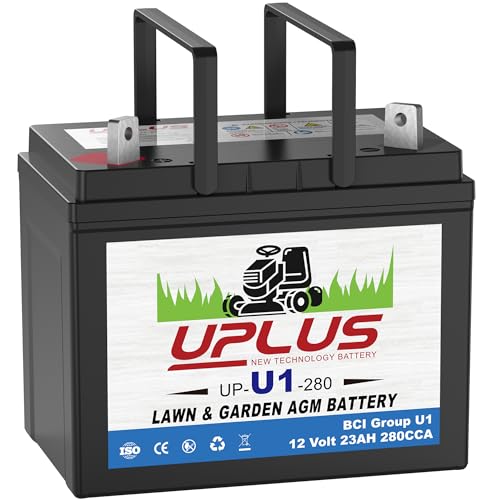
Pros
- Maintenance-free design – no water refills or acid spills, perfect for homeowners who prefer low upkeep.
- Strong cold cranking amps (280 CCA) for reliable starting even in harsh winter conditions.
- Durable AGM construction resists vibration and leaks, ideal for rough terrain and frequent use.
- Wide compatibility with major riding mower brands simplifies replacement decisions.
Cons
- Rated only 23Ah – may have shorter runtime for electric accessories compared to larger batteries.
- Heavier than some lithium alternatives (14.1 lbs) – may require careful handling during installation.
- Some users may prefer a battery with higher CCA for larger engines or extreme cold climates.
The UPLUS U1 riding lawn mower battery is a sealed lead-acid AGM replacement designed for homeowners who want a reliable, maintenance-free power source for their gas-powered mower. This battery replaces the standard U1 group size (7.68 x 4.92 x 6.93 inches) and fits many popular riding mowers from John Deere, Cub Cadet, Husqvarna, Craftsman, Toro, and others. With 12 volts, 23 amp-hours, and 280 cold cranking amps, it provides enough power to start most lawn tractors and garden tractors reliably, even in cold weather.
In real-world use, the 280 CCA rating ensures strong starting performance down to -22°F, which is a key advantage for homeowners in colder regions. The sealed AGM construction means there is no need to check water levels, no risk of acid spills, and the battery is vibration resistant—important for the bumpy ride of a mowing session. Users can expect a service life of over five years when properly cared for, thanks to the use of 99.99% pure primary lead that improves charge acceptance and reduces internal corrosion.
Durability is a strong point: the calcium-calcium technology lowers the self-discharge rate and minimizes grid corrosion, which helps the battery hold a charge longer during off-season storage. The battery is also leak-proof and can be mounted in various orientations (except inverted). This makes it a practical choice for homeowners who store their mowers in unconditioned garages or sheds.
Installation is straightforward for anyone familiar with basic battery replacement. The terminals are clearly marked: left positive (red) and right negative (black). No extra tools beyond a basic wrench set are needed. The battery weighs 14.1 pounds—similar to other U1 AGM batteries—so lifting it into the tray is manageable for most adults. After connecting the leads, the mower should start right up if the charging system is working properly.
A realistic limitation is the 23Ah capacity, which is standard for this group size but lower than some larger batteries. This means it is best suited for starting and powering basic electrical components (lights, PTO clutch)—not for extended use of high-draw accessories. Some users with large engines or frequent stop-start mowing might prefer a battery with higher CCA, but for most standard riding mowers, this is adequate.
Overall, the UPLUS U1 battery is a solid choice for homeowners seeking a dependable, long-lasting replacement battery. Backed by a 15-month warranty and local after-sales support from a California warehouse, it offers peace of mind. If you are looking for a maintenance-free option that handles cold starts and resists vibration, this battery is worth considering for your lawn tractor or garden mower.
Jump-Starting a 12-Volt Mower from a Car
Yes, a 12-volt riding mower or zero-turn can often receive a jump from a car battery, but the car engine must remain OFF throughout the connection and starting attempt. The car battery supplies a 12-volt source; the running car’s alternator can create electrical conditions that risk damaging the mower’s charging stator and voltage regulator. This guidance applies to 12-volt starter systems, not proprietary high-voltage cordless mower packs. Check the mower manual first, because manufacturer instructions take precedence and some equipment may specify a different procedure.
A portable 12-volt jump pack is another possible source if its manufacturer permits use with lawn equipment. The listed BOOKOO 4500A 12V Portable Car Battery Jump Starter is described as suitable for tractors and lawnmowers, but the product description does not replace the mower manual’s instructions. Its stated 12-volt application is relevant; its large engine-starting claims do not establish that every mower connection or procedure is appropriate. Confirm that the pack is charged and use only its supplied cables and instructions.
Check the Battery Before Connecting Cables
Park the mower and car on stable ground, set the mower controls as the manual directs, remove the key, and keep blades disengaged. Do not jump a battery that is cracked, swollen, leaking, unusually hot, or otherwise visibly damaged. Lead-acid batteries can release explosive gas, so keep flames, cigarettes, and sparks away from the battery area. Wear eye protection and acid-resistant work gloves, and avoid leaning over the battery while making connections.
Inspect the battery case, posts, cables, and ground connection before reaching for jumper leads. A loose or corroded connection can cause a rapid solenoid chatter that sounds like a weak battery, while a damaged cable can prevent current from reaching the starter. Stop if the terminals are badly damaged or the battery appears unsafe to handle. Do not try to revive a frozen, leaking, or physically compromised battery with a jump.
Identify positive and negative from the molded symbols or labels, not from cable color alone. On many mower batteries the red cable is positive, but confirm both ends and the manual. Group U1 commonly has positive on the left when viewed from the label side, whereas U1R reverses the positive terminal position; the mower’s own cable placement determines what fits. A reversed connection can damage wiring, fuses, or electrical components, so do not force a lead onto a terminal based on appearance.
Make the Connection with the Donor Engine Off
Keep the car’s ignition off and its engine stopped. Connect positive to positive, then connect the negative lead to the mower’s designated negative point or ground location as specified by the mower manual. Follow the jumper pack or vehicle manual for the exact connection points and sequence; if those directions conflict with a general description, follow the manufacturer. Keep clamp jaws from touching each other or metal parts that could create an unintended short.
Make sure the clamps are secure without twisting or levering delicate mower terminals. Do not let cables cross moving parts, hot surfaces, or sharp edges. Once connected, attempt to start the mower as the manufacturer directs, without running the donor car engine. If it does not crank, stop rather than repeatedly making long attempts that heat cables or the starter circuit.
After the attempt, disconnect the leads in the reverse order specified by the instructions and keep the clamps separated. Do not remove a cable by pulling on its wire. If you see sparks beyond what the equipment instructions describe, smell burning insulation, or notice heating, stop and separate yourself from the equipment; do not continue troubleshooting around a potentially damaged circuit. A successful start is not proof that the mower battery or charging system is healthy.
What a Successful Jump Does and Does Not Prove
If the engine cranks after a jump, the battery may have been discharged, but the cause of discharge remains unknown. Winter storage, a charging fault, a parasitic electrical draw, or a battery nearing the end of its service life can all leave too little reserve for cranking. A jump provides temporary starting assistance; it does not restore lost battery capacity or repair damaged plates. If the battery repeatedly needs help, investigate rather than treating each jump as a permanent fix.
A mower may also start and then fail again if the battery cannot accept or retain charge. Some lawn tractors recharge their starter battery through an engine charging circuit, but a jump itself does not verify that circuit. Do not assume that mowing for a short time will recover a deeply discharged battery. A suitable charger and the battery manufacturer’s directions are the safer route for a battery that needs a full recharge.
Separate a Weak Battery from Other No-Start Causes
Read Resting Voltage Before Repeating the Jump
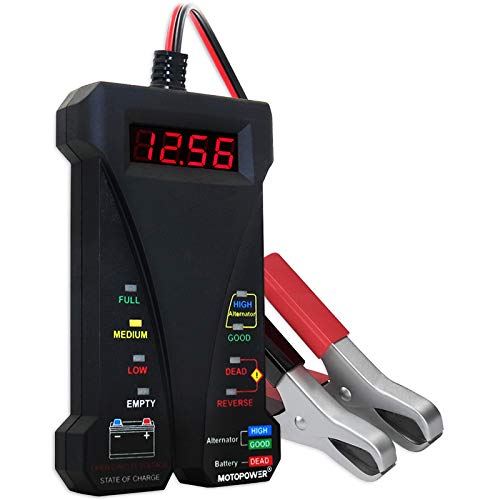
A digital multimeter can help distinguish a discharged battery from other faults. With the mower off and the battery rested, set the meter to DC voltage and place the red probe on positive and the black probe on negative. A reading around 12.6V to 12.8V generally indicates a fully charged lead-acid battery; around 12.2V suggests substantial discharge. Readings depend on battery condition and measurement circumstances, so voltage alone cannot establish how much cranking capacity remains.
A reading below 10.5V can indicate a dead or compromised cell, and a jump may not make that battery dependable. A surface reading can also look acceptable while voltage collapses as the starter draws current. If you know how to measure safely, compare the resting voltage with the reading during a brief crank attempt, keeping probes and hands clear of moving parts. A substantial drop supports further battery or connection diagnosis, but do not treat one reading as a definitive load test.
Rapid clicking often occurs when voltage falls too low for the solenoid to stay engaged, but poor terminal contact or a weak ground can produce similar behavior. A single click can point to a solenoid, starter, or connection problem as well as a weak battery. Silence may indicate a control-circuit issue, a fuse, or a safety condition, not necessarily a failed battery. Never bypass seat, brake, or blade safety switches to force a start.
Inspect Cables, Grounds, and Terminal Orientation
With the mower off and the key removed, look for loose clamps, corrosion, frayed cable insulation, or a ground connection that is no longer secure. Follow the manual before touching or cleaning terminals. For battery removal, disconnect the negative cable first; for installation, connect positive first and negative last, while ensuring tools cannot bridge a terminal to the frame. Eye protection and acid-resistant gloves are prudent around lead-acid batteries, even when the case appears intact.
Terminal geometry is a practical fit issue, not a cosmetic difference. The supplied UPLUS Group U1 listings specify positive on the left and negative on the right, while the MARXON listing also specifies positive on the left and negative on the right. The product information does not establish compatibility with every mower or every terminal hardware style. Check the factory battery label, case dimensions, terminal positions, mounting arrangement, and cable reach before ordering a replacement.
A battery can be the right nominal voltage and still be wrong for the tray or cables. The listed UPLUS units are Group U1 and each has stated dimensions of 7.68 by 4.92 inches at the base, with height listed at 6.93 inches; the MARXON listing gives 7.68 by 4.92 by 6.14 inches. Confirm the actual compartment and hold-down clearance against the product listing and mower manual. Do not stretch cables, swap polarity, or leave the battery unsecured to make an incompatible unit work.
After the Mower Starts, Check Why the Battery Went Flat
Verify Charging-System Output Safely
A mower charging circuit may include a stator and voltage regulator, and a fault can leave a recently jumped battery discharged again. A general diagnostic benchmark for a 12-volt mower system is approximately 13.5V to 14.5V DC at full operating throttle, but consult the specific service manual for the correct test conditions and limits. Do not probe near belts, fans, or other moving components, and do not attempt a running test if you cannot hold the meter securely and safely. If the reading is outside the model’s stated range, a qualified repair provider can isolate the stator, regulator, wiring, and connections.
Testing at the battery posts is useful only when the probes make solid contact and the meter is set correctly. A low running reading can reflect a charging fault, but it can also result from loose wiring, poor ground, or an incorrect test setup. Disconnecting components or probing an unfamiliar connector can cause damage, so use the mower’s wiring diagram and service procedure rather than guessing. A jump should not be repeated as a substitute for identifying why charging is absent.
If the mower starts but will not keep running, the battery may not be the only concern. Inspect visible wiring and fuses only as the manual permits, and avoid bridging terminals or bypassing switches. A persistent no-charge condition, burnt smell, melted connector, or repeated blown fuse warrants professional diagnosis. For a broader overview of battery sizing and replacement choices, this lawn mower battery sizing and retail guide can help with the next step.
Choose a Replacement for the Actual Mower
Replacement decisions should follow the mower manual’s voltage, group size, polarity, and minimum cranking requirements. Cold Cranking Amps (CCA) describe a battery’s ability to supply starting current under cold conditions; more is not a substitute for correct dimensions, polarity, or terminal hardware. The listed UPLUS options include Group U1 AGM batteries rated at 280, 330, and 360 CCA, and the MARXON Group U1 listing specifies 360 CCA. Those specifications describe the products, not a universal recommendation for every engine.
The UPLUS listings identify sealed AGM construction and maintenance-free use. AGM can be a sensible choice where a sealed design is wanted, but the label and manual still need to match the mower’s electrical and physical requirements. The MARXON listing describes a sealed lead-acid battery and names a range of mower models as compatible; verify the exact model and dimensions rather than relying on a broad brand list. A brand appearing in a compatibility list does not confirm every model or year.
For the jump source, the BOOKOO portable unit is specifically listed as a 12-volt jump starter for lawnmowers and tractors, with smart cables and safety protections described by its manufacturer. Its description advises maintaining charge during storage and says to have the unit above half charge before starting a car; follow the manual for mower use and pack charging. A portable pack avoids positioning a car beside the mower, but it still requires correct polarity and the stated equipment procedure. Do not use a 12-volt starter jump pack on a 40V, 56V, 60V, or 80V cordless mower battery system.
Prevent Another Dead-Battery Startup
Lead-acid batteries gradually lose charge during storage, and a battery left discharged can suffer sulfation that reduces its ability to deliver starting current. Keep the battery maintained according to its manufacturer’s instructions, using a charger or maintainer designed for its chemistry and voltage. An unregulated trickle charger left connected indefinitely is not interchangeable with a smart maintainer. Do not use a charger setting or current beyond the battery maker’s guidance.
Before off-season storage, inspect the case and cables, keep the battery in a suitable location, and follow the mower manual on whether to disconnect it. If removing it, disconnect negative first and protect the terminals from accidental contact. Reconnect positive first and negative last when reinstalling, confirming polarity before tightening. Never store or charge a damaged battery indoors or ignore signs of leakage, swelling, or overheating.
A battery that loses charge again soon after a proper recharge deserves a charging-system and draw check. A repair shop can test battery capacity under load and inspect the starter circuit if meter readings and connections do not reveal the problem. If the mower starts reliably after a jump but the charging output is questionable, verify it against the model’s service information before replacing parts. Keep the donor vehicle engine off during every car-to-mower jump, and replace the battery only after confirming the required size, polarity, and cranking rating.





Write Your Review
No reviews yet. Be the first to share your experience!