


A riding mower that clicks, cranks slowly, or goes silent at the key can have a weak battery, but those symptoms don’t prove the battery itself has failed. Loose or corroded connections, a poor ground, a starter circuit fault, or a charging problem can produce similar trouble. A few careful checks help narrow the cause before you buy a replacement or spend time on the wrong repair.
To answer how do i know if my riding mower battery is bad, compare its resting voltage with its behavior under starting load, then check whether the mower recharges it. A fully charged 12-volt lead-acid battery typically rests around 12.6V to 12.8V; a reading near or below 12.2V indicates substantial discharge, while a reading below 10.5V can point to a failed cell. Those figures are clues, not a substitute for the mower and battery maker’s instructions. For replacement context, see this riding mower battery selection guide and our overview of mower battery fit and compatibility.
Top Products

Pros
- Amusing design that sparks conversations among lawn care fans
- Comfortable lightweight fabric suitable for warm-weather wear
- Classic fit with reinforced seams for durability
- Affordable price point for a novelty gift
Cons
- Limited to black color and small size only - may not suit all preferences
- Design is specific to zero-turn mower owners - less appealing to others
This t-shirt is a fun nod to anyone who takes pride in their zero-turn riding lawn mower. The 'This Is How I Roll' slogan paired with a mower graphic is perfect for homeowners, suburban lawn owners, or rural property owners who spend Saturday mornings cutting grass. It's not a piece of outdoor power equipment itself, but it shows off your lawn care passion in a lighthearted way.
The shirt is made from lightweight material with a classic fit, making it comfortable for casual wear. The double-needle stitching on the sleeves and bottom hem adds durability, so it holds up well after repeated washing. Many users may appreciate the soft feel and breathable fabric, especially during warmer months when you're out in the yard or at a backyard barbecue.
Based on the product description, this shirt comes in black and size small. That limited sizing and color option may not work for everyone, but it can still be a great gift for a friend or family member who loves their zero-turn mower. The design is simple and humorous, likely to get a chuckle from fellow lawn care enthusiasts.
As a novelty item, it's not meant for heavy-duty work, but it's fine for light outdoor tasks or just relaxing after mowing. The shirt is easy to care for - just machine wash and tumble dry low. If you're looking for a unique present for a gardener, landscaping professional, or budget-conscious shopper who enjoys yard work, this t-shirt fits the bill.
Keep in mind that this is apparel, not a mower accessory. It won't improve cutting performance or reduce maintenance time, but it will add a smile to your mowing routine. For those who already own a zero-turn mower or dream of one, this shirt is a playful way to express that 'this is how I roll' attitude.

Pros
- Humorous design appeals to mower lovers
- Comfortable and lightweight for warm-weather wear
- Durable construction with double-needle stitching
Cons
- Limited to women's sizes, may not fit all body types
- Design may not appeal to those outside lawn care circles
- Only available in black color option
This t-shirt is a novelty apparel item designed for women who enjoy zero-turn riding mowers or have a sense of humor about lawn care. It's a lightweight, classic-fit tee that showcases a funny quote: 'This is how I roll - zero turn riding lawn mower.' If you're looking to express your love for mowing or need a gift for a lawn care enthusiast, this shirt may be a good pick.
The shirt is made with a lightweight fabric, making it comfortable for warm days spent in the yard or garage. The classic fit offers a relaxed silhouette, and the double-needle stitching on the sleeves and hem helps improve durability. Many users appreciate the soft feel and breathable material for casual wear.
In terms of design, the black color is versatile and easy to pair with jeans or shorts. The printed quote is clear and centered, adding a playful touch without being overly flashy. For women who take pride in their zero-turn mower or enjoy yard work, this shirt may spark conversations and smiles.
Keep in mind that this is a standard t-shirt, not a performance or moisture-wicking garment. It's best suited for casual settings rather than heavy physical activity. The shirt is available in women's sizes, so it's important to check the size chart to ensure a proper fit.
Overall, this t-shirt offers a fun way to celebrate your lawn care hobby. It's an affordable and lighthearted addition to any wardrobe, especially for those who appreciate a good mower joke or want to show off their zero-turn pride.
Diagnosing a Riding Mower Battery That May Be Bad
A battery is suspect when it is properly charged, has clean and secure connections, yet cannot supply enough current to crank the engine or quickly loses charge again. Confirming that pattern matters: replacing a sound battery won’t repair a defective starter solenoid, damaged cable, or charging system. Use a digital multimeter for initial checks, and treat a professional load test as a useful next step if the voltage readings are inconclusive.
Start with symptoms, not a replacement guess
Rapid clicking often means the starter solenoid is receiving too little voltage to stay engaged. A discharged battery can cause that, but so can corrosion, a loose terminal, or a poor ground connection that restricts current. Slow, labored cranking also raises suspicion of low battery capacity, though a failing starter or mechanical resistance can create similar behavior.
A single click with no crank is less specific. It can come from the solenoid, starter motor, battery cables, or an interlock or ignition-circuit problem. Silence may mean the battery is deeply discharged, but it can also reflect a blown fuse, an open connection, or a safety switch preventing the start circuit from operating.
Notice whether the headlights or dash indicators dim sharply during an attempted start, if the mower has them. A major drop under load supports a battery or high-resistance connection problem, but it does not identify the failed component by itself. Don’t bypass seat, brake, or blade-control safety switches to test a theory; use the owner’s manual and have an uncertain circuit diagnosed safely.
Inspect the case, terminals, and ground path
Before using a meter, look for a cracked, swollen, leaking, or unusually hot battery. Stop work if the case is damaged or acid is leaking, and follow the manufacturer’s handling and disposal guidance. Wear eye protection and acid-resistant gloves around lead-acid batteries, keep sparks and flames away, and work in a ventilated area because charging batteries can release gas.
Check that both terminals are secure and free of heavy corrosion, and follow each cable to its other connection. A clean-looking battery post doesn’t rule out corrosion between the cable and post or a loose frame ground. A terminal that moves by hand, a frayed cable, or a loose ground can interrupt starter current and imitate a failing battery.
If cleaning or removal is needed, consult the mower manual and keep tools from bridging a terminal to the frame. Disconnect the negative cable first, then the positive; reconnect the positive first and the negative last. Maintain correct polarity, positive to positive and negative to negative, and don’t scrape, strike, or short battery terminals.
Measure resting voltage after charging and resting
Set a digital multimeter to DC volts in a range that includes 12 volts. With the mower off and the battery isolated from charging, place the red probe on the positive terminal and the black probe on the negative terminal. Make firm contact with the metal posts, not a corroded cable clamp, and avoid letting the probes touch each other.
Allow a recently charged battery to rest before interpreting its open-circuit reading, since surface charge can make the number look higher than its lasting condition. Around 12.6V to 12.8V is a typical fully charged resting range for a 12-volt lead-acid battery. A reading around 12.2V suggests substantial discharge, often described as roughly half charged, and should prompt charging before a failure verdict.
A reading under 10.5V after appropriate charging is a serious warning sign for a shorted or failed cell, especially if it remains low rather than recovering. It is not sensible to keep attempting starts with a battery in that state. Readings depend on chemistry, temperature, charge history, and the battery maker’s specifications, so use the supplied chart for the exact battery when available.
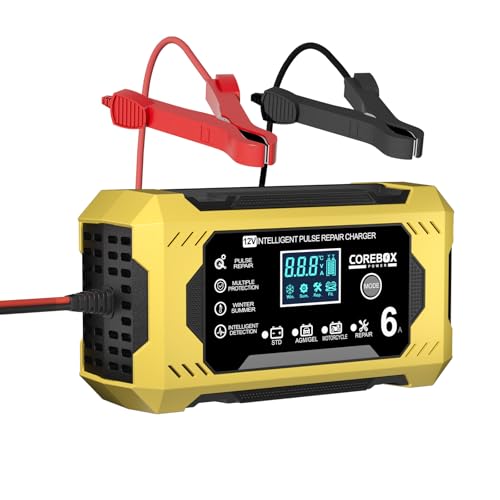
Do not assume a low reading means the battery is permanently bad. A battery left unused over winter may simply be discharged, while repeated deep discharge can cause lead-plate sulfation and lasting capacity loss. Charge it only with a charger approved for its chemistry and voltage, at the maker’s specified settings, then repeat the resting check.
Check voltage while the starter is engaged
A resting reading shows charge state, not how well the battery can deliver starter current. If the battery is charged and connections are sound, observe the meter across the battery terminals while another person turns the key briefly, with the mower secured according to its manual. Keep hands, clothing, and meter leads clear of belts, blades, and other moving parts.
A sharp voltage collapse during cranking suggests the battery may lack usable capacity, but weak cables, a poor ground, or an unusually demanding starter can also pull voltage down. A commonly used diagnostic reference is about 9.6V minimum during cranking under appropriate test conditions; temperature and the equipment maker’s procedure matter. Treat a lower reading as a reason to investigate further, not as proof of one particular failed part.
If the meter stays relatively steady but the starter does not turn, shift attention toward the solenoid, starter, ignition circuit, and safety interlocks rather than declaring the battery bad. A technician can use a load tester and voltage-drop checks to distinguish a weak battery from resistance in the positive cable or ground path. Avoid probing unknown terminals or bridging solenoid posts, which can cause a short, unexpected movement, or injury.
Separate battery failure from a charging fault
If a charged battery starts the mower but is low again after mowing, the battery may be unable to retain charge, or the mower may not be replenishing it. A faulty stator or voltage regulator can leave a good battery undercharged. An electrical draw while parked can also drain it, so the sequence of events and a charging-system check matter.
Where the manufacturer provides a test procedure, a running DC output in the approximate 13.5V to 14.5V range at full operating throttle is a useful general reference for checking the charging system. The correct test points and acceptable results vary by mower design. Keep the meter leads and hands clear of moving parts, and don’t disconnect the battery while the engine is running as a way to test charging.
Voltage outside the expected range does not automatically mean the stator alone has failed; wiring, connectors, grounds, or the regulator may be involved. Consult the wiring diagram and service instructions for the mower rather than applying a generic pin test. If checks involve exposed engine wiring or unclear readings, a small-engine shop can test the charging circuit without guessing at components.
For a 12-volt mower jump-started from a passenger vehicle, the donor vehicle’s engine must remain OFF. A running car can expose the mower’s stator and voltage regulator to damaging electrical conditions. Follow both manufacturers’ instructions, confirm polarity before connecting, and never use a jump procedure if the battery is frozen, cracked, leaking, or otherwise damaged.
Match a replacement to the mower, not just the symptom
If testing supports replacement, check the mower manual and existing battery label for voltage, group size, terminal arrangement, and required cranking rating. Many riding mowers use a 12-volt starter battery, but size and specifications are not universal. The battery must sit securely in its tray, allow the hold-down to work, and let the cables reach without strain.
BCI Group U1 and U1R batteries can differ in positive-terminal position. Viewed with the label facing the reader, the positive post is commonly on the left for U1 and on the right for U1R; verify the actual battery markings and mower layout rather than relying on that shorthand alone. A reversed layout can leave cables too short or encourage unsafe stretching and incorrect polarity.
Terminal hardware also matters. Some mower batteries use flag-style terminals with bolt holes, while others use different post arrangements, so compare the replacement with the factory cables. Don’t force a cable onto an incompatible terminal or improvise a connection that can loosen or short against the frame.
Follow the engine or mower maker’s minimum Cold Cranking Amps (CCA) requirement. A larger engine, particularly a V-twin, may need a higher cranking rating than a smaller single-cylinder engine, but the equipment specification controls. Selecting by an assumed engine class alone can lead to a mismatch, even if the battery appears to fit physically.
Prevent a repeat after winter storage
Lead-acid batteries lose charge while sitting, and a battery left discharged can develop sulfation that reduces its ability to accept and hold charge. Before seasonal storage, follow the mower and battery instructions for disconnection, cleaning, and charging. A chemistry-compatible smart maintainer can help preserve charge when its maker permits that use; an unsuitable or unregulated charger can overcharge a battery.
Keep the battery clean and secured, and inspect the terminals periodically for looseness or corrosion. If the mower repeatedly needs charging between uses, look for a charging fault or parked electrical draw rather than repeatedly topping up the battery without diagnosis. Note the resting voltage after charging and again later under similar conditions; a persistent decline can help identify a retention or drain problem.
When the meter shows low resting voltage, charge correctly before deciding the battery is spent. If the voltage remains below the expected range, collapses under cranking load, or fails to stay charged despite a verified charging circuit and sound connections, replacement becomes more likely. Match the replacement to the mower’s stated electrical and physical requirements, and arrange proper lead-acid battery recycling through an appropriate local collection point.



Write Your Review
No reviews yet. Be the first to share your experience!