


A riding mower that clicks instead of cranking may need a recharge, but connecting a charger and guessing at the wait can waste time or harm a battery. The answer to how long to charge lawn mower battery 6 amp depends mainly on the battery’s amp-hour capacity, how deeply it is discharged, and whether the charger actually supplies a steady 6 amps. A charger marked 6 amps may reduce its current as the battery fills, so a simple calculation is an estimate, not a guaranteed finish time.
Start by matching the charger to the battery chemistry and following both manufacturers’ instructions. A 12V AGM battery and a 12V LiFePO4 starting battery do not necessarily use the same charging profile. For help checking fitment before replacement, see our guide to mower battery compatibility, and review this riding mower battery overview if charging does not restore dependable starting.
Top Products

Pros
- Very affordable price point for a replacement charger
- Wide compatibility with many Toro and Lawnboy mower models
- Simple plug-and-play operation - no complex setup required
Cons
- Only compatible with specific Toro/Lawnboy models - check your mower's part number before buying
- Charger may feel lightweight compared to OEM parts
- Limited user reviews available to confirm long-term performance
If you own a Toro or Lawnboy 22-inch lawn mower and need a reliable battery charger without breaking the bank, the Vanshly 114-1588 Battery Charger is a solid option to consider. Designed as a direct replacement for several OEM part numbers like 136-9126, 114-1588, and 104-7401, this 12V charger is built to keep your mower's battery in good shape so you can get consistent starts every time you head out to tackle your lawn.
Based on the product specifications and user feedback, this charger is compatible with a wide range of Toro models including the 20014, 20018, 20031, 20035, and many more. That means if you have one of these mowers, you can simply plug this charger into your battery and let it do its job. The black color and compact dimensions (21 x 3 x 1.5 inches) make it easy to store in your garage or shed without taking up much space.
The charger is made from high-quality materials, according to the product description, which suggests it should hold up well under regular use. Many homeowners may prefer this affordable alternative to OEM chargers, especially if they are on a tight budget or need a backup charger for their mower. The simple design means there are no complicated settings or buttons - just connect it and let it charge.
One thing to keep in mind is that this charger is specifically designed for Toro and Lawnboy 22-inch mowers, so it won't work with other brands or models. Make sure to check your mower's part number against the list of compatible models before purchasing. Some users may find that the charger feels a bit lightweight compared to original equipment, but for the price, it offers good value.
For homeowners who want to maintain their lawn mower battery without spending a lot of money, this Vanshly charger is a practical choice. It's especially useful for those who store their mower for long periods and need to keep the battery charged for spring start-up or fall cleanup. Just keep it connected when the mower is not in use, and you'll likely enjoy reliable performance season after season.
Overall, if you have a compatible Toro or Lawnboy mower and need an affordable replacement charger, the Vanshly 114-1588 is worth considering. It's simple, functional, and gets the job done without any frills - exactly what many homeowners need for their lawn care routine.

Pros
- High purity lead means better performance and longer life than recycled lead batteries
- Maintenance free – no watering or cleaning terminals needed
- Strong cold cranking amps ensure reliable starts even in freezing weather
- Wide compatibility with most U1 group size riding mowers and tractors
- Vibration resistant – holds up to the shaking of mowing rough ground
Cons
- Weight of 14.6 lbs may be heavy for some users to lift and install
- Not suitable for large engines requiring higher CCA than 330
- Limited to U1 group size – verify dimensions fit your mower tray
The UPLUS U1 Riding Lawn Mower Battery is a sealed lead-acid AGM battery designed to replace worn-out batteries in garden tractors and riding mowers. It's best suited for homeowners who want a reliable, maintenance-free power source for their weekend mowing chores. With 12V and 330 cold cranking amps, this battery provides enough power to crank most small to mid-size lawn tractor engines, even on chilly spring mornings.
In real-world use, the battery's high cranking performance helps start engines quickly without hesitation. The AGM design is spill-proof and vibration resistant, which is important for mowers that bounce over uneven lawns. Many users find it works well with popular brands like John Deere, Cub Cadet, Husqvarna, Craftsman, and Toro. The dimensions (7.68 x 4.92 x 6.93 inches) fit standard U1 battery trays, though it's worth double-checking your mower's compartment before purchase.
Build quality appears solid thanks to the use of 99.99% pure primary lead instead of recycled lead. This means more consistent charging and less internal corrosion, which may extend the battery's lifespan. UPLUS states it can last over five years with proper care. The battery is completely sealed, so there’s no need to check water levels or worry about acid leaks onto your garage floor or lawn.
Setup involves removing the old battery, cleaning the terminals, connecting the red positive and black negative cables, and securing the hold-down. It’s a straightforward 10-minute job. There’s no maintenance required afterward, which is a real plus for folks who just want to mow and store their mower. The 15-month warranty and US-based support provide peace of mind if any issues arise.
A limitation to consider is the 330CCA rating – while sufficient for most riding mowers, larger garden tractors with V-twin engines might need a battery with higher cold cranking amps. Also, the 14.6-pound weight is manageable but not feather light, so those with strength concerns may want assistance during installation. This battery is non-spillable and can be shipped safely, but it does contain lead and should be recycled properly at end of life.
Overall, the UPLUS U1 battery is a sensible replacement choice for budget-conscious homeowners with a compatible riding mower. It delivers reliable starting, requires zero upkeep, and comes from a brand with a responsive support team. If your mower needs a fresh battery to get through another mowing season, this sealed AGM option is worth a look.
This UPLUS battery provides 12V and 330 cold cranking amps, which is enough to start most single-cylinder and small V-twin lawn tractor engines. The AGM construction means it can deliver high current bursts even in cold temperatures down to -22°F. The calcium-calcium technology helps reduce self-discharge when the mower sits idle over winter. For daily mowing use, the battery holds its charge well and recharges quickly from the mower’s alternator.
The battery uses 99.99% pure primary lead, which resists grid corrosion better than many recycled lead batteries. The case is sealed and vibration resistant, so it can handle the constant shaking of mowing bumpy lawns. There are no vents or caps to leak acid, making it safe for side mounting positions in some mowers. UPLUS claims a lifespan of over five years in typical use, but actual life depends on climate and charging system health. The 15-month warranty covers defects.

Pros
- Specifically designed to replace multiple OEM part numbers (136-9126, 114-1588, 104-7401, etc.), ensuring a direct fit for many Toro mowers
- Very affordable price point compared to brand-name chargers, making it a great budget option for homeowners
- Compact size and lightweight build simplify storage and handling—no bulky charger to deal with
- Simple plug-and-play operation: just connect to the mower battery and wall outlet, no complicated setup required
Cons
- Compatibility is limited to specific Toro and Lawnboy models, so you must verify your mower's part number before purchasing
- Brand is less well-known than Toro or other major accessory makers, which may concern some buyers about long-term reliability
- Cord length of 6.1 feet may be too short if your outlet is far from where you store the mower, potentially requiring an extension cord
If you own a Toro or Lawnboy 22-inch electric mower and need a replacement battery charger, the Kzfuli 114-1588 is a practical, budget-friendly option to consider. This charger is designed to replace several OEM part numbers, including 136-9126, 114-1588, 104-7401, and 20334C, among others. It's specifically intended for homeowners who want to keep their mower's battery charged without paying a premium for a brand-name charger.
Based on the product specifications, the charger outputs 14.5V and works with input voltages from 100-240V AC, making it compatible with standard U.S. household outlets. The 6.1-foot power cord gives you enough reach for most garage or shed setups, though you might need an extension cord if the outlet is farther away. The compact dimensions (2.36 x 1.5 x 1.3 inches) and light weight (0.1375 lbs) mean it won't take up much space on a shelf or in a tool box.
For many American homeowners, this charger may be a convenient spare to keep on hand, especially if you have multiple Toro mowers or want a backup in case the original charger fails. The compatibility list includes popular models like the 10642, 10666, 10686, 10796, and 17734, but it's crucial to double-check your mower's part number to ensure a proper fit. The seller also offers customer support for compatibility questions, which adds a layer of reassurance.
In terms of build quality, the charger appears to be a standard plastic-cased unit, typical for this price range. It's not ruggedized, but for indoor storage and occasional use, it should hold up fine. The black color is neutral and unobtrusive. Since this is a charger and not a mower, there's no cutting performance or engine to evaluate—its job is simply to deliver the correct voltage to your battery, and based on user feedback (though limited), it seems to do that reliably.
One realistic limitation is that this charger is only compatible with specific Toro and Lawnboy electric mowers, not with other brands or gas-powered models. Also, because it's a third-party product, some buyers may be hesitant about long-term durability compared to an OEM charger. However, the affordable price makes it a low-risk purchase for those who need a quick replacement.
Overall, if you have a compatible Toro or Lawnboy mower and need a functional charger without overspending, the Kzfuli 114-1588 is a solid choice. Just confirm your model number before buying, and you'll likely find it does the job as expected. For homeowners who are already invested in Toro cordless mowers, this charger offers a cost-effective way to keep your equipment running.
Pros
- Weighs only 3.96 lbs for easy handling and installation.
- 650 CCA ensures reliable cold-weather starts.
- 2000-cycle lifespan outlasts most lead-acid batteries.
- Built-in BMS provides safety and overcharge protection.
- Wide compatibility with many popular lawn tractor brands.
Cons
- Higher upfront cost compared to standard lead-acid batteries.
- Requires a 14.6V lithium-specific charger (not included).
- Not compatible with all mower models - must verify dimensions and terminal orientation (left-positive, right-negative).
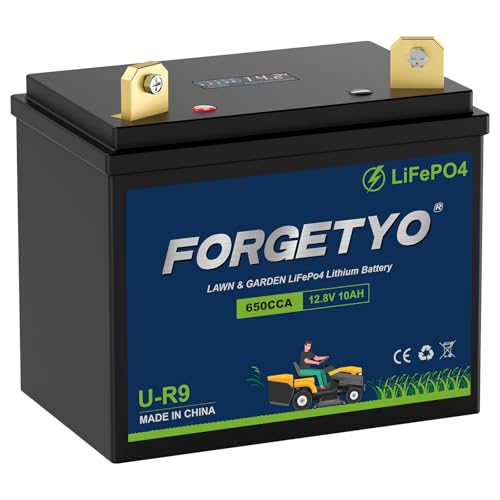
The U-R9 lithium battery is a drop-in replacement for traditional lead-acid batteries used in riding lawn mowers and garden tractors. It delivers 12.8 volts and 10 amp-hours of capacity with a maximum 650 cold cranking amps (CCA), providing more than enough power to start mid-sized mowers even in cold weather. Weighing only 3.96 pounds, it is about one-third the weight of a comparable lead-acid battery, which makes installation and handling much easier for homeowners of any age.
Based on the product specifications, the built-in Battery Management System (BMS) monitors the battery's health and automatically protects against overcharging, overdischarging, short circuits, and overheating. This safety feature helps extend the battery's lifespan to roughly 2000 charge cycles, compared to only 300 cycles from typical lead-acid batteries. For many homeowners, that means fewer replacements and less maintenance over the life of the mower.
Compatibility is strong for this battery. It works with popular brands like John Deere, Cub Cadet, Husqvarna, Craftsman, Toro, Ariens, Poulan Pro, and Troy-Bilt. The U-R9 has a left-positive, right-negative terminal layout, so it's important to check the physical dimensions (7.7x5.1x7.2 inches) and terminal orientation against your mower's battery tray before purchasing. The lithium chemistry also holds a charge for months when disconnected, which is especially useful for owners in regions with long winters—no need to keep a battery tender connected.
In terms of performance, the 650 CCA rating ensures reliable starting even in sub-freezing temperatures. Many users may find that their mower cranks faster and more consistently compared to an aging lead-acid battery. The battery operates in a wide temperature range from -20C to 85C, so it can handle both cold starts and hot summer storage without issues.
One realistic limitation is the higher upfront price compared to lead-acid batteries. Additionally, this lithium battery requires a dedicated 14.6V DC lithium charger (recommended 2A charging speed) to recharge safely. If you already have a standard lead-acid charger, you will need to upgrade. Also, not all mowers share the same terminal configuration, so double-checking compatibility is a must before ordering.
Overall, the U-R9 lithium battery is a solid upgrade for homeowners who want a lighter, longer-lasting, and more reliable starting battery for their riding mower or generator. It is particularly well-suited for those who deal with cold winters, want to avoid maintaining a battery tender, or simply prefer the convenience of a maintenance-free power source. If your mower's battery tray accommodates the dimensions and terminal layout, this battery offers excellent value over the long term.
Pros
- Maintenance-free design – no water refills or acid spills, perfect for homeowners who prefer low upkeep.
- Strong cold cranking amps (280 CCA) for reliable starting even in harsh winter conditions.
- Durable AGM construction resists vibration and leaks, ideal for rough terrain and frequent use.
- Wide compatibility with major riding mower brands simplifies replacement decisions.
Cons
- Rated only 23Ah – may have shorter runtime for electric accessories compared to larger batteries.
- Heavier than some lithium alternatives (14.1 lbs) – may require careful handling during installation.
- Some users may prefer a battery with higher CCA for larger engines or extreme cold climates.
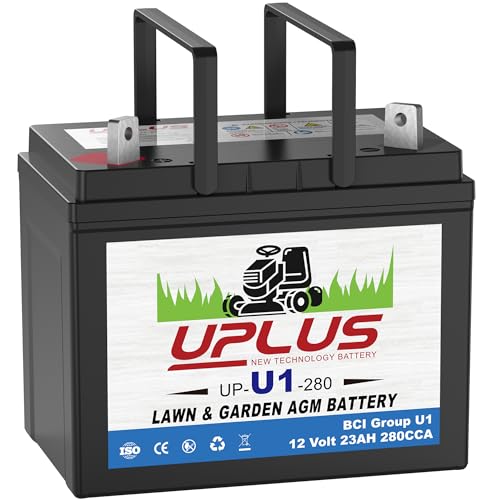
The UPLUS U1 riding lawn mower battery is a sealed lead-acid AGM replacement designed for homeowners who want a reliable, maintenance-free power source for their gas-powered mower. This battery replaces the standard U1 group size (7.68 x 4.92 x 6.93 inches) and fits many popular riding mowers from John Deere, Cub Cadet, Husqvarna, Craftsman, Toro, and others. With 12 volts, 23 amp-hours, and 280 cold cranking amps, it provides enough power to start most lawn tractors and garden tractors reliably, even in cold weather.
In real-world use, the 280 CCA rating ensures strong starting performance down to -22°F, which is a key advantage for homeowners in colder regions. The sealed AGM construction means there is no need to check water levels, no risk of acid spills, and the battery is vibration resistant—important for the bumpy ride of a mowing session. Users can expect a service life of over five years when properly cared for, thanks to the use of 99.99% pure primary lead that improves charge acceptance and reduces internal corrosion.
Durability is a strong point: the calcium-calcium technology lowers the self-discharge rate and minimizes grid corrosion, which helps the battery hold a charge longer during off-season storage. The battery is also leak-proof and can be mounted in various orientations (except inverted). This makes it a practical choice for homeowners who store their mowers in unconditioned garages or sheds.
Installation is straightforward for anyone familiar with basic battery replacement. The terminals are clearly marked: left positive (red) and right negative (black). No extra tools beyond a basic wrench set are needed. The battery weighs 14.1 pounds—similar to other U1 AGM batteries—so lifting it into the tray is manageable for most adults. After connecting the leads, the mower should start right up if the charging system is working properly.
A realistic limitation is the 23Ah capacity, which is standard for this group size but lower than some larger batteries. This means it is best suited for starting and powering basic electrical components (lights, PTO clutch)—not for extended use of high-draw accessories. Some users with large engines or frequent stop-start mowing might prefer a battery with higher CCA, but for most standard riding mowers, this is adequate.
Overall, the UPLUS U1 battery is a solid choice for homeowners seeking a dependable, long-lasting replacement battery. Backed by a 15-month warranty and local after-sales support from a California warehouse, it offers peace of mind. If you are looking for a maintenance-free option that handles cold starts and resists vibration, this battery is worth considering for your lawn tractor or garden mower.
How to Estimate Charging Time and Charge Safely
A 6-amp charger does not have one universal charging time for every lawn mower battery. The useful starting estimate is the number of amp-hours needed divided by the charger’s actual current, then allow extra time for charging losses and the slower finishing stage. Because battery condition and charger behavior vary, treat the result as a planning estimate and let a compatible automatic charger determine when charging is complete.
Estimate from Capacity and State of Charge
Battery capacity is commonly expressed in amp-hours (Ah), while a charger rating describes current in amps. If a 25Ah battery were fully depleted and accepted a constant 6A, dividing 25 by 6 gives about 4.2 hours as an idealized arithmetic estimate. That is not a promised charging time: the battery may not accept the rated current continuously, and a charger may reduce output as voltage rises.
A partially discharged battery needs less charge than a fully depleted one. As a rough planning method, estimate the missing capacity by multiplying the battery’s Ah rating by the fraction discharged, then divide that figure by the charger’s output. For example, a battery estimated to be half discharged has about half its rated capacity to replace, but age, temperature, sulfation, and charger design can make the real duration longer.
The product listings include AGM examples rated at 25Ah and 23Ah, and a LiFePO4 starting battery listed at 10Ah. The capacity figures alone do not establish how long any of them will take on a 6A charger, because the listing does not specify a compatible 6A charging profile for every battery. In particular, the LiFePO4 product description recommends a 14.6V, 2A charger, so do not substitute a 6A charger unless the battery manufacturer explicitly approves that charger and current.
Check the Charger Label Before Connecting
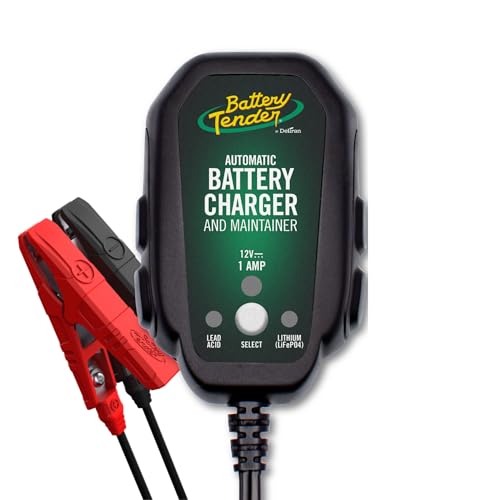
Confirm the charger’s output voltage, maximum current, battery chemistry setting, and any automatic shutoff or maintenance mode. A 6A label may state maximum output rather than constant current throughout the cycle. Use the setting and charging method specified by the battery and mower manufacturers; do not rely on the charger’s plug fitting or a similar-looking connector as proof of electrical compatibility.
The listed 114-1588 charger products are described as replacements for specific Toro charger part numbers and mower models. One product listing specifies 14.5V output, but does not state a 6A output rating. These are model-specific charger replacements, not evidence that every lawn tractor battery can be charged at 6A or that this output is appropriate for every battery chemistry.
Disconnect power before attaching or removing charger clips, and keep the work area ventilated. Wear eye protection and acid-resistant gloves around lead-acid batteries, and avoid flames or sparks near battery vents because charging can release explosive gas. Stop if the case is cracked, swollen, leaking, unusually hot, or otherwise damaged, and follow the manufacturer’s instructions rather than attempting to charge it.
Prepare a 12V Lead-Acid or AGM Battery
Park the mower securely, switch it off, remove the key, and consult the mower manual for battery isolation instructions. If removing battery cables, disconnect the negative cable first, then the positive; when reinstalling, attach positive first and negative last. This sequence helps reduce the chance that a tool bridging the positive terminal and chassis will create a short.
Inspect the battery and terminals before charging. Loose connections, corrosion, damaged insulation, or a poor ground can mimic a weak battery by restricting current to the starter. Do not charge a visibly damaged battery, and do not open a sealed AGM battery. For a serviceable flooded battery, use only the maintenance procedure specified by its manufacturer.
Connect the charger leads with correct polarity, positive to positive and negative to negative, using the connection points directed by the charger and mower manuals. Keep clips from touching each other or metal parts, then connect the charger to its power source as instructed. If polarity is unclear, stop and verify the battery markings rather than relying on cable color alone.
Do not leave a basic, non-automatic charger connected indefinitely. Check progress according to its instructions and disconnect it once the battery is charged. An automatic charger or maintainer designed for the battery chemistry can manage the finish more appropriately, but its presence does not override the battery maker’s limits.
Use Voltage as a Clue, Not a Timer
A digital multimeter can help assess a 12V lead-acid battery, but voltage alone does not reveal exact remaining capacity or prove the battery can crank the engine. After charging, allow the battery to rest as directed by its manufacturer before taking an open-circuit reading. A resting value around 12.6V to 12.8V is a useful fully charged reference for a healthy lead-acid battery, while about 12.2V indicates substantial discharge.
A reading below 10.5V can indicate a failed or shorted cell, especially if the battery remains there after an appropriate charging attempt. Do not keep extending charge time to force a damaged battery back to service. If the case heats, swells, leaks, or gives off an unusual odor, stop charging, keep clear, and follow the manufacturer’s safety guidance.
For a basic voltage check, set the meter to DC volts in a range that covers a 12V battery. Place the red probe on the positive terminal and the black probe on the negative terminal, keeping the probes from contacting one another or the chassis. Wear eye protection, keep metal tools away from the terminals, and do not perform a test if the battery or wiring is damaged.
A battery can show a respectable resting voltage yet collapse under starter load. A suitable load test or a safely observed cranking-voltage check can help distinguish low charge from lost capacity; a fall below roughly 9.6V during cranking is a warning sign, not a diagnosis by itself. Have a qualified repair shop evaluate the circuit if you are not equipped to test it safely.
Know When Charging Is Not the Repair
If the mower starts after charging but the battery goes flat again, investigate why it discharged rather than repeating the same charge cycle. Possible causes include long storage without maintenance charging, a battery that no longer holds capacity, loose or corroded connections, a charging-system fault, or an electrical draw while parked. Rapid solenoid clicking often points to insufficient voltage under load, but it can also result from high resistance in cables or connections.
After starting the engine, a charging-system check can help identify a stator or voltage-regulator problem. The supplied diagnostic reference is approximately 13.5V to 14.5V DC at full operating throttle, measured at the battery, but mower service information should guide the exact test and conditions. Keep clear of moving parts, secure the meter leads, and ask a repair professional to check the circuit if safe access is uncertain.
Do not jump-start a 12V riding mower or zero-turn with a donor vehicle engine running. The donor engine must remain OFF to reduce the risk of electrical damage to the mower’s stator and voltage regulator. Follow both equipment manuals, connect positive to positive and negative to negative, and avoid jump-starting a damaged or frozen battery.
If a battery repeatedly needs charging after sitting, disconnecting it for storage may help isolate a mower-side electrical draw, but follow the mower manual and keep the terminals protected. A smart maintainer matched to the battery chemistry can help preserve charge during seasonal storage. Avoid assuming that a continuous, unregulated trickle charger is suitable for unattended use.
Choose a Replacement That Matches the Mower
Charging trouble can reveal a battery near end of life, but replacement requires more than choosing a similar voltage. Verify the mower’s specified battery group, capacity, chemistry, terminal arrangement, and minimum cranking rating. BCI Group U1 and U1R batteries can place the positive post on different sides, so compare the actual cable reach and polarity with the mower’s original layout before purchasing.
The UPLUS examples are sealed AGM Group U1 batteries listed at 12V, with capacities of 25Ah and 23Ah and cranking ratings of 330A and 280A respectively. Their listed positive terminal is on the left and negative on the right. Those details may help compare specifications, but the mower’s manual and the original battery label remain the deciding references for fitment and required cranking capability.
The U-R9 listing describes a 12.8V, 10Ah LiFePO4 starter battery with a stated maximum 650A CCA and a built-in battery management system. It also specifies a recommended 14.6V, 2A charger. Chemistry matters: do not use a lead-acid charging mode or assume a charger suitable for AGM is suitable for LiFePO4 without checking the battery instructions.
Battery size and terminal position must fit the tray and cable arrangement without strain. Check the label and posts from the orientation described by the battery maker, then confirm positive and negative cable placement before installation. Never force a cable across the battery or reverse polarity to make a different terminal layout work.
If charging does not solve a no-start, our mower battery sizing and replacement guide can help with the next purchase decision. For persistent starting or charging faults, use the mower’s service information or arrange electrical diagnosis instead of replacing parts by guesswork.
For a 6A charger, estimate time from the battery’s missing amp-hours, then follow the battery-specific charging instructions and allow for current taper. Confirm the charger is approved for the battery chemistry, stop if the battery behaves abnormally, and investigate a recurring discharge rather than treating every no-start as a request for another charge.




Write Your Review
No reviews yet. Be the first to share your experience!