


Ragged turf creeping over concrete sidewalks ruins the crisp presentation of freshly cut turf, leaving unsightly overgrowth that standard cutting decks simply cannot reach. Trimming along paved surfaces demands dedicated blade orientation and controlled cutting depth to carve a sharp, distinct boundary between green grass and pavement. Investing in the Best Lawn Edgers makes all the difference when framing sidewalks, garden beds, and driveways with sharp, manicured borders. Paired with reliable battery powered push mowers for general yard maintenance, a dedicated edging tool delivers that manicured perimeter without chewing up your entire Saturday morning.
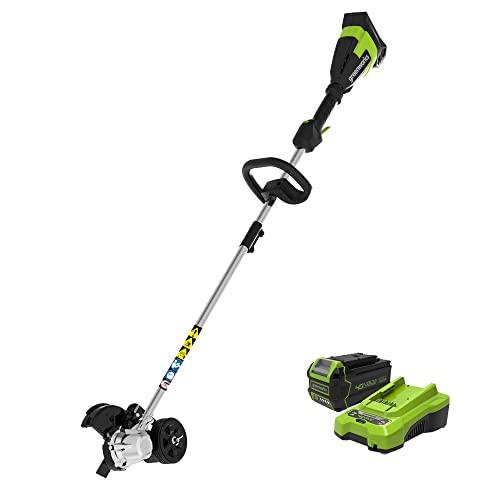
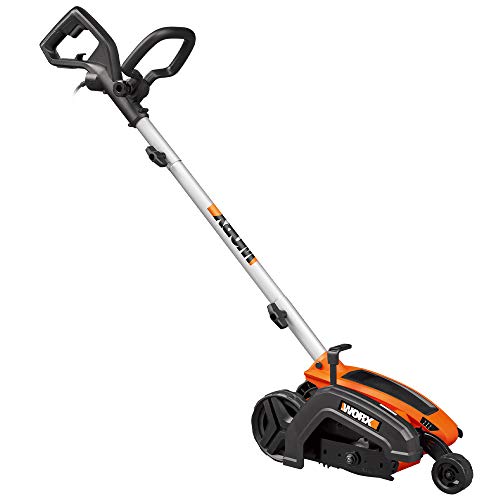
Motor power and blade construction dictate how effortlessly a unit slices through compacted soil and tangled root systems. Manufacturer specifications show that high-torque 12-amp electric motors and brushless cordless platforms maintain steady blade rotation without bogging down in stubborn spring thatch. Stable guide wheels and multi-position depth adjustments give operators precise control along uneven curbs. Pairing these edging tools with mulching lawn mowers ensures healthy turf, neat clipping dispersal, and sharp borders across your entire yard all season long.



Frequently Asked Questions
What blade depth setting works best for standard lawn edging?
Set the blade between 1 and 1.5 inches deep for regular turf maintenance. Cutting deeper than necessary increases motor strain, prematurely dulls the steel blade against hidden gravel, and risks slicing into buried landscape lighting wires. Shallow settings cleanly shear stolons and turf roots right at the concrete boundary line without throwing excess dirt across walkways.
Can a dedicated lawn edger dig trenches for landscape borders?
Yes, several corded and cordless edgers feature dedicated trenching modes reaching down to 2 or 3 inches. Models equipped with high-torque electric motors or 40V to 56V battery systems easily slice through compacted soil to lay low-voltage wiring, drip irrigation tubing, or plastic border edging. If you maintain larger properties, pairing a trench-capable tool with powerful equipment like a battery zero turn mower simplifies full-yard care.
How often do steel edger blades need replacement or sharpening?
Most homeowners replace edger blades once per season, or roughly every 20 to 30 hours of runtime. Because edger blades strike dirt, sand, and concrete curbs, they wear down on the corners, which reduces cutting efficiency and causes the motor to bog down. Inspecting blade width periodically ensures clean mechanical cuts rather than ragged tearing along sidewalks.
Is a dedicated wheeled edger better than a string trimmer?
A dedicated wheeled edger delivers significantly straighter lines and deeper cuts in dense turf than a string trimmer. Wheeled edgers use rigid steel blades supported by guide wheels to roll smoothly along pavement, eliminating hand fatigue and wavering paths. While a string trimmer works for quick touch-ups on soft grass, dense sod requires the rigidity of dedicated steel, much like how heavy-duty chores often call for durable rated gas lawn mowers to tackle thick grass growth.
Do cordless electric edgers provide enough torque for thick grass roots?
Yes, modern brushless cordless edgers utilizing 20V to 56V lithium-ion platforms produce ample torque to sever stubborn root networks. High-efficiency brushless motors automatically maintain rotational speed when encountering compacted soil or thick warm-season grasses like Bermuda and St. Augustine. Ensure you pair the tool with at least a 4.0Ah battery pack to avoid sudden voltage dropouts during demanding edging jobs in 2026.



Write Your Review
No reviews yet. Be the first to share your experience!