


A lawn edger creates a sharp boundary between grass and hardscape by using a rotating blade to cut away the turf line. The tool works by positioning a vertical or angled blade against the edge of a driveway, sidewalk, or patio, where it slices through the grass roots and topsoil as you push or pull it along the surface.
This action removes the overgrown grass that typically invades paved areas, leaving a distinct, clean line that defines the lawn’s perimeter. Understanding how this lawn edger functions helps you choose the right tool for your specific yard layout and maintenance routine.
Most modern edgers fall into three categories: manual, corded electric, and cordless battery-powered. Each type uses a slightly different mechanism to drive the cutting blade, ranging from human-powered wheel rotation to high-torque motors. The choice often depends on the size of your lawn, the hardness of the soil, and how frequently you need to maintain the edges. For detailed options on power sources, you can check our guide to battery-operated lawn equipment to see how these systems compare in efficiency and runtime.


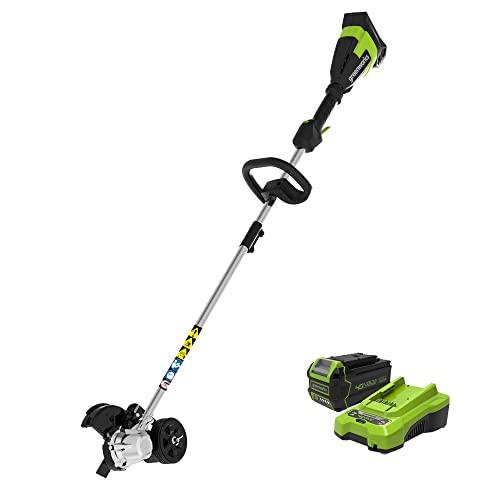


How a Lawn Edger Works: Mechanics and Mechanics
The core function of any lawn edger is to cut a vertical or slightly angled trench along the edge of a paved surface. The mechanism relies on a rotating blade that spins at high speeds to slice through grass blades, roots, and shallow soil.
In electric models, a motor drives this blade, while in manual tools, the user’s forward motion turns the wheel, which in turn rotates the cutting edge. The depth of this cut is critical, as it determines how clean the final border appears and how well it resists future grass encroachment.
| Feature Type | Manual Edger | Corded Electric | Cordless Electric |
|---|---|---|---|
| Power Source | Human Muscle | AC Mains | Rechargeable Battery |
| Blade Speed | Variable (User Pace) | High (Constant) | High (Variable) |
| Typical Depth | 1-2 inches | 1.5-2 inches | 1.5-2 inches |
| Best For | Small Areas | Large Yards | Medium Yards |
Understanding the basic components helps in diagnosing performance issues. The blade is the primary cutting element, and its geometry affects how cleanly it separates the grass from the hardscape. Most blades are made from steel and may have serrated edges to improve cutting efficiency in dense turf.
The wheel assembly provides stability and ensures the blade stays at a consistent distance from the curb or pavement. A guide wheel or plough blade often sits behind the cutting edge to help define the width of the trench and keep the tool on a straight path.
Before selecting a tool, it is helpful to know what to look for in the mechanical design. These features directly impact the ease of use and the quality of the finished edge:
- Blade material: Steel blades are standard, with serrated edges often preferred for tougher grass.
- Depth adjustment: Look for tool-less or quick-release mechanisms to change cutting depth easily.
- Wheel design: Wide or dual wheels improve stability and help maintain a straight cutting line.
- Handle ergonomics: Adjustable or telescopic handles reduce strain during long edging sessions.
- Weight distribution: Balanced tools are easier to maneuver around curves and obstacles.
Electric vs. Manual Cutting Mechanisms
Electric edgers use a motor to spin the blade at a constant, high speed, which allows for faster work and less physical effort. Corded models provide unlimited runtime but are limited by the reach of the power cord. Cordless models offer greater freedom of movement but depend on battery capacity. The motor type also matters; brushless motors are generally more efficient and durable than brushed motors, providing longer life and consistent power output. This efficiency can be a significant factor for users who edge frequently or have larger properties.
Manual edgers rely on the user’s physical effort to drive the cutting action.
- As you push the tool forward, the wheel rotates, turning the blade via a gear system.
- This method is quieter and requires no fuel or electricity, making it an eco-friendly option for small yards.
- However, it is more labor-intensive and may be difficult on hard or rocky soil.
- The cutting speed is directly tied to how fast you walk, so the process can be slower for large areas.
- Many homeowners find that manual tools are best for occasional maintenance or small, defined borders.
Blade Geometry and Cutting Depth
The shape and size of the blade determine the quality of the cut. A wider blade can clear more debris in a single pass, but it requires more power to rotate. Most electric edgers feature blades between 7 and 9 inches in diameter.
The thickness of the blade also plays a role; a thicker blade is more durable and less likely to bend on impact with rocks or roots. Serrated blades have small teeth along the edge, which helps them grip and cut through dense or overgrown grass more effectively than flat blades.
Cutting depth is adjustable on most modern edgers, typically ranging from about 1.5 to 2 inches. A deeper cut creates a more defined border but removes more soil, which can be beneficial for preventing grass from growing back over the edge.
A shallower cut is faster and less disruptive to the soil structure, making it suitable for light maintenance. The ability to adjust depth without tools is a convenient feature, allowing you to switch between tasks quickly. Some models also include a plough blade or trencher attachment that can dig deeper for laying cables or irrigation lines.
Stability and Guide Wheels
Maintaining a straight and consistent edge is crucial for a professional look. Guide wheels help achieve this by keeping the edger at a fixed distance from the curb or pavement. These wheels can be positioned at various angles to match the specific needs of the job.
Dual-wheel systems provide better stability than single wheels, especially on uneven ground. The rear wheels often have a larger diameter to help roll over debris and maintain momentum. This stability reduces the need for constant correction, making the task less tiring and the results more uniform.
The handle design also contributes to control. Adjustable handles allow users to set the tool at a comfortable height, reducing strain on the back and arms. Some models feature a telescopic shaft that can be collapsed for storage. Ergonomic grips with rubber or foam padding improve comfort during extended use. A lockout feature is also important for safety, preventing the blade from spinning when the tool is not in use. These design elements work together to make the edging process smoother and more precise.
Power Source and Runtime Considerations
The power source dictates how long you can work without interruption. Corded electric edgers are powered by a standard household outlet, providing consistent power as long as the cord reaches. This makes them ideal for large yards or continuous work sessions.
However, the cord can be a nuisance, especially if you need to move around a lot. Extension cords should be of adequate gauge to prevent voltage drop, which can affect motor performance. It is also important to keep the cord clear of the cutting path to avoid damage or safety hazards.
Cordless edgers use rechargeable batteries, offering greater mobility but limited runtime. The battery capacity, measured in amp-hours (Ah), determines how long the tool can run on a single charge. A 4.0Ah battery, for example, may provide enough power for a medium-sized yard, while larger properties might require a spare battery.
Some brands offer battery sharing systems, where the same battery can be used across multiple tools. This can be a cost-effective option if you already own other tools from the same brand. For more on battery systems, see our guide to battery-powered lawn care.
Safety Features and Maintenance
Safety is a critical aspect of using any powered edger. Most models include a blade guard to protect the user from flying debris. A lockout switch prevents the tool from starting accidentally, which is especially important when changing blades or storing the unit. The blade itself should be inspected regularly for damage, such as cracks or excessive wear. A damaged blade can become dangerous and should be replaced immediately. Keeping the blade sharp also ensures efficient cutting and reduces the strain on the motor.
Regular maintenance helps keep the edger in good working condition. This includes cleaning debris from the blade and wheels after each use. For electric models, checking the power cord for damage and ensuring the battery is stored properly are important steps. Manual edgers require less maintenance but still need regular cleaning and occasional sharpening of the blade. Storing the tool in a dry place prevents rust and corrosion. Following these simple steps can extend the life of your edger and ensure it performs reliably season after season.
Choosing the right edger depends on your specific needs, including yard size, soil conditions, and frequency of use. Electric models offer speed and ease, while manual tools provide simplicity and low cost. By understanding how each mechanism works, you can make an informed decision that fits your lawn care routine. Always prioritize safety and proper maintenance to get the best results from your equipment.


Write Your Review
No reviews yet. Be the first to share your experience!