


A mower that clicks instead of cranking often needs more than a quick battery charge. The battery may be deeply discharged, nearing failure, or not receiving a charge from the mower’s electrical system. The answer to how long does lawn mower battery take to charge depends on its chemistry, capacity, state of charge, and the charger’s output, so a single time estimate can mislead.
Start with the battery label and the mower manual, then use a charger explicitly suited to the battery chemistry and voltage. A 12-volt riding mower starter battery is not the same as a proprietary lithium-ion pack for a cordless mower, and their charging equipment isn’t interchangeable. If you’re still choosing a replacement, our mower battery fitment guide explains why case size and terminal position matter.
This guide explains how to estimate charging time without guessing at a battery’s missing specifications, how to check whether charging is working, and what to do if a battery won’t recover. It also covers safe handling, winter storage, and the difference between a gas mower’s 12-volt starter battery and a cordless mower’s tool-platform battery. Follow the battery and mower manufacturers’ charging and safety instructions, especially if a case is damaged, hot, swollen, or leaking.

Pros
- Maintenance-free AGM design—no water refills needed
- Broad compatibility with many walk-behind mowers and outdoor equipment
- Lightweight and compact for simple installation
- Affordable price point compared to OEM batteries
- 2-year warranty adds extra value
Cons
- Capacity (3AH) may be too low for larger mowers or extended cranking needs
- Some users may need to check terminal orientation for a perfect fit
The PowerStar YTX4L-BS is a compact 12V 3AH AGM battery designed specifically for electric-start walk-behind lawn mowers, with particular compatibility for Snapper models and many other brands. This battery is an ideal replacement for homeowners who want a reliable, maintenance-free power source for hassle-free starting—no more pulling cords on Saturday mornings. It also suits apartment dwellers with small yards who use electric-start mowers for quick trimming.
In terms of real-world performance, this battery delivers consistent cranking power for starting the engine, thanks to its advanced AGM (Absorbed Glass Mat) technology. It provides stable voltage to run the starter motor reliably, even in moderate weather. While it is not designed for powering accessories, its primary role as a starting battery is well-suited for typical mowing sessions. The battery holds enough charge for multiple starts per mowing session, though users with larger decks or longer cranking may want to consider a higher capacity model.
Build quality is solid for a budget-friendly battery. The AGM construction means it is sealed, spill-proof, and resistant to vibration—important for the rough ride of a mower. The casing feels durable and should resist corrosion from moisture or debris. At just 3.09 pounds, it is easy to handle during installation, and its compact dimensions (4.4 x 2.7 x 3.3 inches) allow it to fit in most standard battery trays without modification.
Setup is straightforward: simply connect the positive and negative terminals (usually labeled) and secure the battery in the tray. No water filling or electrolyte checks are needed. Maintenance is essentially zero—just keep the terminals clean and ensure the battery is charged during storage. Some users may find that the terminal orientation (position of positive and negative posts) requires a slight adjustment with adapters or cables, but this is typical for many replacement batteries.
A realistic limitation is the 3AH capacity, which is on the lower end for batteries in this class. If your mower requires extended cranking (like in very cold weather) or has a large engine, this battery may not provide as many starting attempts per charge. Also, while it fits many models, it is always wise to double-check terminal placement and dimensions against your original battery to avoid a loose fit.
Overall, this PowerStar battery is a practical, affordable choice for homeowners with smaller walk-behind mowers who want a drop-in replacement with a decent warranty. It is best suited for routine mowing in moderate climates where the engine starts easily. For those with larger equipment or very cold winters, a battery with higher cold-cranking amps (CCA) or larger capacity may be more suitable. But for its price and convenience, the YTX4L-BS delivers good value for everyday lawn care.
Pros
- Lightweight and easy to push, perfect for small yards and users who want a low-effort mowing experience
- Quiet operation allows early morning mowing without disturbing neighbors
- Battery doubles as a power bank for charging devices, adding versatility
- Easy height adjustment and folding handle make setup and storage simple
Cons
- 14-inch cutting width may be too narrow for larger lawns over 2,800 sq. ft.
- Grass bag capacity of 8 gallons may require frequent emptying on thicker grass
- Limited to battery runtime of about 30 minutes, which may not suit very large or overgrown yards
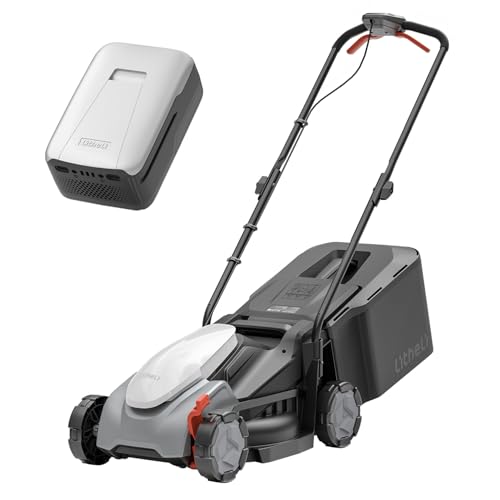
The Litheli 14 Inch Battery Lawn Mower is designed for homeowners with small to mid-sized yards who want a cordless, low-maintenance alternative to gas mowers. It's especially suitable for apartment dwellers, suburban homeowners, and first-time buyers looking for a lightweight push mower that's easy to store and operate.
In terms of cutting performance, the 14-inch steel deck delivers a clean cut across lawns up to 2,800 sq. ft. on a single charge. The 5-position height adjustment lets you set the blade from 1 to 2.5 inches, adapting to seasonal growth or preferred grass length. The included 8-gallon grass bag collects clippings effectively, reducing the need for raking. However, on thicker or wet grass, the bag may fill up faster, requiring more frequent stops.
Build quality is solid for the price point, with a durable plastic deck and adjustable handle that feels sturdy during use. The brushless motor is whisper-quiet and requires no oil changes or spark plugs, making maintenance almost nonexistent. The battery is removable and doubles as a power bank, which is a handy feature for charging devices during outdoor work.
Setup is straightforward—the mower comes mostly assembled, and the foldable handle allows for compact storage in a garage or shed. At just over 24 pounds, it's easy to lift and carry, and the lightweight design makes it ideal for maneuvering around flower beds and garden edges. The single-lever height adjustment is simple to use, even for beginners.
One realistic limitation is the 30-minute runtime, which may not be enough for larger or overgrown lawns. Additionally, the 14-inch cutting width means more passes compared to wider mowers, so it's best suited for yards under a quarter acre. The grass bag, while adequate, could be larger for uninterrupted mowing.
Overall, the Litheli 14 Inch Battery Lawn Mower is a practical choice for budget-conscious shoppers and those prioritizing ease of use, quiet operation, and minimal maintenance. It's a reliable cordless option for small yards and offers good value with its battery power bank feature and warranty support.

Pros
- Specifically designed to replace multiple OEM part numbers (136-9126, 114-1588, 104-7401, etc.), ensuring a direct fit for many Toro mowers
- Very affordable price point compared to brand-name chargers, making it a great budget option for homeowners
- Compact size and lightweight build simplify storage and handling—no bulky charger to deal with
- Simple plug-and-play operation: just connect to the mower battery and wall outlet, no complicated setup required
Cons
- Compatibility is limited to specific Toro and Lawnboy models, so you must verify your mower's part number before purchasing
- Brand is less well-known than Toro or other major accessory makers, which may concern some buyers about long-term reliability
- Cord length of 6.1 feet may be too short if your outlet is far from where you store the mower, potentially requiring an extension cord
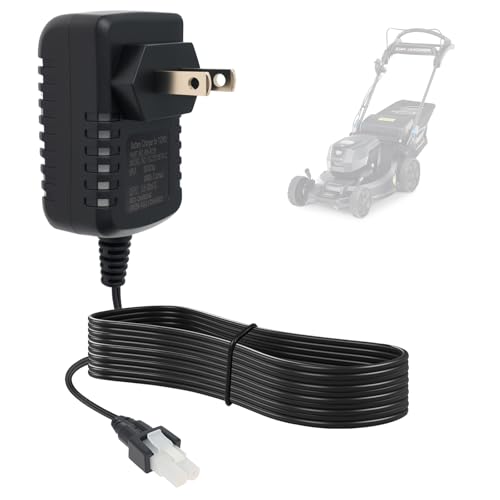
If you own a Toro or Lawnboy 22-inch electric mower and need a replacement battery charger, the Kzfuli 114-1588 is a practical, budget-friendly option to consider. This charger is designed to replace several OEM part numbers, including 136-9126, 114-1588, 104-7401, and 20334C, among others. It's specifically intended for homeowners who want to keep their mower's battery charged without paying a premium for a brand-name charger.
Based on the product specifications, the charger outputs 14.5V and works with input voltages from 100-240V AC, making it compatible with standard U.S. household outlets. The 6.1-foot power cord gives you enough reach for most garage or shed setups, though you might need an extension cord if the outlet is farther away. The compact dimensions (2.36 x 1.5 x 1.3 inches) and light weight (0.1375 lbs) mean it won't take up much space on a shelf or in a tool box.
For many American homeowners, this charger may be a convenient spare to keep on hand, especially if you have multiple Toro mowers or want a backup in case the original charger fails. The compatibility list includes popular models like the 10642, 10666, 10686, 10796, and 17734, but it's crucial to double-check your mower's part number to ensure a proper fit. The seller also offers customer support for compatibility questions, which adds a layer of reassurance.
In terms of build quality, the charger appears to be a standard plastic-cased unit, typical for this price range. It's not ruggedized, but for indoor storage and occasional use, it should hold up fine. The black color is neutral and unobtrusive. Since this is a charger and not a mower, there's no cutting performance or engine to evaluate—its job is simply to deliver the correct voltage to your battery, and based on user feedback (though limited), it seems to do that reliably.
One realistic limitation is that this charger is only compatible with specific Toro and Lawnboy electric mowers, not with other brands or gas-powered models. Also, because it's a third-party product, some buyers may be hesitant about long-term durability compared to an OEM charger. However, the affordable price makes it a low-risk purchase for those who need a quick replacement.
Overall, if you have a compatible Toro or Lawnboy mower and need a functional charger without overspending, the Kzfuli 114-1588 is a solid choice. Just confirm your model number before buying, and you'll likely find it does the job as expected. For homeowners who are already invested in Toro cordless mowers, this charger offers a cost-effective way to keep your equipment running.

Pros
- Reliable 320 CCA starting power for most lawn tractors and mowers.
- Spill-proof and vibration-resistant AGM design for durability.
- Works in a wide range of temperatures, ideal for varied climates.
- Long service life with deep discharge recovery capability.
- Easy to install with included screws (no wire harness needed).
Cons
- Does not include a wire harness or mounting accessories, which may require separate purchase for some mowers.
- Dimensions may not fit all lawn tractor models; verify compatibility before buying.
- Some users may prefer a battery with higher CCA for very large engines or extreme cold.
If you own a Craftsman lawn tractor or mower that needs a new battery, the Mighty Max Battery ML-U1-CCAHR is a solid replacement option. This 12V sealed lead-acid battery delivers 320 cold cranking amps (CCA), which is enough to start most residential lawn mowers and tractors, even on cooler mornings when engines need a little extra juice. It's designed as a direct fit for the Craftsman 25780 and similar models, so many homeowners may find it a convenient swap.
In terms of performance, the battery's AGM (Absorbent Glass Mat) technology means it's spill-proof and can be mounted in any position—handy if your mower's battery tray is awkwardly angled. It also handles vibration and shock well, which is important for the bumpy ride across a lawn. The high discharge rate helps ensure consistent starting power, and the battery can recover from deep discharges, which is a plus if you accidentally leave the key on.
Build quality seems solid for the price. The case is durable, and the terminals are clearly marked (positive on left, negative on right). It weighs about 14 pounds, which is typical for this size battery. The included screws are a nice touch, but you'll need to reuse your existing wire harness or buy one separately—something to keep in mind if you're replacing an older battery with corroded cables.
Installation is straightforward for anyone comfortable with basic tools. Just remove the old battery, connect the new one (red to positive, black to negative), and secure it with the screws. No special maintenance is required since it's a sealed battery—no checking water levels. Just keep the terminals clean and tight. Storage is easy too; it can be stored in any position, though keeping it charged during off-season is recommended.
One limitation is that the 320 CCA may not be enough for very large engines or extreme cold climates. If you live in an area with harsh winters, you might want a battery with higher CCA. Also, the dimensions (7.62 x 5.00 x 7.00 inches) mean it's not universal—always double-check that it fits your mower's battery tray before buying.
Overall, the Mighty Max Battery ML-U1-CCAHR is a practical, budget-friendly replacement for many Craftsman lawn tractors. It offers reliable power, spill-proof design, and good durability. For homeowners who want a simple, no-fuss battery swap without breaking the bank, this is a solid choice. Just verify compatibility and you'll be ready for mowing season.
Pros
- Reliable starting power with 200CCA for quick ignition
- Spill-proof AGM design enhances safety and mounting flexibility
- Vibration and shock resistant for durability on bumpy lawns
- Maintenance-free operation saves time and effort
Cons
- Does not include wire harness or mounting accessories, so you may need to reuse existing hardware
- Some users may find the terminal orientation requires careful checking to match their mower setup
- Not suitable for all mower models, so compatibility should be verified before purchase
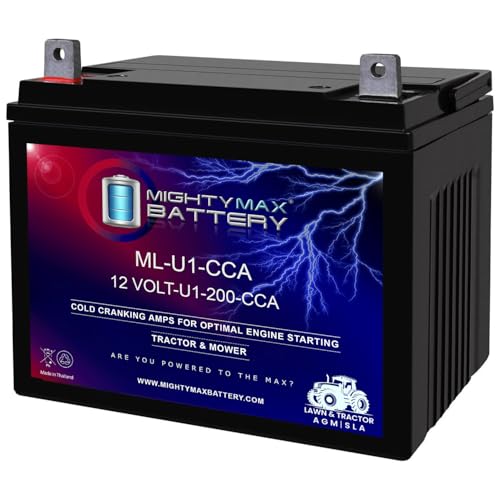
The Mighty Max Battery ML-U1 is a 12-volt sealed lead acid battery designed to replace the battery in many Craftsman lawn tractors and mowers, including the model 25780. This battery is a practical choice for homeowners who need a dependable power source for their riding mower without the hassle of traditional wet-cell batteries. With 200 Cold Cranking Amps, it provides enough power to start most single-cylinder engines commonly found on residential lawn tractors, even during cooler spring mornings or fall afternoons.
Performance-wise, this battery uses AGM (Absorbent Glass Mat) technology, which means it is spill-proof and can be mounted in any position. This flexibility is helpful if your mower has an odd battery tray orientation or limited space. The battery also handles deep discharges better than standard flooded batteries, which is a plus if you occasionally leave lights on or have a parasitic drain. However, it is not designed for high-drain applications like powering accessories for extended periods—its main job is starting the engine.
Build quality appears solid for its price point. The case is made from durable ABS plastic that resists cracking from vibration and impacts during mowing. The terminals are standard SAE posts, but you may need to check the polarity: this model has positive on the left and negative on the right. Some users report that the included screws are adequate, but you will need to reuse your existing wire harness and mounting hardware, as none are included.
Setup is straightforward if you are comfortable with basic tools. Simply remove the old battery, clean the terminals, and install this one using the provided screws. Because it is maintenance-free, you won't need to check water levels or clean corrosion as often as with a wet-cell battery. Storage is also easier since the battery can be stored on its side if needed, though keeping it upright is recommended for longest life.
One realistic limitation is that this battery may not be compatible with all mower models, especially those requiring different terminal configurations or higher CCA ratings for larger engines. Always verify your mower's battery group size and polarity before ordering. Additionally, the lack of included mounting hardware means you may need to purchase a battery hold-down kit separately if your old one is missing or damaged.
Overall, the Mighty Max Battery ML-U1 is a solid replacement option for Craftsman lawn tractor owners who want a reliable, maintenance-free battery at a reasonable price. It works well for typical suburban lawn mowing needs, but if you have a larger tractor with a high-compression engine or live in extremely cold climates, you might consider a battery with higher CCA. For most homeowners, this battery offers a good balance of performance, durability, and value.
Pros
- Weighs only 3.96 lbs for easy handling and installation.
- 650 CCA ensures reliable cold-weather starts.
- 2000-cycle lifespan outlasts most lead-acid batteries.
- Built-in BMS provides safety and overcharge protection.
- Wide compatibility with many popular lawn tractor brands.
Cons
- Higher upfront cost compared to standard lead-acid batteries.
- Requires a 14.6V lithium-specific charger (not included).
- Not compatible with all mower models - must verify dimensions and terminal orientation (left-positive, right-negative).
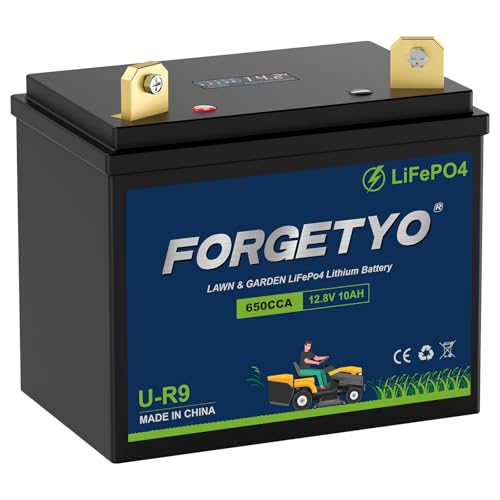
The U-R9 lithium battery is a drop-in replacement for traditional lead-acid batteries used in riding lawn mowers and garden tractors. It delivers 12.8 volts and 10 amp-hours of capacity with a maximum 650 cold cranking amps (CCA), providing more than enough power to start mid-sized mowers even in cold weather. Weighing only 3.96 pounds, it is about one-third the weight of a comparable lead-acid battery, which makes installation and handling much easier for homeowners of any age.
Based on the product specifications, the built-in Battery Management System (BMS) monitors the battery's health and automatically protects against overcharging, overdischarging, short circuits, and overheating. This safety feature helps extend the battery's lifespan to roughly 2000 charge cycles, compared to only 300 cycles from typical lead-acid batteries. For many homeowners, that means fewer replacements and less maintenance over the life of the mower.
Compatibility is strong for this battery. It works with popular brands like John Deere, Cub Cadet, Husqvarna, Craftsman, Toro, Ariens, Poulan Pro, and Troy-Bilt. The U-R9 has a left-positive, right-negative terminal layout, so it's important to check the physical dimensions (7.7x5.1x7.2 inches) and terminal orientation against your mower's battery tray before purchasing. The lithium chemistry also holds a charge for months when disconnected, which is especially useful for owners in regions with long winters—no need to keep a battery tender connected.
In terms of performance, the 650 CCA rating ensures reliable starting even in sub-freezing temperatures. Many users may find that their mower cranks faster and more consistently compared to an aging lead-acid battery. The battery operates in a wide temperature range from -20C to 85C, so it can handle both cold starts and hot summer storage without issues.
One realistic limitation is the higher upfront price compared to lead-acid batteries. Additionally, this lithium battery requires a dedicated 14.6V DC lithium charger (recommended 2A charging speed) to recharge safely. If you already have a standard lead-acid charger, you will need to upgrade. Also, not all mowers share the same terminal configuration, so double-checking compatibility is a must before ordering.
Overall, the U-R9 lithium battery is a solid upgrade for homeowners who want a lighter, longer-lasting, and more reliable starting battery for their riding mower or generator. It is particularly well-suited for those who deal with cold winters, want to avoid maintaining a battery tender, or simply prefer the convenience of a maintenance-free power source. If your mower's battery tray accommodates the dimensions and terminal layout, this battery offers excellent value over the long term.
Pros
- Strong 320 CCA rating provides quick engine turnover on chilly spring mornings
- Sealed AGM construction resists leaks, spills, and rough lawn vibration
- Direct drop-in replacement size for standard U1 riding mower battery compartments
- Zero routine fluid maintenance required compared to traditional flooded batteries
Cons
- Wire harness and terminal adapters are not included in the box
- Positive-on-left polarity requires verifying cable reach before installation
- Weighs 14 pounds, requiring steady handling when lowering into compact mower compartments
Starting up a riding mower after months in the shed should not be a struggle. The Mighty Max ML-U1-CCAHR 12V 320 CCA battery is designed as a direct replacement power source for riding mowers and lawn tractors such as the John Deere X320. For suburban homeowners managing half an acre or rural property owners maintaining expansive acreage, having dependable cranking power is essential for getting weekend yard work done on schedule.
With a 320 Cold Cranking Amps rating, this battery provides plenty of punch to turn over large single-cylinder and V-twin tractor engines. The sealed lead-acid (SLA) and absorbent glass mat (AGM) construction allows for a high discharge rate, helping fire up the deck quickly even on cool early spring mornings. The resilient internal chemistry also aids in deep discharge recovery, which comes in handy if the battery sits idle between seasonal cuttings.
Lawn tractors endure constant bumps, rough turf, and heavy vibration across uneven yards. This battery features a rugged, spill-proof casing engineered to handle high vibration and sudden shocks without shedding internal plate material. Because it is completely sealed, it avoids the messy acid leaks and terminal corrosion that frequently plague traditional flooded lead-acid batteries.
Measuring 7.62 by 5.00 by 7.00 inches with positive-on-left polarity, the unit slides smoothly into standard U1 battery trays. It comes supplied with terminal screws for a fast swap during your spring maintenance routine. As a maintenance-free sealed unit, there is no need to check electrolyte levels or top off cells with distilled water, saving valuable time during routine lawn care prep.
While the battery delivers dependable starting power, buyers should verify their machine's cable length and polarity orientation, as no extra wiring harness is included. For homeowners and lawn care enthusiasts seeking a straightforward, reliable replacement battery to keep their John Deere or compatible riding mower running strong, this Mighty Max unit represents a practical and cost-effective choice.
The 320 Cold Cranking Amps rating provides strong starting capability for mid-to-large riding mowers, zero-turn units, and garden tractors. The AGM internal design delivers a stable current discharge, ensuring quick spark generation without straining your mower starter motor.
Its ability to recover from deep discharge cycles makes it particularly practical for seasonal power equipment that may sit in an unheated garage or shed through freezing winter months.
Unlike older conventional batteries, this sealed AGM battery requires no fluid maintenance. Homeowners do not have to handle hazardous acid or inspect water levels before Saturday morning mowing sessions.
To maximize lifespan across multiple seasons, using a standard 12V trickle charger or battery maintainer during the winter offseason will keep the cells in prime condition for spring startup.
Estimate Charging Time from the Battery and Charger
There isn’t one reliable charging-time figure for every lawn mower battery. A small, partly charged battery on an appropriate charger may need much less time than a larger, deeply discharged battery, and the final stage of charging can take longer than a simple capacity calculation suggests. The dependable starting point is to identify the battery’s voltage, chemistry, capacity, current state, and the charger’s rated output.
Use capacity and charger current for a rough estimate
For a battery with a stated amp-hour (Ah) capacity, a basic estimate is the number of amp-hours that must be replaced divided by the charger’s output in amps. This is only a planning estimate, not a promise: charging is not perfectly efficient, a charger may reduce current as the battery fills, and some chargers pause or change modes during the process. A battery’s label and charger manual are more useful than applying a universal time to every mower.
For example, the listed PowerStar YTX4L-BS is a 12-volt, 3-Ah AGM/SLA battery. The provided product information does not state a charging current or a specific charge duration, so an exact estimate cannot be derived from that listing alone. Its small capacity does not mean it should be charged with any small adapter; use an appropriate charger and its manufacturer’s specified settings.
The U-R9 riding mower battery is listed as a 12.8-volt, 10-Ah LiFePO4 battery, and its description specifies a recommended charger of 14.6 volts at 2 amps. That information gives a more meaningful basis for a rough estimate, but it still does not establish an exact time from empty to full. The battery management system and charging stage affect the actual process, so follow the supplied battery instructions rather than treating a division calculation as a completion signal.
Do not confuse charger voltage with charger current. The listed 114-1588 charger specifies a 14.5-volt output, but the supplied listing does not state its output amperage or a battery capacity. Those missing details prevent a responsible charge-time calculation, and a model-specific connector or part-number match does not by itself establish compatibility with every mower battery.
Battery chemistry changes the charging method
Lead-acid, AGM, LiFePO4, and cordless lithium-ion batteries require charging profiles suited to their chemistry and design. A charger intended for one type may not be suitable for another, even if the nominal voltage appears close. Check the battery label and charger manual for approved voltage, current, and charge mode before connecting anything.
Sealed AGM/SLA products in the supplied listings include PowerStar and Mighty Max batteries. The product descriptions identify their chemistry, but do not provide a universal charge time or authorize an arbitrary automotive charger. Use a compatible charger with the specified profile, and avoid an unregulated charger that could continue pushing current after the battery should be in its finishing stage.
The U-R9 listing calls for a 14.6-volt, 2-amp charger for its LiFePO4 battery. That is a product-specific instruction, not a general setting for every lithium mower battery. A high-voltage cordless pack, such as the 5.0-Ah pack supplied with the Litheli 14 Inch Battery Lawn Mower, belongs to its designated tool and charger system; do not connect it to a 12-volt starter-battery charger.
For cordless packs, use the manufacturer-approved charger and let the charger’s indicators and instructions define completion. If a pack becomes unusually hot, swollen, damaged, or gives a fault indication, stop charging and follow the manufacturer’s safety guidance. Do not open a sealed pack, attempt cell repair, or force charging after a protective shutdown.
Check Battery Condition Before Waiting on a Charge
Read resting voltage with the battery isolated from recent use
A digital multimeter can help distinguish a discharged 12-volt starter battery from a possible battery or connection problem. Set the meter to DC voltage and place the probes on the battery posts, observing polarity. For a useful resting reading, let the battery sit after charging or running the mower so temporary surface charge does not distort the result.
A healthy, fully charged 12-volt lead-acid battery commonly rests around 12.6 to 12.8 volts. A reading near 12.2 volts indicates substantial discharge, while a reading below 10.5 volts can point to a failed or shorted cell. These are diagnostic clues, not a substitute for the battery manufacturer’s specifications or a proper load test.
If the battery reads low, charging may be appropriate only when the case is intact and the charger supports its chemistry. A battery with a cracked case, swelling, leakage, unusual heat, or a strong abnormal odor should not be charged. Keep sparks and flames away from lead-acid batteries, which can release explosive gas during charging, and wear eye protection and acid-resistant gloves when working around them.
A low reading does not establish that the battery is the only problem. Loose connections, corrosion, a faulty starter circuit, or a charging-system fault can produce similar no-start complaints. If a battery repeatedly needs charging, investigate why it discharged rather than treating repeated charging as a permanent fix.
Use cranking symptoms to separate battery trouble from connection trouble
Rapid solenoid clicking often means the starter circuit is losing voltage under load, but it does not identify the failed part by itself. A discharged or worn battery, corroded terminals, a loose ground, or a poor cable connection can all contribute. Silence may point toward a different part of the starting circuit, so don’t replace a battery solely because the mower won’t crank.
Observe the meter while the starter is engaged only if the mower’s safety controls are correctly set and the manufacturer’s instructions allow the check. A substantial voltage drop during cranking suggests the battery or high-resistance connections need attention; a value below about 9.6 volts under load is a warning benchmark, not a universal pass-fail rule for every battery and temperature. Avoid bypassing a solenoid, seat switch, PTO interlock, or other safety device.
Inspect posts, cable ends, and the ground connection for looseness, corrosion, or damage with the mower off and the key removed. Do not bridge terminals with a tool or allow a wrench to contact the frame while touching a positive terminal. If cleaning or removal is required, disconnect the negative cable first; when reinstalling, connect positive first and negative last, keeping the terminals correctly matched.
Charge Safely and Verify the Mower Recharges
Match the charger before connecting it
Read the battery label and charger manual before charging, including the chemistry, nominal voltage, polarity, and any current limit. A charger’s connector fitting the port is not enough to prove its electrical output is appropriate. Confirm that the charger is specified for the exact battery type and follow its connection sequence and indicator meanings.
For a removable cordless pack, switch off the mower and use the designated charger in the manner described by the tool maker. For a riding mower starter battery, the manual should say whether charging may be done in place or whether removal is required. Keep the battery in a ventilated area and do not charge a frozen, damaged, leaking, or visibly swollen battery.
If a 12-volt mower must be jump-started to move it, use the mower and battery makers’ instructions, connect matching polarities, and keep the donor vehicle’s engine OFF. A running donor engine can expose the mower’s stator and voltage regulator to damaging electrical conditions. Do not jump a cordless high-voltage pack as though it were a 12-volt starter battery.
A charger that stops early may be reporting a fault, an incompatible battery, a connection problem, or a pack protection event. Check the manual’s indicator chart and inspect the plug and battery contacts without probing or shorting them. If the charger repeatedly faults or the battery becomes hot, discontinue charging and seek manufacturer support rather than trying a higher-current charger.
Confirm the mower’s charging system after startup
A riding mower normally uses its charging system to replenish the starter battery while the engine runs, but a short mowing session may not restore a deeply discharged or failing battery. A battery that repeatedly loses charge may have a weak battery, an electrical draw while parked, or a fault in the stator or voltage regulator. Charging it externally can get the mower going without correcting the underlying cause.
Where the mower service instructions permit, a multimeter check at the battery with the engine running can help assess charging output. A common reference range is approximately 13.5 to 14.5 volts DC at full operating throttle, but the mower’s service information takes precedence because systems vary. Keep hands, meter leads, clothing, and tools clear of moving parts, and do not attempt the check if you cannot do it safely.
A reading outside the specified range warrants further diagnosis rather than an automatic battery replacement. Wiring, grounds, connectors, the stator, and regulator can all affect the result. A repair shop can perform circuit tests if the service procedure requires access to exposed connectors or measurements you are not equipped to make safely.
For a broader explanation of starter-battery selection and charging considerations, see this riding mower battery guide. The key distinction is that a compatible battery and a functioning charging system solve different problems. A new battery can still go flat if the mower is not replenishing it or an electrical load remains active while parked.
Fit, Storage, and the Product Differences That Matter
Check case size and terminal orientation before replacement
Charging time matters less if the replacement battery cannot connect safely. The supplied Mighty Max ML-U1 listings specify a 12-volt sealed lead-acid battery with positive on the left and negative on the right, along with dimensions of 7.62 by 5.00 by 7.00 inches. The U-R9 listing gives dimensions of 7.7 by 5.1 by 7.2 inches and also lists positive-left, negative-right polarity.
Compare those details with the mower’s existing battery, tray, hold-down, terminal hardware, and cable reach before ordering. Group U1 and U1R refer to different terminal layouts; a similar case size does not guarantee the factory cables will reach the posts in the correct orientation. Never stretch a cable, cross leads, or reverse polarity to make a mismatched battery work.
Cranking capacity also needs to match the mower maker’s requirement. The listed Mighty Max options are rated at 200 CCA and 320 CCA, while the U-R9 listing states a maximum of 650 CCA. Those figures describe different listed products, not a universal requirement, and more is not a reason to ignore voltage, dimensions, polarity, terminal style, or the mower manual’s specified battery.
Small batteries also have different duties. The PowerStar product is listed as a 3-Ah AGM/SLA battery for specified Snapper walk-behind electric-start applications, while the Litheli mower uses a 5.0-Ah lithium-ion pack as its cordless mowing power source. A starter battery cranks an engine; a cordless pack runs an electric motor. Their capacity figures do not make their charging systems interchangeable.
Prevent winter discharge from becoming a spring no-start
Lead-acid batteries gradually lose charge while stored, and a deeply discharged battery can suffer sulfation that reduces its ability to accept and retain charge. Disconnecting a battery may reduce loads from the mower, but it does not stop the battery’s own self-discharge. Check stored batteries periodically and use a compatible smart maintainer only if the battery maker permits it.
A maintainer designed for the battery chemistry can reduce the risk of leaving a battery unattended in an unsuitable charge state. An unregulated trickle charger is not automatically safe for continuous connection because it may not change its output as the battery fills. Follow the maintainer instructions, keep the battery ventilated, and do not charge a frozen or damaged battery.
Store cordless packs according to the tool maker’s temperature, charge-level, and inspection guidance. Remove the pack from the mower if the manual recommends it, and avoid placing it near heat or moisture. A pack that no longer charges normally or triggers a fault should be handled through the manufacturer’s service process, not opened or rebuilt at home.
Charging duration is best treated as an estimate bounded by the actual battery and charger specifications, not a fixed number of hours. Identify the chemistry and capacity, use the correct charger, and investigate repeat discharges or abnormal readings instead of repeatedly charging around a fault. If the mower starts but the battery does not stay charged, verify the charging system before deciding that another battery is the answer.




Write Your Review
No reviews yet. Be the first to share your experience!