


Collecting dense autumn leaves, stubborn pine needles, and heavy lawn thatch by hand takes considerable physical effort. Learning how to assemble a lawn sweeper correctly ensures your yard cleanup equipment operates smoothly behind your riding mower or as a manual push unit. Many property owners struggle with ambiguous assembly manuals, misplaced hitch hardware, and reversed bracket orientations that lead to binding brushes or misaligned wheels. Setting aside an organized workspace and understanding the mechanical layout of the chassis makes the entire construction process straightforward and manageable. Pairing your seasonal mowing routine with an effective leaf collector for lawn mower guide can further streamline how you clear turf debris across large areas.
Whether you choose an extra-wide tow-behind model like the Garvee 52 in Tow-Behind Lawn Sweeper, High Hopper or a compact push unit such as the VEVOR Push Lawn Sweeper 26 in Leaf & Grass, proper assembly directly affects sweeping performance. Precise frame squaring prevents wheel drag and ensures internal drive pinions mesh properly with brush gears. Taking the time to seat tension rods, calibrate brush clearance, and tighten frame bolts creates a rigid structure capable of withstanding rough turf conditions. When you assemble your equipment with attention to mechanical tolerances, you protect internal gearing, maximize debris pickup, and extend the operating life of your machine.

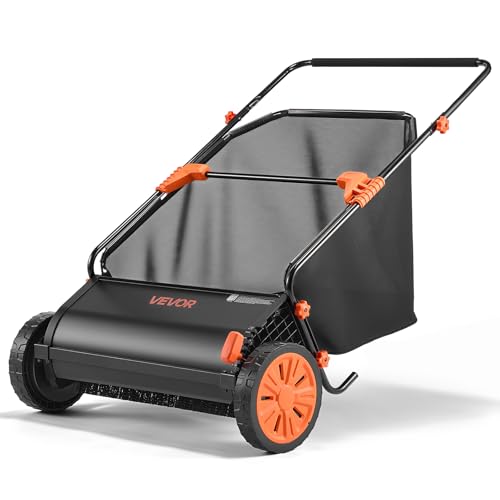
Pros
- Efficient collection of leaves, grass clippings, and pine needles with minimal passes.
- Durable metal frame and PP bristles resist tangling from weeds and debris.
- Easy 10-level height adjustment adapts to various lawn and surface conditions.
- Large hopper capacity and quick-dump buckles save time during yard work.
Cons
- Wet leaves may reduce sweeping efficiency, as noted in the product description.
- Not ideal for heavy debris like large twigs or nuts without optional brush upgrades.
- Assembly of frame and hopper is required, though core parts come pre-assembled.
The VEVOR 26-inch Push Lawn Sweeper is a practical tool for homeowners who want to keep their yards tidy without the back strain of raking. Designed for collecting leaves, grass clippings, and light debris, it works well on lawns, patios, and driveways. This sweeper is especially useful for those with medium to large yards who want a faster, more efficient cleanup method.
Performance-wise, the sweeper uses three V-shaped rotating brushes that reach deep into the grass to lift debris. The 1:5 brush-to-wheel ratio means it collects material in fewer passes, saving time. The 10-level brush height adjustment lets you set the perfect depth for different grass lengths and surfaces, from short turf to uneven ground. However, wet leaves can clog the brushes, so it's best used when the yard is dry.
Build quality is solid with a durable metal frame and PP bristles that resist tangling from weeds and pine needles. The wheels are made from PP and rubber, providing good traction on damp or rough surfaces. The 7 cu.ft. hopper is tear-resistant and attaches with four quick-release buckles for easy dumping. The foam-padded handle adds comfort during extended use.
Setup is straightforward since the core parts come pre-assembled. You just need to attach the frame and hopper, and it's ready to go. Storage is easy thanks to its compact design - it won't take up much space in a garage or shed. Maintenance is minimal: occasionally check the brushes for wear and clean out any tangled debris.
A realistic limitation is that this sweeper is not designed for heavy-duty tasks like collecting large twigs or nuts. The description notes that wet leaves reduce efficiency, so timing your cleanup matters. Also, while it's easy to push on flat ground, very thick or tall grass might require more effort.
Overall, the VEVOR Push Lawn Sweeper is a great value for budget-conscious homeowners who want a reliable leaf and grass collector. It's easy to use, stores compactly, and handles typical yard debris well. If you have a yard with moderate leaf fall and grass clippings, this sweeper will make your Saturday chores much easier.

Pros
- Reinforced brushes provide strong sweeping action and long-lasting durability.
- Adjustable brush height adapts to different surfaces for thorough debris collection.
- Large 3.5 cu ft bag holds plenty of leaves and grass clippings, minimizing emptying frequency.
- Tool-free assembly and fold-flat storage make it convenient for homeowners with limited space.
- Lightweight and easy to maneuver around flower beds and garden edges.
Cons
- Manual push operation may require more effort on thick, wet grass or heavy leaf piles.
- Bag capacity, while generous, may still need frequent emptying on very large properties.
- No reviews yet, so long-term performance is unverified; rely on product specifications and warranty.
The Dapper Supply 21-Inch Push Lawn Sweeper is a manual leaf and grass collector designed for homeowners who want an affordable, no-fuel alternative to gas or electric blowers. It's particularly well-suited for small to medium-sized lawns, apartment dwellers with tiny yards, or anyone looking to keep walkways and driveways tidy without the noise and emissions of power equipment. The sweeper uses a rotating brush system to sweep debris into a removable bag, making fall cleanup or post-mowing grass collection a simple, quiet task.
Based on product specifications, the reinforced and thickened brushes are a standout feature—they're meant to resist deformation and deliver up to 95% debris pickup in a single pass. The 21-inch sweeping width is practical for standard residential lawns, and the adjustable brush height (via a hand-operated knob) lets you adapt the sweeper to uneven ground, pavement, or garden paths. This flexibility is a real plus for homeowners who deal with varied terrain.
Build quality appears solid for the price point: the frame is sturdy enough to handle regular use, and the 3.5 cubic foot non-woven hopper bag is both durable and easy to empty. The bag attaches securely and detaches quickly for dumping. The entire unit weighs just 17 pounds, so pushing it around the yard feels light and manageable. For storage, the sweeper folds flat and can be hung on a wall using the integrated clips—a great space-saver for garages or sheds.
Setup is tool-free thanks to quick clips on both sides, so you can have it assembled in minutes. Maintenance is minimal: just empty the bag after each use and occasionally check the brush for debris buildup. Since there's no engine or battery, there's no fuel mixing, charging, or annual tune-ups required. This makes it an excellent choice for first-time buyers or those who prefer a low-maintenance approach to yard care.
That said, manual sweepers have limitations. They work best on dry leaves and grass clippings; wet, heavy debris may clog the brush or require extra passes. On very large properties, the bag's 3.5 cubic foot capacity might mean frequent trips to the compost pile. Also, because this is a new product with zero customer reviews, long-term durability isn't yet proven by the community. However, the 2-year limited warranty offers some reassurance.
Overall, the Dapper Supply Push Lawn Sweeper is a smart buy for budget-conscious homeowners who want a reliable, easy-to-store tool for light to moderate leaf and grass cleanup. If your yard is under a quarter acre and you value simplicity over speed, this sweeper may be a great fit. For larger lawns or heavy debris, consider a tow-behind or powered sweeper instead.

Pros
- Affordable price point for budget-conscious homeowners.
- Lightweight and easy to push for most users.
- Adjustable brush height adapts to different terrains.
- Large hopper capacity reduces trips to empty.
Cons
- Manual push design requires physical effort; not self-propelled.
- May struggle with wet or heavy debris - best for dry materials.
- Non-woven hopper bag may not be as durable as canvas or plastic.
The VEVOR Push Lawn Sweeper is a practical, manual yard tool designed for homeowners who want a simple way to keep their lawn free of leaves, grass clippings, and small twigs. It is especially suited for those with small to medium-sized yards who prefer a no-gas, no-electricity approach to lawn care. Unlike powered sweepers, this push model is quiet, lightweight, and easy to store.
Based on product specifications, the sweeper features thickened and densified brushes that increase sweeping force and resist deformation over time. With a 21-inch sweeping width, it can pick up about 80% of debris in a single pass. The stepless brush height adjustment allows you to set the brushes at the right level for different surfaces - from sidewalks to garden beds - using just a hand knob. This flexibility makes it useful for various yard conditions.
The hopper bag has a 3.5 cubic foot capacity and is made from non-woven fabric. It collects a good amount of debris before needing to be emptied, which saves time during cleanup. The bag is easy to remove and dump. The frame is designed with quick-clip sides for simple assembly and disassembly, and the sweeper can be stored upright or hung on a wall to save space.
In terms of build quality, the VEVOR sweeper uses a steel frame and plastic components. It weighs only 14.33 pounds, making it easy to push and maneuver around flower beds, trees, and tight corners. The ergonomic handle is comfortable for most users. However, because it is a manual push sweeper, it requires physical effort, especially on slopes or thick debris.
One realistic limitation is that this sweeper works best on dry leaves and grass clippings. Wet or heavy debris may clog the brushes or not be picked up effectively. The non-woven bag may also wear over time with frequent use. Additionally, there are no reviews yet to gauge long-term durability, so potential buyers should consider this as a budget-friendly option for light to moderate yard cleanup.
Overall, the VEVOR Push Lawn Sweeper is a good choice for homeowners who want a simple, affordable, and eco-friendly way to keep their yard tidy. It is not a replacement for a powerful leaf blower or vacuum, but it can handle routine debris collection with ease. If you have a small lawn and prefer a manual tool, this sweeper offers decent value for the price.
Step-by-Step Guide on How to Assemble a Lawn Sweeper
Assembling a lawn sweeper requires methodical mechanical organization, correct fastener alignment, and careful tensioning of fabric hoppers. Taking the machine from flat-packed pieces to a fully operational yard collector involves building a square chassis, mounting drive wheels and rotating brushes, and securing collection bags. By understanding the mechanical principles behind brush-to-wheel ratios, hitch geometry, and brush height adjustment, you avoid common assembly pitfalls and ensure seamless yard cleanup.
Pre-Assembly Inspection and Workspace Organization
Before turning a single bolt, clear a level concrete workspace such as a garage floor or clean driveway. Unpack all components from the shipping box and cross-reference them with the included parts diagram to verify nothing is missing. Organizing hardware into labeled containers keeps specialized hitch pins, carriage bolts, nylon locknuts, and clevis pins from getting mixed up during construction.
Inspect the sweeper housing, steel tubing, and hopper fabric for any shipping damage or warped metal brackets. Sweepers rely on straight frame tubes to maintain parallel brush contact across the entire sweeping swath. A bent tube or twisted crossmember can cause uneven ground pressure and accelerate premature tire wear. Having a socket set, adjustable wrenches, pliers, and a rubber mallet nearby ensures you can seat tight-fitting frame sleeves without damaging protective powder coatings.
Many modern sweepers, including designs from Garvee, provide illustrated documentation and QR-code installation video links directly on the packaging. Reviewing these manufacturer visual aids before handling heavy parts provides clear context on bracket orientation. Taking fifteen minutes to organize your components and study the assembly diagram prevents the frustration of dismantling partially built sections later.
Core Frame and Axle Housing Construction
The foundational step in sweeper assembly centers on securing the main axle housing and chassis crossmembers. Position the primary sweeper housing flat on your working surface with the brush cavity facing downward. Heavy-duty units like the Garvee 52 in Tow-Behind Lawn Sweeper, High Hopper utilize corrosion-resistant carbon steel frames that require firm alignment between the lower cross braces and side plates.
Insert carriage bolts through the frame holes from the inside outward, ensuring the square shoulders of the bolts drop securely into the stamped frame cutouts. Hand-thread the nylon locknuts onto each bolt before applying final torque. Leaving fasteners finger-tight at this stage allows the frame enough flex to align subsequent braces and hitch brackets without binding.
Once all structural frame tubes, side panels, and axle supports are loosely positioned, check that the entire assembly rests flat against the ground without rocking. Once squareness is confirmed, tighten each fastener progressively in an alternating cross-pattern using your hand wrenches. Consistent fastener tension across the metal chassis prevents frame deflection when navigating bumpy lawns or uneven slopes.
Installing Wheels, Pinion Gears, and Sweeper Brushes
Brush rotation on push and tow-behind sweepers is driven entirely by ground-wheel movement through internal pinion gears. Push sweepers such as the VEVOR Push Lawn Sweeper 26 in Leaf & Grass utilize a 1:5 brush-to-wheel gear ratio, meaning the internal brushes spin five times faster than the drive wheels. To maintain this mechanical advantage, the drive gears and wheels must be oriented according to manufacturer specifications.
Examine the axle ends and internal wheel cavities for directional drive pawls or drive pins. Slide the pinion gear onto the axle, making sure the gear teeth mesh cleanly with the internal ring gear built into the wheel hub. If your sweeper requires manual brush assembly, insert the brush shaft through the side plate bearings and secure the nylon or polypropylene bristles into their mounting hubs.
Slide the heavy-duty wheels onto the axle spindles, taking care not to pinch the internal grease seals or sealed bearings. Secure each wheel using the supplied flat washers and cotter pins or locknuts, checking that the wheel spins freely forward while engaging the brush drive. Rotate the wheels by hand to confirm the brushes turn forward with minimal resistance, and verify that rolling backward disengages the drive mechanism as intended.
Hitch Assembly for Tow-Behind Units vs. Push Sweeper Handles
Attaching the operating handles or towing drawbars requires different assembly procedures depending on whether you have a push model or a tractor-pulled unit. Push sweepers, like the Dapper Supply 21″ Push Lawn Sweeper, rely on multi-section tubular handles connected directly to the chassis side brackets. Align the lower handle tubes with the frame studs, slide them into position, and lock them in place using quick-release clips or plastic wing knobs.
For tow-behind sweepers, assemble the hitch drawbar tubes by securing the angled hitch arms to the sweeper frame brackets. Align the central hitch tongue between the two drawbars, inserting long carriage bolts through the adjustment holes. Tow-behind systems feature universal hitch brackets designed to mount directly to the rear hitch plates of lawn tractors, zero-turn mowers, and utility vehicles.
When assembling hitch arms, adjust the mounting brackets so the sweeper frame remains level with the ground when hitched to your specific tow vehicle. An unlevel hitch forces the brushes to dig into the lawn unevenly, causing high wear on one side and missed debris on the other. If you frequently operate your towing vehicle along hilly terrain, pairing your setup with tips from our equipment safe for steep slopes resource can help you avoid instability and wheel slip.
Hopper Bag Fabric Stretching and Structural Rod Framing
Assembling the hopper bag is often the most tactile part of the process because it requires stretching heavy-duty fabric over rigid steel frames. Start by laying the fabric bag flat on a clean surface with the opening facing upward. Slide the lower steel frame tubes through the stitched fabric sleeves sewn along the bottom edges of the collection hopper.
Connect the upper frame tubing, fitting the swaged tube ends into the corresponding corner connectors. For high-capacity models like the Garvee 52 in Tow-Behind Lawn Sweeper, High Hopper, which features a 26 cubic foot hopper, insert the internal tension support rods to give the basket structural integrity. Flex the flexible steel tension rods into their retention pockets carefully, wearing safety glasses and work gloves to protect your hands from slipping metal.
On compact push units like the VEVOR Push Lawn Sweeper 21″ Leaf & Grass Collector, the 3.5 cubic foot non-woven bag mounts quickly with side clips and bottom support feet. Verify that all fabric seams are pulled taut across the perimeter steel tubing and that the bag bottom does not sag. A sagging hopper bag will drag against damp turf or abrasive asphalt during operation, causing fabric wear and unnecessary dragging resistance.
Calibrating the Brush Height Mechanism for Grass and Hard Surfaces
Once the frame, wheels, and hopper are constructed, install the brush height adjustment mechanism. Sweepers feature several height adjustment styles, ranging from multi-position notched levers to stepless hand-operated dials. Push units like the VEVOR Push Lawn Sweeper 26 in Leaf & Grass incorporate a 10-level side-mounted adjustment handle that alters the clearance between the rotating bristles and the ground.
Mount the height adjustment handle to the side frame plate using the provided pivot bolt, wavy washer, and locknut. Adjust the locking nut tension so the lever slides between index slots smoothly while holding firmly under operating vibration. On models with stepless hand knobs, such as the Dapper Supply 21″ Push Lawn Sweeper, thread the adjustment rod through the front trunnion bracket and hand-tighten the retention knob.
Set the initial brush height by parking the sweeper on flat turf. Adjust the mechanism so the brush tips penetrate approximately one-half inch into the grass canopy. Setting brushes too low forces them deep into the soil, creating excessive wheel resistance, bending bristle fibers, and potentially stripping internal drive gears. Setting brushes too high allows dry leaves and light pine needles to pass beneath the bristles uncollected.
Rigging Dump Ropes and Universal Tractor Hitches
Tow-behind sweepers rely on dumping systems that allow operators to discharge full loads of lawn clippings and leaves without leaving the tractor seat. Locate the dump rope included in your hardware kit, which connects directly to the upper frame bar of the collection basket. Thread the rope through the eyelet guide mounted on the sweeper hitch tongue to ensure a smooth, centered pull vector.
Tie a secure bowline or double-overhand knot through the hopper frame grommet, pulling firmly to verify the knot will not slip under load. Route the free end of the rope forward along the tractor drawbar, tying it off with enough slack to accommodate sharp turns without tugging the dump mechanism open prematurely. Fasten the grip handle at a comfortable reaching distance behind the operator seat.
Complete the hitch installation by inserting the clevis pin through the sweeper hitch brackets and your tractor hitch plate. Lock the pin securely using the provided hair-pin cotter. If your yard maintenance involves multi-tasking across expansive acreage, integrating other tow-behind gear using our sprayers for lawn tractors reference can help you organize rear hitch equipment for smooth seasonal lawn care.
Post-Assembly Mechanical Verification and Common Setup Mistakes
Conduct a thorough mechanical verification on flat ground before deploying the assembled sweeper across your lawn. Push the unit forward or pull it slowly behind your towing machine for several feet, observing wheel rotation and gear engagement. The brushes must spin forward briskly without stuttering, chattering, or emitting grinding noises from the wheel hubs.
One frequent assembly mistake involves mounting the internal drive pinions on the wrong sides of the axle. When pinions are reversed, the drive pawls slip when moving forward and only engage the brushes when pulling the machine backward. If your brushes remain stationary when rolling forward, remove the wheel retaining clips, swap the left and right pinion gears, and re-test forward rotation.
Another common setup error is improper frame alignment, which causes the sweeper to track crookedly behind the tractor. Loosen the hitch drawbar bolts slightly on level concrete, pull the machine forward two feet to let the wheels center naturally, and re-torque the fasteners. Confirm that the hopper dump rope clears moving parts and that the bag frame does not rub against the rotating brush tips.
Disassembly for Storage and Seasonal Fastener Maintenance
Proper long-term ownership involves seasonal storage planning and periodic fastener inspection. Hand-push sweepers, including the Dapper Supply 21″ Push Lawn Sweeper and the VEVOR Push Lawn Sweeper 21″ Leaf & Grass Collector, feature quick-release clips along the handle uprights and bottom support feet. Releasing these clips allows the handle to fold forward over the collection bag so the sweeper can hang neatly on garage wall hooks.
For tow-behind sweepers with large hoppers, pull the internal steel tension rods from their brackets to collapse the fabric basket flat against the frame. Store the hopper bag in a dry, ventilated shed to prevent mildew growth on the non-woven fabric. Applying a light coat of silicone lubricant to pivot joints and wiping clean grease onto exposed gear teeth protects mechanical assemblies during wet winter months.
Vibration from rough turf naturally loosens threaded fasteners over time. Make it a habit to check hitch bolts, wheel axle retaining clips, and brush clamp screws after your first two hours of operation. Keeping fasteners properly torqued and gear hubs clean ensures your assembled lawn sweeper will consistently clear leaves, thatch, and yard debris season after season.





Write Your Review
No reviews yet. Be the first to share your experience!