


A mower that clicks instead of starting after winter storage may need a charge, but a weak battery can also point to a failing connection or charging circuit. Before connecting a charger, identify whether the machine uses a 12-volt starter battery or a proprietary cordless battery pack; they require different equipment and procedures. A smart charger with the correct battery mode is a better choice than an unregulated trickle charger, and the mower and charger manuals should guide the setup. This guide explains how to charge a mower battery while protecting the battery, wiring, and operator.
For a riding mower, a resting reading around 12.6V to 12.8V generally indicates a charged lead-acid battery, while a reading near 12.2V indicates substantial discharge. A reading below 10.5V can suggest a failed cell, so charging alone may not restore dependable starting. Cordless mowers use higher-voltage packs, such as the 40V system listed with the Greenworks mower, and must be charged with the appropriate platform charger. If you are still checking whether a replacement is the right type, our guide to mower battery compatibility explains why voltage, size, and terminal layout matter.
A drained battery can be frustrating, especially when the mower is needed for routine yard work. A careful voltage check and a compatible charger can help distinguish a simple discharge from a battery that needs replacement or a mower that is not recharging it. For riding mower starting and upkeep context, see our riding mower battery overview. Always follow equipment instructions and use eye protection and acid-resistant gloves around lead-acid batteries.

Pros
- Extremely lightweight at 20.5 lbs—easy to push, lift, and maneuver around obstacles
- Two batteries included with quick swap for extended runtime without waiting to recharge
- Brushless motor provides reliable power and reduced maintenance compared to gas mowers
- Compact 13-inch deck fits through narrow gates and stores easily in small spaces
- 5 height settings give flexibility for different grass lengths and seasons
Cons
- 13-inch cutting width may require more passes on larger lawns—best suited for yards under 1/4 acre
- Grass collection bag is 8 gallons—may need frequent emptying on thick or tall grass
- Battery runtime per battery is 25 minutes under typical conditions; heavy or wet grass may reduce runtime
The STEELITE Cordless Lawn Mower is a compact, battery-powered push mower designed for homeowners with small to medium-sized yards. With a 13-inch cutting deck and a lightweight build of just 20.5 pounds, this mower is especially appealing for apartment dwellers, suburban homeowners with modest lawns, and anyone who values easy storage and maneuverability. It comes with two 4.0Ah lithium-ion batteries and a charger, providing up to 50 minutes of total runtime when you swap batteries mid-mow.
In real-world use, the brushless motor delivers consistent cutting power for typical grass conditions. The 5-position height adjustment lever lets you quickly set the cut between 0.98 and 2.56 inches, which works well for spring growth, summer maintenance, or fall cleanup. The included 8-gallon grass collection bag helps keep your lawn tidy, and the mower is designed for bagging only—no mulching or side discharge options are mentioned. For small, flat lawns, this mower should handle routine mowing without issue.
Build quality appears solid for the price point. The deck is likely made of durable plastic or steel (specs not fully detailed), and the overall weight suggests a mostly plastic construction that resists rust. The brushless motor is a plus for longevity and efficiency, and the batteries are standard 20V, which may be compatible with other STEELITE Tools products. The brand clarification—STEELITE Tools vs. STEELITE International—is worth noting for warranty and support purposes.
Setup is straightforward: attach the handle and grass bag, charge the batteries, and you're ready. The foldable handle allows for compact vertical or horizontal storage in a garage, shed, or even a closet. Maintenance is minimal—no oil changes, no spark plugs, just keep the blades sharp and clean the deck. The lightweight design makes it easy to carry up stairs or load into a vehicle.
Limitations include the narrow 13-inch cutting width, which means more passes on larger lawns. The 8-gallon bag may fill quickly in thick grass, and the batteries provide only 25 minutes each under normal conditions—heavy or wet grass can drain them faster. For yards over 1/4 acre, you might need to recharge or buy extra batteries. Also, the mower lacks self-propulsion, so on slopes or uneven terrain, you'll need to push manually.
Overall, the STEELITE Cordless Lawn Mower is a practical choice for budget-conscious shoppers, first-time mower buyers, or anyone with a small, flat lawn who wants a lightweight, low-maintenance electric mower. It offers good value with two batteries and a brushless motor, and its compact size makes storage a breeze. If your yard is under 1/4 acre and you prioritize ease of use and quiet operation, this mower is worth considering.
The mower comes with two 20V 4.0Ah lithium-ion batteries and a charger. Each battery provides up to 25 minutes of runtime under typical mowing conditions, giving a combined 50 minutes with quick swapping. Charging time is not specified but is likely a few hours per battery. The batteries are removable and can be used with other STEELITE Tools 20V products. For small lawns under 1/4 acre, this runtime should be sufficient for a single mowing session. Users may want to consider purchasing an additional battery for larger yards or thicker grass.
The 13-inch cutting deck is powered by a brushless motor that spins the blade efficiently. With 5 height settings from 0.98 to 2.56 inches, you can adjust for different grass types and seasons. The mower is designed for bagging grass clippings; it does not mention mulching or side discharge capabilities. The 8-gallon grass collection bag is easy to attach and empty. For thin to moderate grass, the mower should provide a clean cut. For very thick or tall grass, you may need to mow slowly or take multiple passes.
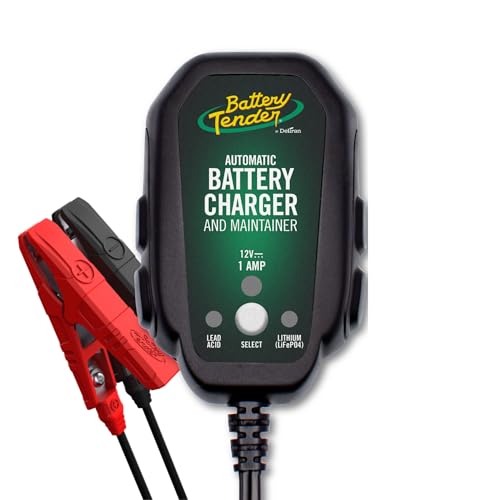
Pros
- Versatile compatibility with both lead-acid (AGM, flooded, gel) and lithium (LiFePO4) batteries.
- Smart charging technology prevents overcharging and sulfation, extending battery lifespan.
- Compact and lightweight, easy to mount or store near your lawn mower.
- Safety features include spark-proof connections and reverse polarity detection.
Cons
- Only 800mA output, which may be slower for deeply discharged batteries compared to higher amperage chargers.
- Limited to 12V batteries; not suitable for 6V systems or larger equipment batteries requiring higher amperage.
- Some users may prefer a charger with a built-in display for voltage monitoring.
The Battery Tender Junior 12V 800mA charger and maintainer is a practical solution for homeowners who want to keep their lawn mower, motorcycle, ATV, or other powersport batteries in top condition. Designed for both lead-acid and lithium batteries, this compact device automatically adjusts its charging profile to match the battery type, ensuring optimal performance and longevity.
Many users appreciate the smart technology built into this charger. The microcontroller constantly monitors the battery's state and adjusts the charge rate accordingly, preventing overcharging and reducing the risk of sulfation in lead-acid batteries. This is especially useful for seasonal equipment like lawn mowers that sit idle during winter months. The 800mA output is sufficient for maintaining a charge, though it may take longer to revive a deeply discharged battery compared to higher-amp models.
Safety is a key feature of the Battery Tender Junior. It is spark-proof during connection and automatically detects reverse polarity, ensuring a correct hookup before delivering power. This gives peace of mind, especially for those who are not experienced with battery maintenance. The unit also holds multiple safety certifications, including ETL US/CSA, FCC, and ICES, and comes with a 5-year warranty.
Setup is straightforward: simply connect the ring terminals or alligator clips to the battery, plug the charger into a standard outlet, and select the battery type with the push of a button. The compact size (4.4 x 2.9 x 2.15 inches) and lightweight design (under 1 pound) make it easy to store in a garage or shed, or even mount near your equipment.
A potential limitation is the low amperage, which means it's best suited for maintaining batteries rather than charging deeply discharged ones. For larger batteries or faster charging, a higher-amp model may be more appropriate. Additionally, it only works with 12V batteries, so it cannot be used with 6V systems or some larger equipment.
Overall, the Battery Tender Junior is a reliable and affordable option for anyone who wants to prolong the life of their lawn mower or powersport battery. It's ideal for seasonal use, helping to ensure your equipment starts reliably when you need it. For most homeowners with small to medium-sized batteries, this charger offers excellent value and convenience.

Pros
- Specifically designed to replace multiple OEM part numbers (136-9126, 114-1588, 104-7401, etc.), ensuring a direct fit for many Toro mowers
- Very affordable price point compared to brand-name chargers, making it a great budget option for homeowners
- Compact size and lightweight build simplify storage and handling—no bulky charger to deal with
- Simple plug-and-play operation: just connect to the mower battery and wall outlet, no complicated setup required
Cons
- Compatibility is limited to specific Toro and Lawnboy models, so you must verify your mower's part number before purchasing
- Brand is less well-known than Toro or other major accessory makers, which may concern some buyers about long-term reliability
- Cord length of 6.1 feet may be too short if your outlet is far from where you store the mower, potentially requiring an extension cord
If you own a Toro or Lawnboy 22-inch electric mower and need a replacement battery charger, the Kzfuli 114-1588 is a practical, budget-friendly option to consider. This charger is designed to replace several OEM part numbers, including 136-9126, 114-1588, 104-7401, and 20334C, among others. It's specifically intended for homeowners who want to keep their mower's battery charged without paying a premium for a brand-name charger.
Based on the product specifications, the charger outputs 14.5V and works with input voltages from 100-240V AC, making it compatible with standard U.S. household outlets. The 6.1-foot power cord gives you enough reach for most garage or shed setups, though you might need an extension cord if the outlet is farther away. The compact dimensions (2.36 x 1.5 x 1.3 inches) and light weight (0.1375 lbs) mean it won't take up much space on a shelf or in a tool box.
For many American homeowners, this charger may be a convenient spare to keep on hand, especially if you have multiple Toro mowers or want a backup in case the original charger fails. The compatibility list includes popular models like the 10642, 10666, 10686, 10796, and 17734, but it's crucial to double-check your mower's part number to ensure a proper fit. The seller also offers customer support for compatibility questions, which adds a layer of reassurance.
In terms of build quality, the charger appears to be a standard plastic-cased unit, typical for this price range. It's not ruggedized, but for indoor storage and occasional use, it should hold up fine. The black color is neutral and unobtrusive. Since this is a charger and not a mower, there's no cutting performance or engine to evaluate—its job is simply to deliver the correct voltage to your battery, and based on user feedback (though limited), it seems to do that reliably.
One realistic limitation is that this charger is only compatible with specific Toro and Lawnboy electric mowers, not with other brands or gas-powered models. Also, because it's a third-party product, some buyers may be hesitant about long-term durability compared to an OEM charger. However, the affordable price makes it a low-risk purchase for those who need a quick replacement.
Overall, if you have a compatible Toro or Lawnboy mower and need a functional charger without overspending, the Kzfuli 114-1588 is a solid choice. Just confirm your model number before buying, and you'll likely find it does the job as expected. For homeowners who are already invested in Toro cordless mowers, this charger offers a cost-effective way to keep your equipment running.
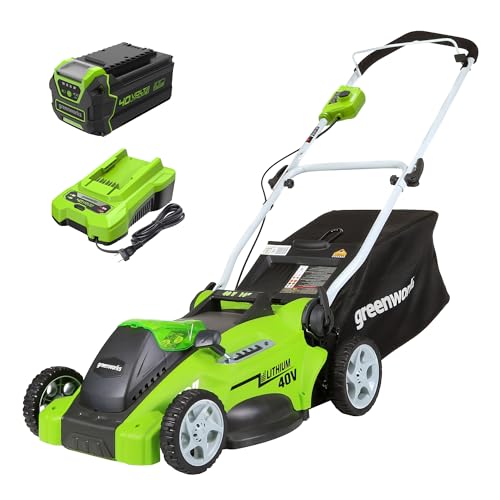
Pros
- Significantly lighter than gas mowers, reducing user fatigue and making it easy to handle on slopes or uneven terrain.
- Quiet operation and zero emissions – great for early morning mowing and environmentally friendly yards.
- Simple electric push-button start eliminates the hassle of gas, oil, and pull cords.
- 5-position height adjustment offers flexibility for different grass types and seasonal cuts.
- Mulching capability returns nutrients to the lawn, reducing fertilizer needs.
Cons
- Battery runtime may not be sufficient for lawns larger than 1/3 acre, especially in thick or wet grass.
- 16-inch deck is smaller than standard 20-21 inch mowers, so it takes more passes to cover larger areas.
- Plastic deck construction, while lightweight, may be less durable over time compared to steel or aluminum decks.
- No self-propelled drive – users must push the mower entirely, which may be tiring on larger lawns or hills.
The Greenworks 40V 16-inch cordless push lawn mower is a solid entry-level electric mower designed for homeowners with small to medium-sized yards—typically up to a third of an acre. It targets those looking to transition from gas to battery power, offering a simpler, quieter, and more eco-friendly mowing experience. First-time mower buyers, apartment dwellers with tiny patches, or suburban lawn owners will appreciate its lightweight build and ease of use.
Performance-wise, the 40V brushless motor delivers enough torque to handle typical turf conditions, including Bermuda, fescue, and bluegrass. The 16-inch cutting width is narrower than standard mowers, which means more passes for larger areas, but it excels in tight spaces around gardens and landscaping. The 2-in-1 system lets you choose between mulching—which finely chops clippings to feed the lawn—or rear bagging for a tidy finish. Based on user feedback, the mulching is efficient on dry grass, but wet or tall grass may require slower passes or a second cut. The single lever height adjustment offers five positions from roughly 1.5 to 3.5 inches, giving you quick control over cutting length.
Build quality emphasizes portability over ruggedness. The deck is made of lightweight plastic rather than steel, contributing to its 37.5-pound weight—about 35% lighter than comparable gas mowers. While this makes it easy to lift into a truck or store in a shed, some users question the long-term durability of plastic against rocks or thick roots. The wheels are standard plastic with decent tread, providing adequate traction on flat lawns but struggling on steep slopes. Assembly is straightforward—typically just attaching the handle with included hardware—and no tools are needed for basic adjustments.
Maintenance is minimal: no oil changes, no spark plugs, and no fuel mixing. After each use, simply wipe down the deck and keep the battery charged. The included 4.0Ah battery offers about 30-40 minutes of runtime on a single charge, depending on grass conditions and operator technique. For a 1/4-acre lawn, you may get through the whole yard; for 1/3 acre, the battery might run out before finishing, especially in thick spring growth. The charger takes about 2 hours to fully recharge. Storage is convenient—the mower stands upright and takes up minimal floor space, and the handle folds flat for hanging on a wall hook.
Realistic limitations include the relatively small cutting deck and lack of self-propulsion. If your lawn has significant hills or you have mobility issues, pushing this mower can still be tiring. Additionally, the plastic deck may show scratches and wear over time, and the 40V system is less powerful than 60V or 80V alternatives from other brands. Replacement batteries are not cheap, so investing in a second battery might be necessary for larger yards.
Ultimately, the Greenworks 40V 16-inch mower is a smart buy for budget-conscious homeowners who prioritize lightweight, quiet, and low-maintenance mowing on small, flat lawns. It's also an excellent starter mower for those new to battery-powered equipment. For larger properties or tougher terrain, consider a self-propelled model or a bigger deck size. But for its price point and included battery/charger, this mower delivers reliable performance for typical suburban lots.
The Greenworks 40V 16-inch mower comes with a 4.0Ah lithium-ion battery and a standard charger. On a full charge, you can expect about 30-40 minutes of runtime under normal conditions—enough to mow about a 1/4 acre. For thicker or taller grass, actual runtime may be shorter. The battery uses Greenworks’ 40V platform, making it interchangeable with other tools like leaf blowers and string trimmers. Charging time is around 2 hours. While the included battery is sufficient for small lawns, investing in a second battery (sold separately) can extend runtime for larger yards without waiting for a recharge.
This mower features a 2-in-1 system that supports both mulching and rear bagging. The mulching blade cuts grass clippings into fine particles that decompose quickly, returning nutrients to the soil—ideal for eco-conscious lawn care. For a cleaner look, the 13-gallon rear bag collects clippings easily. To switch between modes, simply remove the bag and close the rear flap for mulching, or attach the bag for collection. Some user reviews note that bagging works best when the grass is dry, and the bag may need emptying frequently in dense lawns. Overall, the system is easy to use and effective for small- to medium-sized lawns.
Thanks to its lightweight 37.5-pound design and foldable handle, this mower is exceptionally easy to store. The handle collapses without tools, allowing the mower to stand upright or hang on a wall in your garage, shed, or even a corner of your apartment balcony. Its compact footprint (roughly 50.8 x 18.9 x 39 inches when unfolded) takes up minimal floor space. The lack of a gas engine means no smells or spills during storage. For homeowners with limited storage, this mower is a practical choice.
Greenworks backs this mower with a 3-year warranty, covering defects in materials and workmanship. The battery and charger come with a separate 2-year warranty. Customer support is available via phone and email, and replacement parts are widely available through Greenworks’ website and third-party retailers. While the plastic deck may not have the longevity of steel, the warranty provides reasonable peace of mind for the typical homeowner. Be sure to register your product after purchase for easy warranty claims.
Charging a Mower Battery Safely and Correctly
The correct charging method depends first on the battery system. A riding mower starter battery is commonly a 12V lead-acid unit, while cordless walk-behind mowers use a higher-voltage lithium-ion pack built for a specific tool platform. Do not connect a 12V charger to a 40V mower pack or assume that packs from different brands are interchangeable. Check the battery label and equipment manual before charging, and use a charger whose voltage, chemistry setting, and connectors match the battery.
Identify the Battery Before Connecting a Charger
Riding mower batteries are usually identified by their nominal voltage and chemistry on the case or label. The battery may be flooded lead-acid, sealed AGM, or a 12V LiFePO4 replacement, and each chemistry needs an appropriate charging profile. A charger that offers selectable lead-acid and lithium modes still requires the operator to choose the correct mode; the setting is not a substitute for confirming the battery type. Never charge a battery with a cracked, swollen, leaking, or unusually hot case.
Cordless mower packs are a separate category. A Greenworks 40V mower, for example, is supplied with a 40V 4.0Ah battery and charger, while the STEELITE mower listing describes two 20V 4.0Ah packs and a charger. Those examples do not establish compatibility with other tools or brands. Use the charger specified for the exact battery platform, and do not open, rebuild, or attempt to charge a damaged lithium pack with a generic 12V charger.
The product options listed with this guide illustrate why charger labels deserve attention. The Battery Tender Junior 12V is described as an 800mA charger and maintainer with selectable lead-acid and lithium settings. The 114-1588 Lawn Mower Battery Charger listing gives a 14.5V output and specifies a group of Toro and Lawn-Boy model and part-number matches. That listing is not evidence that it works with every mower, so verify the equipment model, connector, and part number before ordering or connecting it.
Check Battery Condition and Prepare the Work Area
Park the mower on a stable, dry surface, switch it off, remove the key, and keep the cutting deck disengaged. Read both the mower and charger instructions before touching the battery. Wear eye protection and acid-resistant work gloves around lead-acid batteries, and keep sparks, flames, and smoking materials away because charging can release flammable gas. Do not charge a frozen, leaking, swollen, or visibly damaged battery.
Inspect the case, cables, and terminals for damage, corrosion, loose hardware, or signs of heat. If corrosion is present, avoid creating sparks and follow the mower maker’s cleaning instructions before charging; do not let cleaning liquid enter battery cells or electrical connectors. A battery hold-down should keep the case secure, and cables should not be stretched or pinched. If the mower uses Group U1 or U1R, confirm the positive and negative terminal positions rather than relying on cable color alone.
A digital multimeter can help determine whether charging is appropriate, although a resting voltage is only a screening check and does not prove that the battery can deliver starter current. Set the meter to DC voltage and place the probes on the corresponding battery terminals, keeping positive on positive and negative on negative. A healthy, fully charged 12V lead-acid battery commonly rests around 12.6V to 12.8V; around 12.2V indicates a substantially discharged state. A reading under 10.5V may indicate a failed cell, in which case replace or professionally assess the battery instead of assuming a charger will fix it.
Connect a 12V Charger in the Correct Order
For a removable battery, follow the mower manual’s removal procedure and place the battery in a dry, ventilated area approved for charging. If removing the battery, disconnect the negative cable first, then the positive cable, to reduce the chance of a tool shorting the positive terminal to the chassis. When installing it again, connect positive first and negative last. If the battery stays in the mower, use the approved charging connection and isolation instructions provided by the manufacturer.
With the charger unplugged or switched off as its instructions require, attach the positive clamp to the positive terminal and the negative clamp to the negative terminal or manufacturer-designated ground point. Confirm polarity before energizing the charger; reversing the leads can damage electrical components or the charger. Select the chemistry mode that matches the battery, then connect power and let the charger follow its specified sequence. Do not use a high-current automotive charger unless its instructions explicitly support the battery and provide a suitable current and voltage profile.
The Battery Tender Junior 12V listing describes selectable modes for lead-acid and LiFePO4 batteries, plus reverse-polarity detection and spark-resistant lead connection. Those features do not remove the need to confirm polarity, chemistry, and operating instructions. Its listed 800mA output is a low-current charging rate, so a deeply discharged battery may take substantial time if it remains serviceable. Do not leave any charger unattended unless its manufacturer specifically permits that use and describes the intended monitoring or maintenance mode.
When charging finishes, switch off or unplug the charger as directed before removing the clamps. The negative connection is generally removed first, followed by the positive, unless the charger or mower instructions specify a different safe sequence. Keep the clamps from touching each other or metal parts of the mower. Reinstall a removed battery with positive cable first and negative cable last, then secure the hold-down without forcing terminals or hardware.
Charge Cordless Packs Only with Their Platform Charger
A cordless mower pack is not charged like a riding mower’s 12V starter battery. Remove the pack only as the mower instructions direct, inspect it for damage, and use the matching platform charger in the conditions specified by the manufacturer. Keep the battery and charger dry, clear of debris, and away from excessive heat. If the pack is unusually hot after mowing, allow it to cool as directed rather than trying to override a thermal protection feature.
The STEELITE mower listing describes two 20V 4.0Ah lithium-ion batteries and an included charger. It states that each battery may provide up to 25 minutes under typical mowing conditions, with a combined stated runtime of up to 50 minutes when swapping packs. Actual runtime will vary with grass and operating conditions, so those figures should not be treated as a charging-time estimate or a promise for every yard. The Greenworks listing similarly pairs its 40V mower with a 4.0Ah pack and charger, but does not make that pack compatible with another voltage ecosystem.
Do not use a damaged cordless pack, expose it to water, or attempt to open its casing. If the charger reports a fault, the pack repeatedly shuts down, or it will not accept a charge, consult the manufacturer rather than trying improvised recovery methods. Proprietary lithium packs contain control and protection electronics that a generic charger may not support. Replacement decisions should account for the exact platform and approved charger, not merely a similar-looking connector or stated capacity.
Determine Whether the Battery or Mower Is at Fault
A successful charge does not prove that the mower’s charging system works. If a 12V riding mower starts after charging but the battery goes flat again, inspect cable connections and consider whether the stator or voltage regulator is failing to replenish it. The useful running benchmark supplied for this diagnostic context is about 13.5V to 14.5V DC at full operating throttle, measured at the battery terminals. Use the mower service procedure and suitable meter technique; if the reading is outside the specified range, have the charging circuit checked rather than replacing batteries repeatedly.
Starting symptoms can help direct the next check without identifying a single cause on their own. Rapid solenoid clicking can occur when voltage collapses under starter load, while a silent no-crank condition can also involve a connection, fuse, switch, or interlock. A charged resting reading does not establish that a battery can supply adequate cranking current. If safe and competent to do so, a load test can help distinguish a weak battery from a starter or circuit fault; do not bypass safety switches or bridge terminals.
After charging, recheck the resting voltage after the battery has had time to settle, using the battery maker’s guidance for timing. If it quickly falls again, inspect for a damaged battery, loose or corroded connections, or an electrical draw while the mower is off. A battery that repeatedly needs charging may be the symptom rather than the root cause. Persistent faults, burned wiring, or uncertain meter readings are good reasons to stop and seek qualified service.
Jump-starting is not a substitute for charging or diagnosis, but it may be considered only if the mower manual permits it. If using a passenger vehicle as the donor for a 12V riding mower or zero-turn, the donor vehicle engine must remain OFF to help prevent electrical damage to the mower stator and voltage regulator. Follow the equipment manufacturer’s connection sequence, maintain positive-to-positive and negative-to-negative polarity, and keep clamps away from moving parts and battery vents. If the instructions are unclear, use an approved charger or seek service instead of improvising.
Prevent a Repeat Discharge During Storage
Lead-acid batteries lose charge while stored, and a deeply discharged battery can be more vulnerable to sulfation and permanent capacity loss. A smart maintainer designed for the battery chemistry can help keep a serviceable 12V battery charged during a long off-season, provided the battery and charger manuals permit that setup. A basic, uncontrolled trickle charger may continue supplying current when it should not, so do not treat every charger as a safe indefinite maintainer. Check the equipment instructions for storage temperature, disconnection, and maintenance intervals.
For a cordless pack, follow the pack maker’s storage charge and temperature recommendations instead of applying lead-acid maintenance rules. Keep packs in a dry location and inspect them before seasonal use. Do not leave a lithium pack on a charger indefinitely unless the manufacturer explicitly supports that practice. If you are disposing of a lead-acid battery, use an appropriate battery retailer or recycling program and follow local handling rules; our battery recycling and core return overview can help explain what to ask before returning one.
For a 12V mower, verify battery chemistry, polarity, charger mode, and condition before charging, then confirm that the mower replenishes the battery after it runs. For a cordless mower, use only the charger matched to its pack platform and observe the manufacturer’s temperature and storage guidance. If the battery will not hold a charge or the mower repeatedly drains it, diagnose the battery and charging circuit rather than repeating the same charge cycle. That distinction is the practical key to restoring dependable starts without risking avoidable electrical damage.



Write Your Review
No reviews yet. Be the first to share your experience!