


A riding mower that clicks instead of starting often has a discharged battery, but a jump-start is only a temporary way to get the engine turning. Before connecting anything, check for a damaged or leaking battery and confirm that the mower uses a 12-volt starting system. A reversed connection or running donor vehicle can damage electrical components, so polarity and the donor engine setting matter as much as having a charged booster.
This guide explains how to jump lawn mower battery safely, what to check before and after the attempt, and when a battery needs charging or replacement instead. A portable 12-volt jump starter may be convenient, while a donor car can also be used with its engine switched off. For fitment context before replacing a failed battery, see this guide to lawn mower battery size and compatibility and our riding mower battery overview.

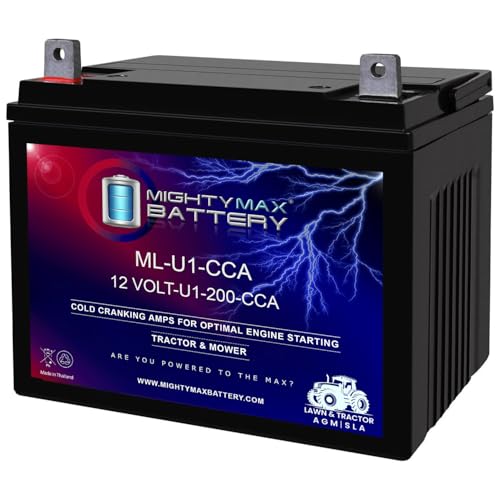
Pros
- True maintenance-free operation – no topping off water or cleaning corrosion
- Strong CCA rating for reliable cold-weather starting on snow blowers or late-season mowing
- Comes fully charged and includes threaded posts for easy nut/bolt terminal hookup
- Works with most 12V small engine starters found on lawn tractors and zero-turn mowers
Cons
- Not a deep-cycle battery – not intended for extended power draws like electric winches or trolling motors
- Weight (nearly 13 lbs) may be slightly heavier than some comparable lithium or AGM options
- Some users may find the nut and bolt terminals require a wrench for installation instead of quick-connect clamps
If you own a riding mower, lawn tractor, zero-turn mower, or even a snow blower, you know how frustrating a dead battery can be. The Mighty Max Battery 12V 200 CCA SLA AGM battery is designed to be a straightforward replacement for many small engine starting applications. It's a sealed lead-acid battery that uses AGM technology, meaning it's completely maintenance-free—no refilling, no acid spills, and no corrosion mess to clean up. For homeowners who just want to hop on their mower and get the grass cut without extra maintenance, this is a practical choice.
Performance-wise, the 200 cold cranking amps are sufficient for most riding mowers and lawn tractors. Even on chilly spring mornings or late-fall leaf cleanup days, this battery should give you reliable starting power. The AGM construction also means it handles vibration better than a flooded battery, which is important when you're bouncing over bumps in the yard. The nut and bolt terminals provide a solid, secure connection that won't loosen up over time—you can tighten them down and forget about them.
Build quality is what you'd expect from a reputable brand like Mighty Max Battery. The case is tough and sealed, so you can install it in a variety of positions (just not upside down). At 12.89 pounds, it's not too heavy to lift in and out of the battery tray. The dimensions (7.75 x 5.11 x 6.25 inches) are standard for many lawn mower batteries, so it should fit most trays without modification.
Setup is about as easy as it gets: remove the old battery, connect the new one (making sure to attach positive and negative correctly), tighten the nuts on the terminals, and you're ready to go. It comes pre-charged, so you don't need to wait for a first charge. Storage is simple too—since it's sealed, you can mount it in the mower all season without worrying about water levels or acid leaks.
One realistic limitation is that this is not a deep-cycle battery. It's built for short bursts of high current to start an engine, not for powering accessories like lights or electric clutches for an extended period. Also, some people prefer the convenience of quick-connect terminals, but the nut and bolt setup here is very secure and standard for many small engine applications.
Overall, the Mighty Max Battery 12V 200 CCA SLA AGM battery is a reliable, no-fuss replacement for your outdoor power equipment. If you want a battery that works when you need it and requires zero maintenance, this is a great pick. It's especially suited for suburban homeowners or rural property owners who want to get back to mowing quickly without dealing with battery headaches.
The 200 Cold Cranking Amps (CCA) rating is the key spec here. For most riding mowers and lawn tractors with engines between 12 and 25 HP, this battery provides enough power for reliable starts even in cooler temperatures. It uses AGM (Absorbent Glass Mat) technology, which means the electrolyte is absorbed into fiberglass mats rather than being free liquid. This gives it lower internal resistance and higher discharge rates than a standard flooded battery. The result is a strong, consistent crank that helps your engine fire up quickly.
Mighty Max Battery builds their SLA AGM batteries with a thick, impact-resistant polypropylene case that can handle the bumps and vibrations of lawn mowing. The sealed design means no acid fumes or corrosion buildup on terminals or cables—a common issue with traditional flooded batteries. Plus, the AGM construction is spill-proof, so you can mount the battery safely in mowers that tip or bounce. The nut and bolt terminals are made of brass or lead alloy and resist stripping.

Pros
- High purity lead means better performance and longer life than recycled lead batteries
- Maintenance free – no watering or cleaning terminals needed
- Strong cold cranking amps ensure reliable starts even in freezing weather
- Wide compatibility with most U1 group size riding mowers and tractors
- Vibration resistant – holds up to the shaking of mowing rough ground
Cons
- Weight of 14.6 lbs may be heavy for some users to lift and install
- Not suitable for large engines requiring higher CCA than 330
- Limited to U1 group size – verify dimensions fit your mower tray
The UPLUS U1 Riding Lawn Mower Battery is a sealed lead-acid AGM battery designed to replace worn-out batteries in garden tractors and riding mowers. It's best suited for homeowners who want a reliable, maintenance-free power source for their weekend mowing chores. With 12V and 330 cold cranking amps, this battery provides enough power to crank most small to mid-size lawn tractor engines, even on chilly spring mornings.
In real-world use, the battery's high cranking performance helps start engines quickly without hesitation. The AGM design is spill-proof and vibration resistant, which is important for mowers that bounce over uneven lawns. Many users find it works well with popular brands like John Deere, Cub Cadet, Husqvarna, Craftsman, and Toro. The dimensions (7.68 x 4.92 x 6.93 inches) fit standard U1 battery trays, though it's worth double-checking your mower's compartment before purchase.
Build quality appears solid thanks to the use of 99.99% pure primary lead instead of recycled lead. This means more consistent charging and less internal corrosion, which may extend the battery's lifespan. UPLUS states it can last over five years with proper care. The battery is completely sealed, so there’s no need to check water levels or worry about acid leaks onto your garage floor or lawn.
Setup involves removing the old battery, cleaning the terminals, connecting the red positive and black negative cables, and securing the hold-down. It’s a straightforward 10-minute job. There’s no maintenance required afterward, which is a real plus for folks who just want to mow and store their mower. The 15-month warranty and US-based support provide peace of mind if any issues arise.
A limitation to consider is the 330CCA rating – while sufficient for most riding mowers, larger garden tractors with V-twin engines might need a battery with higher cold cranking amps. Also, the 14.6-pound weight is manageable but not feather light, so those with strength concerns may want assistance during installation. This battery is non-spillable and can be shipped safely, but it does contain lead and should be recycled properly at end of life.
Overall, the UPLUS U1 battery is a sensible replacement choice for budget-conscious homeowners with a compatible riding mower. It delivers reliable starting, requires zero upkeep, and comes from a brand with a responsive support team. If your mower needs a fresh battery to get through another mowing season, this sealed AGM option is worth a look.
This UPLUS battery provides 12V and 330 cold cranking amps, which is enough to start most single-cylinder and small V-twin lawn tractor engines. The AGM construction means it can deliver high current bursts even in cold temperatures down to -22°F. The calcium-calcium technology helps reduce self-discharge when the mower sits idle over winter. For daily mowing use, the battery holds its charge well and recharges quickly from the mower’s alternator.
The battery uses 99.99% pure primary lead, which resists grid corrosion better than many recycled lead batteries. The case is sealed and vibration resistant, so it can handle the constant shaking of mowing bumpy lawns. There are no vents or caps to leak acid, making it safe for side mounting positions in some mowers. UPLUS claims a lifespan of over five years in typical use, but actual life depends on climate and charging system health. The 15-month warranty covers defects.
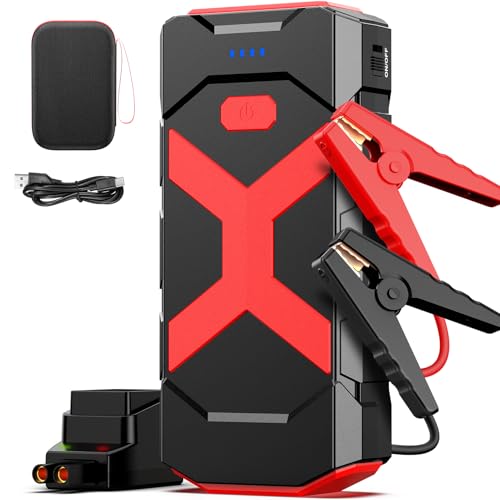
Pros
- High peak current (4000A) easily starts large engines including lawn mowers, trucks, and boats.
- Large 20000mAh battery capacity offers multiple device recharges and many jump starts before needing a recharge.
- Water resistant (IP66) and works in extreme temperatures, making it reliable in various weather conditions.
- Includes a hard carrying case and smart clamps with safety features for easy and safe operation.
Cons
- Weight of 1.93 pounds may be slightly heavier than some ultra-portable models.
- USB output max 5V/3A may charge larger tablets slower than dedicated chargers.
- Some users might prefer a model with built-in AC outlet for powering small appliances.
The BOOKOO A9 is a versatile 4000A jump starter that goes beyond just reviving dead car batteries. It is designed to handle a wide range of engines, including those in lawn mowers, garden tractors, riding mowers, boats, and more. This makes it a practical tool for homeowners with outdoor power equipment, as well as for anyone who wants a reliable emergency power source for their vehicle. Its compact size and included storage case mean it can live in your garage or car glove box, ready when you need it.
In terms of performance, the 4000A peak current is more than enough for most gasoline engines up to 12L and diesel up to 10L. Based on product specifications, it can start a dead battery in seconds, even in extreme temperatures from -4°F to 149°F. The 20000mAh capacity is generous, allowing for up to 50 jump starts per charge, plus it can recharge your smartphone, tablet, or other USB devices multiple times. This dual functionality makes it a handy power bank for camping, tailgating, or everyday use.
Build quality appears solid with a rugged exterior and an IP66 water resistant rating, meaning it can handle rain, snow, and dust. The smart jumper clamps include 10 safety protections such as reverse polarity, over-current, and short circuit prevention, which is reassuring for first-time users. The included hard carrying case keeps everything organized and protects the unit from bumps and scratches.
Setup is straightforward: connect the smart clamps to your battery, and the unit will indicate correct polarity. The built-in 400LM LED flashlight with flash, strobe, and SOS modes adds extra utility for nighttime emergencies or outdoor activities. The jump starter itself recharges via Type-C input, and the dual USB outputs (including Quick Charge 3.0) let you power up devices quickly. Maintenance is minimal—just keep it charged and store it in a dry place.
One realistic limitation is its weight of 1.93 pounds, which is slightly heavier than some ultra-portable models, though still easy to carry. The USB output maxes out at 5V/3A, so charging larger tablets may take a bit longer. Also, it does not include an AC outlet, so it won't power small appliances directly. However, for its intended purpose as a jump starter and power bank, these are minor trade-offs.
Overall, the BOOKOO A9 is a solid choice for homeowners who own lawn mowers, tractors, or other outdoor equipment with batteries. It is also great for anyone who wants a dependable jump starter for their car, boat, or RV. With a 24-month warranty and lifetime technical support, it offers good value for the price. If you need a versatile, weather-resistant power source that can handle multiple tasks, this is worth considering.

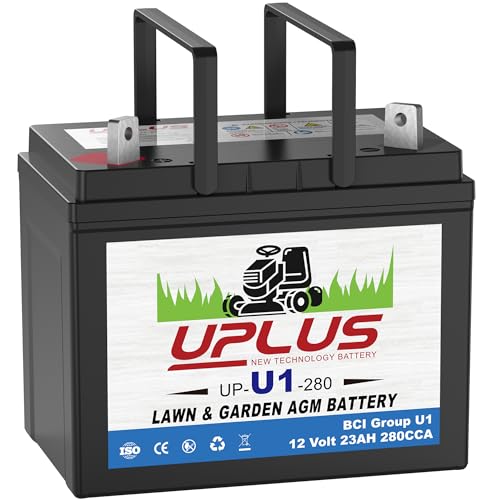
Pros
- Maintenance-free design – no water refills or acid spills, perfect for homeowners who prefer low upkeep.
- Strong cold cranking amps (280 CCA) for reliable starting even in harsh winter conditions.
- Durable AGM construction resists vibration and leaks, ideal for rough terrain and frequent use.
- Wide compatibility with major riding mower brands simplifies replacement decisions.
Cons
- Rated only 23Ah – may have shorter runtime for electric accessories compared to larger batteries.
- Heavier than some lithium alternatives (14.1 lbs) – may require careful handling during installation.
- Some users may prefer a battery with higher CCA for larger engines or extreme cold climates.
The UPLUS U1 riding lawn mower battery is a sealed lead-acid AGM replacement designed for homeowners who want a reliable, maintenance-free power source for their gas-powered mower. This battery replaces the standard U1 group size (7.68 x 4.92 x 6.93 inches) and fits many popular riding mowers from John Deere, Cub Cadet, Husqvarna, Craftsman, Toro, and others. With 12 volts, 23 amp-hours, and 280 cold cranking amps, it provides enough power to start most lawn tractors and garden tractors reliably, even in cold weather.
In real-world use, the 280 CCA rating ensures strong starting performance down to -22°F, which is a key advantage for homeowners in colder regions. The sealed AGM construction means there is no need to check water levels, no risk of acid spills, and the battery is vibration resistant—important for the bumpy ride of a mowing session. Users can expect a service life of over five years when properly cared for, thanks to the use of 99.99% pure primary lead that improves charge acceptance and reduces internal corrosion.
Durability is a strong point: the calcium-calcium technology lowers the self-discharge rate and minimizes grid corrosion, which helps the battery hold a charge longer during off-season storage. The battery is also leak-proof and can be mounted in various orientations (except inverted). This makes it a practical choice for homeowners who store their mowers in unconditioned garages or sheds.
Installation is straightforward for anyone familiar with basic battery replacement. The terminals are clearly marked: left positive (red) and right negative (black). No extra tools beyond a basic wrench set are needed. The battery weighs 14.1 pounds—similar to other U1 AGM batteries—so lifting it into the tray is manageable for most adults. After connecting the leads, the mower should start right up if the charging system is working properly.
A realistic limitation is the 23Ah capacity, which is standard for this group size but lower than some larger batteries. This means it is best suited for starting and powering basic electrical components (lights, PTO clutch)—not for extended use of high-draw accessories. Some users with large engines or frequent stop-start mowing might prefer a battery with higher CCA, but for most standard riding mowers, this is adequate.
Overall, the UPLUS U1 battery is a solid choice for homeowners seeking a dependable, long-lasting replacement battery. Backed by a 15-month warranty and local after-sales support from a California warehouse, it offers peace of mind. If you are looking for a maintenance-free option that handles cold starts and resists vibration, this battery is worth considering for your lawn tractor or garden mower.
Safe Jump-Starting for a 12-Volt Mower
A jump-start supplies temporary power to help a compatible 12-volt riding mower or zero-turn start. It does not repair a battery that has a failed cell, restore a damaged cable, or fix a charging-system fault. Use the mower and booster or donor equipment instructions as the authority for connection points and sequence, because battery placement and grounding arrangements differ among machines.
Confirm the Battery and Prepare the Mower
Park the mower on a level surface, set the parking brake, turn the ignition off, and remove the key. Disengage the blades and keep hands, clothing, and tools clear of moving parts. Allow the engine and electrical equipment to cool if the mower has recently been running, and work in a ventilated area away from flames, cigarettes, or anything that could create a spark.
Wear eye protection and acid-resistant work gloves when working around a lead-acid battery. Do not jump a case that is cracked, swollen, leaking, unusually hot, or otherwise visibly damaged. A damaged battery can expose corrosive electrolyte or present other hazards; stop and get appropriate service or disposal guidance rather than connecting a booster.
Read the battery label and mower manual to verify that the mower has a 12-volt starter battery and to locate its positive and negative terminals. The red or plus-marked terminal is positive, and the black or minus-marked terminal is negative, but verify the markings instead of relying only on cable color. If the battery is frozen or its condition is uncertain, do not attempt a jump-start until the manufacturer’s safety guidance has been checked.
Choose a Booster or Donor Vehicle Correctly
A portable jump starter should be specified for 12-volt starting applications and used exactly as its manufacturer directs. Check that the unit is charged and that its clamp cables and insulation are intact. Product descriptions for the BOOKOO 4500A, BOOKOO A9, and BOOKOO 6000A list lawnmowers or tractors among their intended applications, but the mower manual and the booster instructions still determine whether a particular connection is suitable.
If using a passenger vehicle as the donor, switch the vehicle’s engine off and keep it off throughout the connection and starting attempt. This is an essential precaution: a running donor vehicle can expose the mower’s charging circuit to electrical conditions that may damage its stator or voltage regulator. Do not assume that a car’s higher-capacity electrical system is harmless simply because both batteries are labeled 12 volts.
Keep both machines switched off while arranging the leads, and make sure the cables can reach without stretching across hot, moving, or sharp parts. Follow the exact connection points and sequence stated in the mower and booster manuals. If the mower manual specifies a frame ground rather than the battery’s negative post, use the designated point instead of improvising.
Connect With Polarity Checked at Every Step
Identify positive and negative at both ends before placing a clamp. Connect positive to positive and negative to negative, or use the manufacturer-designated ground point where the mower instructions require it. Keep clamps from touching each other or bridging a terminal to nearby metal, and do not let a clamp hang loose where vibration could move it.
Polarity mistakes can cause sparks, blow a fuse, damage wiring, or harm electronic charging components. If the terminal markings are obscured by corrosion, clean and identify them before connecting anything. Do not connect based on which side of the battery a terminal occupies: U1 and U1R cases can place positive posts differently, and cable colors or routing may not make a mismatched battery obvious.
Once connected according to the manuals, make the starting attempt without revving a donor vehicle, which must remain off. Use the mower’s normal starting controls, including its seat, brake, and blade-control safety conditions. Never bypass an interlock or bridge starter terminals to force the engine to crank.
If the engine does not start promptly, stop rather than repeatedly cranking for long periods. Disconnect the equipment in the reverse of the prescribed connection sequence, keeping loose clamps separated and away from metal. The exact sequence can vary by booster design and mower grounding instructions, so follow those instructions instead of relying on a generic diagram.
Read the Result Instead of Repeating the Jump
If the mower starts with assistance, the result shows that extra starting power helped, not that the battery is healthy. A discharged battery may accept a proper recharge, while an aged or damaged battery may fall back to a no-start condition soon afterward. Arrange a battery check and use a charger intended for the battery chemistry and voltage rather than treating repeated jumps as a repair.
If the starter still turns slowly or the solenoid chatters, inspect for loose or corroded connections and weak battery condition. A rapid series of clicks can occur when voltage collapses under starter load, but a defective solenoid, starter, ground cable, or safety circuit can also prevent cranking. A silent no-crank condition points to a wider set of possibilities, including an open connection, fuse, ignition circuit, or interlock, so jumping alone cannot identify the fault.
A battery that starts the mower but goes flat again deserves charging-system diagnosis. The mower’s stator and voltage regulator supply charging output while the engine runs, and a fault there can leave a replacement battery discharged as well. For a related overview of riding mower battery selection and fitment, consult this mower battery sizing and retail guide.
Check Battery Voltage and Connections Afterward
A digital multimeter can help separate a low state of charge from a recurring electrical problem. With the mower off and the battery rested, set the meter to DC volts and place the probes on the corresponding positive and negative terminals. A healthy, fully charged 12-volt lead-acid battery commonly reads about 12.6 to 12.8 volts at rest; a reading near 12.2 volts indicates substantial discharge, while a reading below 10.5 volts can indicate a failed cell or severely compromised battery.
A resting reading is not a complete condition test. A weak battery may show acceptable voltage without a load, then drop sharply as the starter draws current. If the reading is low, charge with an appropriate charger and retest according to the battery maker’s instructions; do not use a high-amp automotive charging setting unless the battery manufacturer specifically permits it.
Inspect the terminals and cables with the equipment off. Look for looseness, corrosion, damaged insulation, or a poor ground connection between the negative cable and chassis. Do not let a wrench connect a battery terminal to the mower frame, and avoid sparks around the battery, since lead-acid batteries can release flammable gas during charging.
If cleaning is needed, use the battery and mower manufacturer’s guidance and suitable protective equipment. Keep cleaning liquid and tools away from open vents and electrical components, and make sure the terminals are dry before reconnecting. For battery removal, disconnect the negative cable first; for installation, connect the positive cable first and the negative cable last, while maintaining correct polarity.
Confirm Charging Output and Battery Fitment
After a successful start, a charging-system check can help determine whether the mower is replenishing the battery. With a meter connected as directed by the service manual, a typical diagnostic benchmark is about 13.5 to 14.5 volts DC at full operating throttle. This is a general reference, not a substitute for the specific mower’s service specifications, and the measurement should be made only if the manual describes a safe procedure.
An output outside the expected range does not by itself identify the failed component. Wiring, the stator, regulator, connections, or the battery may all need evaluation. If the reading is abnormal or the mower repeatedly needs a jump, avoid buying a battery until the charging circuit has been checked; otherwise a new battery may face the same discharge problem.
If replacement is needed, compare the old battery’s group, voltage, terminal orientation, terminal hardware, and required cranking rating with the mower manual. Standard Group U1 and U1R batteries can differ in positive-terminal position, so a case that appears similar may leave factory cables too short or put polarity on the wrong side. The listed UPLUS U1 batteries are 12-volt sealed AGM options with 280 or 330 CCA, while the Mighty Max ML-U1-CCA is listed as a 12-volt sealed lead-acid AGM battery rated at 200 CCA; neither rating should be assumed suitable without checking the mower’s specification.
Cranking needs vary with engine design and the equipment maker’s requirements, so select the specified CCA rather than choosing by appearance alone. Check that the terminal hardware matches the mower cables and that the hold-down secures the case without pinching wires. A U1 battery is not automatically interchangeable with a U1R merely because the labels or dimensions look close.
Prevent the Next Dead-Battery Start
Long periods of storage can leave a lead-acid battery discharged, and remaining at a low state of charge can contribute to sulfation. Keep the battery charged according to its manufacturer’s storage directions, using a compatible smart maintainer rather than leaving an unsuitable charger connected unattended. Disconnecting the negative cable during storage may reduce some unwanted drain, but first check the mower manual for memory or storage requirements.
Before seasonal storage, check that the battery is secure, the terminals are clean, and the mower is switched off. If a fully charged battery repeatedly loses charge while parked, investigate parasitic draw or a charging-system issue instead of assuming the battery alone is at fault. Recheck voltage and connections before the next start, especially after extended storage.
For a no-start today, verify the battery condition, use a compatible 12-volt booster, preserve polarity, and keep any donor vehicle engine off. Then test the battery and charging system rather than relying on repeated jumps. That sequence helps distinguish a temporary discharge from a battery or mower fault and reduces the chance of turning a simple starting problem into electrical damage.



Write Your Review
No reviews yet. Be the first to share your experience!