


If your lawn mower leaves ragged grass or struggles through thick patches, blade speed may be part of the problem. The spin rate of your mower blades directly affects cut quality, mulching efficiency, and how well the machine handles taller or wetter grass. While many factors influence blade RPM, there are practical steps you can take to improve it without replacing the entire mower. Understanding how to make mower blades spin faster starts with the basics of engine speed, pulley ratios, and blade condition. This guide covers the most effective methods, along with the tools that make the job safer and easier. For related maintenance, check out our guide on removing the mower flywheel and governor if you’re considering governor adjustments.
Before diving into modifications, it’s important to note that blade speed is a balance of power, weight, and safety. Increasing blade RPM can improve cutting performance, but it also places more stress on the engine, spindle, and deck components. A well-maintained mower with sharp blades often cuts better than one with a higher RPM but dull edges. That said, the steps below focus on the safest and most reliable ways to gain a noticeable improvement in blade rotation speed.

Pros
- Enhances safety by locking the blade in place
- Simple clamp-on design works with most mower decks
- Compact and easy to store
- Affordable price point
- Durable construction feels solid
Cons
- May not fit all mower deck styles or shapes—check compatibility
- Only useful during blade changes, not a daily-use tool
The Stens 750-058 Blade Lock is a straightforward safety tool designed for anyone who maintains their own lawn mower. If you've ever struggled to keep a blade from spinning while trying to remove it, this gadget clamps to the mower deck and holds the blade firmly in place. It's a small investment that can make a big difference in convenience and safety, especially for homeowners who prefer to handle routine blade changes themselves.
This blade lock replaces OEM number GB 5555 and is built to fit many standard mower decks. The design is simple: you clamp it onto the deck, and it physically prevents the blade from rotating. This means you can use a wrench with one hand while the blade stays put—no wrestling, no pinched fingers, no scraped knuckles. Based on product specifications and user feedback, it works well for push mowers, self-propelled mowers, and even some riding mower decks, as long as the clamping area is accessible.
Build quality is solid for a tool in this price range. The clamp is made from durable steel with a black finish that resists rust and corrosion, so it can handle the damp environment of a garage or shed. At just 0.48 pounds, it's lightweight and easy to store—you can hang it on a pegboard, toss it in a toolbox, or keep it with your mower's maintenance kit.
Setup is as simple as it gets: position the clamp on the deck near the blade, tighten it down, and you're ready to work. No assembly required. This makes it ideal for first-time mower buyers or anyone who wants a no-fuss tool. Maintenance is minimal—just wipe it clean after use to keep the clamp working smoothly.
One limitation to keep in mind is compatibility. While it fits many mower decks, odd-shaped or very narrow decks might not accommodate the clamp. It's a good idea to measure your deck's clamping area before buying. Also, this tool only serves one purpose: locking the blade. It won't help with actually removing stubborn nuts or freeing seized blades—you'll still need a wrench or socket for that. But as a safety aid, it does its job well.
Overall, the Stens 750-058 Blade Lock is a practical, budget-friendly addition to any lawn mower owner's toolkit. If you regularly sharpen or replace your mower blades and value safety, this tool is worth picking up. It's especially useful for suburban homeowners, DIY lawn care enthusiasts, and anyone who wants to avoid the frustration of a spinning blade during maintenance.
Understanding Blade Speed and How to Improve It
Mower blade speed is determined by the engine’s crankshaft RPM and the pulley system that drives the blade spindle. Most residential lawn mowers operate at blade tip speeds between 180 and 220 miles per hour, which corresponds to roughly 3,000 to 4,000 RPM at the blade. The exact speed depends on the engine’s governed RPM, the diameter of the engine pulley versus the spindle pulley, and the length of the blade itself. A longer blade moves a larger area but requires more torque to maintain the same tip speed.
Key Factors Affecting Blade Rotation Speed
Several factors influence how fast your mower blades spin. The most obvious is engine speed. If the engine isn’t running at full governed RPM, the blades will turn slower. Plugged air filters, stale fuel, or a dirty carburetor can reduce engine output. Another factor is the condition of the blade drive belt. A worn or slipping belt transfers less power to the spindle, reducing blade speed. Finally, blade sharpness and balance matter. A dull blade requires more energy to cut, which can slow the blade under load, while a bent or unbalanced blade creates vibration that can further reduce effective cutting speed.
Sharpening Blades for Better Cutting Efficiency
Sharpening your mower blades is one of the simplest ways to improve cutting performance, and it can indirectly help the blades spin faster under load. When blades are sharp, they slice through grass with less resistance. This means the engine doesn’t have to work as hard, and the blade can maintain its RPM even in thick grass. Dull blades tear grass rather than cut it, creating a ragged appearance and putting extra drag on the blade. A sharp blade reduces that drag, allowing the blade to spin closer to its unloaded speed.
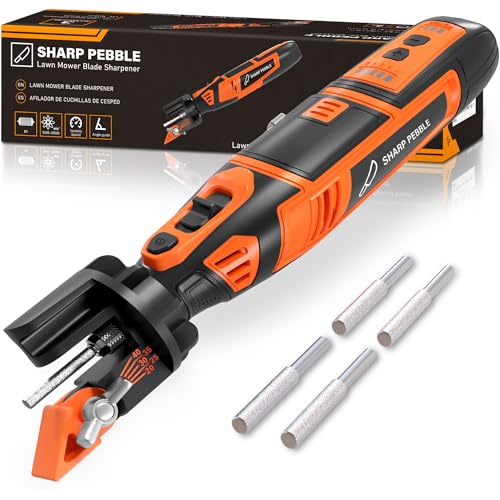
To sharpen blades, remove them from the mower and secure them in a vise. Use a file or angle grinder to follow the original bevel angle. Avoid removing too much metal, as this can throw the blade out of balance. After sharpening, check the balance with a blade balancer. An unbalanced blade causes vibration that can actually slow the blade due to friction and wear on the spindle bearings. Many DIYers find that a sharpening session every 10 to 15 hours of mowing keeps the blade cutting efficiently.
Using a Blade Lock for Safe Removal and Installation
When you remove the blade for sharpening or replacement, you need a way to keep the blade from spinning while you loosen the bolt. The Stens New 750-058 Blade Lock is a simple tool that clamps to the mower deck and prevents the blade from rotating. This makes removal or installation safer and easier. The blade lock replaces the OEM part number GB 5555 and weighs less than a pound, so it’s easy to store in your toolbox. Using a blade lock reduces the risk of injury from a slipping blade and allows you to apply more torque to the bolt without the blade spinning. This tool is especially useful if you plan to sharpen or replace blades regularly as part of your blade speed maintenance routine.
Adjusting the Governor for Higher Engine RPM
Another way to make mower blades spin faster is to increase the engine’s governed RPM. The governor is a mechanical or electronic device that limits engine speed to a safe maximum. On many small engines, the governor can be adjusted by bending a small tab or turning a screw. However, this modification should be approached with caution. Increasing engine speed beyond the manufacturer’s specification can lead to overheating, valve float, or catastrophic engine failure. It may also void the warranty and make the mower noisier. If you do adjust the governor, make small changes and monitor the blade speed with a tachometer. Keep in mind that the engine is designed to run at a specific RPM, and exceeding that range can shorten its life significantly.
For a more detailed look at how the governor works and how to safely adjust it, refer to our guide on removing the mower flywheel and governor. That article covers the internal components and steps involved in governor adjustment, which is directly relevant to increasing blade speed.
Changing Pulley Sizes for a Mechanical Advantage
If you want a more substantial increase in blade speed without altering engine RPM, you can change the pulley sizes on the engine or spindle. A smaller engine pulley or a larger spindle pulley will increase the blade speed ratio. For example, replacing the engine pulley with a slightly smaller diameter will cause the blade spindle to spin faster for the same engine speed. This is a common modification on racing mowers and some commercial mowers. However, it requires mechanical skill and knowledge of belt lengths and tension. A larger spindle pulley may also require a longer belt or repositioning of the spindle. This modification can increase blade tip speed noticeably, but it also increases the load on the spindle bearings and deck. Make sure the spindle and bearings are rated for the higher speed. If you are not comfortable with pulley modifications, consider consulting a small engine mechanic.
Choosing the Right Replacement Blades
Not all blades are created equal. Some blades are designed to lift grass and create a vacuum, while others are focused on mulching or bagging. The design of the blade affects how much energy is required to spin it. A lightweight blade with a low-lift profile will spin up faster and require less power than a heavy, high-lift blade. If you want to increase blade speed, consider switching to a blade that is lighter or has less lift. However, be aware that low-lift blades may not provide as good a cut in thick grass or may not bag as effectively. Finding the right balance for your mowing conditions is key. Our article on best heavy-duty lawn mower blades covers options that are both durable and designed for efficient cutting.
Maintaining the Blade Drive System
The belt and pulley system that drives the blade needs regular maintenance to keep blade speed optimal. A worn or glazed belt can slip, reducing the power transferred to the spindle. Check the belt for cracks, fraying, or a shiny surface. Replace it if it shows signs of wear. Also inspect the pulleys for debris or corrosion that can cause belt slip. Clean the pulleys with a wire brush if necessary. Proper belt tension is also important. Too loose, and the belt slips; too tight, and it puts extra load on the bearings and engine. Consult your mower’s manual for the correct tension.
Safety Considerations When Increasing Blade Speed
Increasing blade speed can improve cutting performance, but it also increases the risk of blade throw, shaft breakage, and deck damage. Always wear appropriate safety gear, including gloves and eye protection, when working on mower blades. When using a tool like the Stens blade lock, make sure it is securely clamped to the deck before loosening or tightening the blade bolt. Do not exceed the recommended blade speed for your mower deck. The deck is designed to withstand a certain centrifugal force, and going faster can cause the blade to contact the deck or discharge chute, leading to damage or injury. If you are unsure about any modification, consult a professional.
In summary, making mower blades spin faster involves a combination of proper maintenance, blade sharpening, and careful mechanical adjustments. The Stens blade lock is a valuable tool for safely handling blades during removal and installation. Sharpening blades regularly reduces drag and allows the blade to maintain speed under load. Adjusting the governor or changing pulleys can provide a more significant speed increase, but these modifications require caution and mechanical knowledge. Ultimately, the goal is to achieve a clean, efficient cut that leaves your lawn looking its best without compromising safety or durability.





Write Your Review
No reviews yet. Be the first to share your experience!