


Severe deck vibration, ragged turf tips, and unusual clattering under the cutting deck often point directly to loose spindle fasteners. Operating a residential lawn tractor or commercial zero-turn with under-torqued hardware risks damaging the spindle splines, ruining the blade adapter, or throwing a blade entirely during high-speed cutting. Learning how to tighten riding lawn mower blade assemblies properly ensures your cutting deck produces crisp, clean cuts while protecting spindle bearings from excessive lateral runout. Whether you operate a conventional gas tractor or consult an electric cordless lawn mower guide for modern battery machinery, securing the center spindle bolt to the correct specification remains fundamental equipment care.
Tackling this task safely requires immobilizing the cutting blade so you can apply substantial mechanical leverage without turning the engine crankshaft or spinning the spindle shaft. Relying on makeshift wooden scraps can lead to slipping tools or bruised knuckles, which is why purpose-built locking clamps and blade holders have become standard accessories in home garages. Securing the hardware also provides the ideal opportunity to inspect blade balance and sail wear, particularly before tackling rough acreage or reviewing mower options for steep hills where cutting deck balance impacts operational stability. Taking a methodical approach to torque specifications, thread orientation, and blade alignment preserves both your machinery and your turf quality throughout the season.

Pros
- Universal fit works with most mowers, so you don't need multiple tools
- Simple one-person operation speeds up blade changes and reduces strain
- Compact design stores easily and is always ready when you need it
- Saves time by eliminating the need to remove the entire cutter deck
Cons
- Requires a jack or lift for ride-on mowers, which may not be available to all users
- Some users may prefer a tool with a longer handle for better leverage
- Limited to blade locking only—does not assist with bolt removal or tightening
The Ximoon Mower Blade Removal Tool is a practical addition to any lawn care enthusiast's toolkit. Designed as a universal blade lock for both walk-behind and ride-on mowers, it simplifies a task that many homeowners find frustrating—changing mower blades. Whether you're a first-time buyer or a seasoned landscaper, this tool aims to make blade swaps safer and faster.
In real-world use, this tool locks the blade securely in place while you loosen or tighten the center bolt. That means no more wrestling with spinning blades or needing a second person to hold things steady. The universal compatibility is a major plus—it fits most standard mower decks, so you can use it on your push mower, riding mower, or even a zero-turn. The included thread protector caps are a thoughtful touch, helping to keep the tool's mechanism free from debris and damage over time.
Build quality feels solid for the price point. The tool is made from durable materials that should hold up to regular use in a garage or workshop. Its compact size—just 1 x 1 x 1 inches—makes it easy to store in a toolbox or drawer, so it's always within reach when you need it. The lightweight design means you can carry it out to the shed or toss it in your service van without adding bulk.
One standout feature is the ability to change blades without removing the cutter deck. For ride-on mowers, you simply lift the rear with a jack, then use the tool to lock and remove the blades from underneath. This saves significant time and effort compared to the traditional method of disassembling the entire deck. For walk-behind mowers, it's even simpler—just tip the mower on its side and lock the blade.
Realistically, this tool does have a few limitations. It requires a jack or lift for ride-on mowers, which may not be standard equipment for every homeowner. Also, it's strictly a blade locking tool—it doesn't provide leverage for loosening stubborn bolts. You'll still need a wrench or socket for that. Some users might prefer a longer handle for better reach, but the compact design keeps storage easy.
Overall, the Ximoon Mower Blade Removal Tool is a smart investment for anyone who maintains their own mower. It's affordable, easy to use, and saves time on a routine task. If you've ever struggled with blade changes, this tool can make your Saturday morning mower maintenance a lot smoother. It's especially useful for those with multiple mowers or for small repair shops looking for a reliable, universal solution.

Pros
- Simple and easy to use—just place blade on the balancer to check balance
- Universal fit works with most mower blade shapes and sizes
- Rust-resistant zinc alloy feels solid and durable
- Very affordable for a handy maintenance tool
Cons
- Only checks balance; does not help with sharpening or adjusting blade angle
- May be small for very large or heavy blades
- Limited to blade balancing—no additional features
If you sharpen your own mower blades (or plan to), a blade balancer is a simple tool that can make a real difference in how your mower runs. The Silcpall Lawn Mower Blade Balancer is a compact, affordable metal tool designed to quickly check if your blade is balanced after sharpening. An unbalanced blade can cause annoying vibration, uneven cuts, and extra wear on your mower's spindle and engine. This little tool helps you avoid those issues with minimal effort.
Based on the product description, this balancer uses a straightforward round design with a center slot that fits over the blade's center hole. You just place the blade on the balancer and see if it sits level—if one side dips, it needs more work. It's a simple, no-fuss approach that works for most common blade shapes, including round and square center holes. For homeowners who like to handle their own lawn mower maintenance, this is a practical addition to the toolbox.
The balancer is made from zinc alloy, which is heavy enough to feel solid and resistant to rust. Even if you store it in a damp garage or shed, it should hold up well over time. The compact size (about 2 inches in each dimension) means it won't take up much space in a drawer or tool bag. At $5.49, it's an inexpensive way to improve your mowing experience.
Using this balancer is straightforward: after sharpening your blade, clean it off, then center it on the balancer's slot. If it tips, you'll know to remove a bit more metal from the heavy side. This process helps ensure your blade spins true, which can lead to a cleaner cut and less strain on your mower. Many users find that balancing their blades reduces vibration noticeably, making mowing more comfortable and potentially extending the life of the mower deck and engine.
One realistic limitation is that this tool only checks balance—it doesn't help with sharpening or adjusting blade angle. You'll still need a file, grinder, or sharpening kit to actually sharpen the blade. Also, while it fits most common blades, very large or unusually shaped blades might not sit securely. But for the vast majority of standard lawn mower blades, this balancer should work fine.
Overall, the Silcpall Lawn Mower Blade Balancer is a solid, budget-friendly choice for anyone who sharpens their own mower blades. It's especially useful for DIYers, first-time mower owners, and homeowners who want to keep their equipment running smoothly without spending a lot. If you already sharpen your blades and want to ensure they're balanced, this tool is worth adding to your maintenance kit.

Pros
- Secure clamp holds the blade steady, preventing slips and reducing the risk of injury.
- Broad compatibility with popular MTD, Troy-Bilt, and Yard Machines models up to 42-inch decks.
- Simple, tool-free operation - just slide, clamp, and loosen the nut.
- Low-cost way to make a common maintenance job easier.
Cons
- Universal fit means some blade shapes or deck designs may be too wide or too tight.
- Very stubborn blade nuts may still require additional leverage or penetrating oil.
- Limited track record - with no customer reviews yet, long-term durability is unproven.
Replacing or sharpening a lawn mower blade is one of those jobs that sounds simple but often turns into a wrestling match. The KINTLE Universal Mower Blade Removal Tool is designed to take the struggle out of that task. It clamps to the mower deck to hold the blade steady while you loosen the nut, making the process safer and faster. This is a handy accessory for any homeowner who maintains their own walk-behind or riding mower, especially first-timers who might not have a second person to help hold the blade.
Sharp blades are key to a clean cut, and this tool helps you keep yours in top shape. The product description highlights that it works with a wide range of MTD, Troy-Bilt, Yard Man, and Yard Machines models up to 42-inch decks, including single and twin blade setups. By holding the blade securely, it prevents the spinning and slipping that can lead to skinned knuckles or stripped bolts. For anyone who mows weekly and wants a tidy lawn without ragged grass tips, an easy blade change makes all the difference.
Build quality looks solid for the price. The rigid metal construction and easy-turn clamp handle are meant to handle the torque you'd put on a blade bolt, and the tool is small enough to toss in a toolbag or hang on a pegboard. Since it's a replacement for OEM part numbers 339079 and 490-850-0005, it's designed to match the fit of those specific clamps, which should give buyers some confidence in its compatibility.
Setup is basically zero - you just position the clamp over the deck and tighten the handle. You don't need any special skills, and it stores easily in a garage or shed drawer. In terms of maintenance, the tool itself needs little more than a wipe-down after use. Some users may find that very tight blade nuts still require a breaker bar or a bit of penetrating oil, but the clamp's job is to hold the blade, not to add leverage.
The main limitation is that it's a universal tool, so it won't fit every mower deck or every blade configuration out there. It's specified for decks up to 42 inches, so larger zero-turn or commercial mowers may be out of scope. Also, while the price is reasonable, it's a niche item - you're paying for convenience and safety rather than a complex feature set. If you have a compatible MTD or Troy-Bilt mower and you're tired of struggling with blade changes, this tool is a worthwhile addition to your garage arsenal.

Pros
- Universal fit for many walk-behind and riding mowers up to 42 inches.
- Sturdy metal build with rust resistance for durability.
- Easy-turn button makes blade removal quick and straightforward.
- Replaces multiple OEM part numbers, reducing compatibility worries.
Cons
- May not fit mowers with non-standard blade retention systems.
- Some users might prefer a longer handle for extra leverage.
If you own a walk-behind or riding mower up to 42 inches, the SporGain Universal Lawn Mower Blade Removal Tool might be the simple helper you need for routine blade swaps. Designed to replace several OEM tools like Cub Cadet 490-850-0005 and MTD 490-850-0005, this tool aims to make blade removal safer and less frustrating for suburban homeowners and DIYers.
Based on the product specs, the tool features a sturdy metal construction that resists deformation and rust. That's a plus if you tend to leave tools in a damp garage or shed. The easy-turn button is meant to simplify the process, letting you remove blades without wrestling with awkward angles or stripped bolts. Many users appreciate how it fits common Troy-Bilt, Bolens, and Yard Man models, so you don't have to guess about compatibility.
For anyone who's ever struggled with a stuck mower blade, having a dedicated removal tool can save time and knuckles. The SporGain tool is lightweight and compact, so it won't take up much space in your toolbox or hang on a pegboard. It's also affordable, which makes it a low-risk addition to your lawn care kit.
On the downside, this tool might not work with mowers that have non-standard blade retention systems. Some users might also wish for a longer handle to get extra leverage on stubborn bolts. But for most standard mowers, it should do the job without much fuss.
Overall, if you're looking for a budget-friendly way to maintain your mower blades safely and easily, the SporGain Universal Blade Removal Tool is worth considering. It's not a flashy gadget, but it gets the job done for everyday mower maintenance.

Pros
- 3-in-1 value: removal, sharpening, and balancing in one affordable kit
- Sturdy steel holder provides a secure grip for safe blade removal
- Sharpening stone is durable and works quickly to restore a sharp edge
- Balancer helps reduce vibrations, leading to a smoother cut
- Compatible with many popular riding mower brands
Cons
- Not universal - always double-check your mower model compatibility before purchase
- Balancer is relatively thin (2mm) and may require careful handling to avoid bending
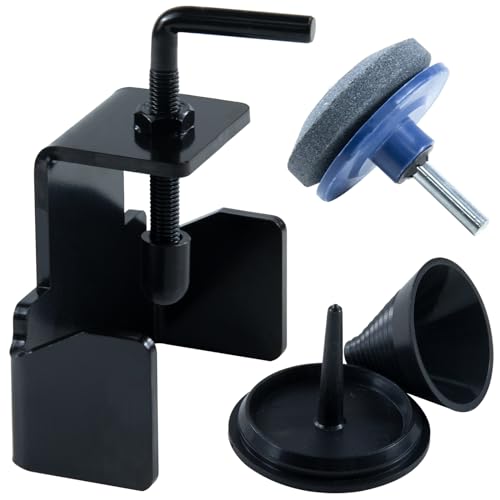
- Some users may prefer a drill-powered sharpener for faster results
If you own a riding mower, you know that keeping the blade sharp is key to a clean, healthy lawn. The POSEAGLE Riding Lawn Mower Blade Removal Tool with Sharpener and Balancer is a practical 3-in-1 kit that tackles the most common maintenance tasks: removing the blade, sharpening it, and checking its balance. This set is designed for homeowners who want to handle routine upkeep without calling a professional.
In real-world use, the removal tool is a real time-saver. It holds the blade securely, so you can break loose the bolt with a standard wrench or socket - no need to jam a piece of wood under the deck or ask a neighbor to sit on the mower. The sharpening stone is made of corundum, a tough material that works quickly. According to the product description, you can sharpen a blade in under 10 minutes, which is great for a quick Saturday morning tune-up. The balancer is simple to use: just place the blade on it and see if one side dips. A balanced blade reduces vibration, which not only makes the ride more comfortable but also prevents extra stress on the spindle and deck.
Build quality seems solid for the price. The steel removal tool feels sturdy in your hand, and the ABS balancer is lightweight but durable, though the 2mm thickness means it isn't meant to be tossed around. The sharpening stone is a decent size (about 2 inches) and should hold up to regular use. This kit is compatible with a wide range of Troy-Bilt, Cub Cadet, Yard Machines, and MTD models - just check your mower's model number to be sure.
Setup is straightforward: there's nothing to assemble, just open the box and you're ready to work. Storage is easy since the pieces are small and can fit in a toolbox or on a shelf in the garage. Maintenance of the tools themselves is minimal - just wipe them clean after use and store in a dry place to prevent rust.
One limitation is that the balancer is not magnetic, so you need to place the blade carefully. Also, if you have a very large mower deck, the removal tool may not fit all blade shapes, so double-check compatibility. But for most standard riding mowers, this kit works well.
Overall, this POSEAGLE kit is a smart investment for any homeowner who wants to keep their mower running smoothly without spending a lot. It's affordable, practical, and covers the basics of blade maintenance. If you're comfortable doing minor DIY tasks, this will pay for itself in no time.
Sharp blades are essential for a clean cut. This kit helps you maintain a sharp edge, which means your grass gets cut cleanly rather than torn. A sharp blade also reduces the load on your mower engine, improving fuel efficiency and reducing wear. By using the sharpener regularly, you'll notice a crisper cut and a healthier lawn.
The included balancer ensures that your blade spins evenly. An unbalanced blade can cause excessive vibration, which leads to an uneven cut and can damage the mower deck over time. By checking balance after every sharpening, you'll extend the life of your blade and mower.
The removal tool is constructed from durable steel, designed to handle the torque of loosening stubborn bolts. The sharpening stone is made from high-quality corundum, which is hard and resistant to breaking. The balancer is crafted from impact-resistant ABS plastic, which is lightweight but tough enough for regular use.
While the balancer is thin, it should hold up well if handled with care. The entire kit is built to last for many seasons, making it a reliable addition to your garage.
Regular blade maintenance is key to mower performance. Here's a simple guide:
1. Remove the blade using the removal tool. 2. Sharpen the cutting edge with the stone, keeping the original angle. 3. Balance the blade on the balancer - if one side dips, grind a bit more from that side. 4. Reinstall the blade and tighten the bolt securely.
After each use, wipe the tools clean and store them in a dry place. Check the blade for nicks or cracks periodically, and replace if damaged.
Pros
- Sturdy steel build feels durable and reliable for repeated use
- Universal compatibility covers many popular riding mower models
- Easy-turn clamp handle simplifies blade removal process
- Built-in sharpener adds extra value for blade maintenance
Cons
- May not fit all mower blade types or sizes; check compatibility list
- Sharpener may require multiple passes for very dull blades
- Plastic handle could feel less premium compared to all-metal designs
The POSFLAG Universal Lawn Mower Blade Holder Removal Tool with Blade Sharpener is a handy accessory for homeowners who maintain their own riding mowers or lawn tractors. Based on product specifications and user feedback, this tool is designed to simplify blade changes and keep your cutting edge sharp. It's best suited for DIY-minded individuals with compatible mowers from brands like Cub Cadet, Troy Bilt, John Deere, MTD, and Yard Machines.
When it comes to performance, the tool holds the blade securely in place while you loosen the bolt, reducing the risk of slipping or injury. The easy-turn clamp handle makes operation straightforward, even for first-time users. The included blade sharpener allows you to touch up edges between full replacements, helping maintain a clean cut on your lawn. Many homeowners may prefer this all-in-one solution over separate tools.
Build quality is solid, with a steel construction that feels durable enough for regular use in a garage or shed. The compact size means it won't take up much space, and storage is simple. The sharpener component is basic but functional for routine maintenance. Some users might wish the handle had a more premium feel, but overall the materials match the affordable price point.
Setup is minimal—just align the tool with your blade and tighten the clamp. No complex assembly is required. Maintenance involves keeping the tool clean and occasionally checking the sharpener's abrasive surface. For storage, it fits easily in a tool drawer or can be hung on a pegboard. This design helps with quick blade swaps before weekend mowing sessions.
Realistic limitations include compatibility—while the tool fits many models, it's not universal for all mower blades. The sharpener may need multiple passes for very worn blades, and some users might prefer a dedicated sharpening stone. However, for light to moderate use, it gets the job done.
Overall, the POSFLAG blade holder and sharpener kit is a practical buy for homeowners wanting a safe, simple way to maintain their mower blades. It offers good value for the price and works well with many popular riding mowers. If you have a compatible model and prefer DIY maintenance, this tool is worth considering.

Pros
- Quick and easy installation – no deck removal needed
- Safe locking mechanism reduces risk of injury
- Durable USA-made construction for long-term use
- Fits standard blades up to 2-3/4 inches wide
- Eliminates the need for extra tools or blocks
Cons
- Only works with blades 2-3/4 inches or less – may not fit wider blades
- Requires raising the mower at least 4 inches for optimal use
- May not be compatible with all mower brands or blade designs
The BLADZ-LOK Premium Standard Lawn Mower Blade Removal Tool is a practical accessory for anyone who owns a riding mower or zero-turn mower. Designed to simplify blade changes, this tool locks two blades together, letting you remove the bolt without removing the entire mower deck. It's a handy solution for homeowners who want to keep their blades sharp without spending hours on deck removal.
Based on product specifications, the tool installs in about 30 seconds with a simple three-step process. You raise the mower at least 4 inches, place the tool over the blades, and then use a wrench to loosen the blade bolt. The patented design uses a coupler that grips the blades securely, preventing them from spinning as you work. This eliminates the need for wood blocks, wedges, or another person to hold the blades.
Build quality appears solid, with the tool made in the USA from premium materials. The coupler is designed to fit standard blades up to 2-3/4 inches wide, which covers most residential riding mower blades. The manufacturer emphasizes that the tool will not damage new or sharpened blades, which is a common concern with other removal methods.
Setup is straightforward, but you do need to measure your blade width before ordering. The tool is not suitable for blades wider than 2-3/4 inches. Once you have the right fit, the tool stores easily in a toolbox or mower storage area. No ongoing maintenance is required beyond keeping it clean.
One limitation is that the tool requires the mower to be raised at least 4 inches. This may not be possible on all mowers, especially if you lack a lift or ramps. Also, while the tool fits most standard blades, it may not work with certain non-standard designs or heavy-duty tractor blades. Users should verify compatibility before purchase.
Overall, the BLADZ-LOK is a well-designed tool for homeowners who change their own mower blades. It saves time, reduces frustration, and adds a layer of safety. If you own a riding mower with standard blades and want a faster, simpler blade change, this tool is worth considering.
Using the BLADZ-LOK is straightforward. First, ensure your mower is on a level surface and the engine is off. Raise the mower deck at least 4 inches using a jack, lift, or ramps. Safety first – always use wheel chocks and disconnect the spark plug.
Next, measure your blade width. The tool fits blades 2-3/4 inches or less. If your blades are wider, this tool will not work. Place the coupler over the two blades, aligning the slots with the blade edges. The tool should sit snugly, locking the blades together.
Finally, use a socket wrench to loosen the blade bolt. The tool holds the blades in place, preventing them from spinning. Once the bolt is loose, remove the tool and then the blade. Reverse the process to install new blades. The entire process takes about 30 seconds once the mower is raised.
The BLADZ-LOK is designed with safety in mind. The coupler's locking mechanism holds the blades firmly together, reducing the risk of the blades spinning unexpectedly during bolt removal. This is a significant improvement over using wood blocks or wedges, which can slip or break.
Made in the USA from premium materials, the tool is built to last. The manufacturer emphasizes durability, and the tool's simple design means there are no moving parts to wear out. With proper care, it should provide years of reliable service.
However, as with any blade removal tool, it's important to follow safety guidelines. Always wear gloves and eye protection. Ensure the mower is stable and the engine is off. The tool is not intended for use on blades wider than 2-3/4 inches, so double-check compatibility before each use.

Pros
- Universal compatibility with many walk-behind and riding mower models up to 42-inch decks.
- Safe clamp design prevents blade rotation, reducing injury risk during removal or installation.
- Durable high-strength steel build withstands repeated use in tough conditions.
- Easy to use without an assistant, saving time and effort for solo maintenance.
- Low cost compared to hiring professional blade replacement services.
Cons
- May not fit all mower deck designs perfectly - check compatibility with your specific model before purchase.
- Limited to blade removal only; does not include other maintenance tools like a wrench or socket.
- Some users may find the clamp requires extra effort on stubborn or rusted blade bolts.
The KSWLOR Lawn Mower Blade Removal Tool is a practical accessory designed for homeowners who prefer to handle their own lawn mower maintenance. This universal blade clamp fits both walk-behind and riding mowers with decks up to 42 inches, making it a versatile addition to any yard care toolkit. Based on product specifications, it works with popular brands such as Troy-Bilt, MTD, Yard Machines, and Cub Cadet, covering a wide range of models from the early 2010s.
In real-world use, the tool's clamp design securely locks the blade in place, preventing it from spinning while you loosen or tighten the bolt. This feature significantly improves safety compared to using a block of wood or relying on friction alone. Many homeowners may appreciate being able to complete blade changes without needing a helper, as the clamp holds the blade steady for one-person operation.
Build quality appears solid, with the tool made from high-strength steel that can withstand repeated use. The compact dimensions (3.6 x 1.8 x 3 inches) make it easy to store in a tool box or hang on a pegboard in the garage. The black finish should resist rust under normal storage conditions, though keeping it dry will extend its life.
Setup is straightforward: simply position the clamp onto the blade so that the locking teeth engage, then use a wrench to remove the bolt. No assembly is required, and the tool comes ready to use out of the package. Maintenance is minimal - just wipe it clean after each use to prevent grass buildup.
One realistic limitation is that the clamp may not fit every mower blade shape or deck design perfectly. Users with older or less common mowers should verify compatibility before buying. Additionally, the tool only assists with blade removal; you still need a socket or wrench for the bolt itself.
Overall, the KSWLOR Blade Removal Tool offers an affordable and safe way for DIY lawn care enthusiasts to perform routine blade maintenance. It is a worthwhile investment for anyone looking to keep their mower cutting cleanly without the hassle of a traditional blade removal method.
This tool is designed to fit a wide range of walk-behind and riding mowers with decks up to 42 inches. It supports both single and twin blade configurations. According to the product description, it is compatible with specific models from Troy-Bilt (e.g., TB280ES, TB320, TB1100), MTD (e.g., 11A-B13M729, 13A326JC058), Yard Machines (e.g., 11A-020W700, 13A2775S000), and Cub Cadet (e.g., 490-850-0005). Always check your mower's model number against the list provided to ensure a proper fit.

Pros
- Adjustable fit accommodates a wide range of blade sizes.
- Durable metal build offers long-lasting reliability.
- Easy-turn knob simplifies adjustment and locking.
- Enhances safety by stabilizing the blade during maintenance.
- Affordable price for a useful lawn care tool.
Cons
- May not fit all mower models - check compatibility before purchase.
- Zero reviews at launch - limited user feedback available.
- Only suitable for blade removal and installation, not for other repairs.
The Cuidosful Adjustable Lawn Mower Blade Holder is a handy accessory for anyone who maintains their own mower. Designed to hold blades steady during removal and installation, it helps reduce the risk of slipping or injury. This tool is especially useful for homeowners who prefer to handle blade sharpening or replacement themselves, rather than taking the mower to a shop.
In terms of performance, the adjustable width feature allows it to grip a variety of blade sizes commonly found on walk-behind and riding mowers. The easy-turn knob makes it simple to set the holder to the right width and lock it in place. Based on product specifications, this design should improve control and stability, making blade service safer and less frustrating.
Build quality appears solid with a rust-resistant metal construction that resists bending or deforming over time. The compact dimensions (5.2 x 2.1 x 3.22 inches) mean it won't take up much space in a toolbox or garage drawer. Many homeowners may appreciate the durable feel and the peace of mind that comes from using a tool built to last.
Setup and use are straightforward - simply adjust the knob, place the holder over the blade, and tighten. No special skills or additional tools are required. For storage, it can be hung on a pegboard or tucked away without hassle. Maintenance of the tool itself is minimal; just wipe clean after use.
However, there are some limitations. Because it's a universal design, it may not fit every mower model perfectly. The product has zero customer reviews at this time, so real-world feedback is not yet available. Also, this tool is specifically for blade removal and installation, not for other repair tasks.
Overall, the Cuidosful Adjustable Lawn Mower Blade Holder is a budget-friendly option for DIY lawn care enthusiasts. If you regularly service your mower blades and want an extra layer of safety and convenience, this tool may be a worthwhile addition to your equipment. As always, check compatibility with your mower before purchasing.
Essential Mechanics and Procedures for Tightening Riding Mower Blades
Securing a riding mower blade requires more than pulling on a ratchet until the bolt stops turning. A cutting blade rotates at tip speeds often exceeding 15,000 to 18,000 feet per minute, generating substantial centrifugal force and kinetic energy. If a blade bolt is under-torqued, normal turf impact and engine vibration will cause the fastener to back out, damaging the spindle or flying loose inside the deck chamber. Overtightening can also strip spindle threads, stretch the mounting bolt past its yield strength, or crack the cast housing. Understanding the exact mechanical sequence for locking, aligning, and torquing the hardware ensures a dependable assembly that holds firm across demanding mowing sessions.
Critical Safety Isolations Before Accessing the Underside of the Deck
Working beneath a mower deck exposes hands to sharp cutting edges and heavy mechanical assemblies that can shift unexpectedly. Before reaching near the blade chamber, park the tractor on flat concrete, set the mechanical parking brake, and shut down the engine completely. Removing the ignition key prevents accidental startup, while disconnecting the spark plug rubber boot eliminates any possibility of residual cylinder compression rotating the engine. On battery riders, pulling the high-voltage safety key provides identical physical isolation before tools touch the spindle hardware.
Accessing the underside can be done by removing the cutting deck or lifting the front chassis with a dedicated service lift. When using a mechanical lift or hydraulic jack, heavy-duty jack stands and wheel chocks must support the chassis to prevent accidental collapse. Never rely solely on a hydraulic jack when reaching under the steel deck shell. If your operator manual recommends deck removal, disconnecting the lift linkages, PTO belt, and draft arms allows the entire assembly to slide out smoothly for unobstructed access.
Understanding Spindle Shafts, Arbor Shapes, and Thread Orientations
Mower deck spindles use specific arbor configurations to center the blade and lock it against rotational slip during sudden impact. Common residential riders from brands like MTD, Troy-Bilt, Cub Cadet, and Yard Machines feature star-pattern spindle shafts, typically with 5-point or 6-point star geometries. When mounting the blade, the center hole cutout must seat completely flush over the matching spindle star before any fastener is tightened down. Drawing down a misaligned blade with the center bolt crushes the star nubs, bends the blade center, and causes severe deck vibration during operation.
Thread direction represents another mechanical variable that trips up DIY maintainers during blade tightening. Most standard single-engine riding mowers employ traditional right-hand threads where fasteners tighten clockwise and loosen counter-clockwise. However, certain multi-spindle zero-turn mowers use counter-rotating blades where one spindle features a left-hand reverse thread to keep blade rotation from loosening the nut. If you are refurbishing older equipment, our guide on dating a Toro lawn mower illustrates how identifying specific model years helps locate accurate factory assembly diagrams and spindle specifications.
The Critical Role of Belleville Coned Washers and Hardware Alignment
Riding lawn mower blade assemblies rely on specialized cupped spring washers, known as Belleville washers, to maintain constant clamping pressure. These heavy-gauge steel washers have a distinct conical dish profile designed to absorb harmonic vibration and compensate for minor thermal expansion. The washer must always be installed with the convex crown facing the bolt head and the concave hollow side pressing flat against the blade body. Installing a Belleville washer upside down eliminates its spring tension, allowing normal cutting vibrations to loosen the bolt assembly.
Inspecting the condition of the mounting hardware before reassembly is just as vital as checking washer orientation. The retaining bolt threads must be free of caked grass debris, rust scale, and galling that could distort torque readings. Spindle face flanges should be scraped clean with a wire brush so the blade sits dead flat against the arbor. Reusing stretched or damaged hardware risks fastener fracture under the severe dynamic loads generated when operating across rough ground or using lawn tractor leaf collection equipment that increases deck airflow resistance.
Mechanical Blade Clamps and Immobilizers vs. Improvised Blocks
Tightening a blade fastener to between 70 and 90 foot-pounds requires locking the spindle stationary so torque transfers directly into the threads. Wedging a scrap block of wood between the blade and deck baffle is common, but wooden blocks can split or slip under heavy load. Slipping blocks allow sharp cutting edges to rotate unexpectedly, risking injury or bending the deck baffle sheet metal. Purpose-built mechanical clamps hook directly over the deck edge or tie adjacent blades together, creating a rigid stop that frees both hands to manage the torque wrench safely.
Several dedicated clamping tools provide dependable holding power across different deck geometries. Clamp-on deck locks like the Ximoon Mower Blade Removal Tool Replacement secure over the deck rim and include protective thread caps to shield the clamping mechanism. Universal clamp models like the KINTLE 490-850-0005 Universal Mower Blade Removal and the SporGain Universal Lawn Mower Blade Removal Tool fit walk-behind and riding decks up to 42 inches with an easy-turn knob. Similar universal designs, including the KSWLOR Lawn Mower Blade Removal Tool and the POSFLAG Universal Lawn Mower Blade Holder Removal, provide rigid steel clamping compatible with numerous MTD, Troy-Bilt, and Cub Cadet decks. Having an adjustable fixture like the Adjustable Lawn Mower Blade Holder allows homeowners to accommodate varying blade widths without slipping.
Twin-spindle and triple-spindle riding mowers present unique spatial constraints where clamping to the deck rim can occasionally interfere with internal baffles. For dual-blade cutting decks, coupler systems like the BLADZ-LOK Premium Standard Lawn Mower Blade clamp two adjacent blades together directly under the chassis. This patented locking coupler eliminates the need to attach anything to the deck skirt, holding blades up to 2-3/4 inches wide in place without damaging newly sharpened cutting edges. Because it bridges the cutting blades beneath the deck, operators can tighten hardware without pulling the deck off the machine. Stabilizing the blade securely guarantees that every foot-pound applied by your wrench tensions the bolt rather than spinning the spindle shaft.
Verifying Rotational Balance and Edge Condition Prior to Final Installation
Tightening a cutting blade that is out of balance will rapidly destroy spindle bearings, loosen deck mounting brackets, and fatigue operator hands. Whenever blades are serviced, testing dynamic balance on a dedicated balancing tool is an essential intermediate step. Precision balancers like the zinc alloy Lawn Mower Blade Balancer feature a stepped circular cone that supports standard round and shaped center holes to verify horizontal equilibrium. Multi-function maintenance kits, such as the POSEAGLE Riding Lawn Mower Blade Removal Tool which bundles an impact-resistant ABS balancer with a drill-mounted corundum sharpener, let you dress the cutting bevel and balance the blade in a single work session. An evenly balanced blade minimizes parasitic vibration, prolonging the operational lifespan of the spindle assembly.
If one blade wing dips during balancing, material must be ground away from the back sail or heavy edge until the blade rests completely level. Never attempt to correct balance by grinding material off the cutting bevel tips, as this alters the cutting radius and leads to stepped cuts across your turf. Furthermore, inspect the uplift sails at the trailing edge of the blade for thinning metal, sand erosion, or cracking. A blade with eroded sails can fracture under centrifugal load, turning loose steel into high-velocity debris inside the deck housing. Once the blade is verified sharp, structurally sound, and horizontally balanced, it is ready to be seated on the spindle arbor for final tightening.
Step-by-Step Procedure for Torquing Riding Mower Blade Hardware
Executing the final tightening procedure requires clean components, correct positioning, and a calibrated torque wrench rather than an impact gun. Begin by aligning the blade with the spindle arbor, ensuring the uplift sail curves upward toward the underside of the mower deck shell. Position the Belleville washer with its dished cone pressing against the blade and thread the center bolt into the spindle shaft by hand. Threading the bolt manually for several full turns ensures the threads are engaged cleanly, preventing costly cross-threading into the spindle shaft. Once hand-tight, verify that the blade center cutout remains completely seated over the spindle star or locating dowels.
Next, install your blade clamp or coupler to prevent blade rotation in the tightening direction. Position the clamp against the deck skirt or bridge adjacent blades so the mechanical stop resists clockwise wrench travel. Fit a six-point socket of the correct size onto your mechanical torque wrench, avoiding sloppy twelve-point sockets that can slip and round the bolt head corners. Pull smoothly on the wrench handle until the internal ratchet mechanism clicks, indicating that the target torque value has been achieved. Most residential riding mower manufacturers specify between 70 and 90 foot-pounds for standard spindle hardware, though you should always verify the exact rating in your machine manual.
Avoid the temptation to use pneumatic or cordless impact wrenches to tighten riding mower blade bolts. While impact tools are convenient for removing stubborn fasteners, they deliver uncontrolled torque spikes that can strip spindle threads or stretch bolts beyond their elastic threshold. An over-torqued bolt can fracture under stress while cutting thick grass, resulting in catastrophic blade loss. Conversely, an impact wrench might rattle against high thread friction and stall before applying genuine clamping force to the Belleville washer. A manual, click-type torque wrench remains the only reliable tool for ensuring your mower blade is fastened to precise engineering limits.
Diagnosing Post-Tightening Deck Vibration, Streaking, and Spindle Play
After reinstalling and torquing the cutting blades, conducting a physical verification check prevents surprises once the engine is started. Grasp the tip of the installed blade with a gloved hand and gently push upward and downward to inspect the spindle assembly for axial end-play. There should be zero perceptible vertical play or rocking motion in the spindle shaft; any movement indicates worn spindle bearings or a damaged spindle housing that requires replacement. Next, rotate the blade slowly by hand through a complete 360-degree rotation to confirm the cutting edges clear the inner deck baffles and discharge chute throat. The tips should track on a consistent horizontal plane without catching on weld seams or belt covers.
If you start the mower deck and detect immediate, aggressive vibration through the footrest, shut the PTO off immediately and re-inspect the assembly. The most frequent culprit is a blade that slipped off its locating star shoulder while the center bolt was being torqued down, resulting in an eccentric, off-center spin. Another common mistake involves accidentally installing the blade upside down, with the cutting bevel facing the deck and the uplift sails pointing at the grass. An inverted blade tears grass stems into brown, ragged tatters and fails to produce the aerodynamic suction necessary to lift turf upright. Removing the hardware, confirming star alignment, and re-torquing with a dedicated clamp resolves these assembly errors quickly.
Routine Inspection Schedules and Hardware Replacement Thresholds
Maintaining secure blade attachment is an ongoing maintenance discipline rather than a one-time seasonal repair. Riding mower blades should be inspected for tightness and physical integrity every 25 operating hours, or immediately following an accidental collision with a hidden tree root, rock, or landscape curb. High-impact collisions can stretch spindle bolts, crack cast aluminum housings, or partially shear alignment stars even if the fastener appears tight on the outside. Regularly scraping packed, wet clippings from the underside of the deck also prevents acidic grass decomposition from corroding bolt threads and weakening clamping surfaces. Clean steel surfaces allow washers to seat with true metal-to-metal contact, preserving steady torque over long mowing cycles.
Knowing when to retire mounting hardware prevents catastrophic deck failures in the middle of mowing season. Spindle bolts and Belleville washers should be replaced every few seasons, or immediately if the washer loses its spring cup profile and compresses permanently flat. If the hex corners of the spindle bolt become rounded from socket slip, replace the bolt promptly before it becomes impossible to torque or remove. Spindle housings should also be examined around their mounting ears for hairline stress cracks caused by prior impacts or overtightening. Investing in fresh factory hardware and using reliable blade locking tools guarantees that your riding mower operates smoothly, cuts evenly, and remains completely safe across every mowing pass.






Write Your Review
No reviews yet. Be the first to share your experience!