


Starting an electric lawn mower is a straightforward process that typically involves checking the power source, engaging safety controls, and activating the motor. Unlike gas mowers, you do not need to pull a starter cord or manage fuel mixes, which simplifies the initial setup for many homeowners. Whether you are using a corded model or a battery-powered unit, the core principle remains consistent: ensure the machine is safe to operate before applying power.
Understanding the specific startup sequence for your device prevents accidental shutdowns and protects the motor from damage. Many users find that safety interlocks are the most common point of confusion, as releasing a control lever can instantly stop the blade. By familiarizing yourself with the specific controls on your mower, you can transition from setup to mowing efficiently. This guide outlines the precise steps for both corded and cordless electric mowers, ensuring you start your session with confidence and safety.

Pros
- Very quiet operation – much less noise than a gas mower, great for early morning or evening mowing.
- Lightweight and easy to push, even on slight slopes; foldable handle makes storage simple.
- Two batteries provide enough runtime for typical suburban lawns, and they can charge a phone in a pinch.
- Tool-free height adjustment and simple switch between mulching and bagging add convenience.
Cons
- 16-inch cutting deck is narrow for larger lawns – expect more passes if your yard exceeds a quarter acre.
- Bag capacity is only 13 gallons, which may require more frequent emptying during tall or thick grass.
- Some users may find the plastic deck less durable than steel over many seasons of heavy use.
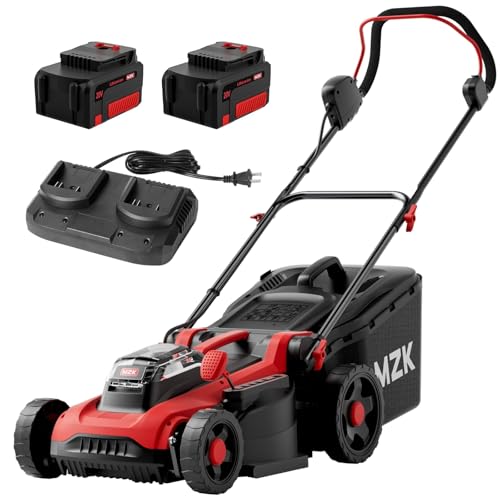
For homeowners with a small to mid-sized lawn – think a quarter acre or less – the Litheli 16-inch cordless electric mower offers a practical, quiet, and low-hassle alternative to gas-powered machines. It's especially appealing if you're tired of dealing with gas, oil, and pull cords, or if you want to mow early on Saturday without waking the whole block. The package includes two 5.0Ah lithium-ion batteries and a charger, so you're ready to go right out of the box.
On the cutting front, the brushless motor provides consistent power to the 16-inch steel blade. You get a six-position single-lever height adjustment that ranges from a low 0.98 inches for a close trim up to 2.95 inches for taller grass. Switching between mulching and rear bagging is straightforward – the mulching plug inserts easily, and the 13-gallon bag clips on securely. For a small lawn, mulching works well to return nutrients to the soil, while bagging gives a tidy finish for that curb-appeal look. The 16-inch deck is nimble around flower beds and garden edges, though you'll make more passes compared to a wider deck.
Build quality is what you'd expect at this price point: a sturdy plastic deck that keeps weight down (around 30 pounds) and a steel blade underneath. The wheels are plastic but roll smoothly, with larger 7.1-inch rear wheels and 5.9-inch front wheels for decent maneuverability. The handle is adjustable and folds quickly for storage – a real plus if you're tight on garage or shed space. Assembly is minimal: attach the handle, install the batteries, and you're mowing in about 10 minutes.
Battery performance is a highlight. Each 5.0Ah battery delivers about 20 minutes of runtime under normal conditions, so with both you get roughly 40 minutes – enough for most quarter-acre lawns. The batteries also double as a power bank via USB, which is handy for charging a phone during a power outage or while camping. Recharging takes a couple of hours per battery, so plan accordingly if you have a bigger yard or very thick grass that drains power faster.
That said, this mower has limitations. The 16-inch cutting width means more passes on anything larger than a quarter acre, and the 13-gallon bag fills up quickly in tall or damp grass. The plastic deck may not hold up as long as a steel deck under heavy use, and the lack of self-propulsion could be tiring on sloped or large lawns. But for its intended audience – budget-conscious homeowners with small, flat yards – these trade-offs are easy to accept.
Overall, the Litheli cordless mower is a smart buy if you value quiet operation, easy maintenance, and compact storage. It's not built for heavy-duty commercial work or sprawling estates, but for a typical suburban lot, it gets the job done without the fuss of gas or cords. Backed by a 3-year tool warranty and responsive customer support, it's a solid entry-level electric mower that many homeowners will appreciate.

Pros
- Lightweight and easy to push, great for users of all ages
- Corded power means consistent performance without battery runtime worries
- Affordable price point for budget-conscious first-time mower buyers
- Compact storage with foldable handle – fits in small sheds or garages
Cons
- Limited by cord length – may require extension cord for larger yards
- 15-inch cutting width is smaller than most standard mowers, extending mowing time
- Not self-propelled; requires physical effort on slopes or thick grass
The LawnMaster MEB1114K is a corded electric push mower designed for homeowners with small to medium-sized lawns. It’s a practical choice for apartment dwellers with tiny yards, suburban residents with manageable plots, or anyone looking for an affordable entry into electric mowing. With a 15-inch cutting width and 11-amp motor, this mower handles typical grass growth without the hassle of gas or batteries.
In real-world use, the 3,300 RPM motor provides enough power to cut through thin to moderate grass. The 5 height-adjustment positions range from 1.4 to 3 inches, letting you dial in the perfect cut for different seasons. The 7-gallon collection bag works well for light clippings, but may fill quickly on overgrown lawns. For mulching, the mower can handle fine clippings if you mow frequently.
Build quality is decent for the price – the deck is made of durable plastic, keeping weight down to just 28 pounds. The 7.75-inch rear wheels roll smoothly over flat terrain, but larger bumps may cause some bouncing. The handle is comfortable and folds without tools for vertical storage, a real plus for tight garage spaces.
Setup is straightforward: attach the handle and bag, plug in, and mow. Maintenance is minimal – no oil, no fuel, just occasional blade sharpening. The cord management hook helps keep the power cord out of the way, but you’ll need a heavy-duty extension cord for yards larger than 100 feet.
Limitations include the narrow cutting width, which means more passes on anything bigger than a quarter-acre. The lack of self-propulsion can be tiring on slopes or thick grass. Also, the cord can be a tripping hazard and limits range. Some users may prefer a cordless model for more freedom.
Overall, the LawnMaster MEB1114K is a solid buy for budget-minded homeowners with small, flat lawns. It’s easy to use, store, and maintain. If your yard is under 3,000 square feet and you don’t mind a cord, this mower offers great value for the money.
The 11-amp motor delivers 3,300 RPM, which is sufficient for typical residential grass. The 15-inch steel blade cuts a clean swath, though it may struggle slightly with thick, wet grass. The 5 height settings let you adjust from a low 1.4-inch trim to a taller 3-inch cut, suitable for different grass types and seasons. For best results, mow when grass is dry and keep the blade sharp.
At just 28 pounds, this mower is one of the lightest electric models available. The handles fold down quickly without tools, allowing the mower to stand vertically in a small corner of the garage or shed. This space-saving design is ideal for apartment dwellers or homeowners with limited storage. The compact size also makes it easy to carry up stairs or load into a car for transport.

Pros
- Exceptionally lightweight and easy to push, ideal for seniors and those with limited strength.
- Brushless motor is quiet, emission-free, and requires no routine maintenance.
- Quick-fold design and compact size make storage simple in small spaces.
- Adjustable cutting height provides versatility for different grass conditions.
- Long battery life covers typical small yard needs, and battery can charge electronics in a pinch.
Cons
- 14-inch cutting width is narrow for larger lawns, requiring more passes.
- Grass bag capacity of 9 gallons may need frequent emptying on thicker or taller grass.
- Plastic deck may not be as durable as steel decks on rough terrain.
The Litheli 14-inch cordless lawn mower is a purpose-built solution for homeowners with small to mid-sized yards—think up to about 1,600 square feet. It's especially well-suited for apartment dwellers, suburban homeowners with compact lawns, seniors, and anyone who wants to avoid the hassle of gas, cords, or heavy machinery. This mower prioritizes ease of use, quiet operation, and simple storage, making weekend lawn care feel less like a chore and more like a quick, satisfying task.
In terms of cutting performance, the brushless motor provides reliable power for typical grass conditions. The 14-inch steel blade delivers a clean cut, and the 5-position height adjustment (1 to 2.5 inches) lets you adapt to seasonal growth—lower for spring, higher for summer heat. The included 9-gallon grass bag captures clippings effectively, reducing post-mowing cleanup. While the mower is primarily a bagging unit, it also handles mulching well if you leave the clippings to feed the lawn. The cutting deck is compact, allowing you to navigate around flower beds, trees, and tight corners with ease.
Build quality is solid for a lightweight electric mower. The deck is made of durable plastic, which keeps weight down but may not withstand heavy impacts as well as steel. The wheels are sturdy and roll smoothly over level ground. The adjustable handle is comfortable and folds quickly for compact storage—perfect for garages, sheds, or even apartment balconies. No tools are needed for folding, and the mower stands upright when stored, saving valuable floor space.
Setup is straightforward: the mower comes mostly assembled, and you just attach the handle and grass bag. The 5.0Ah lithium-ion battery charges fully in about 1-2 hours and provides up to 40 minutes of runtime—enough for most small lawns. The battery is also compatible with other Litheli tools, and it includes a USB port for charging phones or tablets, adding practical value. Maintenance is nearly zero—no oil, no gas, no spark plugs. Just keep the blade sharp and clean the deck after use.
Realistic limitations include the narrow 14-inch cutting width, which means more passes on any lawn over 1,000 sq. ft. The grass bag is a bit small, so you may need to empty it frequently if the grass is thick or damp. The plastic deck, while lightweight, might not hold up as well over many years of heavy use. Also, this mower is not self-propelled, so pushing it on slopes or uneven ground requires some effort—though the light weight helps.
Overall, the Litheli 14-inch cordless mower is an excellent choice for budget-conscious buyers, seniors, apartment dwellers, or anyone with a small, flat lawn who values convenience, quiet operation, and easy storage. It's not built for large properties or rugged terrain, but for its intended use—small, manageable lawns—it delivers a clean cut with minimal fuss. If you're looking for an affordable, low-maintenance entry into cordless mowing, this model is worth serious consideration.
Pros
- Very quiet operation - great for early morning mowing or noise-sensitive neighborhoods.
- Lightweight and easy to push, especially on flat, small lawns.
- Eco-friendly and cost-effective with zero fuel or electricity costs.
- Simple height adjustment with no tools needed.
- Low maintenance and long-lasting if blades are kept sharp.
Cons
- Only effective on grass up to about 4 inches tall; struggles with overgrown or thick weeds.
- Narrow 14-inch cutting width means more passes on larger lawns - best for yards under 1/4 acre.
- Manual push requires more physical effort on uneven terrain or slopes compared to self-propelled mowers.
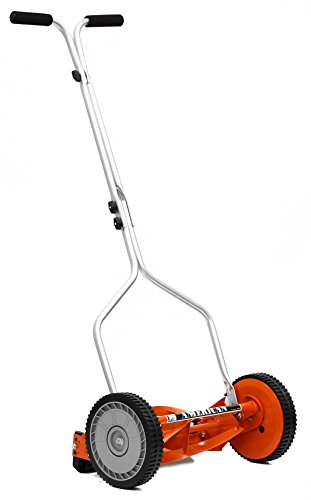
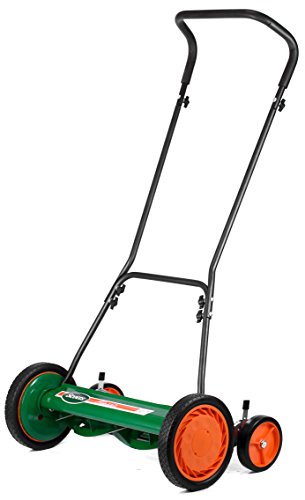
If you have a small, level lawn and want a simple, quiet, and eco-friendly way to keep it tidy, the American Lawn Mower 1204-14 reel mower is a solid choice. This manual push mower weighs only 19 pounds and has a 14-inch cutting width, making it easy to maneuver around trees, garden beds, and tight corners. It's powered entirely by you - no gas, no cords, no batteries - just a clean, scissor-like cut from its four hardened steel blades.
Based on product specifications and user feedback, this mower performs best on grass that is kept under 4 inches tall. The adjustable cutting height ranges from 0.5 to 1.75 inches, letting you choose your preferred lawn height. Since reel mowers clip the grass cleanly without tearing, the lawn tends to look healthier and greener after each mow. Many homeowners may appreciate the lack of noise and fumes - excellent for early Saturday mornings or properties near neighbors.
The build quality is straightforward: a sturdy steel frame with 8.5-inch polymer wheels that roll smoothly on flat terrain. Assembly is minimal right out of the box, and maintenance mostly involves keeping the blades sharp (a simple sharpening kit is inexpensive). The mower's lightweight design also means it can be stored vertically or hung on a wall, saving garage space.
However, this reel mower has some real-world limitations. It is less effective on damp or thick grass, and it may require multiple passes if the lawn grows long between mowings. The 14-inch width is narrow, so for lawns larger than about 1/4 acre, it can become tedious. Also, on uneven ground or slopes, the push effort increases - this is best for flat, well-maintained yards.
Overall, for budget-conscious homeowners, apartment dwellers with small lawns, or anyone looking to reduce their carbon footprint, the American Lawn Mower 1204-14 offers great value at around $72. It's a reliable, low-maintenance tool that encourages regular, frequent mowing for a beautiful lawn without the hassles of engine maintenance or fuel costs.

Pros
- Powerful brushless motor provides ample torque for thick grass and longer runtime.
- AeroDeck design reduces clumping and improves bagging efficiency.
- Intellicut technology automatically optimizes power usage for varying lawn conditions.
- Compatible with Worx PowerShare system, letting you share batteries with other tools.
- Easy to store vertically with collapsible handle, ideal for tight spaces.
Cons
- At 55.6 pounds, this mower is on the heavier side for a push model, which may be tiring for some users.
- Battery runtime may not be sufficient for lawns approaching the full half-acre if conditions are very thick.
- No self-propelled option, so it requires manual pushing on slopes or uneven terrain.
The Worx WG752 is a cordless push lawn mower designed for homeowners with medium-sized lawns up to half an acre. It combines a 40V brushless motor with innovative deck technology to deliver efficient cutting without the hassle of cords or gas. This mower is ideal for those who prefer battery power and want a reliable, low-maintenance alternative to traditional gas mowers.
When it comes to cutting performance, the WG752 features AeroDeck technology, which uses a vented design to increase airflow inside the deck. This helps prevent clogs and clumping, even in damp or dense grass. The Intellicut system automatically adjusts motor speed based on grass thickness, so you get consistent power without wasting battery. The 3-in-1 capability lets you switch between mulching, bagging, and rear side-discharge with the included plug and chute, giving you flexibility for different yard conditions.
The mower is built with a durable deck and sturdy wheels, likely designed to withstand regular use. The brushless motor is known for longevity and efficiency, and the PowerShare Pro batteries are compatible with a wide range of Worx tools. The overall construction feels solid, but at 55.6 pounds, it's heavier than some comparable cordless mowers, which may affect maneuverability on slopes.
Assembly is straightforward, with the collapsible handle making it easy to store vertically in a garage or shed. The single-lever height adjustment allows quick changes from 1.5 to 4 inches, accommodating different grass types and seasons. Maintenance is minimal – just keep the blades sharp and the deck clean. The batteries charge in about 2.5 hours with the included dual charger, and the onboard indicator shows remaining runtime.
One potential downside is the lack of self-propulsion, which means you'll need to push the mower yourself. The weight can be a factor on hilly terrain or for users with limited strength. Battery runtime is advertised for up to half an acre, but heavy or wet grass may reduce that. Also, since there are no user reviews yet, long-term reliability is unproven.
For the price, the Worx WG752 offers a solid set of features for a battery-powered push mower. If you have a flat to moderately sloped lawn under half an acre and want the convenience of cordless operation with the flexibility of a shared battery platform, this mower is worth considering. It's particularly suited for eco-conscious homeowners who want to avoid gas and emissions. However, if you need a self-propelled model or have a larger lawn, you might want to look at other options.
The Worx WG752 comes with two 20V 5.0Ah PowerShare Pro batteries that combine to deliver 40V of power. According to the manufacturer, this setup provides enough runtime for lawns up to half an acre under normal mowing conditions. The included 4.0A dual charger can fully charge both batteries in about 2.5 hours, minimizing downtime between mows.
One key feature is the Intellicut system, which automatically adjusts motor speed based on grass density. This helps conserve battery life when mowing thinner areas, extending runtime. The batteries also have an onboard charge-level indicator, so you can easily check remaining power before starting.
Another advantage is the PowerShare platform – these batteries work with over 140 other Worx tools, including string trimmers, leaf blowers, and chainsaws. This makes it easy to build a battery-powered outdoor equipment lineup without needing separate chargers or batteries. For homeowners who already own Worx tools, this mower is a natural addition.

Pros
- Extremely lightweight at 21 pounds, making it easy to push and carry
- Foldable handle allows compact storage in sheds or garages
- Five cutting height options give flexibility for various grass conditions
- Large grass bag holds plenty of clippings, reducing trips to compost
Cons
- Corded design limits range to extension cord length, which may be inconvenient for larger lawns
- 15-inch cutting width is narrower than many gas mowers, requiring more passes on medium yards
- Some users may find the 11A motor struggles with thick, wet grass compared to higher-powered models
The BILT HARD 15-inch corded electric lawn mower is a practical solution for homeowners with small to medium-sized yards who want a lightweight, easy-to-use alternative to gas mowers. This push mower combines a powerful 11A motor with a compact 15-inch cutting deck, making it ideal for navigating tight spaces, flower beds, and garden paths. It's especially suited for apartment dwellers with small patches of grass, suburban homeowners with modest lawns, or anyone seeking a budget-friendly entry into electric mowing.
When it comes to real-world performance, the 11A motor spins the blade at 3300 RPM, delivering consistent cutting power for typical grass conditions. The five-position height adjustment lets you set the cut from 1 to 3 inches, allowing you to adapt to seasonal growth or different grass types. The 15-inch cutting width means you'll cover ground efficiently on small lawns, though you may need extra passes on larger areas. The included 9.2-gallon grass bag catches clippings effectively, reducing the need for constant emptying. Since this is a corded mower, you'll need to manage an extension cord, but the constant power means no battery fade or fuel mixing.
Build quality appears solid for the price point, with a durable plastic deck that resists rust and corrosion. The 21-pound weight makes this one of the lightest mowers available, which greatly reduces user fatigue and makes it easy to carry up steps or over uneven terrain. The foldable handle is a standout feature, allowing the mower to stand upright for compact storage in a shed or garage corner. The double-safety system—a start lock button and instant-stop lever—provides peace of mind, especially for first-time users or those mowing near children and pets.
Setup is straightforward out of the box, requiring minimal assembly—typically attaching the handle and grass bag. Maintenance is simple: keep the blade sharp, clean the deck after use, and store it in a dry place. The corded design eliminates the need for battery charging, oil changes, or fuel stabilization. For daily handling, the lightweight frame and ergonomic handle make pushing feel effortless, and the foldable design means it takes up very little space when not in use.
Realistic limitations include the cord itself, which can be a tripping hazard and limits your range to the length of your extension cord. The 15-inch cutting width is narrower than many gas or larger electric mowers, so mowing a quarter-acre lawn would require more passes. Additionally, very thick or wet grass may challenge the 11A motor, potentially causing it to bog down. Some users might prefer a self-propelled model for hilly terrain, though the light weight helps mitigate that issue.
Overall, the BILT HARD 15-inch corded electric mower is a smart buy for budget-conscious homeowners with small yards who value simplicity, low maintenance, and easy storage. It delivers reliable cutting performance for routine grass trimming, and its lightweight design makes it accessible to a wide range of users. If you have a compact lawn and don't mind managing a cord, this mower offers excellent value for the price.
The process of activating an electric mower depends entirely on its power source. Corded models require a direct connection to a grounded outlet, while cordless units rely on a charged battery pack. In both cases, the manufacturer designs a specific safety protocol to prevent the blade from spinning while the user is still adjusting the machine. Ignoring these protocols can lead to immediate motor shutdown or, in rare cases, mechanical stress on the spindle assembly.
| Feature | Corded Electric | Cordless Battery |
|---|---|---|
| Power Source | AC Outlet (120V) | Li-Ion Battery Pack |
| Startup Trigger | On/Off Switch + Safety Lever | Power Button + Safety Lever |
| Pre-Start Check | Cord Integrity, GFCI | Battery Charge, Insertion |
| Common Issue | Trip Breaker, Cord Tangle | Low Battery, Loose Connection |
Before you attempt to start the machine, verify that the cutting deck is clear of debris and the blade is not obstructed. A blocked blade can cause the motor to stall or overheat, triggering thermal protection circuits in modern electric mowers. Ensure the grass height is set to a reasonable level for the current turf condition, as starting with the deck in the highest position can strain the motor if the grass is dense.
For corded models, the electrical connection is the primary concern. The power cord must be fully extended and free of kinks or damage before plugging it in. Many electric mowers are designed to be used outdoors, but the outlet must be protected by a Ground Fault Circuit Interrupter (GFCI) to prevent electric shock in wet conditions. If the outlet is not GFCI protected, do not plug in the mower. Instead, use a GFCI-protected power strip or an outdoor-rated GFCI outlet.
Once the power source is verified, locate the safety control lever. This is often a squeeze handle on the grip or a separate button that must be held down to allow the motor to run. This mechanism is a critical safety feature that ensures the blade stops immediately if you let go of the handle.
For cordless mowers, confirm that the battery is fully inserted and locked into place. A partially seated battery may not make proper contact, preventing the mower from turning on even if the charge level is high.
Activate the main power switch or button, which is a simple toggle or push-button located on the handle or the deck on most models.
- You should hear a hum from the motor and feel a slight vibration as the blade begins to spin.
- If the motor does not start, do not repeatedly press the button, as this can overheat the starter circuit.
- Instead, release the safety lever, wait ten seconds, and try again if the issue persists.
- Check the power source or battery charge level if the issue persists after waiting and trying again.
Some advanced cordless mowers feature an automatic speed adjustment system. These units use sensors to detect grass density and adjust the motor speed accordingly. When you turn on such a mower, it may start at a lower speed and ramp up as it encounters thicker turf. This is normal operation and helps conserve battery life in lighter areas. If your mower has this feature, allow it a few seconds to calibrate before pushing it into the grass.
Verifying Power Source and Safety Interlocks
The first step in the startup sequence is confirming that the mower has a viable power source. For corded units, this means inspecting the cord for any visible damage, such as frayed insulation or exposed wires. A damaged cord poses a serious safety risk and should be replaced before use. Plug the mower into a GFCI-protected outlet and ensure the connection is secure. If the outlet is a standard indoor outlet, it is not suitable for outdoor mower use due to the risk of moisture exposure.
For cordless mowers, check the battery indicator. Most modern lithium-ion batteries have an LED display that shows the remaining charge level. A fully charged battery is essential for a smooth start, especially if you plan to mow a larger area. If the battery is low, the motor may struggle to reach full speed, leading to uneven cuts or premature battery drain. Ensure the battery is clicked firmly into the mower’s battery slot. A loose connection can cause intermittent power loss, which is dangerous when the blade is spinning.
Next, engage the safety interlocks. These are the physical controls that must be activated before the motor can run. On many push mowers, this is a squeeze handle that you must hold down with one hand while operating the mower with the other.
On self-propelled models, there may be a separate brake or safety button. Ensure that these controls are not obstructed by debris or dirt. A dirty safety lever may not depress fully, preventing the mower from starting. Clean the area around the controls with a dry cloth if necessary.
It is also important to check the blade engagement mechanism. Some mowers have a separate switch to engage the blade, while others have the blade always engaged when the motor is on. If your mower has a separate blade switch, ensure it is in the “On” position. If the blade is disengaged, the motor may run, but the grass will not be cut. This is a common source of confusion for new users who think the mower is broken because it is not cutting.
Step-by-Step Startup for Corded Models
Starting a corded electric mower involves a specific sequence to ensure safety and performance. Begin by unplugging the mower from the outlet if it was previously in use. This allows you to inspect the blade and deck for any obstructions. Remove any tangled grass or debris from the blade and the underside of the deck. A clean blade spins more efficiently and reduces the load on the motor, leading to a smoother start.
Plug the power cord into a GFCI-protected outdoor outlet. Ensure the cord is routed away from the cutting path to prevent accidental cutting. If the cord is too short to reach the outlet, do not use an extension cord unless it is rated for outdoor use and has a sufficient gauge. Using an undersized extension cord can cause voltage drop, leading to poor motor performance or overheating. If you must use an extension cord, choose one with a 12-gauge wire or thicker for mowers with higher amperage requirements.
Hold the safety lever or button as instructed by the manufacturer. For many corded mowers, this is a squeeze handle on the grip. Keep your hand firmly on the handle while you activate the main power switch. The motor should start immediately. If it does not, release the safety lever, wait a few seconds, and try again. If the motor still does not start, check the outlet to ensure it is providing power. You can test the outlet with a lamp or another device to verify it is working.
Once the motor is running, push the mower forward at a steady pace. Avoid pushing too fast, as this can cause the motor to stall. Let the mower do the work; you should not have to force it through the grass. If you feel resistance, slow down or raise the cutting height slightly. This reduces the load on the motor and helps maintain a consistent speed. Continue mowing until the area is complete, keeping the safety lever engaged at all times.
Step-by-Step Startup for Cordless Models
Starting a cordless mower begins with ensuring the battery is fully charged and properly installed. Remove the battery from the mower and check the charge indicator. If the battery is not fully charged, insert it into the charger and wait until the indicator shows a full charge. Most lithium-ion batteries charge in 30 to 60 minutes, depending on the capacity. Do not use a battery that is swollen or damaged, as this poses a fire risk.
Insert the charged battery into the mower’s battery slot. Push it in until you hear a click, indicating it is locked in place. A secure connection is vital for reliable power delivery. If the battery is not fully seated, the mower may not start or may shut down unexpectedly during operation. Check the battery compartment for any debris that might prevent a full insertion. Clean the contacts with a dry cloth if they appear dirty or corroded.
Engage the safety controls. On cordless mowers, this is often a button or lever that must be held down to allow the motor to run. Some models have a two-stage safety system, requiring you to press a button and then hold a lever. Follow the specific instructions in your user manual. Once the safety controls are engaged, press the power button. The motor should start, and you may hear a brief beep or see an LED light indicating that the mower is active.
Push the mower forward to begin cutting. Monitor the battery indicator as you mow to ensure you have enough charge to complete the job. If the battery level drops significantly, the motor speed may decrease, affecting cut quality. Plan your mowing route to minimize backtracking, as this conserves battery life. If the mower stops unexpectedly, check the battery connection and the safety controls. If the issue persists, the battery may need to be replaced or the motor may have triggered a thermal protection shutdown.
Common Startup Issues and Solutions
If your electric mower fails to start, several common issues may be at play. The most frequent cause is a tripped GFCI outlet or a blown fuse. Check the outlet and reset the GFCI if necessary. If the outlet is not GFCI protected, use a GFCI-protected power strip. For cordless mowers, a loose battery connection is a common culprit. Ensure the battery is fully inserted and locked in place. If the battery indicator does not light up, the battery may be dead or faulty.
Another common issue is a blocked blade. If the blade is obstructed by grass or debris, the motor may stall or fail to start. Turn off the mower and unplug it or remove the battery. Clear the obstruction from the blade and the deck. Ensure the blade spins freely by hand (with the power disconnected) before attempting to start again. A blocked blade puts excessive strain on the motor, which can lead to overheating and damage.
Thermal protection is another reason for startup failure. If the motor has been running for an extended period, it may have overheated and shut down to protect itself. Allow the mower to cool down for 15 to 20 minutes before attempting to start it again. Do not force the motor to start while it is hot, as this can cause permanent damage. If the mower continues to overheat, check for obstructions in the deck or a dull blade, which increases the load on the motor.
For cordless mowers, a depleted battery is a frequent cause of startup failure. Even if the battery indicator shows some charge, it may not be enough to start the motor under load. Try charging the battery fully and attempting to start the mower again. If the battery does not hold a charge, it may need to be replaced. Lithium-ion batteries degrade over time and may lose capacity after several hundred charge cycles. If your mower is several years old, consider replacing the battery to ensure reliable performance.
Safety Precautions During Startup
Safety is paramount when operating any power tool, including electric mowers. Always wear closed-toe shoes and long pants to protect your feet and legs from flying debris. Avoid loose clothing, which can get caught in the blade or moving parts. Keep your hands and feet away from the blade and the deck while the mower is running. Never reach under the deck while the motor is on, even if you think the blade has stopped.
Ensure the area is clear of children, pets, and obstacles before starting the mower.
- Remove sticks, stones, and toys from the lawn to prevent them from being thrown by the blade.
- A flying object can cause serious injury or damage the mower during operation.
- If you are mowing near a fence or wall, keep a safe distance to avoid damaging the surface or getting caught.
- Be cautious when mowing on slopes, as electric mowers may have different handling characteristics than gas mowers.
For corded mowers, be mindful of the power cord. Keep it away from the cutting path and ensure it is not pinched or stretched. If the cord becomes tangled, stop the mower and untangle it before continuing. Do not use the mower in wet conditions, as this increases the risk of electric shock. If the grass is damp, wait until it is dry before mowing. If you must mow in damp conditions, ensure the outlet is GFCI protected and the cord is in good condition.
Always read the user manual for your specific model before starting the mower. The manual contains important safety information and operating instructions that may vary by model. Pay attention to any warnings or cautions regarding startup and operation. If you are unsure about any step, consult the manual or contact the manufacturer for clarification. Proper use of your electric mower ensures a safe and efficient mowing experience.
Maintenance for Reliable Startup
Regular maintenance helps ensure your electric mower starts reliably every time. Clean the underside of the deck after each use to remove grass clippings and debris. A clean deck prevents rust and ensures the blade spins freely. Use a dry brush or a low-pressure air hose to clean the deck. Avoid using high-pressure water, which can damage the motor or electrical components.
Inspect the blade regularly for dullness or damage. A dull blade requires more force to cut grass, which increases the load on the motor and can lead to overheating. Sharpen or replace the blade as needed. Follow the manufacturer’s instructions for blade sharpening and balancing. An unbalanced blade can cause vibration and wear on the spindle assembly, leading to premature failure.
For cordless mowers, store the battery in a cool, dry place when not in use. Extreme temperatures can degrade the battery’s capacity and lifespan. Do not leave the battery in the mower for extended periods if you are not using it. Remove the battery and store it separately. Charge the battery to about 50% for long-term storage to maintain its health. Follow the manufacturer’s guidelines for battery storage and charging.
Check the power cord for corded mowers regularly. Inspect it for any signs of damage, such as fraying or exposed wires. If you find any damage, replace the cord immediately. Do not use a damaged cord, as it poses a safety risk. Store the cord neatly to prevent tangles and damage. A well-maintained power cord ensures a reliable connection to the outlet.
Understanding Motor Types and Performance
Electric mowers typically use either brushed or brushless motors. Brushless motors are more efficient and durable, as they do not have brushes that wear out over time. They also produce less noise and have a longer lifespan. Many modern cordless mowers use brushless motors, which provide consistent power and require less maintenance. If your mower has a brushless motor, it may have a longer runtime on a single charge compared to a brushed motor model.
The power of an electric mower is measured in amperes (A) for corded models or in voltage (V) and amp-hours (Ah) for cordless models. A higher amperage or voltage generally indicates more power, which is useful for cutting thick or tall grass. However, higher power also requires a larger battery or a thicker power cord. Choose a mower with sufficient power for your lawn size and grass type. For small lawns, a lower-power model may be sufficient, while larger lawns may require a higher-power unit.
Some electric mowers feature variable speed controls, allowing you to adjust the motor speed based on the grass density. This can help conserve battery life and improve cut quality. If your mower has this feature, use it to optimize performance. Start at a lower speed for light grass and increase the speed for thicker areas. This adaptive approach helps maintain a consistent cut and extends the battery’s runtime.
Understanding the motor type and power rating helps you choose the right mower for your needs. If you are considering a new mower, look for models with brushless motors and sufficient power for your lawn size. Read reviews and specifications to compare different models. A well-chosen electric mower will provide reliable performance and ease of use for years to come.
By following these startup steps and safety precautions, you can ensure a smooth and safe mowing experience. Whether you use a corded or cordless model, the key is to understand the specific controls and power requirements of your mower. Regular maintenance and attention to safety details will help you get the most out of your electric lawn mower. If you encounter persistent issues, consult the user manual or contact the manufacturer for support. Proper care and use will keep your mower running efficiently for many seasons.
If you are looking for more information on maintaining your equipment, our guide on electric cordless lawn mower options provides detailed insights into different models and their features. This can help you make an informed decision if you are considering an upgrade or replacement.






Write Your Review
No reviews yet. Be the first to share your experience!