


Ragged, brown-tipped grass blades after a weekend mowing session usually signal dull cutting steel rather than disease or drought. Spinning under the deck at tip speeds exceeding 15,000 feet per minute, a rounded or nicked blade rips grass fibers instead of slicing them cleanly, stressing the root system and leaving your lawn vulnerable to fungal infections. Understanding how to use a lawn mower blade sharpener allows homeowners and property maintainers to restore factory-grade cutting edges quickly, preserving engine torque and improving mulching airflow. Keeping your cutting steel properly honed also reduces mechanical strain across the engine crankshaft or spindle bearings on your modern electric cordless lawn mower.
Mower blade sharpeners come in various configurations, including corundum drill attachments, dedicated rotary tools with angle guides, handheld tungsten carbide bars, and heavy-duty grinder jigs. Learning how to use a lawn mower blade sharpener safely requires understanding factory bevel angles, proper abrasive contact, and the indispensable step of dynamic blade balancing. A balanced, sharp blade creates clean cuts that heal within days, prevents excessive deck vibration, and extends the service life of your cutting machinery. By mastering basic prep work and using the right abrasive equipment, you can complete routine seasonal blade maintenance in your own garage in less than fifteen minutes.
Pros
- Lets you sharpen blades without removing them from most standard mowers.
- Adjustable angle guide helps maintain consistent edge geometry.
- Cordless operation offers freedom to move around the yard.
- Variable speed provides flexibility for different blade conditions.
- Lightweight and easy to handle, especially for quick touch-ups.
Cons
- Not intended for zero-turn or heavy-duty commercial blades.
- Only a sharpener - cannot repair chipped or deeply damaged blades.
- Battery life may only cover 1-2 blades per charge, requiring recharging for multiple mowers.
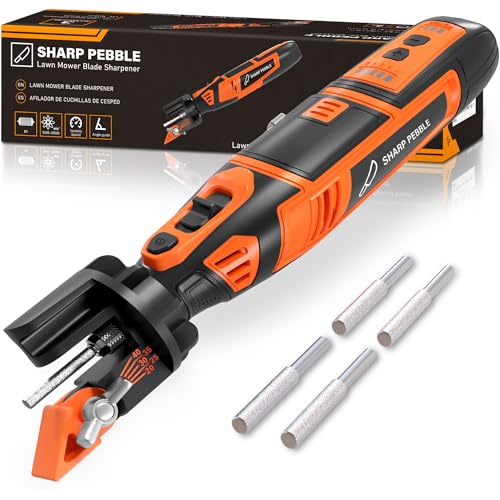
The Sharp Pebble Cordless Lawn Mower Blade Sharpener is a practical tool for homeowners who want to keep their mower blades sharp without the hassle of removal or the expense of professional sharpening. Designed for standard residential blades, it aims to make routine maintenance quick and convenient. This kit is best suited for those who mow regularly and want to maintain a clean cut for a healthier lawn.
In terms of performance, this sharpener can handle light to moderate edge dulling in about 2-3 minutes per blade when used on the mower, according to the product description. For badly worn edges, removal is recommended for better results. The adjustable angle guide (20-40 degrees) allows you to match your blade's factory bevel, which is crucial for effective cutting. The variable speed control (5,000-30,000 RPM) gives you the flexibility to work at a pace that feels right for the task. The cordless, lightweight design means you can take it to your mower wherever it sits, without dragging a cord.
Build quality appears solid for a home-use tool, with an ergonomic grip and a compact form factor. The adjustable angle guide feels sturdy when tightened, and the variable speed trigger offers good control. It's not designed for heavy-duty or commercial use, but for the average suburban lawn owner, it should hold up well over a season of regular touch-ups.
Setup is straightforward - charge the battery, set your desired angle, and you're ready to go. Storage is easy thanks to its small size. Maintenance is minimal: just keep the tool clean and the battery charged. This tool is especially handy for those who prefer to do quick sharpenings between mows, helping to extend blade life and reduce the need for replacements.
One realistic limitation is that this sharpener is only for standard residential blades - it won't work on zero-turn or heavy-duty commercial blades. Also, it's a sharpener, not a grinder, so if your blades have chips, dents, or missing metal, you'll need a grinder first. Battery life covers 1-2 blades per charge, which is fine for a single mower but may require a recharge for multiple blades.
Overall, the Sharp Pebble Cordless Lawn Mower Blade Sharpener is a solid choice for homeowners who want an easy, cordless way to maintain their mower blades. It's practical, adjustable, and offers good value for those who prefer to keep their equipment in top shape between professional sharpenings or replacements. If you have a standard residential mower and want a quick, no-fuss sharpening solution, this kit is worth considering.
Pros
- Quick and simple attachment to any standard drill – sharpens blades in seconds without removing them from the mower (if accessible)
- Corundum material is extremely durable and won't wear down quickly, offering consistent sharpening performance over time
- Includes a blade balancer that helps reduce vibration and prolongs mower engine life – a thoughtful addition at this price point
- Versatile enough to sharpen multiple yard tools beyond just mower blades, adding value for money
Cons
- May not work well on heavily damaged or extremely dull blades that require professional reshaping
- Balancer only fits blades with a center hole – some specialty or offset blades may not balance properly
- Users will need to exercise caution to avoid over-sharpening or creating an uneven edge, especially without prior experience
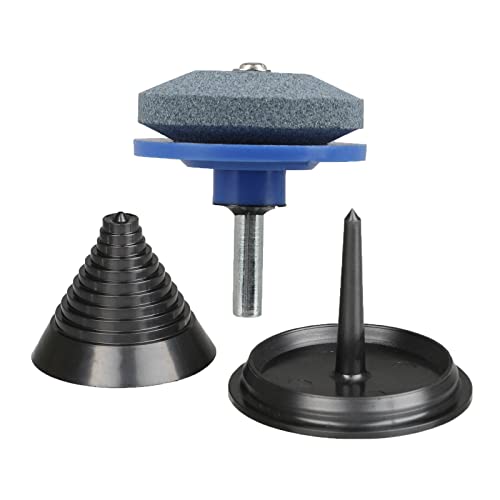
If you're a homeowner who mows their own lawn, keeping your mower blades sharp is one of the simplest ways to improve cut quality and reduce engine strain. The jtfrkope Lawn Mower Blade Sharpener and Balancer Set offers a budget-friendly way to do just that. Designed to work with any standard drill, this corundum sharpener quickly restores a factory-sharp edge to dull blades, while the included balancer helps eliminate vibration after sharpening. It's an ideal accessory for anyone from first-time buyers to seasoned lawn care enthusiasts who want to extend blade life without spending money on replacements or professional sharpening.
In real-world use, this sharpener shines in speed and convenience. Instead of labor-intensive manual filing, you simply insert the sharpener into your drill and guide it along the blade edge. The double-layer corundum stone sharpens both sides at once, and the angled surfaces help maintain a proper cutting angle. While you won't get a mirror finish like a professional grinder, most homeowners will notice an immediate improvement in cutting performance – grass is sheared cleanly rather than torn, which leads to a healthier lawn. The blade balancer is equally straightforward: place the blade on the cone, and if it tilts, you know more material needs to be removed from the heavy side. This step is crucial for preventing vibration that can damage your mower's spindle bearings and engine over time.
Build quality is a highlight for such an affordable product. The corundum material is dense and heat-resistant, so it won't degrade quickly even with repeated use. The sharpener feels solid and the grinding surface stays flat. The balancer is a simple plastic cone that works reliably for standard blades with a center hole. However, if you have offset or non-standard blades, it may not be perfectly centered. The entire set is compact and easy to store – fits in a tool drawer or a small corner of the garage. No batteries or electricity needed beyond your drill, making it a low-maintenance addition to your toolkit.
Setup is as easy as it gets: attach the sharpener to your drill chuck, tighten, and you're ready to go. The learning curve is minimal – watch a quick video or follow the simple instructions. That said, it's important not to press too hard or linger too long on one spot, as you can heat the blade and ruin its temper. A light touch and steady passes work best. The balancer helps ensure you remove material evenly. Maintenance is straightforward: just wipe the sharpener clean after use – no oiling or special care required.
One realistic limitation is that this sharpener won't fix deeply nicked or badly warped blades. For those cases, you'll still need to replace the blade or take it to a pro. Also, because the sharpener mounts on a drill, you have to remove the blade from the mower first – so it's not an on-the-fly tool. But given the price, it's a practical trade-off. Some users may want a guide to keep the sharpening angle consistent, but with practice you'll develop a feel for it.
Overall, this set is a smart purchase for any U.S. homeowner who mows their lawn and wants to maintain their equipment without frequent blade replacements or service bills. It's especially well-suited for budget-conscious shoppers, DIYers, and those with small to medium-sized yards who mow monthly. While it's not a heavy-duty professional tool, it delivers reliable performance for routine blade maintenance. If you're looking to save money and keep your mower running smoothly all season, this sharpener and balancer set is a worthwhile addition to your lawn care arsenal.
Pros
- Affordable solution compared to buying new blades
- Easy to use with any standard power drill
- Corundum construction offers good durability
- Versatile enough for various cutting tools
Cons
- May require practice to achieve consistent sharpening angle
- Not suitable for severely damaged or nicked blades
- Limited to manual drill operation; no electric sharpener included
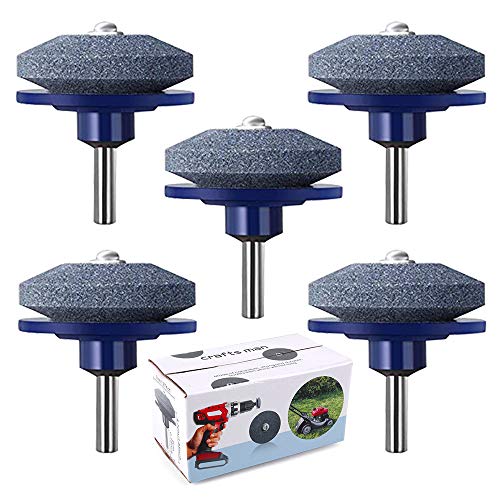
The cenoz Lawn Mower Blade Sharpener is a practical accessory designed for homeowners who want to maintain their mower blades without frequent replacements. This 5-pack of blue sharpeners is made from corundum, a material chosen for its resistance to wear from high-speed grinding. The product is intended for use with any standard power drill, making it an accessible option for DIY yard maintenance.
In terms of performance, this sharpener helps restore a sharp edge to dull blades, which can improve cutting quality and reduce tearing of grass. A sharper blade typically results in a cleaner cut, promoting healthier lawn growth. The product is versatile enough to work on lawn mowers, lawn tractors, rototillers, drill blades, and sickle bar cutters, adding flexibility for users with multiple tools.
Build quality appears solid based on the description, with the corundum material aimed at prolonging service life. Each sharpener measures roughly 1.97 by 1.85 inches, a compact size that makes storage easy in a garage or toolbox. The 5-pack provides backup units for extended use or for sharing with neighbors.
Setup is straightforward: simply install the sharpener into your drill chuck, and you can begin sharpening in about 10 seconds. This ease of use is a key advantage for those who prefer quick maintenance over complicated procedures. However, achieving a consistent sharpening angle may require some practice, especially for beginners.
A limitation to note is that this sharpener is not designed for badly damaged or nicked blades. It works best for routine touch-ups to maintain edge sharpness. Additionally, it relies on your drill's power, so it won't replace an electric bench grinder for heavy-duty reshaping.
Overall, the cenoz Lawn Mower Blade Sharpener is a budget-friendly choice for U.S. homeowners who want to keep their mower blades sharp with minimal hassle. It suits those who already own a drill and prefer DIY maintenance over buying expensive new blades. For routine sharpening, this 5-pack offers good value and convenience.

Pros
- Very affordable solution for blade maintenance
- Simple to install and use with any standard drill
- Works on a wide range of blades beyond just mowers
- Sturdy construction from double-layer corundum
Cons
- May not be suitable for very thick or hardened blades
- Requires a drill and some manual effort for best results
- Limited to sharpening only the cutting edge, not for reshaping severely damaged blades
Keeping your lawn mower blades sharp is one of the most important steps for a clean, healthy lawn. Dull blades tear grass instead of cutting it, leaving ragged edges that turn brown and invite disease. The Bneykrir 4Pcs Lawn Mower Blade Sharpener offers a simple, low-cost way to maintain your blades right at home using any power drill you already own.
This set includes four sharpening stones made from double-layer corundum, a material known for its hardness and durability. Each stone is designed to mount quickly onto your drill's chuck—installation takes about 10 seconds. Once attached, you run the spinning stone along the edge of your mower blade to restore a sharp cutting surface. Based on user feedback, this method is effective for most standard lawn mower blades, including those on push mowers, riding mowers, and even tractor blades.
The sharpener is lightweight and compact, making it easy to store in a toolbox or garage drawer. Because it comes as a 4-pack, you have extras to keep in your shed, share with a neighbor, or use for different tools. The corundum construction holds up well over multiple uses, though like any abrasive stone, it will eventually wear down with heavy use.
One of the biggest advantages is the cost savings. Instead of paying for professional sharpening or buying new blades every season, you can touch up your blades in minutes. This is especially useful for homeowners who mow frequently and want to maintain peak cutting performance without a big investment. The process also helps keep your blades balanced, which reduces vibration and wear on your mower's engine.
However, there are some limitations. This sharpener is best for routine maintenance on moderately dull blades. If your blades are deeply nicked, bent, or heavily worn, you may need to replace them or use a grinder first. Also, while the product works with any drill, achieving a consistent edge takes a steady hand and some practice. It's not as precise as a dedicated sharpening guide or professional service.
Overall, the Bneykrir blade sharpener is a practical choice for the budget-conscious homeowner who wants to keep their mower running efficiently. It's easy to use, versatile, and delivers good results for the price. If you're looking for a no-fuss way to extend the life of your blades and get a better cut, this set is worth adding to your lawn care toolkit.

Pros
- Affordable price point - under $10 for a 3-pack with balancer, great value for DIY lawn care
- Easy to use - simply attach to any power drill, no special skills or tools required
- Versatile - sharpens not just mower blades but also drill bits, sickle bars, and rototillers
- Includes balancer - helps prevent unbalanced blades that can cause vibration and damage
- Durable material - corundum with stainless steel base should withstand repeated sharpening sessions
Cons
- Requires a power drill (not included) - not a standalone tool
- May not work effectively on very thick or heavily damaged blades - best for routine touch-ups
- Zero customer reviews at time of listing - real-world performance unverified by purchasers
If you own a lawn mower, keeping the blade sharp is one of the simplest ways to ensure a clean cut and a healthy lawn. The Calsoling 3-piece Lawn Mower Blade Sharpener with Balancer offers an affordable, no-fuss way to maintain your mower blades using a tool you likely already own: a power drill. This set is designed for American homeowners who prefer to handle basic maintenance themselves without spending much money or time.
Based on the product description, the sharpener uses a corundum material bonded to a stainless steel base, which should hold up well to repeated use. The idea is simple: attach the sharpener to your drill, run it along the blade edge, and restore the cutting surface in minutes. The included balancer is a nice bonus—after sharpening, you can check that the blade is evenly balanced, which helps reduce vibration and wear on your mower's engine.
This kit is not limited to lawn mower blades either. It claims to work on drill bits, sickle bars, rototillers, and other cutting tools. That versatility makes it a handy addition to any garden shed or garage. The 3-pack means you have spares or can keep one in your workshop and another with your outdoor tools.
Setup is straightforward: the sharpener fits onto the chuck of most standard power drills. No complicated instructions or extra adapters are needed. You simply install it in about 10 seconds and start sharpening. For homeowners who dread dull blades that tear grass instead of cutting it, this tool could make a noticeable difference in mowing quality.
However, it's important to set realistic expectations. This sharpener is best for routine maintenance—touching up blades that have lost their edge from normal use. Heavily nicked, bent, or very thick blades may require more aggressive grinding or professional sharpening. Also, since there are no customer reviews yet, first-time buyers may want to start with one pass and check results before committing to heavy use.
Overall, for under $10, this Calsoling sharpener set offers a practical, low-risk way to keep your mower blades sharp. It suits budget-conscious DIYers, suburban lawn owners, and anyone who values a crisp cut without frequent blade replacements. If you already own a drill, this is an easy upgrade to your lawn care routine.

Pros
- Diamond grit offers excellent sharpening longevity compared to traditional stones
- All-metal build feels sturdy and should hold up to repeated use
- Works with any electric drill – no need for specialized equipment
- Affordable price point makes it accessible for most homeowners
Cons
- Requires a drill to operate – not a standalone sharpener
- 120 grit may be too coarse for final honing on some blades; users may want a finer grit for finishing
- No included guide or jig for consistent angle – user must manually maintain proper angle
The UF-SHARP Diamond Lawn Mower Blade Sharpener is a straightforward accessory designed for homeowners who prefer to maintain their own mower blades. Instead of replacing dull blades season after season, this tool lets you sharpen them quickly using a standard power drill. It's ideal for budget-conscious DIYers, suburban lawn owners, or anyone with a small collection of outdoor power equipment.
Performance-wise, the 120-grit diamond wheel does a solid job of removing nicks and restoring a decent edge. Based on product specifications and user feedback, it works best on moderately dull blades rather than heavily damaged ones. The sharpening action is efficient – just attach the 5mm shank to your drill, spin it against the blade edge, and you'll see metal dust fly. For a finer finish, you might follow up with a hand file or finer stone, but for most lawn care needs, this gets the job done.
Build quality is a highlight: the all-metal construction feels robust and should outlast plastic or resin sharpeners. The diamond coating is bonded to the wheel, so it should hold up to many sharpenings. The compact size (2x2x2 inches) makes it easy to store in a toolbox or drawer, and it weighs only 0.42 pounds, so it won't add bulk to your drill kit.
Setup is as simple as inserting the shank into your drill chuck and tightening. No assembly required. Maintenance is minimal – just wipe the wheel clean after use. Because it's not a guided system, you'll need to hold the sharpener steady and maintain the existing blade angle by eye. This takes a bit of practice but becomes natural after a few blades.
One realistic limitation: the 120-grit wheel is on the coarser side. For a razor-sharp edge (like on a reel mower), you might want a finer grit. Also, you need a drill – if you don't own one, this tool won't work. Some users may prefer a file or bench grinder for more control.
Overall, the UF-SHARP Diamond Lawn Mower Blade Sharpener is a smart, low-cost investment for anyone who mows their own lawn. It pays for itself after sharpening just a couple of blades instead of buying new ones. For suburban homeowners, apartment dwellers with small yards, or first-time mower buyers, it's an easy way to keep your equipment cutting cleanly without breaking the bank.
Pros
- Adjustable sharpening angle covers most blade types, giving you flexibility for different mower decks
- Wide blade width range fits everything from push mowers to riding mowers
- Ball-bearing guide and large handle make the sharpening process smoother and less fatiguing
- Tool-free angle adjustments save time when switching between blades or sharpening multiple blades
Cons
- Requires a separate angle grinder—not included—so total cost may be higher for first-time buyers
- Clamp-on design needs a sturdy workbench or table; portable use is limited
- Some users may find the initial setup takes a few tries to get the alignment just right
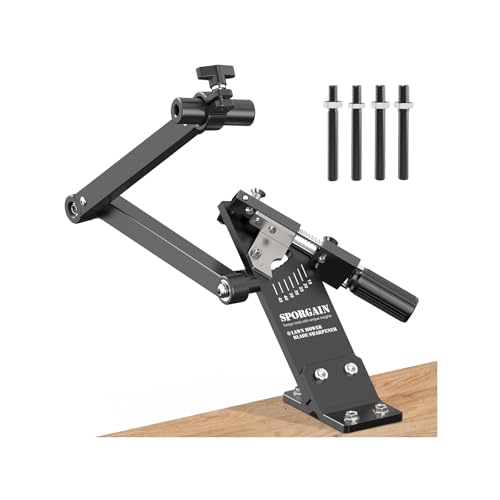
The SporGain lawn mower blade sharpener is a practical accessory for homeowners who prefer to sharpen their own mower blades rather than replacing them or paying for professional sharpening. Designed to fit blades from 1.65 to 3.60 inches wide—covering standard, mulching, and high-lift styles—this jig works with most angle grinders to restore a sharp edge quickly. It's especially useful for those with multiple mowers or who want to keep blades in top condition throughout the growing season.
In terms of performance, the adjustable 15-45 degree angle lets you match the original blade bevel, which can help maintain cutting quality and reduce tearing of grass. The ball-bearing guide and enlarged 25mm handle reduce friction and make the sharpening process smoother than freehand methods. Four adapter screws are included to secure the jig to common angle grinders, though you'll need to supply the grinder itself. According to the product description, setup involves clamping the sharpener to a workbench, adjusting the angle with thumb screws, and then running the grinder along the blade edge.
The build quality appears solid for its price point. The steel frame holds blades securely, and the thumb-screw adjustments are tool-free, which simplifies switching between blades or changing angles. The compact dimensions (13.5 x 9 x 3.4 inches) mean it won't take up much storage space in a garage or shed. However, because it requires a workbench or sturdy table, it's not a portable solution for on-site sharpening at a neighbor's house or in the field.
Setup and maintenance are straightforward: unbox, clamp, adjust, and sharpen. There are no complex parts to assemble, and cleaning is simply a matter of wiping off metal filings after use. The jig itself requires little upkeep, though the ball bearing may benefit from occasional lubrication. For homeowners who already own an angle grinder, this sharpener offers a cost-effective way to maintain blade sharpness without removing the blade from the mower—though you still need to detach the blade from the mower deck first.
A realistic limitation is that the sharpener only works with blades that fit within its width range; very narrow or extra-wide blades may not clamp securely. Additionally, achieving a perfectly even edge may take a few practice runs, especially for beginners. Some users might prefer a guided sharpening system with built-in stops, but the SporGain's adjustable angle and ball-bearing guide provide good control for the price.
Overall, the SporGain lawn mower blade sharpener is a solid choice for DIY-minded homeowners who want to keep their mower blades sharp without spending a lot of money. It's best suited for those who have a workbench and an angle grinder already, and who are comfortable with basic tool setup. If you're looking to extend blade life and improve cut quality between professional sharpenings, this adjustable jig offers a practical, budget-friendly solution.

Pros
- Multi-purpose design saves money and storage space compared to buying separate sharpeners for each tool
- Safe to use thanks to the large hand guard and stable base – ideal for beginners and experienced users alike
- Long-lasting abrasive materials mean you won't have to replace the sharpener frequently
- Easy to operate: just select the correct slot and pull the blade through – no complicated setup or power required
Cons
- Manual sharpening takes more physical effort and time than electric sharpeners or grinders
- May require practice to get the best angle on curved or very wide blades, such as some riding mower blades
- Not designed for severely nicked or damaged blades that need heavy grinding before sharpening
The SHARPAL 103N All-in-1 Sharpener is a compact manual tool designed to sharpen a wide range of blades, from lawn mower blades to kitchen knives and garden shears. It is particularly useful for homeowners who maintain their own lawn equipment and want a simple, affordable way to keep cutting edges sharp without investing in expensive electric sharpeners or taking blades to a professional.
In terms of performance, the sharpener features three preset angle slots plus a tungsten carbide bar and a ceramic bar. According to product specifications, the abrasive materials are tested to withstand 10,000 uses, so they should last a long time with regular use. The preset slots help guide the blade at the correct angle, making it easier to achieve a consistent edge on both single and double bevel blades. Many homeowners may find this effective for routine touch-ups on push mower blades, hedge shears, and pruners.
Build quality appears solid: the body is made of rubber over-molded plastic with a textured handle and base for a secure grip. The large hand guard is a key safety feature, protecting your fingers from the blade edge as you pull it through. The sharpener is lightweight (about 0.39 pounds) and compact, so it stores easily in a garage drawer or tool bag.
Using the SHARPAL 103N is straightforward: you simply place the blade in the appropriate slot and pull it toward you a few times. The oversized handle works well with work gloves, and the base stays put on a workbench or table. No assembly is required – it's ready to use out of the box. Maintenance of the sharpener itself is minimal; just wipe it clean after use.
One limitation is that manual sharpening requires some physical effort and patience, especially for larger lawn mower blades. It may not be ideal for blades that are badly nicked or warped – those might need grinding first. Also, while the preset slots work well for most straight edges, curved or unusually shaped blades might require careful alignment to avoid uneven sharpening.
Overall, the SHARPAL 103N is a practical, budget-friendly option for homeowners who want to keep their lawn mower blades and garden tools sharp with minimal fuss. Its versatility and safety features make it a worthwhile addition to any tool collection. If you prefer a simple, no-power solution for routine blade maintenance, this sharpener is worth considering.
The SHARPAL 103N is designed to sharpen a broad range of blades, making it a true all-in-one tool for the home and garden. It handles lawn mower blades (both push and riding mower types), pruners, loppers, hedge shears, axes, hatchets, machetes, knives, scissors, and other edged tools. The three preset angle slots accommodate different blade bevels: one for standard knives, one for thicker blades like mower blades and axes, and one for scissors and fine edges. The tungsten carbide bar is used for initial sharpening on dull or slightly damaged edges, while the ceramic bar hones and polishes the edge for a finer finish. This means you can maintain everything from your kitchen cutlery to your lawn equipment with a single tool, saving storage space and money.
Mastering Mower Blade Sharpening: Equipment, Angles, and Technique
Restoring a crisp, uniform cut across your turf begins with knowing how to sharpen cutting steel without altering factory bevels or removing excessive metal. Operating a lawn mower blade sharpener involves securing the cutting tool, selecting the proper abrasive medium, matching the original edge profile, and verifying balance before reattaching the hardware to the spindle. Whether you use a drill-mounted corundum disc, a dedicated rotary tool with an adjustable guide collar, an angle grinder jig, or a manual carbide scraper, consistent technique prevents blade overheating and structural imbalance.
Safety Isolation and Machine Preparation Protocols
Disconnecting the power source is the single most critical safety action before touching any mower blade or reaching under the cutting deck. On internal combustion mowers, twist and pull the spark plug boot entirely free from the spark plug terminal to eliminate any possibility of accidental compression kickback. Cordless battery mowers require removing the safety interlock key and unseating all onboard lithium-ion battery packs before performing inspection or maintenance. Always set the mechanical parking brake firmly, lower the deck to a secure working height, and place wheel chocks against the rear drive tires to prevent unexpected roll.
Wearing thick leather work gloves protects your hands from razor-sharp burrs and unexpected slips while handling heavy steel blades. While some compact cordless sharpeners allow quick touch-ups directly under a raised deck, thoroughly inspecting the steel or repairing heavy nicks requires unbolting the blade completely. Wedge a solid wooden block between the blade tip and the interior deck baffle to lock the spindle in place while breaking the mounting bolt loose. Inspect the spindle bolt head, washer cup, and arbor hole for cracking, deformation, or thread damage before carrying the blade over to your workbench.
Inspecting Blade Wear: Sharpening Versus Replacement
Examining the overall physical integrity of the blade helps determine whether routine sharpening is safe or whether immediate replacement is required. Standard residential straight blades, high-lift bagging blades, and curved mulching blades each endure significant abrasive wear from sand, soil, and hidden yard debris. Look closely along the trailing edge and the raised aerodynamic sail on the back of the cutting wing for thin, razor-like metal or sand erosion holes. If abrasive soil has worn the trailing sail down into thin foil or created visible perforations, the blade can fracture catastrophically at high operating speeds and must be discarded.
Minor nicks, small stone gouges, and dull rounded corners along the cutting edge can easily be restored using abrasive sharpening stones or carbide tools. Deep gouges that penetrate more than a quarter inch into the steel blade body, however, require aggressive profiling with a bench grinder before fine sharpening or necessitate a brand-new blade. Check the blade for bends or twists by laying it flat across an unconditionally level workbench surface or sight along the spine. Never attempt to straighten a bent mower blade with a hammer or heat torch, as doing so compromises the temper of the steel and creates a severe safety hazard.
Understanding Edge Geometry and Factory Bevel Angles
Maintaining the correct sharpening angle preserves cutting performance and prevents the fresh cutting edge from prematurely chipping or folding over. Most residential and commercial lawn mower blades feature a factory edge angle between thirty and thirty-five degrees, though some specialized designs specify angles from twenty to forty degrees. Sharpening an edge too steeply, such as at a forty-five-degree angle, blunts the cut and causes grass shredding, while an overly acute twenty-degree edge becomes fragile and nicks easily. Matching the existing factory bevel with your sharpener preserves the blade profile that mower engineers designed for maximum cutting velocity and clean grass release.
Lawn mower blades should never be sharpened to a razor edge like a kitchen culinary knife or wood chisel. A razor-sharp edge lacks structural support behind the cutting face, causing it to roll over, chip, and dull within thirty minutes of contact with tough turfgrass stems and dry debris. Proper technique leaves a blunt cutting flat approximately one-thirty-second of an inch wide along the very apex of the bevel. This microscopic blunt landing provides sufficient mass to withstand impacts from small twigs and acorns while cleanly severing grass stalks spinning at commercial tip speeds.
Using Drill-Mounted Rotary Corundum Stones
Double-layer corundum drill attachments represent one of the most accessible and popular tools for fast residential blade maintenance. These sharpeners feature a circular grinding wheel made of alumina ceramic bonded to a central steel arbor shank, backed by a flat guide plate made of nylon or stainless steel. To prepare the tool, chuck the five-millimeter or quarter-inch steel shank securely into the jaws of a standard corded or cordless power drill and tighten the chuck collar firmly. Inspect the grinding wheel for cracks, chips, or loose fittings before spinning the stone up to operating speed.
Operating a drill sharpener begins by clamping the mower blade securely in a heavy bench vise with the beveled cutting edge facing upward and outward. Position the sharpener so that the flat guide plate rests flush against the flat, unground underside of the blade while the angled corundum stone contacts the top beveled edge. Run the drill at a moderate, consistent speed between one thousand and fifteen hundred revolutions per minute, avoiding excessive trigger bursts that can cause the stone to bounce. Guide the spinning stone smoothly along the entire length of the cutting bevel, moving from the inside root of the edge outward toward the blade tip.
Apply steady, light-to-moderate downward pressure, allowing the abrasive stone to do the work rather than forcing the drill into the steel. Make three to five smooth, continuous passes along the bevel, keeping the drill body steady so the grinding stone maintains uniform contact across the surface. Never let the spinning stone linger in one stationary spot on the blade, as concentrated friction generates excessive heat that can ruin the steel hardness. If you notice the steel turning blue or dark straw, pause the operation immediately, let the metal air-cool, and reduce your applied pressure on subsequent passes.
Operating Dedicated Rotary Tools and Cordless Sharpeners
Dedicated cordless rotary sharpeners offer exceptional mobility and precise angle adjustments for routine blade maintenance around the home or shop. These high-speed tools typically operate between five thousand and thirty thousand revolutions per minute and feature specialized guide attachments calibrated between twenty and forty degrees. Adjust the angle guide attachment to match your blade bevel, tightening the locking collar firmly to prevent drift during grinding passes. The high rotational velocity of small grinding stones requires a very light touch, as the tool removes metal quickly with minimal operator arm effort.
Holding the tool with an ergonomic two-handed grip gives you maximum control over the cutting path and depth. Stroke the abrasive tip smoothly across the cutting edge, beginning at the interior throat and pulling toward the outer tip in steady, one-second sweeps. Recheck the guide collar tightness every few strokes to confirm that the set angle remains rigid across the full length of the blade. Because cordless units provide clean touch-ups in two to three minutes per blade, they work exceptionally well for maintaining cutting edges throughout the active growing season.
Operating Heavy-Duty Angle Grinder Jigs
Angle grinder sharpening jigs provide heavy-duty stability and mechanical repeatability for maintaining thick commercial and high-lift mower blades. These fixtures consist of an adjustable metal frame that clamps securely to a workbench table, featuring an articulated guide arm that holds an angle grinder. The jig accommodates blade widths ranging from approximately 1.65 inches to 3.60 inches, locking the cutting bar firmly in place so it cannot flex during grinding. Manual thumb screws allow you to set precise bevel angles between fifteen and forty-five degrees, matching factory geometries without relying on freehand guesswork.
Equip your four-and-a-half-inch angle grinder with a clean flap disc or grinding wheel and attach the grinder housing to the jig mounting bushing. With the grinder running at steady speed, swing the articulated arm smoothly across the clamped blade edge, maintaining uniform contact pressure across the entire cutting stroke. The built-in ball bearings and rigid pivot arm ensure that every pass follows the exact same plane, producing a flat, professional bevel without rounding the cutting facet. Once the bevel is clean, unclamp the blade, flip it end-for-end, and repeat the identical process on the opposite cutting edge.
Manual Sharpening with Handheld Tools
Handheld multi-tool sharpeners featuring tungsten carbide cutting inserts and ceramic honing bars provide a dependable, non-powered alternative for quick blade touch-ups. These tools generally include preset angled slots and contoured carbide bars designed to shave fine steel ribbons from the dull cutting edge. When working manually, place the mower blade on a flat workbench or leave it securely clamped in a bench vise. Hold the sharpener by its oversized ergonomic handle, making sure your fingers remain tucked safely behind the integrated protective hand guard throughout the entire stroke.
Place the preset sharpening notch or carbide edge against the blade bevel at the inner end of the cutting zone. Draw the tool outward toward the blade tip using firm, consistent downward pressure, keeping the sharpener perpendicular to the blade edge. Repeat this drawing motion four to six times until a clean, bright cutting edge appears across the steel surface. Finish the process by lightly drawing the ceramic honing rod along the flat underside of the blade to remove any fine metal burrs created during sharpening without beveling the bottom face.
The Critical Step of Dynamic Blade Balancing
Sharpening removes steel from the cutting edge, which inevitably alters the weight distribution between the two opposing wings of the mower blade. Operating an unbalanced blade creates severe rotational vibration that shakes the mower deck, loosens structural bolts, and rapidly destroys spindle bearings. Over time, heavy vibration can crack mower deck baffles and damage the crankshaft seal or electric motor housing. Homeowners switching to modern equipment often explore our battery-operated lawn mowers guide to evaluate whether cordless torque matches traditional gas engines under tough cutting conditions.
Balancing a sharpened blade is simple and takes only a minute using a multi-tiered cone balancer or a magnetic wall-mounted balancing pin. Place the center arbor hole of the blade squarely onto the stepped cone balancer resting on a level, vibration-free workbench surface. Release the blade gently and observe which end dips downward toward the table surface. The heavy side will sink while the lighter side tilts upward, indicating that the blade requires minor material removal to achieve static equilibrium.
Correcting an unbalanced blade requires grinding steel away from the heavy side until the blade rests completely horizontal on the balancer cone. Always grind metal away from the back edge of the blade, the curved sail, or the trailing wing, never from the freshly sharpened cutting edge. Grinding the cutting edge will alter your bevel angle and shorten the cutting radius of that blade wing, leading to uneven cut lines across your lawn. Remove a small amount of steel at a time, repeatedly rechecking the blade on the balancer until both wings remain perfectly level.
Reinstallation, Spindle Alignment, and Cut Verification
Reattaching the sharpened blade correctly ensures safe operation and prevents serious mechanical damage under the cutting deck. When inspecting spindle housings and deck shells on legacy machines, our Toro lawn mower serial number guide offers practical reference points for tracking down original manufacturer deck specs and age. Position the blade so the curved aerodynamic sails point upward toward the underside of the deck, with the flat side facing downward toward the grass. Installing a blade upside down causes the curved back to beat grass into the dirt rather than lifting and cutting it cleanly.
Align the center arbor hole carefully with the spindle star, spline, or round hub to ensure that the blade seats fully flat against the spindle face. Thread the mounting bolt and washer assembly by hand to prevent cross-threading, then lock the blade with a wooden block to complete the tightening sequence. Use a calibrated torque wrench to tighten the bolt to the manufacturer recommended specification, which typically ranges from thirty-five to sixty foot-pounds for residential mowers. Once the bolt is secure, reconnect the spark plug wire or reinsert the battery pack, and start the engine on a flat driveway to verify smooth, vibration-free rotation.
Seasonal Blade Maintenance and Cutting Edge Longevity
Developing a routine blade maintenance schedule ensures optimal turf health, improves fuel efficiency, and prevents unnecessary strain on your mower powertrain. In typical suburban conditions, standard mower blades should be sharpened every twenty to twenty-five hours of active grass cutting, or roughly twice per mowing season. Lawns grown in sandy soils or properties with exposed tree roots and hidden rocks require more frequent inspection to address microscopic edge rolling and abrasion. Inspecting the cutting edge after mowing rough terrain helps you catch minor dullness before it degrades into deep gouges or torn grass tips.
Proper seasonal storage also plays an important role in preserving the structural integrity of your sharpened mower blades. After performing end-of-season sharpening and balancing, wipe down the bare steel cutting edges with a thin coating of lightweight machine oil or rust inhibitor. Storing the blades in a dry garage or utility shed prevents atmospheric moisture from creating surface pitting along the honed bevel during damp winter months. Starting the spring growing season with freshly balanced, corrosion-free blades guarantees clean cuts that promote lush, green, disease-resistant turf across your entire property.





Write Your Review
No reviews yet. Be the first to share your experience!