


Navigating multi-acre turf management demands machinery that blends rapid ground speed with manicured cut precision. Property owners investigating what is the best zero turn mower according to consumer reports frequently focus on how independent testing laboratories weigh engine endurance, deck airflow dynamics, and mechanical reliability against real-world acreage challenges. Commercial-grade components like twin-cylinder engines and responsive dual hydrostatic drives dramatically shorten weekly mowing routines, yet machine selection requires evaluating property layout, terrain gradients, and routine maintenance demands before committing to a platform. Carefully comparing published evaluation criteria with your property layout and turf varieties prevents costly buying mistakes.
Steep drainage swales and wet turf often expose the traction limits of residential zero-turn casters, making safety standards and incline stability essential factors in every equipment evaluation. Checking our guide on mower options for steep hills helps clarify how slope limits affect zero-radius steering behavior under variable turf moisture conditions. Investing in a capable platform like the Husqvarna Z254F 54 in. 23 HP Kawasaki Zero paired with protective seasonal gear like the Porch Shield Zero Turn Mower Cover Up to 62 inches ensures your outdoor power equipment delivers reliable startups and lasting performance across demanding cutting cycles.
Pros
- Exceptional cutting performance with the 54-inch ClearCut deck handles large areas quickly
- Kawasaki engine is known for reliability and strong power delivery
- Hydrostatic transmission provides smooth, effortless speed and direction changes
- Comfortable seat and intuitive controls make mowing enjoyable even for extended periods
Cons
- Higher price point may not suit budget-conscious buyers or those with smaller lawns
- Large size and weight (595 lbs) require ample storage space and may be challenging to maneuver in tight spaces
- Mulching kit and bagger are sold separately, adding to the overall cost
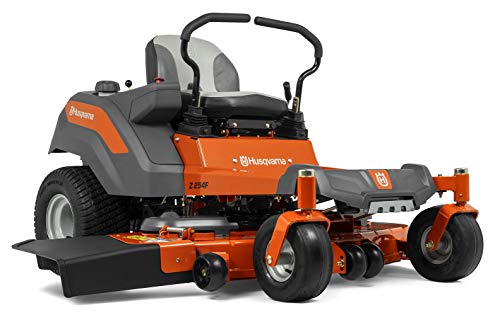
The Husqvarna Z254F is a zero-turn riding mower built for homeowners with substantial lawns who want professional-level efficiency and comfort. With a 54-inch cutting deck and a robust 23 HP Kawasaki engine, this mower is designed to handle large properties quickly and reliably. It's an excellent choice for those who prioritize cutting performance, durability, and ease of operation over budget-friendly options.
In real-world use, the Z254F delivers impressive cutting performance. The ClearCut deck uses a deep design and high-performance blades to create superior air flow, which helps lift grass for a clean cut and improves bagging efficiency. You can choose to discharge clippings, mulch them, or collect them in a bagger (sold separately). The hydrostatic transmission allows smooth, zero-turn maneuverability, making it easy to navigate around trees, flower beds, and other obstacles without constant back-and-forth.
Build quality is a standout feature. The mower's steel frame and heavy-duty components feel solid and durable, ready to withstand years of use on rough terrain. The Kawasaki engine is a well-regarded workhorse, known for its reliability and power. The comfortable high-back seat and ergonomic control panel reduce fatigue during long mowing sessions, while the anti-slip foot area adds a layer of safety.
Setup is straightforward, with most assembly requiring basic tools and following the manual. Storage is a consideration due to its size—this mower needs a garage or shed with ample space. Maintenance is manageable: regular oil changes, blade sharpening, and air filter checks are easy to access. The hydrostatic transmission requires no maintenance, which is a nice convenience.
One realistic limitation is the price—at around $3,879, it's a significant investment, and the mulching kit and bagger are extra. Also, its size and weight (595 lbs) may be challenging for those with smaller yards or limited storage. Some users might find the turning radius less tight than smaller zero-turn models, but for large, open lawns, it's not an issue.
Overall, the Husqvarna Z254F is a top-tier choice for homeowners with large lawns who want a powerful, comfortable, and durable zero-turn mower. It excels in cutting performance and ease of use, though the upfront cost and storage requirements may not suit everyone. If you have the space and budget, this mower can make Saturday morning mowing a breeze.

Pros
- Universal fit works with most zero turn mowers up to 62-inch decks, including top brands
- Durable 600D polyester with waterproof coating offers reliable all-weather protection
- Windproof features (elastic hem and buckles) prevent the cover from blowing off in strong winds
- Air vents minimize condensation and moisture buildup, reducing the risk of rust or mildew
- Easy to put on and remove thanks to the built-in handle and lightweight design
Cons
- Black color may show dust and dirt more readily than lighter colors
- Universal fit might not be perfectly snug on all mower models; some users may need to adjust the elastic hem
- No storage bag included for storing the cover when not in use
If you own a zero turn mower, you know how much of an investment it is. The Porch Shield Zero Turn Mower Cover is designed to protect that investment from the elements, whether it's rain, snow, sun, or dust. This cover is a practical accessory for any U.S. homeowner, suburban lawn owner, or even rural property owner who wants to keep their mower in top shape without spending a fortune on a custom cover. It's especially useful for those who store their mower outdoors or in an unheated shed.
In terms of real-world performance, the cover's 600D polyester fabric and PU waterproof coating provide a solid barrier against moisture and UV rays. The double windproof design, with an elastic hem and adjustable buckles, helps keep the cover securely in place even during gusty conditions. The dual air vents are a nice touch, allowing air circulation to reduce condensation buildup that can lead to rust or mildew. Based on the product specs, this cover should handle typical weather across most U.S. regions, from heavy rain to light snow.
Build quality appears to be a strong point. The 600D polyester is a common durable material for outdoor covers, and the PU coating adds an extra layer of water resistance. The stitching and seams are reinforced, and the buckles feel sturdy. The cover weighs about 3.44 pounds, so it's light enough to handle but still feels substantial. The handle on top makes it easy to lift and position, which is a thoughtful design feature for daily use.
Setting up the cover is straightforward: just unfold it, place it over the mower, and adjust the elastic hem and buckles for a snug fit. No tools or assembly required. Storage is easy too – when not in use, the cover can be folded and stored in a garage corner or shed. Maintenance is minimal: occasionally wipe off dirt or debris, and make sure the cover is dry before folding to prevent mold. The cover is designed to be low-maintenance, which fits well with busy homeowners who don't want another chore.
One realistic limitation is that the universal fit may not be perfectly tailored for all zero turn mower shapes. Some users with especially tall or wide mowers might find the cover a bit loose or tight in certain areas. The black color also tends to show dust and bird droppings, so you might need to clean it more often than a lighter color. Additionally, the cover doesn't come with a storage bag, which would be a nice convenience for keeping it tidy when not in use.
Overall, the Porch Shield Zero Turn Mower Cover offers a solid balance of protection, durability, and value. It's a great option for anyone who wants to shield their mower from the elements without breaking the bank. If you need a reliable everyday cover for a standard-sized zero turn mower, this one should serve you well. Just keep in mind that it's a universal fit, so if you have a custom or oversized mower, you might want to double-check the dimensions.
Evaluating Zero-Turn Mowers: Mechanical Standards and Performance Benchmarks
Independent testing organizations evaluate zero-turn mowers by measuring cut evenness, clipping dispersal, agility, and mechanical reliability. When researching what is the best zero turn mower according to consumer reports, buyers find that top performers combine commercial-grade engine torque, optimized deck airflow, and responsive hydrostatic drive control. Rather than relying on brand reputation alone, systematic testing examines how effectively a mower tackles thick grass without scalping turf. Understanding these benchmarks allows property owners to select equipment tailored to their acreage, terrain, and maintenance expectations.
Core Evaluation Benchmarks in Independent Testing
Standardized testing protocols assess riding equipment across multiple performance categories to determine overall ownership value. Cut quality serves as the primary metric, evaluated across side-discharging, mulching, and bagging in varied turf varieties like fescue and Bermuda. Evaluators inspect cut uniformity, checking for stragglers, ragged leaf tips, and clipping windrows. Handling agility around obstacles, lap-bar steering precision, and braking distance also carry substantial weight in published ratings.
Operator ergonomics and intuitive controls play a critical role during multi-hour mowing evaluations. Testing procedures monitor vibration transmission through the seat and steering levers to determine operator fatigue levels. High-scoring models provide supportive contoured seating, responsive throttle controls, and clear sightlines past the front caster wheels. Quick-access cutting height selectors and vibration-dampened footrests further improve operator comfort across expansive acreage.
Reliability metrics derived from broad subscriber surveys highlight mechanical failure rates over multi-year ownership cycles. Survey feedback reveals that belt slippage, deck spindle seizing, and starting issues represent frequent complaints among riding mower owners. Brands that use heavy-duty spindle housings, protected wiring harnesses, and proven engine platforms score consistently higher in long-term owner satisfaction. Examining these reliability trends helps buyers look past showroom marketing and identify durable mechanical construction.
Powertrain Engineering: Engine Reliability and Hydrostatic Transaxle Mechanics
Engine displacement and cylinder design directly determine how well a mower maintains blade tip speed in heavy grass. Twin-cylinder V-twin engines, such as the 23 HP Kawasaki unit on the Husqvarna Z254F 54 in. 23 HP Kawasaki Zero, provide steady torque and pressurized lubrication for reliable performance. Kawasaki engines earn high praise in consumer surveys for smooth cold starts, cast-iron cylinder sleeve durability, and steady power output. This reliable torque curve keeps cutting blades spinning at full speed through dense spring turf.
Hydrostatic transaxles function as the machine hydraulic drive system, powering each rear wheel independently for smooth zero-radius turning. In residential mowers, maintenance-free sealed hydrostatic transmissions eliminate fluid service intervals while delivering dependable all-around performance. Ground speeds reaching up to 6.5 MPH enable operators to finish expansive lawns substantially faster than standard garden tractors. Smooth hydraulic lever response prevents abrupt tire skidding that can tear up damp turf during sharp pivot turns.
Managing heat buildup remains essential for preserving hydrostatic drive longevity under continuous operation. Dual transaxle systems feature dedicated cooling fans positioned above the drive pulleys to circulate airflow across the hydraulic housings. Keeping cooling fan blades free of accumulated grass debris prevents fluid breakdown and sluggish steering response on hot afternoons. Periodic checks of drive belt tension ensure consistent power delivery to both transaxles across rolling acreage.
Cutting Deck Aerodynamics: ClearCut Design versus Fabricated Steel Decks
Deck chamber geometry controls the internal airflow needed to lift grass blades upright before impact. The ClearCut deck on the Husqvarna Z254F employs a deep chamber that generates strong aerodynamic suction from the rotating blade sails. This specialized airflow lifts flattened grass blades, allowing the high-performance blades to slice cleanly and discharge clippings evenly. Superior airflow dynamics minimize wet grass accumulation beneath the deck, reducing clumping during heavy spring mowing.
A 54-inch cutting deck provides an efficient cutting swath ideal for properties spanning one to three acres. Wider decks decrease the number of passes needed to complete a yard, reducing operating hours on the engine and hydraulic system. Three staggered cutting blades ensure thorough overlap across the cutting width, preventing uncut strips during rapid mowing passes. The versatile deck design also supports mulching or collection attachments when property cleanup demands change.
Evaluating stamped airflow decks alongside welded fabricated steel decks clarifies which style suits specific yard conditions. Fabricated decks built from thick plate steel resist heavy impacts from exposed tree roots, rocks, and uneven field debris. In contrast, engineered stamped decks like the ClearCut platform optimize smooth aerodynamic airflow, delivering superior vacuum lift for clean discharge and bagging. Choosing the right deck construction depends on whether you prioritize impact resilience or manicured airflow performance.
Operating Safety on Incline Gradients and ANSI B71.1 Standards
Zero-turn mowers operate differently on hills compared to traditional front-engine steering-wheel tractors. Because steering control depends entirely on rear drive wheel traction, the front caster wheels can swing freely downhill on steep slopes. Industry safety guidelines established by ANSI/OPEI B71.1 restrict riding mower operation to slopes of 15 degrees or less. Operating above this threshold on conventional zero-turn machinery introduces serious risks of sliding, steering loss, and machine rollover.
Downhill braking requires steady operator control to maintain traction and prevent hazardous skidding. Pulling back on both steering levers engages dynamic hydrostatic braking against the rear drive tires. If the slope is excessive or turf is wet, the rear tires can break traction and slide downward while steering control disappears. Operators should traverse hills slowly, avoid sharp pivot turns on inclines, and never mow slopes when moisture coats the turf.
Drive tire tread condition, balanced tire pressures, and operator position heavily influence machine stability on slopes. Using a low-pressure gauge to balance rear tire pressures ensures even ground contact, preventing unwanted steering pull on inclines. Operators should avoid mowing near retaining walls, drainage ditches, and pond banks where embankments drop sharply. Maintaining a generous safety margin near drop-offs prevents unexpected slides into hazardous terrain.
Blade Dynamics, Deck Pitch Calibration, and Underside Maintenance
Delivering an even lawn finish requires accurate deck leveling and proper front-to-rear pitch adjustment. A correctly calibrated deck features positive pitch, where the front blade tips sit 1/8-inch to 1/4-inch lower than the rear tips. This forward rake prevents grass blades from being struck repeatedly, preserving engine horsepower and eliminating clipping buildup under the deck. Checking cutting heights on a flat concrete surface with a mechanical gauge confirms uniform cut height across the 54-inch span.
Selecting the correct blade type directly affects clipping dispersion, bagging efficiency, and mulching quality. Our guide on selecting the right lawn mower blade explains how blade profiles interact with deck chamber depth to optimize performance. High-lift blades create strong airflow for discharging damp turf, while dedicated mulching blades feature specialized teeth to shred clippings into fine mulch. Balancing blades on a cone balancer after sharpening protects deck spindle bearings from destructive vibration.
Shielding the steel deck underside from moisture and grass buildup prevents corrosion and maintains clean airflow. Applying a protective lawn mower deck spray leaves a slippery coating that deters wet clippings from sticking to the metal housing. Scraping away packed debris after heavy mowing sessions restores proper air velocity inside the cutting chamber. Disconnecting spark plug leads before inspecting deck components ensures operator safety during all underside maintenance checks.
Machine Sizing, Backyard Gate Dimensions, and Storage Footprints
Property layout and gate openings define whether a wide-deck zero-turn mower can access every cutting zone. While a 54-inch cutting deck cuts large open lawns quickly, owners must account for overall machine transport width. The side discharge deflector adds several inches beyond the nominal cutting path when resting in the down position. Measuring gate posts and narrow side corridors beforehand prevents clearance issues after equipment delivery.
Standard residential backyard gates measure between 36 and 48 inches wide, which cannot accommodate a 54-inch cutting deck. Properties with standard narrow gates require widening the opening or choosing a compact riding mower with a narrower deck footprint. For acreage properties with wide perimeter gates or open driveways, a 54-inch deck maximizes efficiency without causing clearance headaches. Checking utility trailer width and shed door dimensions also ensures easy transport and secure storage.
Navigating around landscape beds, mature trees, and garden borders highlights the maneuverability advantages of zero-turn steering. The ability to spin completely around obstacles in one fluid pass removes the need for cumbersome multi-point turning maneuvers. Operators can trim closely along mulch edges and fence lines, substantially reducing the string trimmer work needed afterward. Ergonomic control lap bars allow smooth speed modulation when working near delicate ornamental plantings.
Weather Protection and Environmental Shielding for Outdoor Storage
Storing riding equipment outdoors exposes sensitive mechanical parts to rain, sunlight, dust, and humidity. Using a heavy-duty cover like the Porch Shield Zero Turn Mower Cover Up to 62 inches protects machinery when garage space is unavailable. Sized at 83 inches long, 62 inches wide, and 50 inches high, this universal cover fits large zero-turn mowers from brands like Husqvarna, Cub Cadet, Toro, and John Deere. Shielding the engine hood, wiring, and seat prevents UV fading and moisture damage.
Durable fabric construction determines how well an outdoor cover holds up against harsh weather. Heavy-duty 600D polyester with a waterproof polyurethane backing creates an impermeable barrier against rain, snow, tree sap, and dust. Dual built-in air vents allow internal air circulation, preventing moisture buildup and condensation that could rust metal deck components. Convenient integrated handles make placing and removing the cover quick and straightforward during weekly lawn care routines.
Wind-resistant fasteners are essential for keeping protective covers secure during gusty storms. An elastic bottom hem pulls tightly around the mower chassis and tires for a snug fit. Adjustable windproof buckles fasten beneath the mower frame to stop strong winds from blowing the cover loose. Keeping your zero-turn mower covered shields mechanical joints, cables, and switches from weather-induced wear between uses.
Routine Preventative Maintenance Protocols for Long-Term Ownership
Following a regular maintenance schedule keeps engine compression strong and hydraulic drive performance smooth across years of service. Engine care starts with seasonal oil and filter changes using manufacturer-recommended oil viscosities to lubricate internal Kawasaki V-twin components. Inspecting the air filter assembly prevents dirt and fine grass chaff from entering the carburetor and damaging cylinder walls. Fresh spark plugs installed before each cutting season guarantee prompt starts and smooth idle operation.
Deck spindle assemblies and belt tension pulleys need regular inspections to prevent mechanical breakdowns during peak mowing periods. Operators should confirm that idler pulleys spin freely without wobble and that tension springs maintain correct belt grip. Checking the deck drive belt for cracking or fraying allows timely replacement before a broken belt halts cutting progress mid-lawn. Lubricating grease zerks on front caster spindles and deck pulleys pushes out moisture and prolongs bearing life.
Proper winterization protects fuel delivery systems and electrical components from seasonal degradation. Adding fuel stabilizer to fresh gas and running the engine circulates treated fuel through the carburetor and fuel lines. Disconnecting the battery or connecting an intelligent maintenance charger prevents parasitic voltage drop during freezing winter temperatures. Storing the machine in a dry space beneath a breathable cover ensures prompt starting when spring grass begins growing.
Choosing an outstanding zero-turn mower comes down to matching engine reliability, deck aerodynamics, and property dimensions to your yard. Proven platforms equipped with twin-cylinder engines and deep airflow decks produce a manicured finish while saving valuable time on large lawns. Following slope safety guidelines, maintaining accurate deck rake, and protecting equipment with weather-resistant covers ensures reliable operation year after year. Focus on solid mechanical engineering and proper care to keep your lawn looking sharp every season.




Write Your Review
No reviews yet. Be the first to share your experience!