


A riding mower that starts once, then clicks on the next attempt, may have a weak battery, a poor connection, or a charging-system fault. For a gas mower with a 12-volt starter battery, what keeps a lawn mower battery charged is usually the engine-driven stator and voltage regulator working together while the engine runs. A working charging system replenishes some of the energy used to start the engine, but it cannot make up for every fault or undo battery damage caused by prolonged discharge.
Start by separating a gas mower’s starter battery from the removable lithium-ion packs used by cordless mowers. Those packs are charged by their compatible charger, not by an engine stator. For a 12-volt replacement, confirm the mower manual’s battery group, terminal orientation, and required Cold Cranking Amps (CCA) before ordering. Our guide to mower battery fitment explains why a battery that looks close may still have the wrong post layout or dimensions.

Pros
- High 280CCA for reliable starting power even in cold weather
- Long 5-year expected lifespan with proper care
- Maintenance-free and leak-proof for hassle-free ownership
- Durable shockproof and heat-resistant construction
Cons
- Dimensions may not fit all U1 battery compartments; check compatibility
- Sealed lead acid battery weight (14.1 lbs) may be heavier than some lithium alternatives
- No specific anti-vibration features mentioned for rough mower conditions
The MARXON U1 battery is a 12V 280CCA sealed lead acid replacement battery designed specifically for riding lawn mowers and garden tractors. If you own a suburban lawn or a larger property that requires a riding mower, this battery is a direct replacement for many U1 size applications. It's built to deliver the starting power needed to get your mower going, season after season.
Performance-wise, the 280 Cold Cranking Amps provide enough juice to start most single-cylinder and twin-cylinder mower engines, even in cooler morning temperatures. The battery is maintenance-free, so you never have to check fluid levels or add water - just install it and use it. That's a big convenience for homeowners who want a simple, reliable starting solution.
Build quality is a highlight. The battery uses a patented alloy that resists corrosion and prevents leaks. The micro crystal structure is claimed to improve purity and extend lifespan up to 5 years. Additionally, the shockproof casing helps it handle the vibrations and bumps that come with mowing uneven terrain. This makes it a durable choice for regular yard work.
Installation is straightforward. The battery comes with screws, and you can connect it to your mower's cables in minutes - positive on left, negative on right. No special tools required. The weighs about 14 pounds, which is typical for lead acid batteries of this size.
One limitation to consider is that you should measure your existing battery compartment. While this is a standard U1 size (7.68 x 4.92 x 6.14 inches), some tractors may have slightly different dimensions or terminal orientation. Also, if you're looking for a lighter weight or longer runtime for accessories, a lithium battery might be worth comparing - though it would cost more.
Overall, the MARXON U1 battery is a solid choice for homeowners who need a dependable replacement for their riding mower. It combines convenience, durability, and solid performance at a budget-friendly price. Backed by a 15-month warranty and US-based support, it's a practical option for keeping your mower running reliably.
Installing the MARXON U1 battery is a simple DIY task that most homeowners can handle. Start by ensuring your mower is turned off and the key is removed. Locate the battery tray, typically under the seat or hood.
Remove the old battery by disconnecting the negative (black) cable first, then the positive (red). Lift out the old battery and clean any corrosion from the tray and cables using a baking soda and water solution. Let it dry completely.
Place the new MARXON battery in the tray, ensuring the positive terminal aligns with the positive cable. Connect the positive cable first, then the negative. Tighten the screws securely. The battery comes with mounting screws, but you may reuse existing hardware if it fits.
After installation, start your mower and let it run for a few minutes. Check that the battery is securely held and cables are not loose. The battery is maintenance-free, so no further action is needed. Always dispose of old batteries properly at a recycling center.

Pros
- Spill-proof and vibration-resistant design ensures durability in lawn equipment
- High CCA rating provides reliable starting power for various mower engines
- Compatible with a wide range of riding mowers and lawn tractors from top brands
- Long service life with deep discharge recovery for seasonal use
Cons
- Battery only; no wiring harness or mounting accessories included, may require additional purchase for some mowers
- Weight of 14.1 pounds may be slightly heavier than some comparable batteries
The Mighty Max Battery ML-U1-CCAHR is a 12-volt, 320 cold cranking amps (CCA) sealed lead-acid (SLA) AGM battery designed primarily for riding mowers, lawn tractors, and other outdoor power equipment. This battery is a solid option for homeowners who need a dependable replacement battery that can handle the demands of frequent mowing in varying weather conditions. Whether you have a small suburban lawn or a larger rural property, this battery may provide the starting power you need.
According to the product specifications, the ML-U1-CCAHR features a high discharge rate and wide operating temperature range, which may help ensure reliable starts in both hot summer afternoons and chilly early mornings. The AGM construction is spill-proof and can be mounted in any position, offering flexibility for different mower designs. This battery is also resistant to shocks and vibration, which is important for equipment that experiences rough terrain.
Compatibility is a strong point for this battery. It is listed as compatible with a wide range of mowers including Craftsman 25780, Cub Cadet LTX 1046 KW, John Deere 330, and many more. This broad compatibility may make it a convenient choice for owners of multiple mowers or for those who want a reliable replacement without needing to search for a specific model.
In terms of build quality, the battery is described as long-lasting with deep discharge recovery capabilities. This means it may be able to recover from being drained more effectively than some standard batteries, which can be useful for seasonal equipment that sits unused for months. The included screws allow for straightforward installation, though users should note that no wiring harness or mounting accessories are included.
One potential limitation is the weight of 14.1 pounds, which might be slightly heavier than some comparable batteries. However, this weight is typical for a battery of this capacity and should not be an issue for most mower battery trays. Additionally, the battery is sold as a single unit, so buyers should ensure they are getting the correct size and terminal configuration for their mower.
Overall, the Mighty Max Battery ML-U1-CCAHR appears to be a practical and reliable choice for homeowners seeking a replacement battery for their riding mower or lawn tractor. It offers spill-proof safety, broad compatibility, and robust performance characteristics that may suit both casual and dedicated lawn care enthusiasts. As always, checking your mower's specific battery requirements before purchase is recommended.

Pros
- Lightweight at 40 lbs makes it easy to push and store
- Brushless motor provides excellent cutting power and battery efficiency for yards up to 1/4 acre
- IntelliCut technology optimizes power and runtime based on grass conditions, extending battery life
- Compact storage with collapsible handles saves space in garage or shed
Cons
- 17-inch cutting deck is narrower than some competitors, which may require more passes on larger lawns
- Battery runtime may be limited for thicker, taller grass; extra battery recommended for larger yards
- Rear bag capacity is modest, requiring more frequent emptying during heavy mowing
The Worx WG745 is a cordless electric push mower designed for homeowners with small to midsize lawns up to about 1/4 acre. It runs on two 20V 4.0Ah batteries (providing 40V total) and features a brushless motor that delivers solid cutting power while staying quiet and emission-free. This mower is a great fit for suburban yards, apartment dwellers with small patches of grass, or anyone looking to ditch gas and cords for a simpler mowing experience.
In terms of cutting performance, the 17-inch steel deck handles typical grass conditions well. The IntelliCut technology automatically adjusts motor speed based on grass thickness, which helps extend runtime and prevents bogging down in taller or damp grass. The 2-in-1 function lets you choose between mulching clippings for natural lawn food or using the rear bag for collection. Mulching works fine for regular cuts, but in heavy growth, bagging is more effective to avoid clumps. The single lever height adjustment offers six positions from 1.5 to 3.5 inches, covering most common grass heights.
Build quality feels solid for the price point, with a durable plastic deck that won't rust and a lightweight aluminum handle. At 40 pounds, it's easy to push and maneuver around flower beds, trees, and tight corners. The cut-to-edge design allows you to mow closer to fences and garden borders, reducing the need for trimming with a string trimmer. The batteries have a handy charge indicator, so you always know how much juice is left.
Setup is straightforward—just attach the handle and insert the batteries. The collapsible handle folds down for compact vertical or horizontal storage, making it easy to tuck away in a garage corner or shed. Maintenance is minimal: keep the blades sharp, clean the deck after each use, and charge the batteries regularly. The mower operates quietly enough for early morning mowing without disturbing the neighbors.
Realistically, the 17-inch cutting deck is narrower than many gas or larger electric mowers, so it may take longer to cover a 1/4-acre lawn. The battery runtime is adequate for typical mowing, but if your grass is thick or overgrown, you might need a second charge or an extra battery. The rear bag holds about 1.5 bushels, which is fine for small yards but fills quickly on denser lawns. Also, the plastic deck, while rust-proof, may not hold up as well over many years compared to steel decks.
Overall, the Worx WG745 is a reliable, easy-to-use cordless mower for homeowners who value convenience, quiet operation, and low maintenance. It's best suited for flat, small to midsize lawns where maneuverability and storage space are priorities. If you have a larger yard or very thick grass, consider a model with a wider deck or more battery capacity. But for most suburban and apartment dwellers, this mower offers a great balance of performance, weight, and price.
Pros
- True maintenance-free operation – no topping off water or cleaning corrosion
- Strong CCA rating for reliable cold-weather starting on snow blowers or late-season mowing
- Comes fully charged and includes threaded posts for easy nut/bolt terminal hookup
- Works with most 12V small engine starters found on lawn tractors and zero-turn mowers
Cons
- Not a deep-cycle battery – not intended for extended power draws like electric winches or trolling motors
- Weight (nearly 13 lbs) may be slightly heavier than some comparable lithium or AGM options
- Some users may find the nut and bolt terminals require a wrench for installation instead of quick-connect clamps
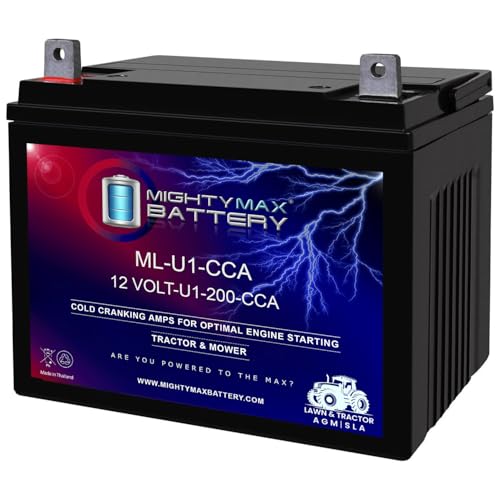
If you own a riding mower, lawn tractor, zero-turn mower, or even a snow blower, you know how frustrating a dead battery can be. The Mighty Max Battery 12V 200 CCA SLA AGM battery is designed to be a straightforward replacement for many small engine starting applications. It's a sealed lead-acid battery that uses AGM technology, meaning it's completely maintenance-free—no refilling, no acid spills, and no corrosion mess to clean up. For homeowners who just want to hop on their mower and get the grass cut without extra maintenance, this is a practical choice.
Performance-wise, the 200 cold cranking amps are sufficient for most riding mowers and lawn tractors. Even on chilly spring mornings or late-fall leaf cleanup days, this battery should give you reliable starting power. The AGM construction also means it handles vibration better than a flooded battery, which is important when you're bouncing over bumps in the yard. The nut and bolt terminals provide a solid, secure connection that won't loosen up over time—you can tighten them down and forget about them.
Build quality is what you'd expect from a reputable brand like Mighty Max Battery. The case is tough and sealed, so you can install it in a variety of positions (just not upside down). At 12.89 pounds, it's not too heavy to lift in and out of the battery tray. The dimensions (7.75 x 5.11 x 6.25 inches) are standard for many lawn mower batteries, so it should fit most trays without modification.
Setup is about as easy as it gets: remove the old battery, connect the new one (making sure to attach positive and negative correctly), tighten the nuts on the terminals, and you're ready to go. It comes pre-charged, so you don't need to wait for a first charge. Storage is simple too—since it's sealed, you can mount it in the mower all season without worrying about water levels or acid leaks.
One realistic limitation is that this is not a deep-cycle battery. It's built for short bursts of high current to start an engine, not for powering accessories like lights or electric clutches for an extended period. Also, some people prefer the convenience of quick-connect terminals, but the nut and bolt setup here is very secure and standard for many small engine applications.
Overall, the Mighty Max Battery 12V 200 CCA SLA AGM battery is a reliable, no-fuss replacement for your outdoor power equipment. If you want a battery that works when you need it and requires zero maintenance, this is a great pick. It's especially suited for suburban homeowners or rural property owners who want to get back to mowing quickly without dealing with battery headaches.
The 200 Cold Cranking Amps (CCA) rating is the key spec here. For most riding mowers and lawn tractors with engines between 12 and 25 HP, this battery provides enough power for reliable starts even in cooler temperatures. It uses AGM (Absorbent Glass Mat) technology, which means the electrolyte is absorbed into fiberglass mats rather than being free liquid. This gives it lower internal resistance and higher discharge rates than a standard flooded battery. The result is a strong, consistent crank that helps your engine fire up quickly.
Mighty Max Battery builds their SLA AGM batteries with a thick, impact-resistant polypropylene case that can handle the bumps and vibrations of lawn mowing. The sealed design means no acid fumes or corrosion buildup on terminals or cables—a common issue with traditional flooded batteries. Plus, the AGM construction is spill-proof, so you can mount the battery safely in mowers that tip or bounce. The nut and bolt terminals are made of brass or lead alloy and resist stripping.

Pros
- High purity lead means better performance and longer life than recycled lead batteries
- Maintenance free – no watering or cleaning terminals needed
- Strong cold cranking amps ensure reliable starts even in freezing weather
- Wide compatibility with most U1 group size riding mowers and tractors
- Vibration resistant – holds up to the shaking of mowing rough ground
Cons
- Weight of 14.6 lbs may be heavy for some users to lift and install
- Not suitable for large engines requiring higher CCA than 330
- Limited to U1 group size – verify dimensions fit your mower tray
The UPLUS U1 Riding Lawn Mower Battery is a sealed lead-acid AGM battery designed to replace worn-out batteries in garden tractors and riding mowers. It's best suited for homeowners who want a reliable, maintenance-free power source for their weekend mowing chores. With 12V and 330 cold cranking amps, this battery provides enough power to crank most small to mid-size lawn tractor engines, even on chilly spring mornings.
In real-world use, the battery's high cranking performance helps start engines quickly without hesitation. The AGM design is spill-proof and vibration resistant, which is important for mowers that bounce over uneven lawns. Many users find it works well with popular brands like John Deere, Cub Cadet, Husqvarna, Craftsman, and Toro. The dimensions (7.68 x 4.92 x 6.93 inches) fit standard U1 battery trays, though it's worth double-checking your mower's compartment before purchase.
Build quality appears solid thanks to the use of 99.99% pure primary lead instead of recycled lead. This means more consistent charging and less internal corrosion, which may extend the battery's lifespan. UPLUS states it can last over five years with proper care. The battery is completely sealed, so there’s no need to check water levels or worry about acid leaks onto your garage floor or lawn.
Setup involves removing the old battery, cleaning the terminals, connecting the red positive and black negative cables, and securing the hold-down. It’s a straightforward 10-minute job. There’s no maintenance required afterward, which is a real plus for folks who just want to mow and store their mower. The 15-month warranty and US-based support provide peace of mind if any issues arise.
A limitation to consider is the 330CCA rating – while sufficient for most riding mowers, larger garden tractors with V-twin engines might need a battery with higher cold cranking amps. Also, the 14.6-pound weight is manageable but not feather light, so those with strength concerns may want assistance during installation. This battery is non-spillable and can be shipped safely, but it does contain lead and should be recycled properly at end of life.
Overall, the UPLUS U1 battery is a sensible replacement choice for budget-conscious homeowners with a compatible riding mower. It delivers reliable starting, requires zero upkeep, and comes from a brand with a responsive support team. If your mower needs a fresh battery to get through another mowing season, this sealed AGM option is worth a look.
This UPLUS battery provides 12V and 330 cold cranking amps, which is enough to start most single-cylinder and small V-twin lawn tractor engines. The AGM construction means it can deliver high current bursts even in cold temperatures down to -22°F. The calcium-calcium technology helps reduce self-discharge when the mower sits idle over winter. For daily mowing use, the battery holds its charge well and recharges quickly from the mower’s alternator.
The battery uses 99.99% pure primary lead, which resists grid corrosion better than many recycled lead batteries. The case is sealed and vibration resistant, so it can handle the constant shaking of mowing bumpy lawns. There are no vents or caps to leak acid, making it safe for side mounting positions in some mowers. UPLUS claims a lifespan of over five years in typical use, but actual life depends on climate and charging system health. The 15-month warranty covers defects.

Pros
- Maintenance-free AGM design is ideal for homeowners who prefer a 'set it and forget it' battery without watering or cleaning terminals.
- Strong cold-cranking performance helps with reliable startup on chilly spring or fall mornings.
- Wide compatibility with leading mower brands makes it an easy replacement for many popular models.
- Leak-proof and vibration-resistant construction adds durability for rough yard conditions.
- Includes a 15-month warranty, providing extra peace of mind for budget-conscious buyers.
Cons
- The 26Ah capacity may be limiting for larger lawn tractors with high electrical demands, such as those with multiple accessories or electric PTO.
- While the terminal layout is standard (left positive, right negative), some users may need to check fitment carefully for their specific mower model.
- Periodic charging is required if the mower sits idle for extended periods to avoid deep discharge damage - a common need for all lead-acid batteries.
The UPLUS U1 riding lawn mower battery is a practical replacement option for homeowners who own garden tractors or ride-on mowers. As a sealed AGM (absorbent glass mat) battery, it is specifically built to deliver reliable starting power for your equipment without the hassle of traditional flooded batteries. This type of battery is best suited for anyone looking for a maintenance-free solution - whether you're a first-time mower owner or a seasoned homeowner who simply wants to replace a tired battery with something dependable.
In terms of real-world performance, the battery's 360 cold cranking amps (CCA) and 12-volt design provide enough punch for most standard riding mower engines. The description highlights strong low-temperature starting ability, which can be a huge plus for those early spring mornings when temperatures can still dip near freezing. The calcium-calcium technology also helps reduce self-discharge, meaning the battery may hold its charge better when stored in the garage or shed between cuts. While this isn't a battery designed for electric mowers, it is a solid fit for the gas-powered riding mowers that dominate suburban and rural lawns.
Build quality appears solid based on the materials and manufacturing details. The use of 99.99% pure primary lead is a notable feature, as it can improve charging efficiency and reduce the release of toxic fumes compared to recycled lead. The AGM construction is sealed, so there are no water levels to check, no spills, and no leaks. The battery is also described as vibration resistant, which is important because riding mowers constantly shake as they cross bumpy ground, flower beds, and uneven terrain around your yard.
Setup is straightforward for most mowers. The compact U1 form factor measures 7.68 inches long, 4.92 inches wide, and 6.93 inches high, and the terminal layout is left positive and right negative. You'll simply remove the old battery, connect the new one (red to positive, black to negative), and secure it in the tray. Maintenance is minimal, but the product description includes a note about avoiding deep discharge. If you leave your mower parked for several weeks, it's a good idea to hook it up to a trickle charger or at least check the voltage to ensure the battery doesn't drop too low.
One realistic limitation is the battery's 26Ah capacity. For most small to mid-size riding mowers, this is plenty. However, if your tractor has heavy electrical accessories like a powerful electric PTO, LED light bars, or a high-output charging system, you might want to confirm that 26Ah meets your needs. Also, while compatibility extends to major brands such as John Deere, Cub Cadet, Husqvarna, Craftsman, and Toro, it's always wise to double-check your owner's manual or measure the battery tray and terminal orientation before purchasing.
Overall, the UPLUS U1 offers a balanced set of features for the price. It brings a trusted chemistry, durable construction, and a generous 15-month warranty, which suggests the manufacturer stands behind the product. If you're a suburban homeowner or a rural property owner who needs a dependable replacement battery for a gas-powered riding mower or lawn tractor, this is a sensible choice that should let you get back to mowing without fuss.
Because this is an AGM battery, regular maintenance is minimal. There is no need to check electrolyte levels, add water, or clean up acid spills. The sealed design also means you can mount it in any orientation that fits your mower, as long as it's secure.
Still, all lead-acid batteries benefit from a little attention. If you store your riding mower for the winter or leave it sitting for more than a month, consider attaching a smart trickle charger to keep the battery topped off. The product description warns that deep discharge can damage the battery, and that's a real concern for seasonal equipment.
Every now and then, check the battery terminals for corrosion. Even with a sealed battery, dirt and moisture can build up. A quick wipe with a dry cloth or a wire brush keeps the connection clean. Make sure the battery is held down securely to avoid excess vibration, which could shorten its lifespan. With these small habits, the UPLUS U1 should provide years of reliable starting power for your lawn tractor.

Pros
- Lightweight 18.52-lb design makes it one of the most portable mowers in its class.
- Cordless with two included batteries - no gas, no cords, no pull-start hassle.
- 5-position height adjustment covers 1 to 2.5 inches for flexible lawn care.
- Push-button start simplifies the mowing routine for beginners and seniors alike.
- Compact footprint and grass bag system work well on small suburban lots.
Cons
- Total runtime of about 30 minutes may not be enough for larger lawns with thick grass.
- 13-inch deck means more passes on anything bigger than a small yard.
- No self-propelled drive, so you'll do all the pushing on uneven ground.
This DEKOPRO 20V cordless lawn mower is a compact walk-behind electric mower built for small yards, side strips, and patio green spaces. With a 13-inch cutting deck and a lightweight frame, it targets homeowners who want a simple, no-gas alternative to a full-size gas mower. If your lawn is more patch than pasture, this machine may be all you need for regular upkeep.
Performance-wise, the 750W motor spins the blade with enough power to handle normal lawn grass and light weeds. The five-position height adjustment lets you lower the blade for a closer cut or raise it for taller summer grass, all without tools. The 11-gallon grass bag uses a wide opening and airflow-friendly design to pull clippings out of the way, so you spend less time shaking out a full bag and more time finishing the yard.
The mower weighs only 18.52 pounds, which changes the feel of small-yard mowing. You can maneuver around flower beds, under trees, and along fences without wrestling a heavy steel deck. The push-button start is a nice upgrade over pulling a cord, and the lack of gas and oil means no messy refills or filter changes. The deck itself appears built for light-duty use, with materials that should hold up fine for seasonal trimming if stored indoors.
Setup is straightforward: attach the handle, drop in the batteries, and you're ready to roll. Storing it is easy because it doesn't take up much garage or shed space. Battery charging takes a few hours, and the two included 4.0Ah batteries give you about 15 minutes each. That's enough for quick touch-ups, but you'll need to plan your mowing around a mid-session battery swap if the grass is thick.
For buyers with larger properties, the 13-inch deck and limited runtime could feel restrictive. You'll make more passes, and a long, damp lawn may drain the batteries sooner. But for a condo courtyard, a small front yard, or just keeping the edges tidy, this cordless mower offers a practical, low-maintenance solution at a budget-friendly price. It's best to set expectations: this is a nimble helper, not a heavy-duty workhorse.
With a 13-inch blade and a 750W motor, this mower is designed for precision trimming rather than broad-acre mowing. The cutting height range of 1 to 2.5 inches covers most common lawn lengths, and the five fixed positions make it easy to dial in your preferred cut. The deck is narrow enough to slip between garden beds and along walkways, which is a plus for detailed yard work.
Bagging performance is helped by the 11-gallon grass catcher and its wide opening. On a dry lawn, the airflow directs clippings into the bag without excessive clogging. Mulching is possible if you ride without the bag, but the mower doesn't come with a dedicated mulching plug or side discharge, so most users will stick with bagging for a clean result.
The mower comes with two 20V 4.0Ah lithium-ion batteries and a charger. Each battery delivers roughly 15 minutes of run time, giving you about 30 minutes total when you swap packs. That's enough for a small yard or a quick cleanup pass, but not for long sessions on thick grass. Charging time is typical for this class, so it's a good idea to keep both batteries topped off.
For eco-conscious homeowners, the cordless design means zero emissions and less noise than a gas engine. You can mow early on a Saturday without waking the whole street, and you never have to worry about stale fuel or spark plug maintenance. Just charge, slide in a battery, and start.
The mower frame and deck are built for light-duty residential use. The plastic components keep weight down, but they also mean the mower isn't meant to handle heavy brush or rocky terrain. With normal care, it should last through several seasons of small-yard mowing. Store it in a dry shed or garage, and wipe the underside after each use to prevent grass buildup.
Maintenance is minimal: keep the blade sharp, clean the deck, and charge the batteries after every session. There's no oil to change, no air filter to replace, and no spark plug to gap. For first-time mower buyers or anyone tired of gas-engine upkeep, this is one of the most straightforward machines to own.

Pros
- Wide compatibility with many popular riding mower brands, making it a versatile replacement option.
- Maintenance-free sealed design saves time and hassle compared to traditional flooded batteries.
- Shockproof and heat-resistant construction may enhance durability in demanding lawn care conditions.
- Competitive price point for a 330CCA battery, appealing to budget-conscious shoppers.
Cons
- No user reviews available yet, so real-world performance feedback is limited.
- Sealed lead acid batteries are heavier than lithium alternatives, which may affect portability during installation.
- CCA rating is moderate; for very cold climates or high-compression engines, a higher CCA might be needed.
The MARXON U1 battery is a 12-volt, 330 cold cranking amp (CCA) sealed lead acid (SLA) battery designed specifically for riding lawn mowers and garden tractors. It suits homeowners who need a dependable replacement battery for their outdoor power equipment, especially those with tractors from brands like Husqvarna, Troy-Built, Snapper, Scag, and many others listed in the compatibility.
In terms of performance, the 330 CCA rating provides enough starting power for most residential riding mowers under normal conditions. The sealed lead acid chemistry delivers consistent voltage and is maintenance-free, meaning you don't have to check or refill electrolyte levels. This setup may work well for homeowners who want a straightforward replacement without the fuss of traditional flooded batteries.
Build quality appears solid with shockproof material that helps resist vibration and heat from engine operation. The high purity micro crystal structure is claimed to extend service life beyond five years, though actual longevity depends on usage and charging habits. The compact U1 dimensions (7.68 x 4.92 x 6.14 inches) fit standard battery trays, making installation simple with included screws.
Setup is straightforward: just connect the positive and negative terminals correctly (positive on left, negative on right) and secure the battery in the tray. No special tools or maintenance routines are needed. Storage is typical for SLA batteries – keep it charged and avoid deep discharges to maximize lifespan.
One limitation is the lack of user reviews, so real-world feedback is not yet available. Also, SLA batteries are heavier than lithium options, which might be noticeable when handling. For very cold climates or high-compression engines, a higher CCA battery could be more reliable. However, for most residential riding mowers in moderate conditions, this MARXON battery should perform adequately.
Overall, the MARXON U1 battery is a practical, budget-friendly choice for anyone needing a direct replacement with broad compatibility. The 15-month warranty and US-based support add confidence. If you're looking for a maintenance-free power source for your garden tractor, this is worth considering.
The MARXON U1 battery is designed to fit a wide range of riding mowers and garden tractors. Compatible brands include AGCO ALLIS, BEAR CAT, BOB-CAT, BUNTON, DIXON, ENCORE, EXMARK, FERRIS, FINN CORP., GIANT-VAC, GRASSHOPPER, GRAVELY, HOWARD PRICE TURF EQUIPMENT, HUSQVARNA, HUSTLER, Kawasaki, LESCO, MASSEY-FERGUSON, MAXIM, MTD Pro, SCAG, SCOTTS, SIMPLICITY, SNAPPER, STEINER, SWISHER, TROY BUILT, WHITE OUTDOOR, WOODS, Yamaha, YAZOO/KEES, and ZIPPER.
Installation is straightforward: remove the old battery, clean the terminals, place the new battery in the tray with correct polarity (positive left, negative right), and secure it using the provided screws. Always disconnect the negative terminal first when removing the old battery and connect the positive first when installing the new one to avoid shorts.
No special tools or modifications are required. The battery fits standard U1 size trays commonly found in residential riding mowers.
MARXON offers a 15-month warranty on this U1 battery, covering defects in materials and workmanship. The company has a US-based office and warehouse, which may help with faster resolution of issues. They state that they will reply to emails within 12 hours.
For warranty claims, you typically need to provide proof of purchase and follow their return process. Always check the product listing for the most current warranty terms. Having local support adds peace of mind for homeowners who prefer dealing with a US-based company.

Pros
- Maintenance-free and leak-proof design reduces routine upkeep
- Shockproof material withstands vibration and heat better than traditional batteries
- Wide compatibility with many popular riding mower and tractor brands
Cons
- Some users may find the 360CCA rating slightly lower than OEM batteries for larger engines
- Dimensions may require checking fitment for non-standard battery trays
- Limited to 12V systems; not suitable for higher voltage equipment
For homeowners who rely on a riding mower or lawn tractor to keep their yard looking sharp, a dependable battery is just as important as a sharp blade. The MARXON U1 Riding Lawn Mower Battery is a 12-volt sealed lead acid (SLA) battery with 360 cold cranking amps (CCA). It's designed to fit a wide range of popular mower models from John Deere, Craftsman, Cub Cadet, Toro, Husqvarna, and many others, making it a versatile replacement option for suburban and rural property owners alike.
When it comes to real-world performance, the 360 CCA rating provides enough power to start most single-cylinder and small V-twin engines found on typical residential riding mowers and garden tractors. The battery's shockproof material helps it handle the vibration and heat that come with regular mowing, especially during hot summer months. According to the product description, the sealed design is maintenance-free, meaning you won't need to check water levels or add acid - just install it and get back to mowing. For those who prefer a no-fuss setup, this can be a practical time-saver.
Build quality appears solid for a budget-friendly battery. The patented alloy construction aims to resist corrosion and prevent leaks, which is important when storing the battery in a garage or shed over the winter. The compact U1 size (7.68 x 4.92 x 6.14 inches) and 15-pound weight make it easy to lift into place, even for those who may not be mechanically inclined. Polarity is clearly marked (positive on left, negative on right), reducing the chance of hooking it up backward.
Installation is straightforward for anyone comfortable with basic battery connections. The listing includes the battery and screws, so you may need to reuse your existing cables or terminal hardware. Storage is typical for a lead-acid battery - keep it charged during off-season months to prolong its life. Maintenance is nearly zero thanks to the sealed design, though periodic cleaning of the terminals to prevent corrosion is always a good idea.
One realistic limitation is that 360 CCA may not be sufficient for larger engines or extreme cold weather starting. Some users might find that their original equipment battery had a higher CCA rating, especially for commercial-grade zero-turn mowers. It's worth checking your mower's specifications before purchasing to ensure compatibility. Also, while the compatibility list is extensive, it's always smart to measure your battery tray to confirm the U1 dimensions will fit.
Overall, the MARXON U1 battery is a solid, affordable option for homeowners looking to replace a worn-out battery in their riding mower or garden tractor. It offers a balance of reliability, easy maintenance, and broad compatibility at a reasonable price point. If you're a budget-conscious shopper or a first-time mower owner who wants a straightforward replacement without the premium cost of some brand-name batteries, this one is worth considering.
Pros
- Significantly lighter than gas mowers, reducing user fatigue and making it easy to handle on slopes or uneven terrain.
- Quiet operation and zero emissions – great for early morning mowing and environmentally friendly yards.
- Simple electric push-button start eliminates the hassle of gas, oil, and pull cords.
- 5-position height adjustment offers flexibility for different grass types and seasonal cuts.
- Mulching capability returns nutrients to the lawn, reducing fertilizer needs.
Cons
- Battery runtime may not be sufficient for lawns larger than 1/3 acre, especially in thick or wet grass.
- 16-inch deck is smaller than standard 20-21 inch mowers, so it takes more passes to cover larger areas.
- Plastic deck construction, while lightweight, may be less durable over time compared to steel or aluminum decks.
- No self-propelled drive – users must push the mower entirely, which may be tiring on larger lawns or hills.
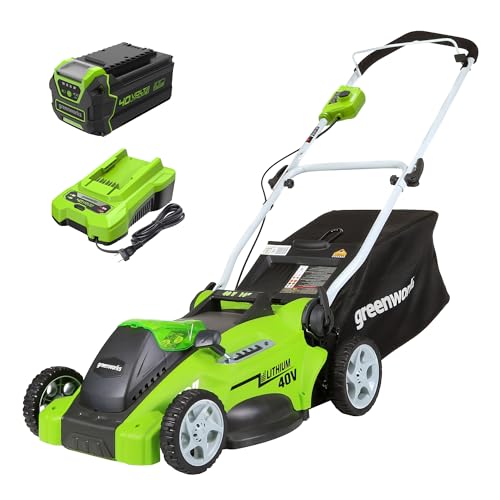
The Greenworks 40V 16-inch cordless push lawn mower is a solid entry-level electric mower designed for homeowners with small to medium-sized yards—typically up to a third of an acre. It targets those looking to transition from gas to battery power, offering a simpler, quieter, and more eco-friendly mowing experience. First-time mower buyers, apartment dwellers with tiny patches, or suburban lawn owners will appreciate its lightweight build and ease of use.
Performance-wise, the 40V brushless motor delivers enough torque to handle typical turf conditions, including Bermuda, fescue, and bluegrass. The 16-inch cutting width is narrower than standard mowers, which means more passes for larger areas, but it excels in tight spaces around gardens and landscaping. The 2-in-1 system lets you choose between mulching—which finely chops clippings to feed the lawn—or rear bagging for a tidy finish. Based on user feedback, the mulching is efficient on dry grass, but wet or tall grass may require slower passes or a second cut. The single lever height adjustment offers five positions from roughly 1.5 to 3.5 inches, giving you quick control over cutting length.
Build quality emphasizes portability over ruggedness. The deck is made of lightweight plastic rather than steel, contributing to its 37.5-pound weight—about 35% lighter than comparable gas mowers. While this makes it easy to lift into a truck or store in a shed, some users question the long-term durability of plastic against rocks or thick roots. The wheels are standard plastic with decent tread, providing adequate traction on flat lawns but struggling on steep slopes. Assembly is straightforward—typically just attaching the handle with included hardware—and no tools are needed for basic adjustments.
Maintenance is minimal: no oil changes, no spark plugs, and no fuel mixing. After each use, simply wipe down the deck and keep the battery charged. The included 4.0Ah battery offers about 30-40 minutes of runtime on a single charge, depending on grass conditions and operator technique. For a 1/4-acre lawn, you may get through the whole yard; for 1/3 acre, the battery might run out before finishing, especially in thick spring growth. The charger takes about 2 hours to fully recharge. Storage is convenient—the mower stands upright and takes up minimal floor space, and the handle folds flat for hanging on a wall hook.
Realistic limitations include the relatively small cutting deck and lack of self-propulsion. If your lawn has significant hills or you have mobility issues, pushing this mower can still be tiring. Additionally, the plastic deck may show scratches and wear over time, and the 40V system is less powerful than 60V or 80V alternatives from other brands. Replacement batteries are not cheap, so investing in a second battery might be necessary for larger yards.
Ultimately, the Greenworks 40V 16-inch mower is a smart buy for budget-conscious homeowners who prioritize lightweight, quiet, and low-maintenance mowing on small, flat lawns. It's also an excellent starter mower for those new to battery-powered equipment. For larger properties or tougher terrain, consider a self-propelled model or a bigger deck size. But for its price point and included battery/charger, this mower delivers reliable performance for typical suburban lots.
The Greenworks 40V 16-inch mower comes with a 4.0Ah lithium-ion battery and a standard charger. On a full charge, you can expect about 30-40 minutes of runtime under normal conditions—enough to mow about a 1/4 acre. For thicker or taller grass, actual runtime may be shorter. The battery uses Greenworks’ 40V platform, making it interchangeable with other tools like leaf blowers and string trimmers. Charging time is around 2 hours. While the included battery is sufficient for small lawns, investing in a second battery (sold separately) can extend runtime for larger yards without waiting for a recharge.
This mower features a 2-in-1 system that supports both mulching and rear bagging. The mulching blade cuts grass clippings into fine particles that decompose quickly, returning nutrients to the soil—ideal for eco-conscious lawn care. For a cleaner look, the 13-gallon rear bag collects clippings easily. To switch between modes, simply remove the bag and close the rear flap for mulching, or attach the bag for collection. Some user reviews note that bagging works best when the grass is dry, and the bag may need emptying frequently in dense lawns. Overall, the system is easy to use and effective for small- to medium-sized lawns.
Thanks to its lightweight 37.5-pound design and foldable handle, this mower is exceptionally easy to store. The handle collapses without tools, allowing the mower to stand upright or hang on a wall in your garage, shed, or even a corner of your apartment balcony. Its compact footprint (roughly 50.8 x 18.9 x 39 inches when unfolded) takes up minimal floor space. The lack of a gas engine means no smells or spills during storage. For homeowners with limited storage, this mower is a practical choice.
Greenworks backs this mower with a 3-year warranty, covering defects in materials and workmanship. The battery and charger come with a separate 2-year warranty. Customer support is available via phone and email, and replacement parts are widely available through Greenworks’ website and third-party retailers. While the plastic deck may not have the longevity of steel, the warranty provides reasonable peace of mind for the typical homeowner. Be sure to register your product after purchase for easy warranty claims.
How Mower Batteries Get Recharged, and How to Check the System
On a gas riding mower, the stator produces electrical output as the engine runs, and the voltage regulator controls the charging output sent to the battery. A charged battery supplies the high current needed by the starter motor; it does not generate its own recharge. If the stator, regulator, wiring, or connections are faulty, the battery can gradually lose charge between starts even if the engine runs normally.
That basic answer has an important limit: not every mower charges its battery at the same rate, and short runs may not replace the energy used during starting. The exact charging design and test procedure vary by mower, so the operator or service manual should take precedence over generic guidance. A 40-volt cordless mower is a different system entirely; its battery pack is charged with the approved platform charger and does not receive charging from a gas-engine stator.
Separate the Battery, the Charging Circuit, and the Load
A weak battery is only one possible cause of a no-start or recurring low charge. Loose or corroded terminals, a poor ground connection, a charging-system fault, or an electrical load that remains active while the mower is parked can produce similar symptoms. A clicking solenoid often means the starter circuit is not receiving enough usable current, but the sound alone does not identify which component has failed.
Begin with a visual inspection while the mower is off and the key is removed. Check for loose cable ends, corrosion, damaged insulation, a compromised hold-down, or a battery case that is cracked, swollen, or leaking. Do not handle a leaking lead-acid battery; avoid contact with its contents and follow the manufacturer’s guidance for safe service or disposal.
Use eye protection and suitable acid-resistant work gloves when working around lead-acid batteries. Keep sparks, flames, and smoking materials away from the battery because charging batteries can release flammable gas. Follow the mower manual for access and isolation procedures, and do not bypass seat, PTO, or other safety interlocks to diagnose a starting problem.
Read Resting Voltage Before Blaming the Stator
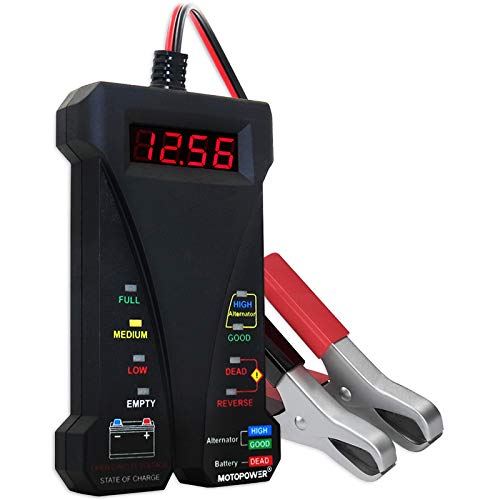
A digital multimeter can provide an initial check of a 12-volt lead-acid battery. With the mower off and the battery rested, select DC voltage and place the probes on the battery posts, red on positive and black on negative. A reading around 12.6 to 12.8 volts is a common fully charged resting benchmark; around 12.2 volts indicates substantial discharge, while a reading below 10.5 volts can point to a dead or compromised cell.
These figures are diagnostic clues, not a complete battery health test. Surface charge after charging can make a weak battery appear healthier than it is, and a battery can show a reasonable resting voltage yet collapse under starter load. Temperature, battery chemistry, recent charging, and the manufacturer’s specifications all affect interpretation, so use the mower and battery documentation where available.
If the meter reading is low, recharge the battery with a charger designed for its chemistry and voltage, following the battery maker’s instructions. Do not substitute a high-current automotive charger or guess at a charging setting. If the battery will not accept or retain a charge, arrange an appropriate battery load test or replacement rather than repeatedly trying to start the mower.
Cranking behavior adds another clue. If the meter is connected securely and the reading falls sharply while the starter is engaged, the battery may be discharged or unable to deliver current; a drop below about 9.6 volts under cranking is a commonly used warning threshold, not a stand-alone verdict for every mower. Keep hands, meter leads, and clothing clear of moving parts, and do not continue cranking for longer than the mower manual permits.
When a battery reads well at rest but the starter clicks or turns slowly, inspect the terminal connections and ground path before replacing parts. A loose or corroded connection can create resistance that becomes more noticeable under starter load. If the battery and connections check out but the starter does not operate, the solenoid, starter, ignition circuit, or safety system may need separate diagnosis.
Check Charging Output With the Mower Running
To check whether the mower is replenishing the battery, first confirm that the battery is adequately charged and that its connections are secure. Measure at the battery posts with the engine stopped, then compare the reading with the engine running at the speed specified by the service manual. A running DC reading in the approximate 13.5 to 14.5 volt range is a useful general benchmark for a functioning charging system, but the mower maker’s procedure and acceptable range govern.
Use caution around the running engine, belts, blades, and hot components. Set the meter correctly, avoid letting the probes touch each other or bridge the terminals, and do not place hands near moving parts. If you are not confident in the procedure, ask a qualified repair shop to perform the test rather than probing exposed wiring around a running mower.
If the voltage does not rise as expected, that does not prove the stator alone is defective. The regulator, connector, wiring, ground, fuse, or measurement setup could also be involved. Some systems have different output characteristics, so follow the model-specific manual before replacing components or testing stator output directly.
If charging voltage is in range but the battery repeatedly goes flat while parked, consider an unintended electrical draw or a battery that no longer holds charge. Switch off accessories and follow the manual’s storage recommendations. A persistent draw test can involve disconnecting circuits and measuring current, but incorrect meter placement can damage the meter or create a short; seek service help if the correct procedure is unclear.
Terminal Orientation and Battery Fit Can Affect Charging
A replacement needs to match more than nominal voltage. Many riding mowers use a BCI Group U1 case, but U1 and U1R can place the positive terminal on opposite sides when viewed in the specified orientation. Check the existing battery label, cable routing, and mower manual; forcing short cables to reach reversed posts can strain connections and create a dangerous polarity error.
Compare the replacement’s listed dimensions, hold-down arrangement, and terminal hardware with the original. Some batteries use bolt-through or nut-and-bolt terminals, while other equipment may require a different connection style. The Mighty Max ML-U1-CCAHR listing specifies positive-left polarity, dimensions of 7.75 by 5.11 by 6.25 inches, and battery screws only, with no wire harness or mounting accessories included.
Product listings can help narrow options, but listed compatibility is not a substitute for checking the mower’s exact requirements. The MARXON U1 280-CCA listing gives positive-left polarity and dimensions of 7.68 by 4.92 by 6.14 inches. Other listed options include UPLUS batteries rated at 330 or 360 CCA and MARXON options rated at 330 or 360 CCA; verify the exact model, polarity, fit, and required CCA before choosing.
CCA describes a battery’s starting-current capability under a defined cold-temperature test, and the mower’s specified minimum should guide selection. The product data includes ratings from 200 to 360 CCA, but those listings do not establish what every engine requires. A larger engine or a cold operating environment may place different demands on starting performance, so do not assume a higher number alone resolves an incorrect case size, terminal layout, or charging fault.
For more detail on selecting a listed starting battery, see this riding mower battery overview. The guide can support comparison, but the decisive checks remain the mower manual’s required group, terminal orientation, CCA, and physical fit. If a battery is installed with reversed polarity, stop rather than attempting to crank the mower; correct the connection safely according to the manufacturer’s instructions.
Safe Charging, Removal, and Jump-Starting
Before removing a 12-volt battery, turn the mower off, remove the key, and follow the manual’s isolation steps. Disconnect the negative cable first to reduce the chance that a tool touching the frame will short the positive terminal. During installation, connect positive first and negative last, maintaining correct polarity and securing the cables without forcing or cross-threading terminal hardware.
Charge a lead-acid or AGM battery with a charger whose voltage profile is approved for that battery type. A smart charger or maintainer can be useful during storage when the manufacturer permits it, but do not leave an unsuitable charger connected unattended. Keep the charging area ventilated, protect eyes and hands, and stop if the battery becomes unusually hot, swells, leaks, or otherwise shows damage.
A 12-volt riding mower may sometimes be jump-started according to its manual, but polarity must be correct and the connection points must be the specified ones. The donor vehicle’s engine must remain OFF while jump-starting a 12-volt riding mower or zero-turn, to reduce the risk of electrical damage to the mower’s stator and voltage regulator. Do not treat the mower like a car or connect equipment with a different system voltage.
Jump-starting is not a fix for a battery that will not hold charge or a faulty mower charging circuit. Once the engine starts, disconnect the jumper leads in the order specified by the mower and donor equipment manuals, keeping clamps from touching each other or metal surfaces. If the mower’s instructions are unavailable or the battery is damaged, use a service provider rather than improvising a connection procedure.
Prevent Storage Discharge, and Treat Cordless Packs Separately
A lead-acid battery can lose charge during months of non-use, and leaving it discharged can contribute to sulfation and reduced capacity. Before seasonal storage, inspect the battery, clean and secure its connections using the manufacturer’s approved method, and maintain charge as directed. Disconnecting a cable may help isolate some parked-mower loads, but follow the manual because equipment designs and storage requirements differ.
A maintainer is not the same as an uncontrolled trickle charger. Use a model intended for the battery chemistry and follow its instructions for connection, storage, and monitoring. If the mower will sit for an extended period, periodically check the battery as directed rather than assuming the charging system will preserve it while the engine is off.
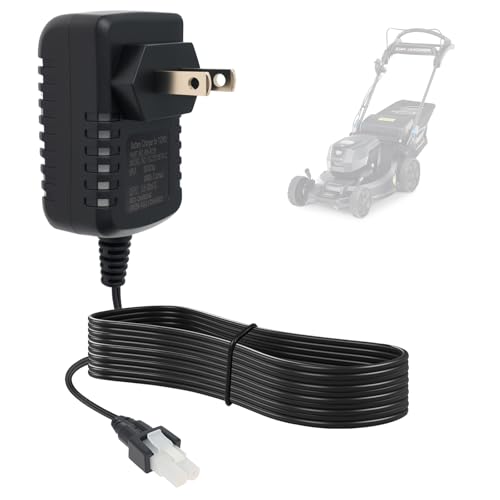
Cordless mower batteries operate differently: the included or approved charger supplies energy to the removable lithium-ion pack, while the mower’s display or indicator may show its charge status. The products listed include 40-volt Greenworks and Worx mowers, as well as a DEKOPRO mower supplied with two 20-volt batteries and a charger. These platform voltages and packs are not interchangeable simply because they are lithium-ion; use the charger and battery specified for the exact tool system.
For a cordless mower that stops during heavy cutting, let the pack cool and consult its manual before restarting or charging it. A protection cutoff can be associated with operating conditions or battery status, but the symptom does not identify a particular cell fault. Do not open, puncture, or attempt to rebuild a sealed lithium-ion pack; discontinue use of a swollen or damaged pack and follow the manufacturer’s service and recycling directions.
For a gas mower, the practical sequence is to inspect connections, check resting voltage, assess cranking behavior, and then verify running charging output using the correct service procedure. If the engine runs but the battery continues to discharge, do not keep replacing batteries without checking the charging circuit and parked electrical loads. For a cordless mower, charge only with the compatible platform charger; for either type, follow the maker’s instructions and investigate recurring failures before the next mowing session.




Write Your Review
No reviews yet. Be the first to share your experience!