


Mowing a dense, undulating yard by pushing manual equipment quickly leads to physical strain and uneven turf results. Knowing what to look for in a self propelled lawn mower transforms weekly yard care from an exhausting chore into an efficient routine. Self-propelled machines integrate an internal drive system that turns the wheels mechanically, reducing operator fatigue while sustaining a consistent forward ground pace. Modern residential models feature diverse drive architectures, deck dimensions, and power sources that fit suburban lots as smoothly as larger quarter-acre properties. Evaluating these core mechanical elements helps you match the machine to your property layout, grass species, and storage space.
Homeowners frequently weigh the continuous torque of four-stroke gas engines against the quiet, push-button convenience of modern battery systems. Exploring contemporary cordless self-propelled electric mower options reveals how brushless motors and high-voltage lithium packs deliver dependable cutting performance without fuel storage hassles. Structural factors such as stamped steel deck durability, drive-wheel traction, and multi-position cutting height levers directly dictate cut consistency across bumpy lawns. Understanding these practical design distinctions ensures you invest in equipment that cuts cleanly and stands up to long seasons of yard maintenance.
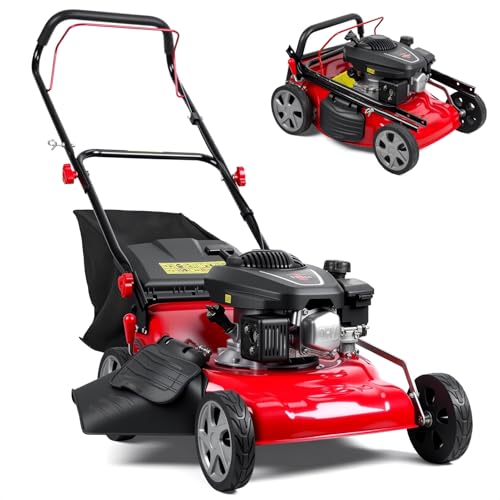
Pros
- Lightweight and foldable for easy storage in small spaces.
- Self-propelled rear-wheel drive helps on inclines and rough ground.
- 3-in-1 mulching, bagging, and side discharge offers flexibility.
- Large 50L grass bag reduces frequent emptying.
- Push-button start is convenient for quick operation.
Cons
- Gas engine requires regular maintenance like oil changes and fuel care.
- Unknown brand and no customer reviews yet make long-term reliability uncertain.
- May be noisier than electric alternatives for early-morning mowing.
The Smalibal 131cc gas self-propelled lawn mower is designed for homeowners who need a reliable, budget-friendly machine for medium-sized yards. According to the product description, it combines a lightweight frame with a rear-wheel-drive system to help tackle slopes and uneven ground without exhausting effort. This mower may suit first-time buyers or those looking for a straightforward gas option that doesn't break the bank.
Performance-wise, the mower features heavy-duty blades that can handle dense grass, weeds, and light brush. The 3-in-1 system lets you mulch clippings for natural fertilizer, bag them in the 50-liter tank, or discharge them to the side. The cutting width and height adjustment range aren't specified, but the self-propelled drive should make covering a typical suburban lawn manageable. Users may appreciate the push-button start for avoiding the pull-start hassle common with gas mowers.
Build quality appears focused on practicality: the lightweight design helps with maneuverability, and the foldable handle is a nice touch for compact storage. The rear-wheel drive adds traction on inclines, which is useful for yards with gentle slopes. However, the deck material isn't mentioned, so it may be steel or plastic—something to consider for long-term durability against rust and impacts.
Setup likely involves attaching the handle and grass bag, which should be straightforward for most homeowners. Maintenance will follow typical gas mower routines: checking oil, cleaning or replacing the air filter, and sharpening blades. The 50L bag is large enough to reduce frequent stops, and the wide mouth makes emptying easier. Storing the mower in a garage or shed is simplified by the foldable handle.
Realistic limitations include the lack of customer reviews, so it's hard to gauge real-world reliability. Gas mowers also require more upkeep than electric models and produce more noise—something to keep in mind for early morning sessions. The unknown brand may raise questions about warranty support and parts availability.
Overall, the Smalibal 131cc gas self-propelled mower appears to be a solid entry-level option for budget-conscious homeowners who need a self-propelled machine for sloped lawns. If you're willing to handle basic gas engine maintenance and want a foldable design for easy storage, this mower could be a practical choice for weekend yard work.
The product description highlights heavy-duty blades designed to cut through dense weeds, shrubs, and stubborn grass. While specific cutting width isn't listed, the 3-in-1 system allows mulching, bagging, or side discharge to handle clippings as needed. The self-propelled rear-wheel drive helps maintain consistent speed on slopes, which may improve cut quality on uneven terrain.
This mower is powered by a 131cc gas engine, providing enough torque for typical residential lawns. The push-button start simplifies operation compared to traditional recoil starters. Gas engines offer unlimited runtime as long as fuel is available, but they require regular maintenance like oil changes and air filter cleaning. The engine type (OHV or side-valve) isn't specified, which could affect performance and longevity.
The lightweight design and rear-wheel-drive system make this mower easy to push and control on slopes and uneven ground. The foldable handle allows compact storage, and the big wheels help roll over bumps. While turning radius isn't given, the self-propelled feature reduces physical effort, which may appeal to elderly users or those with larger yards.
A standout feature is the foldable handle, which allows the mower to stand upright or lay flat for storage in tight garage spaces or sheds. The lightweight construction (weight not specified) also makes it easier to lift into a truck or carry to a storage area. The 50L grass bag is removable and can be stored separately.
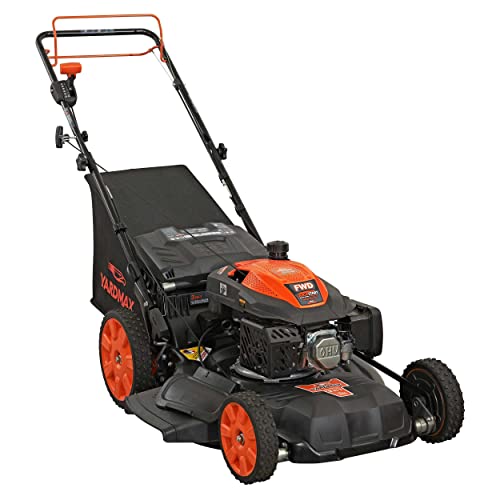
Pros
- Smooth variable-speed control with CVT gives you precise pace matching, reducing fatigue on long pushes.
- High rear wheels and spiked tires handle rough terrain and bumpy yards well.
- 3-in-1 cutting options make it a flexible year-round tool.
- Tool-free, single-lever height adjustment is simple to use.
- Automatic choke and easy-start engine reduce frustration for casual users.
Cons
- Heavy at 84.9 pounds, which may be tough for older or physically limited users to lift or turn around.
- Requires regular gas engine upkeep - oil changes, filter cleaning, and winterizing - compared to a plug-in electric model.
- The 22-inch cutting width is fine for mid-sized yards, but larger properties may find it a bit narrow for faster mowing.
The YARDMAX YG2860 is a gas-powered, self-propelled walk-behind lawn mower built for homeowners who want dependable cutting power without wrestling with a cord or waiting on a battery charge. With a 22-inch steel deck, a 201cc engine, and a continuously variable transmission, this mower sits in the sweet spot for suburban yards and small-to-medium properties. It is especially useful for people with uneven terrain or those who simply want the mower to do more of the legwork.
Under typical conditions, the 22-inch cutting width helps you cover a decent path in each pass, while the 3-in-1 design lets you bag clippings for a tidy lawn, mulch them for natural fertilizer, or blow them out the side discharge for fast work during heavy growth. The CVT's six-speed range is a standout for navigating obstacles: you can slow to a crawl near flower beds, then speed up along open stretches. PACE technology is designed to match your walking speed, so you're not constantly fighting the throttle or dragging the mower along.
The high-wheel design is a practical choice for bumpy yards, since larger wheels roll over dips and lumps more easily than the standard small rear wheels found on many budget mowers. The aggressive spiked tread tires add grip on wet grass and gentle slopes, reducing the likelihood of wheel spin. The black steel deck feels solid, and the built-in cleanout port makes post-mow maintenance less of a chore. Keep in mind that a steel deck can be prone to rust if you store the mower outside or leave grass packed under it, so regular cleaning is worthwhile.
Assembly is generally straightforward for a self-propelled mower - the handle folds for compact storage in a garage or shed, and the single-lever height adjustment means you can change cutting height without needing tools. The automatic choke system is a genuine convenience: no priming or fiddling with a separate choke lever, just start and go. As with any gas mower, expect to change the oil annually, keep the air filter clean, and use fresh fuel. The deck cleanout port simplifies washing away clippings, which can extend the life of the deck.
The biggest trade-off is weight - at roughly 85 pounds, this is not a lightweight machine. Pushing it is easy thanks to the self-propelled drive, but lifting it into a truck bed or carrying it over stairs can be a workout. The 22-inch deck is also best suited to yards under half an acre; anything larger will mean more passes. And because it's gas-powered, you'll have the usual engine maintenance that cordless or plug-in mowers avoid.
For homeowners who want a reliable, powerful self-propelled mower with adjustable speed and rugged wheels, the YARDMAX YG2860 is a strong value at its price point. It may not be the best choice for anyone with physical limitations or a tiny storage space, but for a typical American yard with slopes, mature turf, and the occasional heavy growth, it's a practical workhorse. Based on the product specs and user feedback, this mower should serve well for many seasons of Saturday morning mowing.
The 22-inch steel deck gives a good balance between maneuverability and cutting swath. The 3-in-1 system allows you to bag, mulch, or side discharge without needing an adapter. For mulching, the mower relies on blade design and suction to recut clippings into fine pieces, which works best when the grass is dry. The single-lever height adjustment offers a range of cutting heights, so you can keep the lawn at your preferred length through the season.
Power comes from a 201cc gas engine, which should handle thick grass and damp conditions without bogging down as easily as smaller engines. The automatic choke system removes the guesswork from starting, and the CVT gives you six speed settings so the mower can maintain momentum while you walk at a natural pace. Note that gas engines need fuel, oil, and periodic maintenance, but they also offer unlimited runtime, making them a good fit for larger lots.
The high wheels and rubber spiked tires help the mower roll over uneven ground, and the self-propelled drive reduces pushing effort. Six speed options allow you to slow down in tight corners and speed up on open stretches. The handle folds for storage, and the overall footprint is reasonable for a garage or shed. At 84.9 pounds, you'll want to park it where you don't have to lift it often.
To keep this mower running well, check the oil level before each use and change it as recommended in the manual. Clean the air filter periodically and replace it if it's dirty. Use the deck cleanout port with a garden hose to wash away grass clippings after mowing, and let the deck dry before storing. Keep the blade sharp for clean cuts, and use fresh unleaded gas to avoid fuel-system issues.

Pros
- Powerful brushless motor and 80V battery provide ample torque and runtime for medium-sized lawns.
- Self-propelled rear-wheel drive with variable speed makes mowing on hills effortless.
- Quieter operation compared to gas mowers - good for early morning mowing.
- LED headlight is a thoughtful addition for low-light conditions.
- Steel deck feels sturdy and durable.
Cons
- Battery and charger included, but runtime may vary with grass conditions; heavy or wet grass may reduce runtime.
- At 75 pounds, it's not the lightest electric mower, though self-propelled helps.
- No reviews yet, so real-world performance feedback is limited.
The Greenworks 80V 21in Self-Propelled Lawn Mower is a cordless electric mower designed for homeowners with medium-sized lawns up to about half an acre. It combines the convenience of battery power with the performance of a brushless motor and a durable steel deck, making it a strong contender for those looking to move away from gas mowers.
In terms of cutting performance, the 21-inch deck with brushless motor provides consistent power for most grass conditions. The self-propelled rear-wheel drive with variable speed control helps you maintain a steady pace on slopes and uneven ground. The mower offers mulching, bagging, and side discharge options, giving you flexibility for different yard needs. The LED headlight is a practical feature for early morning or evening mowing sessions.
The steel deck adds durability and longevity, while the overall build feels solid. The 80V battery system is part of Greenworks' platform, so you can use the same battery with other tools. The mower weighs about 75 pounds, which is on the heavier side for an electric mower, but the self-propelled drive makes it easy to push.
Assembly is straightforward, with most components pre-assembled. The handle folds for compact storage, which is helpful for garages with limited space. Maintenance is minimal compared to gas mowers - no oil changes, no spark plugs. Just keep the blade sharp and the deck clean.
One limitation is the runtime; the included 4.0Ah battery may not complete a full half-acre if the grass is thick or wet. Some users may want to purchase an extra battery for larger lawns. Also, since this is a new model with no reviews yet, long-term reliability is unknown. The price point of $449.99 is competitive for a premium 80V self-propelled mower.
Overall, the Greenworks 80V self-propelled mower appears to be a well-rounded option for homeowners seeking a quiet, low-maintenance electric mower with good power and features. It's especially suited for those with sloped yards who will benefit from the rear-wheel drive. If you're in the market for a cordless mower and value self-propelled convenience, this model is worth considering.
The Greenworks 80V 4.0Ah battery provides enough power for up to 1/2 acre on a single charge, depending on grass conditions. The battery is compatible with other Greenworks 80V tools, so you can share batteries across your yard equipment. Charging time is approximately 1-2 hours using the included charger. For larger lawns or tougher cutting conditions, an additional battery may be needed to complete the job. The brushless motor efficiently uses battery power, extending runtime compared to older brushed motors.

Pros
- Lightweight and easy to push — great for homeowners who prefer a simple manual push mower.
- Brushless motor provides reliable power and longer battery life compared to brushed motors.
- Three clipping options give flexibility for mulching, bagging, or discharging clippings.
- Folding handle saves space in storage — ideal for small garages or sheds.
Cons
- Battery runtime may be limited for thicker or wet grass — a second battery might be needed for larger lawns.
- 18-inch cutting deck is narrower than some competitors, requiring more passes on medium lawns.
- Plastic deck may not be as durable as steel decks for heavy-duty or rocky terrain.
If you're looking for a straightforward cordless electric mower to handle a small to medium-sized lawn without the hassle of gas or cords, the Wild Badger Power 40V 18-Inch Brushless model is worth a close look. Designed for homeowners who want a lightweight, maneuverable machine, this mower combines a brushless motor with a 40V battery system to deliver consistent cutting performance. According to the product description, it's best suited for open grass and landscaping with minimal obstacles, making it a solid choice for typical suburban yards or apartment dwellers with small patches of grass.
In terms of real-world performance, the 18-inch brushless motor spins up to 3,400 RPM, which should handle regular weekly mowing with ease. The five cutting height positions allow you to adjust from 1.5 to 3.5 inches (approximate) to match seasonal growth or dry conditions. Three clipping modes—bagging, mulching, and rear discharge—give you flexibility: the included 11-gallon bag collects clippings for a clean finish, while mulching returns nutrients to the soil. The rear discharge option is useful for tall grass when you don't want to stop and empty the bag. Maneuvering around flower beds and trees is fairly easy thanks to the compact 18-inch deck and balanced weight distribution.
Build quality appears reasonable for the price point. The deck is likely made of durable plastic or composite material, which keeps the weight down to 37.5 pounds but may not be as impact-resistant as a steel deck. The wheels are sturdy enough for flat terrain, but if you have rocky or uneven ground, you might want to proceed with care. The folding handle is a nice touch for storage, allowing the mower to fit in tight garage or shed spaces. The included 40V 4.0Ah battery and charger should provide enough runtime for a typical quarter-acre lawn, though thick, wet, or overgrown grass will drain the battery faster.
Setting up the mower out of the box involves minimal assembly—typically attaching the handle and grass bag. Storage is straightforward thanks to the foldable handle, and maintenance is limited to keeping the blade sharp and cleaning the deck after each use. The 3-year warranty and 24-hour customer support add a layer of confidence, especially for first-time mower buyers. Some users may find the battery recharges in about 1-2 hours, which is reasonable for a 4.0Ah pack.
For realistic limitations, this mower is not designed for large lawns—the 18-inch cutting width means more passes, and the battery may not last long enough for acreage. Also, the plastic deck might not hold up as well as steel if you frequently hit rocks or hidden obstacles. Noise levels are typical for an electric mower—quieter than gas, but still noticeable. If you have a steep slope, the lack of self-propulsion could be tiring, but on flat ground the 37.5-pound weight is easy to push.
Overall, the Wild Badger Power 40V mower is a practical, budget-friendly option for homeowners with small to medium lawns who value cordless convenience and simple operation. It's especially well-suited for first-time buyers, eco-conscious users, or anyone who wants to reduce their carbon footprint without sacrificing cutting performance. If you need a reliable mower for weekly maintenance, this model delivers good value at a reasonable price point.

Pros
- Strong 201cc engine provides reliable power for large lawns and thick grass without bogging down.
- 22-inch cutting width covers more ground per pass, saving time on medium to large properties.
- Self-propelled drive with large rear wheels reduces pushing effort on slopes and uneven terrain.
- Versatile 3-in-1 system allows bagging, mulching, or side discharge to match lawn care needs.
Cons
- At roughly 80 pounds, this mower is heavier than many electric models, which may make it less ideal for small yards or hilly terrain without the self-propel engaged.
- Some users may find the single-speed self-propel limited compared to variable-speed models for precise pace control.
- Assembly is required out of the box, and the engine needs oil and fuel before first use—a minor setup step for gas mowers.
The SENIX 201cc self-propelled gas lawn mower is designed for American homeowners with medium to large lawns who want a dependable machine that can handle tough grass and uneven ground. It bridges the gap between budget-friendly push mowers and high-end commercial models, offering a solid blend of power, cutting width, and convenience features. This mower is especially well-suited for suburban lawns, rural properties, or anyone tired of wrestling a lightweight mower through thick spring growth.
Under the hood, the 201cc OHV 4-stroke engine provides reliable torque to power through tall grass and damp conditions without stalling. The 22-inch stamped steel deck cuts a wider swath than the typical 20-inch mower, which can save you several passes on a half-acre lot. The self-propelled drive engages with a simple lever, and the large 11-inch rear wheels help maintain traction on slopes and soft ground. While the single-speed drive lacks the fine-tuned control of variable-speed systems, most users will find it adequate for maintaining a steady walking pace.
Build quality is a highlight here—the steel deck feels sturdy and resistant to dings and rust, and the wheels are substantial enough to roll over ruts and roots. The 3-in-1 system lets you switch between bagging, mulching, and side discharge with a quick change of the plug and chute. Mulching performance is decent for regular maintenance, though very long or wet grass may require a second pass. The single-lever height adjustment is smooth and offers six positions from 1.25 to 4 inches, making it easy to raise the deck for rough terrain or lower it for a manicured look.
Setting up the mower out of the box involves attaching the handle, installing the grass bag, and adding oil and fuel—a straightforward process that takes about 20 minutes. Storage is manageable thanks to a foldable handle that reduces the footprint in your garage or shed. Routine maintenance includes checking oil levels, cleaning the deck after each use, and sharpening or replacing the blade annually. The engine features a low-oil shutdown to protect against damage, and the air filter is easy to access for cleaning.
On the downside, this mower is heavier than many electric alternatives, weighing around 80 pounds. While the self-propel helps, you'll still feel the weight when turning or maneuvering in tight spaces. The grass bag capacity is adequate but may need frequent emptying on larger lawns. Also, the single-speed drive means you can't adjust your pace independently of the mower's speed—something to consider if you prefer a slower or faster walk.
Overall, the SENIX 201cc self-propelled mower delivers strong performance for the price. It's a practical choice for homeowners who need a gas-powered workhorse for a medium to large lawn and want features like a wider deck, easy height adjustment, and 3-in-1 versatility without spending over $400. If you're looking for a reliable mower that can handle regular weekly cuts and occasional overgrowth, this model is worth a close look.

Pros
- Rear-wheel drive handles slopes and uneven terrain better than front-drive models
- Wide 22-inch cutting deck reduces mowing time compared to smaller 20- or 21-inch mowers
- 170cc engine provides ample power for thick, dense grass without bogging down
- Multiple cutting options (mulch, bag, discharge) offer versatility for different lawn conditions
Cons
- At 75 pounds, it's fairly heavy for a push mower; maneuvering on flat ground may require more effort when self-propel is not engaged
- Steel deck, while durable, adds weight and may be prone to rust if not cleaned and stored properly
- Some users find the grass bag connection could be more secure; occasional jams when bagging wet grass
The PowerSmart 22-Inch 170cc Self Propelled Gas Lawn Mower is a practical choice for homeowners with medium to large suburban yards who want a reliable, gas-powered mower without spending over $400. It’s specifically suited for those who face gentle slopes or uneven ground and prefer a self-propelled rear-wheel drive to reduce pushing effort.
In terms of cutting performance, the 170cc OHV engine delivers consistent power through thick grass and light weeds. The 22-inch steel deck cuts a wide path, which helps you finish the lawn faster—especially useful if you're mowing a half-acre lot. The 3-in-1 system works well: mulching chops clippings fine for natural fertilization, the rear bag holds a generous 60 liters, and side discharge is available for tall growth. The six-position height adjustment covers a useful range from 1.5 to 3.9 inches, allowing you to adapt to seasonal conditions, from close spring cuts to longer summer lengths that shade the soil.
Build quality is solid for the price point. The steel deck feels sturdy and should withstand several seasons of typical use, though it will benefit from occasional cleaning and a coating of rust preventative if stored in damp conditions. The rear-wheel drive provides decent traction on slopes, though on wet grass or loose soil you may still need to guide the machine. The handle is comfortable and the controls are straightforward—auto choke and recoil start are user-friendly, even for first-time gas mower owners.
Assembly is moderate: expect to attach the handle, grass bag, and possibly adjust cables—plan about 30 minutes with basic tools. Storage is manageable thanks to a foldable handle that reduces footprint in a garage or shed. Maintenance includes regular oil changes (the engine is a 4-stroke), air filter cleaning, and blade sharpening. The recoil start is reliable, but be prepared to refill gas each season; there is no electric start option.
A realistic limitation is the mower's weight—75 pounds—which makes it less maneuverable when not self-propelled, such as when turning or navigating tight flower beds. Also, the grass bag connection can sometimes come loose if the bag is overfilled or when mowing damp grass. Some users report that the self-propel speed is not variable, so you'll need to adjust your walking pace to match.
Overall, the PowerSmart 22-Inch 170cc Self Propelled Gas Mower offers strong value for homeowners wanting a capable gas mower with self-propelled ease and versatile cutting options. It’s a solid pick for suburban lawns with modest slopes and regular mowing needs, especially if you’re on a budget but don’t want to sacrifice power or deck size.
The 170cc OHV 4-stroke engine is the heart of this mower. It provides reliable power for cutting thick, tall grass without stalling. The overhead valve design improves fuel efficiency and reduces emissions compared to older side-valve engines. Auto choke and recoil start simplify cold starts—just prime and pull. The engine runs on regular unleaded gas and requires standard SAE 30 oil (not included). No battery or cord needed, so you can mow as long as there's fuel in the tank. The engine is not the quietest, but at typical gas mower noise levels it’s acceptable for daytime use in most neighborhoods.

Pros
- Strong 170cc engine provides ample power for thick grass and moderate slopes.
- Self-propelled drive eases mowing on hills and reduces user fatigue.
- 3-in-1 system offers flexibility for mulching, bagging, or discharging clippings.
- Easy height adjustment and folding handle add convenience and storage efficiency.
Cons
- No side discharge option - only rear discharge and bagging; mulching requires the included plug.
- At 68 pounds, it may be heavy for some users to maneuver when not self-propelled.
- Limited reviews available at launch, so long-term reliability is unproven.
The PowerSmart 22-Inch Self Propelled Gas Lawn Mower is designed for American homeowners who need a reliable, no-fuss mower for medium to large lawns. Its 170cc 4-cycle OHV engine provides plenty of torque to cut through thick grass, while the self-propelled rear-wheel drive helps you tackle slopes without excessive effort. This mower suits budget-conscious buyers who want gas power without stepping up to a premium brand.
In terms of cutting performance, the 22-inch steel deck and heavy-duty blade deliver a clean cut across a wide path, reducing mowing time. The 3-in-1 system lets you mulch clippings for natural fertilizer, collect them in the rear bag, or discharge out the back. Based on the product description, switching between modes is straightforward. The six cutting heights (1.5 to 3.9 inches) give you control for early spring cuts or leaving grass longer in summer heat.
Build quality appears solid for the price point. The steel deck should resist rust with proper care, and the folding handle allows compact storage in a garage or shed. Assembly requires no tools, which is a nice convenience. The self-propelled drive engages via a lever, and the auto choke simplifies starting - just pull the recoil starter and go.
Maintenance is typical for a gas mower: check oil, clean the deck, sharpen or replace the blade, and change the oil seasonally. The engine is a standard 170cc OHV, so parts and service should be easy to find. The rear bag capacity is not specified, but based on similar models, it should handle a typical suburban yard without constant emptying.
One limitation is the lack of a side discharge option - the mower only offers rear discharge or bagging, and mulching requires installing the included plug. Some users may prefer side discharge for tall, wet grass. Also, at 68 pounds, this mower is not lightweight; while the self-propelled drive helps, you still need to push it manually on flat ground or when turning.
Overall, the PowerSmart 22-Inch Self Propelled Gas Lawn Mower offers strong value for homeowners who need a dependable gas mower with self-propelled convenience. It is a practical choice for those with hilly terrain, medium to large lawns, and a preference for mulching or bagging. If you are looking for an affordable gas mower that gets the job done without extra frills, this model is worth considering.

Pros
- Auto choke and easy start system – great for first-time gas mower users
- Versatile 3-in-1 cutting options handle grass, leaves, and mulching needs
- Foldable handle saves significant storage space for compact garages or sheds
- Simple single-lever height adjustment with six settings for precise cutting
Cons
- Push-only design may be tiring on large or hilly lawns without self-propulsion
- Rear bag capacity may require frequent emptying on thick or overgrown grass
- Some assembly required out of the box; instructions could be clearer for first-time buyers
The PowerSmart EasyGlide 21-inch push gas lawn mower is a practical entry-level choice for homeowners with small to medium-sized yards who want reliable gas-powered performance without breaking the bank. Powered by a 144cc 4-stroke OHV engine with an auto choke, this mower starts easily and delivers consistent power for weekly mowing, spring growth, and fall leaf cleanup. It's especially suited for budget-conscious shoppers, first-time mower buyers, or anyone looking for a straightforward machine that gets the job done.
In terms of real-world performance, the 21-inch steel deck and heavy blade cut efficiently through typical grass types found in U.S. lawns. The 3-in-1 system lets you mulch clippings for natural fertilization, bag them for a clean finish, or side discharge for quick passes. The single-lever height adjustment offers six positions from 1.5 to 3.9 inches, so you can dial in the exact cut height for your lawn's needs. While the push-only design requires some effort on slopes or larger areas, the lightweight 62-pound build and smooth-rolling wheels make it manageable for most suburban lots.
Build quality centers on a durable steel deck that resists rust and impacts from rocks or sticks. The foldable handle is a standout feature for storage – it reduces the mower's footprint by about 70%, making it easy to stash in a garage corner or shed without taking up much space. Assembly is required, but many users find it straightforward with basic tools. Maintenance is simple: regular oil changes, air filter checks, and blade sharpening keep it running season after season.
Setup involves attaching the handle, rear bag, and adjusting the height. The auto choke eliminates the need for manual priming, so starting is just a pull away. The rear bag is easy to remove and empty, though on thick grass you may need to stop more often. The foldable design is a real plus for those with limited storage, and the mower's compact folded size fits neatly into tight spaces.
Realistic limitations include the lack of self-propulsion, which can make mowing hilly or large lawns more tiring. The rear bag capacity is adequate for regular cuts but may fill quickly on overgrown grass. Some users note that assembly instructions could be more detailed, but overall setup is manageable. Additionally, gas mowers require fuel and oil maintenance, unlike cordless electric models.
Overall, the PowerSmart EasyGlide is a solid, affordable push gas mower for homeowners who value simplicity, versatility, and easy storage. It's best for flat to gently sloping lawns up to a quarter acre. If you need self-propulsion or have a very large yard, consider a self-propelled model. But for reliable cutting with 3-in-1 flexibility and a space-saving design, this mower offers good value for its price.
The 21-inch cutting width allows you to mow efficiently, covering more ground per pass than smaller mowers. The heavy steel blade provides a clean cut, and the 3-in-1 system lets you choose between mulching, bagging, or side discharge based on grass conditions and personal preference. The single-lever height adjustment with six settings from 1.5 to 3.9 inches gives you flexibility for different grass types and seasonal growth. According to product specs, the mower handles typical grass clippings well, but very thick or wet grass may require slower passes or multiple cuts.
The 144cc 4-stroke OHV engine delivers reliable power for push mowing. The auto choke feature simplifies starting – no manual priming or choking needed. This gas engine provides consistent torque for cutting through grass and light weeds. It uses regular unleaded gasoline and requires standard oil changes (typically SAE 30). The engine is designed for easy maintenance, with accessible air filter and spark plug. Noise levels are typical for a gas mower, so early morning mowing may disturb neighbors.
The steel deck is built to withstand bumps and impacts from yard debris, offering good longevity for residential use. The 62-pound weight strikes a balance between sturdiness and maneuverability. The foldable handle is made of metal with comfortable grips, and the wheels are durable plastic with decent tread for traction. Overall, the build quality seems adequate for regular home use, though it may not match premium brands. Proper storage and maintenance will help extend its life.
The foldable handle is a key feature, allowing you to reduce the mower's storage footprint by about 70%. When folded, it takes up less space in a garage, shed, or even a corner of a basement. The mower is lightweight enough to lift and move, though it's still 62 pounds. The compact folded dimensions make it easy to transport in a car trunk or SUV for service or sharing. This design is especially useful for homeowners with limited storage space.
Regular maintenance keeps the PowerSmart mower running smoothly. Change the oil after the first 5 hours of use, then every 25 hours or each season. Clean or replace the air filter as needed – typically every few months. Sharpen the blade at least once a year or after hitting rocks. Keep the deck clean of grass buildup to prevent rust. Store with fresh fuel or use a stabilizer for off-season storage. The auto choke reduces starting issues, but check the spark plug annually.

Pros
- Strong 201cc OHV engine provides reliable power for thick grass and larger yards.
- Rear-wheel drive with large wheels offers excellent traction on slopes and rough terrain.
- 3-in-1 cutting system gives flexibility for mulching, bagging, or side discharge.
- Quick and easy height adjustment with a single lever for precise cutting.
- Durable steel deck built to withstand regular use and weather exposure.
Cons
- Weighs 79 pounds, which may be heavy for some users to maneuver manually if self-propelled disengages.
- Limited to a 22-inch cutting width, which may not be ideal for very large lawns without a riding mower.
- Assembly may require some time and basic tools, though instructions are generally clear.
The SENIX 201cc 22-inch self-propelled gas lawn mower is a solid choice for American homeowners who need reliable power and easy handling for medium to large lawns. With its 201cc OHV engine and rear-wheel drive system, this mower is designed to tackle slopes, uneven ground, and thick grass without bogging down. It’s ideal for suburban yards, rural properties, or anyone who wants a capable gas mower without stepping up to a riding model.
In real-world use, the 22-inch steel cutting deck helps you cover more ground per pass compared to smaller 20-inch mowers, cutting down mowing time. The 3-in-1 cutting system lets you switch between bagging, mulching, and side discharge, so you can adapt to different lawn conditions—whether you’re cleaning up spring growth, mulching fall leaves, or just giving the yard a quick trim. The single-lever height adjustment offers six settings from 1.25 to 4 inches, making it easy to get the perfect cut for any grass type or season.
Build quality feels solid for the price point. The steel deck is durable enough for regular mowing over rocks and sticks, and the large 11-inch rear wheels provide good traction on hills and uneven terrain. The self-propelled system is rear-wheel drive, which helps with maneuverability on slopes and makes pushing easier on flat ground. At 79 pounds, it’s not the lightest mower, but the self-propelled feature takes most of the effort out of mowing.
Setup is straightforward—most of the mower comes pre-assembled, and you’ll just need to attach the handle and grass bag. Maintenance is simple: the air filter is easy to access, and oil changes are straightforward. Storage is manageable thanks to its compact dimensions, though it doesn’t have a folding handle for vertical storage, so you’ll need some floor space in your garage or shed.
One limitation is the weight—if the self-propelled system disengages, pushing the mower manually can be tough, especially on slopes. Also, the 22-inch cutting width is fine for most medium lawns, but if you have a very large property, you might find yourself making more passes than with a wider deck. Some users may also prefer a mower with a folding handle for easier storage.
Overall, the SENIX 201cc self-propelled mower is a reliable, practical option for homeowners who want a powerful gas mower with good traction and versatile cutting options. It’s best suited for those with medium to large lawns who need a machine that can handle hills and thick grass without breaking the bank. If you’re looking for a dependable walk-behind mower that offers solid performance and easy operation, this SENIX model is worth considering.

Pros
- Powerful 201cc engine delivers consistent torque for thick grass and uneven terrain.
- Self-propelled drive reduces physical effort, great for hilly or large lawns.
- Multiple cutting options (mulch, bag, side discharge) provide flexibility for seasonal yard needs.
- Easy starting system eliminates primer and choke adjustments.
- Affordable price point for a self-propelled gas mower with a reliable engine.
Cons
- At 89 pounds, it's heavier than some comparable models, which may be challenging for storage or transport.
- Single-speed self-propelled drive may not offer the variable speed control some users prefer for different terrain.
- No reviews yet, so long-term reliability is unverified – potential buyers should check updated feedback.
The BILT HARD 21-inch self-propelled gas lawn mower is designed for homeowners who need reliable cutting performance on medium to large lawns. With a 201cc OHV engine and rear-wheel drive, this mower aims to make weekly mowing less of a chore. It offers three discharge options – mulching, bagging, or side discharge – so you can adapt to grass conditions and personal preference. The single-lever height adjustment allows quick changes from 1.2 to 3.75 inches, accommodating different grass types and seasonal growth.
In real-world use, the self-propelled system helps you maintain a steady pace across flat or gently sloping yards. The 21-inch cutting deck covers ground efficiently, reducing the number of passes needed. The no-choke, no-primer starting system is a practical feature for those who want to get started without fuss. According to product specifications, the engine delivers 9.0 ft-lb of torque, which should handle typical grass thickness without bogging down. Mulching performance depends on grass moisture and height, but the 3-in-1 design gives you flexibility.
Build quality centers on a durable steel deck that can withstand bumps from rocks or roots. The foam-wrapped handle reduces vibration and hand fatigue during extended use. The rear-wheel drive provides good traction on inclines, though the single-speed may feel limited on steep hills. The mower weighs 89 pounds, which is substantial but typical for a gas self-propelled model. The wheels and height adjustment mechanism feel solid, and the overall construction suggests it can handle regular seasonal use.
Setup requires basic assembly – attaching the handle and grass bag – which most users can complete in under 30 minutes. Storage may be a consideration due to the weight, but the handle can be folded for compact upright storage in a garage or shed. Maintenance includes regular oil changes, air filter cleaning, and blade sharpening. The engine is a standard 4-cycle design, so you'll need to keep a supply of SAE 30 oil. The side discharge chute and mulching plug are easy to swap.
A realistic limitation is the lack of variable speed control on the self-propelled drive. Some users may find the single speed either too fast or too slow for their pace. Additionally, the mower is on the heavier side, which could make maneuvering around tight flower beds or over obstacles more challenging. The grass bag capacity is not specified in the data, but typical 21-inch mowers hold around 2 bushels. Also, since there are no customer reviews yet, early adopters should consider the brand's warranty and support.
Overall, the BILT HARD self-propelled mower is a solid option for budget-conscious homeowners who want gas power without paying a premium. It suits those with medium to large lawns who value easy starting and versatile cutting options. If you don't mind the single-speed drive and the weight, this mower could be a reliable workhorse for regular lawn maintenance. Checking updated user feedback after a few months of release would help confirm long-term durability.
The 21-inch steel deck provides a wide cutting path suitable for most residential lawns. The single-lever height adjustment synchronizes all four wheels, allowing you to set the cut from 1.2 to 3.75 inches in eight positions. This range covers everything from a short, manicured look to taller cuts for warm-season grasses. The 3-in-1 capability means you can mulch clippings to return nutrients to the soil, bag them for a clean finish, or use side discharge for fast mowing when grass is long. The mulching performance may vary with grass conditions, but the deck design promotes good airflow.
The BILT HARD mower is powered by a 201cc 4-stroke OHV engine that produces 9.0 ft-lb of torque. This engine is designed for reliable starting without choke or primer adjustments – just pull the cord and go. It runs on regular unleaded gasoline and requires SAE 30 oil for lubrication. The engine is air-cooled and should provide consistent power for mowing thick grass. Routine maintenance includes checking oil level before each use, changing oil after the first 5 hours and then annually, and cleaning or replacing the air filter as needed.
Essential Specifications and Features for Self-Propelled Mowers
Selecting the right walk-behind mower requires looking beyond basic styling to evaluate the mechanical drive systems, deck engineering, and engine capabilities that directly influence mowing performance. Knowing what to look for in a self propelled lawn mower begins with identifying how your lawn terrain, grass type, and yard obstacles interact with the machine powertrain. A mower designed with the correct drive axle and cutting deck width reduces physical effort, eliminates uneven scalping, and shortens the time required to complete weekly trimming. Evaluating these technical specifications and hardware configurations ensures you choose a machine that matches your specific yard requirements.
Drive Axle Configurations: Front-Wheel Drive vs. Rear-Wheel Drive Systems
The position of the drive axle determines how a walk-behind mower handles inclines, turns, and heavy bagging attachments. Front-wheel drive (FWD) configurations power the front wheels, allowing operators to pivot the machine effortlessly by pushing down on the handle to lift the drive wheels off the turf. This maneuverability makes FWD models like the YARDMAX 22 in. 201cc Select PACE 6 Speed CVT advantageous for flat lawns containing intricate landscape beds and fences. However, front-wheel drive loses ground traction when navigating uphill slopes or when a rear grass bag fills up and shifts machine weight backward. As the front tires lose firm contact with the grass, drive slippage occurs, forcing the operator to supply manual pushing effort. Understanding this weight distribution dynamic helps property owners avoid using front-drive units on steep inclines.
Rear-wheel drive (RWD) systems position the drive mechanism on the back axle to provide superior traction across varied terrain. As a rear-mounted collection bag fills with heavy grass clippings, the center of gravity shifts over the drive axle, effectively pressing the rear tires deeper into the turf. Models such as the 131cc Gas Powered Self Propelled Lawn and the SENIX 201cc 22″ 3-in-1 Single Speed Self Propelled rely on rear-wheel propulsion to maintain consistent forward momentum on slopes and uneven ground. Furthermore, high rear wheels measuring 11 inches in diameter glide over surface ruts, tree roots, and soft soil far more smoothly than standard 8-inch wheels. Pairing large diameter rear wheels with an efficient rear-wheel drive transmission yields dependable traction and stability on challenging turf.
Transmission Mechanics: Single-Speed Gearing vs. Variable-Speed CVT Controls
The transmission governs how engine rotation translates into forward ground speed, dictating operator comfort and mowing precision. Single-speed transmissions utilize a fixed internal gear ratio driven by a belt and pulley system. Machines like the BILT HARD 21″ Self Propelled Gas Lawn Mower use single-speed rear-wheel drive to maintain a constant, steady walking pace. These simplified mechanical setups offer exceptional reliability, minimal maintenance requirements, and direct power transfer. However, a single fixed speed cannot adapt to operator fatigue, tight cornering, or exceptionally tall turf that demands a slower forward speed to prevent engine bogging. Operators managing uniform, level turf often appreciate the uncomplicated operation of single-gear drive assemblies.
Variable-speed drive systems allow operators to fine-tune forward movement dynamically according to walking pace and grass conditions. Some designs employ lever-actuated cable tensioners or multi-step drive pulleys that offer distinct speed selections. For instance, the YARDMAX Select PACE mower integrates a continuously variable transmission (CVT) featuring a 6-speed shift lever that adjusts forward motion to exact user preference. Variable speed control lets the operator slow down when approaching fence corners, garden beds, or heavy spring growth without disengaging the cutting blade. On wide, flat straightaways, the drive can be shifted higher to complete open cutting passes quickly and comfortably.
Powertrain Selection: Four-Stroke Gas Engines vs. High-Voltage Brushless Battery Systems
Engine output directly dictates cutting performance, blade tip velocity, and the machine ability to mulch thick grass without stalling. Internal combustion walk-behind mowers commonly feature single-cylinder four-stroke overhead valve (OHV) engines ranging from 131cc up to 201cc of displacement. Compact engines, such as the 131cc motor on lightweight models, provide adequate torque for routine suburban grass cutting while keeping machine weight low. Mid-range engines, like the 170cc OHV unit powering the PowerSmart 22-Inch 170cc Self Propelled Gas Lawn and the PowerSmart 22-Inch Self Propelled Gas Lawn Mower, provide a noticeable step up in cutting reserve for heavy overgrowth. For expansive yards or thick, wiry grass varieties, a 201cc OHV engine delivering around 9.0 ft-lb of torque provides maximum cutting authority, resisting engine bogging when tall grass is cut in mulching mode.
Cordless battery platforms have emerged as strong alternatives to gas engines, offering quiet operation, zero exhaust emissions, and minimal seasonal maintenance. Battery capacity is evaluated through nominal pack voltage and amp-hour (Ah) ratings, which determine total energy storage calculated in Watt-hours. For example, the Greenworks 80V 21in Self-Propelled Lawn Mower pairs an 80-volt brushless motor with a 4.0Ah battery, producing 320 Watt-hours of onboard energy capable of cutting up to a half-acre per charge. Compact cordless models like the Wild Badger Power 40V 18-In Brushless Cordless offer lighter 40V architectures designed for small to medium yards. Brushless electric motors provide high torque curves that dynamically increase blade speed when encountering thick turf patches, all while operating at significantly lower decibel levels than internal combustion equipment. Switching to battery power also eliminates the need to store gasoline, stabilize fuel for winter, or replace spark plugs.
Cutting Deck Width, Transport Clearance, and Steel Construction
The cutting deck serves as the central aerodynamic chamber that suspends the rotary blade, creates vacuum lift, and channels clippings outward or into a bag. Deck cutting width directly influences mowing time by determining how many linear feet of grass are severed with every forward pass. Compact 18-inch decks navigate narrow backyard gates and tightly spaced garden beds with exceptional precision, leaving minimal perimeter trimming work behind. Standard 21-inch decks represent the classic suburban benchmark, offering an optimal balance between maneuverability and cutting efficiency. For larger properties, 22-inch cutting decks, such as those found on models like the SENIX 201cc 22″ 3-in-1 Variable Speed Self, expand the cutting swath by ten percent over smaller 20-inch decks, substantially reducing total walking distance across expansive lawns.
Deck metallurgy and stamping geometry determine structural impact resistance and airflow velocity. Stamped steel cutting decks are pressed from durable sheet metal, creating smooth internal aerodynamic chambers that channel grass clippings efficiently toward discharge tunnels or rear collection bags. This smooth internal contour prevents clippings from clumping in dead zones, optimizing vacuum lift to stand limp grass blades upright for an even cut. Steel construction also withstands impacts from hidden surface stones, tree roots, and curbs far better than lightweight composite decks. When inspecting heavy-duty lawn mowers, check for rolled deck lips, deck cleanout ports, and reinforced wheel brackets that maintain true blade leveling over years of rigorous operation. Durable deck shells resist twisting and vibration, ensuring consistent cutting height across the entire mowing deck.
Clipping Management: Multi-Mode 3-in-1 Decks and Collection Bag Capacities
Versatility in handling cut turf is a core requirement for adapting to seasonal grass growth patterns and weather conditions. A true 3-in-1 mower allows the operator to switch easily between mulching, bagging, and side discharge. Mulching mode utilizes specialized blade contours and internal baffles to circulate clippings within the cutting chamber until they are finely shredded and deposited back into the soil as organic fertilizer. Side discharge comes into play during early spring or when cutting wet, overgrown turf, dispersing clippings across the lawn without bogging the engine. Rear collection bags provide a clean, manicured finish by trapping clippings and autumn leaves for composting or disposal.
Grass catcher volume directly influences operational efficiency by determining how often you must stop mowing to empty the bag. Compact collection tanks hold approximately 11 gallons or 40 liters, which works well for small yards but requires frequent dumping on larger properties. Mid-sized and heavy-duty mowers feature high-capacity catchers, such as the 50-liter tank on the Smalibal mower or the expansive 60-liter bag included with the PowerSmart 22-inch models. Furthermore, reviewing rear-discharge mowing configurations demonstrates how rear exit chutes protect nearby flowerbeds, fences, and sidewalks from scattered debris that traditional side-discharge chutes often broadcast. Large bags constructed with wide-mouth openings and durable mesh fabric allow maximum air exhaust, ensuring clippings pack densely without premature chute clogging.
Deck Height Adjustment Mechanisms and Operator Ergonomics
Maintaining the proper cutting height is vital for root health, weed suppression, and seasonal turf vitality. Traditional walk-behind mowers often featured independent adjustment levers on each wheel, requiring the operator to bend down and set four separate levers whenever changing cutting levels. Modern self-propelled mowers streamline this task with synchronized single-lever height adjustment systems. A single master lever connected to internal steel linkage raises or lowers all four wheels simultaneously in seconds. Systems like the 6-position adjustment on the SENIX and PowerSmart mowers provide cut ranges from 1.25 inches to 4.0 inches, while BILT HARD offers an 8-position system spanning 1.2 inches to 3.75 inches to match cool-season and warm-season grass requirements.
Handle design and storage convenience directly affect operator fatigue and workspace management. Angled, ergonomic handles wrapped in durable foam padding isolate hands and forearms from engine vibrations, preventing numbness and joint fatigue. Well-placed bail bars allow seamless engagement of both the cutting blade and the self-propelled drive system with minimal grip effort. Furthermore, folding handle assemblies save substantial storage space in crowded garages or sheds. Models like the PowerSmart EasyGlide 21-inch 144cc Push Gas Lawn feature compact folding configurations that collapse in seconds, allowing the mower to tuck neatly beneath shelving between mowing sessions. Quick-release locking knobs enable rapid handle adjustment without needing wrenches or socket sets.
Safety Interlocks, Blade Inspection, and Long-Term Preventative Maintenance
Operator safety systems on modern walk-behind mowers are engineered to prevent accidental contact with spinning blades. The engine or motor control bail acts as a dead-man safety switch that immediately shuts off ignition and engages an internal flywheel brake whenever the operator releases the handle. Before conducting any maintenance, blade sharpening, or under-deck cleaning, always observe strict safety protocols. On gas-powered mowers, firmly disconnect the spark plug boot from the spark plug terminal to eliminate any risk of accidental engine firing. On cordless battery mowers, remove the lithium battery pack or pull the safety interlock key before inspecting the underside of the cutting deck.
Blade condition and seasonal mechanical upkeep directly govern cut quality, plant health, and powertrain efficiency. A dull mower blade tears grass blades rather than slicing them cleanly, leaving frayed brown tips that invite fungal turf diseases and moisture loss. When inspecting or removing the blade for sharpening, secure it with a heavy block of wood wedged against the deck shell, and verify blade balance on a cone gauge before reinstallation. On gas models, inspect the engine oil level and clean the air filter regularly to prevent rich fuel mixtures and premature spark plug fouling. For drive systems, clear grass buildup from belt covers and check cable tension to maintain smooth wheel propulsion. Routine inspection of drive pulleys and cables prevents sudden loss of self-propelled traction during mid-season mowing.
Investing in a self-propelled lawn mower is ultimately an investment in long-term yard care efficiency and physical comfort. Matching the drive axle configuration to your property slope, selecting an engine or battery powertrain with ample torque reserves, and choosing a cutting deck width that suits your yard dimensions ensures a seamless mowing experience. By paying close attention to synchronized height levers, ergonomic handle layouts, and durable steel deck construction, you can select equipment that turns challenging weekend mowing into a swift, satisfying routine. Taking the time to evaluate these core specifications guarantees dependable operation and a pristine lawn season after season.



Write Your Review
No reviews yet. Be the first to share your experience!