


Most mower blades are designed to rotate in a specific direction to ensure a clean cut and prevent damage to the deck or grass. For the what way do mower blades go on question, the standard orientation for most walk-behind and reel mowers is that the cutting edge of the blade points toward the rear of the machine when viewed from the top.
This orientation allows the blade to lift and cut the grass efficiently as the mower moves forward. Getting this direction wrong can lead to a poor cut, increased vibration, or even mechanical failure.
Understanding the correct installation direction is a fundamental part of lawn care maintenance. While gas-powered mowers often have visible arrows on the blade or deck, manual reel mowers rely on the geometry of the reel and cutter bar. The products listed below, including the battery operated lawn mower guide, highlight the importance of proper assembly for optimal performance.
Ensuring the blades are aligned correctly not only improves the quality of the cut but also extends the lifespan of the mower’s components. This article provides a detailed look at how to identify the correct direction for various mower types.
Pros
- Environmentally friendly with zero emissions and low noise.
- Simple, tool-less assembly and easy height adjustment.
- Durable construction with quality steel blades and ball bearing wheels.
- Lightweight and easy to push on flat, small to medium lawns.
Cons
- Not suitable for tall, thick, or wet grass – may require multiple passes or a power mower.
- Limited cutting width of 20 inches, which may increase mowing time on larger lawns.
- No bagging or mulching option – grass clippings are left on the lawn (free fertilizer).
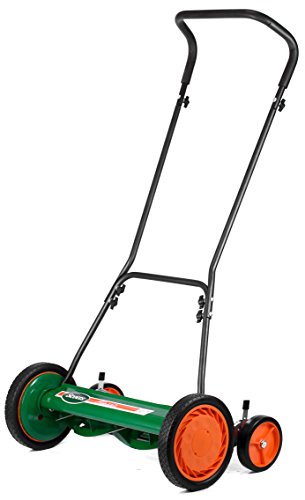
The Scotts 2000-20S is a manual push reel mower that harkens back to a simpler time of lawn care. Designed for small to medium-sized yards, this mower is ideal for homeowners who want a quiet, emission-free alternative to gas or electric mowers. Its 20-inch cutting width and 5-blade reel make it a practical choice for flat lawns with regular maintenance.
In terms of performance, the heat-treated alloy steel blades deliver a scissor-like cut that is cleaner than rotary mowers, promoting healthier grass. The height adjustment is tool-free and offers a range from 1 to 3 inches, allowing you to adapt to seasonal growth. However, this mower works best on grass that is not too tall or wet; it may struggle with thick growth or weeds.
Build quality is solid for a manual mower. The steel blades and ball bearing wheels are durable, and the frame feels sturdy despite the lightweight design. At 26.9 pounds, it is easy to push and maneuver around obstacles. The cushioned handle adds comfort, though taller users might find the fixed handle height a bit low.
Assembly is straightforward and requires no tools. Storage is a breeze because the handle folds down, making it easy to hang on a wall or store in a tight corner. Maintenance is minimal – just keep the blades sharp and the wheels clean. Unlike gas mowers, there is no engine maintenance, fuel storage, or battery charging.
Realistically, this mower is not for everyone. It is best suited for those with relatively small, flat lawns who want a workout and a quiet mowing experience. It may not handle overgrown grass or large properties efficiently. Also, because it leaves clippings on the lawn, it works best as a mulching mower – which is fine for most grasses as it returns nutrients.
Overall, the Scotts 2000-20S is a reliable, budget-friendly choice for the eco-conscious homeowner. If you have a small yard and enjoy a manual approach, this mower offers simplicity, durability, and a satisfyingly clean cut. It is a great entry point for those looking to reduce their carbon footprint without sacrificing lawn quality.
The 5-blade reel on the Scotts 2000-20S provides a clean, scissor-like cut that is gentle on grass blades, reducing the risk of disease. The heat-treated alloy steel stays sharp longer than standard steel, and the ball bearing reel ensures smooth rotation. The cutting height adjusts quickly from 1 to 3 inches via a snap mechanism, allowing you to adapt to different grass types and seasons. For best results, mow frequently and keep grass dry – the reel may struggle with wet or tall grass.
Weighing just 26.9 pounds, the Scotts 2000-20S is easy to push and turn. The 10-inch dual tracking wheels provide stability and help maintain a straight path. The ergonomic handle with cushioned grip reduces fatigue. For storage, the handle folds down quickly without tools, allowing the mower to hang vertically or lie flat in a small space. This makes it an excellent choice for homeowners with limited garage or shed space.
Pros
- Very quiet operation - great for early morning mowing or noise-sensitive neighborhoods.
- Lightweight and easy to push, especially on flat, small lawns.
- Eco-friendly and cost-effective with zero fuel or electricity costs.
- Simple height adjustment with no tools needed.
- Low maintenance and long-lasting if blades are kept sharp.
Cons
- Only effective on grass up to about 4 inches tall; struggles with overgrown or thick weeds.
- Narrow 14-inch cutting width means more passes on larger lawns - best for yards under 1/4 acre.
- Manual push requires more physical effort on uneven terrain or slopes compared to self-propelled mowers.
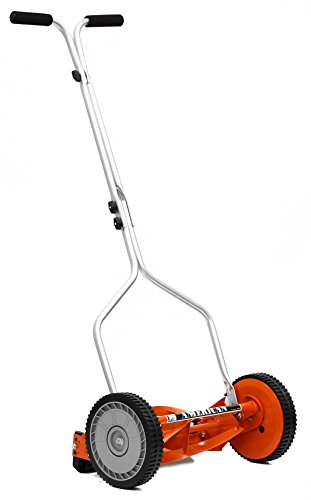
If you have a small, level lawn and want a simple, quiet, and eco-friendly way to keep it tidy, the American Lawn Mower 1204-14 reel mower is a solid choice. This manual push mower weighs only 19 pounds and has a 14-inch cutting width, making it easy to maneuver around trees, garden beds, and tight corners. It's powered entirely by you - no gas, no cords, no batteries - just a clean, scissor-like cut from its four hardened steel blades.
Based on product specifications and user feedback, this mower performs best on grass that is kept under 4 inches tall. The adjustable cutting height ranges from 0.5 to 1.75 inches, letting you choose your preferred lawn height. Since reel mowers clip the grass cleanly without tearing, the lawn tends to look healthier and greener after each mow. Many homeowners may appreciate the lack of noise and fumes - excellent for early Saturday mornings or properties near neighbors.
The build quality is straightforward: a sturdy steel frame with 8.5-inch polymer wheels that roll smoothly on flat terrain. Assembly is minimal right out of the box, and maintenance mostly involves keeping the blades sharp (a simple sharpening kit is inexpensive). The mower's lightweight design also means it can be stored vertically or hung on a wall, saving garage space.
However, this reel mower has some real-world limitations. It is less effective on damp or thick grass, and it may require multiple passes if the lawn grows long between mowings. The 14-inch width is narrow, so for lawns larger than about 1/4 acre, it can become tedious. Also, on uneven ground or slopes, the push effort increases - this is best for flat, well-maintained yards.
Overall, for budget-conscious homeowners, apartment dwellers with small lawns, or anyone looking to reduce their carbon footprint, the American Lawn Mower 1204-14 offers great value at around $72. It's a reliable, low-maintenance tool that encourages regular, frequent mowing for a beautiful lawn without the hassles of engine maintenance or fuel costs.
How to Determine the Correct Blade Orientation
The direction in which mower blades are installed is critical for the safety and efficiency of the cutting system. For most rotary mowers, the blade is designed to spin in a counter-clockwise direction when viewed from above. This means the leading edge of the blade, which is the sharper, angled side, should point toward the back of the mower.
If the blade is installed backwards, it will not lift the grass before cutting it, resulting in a bruised and ragged finish. Additionally, a backwards blade can create excessive vibration that may damage the spindle or deck over time.
Manual reel mowers operate on a different mechanical principle, involving a rotating reel that works against a fixed cutter bar. In these machines, the orientation of the reel relative to the cutter bar is fixed by the design, but the user must ensure the reel is not reversed if it is a reversible model.
Most modern reel mowers have a fixed direction of rotation, typically clockwise when viewed from the front, which corresponds to the user pushing the mower forward. The key is to match the rotation direction of the reel with the direction of travel to ensure the blades shear the grass cleanly. If the reel spins in the opposite direction of travel, it will push the grass rather than cut it, making mowing difficult and ineffective.
| Mower Type | Blade Rotation (Top View) | Cutting Edge Direction | Key Indicator |
|---|---|---|---|
| Gas Rotary | Counter-Clockwise | Toward Rear | Arrow on blade/deck |
| Electric Rotary | Counter-Clockwise | Toward Rear | Arrow on blade/deck |
| Manual Reel | Clockwise (Front View) | Shears Forward | Reel geometry |
Identifying the correct orientation often involves looking for visual cues provided by the manufacturer. Many rotary mower blades have a stamped arrow indicating the direction of rotation. This arrow should point in the direction the blade spins. If the blade does not have an arrow, look at the shape of the blade. The cutting edge is usually angled slightly upward on one side.
This angled side should face the rear of the mower. For reel mowers, the orientation is determined by the fit of the reel into the frame. The reel should rotate freely in the direction that allows the blades to pass over the cutter bar in a shearing motion. If the reel feels tight or binds when turned by hand, it may be installed incorrectly or the bearings may be damaged.
Safety is a primary concern when handling mower blades. Always disconnect the spark plug wire from the gas engine or remove the battery from the electric mower before attempting to remove or install blades. This prevents accidental starting, which could cause severe injury. Use a socket wrench to loosen the blade bolt, being mindful that some blades have reverse-threaded bolts.
If you are unsure about the threading direction, check the manufacturer’s manual. Once the blade is removed, inspect the spindle and blade for any signs of wear or damage. A bent blade or worn spindle can cause imbalance, leading to vibration and premature wear on other components.
Visual Cues and Manufacturer Markings
Manufacturers include several visual cues to help users install blades correctly. The most common is a directional arrow stamped on the blade itself. This arrow indicates the direction of rotation and should be followed strictly. In some cases, the arrow may be located on the mower deck or the spindle housing. If the blade is new and has no markings, refer to the user manual for the specific model.
The manual will provide a diagram showing the correct orientation. For reel mowers, the reel assembly is often designed to fit only one way. The shape of the reel and the frame ensure that the reel cannot be installed backwards. However, if the reel is removable, check for any alignment marks or tabs that ensure proper positioning.
In addition to arrows, the shape of the blade provides clues. A standard rotary blade has a curved shape that is designed to lift the grass. The leading edge of the blade, which is the side that meets the grass first, should be oriented toward the rear of the mower.
This allows the blade to lift the grass before cutting it, resulting in a cleaner cut. If the blade is installed with the leading edge facing forward, it will cut the grass as it is pushed down, leading to a bruised and ragged finish. This can also increase the load on the engine, causing it to run harder and consume more fuel.
For reel mowers, the visual cues are less obvious but still present. The reel blades are arranged in a specific pattern that allows them to shear the grass against the cutter bar. If the reel is rotated in the wrong direction, the blades will not align properly with the cutter bar, resulting in a poor cut. You can test the orientation by turning the reel by hand.
It should rotate smoothly in the direction of travel. If it binds or feels stiff, it may be installed incorrectly. Also, check the gap between the reel blades and the cutter bar. This gap should be consistent and minimal to ensure a clean cut. If the gap is too wide, the grass will not be cut cleanly, and the mower will be less effective.
Common Mistakes in Blade Installation
One of the most common mistakes is installing the blade backwards. This is often done by accident, especially when the blade is removed for sharpening or replacement. Users may not notice the orientation until they start mowing and realize the cut is poor. To avoid this mistake, always check the orientation before tightening the blade bolt.
Another common error is over-tightening the blade bolt. This can strip the threads in the spindle or bend the blade, leading to imbalance. Use a torque wrench if available, or tighten the bolt firmly without excessive force. The blade should be secure but not distorted.
Ignoring the condition of the blade is another frequent error. A dull or bent blade will not cut cleanly, regardless of its orientation. Before installing a blade, inspect it for any signs of damage. If the blade is dull, sharpen it or replace it. If it is bent, it should be replaced, as it cannot be easily straightened without risking further damage. A bent blade will cause vibration, which can damage the mower’s bearings and deck. Regular inspection and maintenance of the blade are essential for optimal performance and safety.
Failing to balance the blade is a less obvious but significant mistake. Even a small imbalance can cause noticeable vibration, which can loosen other components and damage the mower. To balance the blade, suspend it from a nail or a blade balancer. It should hang horizontally.
If one side is heavier, file a small amount of metal from the heavier side until it is balanced. This simple step can significantly improve the performance and longevity of the mower. Always re-check the balance after sharpening the blade, as removing metal can shift the balance point.
Reel Mower Specifics and Geometry
Reel mowers, such as the Scotts 2000-20S and American Lawn Mower 1204-14, have a unique blade system that requires specific attention.
- The reel consists of multiple blades arranged in a cylindrical shape that rotate as the mower is pushed.
- These rotating blades shear the grass against a fixed cutter bar, making the orientation of the reel critical for correct action.
- In most reel mowers, the reel is designed to rotate clockwise when viewed from the front to ensure proper cutting motion.
- As you push the mower forward, the top of the reel moves forward, and the blades pass over the cutter bar in a cutting motion.
- If the reel were to rotate counter-clockwise, the blades would move away from the cutter bar, failing to cut the grass.
The geometry of the reel blades is also important. The blades are angled to create a cutting edge that works against the cutter bar. This angle is fixed in the design, so the orientation of the reel relative to the cutter bar must be correct. If the reel is installed with the wrong orientation, the blades will not align with the cutter bar, resulting in a poor cut.
You can verify the orientation by checking the gap between the reel blades and the cutter bar. This gap should be consistent and minimal. If the gap is uneven, the reel may be misaligned or the cutter bar may be worn. Adjusting the gap is a common maintenance task for reel mowers and can significantly improve cutting performance.
Another aspect of reel mower blade orientation is the direction of the reel’s rotation relative to the wheels.
- The wheels drive the reel, so the direction of wheel rotation must match the direction of reel rotation.
- In most reel mowers, the wheels rotate clockwise when viewed from the side, which drives the reel in the correct direction.
- If the wheels were to rotate counter-clockwise, the reel would spin in the wrong direction.
- This is not a common issue, as the wheel and reel mechanisms are designed to work together.
- However, if you are replacing the wheels or the reel, ensure that they are installed correctly to maintain the proper rotation direction.
- This is especially important if you are using aftermarket parts, which may not be designed for your specific mower model.
Maintenance and Long-Term Care
Proper blade orientation is just one part of maintaining a well-functioning mower. Regular maintenance is essential to keep the blades cutting cleanly and the mower operating safely. This includes cleaning the blades after each use to remove grass clippings and debris. Grass buildup can affect the balance of the blade and reduce its cutting efficiency.
Use a brush or a damp cloth to clean the blades, being careful not to touch the sharp edges. Inspect the blades for any signs of wear or damage, and sharpen or replace them as needed. A dull blade will not cut cleanly, regardless of its orientation, and can damage the grass.
Checking the blade bolt and spindle is also important. Over time, the bolt can loosen due to vibration, which can cause the blade to wobble and damage the mower. Tighten the bolt as needed, being careful not to over-tighten it. Inspect the spindle for any signs of wear or damage, and replace it if necessary.
A worn spindle can cause imbalance and vibration, which can damage other components. Regular maintenance of the blade and spindle will extend the life of the mower and ensure a clean cut every time. If you are unsure about any aspect of blade maintenance, consult the manufacturer’s manual or a professional technician.
Storing the mower correctly is another important aspect of long-term care. Store the mower in a dry, secure location to prevent rust and damage. If the mower will not be used for an extended period, remove the blade and store it separately. This prevents the blade from rusting and makes it easier to clean and inspect.
Apply a thin coat of oil to the blade to prevent rust, and store it in a safe place where it cannot be accessed by children or pets. Proper storage will help maintain the condition of the blade and ensure it is ready for use when needed. Following these maintenance tips will help you get the most out of your mower and keep it in good working order for years to come.
Verifying the Cut Quality
The best way to verify that the blades are installed correctly is to mow a small area and inspect the cut. A correctly installed blade will produce a clean, even cut with no bruising or ragged edges. If the cut is poor, check the blade orientation and tighten the bolt. If the problem persists, inspect the blade for damage or wear.
A dull or bent blade will not cut cleanly, even if it is installed correctly. Sharpen or replace the blade as needed, and re-check the orientation. If the cut is still poor, there may be an issue with the mower’s deck or spindle, which may require professional attention.
For reel mowers, the cut quality is also a good indicator of blade orientation. A correctly oriented reel will produce a clean, even cut with no missed spots. If the cut is uneven or there are missed spots, check the gap between the reel blades and the cutter bar. Adjust the gap as needed to ensure a clean cut. If the problem persists, inspect the reel and cutter bar for wear or damage.
A worn cutter bar or reel can affect the cut quality, even if the blades are installed correctly. Regular maintenance and adjustment of the reel and cutter bar will help ensure a clean cut every time. If you are unsure about any aspect of the cut quality, consult the manufacturer’s manual or a professional technician for guidance.
Understanding the correct way to install mower blades is a simple but important part of lawn care. By following the manufacturer’s instructions and checking the visual cues, you can ensure that your mower is set up correctly for a clean and efficient cut.
Regular maintenance and inspection will help keep the blades in good condition and extend the life of your mower. If you have any questions or concerns, consult the user manual or a professional for assistance. Proper blade orientation is a key factor in achieving a healthy, well-maintained lawn.
For more information on maintaining your lawn equipment, consider exploring our lawn mower age guide to understand the lifespan of your specific model. Keeping track of your equipment’s age can help you plan for necessary replacements and maintenance. By staying informed and proactive, you can ensure that your mower remains a reliable tool for years to come. The correct blade orientation is just one piece of the puzzle, but it is a critical one for achieving the best results from your lawn care efforts.





Write Your Review
No reviews yet. Be the first to share your experience!