


A riding mower that clicks once, cranks slowly, or sits dead after winter may have a weak battery, but replacing it immediately can leave the real fault untouched. A loose ground, corroded terminal, charging-system problem, or electrical draw while parked can drain a sound battery again. The question why does my riding lawn mower battery keep dying is best answered by checking what happens before, during, and after starting.
This guide walks through practical voltage checks, charging-system clues, safe jump-starting, and storage habits that can help separate a failed battery from a mower fault. It also explains why Group U1 and U1R terminal orientation matters if a replacement is needed. For fitment context, see this guide to lawn mower battery compatibility, or browse our riding mower starter battery overview.

Pros
- Extremely lightweight compared to lead-acid replacements, reducing strain when lifting into the tractor.
- High cranking power (450CCA) ensures dependable starts even in cooler temperatures.
- Maintenance-free operation with built-in safety protections - install it and forget it.
- Versatile compatibility across major brands like Craftsman, John Deere, Cub Cadet, Husqvarna, and Troy-Bilt.
Cons
- Upfront cost is higher than a standard lead-acid battery, though longer lifespan may offset the price.
- Requires checking terminal configuration and dimensions before purchase, as some models may need adapters.
- Lithium batteries can be sensitive to extreme heat if stored improperly, though the BMS helps mitigate this.
If you own a riding mower or lawn tractor, you know the frustration of a dead battery on a Saturday morning. This DOUKAS DKLU1R lithium battery is designed to replace those heavy, maintenance-hungry lead-acid U1 batteries with a lightweight, reliable power source. It suits homeowners with mid-size to large lawns who want a dependable start every time, especially for machines that sit in the garage for weeks between uses.
The product description highlights an impressive 450 cold-cranking amps, which is plenty for most single-cylinder or V-twin lawn tractor engines. Because it weighs only 3.3 pounds, you won't be wrestling a 15-pound brick into the battery tray. The lithium chemistry also holds a charge much longer than lead-acid when idle, and with over 2,500 charge cycles, it should outlast several seasons of regular mowing.
Durability looks well thought out for outdoor equipment. The IP65 rating means it can handle rain, mud, and moisture from washing your mower. The internal shock-absorbing layer helps protect against the constant vibration of rough terrain, which is often what kills batteries on riding mowers. The built-in Battery Management System adds extra protection against overcharging, deep discharge, and freezing, so you don't have to worry about damaging it by leaving it in the shed over winter.
Installation is straightforward. It's a direct replacement for common U1 group sizes, so you just disconnect the old battery, drop this one in, and connect the cables. There's no filling with acid, no cleaning corroded terminals, and no periodic charging needed thanks to the smart sleep mode. That makes it a great option for folks who aren't comfortable messing with traditional lead-acid maintenance.
Keep in mind that compatibility is broad but not universal. Before buying, double-check your mower's terminal type and physical dimensions. The battery covers most U1 applications, but some older or oddball models may need extra attention. Also, the price is higher than a basic lead-acid replacement, though you're paying for longer life, lighter weight, and maintenance-free operation.
Overall, this battery makes sense for homeowners who want a reliable, no-fuss start battery that won't let them down mid-season. It's particularly handy for those who store their mower in unheated spaces or only mow every couple of weeks. If you're tired of dealing with dead or sulfated batteries, this lithium upgrade is worth considering.

Pros
- Substantially lighter than standard lead-acid U1 batteries, making removal and installation less of a back strain.
- Strong 320 CCA output provides reliable cold-start performance for small engines in lawn tractors and generators.
- Fast recharge capability minimizes downtime, especially useful for properties with larger mowing areas.
- IP65-rated, vibration-resistant case is built to handle wet grass, rain, and rough terrain.
- Directly replaces common U1-5, U1-7, and U1-9 sizes without modifications in most compatible mowers.
Cons
- Higher upfront cost than comparable lead-acid batteries, though the lifespan may balance that out for some users.
- Not compatible with all riding mowers, so it's essential to check the fitment list or contact the seller before buying.
- Requires a compatible LiFePO4 charger; a standard lead-acid charger may not provide the right charging profile.
For homeowners who rely on a riding mower or lawn tractor to keep a large yard in shape, the battery is the quiet workhorse that gets the engine going every time. The DOUKAS DKLU1-M is a 12-volt lithium iron phosphate (LiFePO4) battery designed to slide into the standard U1 battery slot on many popular lawn tractor brands. It delivers 320 cold cranking amps, which is plenty for most small engines on Craftsman, John Deere, Cub Cadet, Husqvarna, Ariens, Troy-Bilt, Toro, and similar equipment. This is a direct replacement, so it suits homeowners who want a lighter, maintenance-free upgrade rather than fussing with a conventional lead-acid battery.
In real-world use, the starting power is the most important thing, and the 320 CCA rating means the battery can spin a cold engine reliably on a chilly Saturday morning. The LiFePO4 chemistry holds its voltage well under load, and the fast-charging feature is handy for anyone who mows in bursts or needs a quick top-up between tasks. Many homeowners may prefer this setup because it avoids the gradual voltage drop you often see with older lead-acid batteries. The product description highlights that it can be recharged in minutes, which helps if you accidentally leave the ignition on and drain the battery.
This battery is built for outdoor life. The IP65 rating means it is protected against dust and low-pressure water jets, so rain, mud, and wet grass won't cause trouble. There is also an internal shock-absorbing layer to handle the constant vibration that comes from traveling across bumpy terrain. The removable brass terminals are a nice touch because they make it easier to clean and tighten connections. Based on the design, this battery should hold up for multiple mowing seasons in typical American backyard conditions.
Setup is straightforward for anyone who has changed a mower battery. The dimensions are 6.65 x 5.16 x 6.85 inches, which matches the standard U1 footprint, so it should fit in existing battery trays without modification. The lightweight build makes lifting it into place much easier than wrestling with a 20-plus-pound lead-acid battery. Maintenance is basically zero: no water to top off, no terminal corrosion to scrub, and no acid spills to worry about. That is a huge plus for homeowners who want to spend Saturday afternoons mowing, not wrenching.
No battery is perfect for every situation. The upfront cost is higher than a conventional lead-acid battery, and it is important to confirm compatibility before purchasing. The seller notes that any vehicles not on the compatibility list are considered incompatible, so this won't work on every mower. You will also want to use a LiFePO4 battery charger rather than an old automotive charger, because the charging profiles are different. For most riding mowers made after the year 2000 that use a U1 battery, this will be a drop-in replacement, but it's always worth double-checking.
For homeowners with a compatible riding mower or lawn tractor, the DOUKAS DKLU1-M is a solid upgrade over a tired lead-acid battery. It is lighter, faster-charging, and more weather-resistant, which makes it an attractive option for anyone who wants dependable starts with minimal hassle. If you are on a strict budget, a standard battery may be cheaper upfront, but if you value long-term convenience and reliable cold-weather cranking, this lithium battery is worth considering for the next swap.
This battery is designed as a direct replacement for U1-5, U1-7, and U1-9 batteries. It fits many popular brands, including Craftsman, John Deere, Cub Cadet, Husqvarna, Ariens, Troy-Bilt, Toro, and other riding mowers, lawn tractors, and generators. The 6.65 x 5.16 x 6.85-inch dimensions match the standard U1 size, but it is recommended to check your vehicle model against the compatibility list before ordering. Adding your vehicle to Amazon Garage can help confirm fitment. The manufacturer advises that vehicles not listed are not considered compatible.
The IP65 weatherproof rating means this battery can handle rain, dust, and mud without trouble. An internal shock-absorbing layer protects the cells from vibration and impacts that come with mowing uneven ground. Because it is a sealed lithium battery, there is no acid to spill, no water to check, and no terminal corrosion to clean. The removable brass terminals are a practical touch for keeping connections solid. A compatible LiFePO4 charger is recommended to maintain optimal performance and lifespan over the seasons.

Pros
- Extremely lightweight at 20.5 lbs—easy to push, lift, and maneuver around obstacles
- Two batteries included with quick swap for extended runtime without waiting to recharge
- Brushless motor provides reliable power and reduced maintenance compared to gas mowers
- Compact 13-inch deck fits through narrow gates and stores easily in small spaces
- 5 height settings give flexibility for different grass lengths and seasons
Cons
- 13-inch cutting width may require more passes on larger lawns—best suited for yards under 1/4 acre
- Grass collection bag is 8 gallons—may need frequent emptying on thick or tall grass
- Battery runtime per battery is 25 minutes under typical conditions; heavy or wet grass may reduce runtime
The STEELITE Cordless Lawn Mower is a compact, battery-powered push mower designed for homeowners with small to medium-sized yards. With a 13-inch cutting deck and a lightweight build of just 20.5 pounds, this mower is especially appealing for apartment dwellers, suburban homeowners with modest lawns, and anyone who values easy storage and maneuverability. It comes with two 4.0Ah lithium-ion batteries and a charger, providing up to 50 minutes of total runtime when you swap batteries mid-mow.
In real-world use, the brushless motor delivers consistent cutting power for typical grass conditions. The 5-position height adjustment lever lets you quickly set the cut between 0.98 and 2.56 inches, which works well for spring growth, summer maintenance, or fall cleanup. The included 8-gallon grass collection bag helps keep your lawn tidy, and the mower is designed for bagging only—no mulching or side discharge options are mentioned. For small, flat lawns, this mower should handle routine mowing without issue.
Build quality appears solid for the price point. The deck is likely made of durable plastic or steel (specs not fully detailed), and the overall weight suggests a mostly plastic construction that resists rust. The brushless motor is a plus for longevity and efficiency, and the batteries are standard 20V, which may be compatible with other STEELITE Tools products. The brand clarification—STEELITE Tools vs. STEELITE International—is worth noting for warranty and support purposes.
Setup is straightforward: attach the handle and grass bag, charge the batteries, and you're ready. The foldable handle allows for compact vertical or horizontal storage in a garage, shed, or even a closet. Maintenance is minimal—no oil changes, no spark plugs, just keep the blades sharp and clean the deck. The lightweight design makes it easy to carry up stairs or load into a vehicle.
Limitations include the narrow 13-inch cutting width, which means more passes on larger lawns. The 8-gallon bag may fill quickly in thick grass, and the batteries provide only 25 minutes each under normal conditions—heavy or wet grass can drain them faster. For yards over 1/4 acre, you might need to recharge or buy extra batteries. Also, the mower lacks self-propulsion, so on slopes or uneven terrain, you'll need to push manually.
Overall, the STEELITE Cordless Lawn Mower is a practical choice for budget-conscious shoppers, first-time mower buyers, or anyone with a small, flat lawn who wants a lightweight, low-maintenance electric mower. It offers good value with two batteries and a brushless motor, and its compact size makes storage a breeze. If your yard is under 1/4 acre and you prioritize ease of use and quiet operation, this mower is worth considering.
The mower comes with two 20V 4.0Ah lithium-ion batteries and a charger. Each battery provides up to 25 minutes of runtime under typical mowing conditions, giving a combined 50 minutes with quick swapping. Charging time is not specified but is likely a few hours per battery. The batteries are removable and can be used with other STEELITE Tools 20V products. For small lawns under 1/4 acre, this runtime should be sufficient for a single mowing session. Users may want to consider purchasing an additional battery for larger yards or thicker grass.
The 13-inch cutting deck is powered by a brushless motor that spins the blade efficiently. With 5 height settings from 0.98 to 2.56 inches, you can adjust for different grass types and seasons. The mower is designed for bagging grass clippings; it does not mention mulching or side discharge capabilities. The 8-gallon grass collection bag is easy to attach and empty. For thin to moderate grass, the mower should provide a clean cut. For very thick or tall grass, you may need to mow slowly or take multiple passes.

Pros
- Spill-proof and vibration-resistant – perfect for the jarring environment of a riding mower.
- High CCA rating ensures reliable starts even in colder months.
- Long service life with deep discharge recovery for extended use.
- Maintenance-free – no watering required, just install and go.
- One-year warranty adds extra value for budget-conscious homeowners.
Cons
- No wire harness or mounting accessories included – you may need to reuse existing hardware.
- Some users may find the 15.5-pound weight a bit heavy for handling during installation.
- Limited to specific U1R applications – verify compatibility before purchase.
The Mighty Max Battery ML-U1R-CCAHR is a 12V 320CCA sealed lead acid (SLA) battery designed as a replacement for riding mowers like the Husqvarna LGT2654. It's an AGM (absorbent glass mat) battery, meaning it's spill-proof and can be mounted in any position – a handy feature if your mower's battery compartment is cramped or oddly shaped. This battery is best suited for homeowners who need a reliable, maintenance-free power source for their lawn tractor, especially those in colder climates where cold cranking amps matter for winter storage and spring startup.
In terms of performance, the 320 cold cranking amps provide ample power to start most riding mower engines, even after sitting for months. The battery's high discharge rate ensures consistent power delivery, which translates to reliable cranking in chilly mornings or after long periods of disuse. While this battery isn't designed for deep-cycle use (like powering accessories), it excels at starting tasks – exactly what a lawn mower battery should do. The spill-proof design also means no acid leaks, so you don't have to worry about corrosion on your mower's frame or terminals.
Build quality is solid for a budget-friendly battery. The case is durable and resists shocks and vibration, which is crucial for the rough-and-tumble life of a riding mower. The dimensions (7.62 x 5 x 6.25 inches) fit standard U1R battery trays, and the polarity (positive on right, negative on left) matches many Husqvarna models. However, note that the battery comes with only the battery and screws – no wire harness or mounting brackets – so you'll need to reuse or purchase those separately.
Setup is straightforward: remove the old battery, clean the terminals, place the new battery in the tray, secure it with your existing hardware, and connect the cables (red to positive, black to negative). No maintenance is required – no watering, no checking electrolyte levels – which saves time for busy homeowners. Storage is also easy; the battery can be stored on a shelf or in the mower without worry of spills. The one-year warranty adds a layer of confidence, though typical SLA batteries last 3-5 years with proper care.
One limitation is that this battery is not a direct fit for all mowers – it's specifically for U1R applications, so double-check your mower's battery requirements before buying. Also, the 15.5-pound weight might feel heavy when lifting into tight compartments, but that's standard for this type of battery. Some users might wish for included hardware, but that's a minor inconvenience.
Overall, the Mighty Max Battery ML-U1R-CCAHR is a dependable, no-fuss replacement for your Husqvarna LGT2654 or similar U1R-equipped lawn mower. It offers strong starting power, spill-proof safety, and long life at a reasonable price. If you need a battery that just works without extra maintenance, this is a solid choice for your Saturday morning mowing routine.
Pros
- Reliable starting power with 200CCA for quick ignition
- Spill-proof AGM design enhances safety and mounting flexibility
- Vibration and shock resistant for durability on bumpy lawns
- Maintenance-free operation saves time and effort
Cons
- Does not include wire harness or mounting accessories, so you may need to reuse existing hardware
- Some users may find the terminal orientation requires careful checking to match their mower setup
- Not suitable for all mower models, so compatibility should be verified before purchase
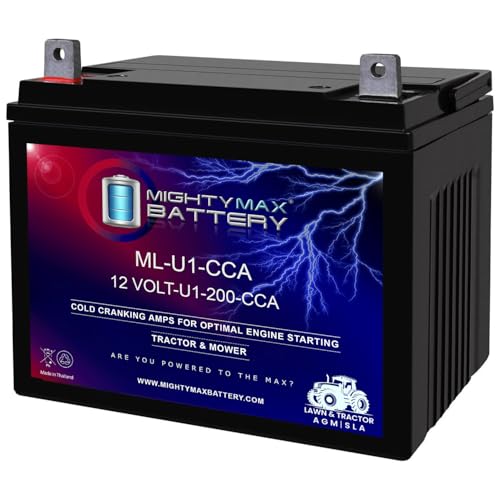
The Mighty Max Battery ML-U1 is a 12-volt sealed lead acid battery designed to replace the battery in many Craftsman lawn tractors and mowers, including the model 25780. This battery is a practical choice for homeowners who need a dependable power source for their riding mower without the hassle of traditional wet-cell batteries. With 200 Cold Cranking Amps, it provides enough power to start most single-cylinder engines commonly found on residential lawn tractors, even during cooler spring mornings or fall afternoons.
Performance-wise, this battery uses AGM (Absorbent Glass Mat) technology, which means it is spill-proof and can be mounted in any position. This flexibility is helpful if your mower has an odd battery tray orientation or limited space. The battery also handles deep discharges better than standard flooded batteries, which is a plus if you occasionally leave lights on or have a parasitic drain. However, it is not designed for high-drain applications like powering accessories for extended periods—its main job is starting the engine.
Build quality appears solid for its price point. The case is made from durable ABS plastic that resists cracking from vibration and impacts during mowing. The terminals are standard SAE posts, but you may need to check the polarity: this model has positive on the left and negative on the right. Some users report that the included screws are adequate, but you will need to reuse your existing wire harness and mounting hardware, as none are included.
Setup is straightforward if you are comfortable with basic tools. Simply remove the old battery, clean the terminals, and install this one using the provided screws. Because it is maintenance-free, you won't need to check water levels or clean corrosion as often as with a wet-cell battery. Storage is also easier since the battery can be stored on its side if needed, though keeping it upright is recommended for longest life.
One realistic limitation is that this battery may not be compatible with all mower models, especially those requiring different terminal configurations or higher CCA ratings for larger engines. Always verify your mower's battery group size and polarity before ordering. Additionally, the lack of included mounting hardware means you may need to purchase a battery hold-down kit separately if your old one is missing or damaged.
Overall, the Mighty Max Battery ML-U1 is a solid replacement option for Craftsman lawn tractor owners who want a reliable, maintenance-free battery at a reasonable price. It works well for typical suburban lawn mowing needs, but if you have a larger tractor with a high-compression engine or live in extremely cold climates, you might consider a battery with higher CCA. For most homeowners, this battery offers a good balance of performance, durability, and value.
Pros
- Weighs only 3.96 lbs for easy handling and installation.
- 650 CCA ensures reliable cold-weather starts.
- 2000-cycle lifespan outlasts most lead-acid batteries.
- Built-in BMS provides safety and overcharge protection.
- Wide compatibility with many popular lawn tractor brands.
Cons
- Higher upfront cost compared to standard lead-acid batteries.
- Requires a 14.6V lithium-specific charger (not included).
- Not compatible with all mower models - must verify dimensions and terminal orientation (left-positive, right-negative).
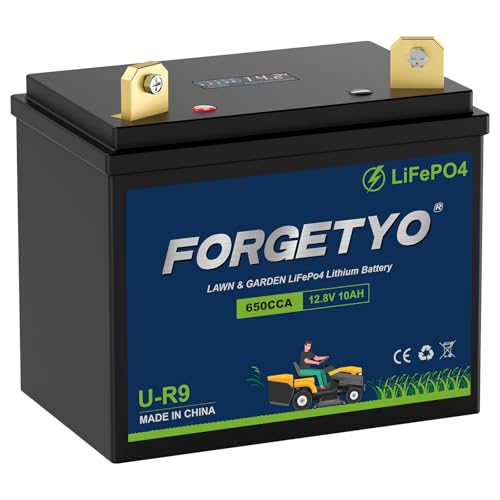
The U-R9 lithium battery is a drop-in replacement for traditional lead-acid batteries used in riding lawn mowers and garden tractors. It delivers 12.8 volts and 10 amp-hours of capacity with a maximum 650 cold cranking amps (CCA), providing more than enough power to start mid-sized mowers even in cold weather. Weighing only 3.96 pounds, it is about one-third the weight of a comparable lead-acid battery, which makes installation and handling much easier for homeowners of any age.
Based on the product specifications, the built-in Battery Management System (BMS) monitors the battery's health and automatically protects against overcharging, overdischarging, short circuits, and overheating. This safety feature helps extend the battery's lifespan to roughly 2000 charge cycles, compared to only 300 cycles from typical lead-acid batteries. For many homeowners, that means fewer replacements and less maintenance over the life of the mower.
Compatibility is strong for this battery. It works with popular brands like John Deere, Cub Cadet, Husqvarna, Craftsman, Toro, Ariens, Poulan Pro, and Troy-Bilt. The U-R9 has a left-positive, right-negative terminal layout, so it's important to check the physical dimensions (7.7x5.1x7.2 inches) and terminal orientation against your mower's battery tray before purchasing. The lithium chemistry also holds a charge for months when disconnected, which is especially useful for owners in regions with long winters—no need to keep a battery tender connected.
In terms of performance, the 650 CCA rating ensures reliable starting even in sub-freezing temperatures. Many users may find that their mower cranks faster and more consistently compared to an aging lead-acid battery. The battery operates in a wide temperature range from -20C to 85C, so it can handle both cold starts and hot summer storage without issues.
One realistic limitation is the higher upfront price compared to lead-acid batteries. Additionally, this lithium battery requires a dedicated 14.6V DC lithium charger (recommended 2A charging speed) to recharge safely. If you already have a standard lead-acid charger, you will need to upgrade. Also, not all mowers share the same terminal configuration, so double-checking compatibility is a must before ordering.
Overall, the U-R9 lithium battery is a solid upgrade for homeowners who want a lighter, longer-lasting, and more reliable starting battery for their riding mower or generator. It is particularly well-suited for those who deal with cold winters, want to avoid maintaining a battery tender, or simply prefer the convenience of a maintenance-free power source. If your mower's battery tray accommodates the dimensions and terminal layout, this battery offers excellent value over the long term.

Pros
- Maintenance-free operation saves time and hassle
- Spill-proof AGM design allows flexible mounting and safe use
- Good cold cranking amps for reliable starts even in cooler weather
- Reputable brand with positive user feedback on longevity
- Affordable replacement compared to OEM John Deere batteries
Cons
- Does not include mounting brackets or wire harness – may need additional parts for some mower models
- Some users report that the terminal orientation may differ from original – check fitment before ordering
- Sealed lead-acid chemistry means it cannot be deep cycled as often as lithium batteries
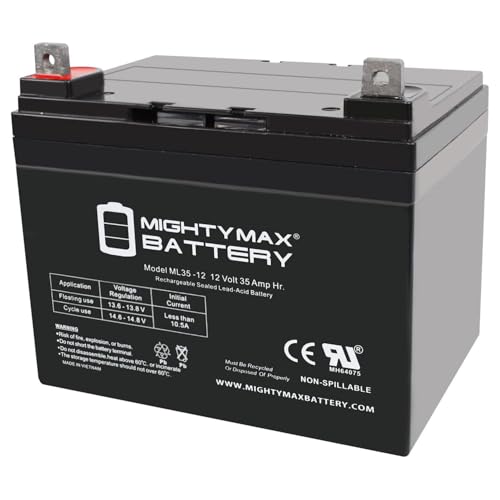
For homeowners who rely on a riding mower or lawn tractor to keep their yard in shape, the battery is an often-overlooked but critical component. The Mighty Max Battery 12V 35Ah SLA AGM is a direct replacement for many John Deere models and other compact riding machines. This sealed lead-acid battery is designed to deliver reliable starting power without the maintenance headaches of traditional flooded batteries.
Based on product specifications, this battery uses AGM (Absorbent Glass Mat) technology, which makes it spill-proof and vibration-resistant. That means you can mount it in any position—even sideways—without worrying about acid leaks. Many homeowners may prefer this for mowers stored in tight sheds or trailers. The 35Ah capacity and high discharge rate provide enough cranking amps for most single-cylinder and twin-cylinder lawn tractor engines.
The build quality feels solid for the price point. The black case is impact-resistant, and the terminals are clearly marked. At 7.76 x 5.12 x 7.01 inches, it fits many standard battery trays, but it’s always wise to measure your old battery before ordering. The package includes the battery and screws only—no wiring harness or mounting hardware—so you may need to reuse existing brackets or buy them separately.
Installation is straightforward for anyone comfortable with basic tools: disconnect the old battery, clean the terminals, place the new battery, connect the cables (positive first, then negative), and secure it. Since it’s maintenance-free, you never have to check electrolyte levels or add water. That’s a real time-saver for busy homeowners who just want to mow and go.
A realistic limitation is that this is a standard lead-acid battery, not a lithium upgrade. It’s heavier (around 22 lbs) and won’t deliver the same deep-cycle capacity if you ever use it for accessories like lights or winches. Some users note that the terminal orientation (positive on left vs right) may differ from your original, so verify the layout before purchase. Also, while it comes pre-charged, a full charge via a trickle charger before first use may help extend its life.
Overall, the Mighty Max Battery is a solid choice for anyone needing a dependable, no-fuss replacement for their riding mower or lawn tractor. It’s particularly suited for budget-conscious homeowners who want OEM-like performance without the high price tag. If you’re replacing a dead battery in your John Deere, Craftsman, or similar mower, this model deserves a close look.
Mighty Max Battery offers a full one-year warranty against manufacturing defects. The warranty covers replacement if the battery fails under normal use within that period. It's worth noting that the warranty does not cover damage from improper installation, overcharging, or physical abuse. For support, contact the seller or manufacturer directly—customer service response times are generally favorable based on user feedback. Always keep your purchase receipt and original packaging for any claims.
Diagnosing a Riding Mower Battery That Keeps Dying
A battery that repeatedly goes flat usually points to one of three broad problems: it no longer stores enough charge, the mower fails to replenish its charge, or something draws power while the machine is parked. A starting symptom alone cannot identify which cause is responsible. Compare the battery’s resting voltage with its behavior during cranking, then check whether the charging system raises voltage after the engine starts.
Repeatedly installing a replacement without these checks risks repeating the same failure. A new battery can still be drained by a charging fault, a parasitic electrical load, dirty connections, or a mower left with an accessory switched on. Conversely, a healthy charging circuit cannot restore a battery with a damaged or sulfated cell. Treat the battery and mower wiring as parts of one system.
Start with the Symptom and a Safe Visual Check
Rapid solenoid clicking often means the voltage available to the starter collapses under load, although poor connections can produce a similar sound. A slow, dragging crank can also come from a discharged or worn battery, corroded terminals, or a weak ground path. Silence when the key turns does not prove the battery is dead; the ignition circuit, fuse, solenoid, or safety switches may be involved.
Park on a stable surface, disengage the blades, remove the key, and follow the mower manual’s precautions before inspecting the battery compartment. Look for a cracked or swollen case, leakage, loose hold-down hardware, damaged insulation, green or white terminal deposits, and a ground cable that is loose at its frame connection. Stop if a lead-acid battery is leaking or visibly damaged, and avoid sparks around battery vents.
Wear eye protection and acid-resistant work gloves when working around lead-acid batteries. Keep metal tools from bridging the terminals or a terminal and the mower frame. If removing cables, disconnect the negative cable first; when installing, connect the positive cable first and the negative cable last. Follow the equipment and battery manufacturers’ safety instructions rather than improvising around wiring.
Measure Resting Voltage Before Charging
A digital multimeter provides a useful first screen. Set it to DC volts, place the red probe on the positive terminal and the black probe on the negative terminal, and avoid letting the probe tips touch each other. For a meaningful resting reading, allow the battery to sit without charging or running the mower beforehand. The terminals must be clean enough for the probes to make contact.
A fully charged 12-volt lead-acid battery commonly rests around 12.6V to 12.8V. A reading around 12.2V indicates substantial discharge, while a reading below 10.5V can point to a failed or shorted cell rather than a simple need for routine charging. These readings are clues, not a complete capacity test: a battery can show reasonable open-circuit voltage and still collapse when the starter draws current.
If the reading is low, charge the battery with a charger designed for its chemistry and voltage, following the battery maker’s instructions. Do not assume a charger setting suitable for lead-acid is appropriate for LiFePO4. Avoid high-current automotive charging settings unless the battery manufacturer specifically permits them. If the battery becomes hot, swells, leaks, or behaves abnormally during charging, stop and consult the manufacturer.
Watch What Happens During Cranking
After charging, a second voltage check during a start attempt can help reveal a battery that cannot support the starter load. Secure the meter probes so they cannot slip into moving parts, keep hands and clothing away from belts and fans, and use the mower manual’s starting procedure. A pronounced voltage drop accompanied by slow cranking or rapid clicking supports a battery or high-resistance connection problem, but does not by itself identify the failed part.
Inspect both battery terminals and the engine or frame ground connection before condemning the battery. A terminal can look connected yet have enough corrosion or looseness to restrict starter current. Clean and secure connections only using methods permitted by the equipment and battery instructions, then repeat the check. Do not bridge the solenoid terminals or bypass seat, brake, or blade safety interlocks.
If the battery has a healthy resting reading but the starter still will not turn, consider the solenoid, starter motor, ignition circuit, fuse, and safety-switch circuit as possible causes. A single click, repeated chatter, and complete silence are different clues, not definitive diagnoses. A technician can perform controlled voltage-drop and starter-circuit checks when the basic battery and connection checks do not resolve the problem.
Check Whether the Mower Recharges the Battery
A battery that starts the mower after charging but is low again after mowing may not be receiving adequate charge. Mower charging systems use engine-driven components such as a stator and voltage regulator, and faults in that circuit can leave the battery progressively depleted. A disconnected, damaged, or poorly connected wire can also interrupt charging. The exact test points and procedure vary, so consult the mower service information before probing connectors.
As a general diagnostic benchmark, a 12-volt charging system may show about 13.5V to 14.5V DC at full operating throttle when functioning properly. Compare readings at the battery with the manufacturer’s procedure and specified engine speed; do not assume the benchmark applies to every model or operating condition. Keep probes, leads, and clothing clear of hot or moving parts, and do not disconnect the battery while the engine is running to test the system.
A reading that does not rise as expected after startup warrants further charging-system diagnosis, not an automatic battery purchase. A failed stator, regulator, wiring connection, or fuse may be involved, and a multimeter reading alone may not distinguish them. If readings are unstable or outside the manufacturer’s limits, stop and seek qualified service. This guide to mower battery sizing and retail options can help with replacement planning, but fitment should follow the mower manual.
Look for a Drain While the Mower Is Parked
If the battery charges correctly while running but loses charge during storage, check for a load that remains connected with the key off. Accessories, a stuck relay, a faulty switch, or damaged wiring can draw power, depending on the machine’s design. Confirm that lights and accessories are off and that the key is removed. A battery that discharges quickly while disconnected points more toward internal battery deterioration than a mower-side draw.
A parasitic-draw test requires care because a meter connected in current mode can be damaged by an incorrect setup or an unexpected current surge. Do not place a meter in current mode directly across the battery terminals. Use the service manual’s specified method and meter limits, or have a repair shop isolate the circuit. Avoid pulling connectors or fuses at random if the manual warns that doing so can affect electronics or stored settings.
Record when the battery was charged, how long the mower sat, and whether the battery was connected or isolated. That simple timeline helps distinguish a rapid drain from ordinary storage discharge. If the loss occurs only with the battery connected, investigate the mower circuit; if it continues disconnected after a full charge, have the battery load-tested or assessed for replacement. A basic voltage reading cannot confirm usable starting capacity.
Jump-Starting Does Not Repair the Cause
A jump may get a stranded mower running, but it does not explain why the battery went flat. If using a compatible 12-volt source, follow the mower and donor equipment instructions, confirm polarity, and connect positive to positive and negative to negative at the designated points. Keep the donor vehicle’s engine OFF throughout the jump-start. A running car can expose the mower’s stator and voltage regulator to damaging electrical conditions.
Do not jump a battery that is frozen, swollen, leaking, or otherwise visibly damaged. Keep sparks and flames away from lead-acid battery vents, and wear eye protection and suitable gloves. If the correct connection points or sequence are unclear, stop and consult the manuals or a qualified service provider. After a successful start, determine whether the mower charges properly rather than assuming the jump restored the battery.
Storage Habits That Reduce Repeat Discharge
Lead-acid batteries gradually self-discharge while idle, and a discharged battery left for months is more vulnerable to sulfation and lasting capacity loss. Before seasonal storage, clean and secure the terminals, switch off accessories, and follow the battery maker’s storage and charging guidance. A compatible smart maintainer can help keep a lead-acid battery charged when used as directed. Avoid an unregulated charger left connected indefinitely because overcharging can damage a battery.
For extended storage, some owners disconnect the battery to reduce the chance of a mower-side parasitic draw. If doing so, switch off the machine and disconnect the negative lead first, securing it so it cannot touch a terminal. Reconnect positive first and negative last when returning the battery to service. Store the battery in the conditions specified by its manufacturer, and do not leave a discharged lead-acid battery exposed to freezing temperatures.
Charging instructions depend on chemistry. Sealed AGM batteries still require a suitable charging profile, while a 12-volt LiFePO4 replacement needs a charger approved for that chemistry. A built-in battery management system does not make an incompatible charger safe. Check the charger’s output specifications and the battery label or manual before connecting it.
Replacement Fitment: Polarity, CCA, and Chemistry
If testing points to a failed battery, match the mower’s specified voltage, group size, terminal arrangement, and minimum cranking rating. Group U1 and U1R describe different positive-terminal positions; the wrong layout can leave factory cables strained or unable to reach. Confirm polarity by checking the battery markings and mower manual, not by assuming a photograph uses the same viewing direction. Never stretch a cable across terminals or reverse polarity to make a battery fit.
Cold Cranking Amps (CCA) describe starting current under a standardized cold condition, but a larger number alone does not establish compatibility. Use the mower manufacturer’s required rating, especially for a larger engine that may demand more starting current. The supplied product options illustrate distinct specifications: the Mighty Max ML-U1 is listed as a 12V 200CCA sealed lead-acid battery, while the ML-U1R-CCAHR is listed as a 12V 320CCA model with positive terminal on the right. Those details do not establish fitment for every mower.
Battery chemistry affects charging and storage choices. Sealed lead-acid options such as the listed Mighty Max models are different from LiFePO4 starter replacements such as the DOUKAS Group U1 products; charger compatibility and mower fitment still need verification. Product listings name certain mower brands, but a brand name alone is not a model-specific fitment guarantee. Check the exact mower model, battery dimensions, terminal hardware, cable reach, and manufacturer requirements before ordering.
Do not confuse a 12-volt riding mower starter battery with a cordless mower’s proprietary high-voltage pack. The STEELITE cordless mower listing describes two 20V 4.0Ah batteries and a charger, but that platform is not interchangeable with a riding tractor’s 12V starter battery. Match replacement packs to the exact tool platform and approved charger. If the recurring failure is on a cordless mower, investigate pack condition and the correct platform-specific charging guidance separately.
The most useful next step is to measure the battery after rest, observe its voltage behavior during a start attempt, and verify charging output after the engine runs. Then follow the evidence: repair a poor connection, investigate an abnormal charging circuit or parked-current draw, or replace a battery that cannot hold or deliver charge. Confirm the replacement’s polarity and charger compatibility before installation, and keep the donor vehicle’s engine off if a jump-start is necessary.


Write Your Review
No reviews yet. Be the first to share your experience!